
7 Accent Wall Inspiration Tips for Stylish Spaces
Deciding how to make your living space feel inviting and distinctive can be overwhelming with so many design choices. If you want to create a standout feature that instantly draws attention and transforms the atmosphere of any room, mastering accent wall design is a practical solution. From choosing the ideal wall to picking complementary colors and experimenting with textures, you’ll discover actionable strategies that bring both style and structure to your home. Get ready to uncover smart, achievable ways to create an accent wall that adds depth, personality, and visual interest, so your space truly reflects your taste.
Table of Contents
- Choose The Right Wall For Maximum Impact
- Pick Paint Colors That Complement Window Shades
- Use Wallpaper For Unique Accent Wall Effects
- Combine Textures Like Wood, Brick, Or Fabric
- Integrate Custom Blinds For Coordinated Style
- Add Art Or Decor To Enhance Your Focal Wall
- Utilize Lighting To Highlight Accent Wall Features
Quick Summary
| Takeaway | Explanation |
|---|---|
| 1. Choose a Natural Focal Point | Select a wall that serves as the room’s primary focal point to enhance the overall design without overpowering it. |
| 2. Test Color Combinations | Always test paint and window shade colors together in the actual room lighting to ensure they harmonize well. |
| 3. Explore Wallpaper Options | Use wallpaper to add personality and unique visual drama to your accent wall, going beyond traditional paint. |
| 4. Layer Different Textures | Combine materials like wood and fabric to create depth and richness in your accent wall design. |
| 5. Utilize Strategic Lighting | Implement various lighting techniques to highlight your accent wall’s features and enhance its visual appeal. |
1. Choose the Right Wall for Maximum Impact
Creating a stunning accent wall starts with selecting the perfect canvas. Your goal is to choose a wall that naturally draws the eye and enhances the room’s overall design without overwhelming the space.
When searching for the ideal accent wall, focus on these key selection criteria:
- Location matters: Select the wall that serves as the room’s natural focal point
- Minimal interruptions: Choose a wall with fewer windows or doors
- Architectural features: Highlight existing structural elements like fireplaces or unique angles
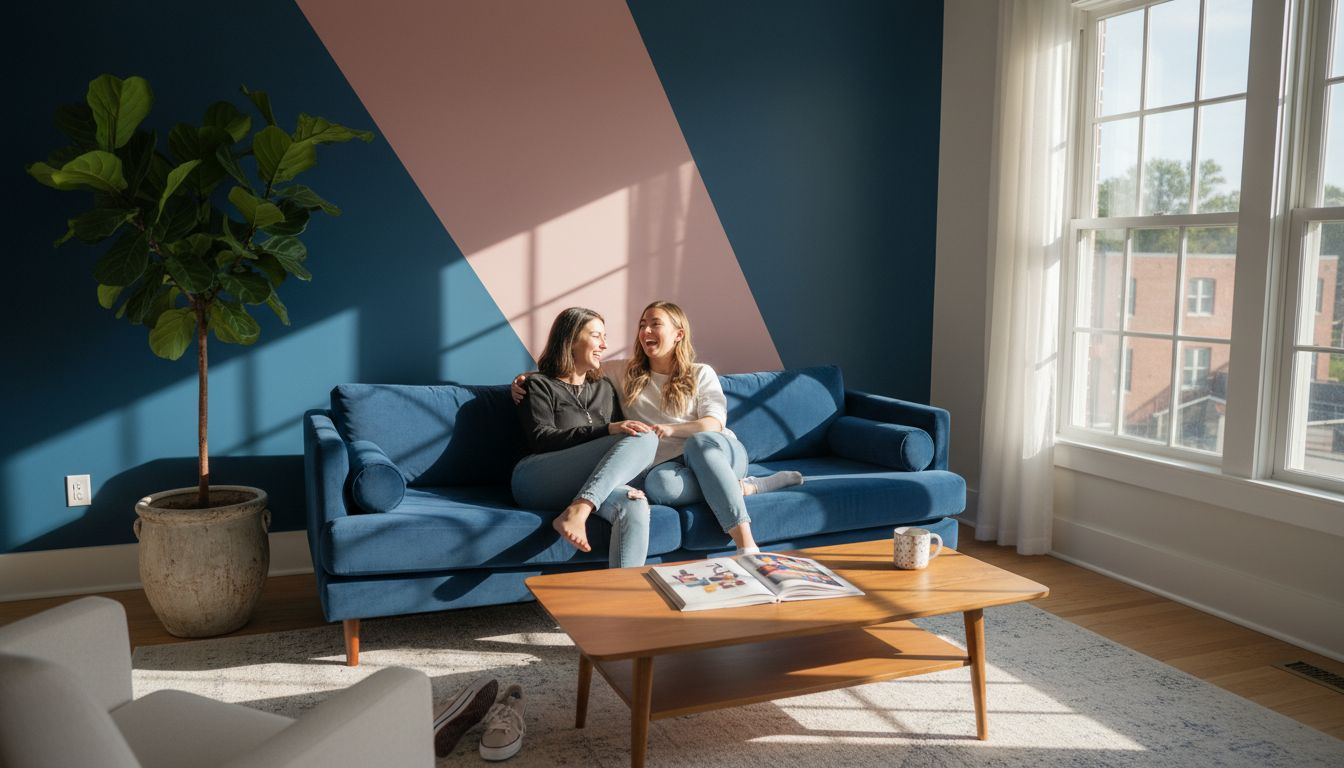
The most effective accent walls are typically found in areas that naturally catch attention. natural focal points of a room often include the wall behind a sofa in living rooms or the wall behind a bed in bedrooms.
Pro tip: An accent wall should complement your room’s layout without competing with other design elements.
Open floor plans offer additional opportunities to use accent walls strategically. These walls can help define specific zones and create visual separation in larger spaces. By carefully selecting your wall, you transform a simple paint job or decorative treatment into a powerful design statement.
Pro tip: Test your accent wall location by taking a photo of the room and digitally previewing potential color or design options before committing to the final look.
2. Pick Paint Colors That Complement Window Shades
Designing a harmonious room requires thoughtful coordination between paint colors and window treatments. Selecting the right color palette can transform your space from ordinary to extraordinary.
To create a visually appealing environment, understand how colors interact with your window shades. Complementary colors can create dynamic contrast and enhance the overall aesthetic of your room.
Consider these strategies for color selection:
- Analyze existing window shade colors: Identify the primary and secondary tones in your window treatments
- Use color wheel principles: Select colors opposite or adjacent to your window shade colors
- Consider room lighting: Natural light significantly impacts color perception
When matching paint colors to window shades, focus on creating balance. Neutral shades like soft grays or warm whites provide versatility and allow window treatments to stand out.
Harmonious color selection transforms a room from simple to sophisticated.
For rooms with bold window shades, opt for more subdued wall colors that complement without competing. Conversely, neutral window treatments allow for more adventurous wall color choices.
Pro tip: Always test paint and window shade colors together using sample swatches in the actual room lighting before making a final decision.
3. Use Wallpaper for Unique Accent Wall Effects
Wallpaper offers a transformative solution for creating stunning accent walls that go beyond traditional paint treatments. With endless design possibilities, wallpaper allows you to inject personality and visual drama into any room.
Architectural wallpaper techniques provide remarkable opportunities to elevate your interior design. Whether you prefer bold patterns or subtle textures, wallpaper can dramatically change a space’s atmosphere.
Consider these wallpaper accent wall strategies:
- Explore diverse design styles: From classic damask to modern geometric patterns
- Mix textures and materials: Combine metallic, textured, or dimensional wallpapers
- Consider room functionality: Select designs that complement existing decor
Wallpaper provides unique advantages over traditional paint. Textured options create depth and visual interest that flat paint simply cannot achieve. Renters can even use removable peel-and-stick wallpapers for temporary transformations.
A well-chosen wallpaper can turn an ordinary wall into an extraordinary focal point.
Choose wallpapers that reflect your personal style while maintaining harmony with your existing room design. Consider scale, color, and pattern intensity to ensure the accent wall enhances rather than overwhelms your space.
Pro tip: Always order wallpaper samples and test them in your actual room lighting before making a final selection to ensure the perfect visual impact.
4. Combine Textures Like Wood, Brick, or Fabric
Transforming an accent wall from flat and forgettable to rich and dynamic requires thoughtful texture combinations. By strategically layering materials, you can create a visually compelling focal point that adds depth and personality to any room.
Mixing materials like wood, fabric, and stone offers endless possibilities for creative expression. Each texture brings unique characteristics that can dramatically change a space’s atmosphere and visual interest.
Consider these texture combination strategies:
- Wood elements: Add warmth and natural character
- Fabric panels: Introduce softness and sound absorption
- Stone or brick veneers: Create rustic or industrial elegance
- Metallic accents: Provide modern, reflective highlights
The key is balance. Wood paired with soft fabrics creates a cozy environment, while stone combined with textiles can soften an otherwise hard surface. Mixing textures allows you to craft a multidimensional accent wall that tells a unique design story.
Thoughtful texture layering transforms walls from simple surfaces into captivating design statements.
Remember that texture is not just visual but also tactile. Running your hand across a wall with varied materials creates a sensory experience that flat paint cannot replicate.
Pro tip: Start with samples and create a small mockup to test texture combinations before committing to the entire accent wall design.
5. Integrate Custom Blinds for Coordinated Style
Creating a cohesive interior design means thoughtfully selecting window treatments that complement your accent wall and overall room aesthetic. Custom blinds offer a sophisticated solution for achieving a polished and intentional look.
Coordinating curtains with window blinds requires strategic color and style selection. Your window treatments should enhance the visual narrative of your space, not compete with it.
Consider these custom blind integration strategies:
- Match color palette: Select blinds that echo accent wall tones
- Consider texture continuity: Align blind materials with wall treatments
- Maintain design consistency: Choose styles harmonizing with room decor
- Prioritize functional aesthetics: Balance light control with visual appeal
Neutral wooden blinds work beautifully with Scandinavian minimalist designs, while textured roller blinds can add depth to modern interiors. The goal is creating a seamless visual experience that feels intentional and refined.
Custom window treatments transform rooms from ordinary to extraordinary.
Remember that blinds are not just decorative elements but functional design components that control light, provide privacy, and contribute to your room’s overall ambiance.
Pro tip: Order fabric swatches and test blind samples against your accent wall in different lighting conditions to ensure perfect color and texture coordination.
6. Add Art or Decor to Enhance Your Focal Wall
An accent wall becomes truly extraordinary when thoughtfully curated with art and decor that tells your unique design story. The right selection of artwork and decorative elements can transform a simple wall into a captivating focal point.
Creative accent wall ideas go beyond mere decoration. They create visual narratives that reflect your personality and design sensibilities.
Consider these strategies for enhancing your focal wall:
- Create visual depth: Layer artwork and decorative objects
- Mix frame styles and sizes: Combine different frame dimensions for interest
- Incorporate reflective surfaces: Use mirrors to expand perceived space
- Balance color and texture: Coordinate with existing room design
Floating shelves offer excellent opportunities to display curated collections. Mix photographs, small sculptures, plants, and accent lighting to create a dynamic visual landscape that draws the eye and sparks conversation.
Art transforms walls from blank canvases into personal statements.
Remember that your focal wall should feel intentional. Every piece you select should contribute to an overall cohesive design narrative that feels authentic and engaging.
Pro tip: Before hanging artwork, create paper templates to experiment with layout and ensure perfect spacing and visual balance.
7. Utilize Lighting to Highlight Accent Wall Features
The right lighting can transform an accent wall from ordinary to extraordinary, turning a simple surface into a dramatic focal point. Strategic illumination reveals textures, colors, and design elements that might otherwise go unnoticed.
Professional lighting strategies can dramatically enhance your accent wall’s visual impact. Different lighting techniques create unique effects and moods.
Explore these lighting approaches for accent walls:
- Grazing lights: Highlight textural wall surfaces
- Spotlighting: Emphasize artwork or architectural details
- Wall washing: Create soft, even illumination
- Recessed lighting: Provide subtle, clean accent effects
Consider the temperature and intensity of your lighting. Warm white lights (2700-3000K) create cozy atmospheres, while cooler temperatures (4000-5000K) offer a more modern, crisp appearance. The goal is to complement your wall’s design without overwhelming its natural beauty.
Lighting is the jewelry that makes your accent wall shine.
Track lighting and adjustable fixtures offer flexibility, allowing you to modify your lighting design as your room evolves or your artistic displays change.
Pro tip: Use LED strip lights with dimmer switches to create multiple lighting scenes and easily adjust the mood of your accent wall.
Below is a comprehensive table summarizing the strategies, key steps, and benefits for achieving impactful accent wall designs as discussed in the article.
| Aspect | Key Concepts | Recommendations and Tips |
|---|---|---|
| Choosing the Wall | Select a predominant wall with minimal interruptions. | Consider the natural focal points like behind a sofa or bed, and avoid cluttered walls. |
| Color Selection | Harmonize paint colors with existing elements. | Analyze window shade colors and lighting; test colors with samples. |
| Wallpaper Options | Use wallpaper for unique effects and personality. | Choose styles that align with room themes and sample the textures beforehand. |
| Texture Combination | Incorporate varied materials for depth and interest. | Experiment with wood, fabrics, and stone; balance the overall design. |
| Window Treatment Coordination | Align blinds with accent wall tones. | Sample and test materials under room lighting for cohesive results. |
| Art and Decor | Add curated art pieces to emphasize the wall. | Experiment with arrangements using templates to achieve balance. |
| Lighting Enhancements | Illuminate the wall features effectively. | Utilize grazing or recessed lights to accentuate design elements. |
Elevate Your Accent Walls with Custom Window Treatments
Crafting the perfect accent wall means balancing colors, textures, and lighting to create a captivating focal point. Many struggle to harmonize their window shades with their accent wall colors and styles as highlighted in the article’s emphasis on complementary paint colors and coordinated blinds. If you want a seamless look that enhances your room’s atmosphere and highlights your accent wall’s design, custom window treatments are essential.
Discover how Value Blinds can transform your space with premium, customizable options like roller shades, wooden blinds, or motorized solutions that perfectly complement your accent wall. Act now to browse our extensive collection and request free swatches to test colors and textures in your home before committing. Start designing your stylish, coordinated room today with expert guidance and easy online customization at Value Blinds Direct.
Frequently Asked Questions
How do I choose the best wall for an accent wall?
To select the best wall for your accent wall, identify the natural focal point of the room, such as the wall behind a sofa or bed. Ensure the chosen wall has minimal interruptions, like windows or doors, to maintain a clean visual appearance.
What paint colors work well with window shades?
To create a harmonious look, choose paint colors that complement the tones in your window shades. Analyze the primary and secondary colors present in your window treatments, then select wall colors that are opposite or adjacent on the color wheel for a balanced effect.
How can I use wallpaper for an accent wall?
Wallpaper can significantly enhance an accent wall with unique patterns and textures. Explore various styles, such as geometric or floral patterns, and consider ordering samples to see how they interact with the room’s lighting before making a final choice.
What materials can I layer to add texture to an accent wall?
You can create depth on your accent wall by layering different materials such as wood, fabric, and stone. Combining these materials, like a wood panel with fabric accents, can produce a rich, inviting atmosphere that enhances the overall design of your space.
How do custom blinds enhance my accent wall?
Custom blinds can coordinate with your accent wall’s color palette and style, creating a polished look throughout the room. Choose materials and textures that align with your wall treatments for a cohesive design; for example, pair wooden blinds with a natural wood accent wall.
How can I use lighting to highlight my accent wall?
To highlight your accent wall, use lighting techniques such as wall washing or spotlights to emphasize textures and colors. Strategically place fixtures to create a soft, even illumination or dramatic highlights that draw attention, adjusting the temperature based on the desired ambiance.