

Understanding Soundproof Window Treatments for Peaceful Homes
City life can swamp your home with constant noise, from morning traffic to late-night sirens. You might think adding another curtain could help, but it barely makes a dent. In reality, advanced soundproof window treatments can slash noise by up to 80 percent, turning even the loudest apartment into a peaceful retreat most people never realize is possible.
Table of Contents
- What Are Soundproof Window Treatments?
- Why Soundproof Window Treatments Matter for Homeowners
- How Soundproof Window Treatments Reduce Noise
- Key Concepts Behind Soundproofing Materials
- Real-World Applications and Benefits of Soundproof Window Treatments
Quick Summary
| Takeaway | Explanation |
|---|---|
| Soundproof window treatments reduce external noise. | These solutions minimize noise transmission through windows, enhancing indoor tranquility and comfort. |
| Material density and layers improve soundproofing. | Utilizing heavier, multilayered materials interrupts sound waves and enhances absorption, increasing overall effectiveness. |
| Health benefits include lower stress and better sleep. | Reducing noise pollution with soundproof treatments promotes mental well-being by improving sleep quality and decreasing anxiety. |
| Various types exist for different environments. | Options such as thick curtains and specialized blinds cater to residential needs, adapting to specific noise challenges. |
| Effective soundproofing enhances property value. | Installing soundproof window treatments not only provides comfort but also potentially increases the property’s market value. |
What Are Soundproof Window Treatments?
Soundproof window treatments represent specialized solutions designed to minimize external noise transmission through windows, creating quieter and more peaceful indoor environments. These innovative products work by blocking, absorbing, and dampening sound waves that would typically penetrate standard glass surfaces.
The Science of Sound Reduction
At their core, soundproof window treatments function through strategic material selection and advanced acoustic engineering. They utilize dense, multilayered materials that interrupt sound wave pathways, preventing noise from easily passing through. The fundamental mechanism involves creating barriers that absorb, reflect, or dissipate sound energy before it enters living spaces.
The effectiveness of soundproof window treatments depends on several key factors:
- Mass and Density: Heavier materials block more sound
- Multiple Layers: Combining different materials increases sound absorption
- Air Gaps: Strategic spacing between treatment layers reduces sound transmission
Types of Soundproof Window Treatments
Homeowners have multiple options for reducing noise intrusion. Our comprehensive guide to soundproof window coverings explores various solutions like:
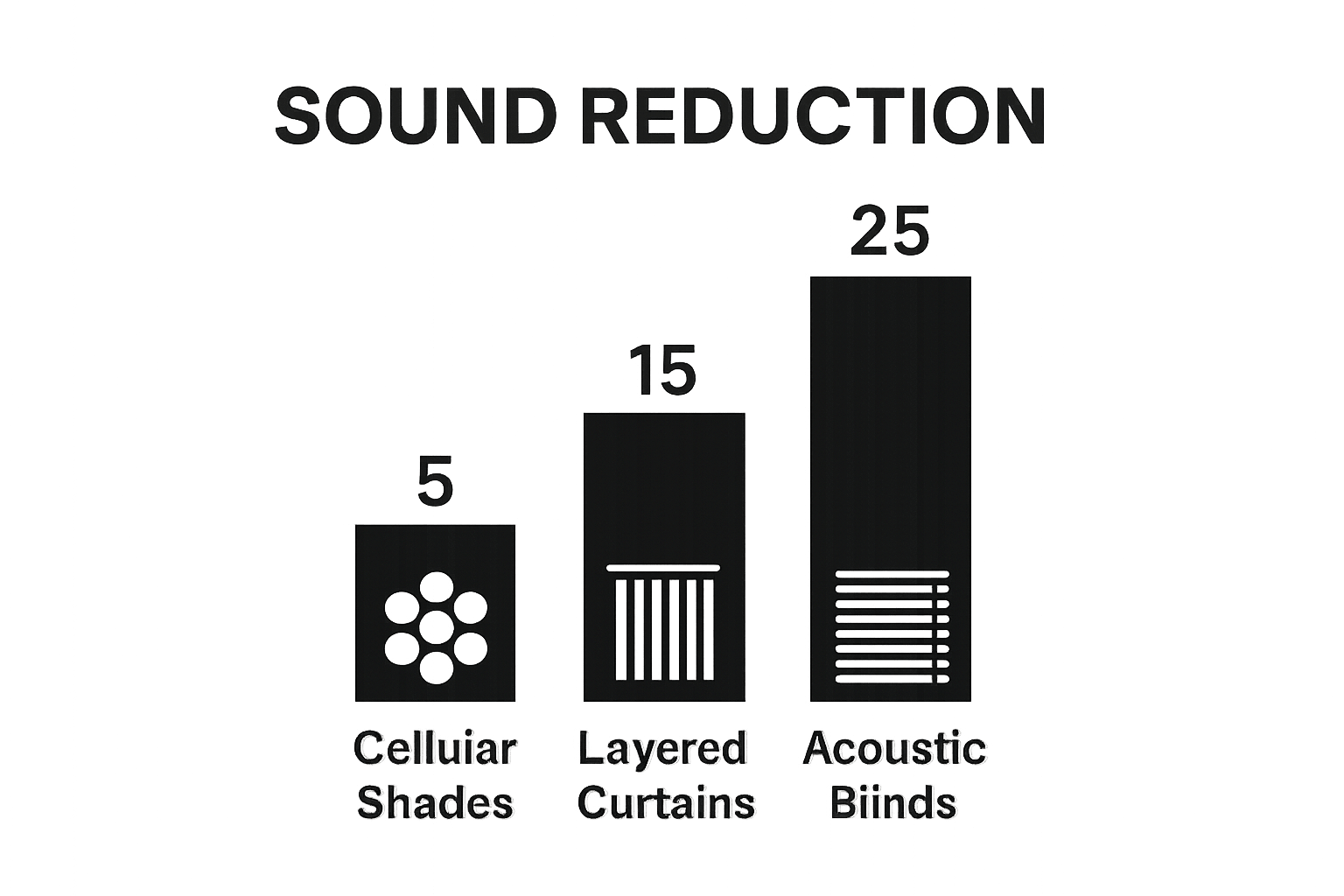
- Cellular/honeycomb shades with specialized sound-dampening fabrics
- Thick, layered curtains with acoustic backing
- Insulating window panels with sound-blocking properties
- Specialized acoustic blinds with dense material compositions
According to acoustic engineering research from the National Research Council, effective soundproofing requires a holistic approach that combines multiple sound mitigation strategies. Window treatments play a crucial role in this comprehensive noise reduction system, offering both functional and aesthetic benefits for residential spaces.
While no window treatment can completely eliminate all external sounds, the right selection can significantly reduce noise levels, transforming noisy environments into tranquil retreats.
The table below compares the main types of soundproof window treatments discussed, highlighting their construction features and typical benefits for homeowners.
| Type of Window Treatment | Construction & Material | Key Benefits |
|---|---|---|
| Cellular/Honeycomb Shades | Multiple fabric layers create air pockets | Effective sound absorption, energy efficiency |
| Thick Layered Curtains | Heavy fabrics with acoustic backing | Strong noise reduction, improved privacy |
| Insulating Window Panels | Solid core or composite structures | Blocks and dampens sound, boosts insulation |
| Specialized Acoustic Blinds | Dense materials designed for sound isolation | Reduces sound passage, maintains aesthetics |
Why Soundproof Window Treatments Matter for Homeowners
Soundproof window treatments have become increasingly critical for homeowners seeking to create peaceful, comfortable living environments. Beyond mere aesthetic considerations, these specialized treatments address significant quality of life challenges related to noise pollution and personal well-being.
Impact on Mental and Physical Health
Continuous exposure to external noise can have profound negative consequences on human health. Research from the World Health Organization indicates that persistent noise pollution leads to increased stress levels, disrupted sleep patterns, and potential long-term cardiovascular risks. Soundproof window treatments serve as a critical intervention, helping homeowners mitigate these health challenges by creating quieter indoor spaces.
The primary health benefits include:
- Reduced stress and anxiety
- Improved sleep quality
- Enhanced mental concentration
- Lower risk of noise-induced hearing complications
Practical Benefits for Different Living Environments
Various residential settings demand unique noise management strategies. Urban apartments near busy streets, homes adjacent to construction zones, or residences near airports and highways particularly benefit from soundproof window treatments. Explore our window treatments for privacy guide to understand how these solutions adapt to different environmental challenges.
Beyond noise reduction, these treatments offer additional advantages:
- Enhanced energy efficiency
- Increased property value
- Improved temperature regulation
- Enhanced aesthetic appeal
According to acoustic engineering studies from the Environmental Protection Agency, effective noise reduction can lower stress hormones by up to 25%, demonstrating the significant impact of strategic window treatments on overall living quality. Homeowners investing in soundproof window treatments are not just purchasing a product but investing in their health, comfort, and long-term well-being.
How Soundproof Window Treatments Reduce Noise
Soundproof window treatments utilize sophisticated acoustic engineering principles to interrupt, absorb, and minimize sound wave transmission through windows. Understanding the complex mechanisms behind noise reduction helps homeowners make informed decisions about protecting their living spaces from unwanted external sounds.
Sound Wave Interruption Techniques
The primary strategy for noise reduction involves creating physical barriers that prevent sound waves from easily passing through window surfaces. These treatments employ multiple scientific approaches to disrupt sound transmission:
- Mass Blocking: Utilizing dense materials that physically obstruct sound wave pathways
- Sound Absorption: Incorporating materials that capture and dissipate sound energy
- Damping: Reducing vibration transfer between window surfaces
Research from acoustic engineering experts demonstrates that effective sound reduction requires a multilayered approach. The most successful soundproof window treatments combine several strategies to create comprehensive noise barriers.
The following table summarizes the scientific techniques used in soundproof window treatments, including their mechanisms and the resulting benefits for homeowners.
| Technique | How It Works | Resulting Benefit |
|---|---|---|
| Mass Blocking | Uses dense materials to physically obstruct sound | Major reduction of noise penetration |
| Sound Absorption | Materials capture and dissipate sound energy | Decreased echo and internal noise |
| Damping | Reduces vibration transfer through window surfaces | Minimizes sound transmission further |
| Multilayer Approach | Combines several materials and barriers | Maximizes overall soundproofing effect |
Material Science and Acoustic Performance
Advanced materials play a critical role in soundproofing effectiveness. Specialized fabrics, cellular structures, and composite materials are engineered to maximize sound wave interference. These materials work through complex mechanisms:
- Trapped air pockets that absorb sound energy
- Specialized weaving techniques that disrupt sound wave transmission
- Multi-density layers that reflect and absorb different sound frequencies
Learn more about heat blocking window coverings to understand how similar material science principles apply to thermal and acoustic management.
According to acoustic engineering studies from the National Research Council of Canada, sound reduction can range from 5 to 25 decibels depending on treatment quality. This significant noise reduction translates to perceivable improvements in indoor comfort, transforming noisy environments into peaceful sanctuaries through strategic window treatment selection.
Key Concepts Behind Soundproofing Materials
Soundproofing materials represent a sophisticated intersection of physics, engineering, and material science, designed to mitigate sound transmission through strategic structural and compositional approaches. Understanding these materials requires exploring their fundamental acoustic manipulation capabilities and innovative design principles.
Acoustic Material Composition
The effectiveness of soundproofing materials depends on complex molecular and structural characteristics that interact with sound waves. Research from acoustic engineering laboratories reveals that optimal soundproofing requires materials with specific density, porosity, and molecular structures.
Critical characteristics of high-performance soundproofing materials include:
- Molecular density variations
- Complex internal structural networks
- Capacity for vibration absorption
- Multi-layered compositional strategies
Sound Wave Interaction Mechanisms
Soundproofing materials fundamentally work by disrupting sound wave energy through multiple sophisticated mechanisms. These mechanisms transform sound wave transmission by:
- Reflecting sound waves
- Absorbing acoustic energy
- Dispersing sound wave frequencies
- Creating interference patterns
Learn more about layering window treatments to understand how strategic material placement enhances acoustic performance.
According to acoustic engineering studies from MIT, advanced soundproofing materials can reduce noise transmission by up to 80% when strategically engineered and implemented. The future of soundproofing lies in developing increasingly sophisticated materials that can selectively manage sound wave characteristics while maintaining aesthetic and functional versatility.
Real-World Applications and Benefits of Soundproof Window Treatments
Soundproof window treatments extend far beyond theoretical acoustic management, delivering tangible benefits across diverse residential and professional environments. These specialized solutions address complex noise challenges while simultaneously enhancing living and working spaces through strategic sound control.
Residential Noise Management Strategies
Homeowners face increasingly complex acoustic environments requiring sophisticated noise reduction approaches. Urban residences, suburban homes near highways, and apartments in bustling neighborhoods particularly benefit from advanced soundproofing technologies. Explore window treatments for apartments to understand how targeted solutions can transform noisy living spaces.
Key residential applications include:
- Protecting sleep quality in high-traffic areas
- Creating quiet home office environments
- Reducing street noise in bedroom and living spaces
- Minimizing disturbances from neighborhood construction
Professional and Specialized Environments
Beyond residential applications, soundproof window treatments provide critical acoustic management in professional settings. Offices, recording studios, medical facilities, and educational institutions require precise sound control to maintain optimal working conditions.
Specialized environment benefits encompass:
- Enhanced concentration in open-plan workspaces
- Improved patient privacy in medical facilities
- Better acoustic conditions for learning environments
- Reduced external audio interference in professional settings
Research from the National Institutes of Health demonstrates that effective noise reduction significantly improves cognitive performance, reduces stress levels, and promotes overall psychological well-being. By strategically implementing soundproof window treatments, individuals can transform their immediate environment, creating spaces that support mental health, productivity, and personal comfort.
Transform Your Home Into a Quiet Sanctuary With Advanced Soundproof Blinds
Ready to enjoy a peaceful home free from the stress of outside noise? If you struggle with constant disruptions from traffic, neighborhood construction, or city commotion, you already know the value of quiet comfort. As described in our article, effective soundproof window treatments are not just about noise reduction—they deliver better sleep, lower stress levels, and true relaxation. Now you can put these concepts into practice without hassle. Discover our collection of Trending Features featuring cellular shades, layered curtains, and custom blinds designed to block and absorb sound. Our expertly crafted products combine dense materials, multi-layer designs, and modern style to help create spaces where quiet and calm are no longer a luxury.

Visit Value Blinds Direct to customize your solution today and take the first step toward a quieter home. Explore New Arrivals for the latest innovations or use our easy online tools for guidance. This is your moment to reclaim tranquility. Shop now and experience the difference high-performance window treatments can make.
Frequently Asked Questions
What are soundproof window treatments?
Soundproof window treatments are specialized products designed to minimize external noise transmission through windows, creating quieter indoor environments by blocking, absorbing, and dampening sound waves.
How do soundproof window treatments work?
These treatments function by using dense, multilayered materials that interrupt sound wave pathways. They are designed to create barriers that absorb or reflect sound, reducing noise pollution in living spaces.
What types of materials are used in soundproof window treatments?
Common materials include thick fabrics, cellular/honeycomb structures, and specialized acoustic blinds. These materials are engineered for density and sound absorption to maximize noise reduction.
Can soundproof window treatments eliminate all noise?
No, while they significantly reduce noise levels, no window treatment can completely eliminate all external sounds. Their effectiveness varies based on the quality of the materials and design used.