
Exterior Window Shades: The Complete Outdoor Buyer's Guide
Most people shopping for exterior window shades start in the wrong place. They open a big-box listing, sort by price, and buy the cheapest roll-up that fits the rough size of the patio. It sags in the first heavy wind, fades by the second summer, and gets dragged to the curb by the third. The problem was never the patio. It was treating an outdoor shade like a disposable accessory instead of a fitted piece of the house.
An exterior window shade is an outdoor-rated fabric shade mounted on the outside of an opening, built to block heat, glare, and UV before they reach the glass. That single definition is the whole difference from an interior blind, which only manages light and privacy inside a room and intercepts heat that is already in the house. Exterior shades use outdoor screen fabric and corrosion-resistant hardware, and on the better systems they lock into side rails so wind cannot get behind the fabric. This guide covers the full decision: the types that exist, how outdoor solar shades and openness factor work, how to choose by space, what custom shades really cost, and how weather should shape what you buy. If you are close to ordering, you can shop custom exterior shades, but read the openness and cost sections first, because that is where the expensive mistakes happen.

The five types of outdoor and exterior shades
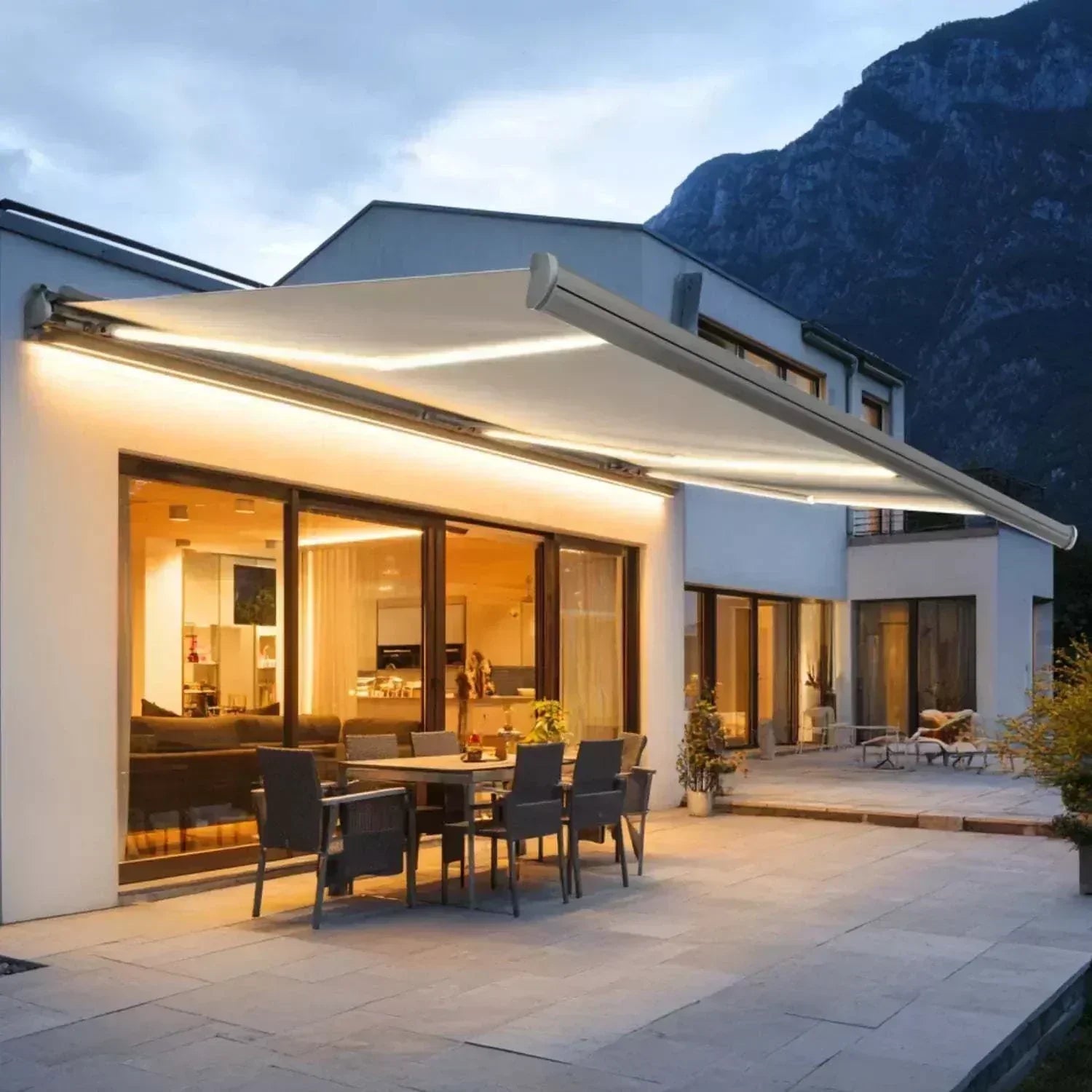
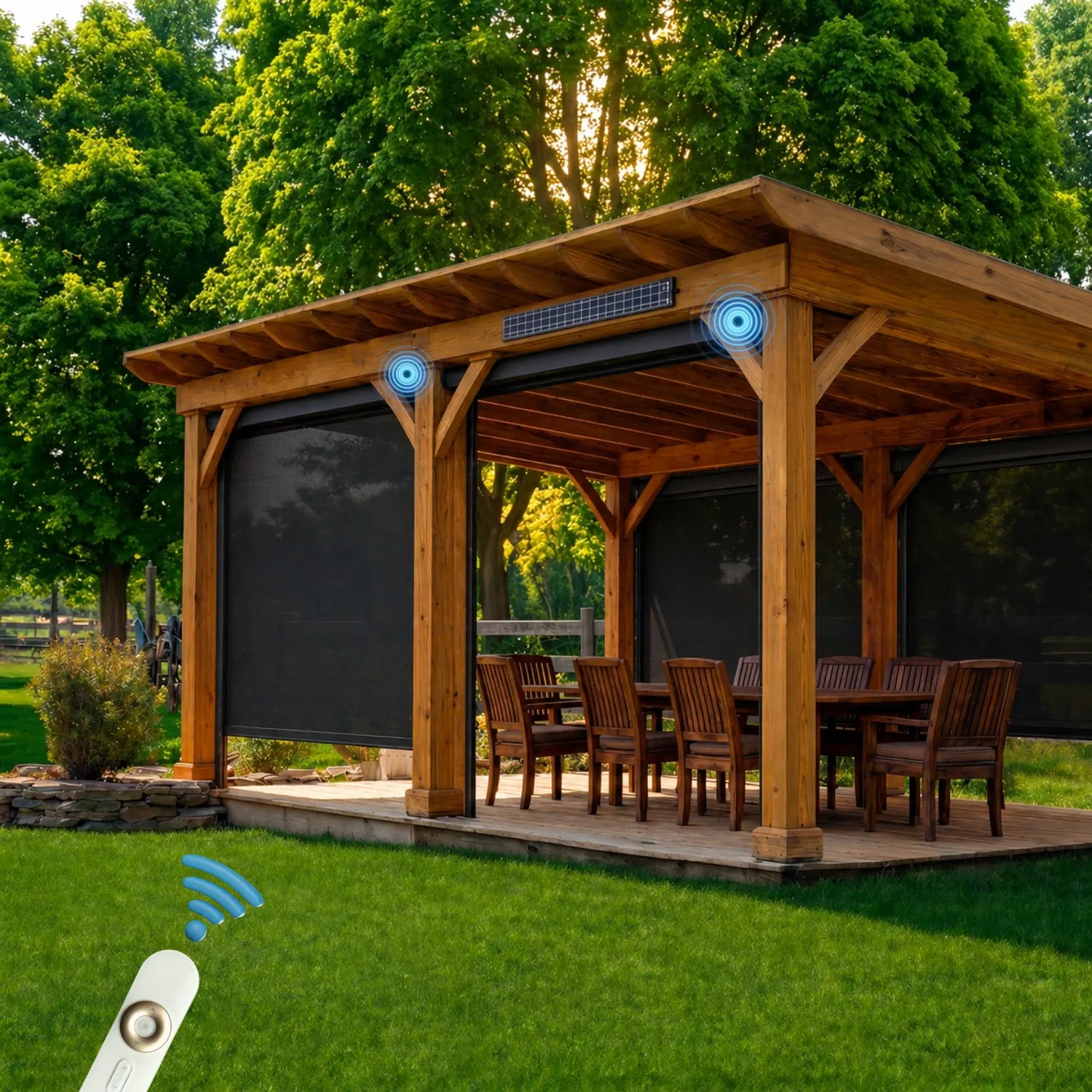
Exterior shade is a category, not a product. Five formats cover almost every backyard, and they are not interchangeable: exterior roller and solar shades (the versatile workhorse), side-track or zip-track shades (wind-stable, with sealed edges), retractable awnings (overhead deck cover), motorized pergolas (a full outdoor room), and store-bought sail and roll-up shades (cheap, generic, and short-lived).
| Type | Best for | Wind behavior | Custom | Starting price |
|---|---|---|---|---|
| Exterior roller / solar | Windows, patios, porches | Good, better with rails | Yes | from about $449 |
| Side-track (zip-track) | Exposed, windy, large openings | Wind-stable, sealed | Yes | from about $456 motorized |
| Retractable awning | Overhead deck and patio | Retract in wind | Yes | $542 to $581 motorized |
| Motorized pergola | Defined outdoor rooms | Built-in, screened | Yes | $6,400 to $7,263 |
| Store-bought sail / roll-up | Temporary, light shade | Poor | No | low, short-lived |
Starting prices are catalogue entry points for the smallest custom builds. They do not include site preparation, electrical work, or professional installation, and the final figure scales with size, motorization, and fabric.
What outdoor solar shades are, and how openness factor works
A solar shade is a roller shade made from tight-weave screen fabric that blocks solar heat and UV while you can still see out. The Value Blinds outdoor fabric blocks up to 95 percent of UV, comes in PVC-coated polyester or fiberglass, and is certified to GreenGuard and OEKO-TEX standards. The single most important spec is the openness factor, the percentage of open space in the weave.
| Openness | View out | Glare and heat control | Daytime privacy | Choose when |
|---|---|---|---|---|
| Blackout (0%) | None | Maximum | Full | Total light block, on a wind-rated track outdoors |
| 1% to 5% | Limited | Strongest | High | West sun, glare, and heat are the problem |
| 10% | Clear | Balanced | Moderate | Everyday all-rounder |
| 20% to 30% | Widest | Lightest | Low | The view is why you sit there |
Two honest limits: openness from 20 to 30 percent is close to insect mesh and does little against a 4 p.m. west sun, so do not buy it where heat control is the goal; and solar shades give daytime privacy only, because after dark, with the light on inside, the effect reverses on any openness above blackout. The fabric and openness guide goes deeper.

How to choose by space
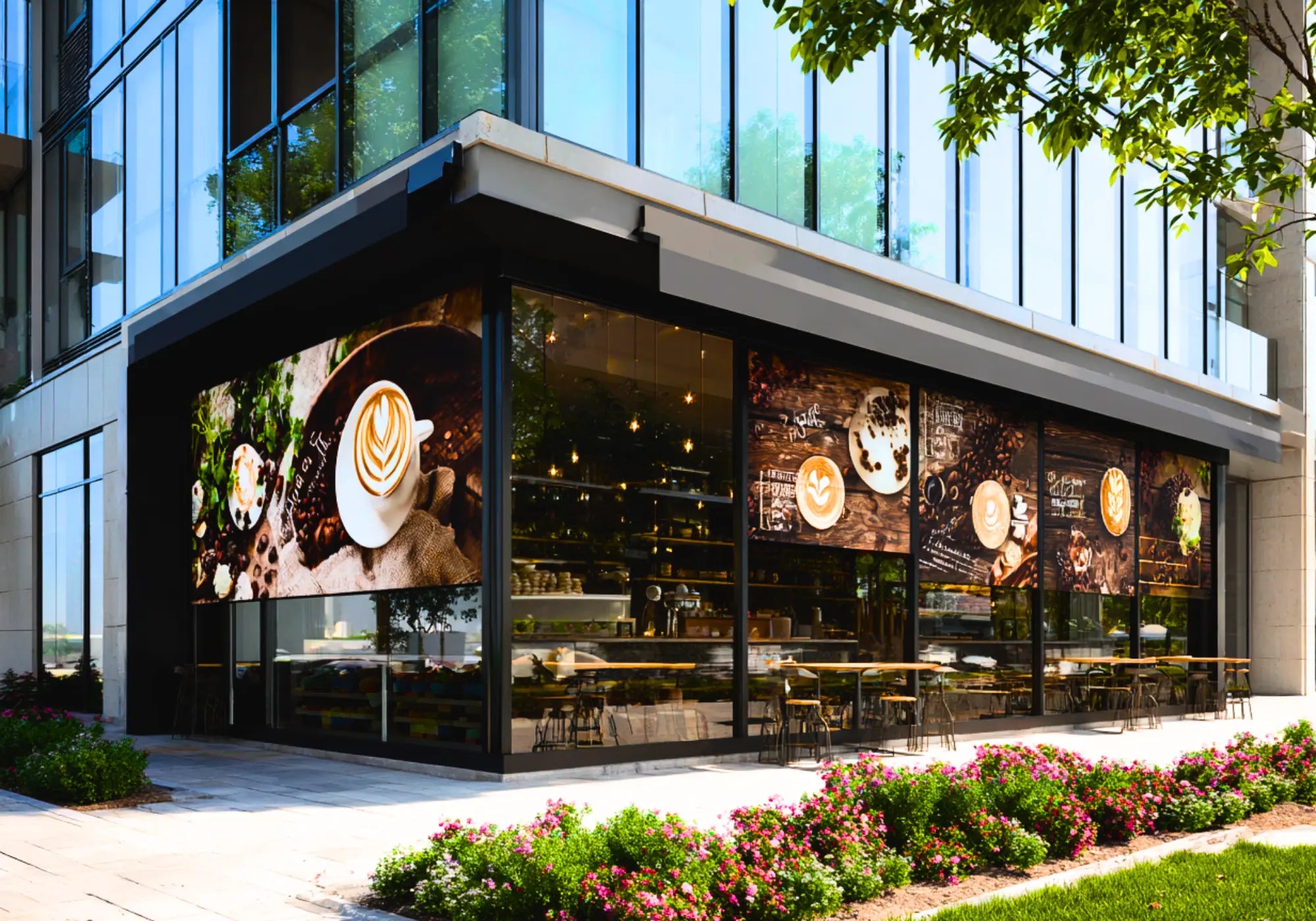
Patios usually want side-track shades or a retractable awning. Decks pair an awning with a roller shade on the most exposed side. Screened porches suit inside-mount roller or solar shades. Walls of glass are where motorized exterior shades earn their cost, running up to 45 feet wide by 22 feet high. A pergola is a structural decision, a full room rather than a single panel of shade.
How much custom exterior shades cost
Custom exterior shades start at about $449 for a manual side-rail shade and rise with size, motorization, fabric, and the side-track system. Motorized shades start in the mid-$450s, motorized awnings $542 to $581, and a motorized pergola is a different category at $6,400 to $7,263. Two costs people forget: motorized shades are factory pre-wired and plug into a standard 120-volt outlet, so if there is no outlet near the install point you will need an electrician to add one; and large outdoor items ship by truck freight, dropped curbside, so plan for two or more people to move the crate. The right comparison is not a $60 sail shade against a $449 custom one. It is one custom shade that lasts years against buying the cheap one three times.
Measuring and installation, in brief
The core choice is inside mount, which sits the shade within a solid, square opening, versus outside mount, which fixes it to the surface around the opening for maximum coverage and is the safer call when an opening is not square. Two things matter most: your ordered width is the bracket-to-bracket size, and the fabric runs slightly narrower to clear the housing and rails, so an inside mount shows a small light gap; and you check for square by measuring corner to corner both ways, not just width in three places. Most shades install yourself with two people, or you can book the professional measure-and-install network that covers most of the continental United States. The full method is in the measuring guide.
Weather, wind, and coastal durability
This is where store-bought and custom part ways. Open-roll shades flap because wind gets behind a free edge. Side-track shades hold because the zippered edge stays captured in the rails, and the Value Blinds zip-track line is rated to withstand sustained winds of roughly 32 to 46 miles per hour. One plain warning: the track holding the fabric is not the same as your wall holding the shade. A large deployed shade is a sail, so mount only into solid structure such as wood framing, beams, posts, concrete, or brick, and retract it in a storm. Hardware is corrosion-resistant as standard, which matters most in salt air. The custom exterior shades collection carries the windproof line.

Why custom outperforms store-bought
A custom exterior shade is built to your opening, runs on corrosion-resistant hardware and outdoor fabric, locks into side rails for wind, and carries a 3-year fabric warranty and a 5-year motor warranty. A store-bought shade is built to a generic size, flaps in wind, and is replaced rather than repaired. The custom shade costs more once. The cheap shade costs less several times.
Outdoor shades by region
Custom outdoor windproof shades ship by truck freight across North America, while samples and indoor products ship by FedEx, UPS, and USPS. What you need changes by climate: Texas for relentless dry-heat UV, where lower openness wins; Florida for salt air, humidity, and storm squalls, where corrosion-resistant hardware and fast retraction matter; coastal Virginia for mixed coastal conditions; and California and North Carolina for strong sun and stricter HOA rules.
What most homeowners get wrong
They buy a high-openness fabric because the showroom shot looked bright, then lose a west patio to 4 p.m. glare because they needed 5 percent and bought 20. They skip side tracks on an exposed opening to save money, and the wind finds the gap. And they measure once, in a hurry, on a shade that is built to the exact numbers they submit.
Frequently asked questions
What are exterior shades and how do they differ from indoor blinds? Exterior shades mount outside the opening and block heat, glare, and UV before they reach the glass, using outdoor fabric and corrosion-resistant hardware. Indoor blinds manage light inside a room and only intercept heat already in the house.
Are outdoor solar shades worth it? For sun-facing patios, decks, and large windows, yes. By stopping heat at the glass they keep spaces cooler than any interior shade. On shaded or rarely used spaces, the value is smaller.
What is the openness factor? The percentage of open space in the weave. Blackout to 5 percent blocks the most glare, heat, and UV with the most privacy. Twenty to 30 percent gives a brighter, clearer view with much less heat control.
How much do custom exterior shades cost? From about $449 for a manual side-rail shade, rising with size and motorization. Motorized awnings start around $542, and motorized pergolas run $6,400 to $7,263. Prices are starting points and exclude installation.
Do exterior shades block heat? Yes. Outdoor screen fabric blocks up to 95 percent of UV and intercepts heat at the glass, which beats any interior blind for keeping a space cool.
What happens next
- Request free samples to judge openness and color in your own light. Samples ship by FedEx, UPS, or USPS.
- Choose your format and openness, or browse the exterior shades collection.
- Measure with the guide, or book a professional measure.
- Place your custom order. Outdoor shades are built in about 4 to 5 weeks and ship by truck freight, delivered curbside.