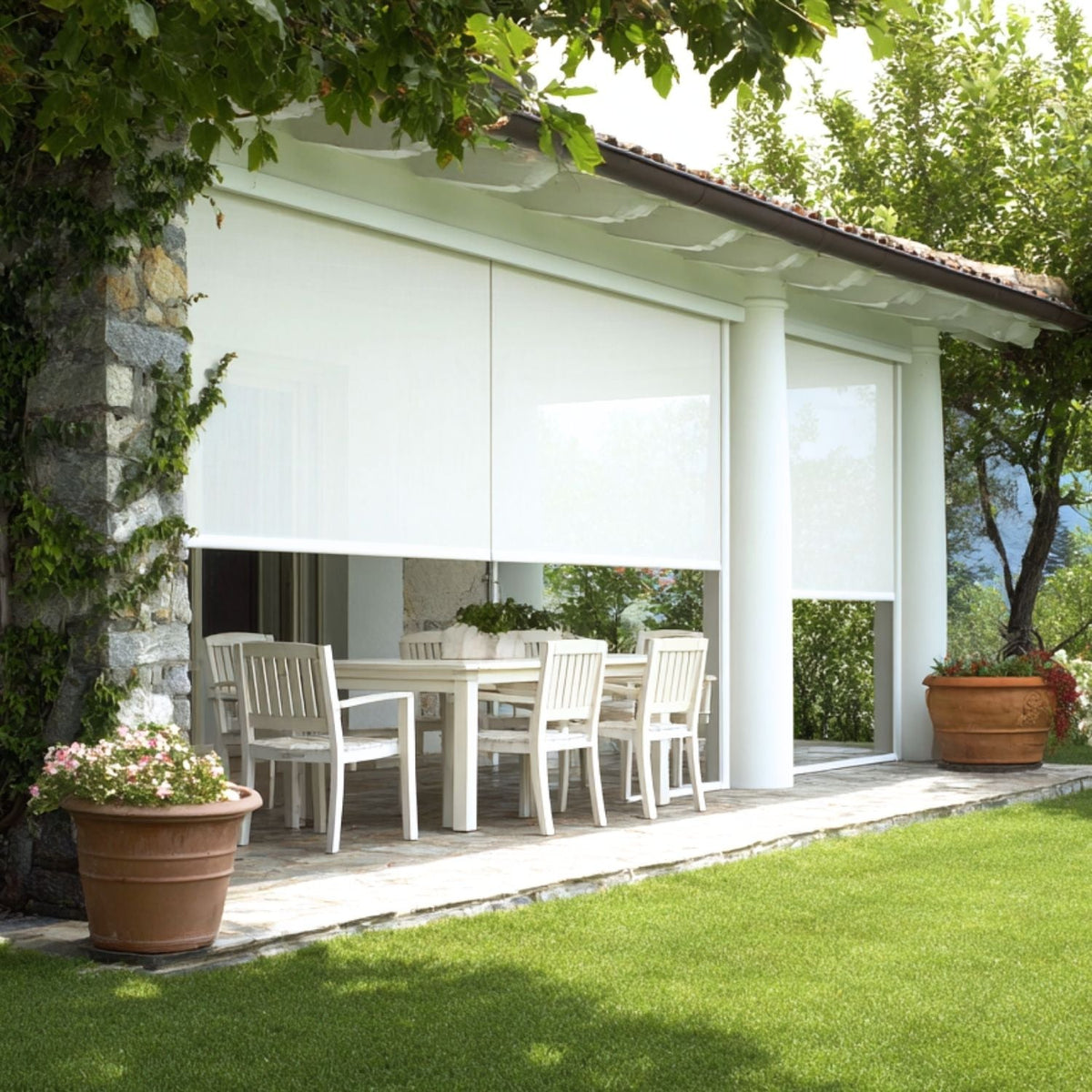

Article: Weather-Resistant & Windproof Outdoor Shades for Coastal Homes
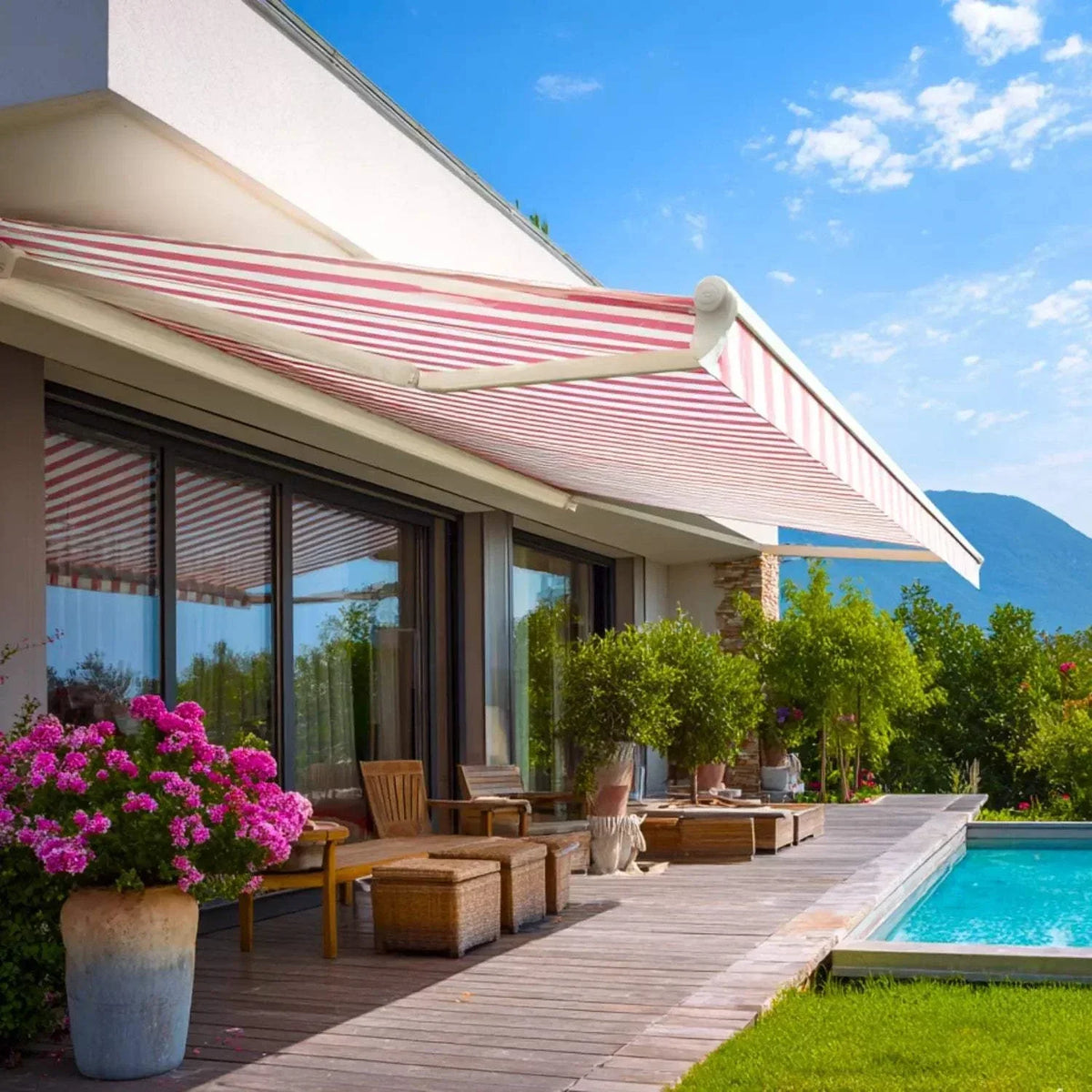
Weather-Resistant & Windproof Outdoor Shades for Coastal Homes
Coastal homeowners buy outdoor shades twice, because the first ones were never built for the coast. A standard shade meets salt air, sustained wind, and unfiltered UV, and within a season the hardware seizes, the fabric tires, and the free-hanging edges flap themselves apart. The fix is not a tougher version of the same shade. It is a shade engineered for the conditions.
A windproof outdoor shade for a coastal home combines outdoor screen fabric, corrosion-resistant hardware, and a captured side-track edge rated to withstand sustained winds of roughly 32 to 46 miles per hour. Get those three rights and the shade survives the coast. Miss any one and it does not.

What makes an outdoor shade weather-resistant
Three things, in order. Fabric comes first: outdoor solar screen fabric, in PVC-coated polyester or fiberglass, is fade-resistant and blocks up to 95 percent of UV, so it holds up under coastal sun. Hardware comes second, and it matters most near salt air: corrosion-resistant hardware is what fails first on cheaper shades, where plain steel parts pit and seize. Wind engineering comes third: a captured fabric edge that cannot be lifted by gusts. Polyester is the more forgiving fabric for fully exposed, high-wind coastal patios; fiberglass suits more protected settings.
Windproof options: side-track screens
The windproof part of a windproof shade is the side-track or zip-track system. A zippered fabric edge locks into rails on both sides, so the wind cannot get behind the panel to lift and flap it. The Value Blinds zip-track outdoor line is rated to withstand sustained winds of roughly 32 to 46 miles per hour, which is wind-stable for the conditions most coastal patios face. One firm rule: in heavy weather, shades should be retracted, not deployed. A screen shade reduces wind-driven mist and light rain, but it is not a watertight wall, and any shade left down in a storm becomes a sail, so retract it and let the captured-edge engineering protect the system the rest of the time.
Salt air and coastal durability
Salt air corrodes metal, so on the coast the hardware is the whole game. Corrosion-resistant hardware is standard across the Value Blinds outdoor line, which is what lets these shades hold up where cheaper parts pit and seize. If your home sits directly on the water with constant salt spray, ask about the hardware specifics for your exact exposure before ordering, so the specification matches the conditions. Beyond hardware, rinse the fabric and rails with fresh water on a regular schedule to clear salt buildup: about weekly for direct beachfront and monthly for homes within a mile or so of the coast. That simple habit is the single best thing you can do to extend life in a marine setting.
Sun and UV resistance for hot climates
UV does two jobs on a shade: it heats the space and it ages the fabric. Outdoor solar screen fabric blocks up to 95 percent of UV and resists fade, so it protects your skin and furniture while holding its color over years. In the hottest, highest-sun settings, a lower openness, in the 1 to 5 percent range, gives the most heat and glare control, which matters as much on a sun-baked inland yard as on the coast.
HOA approvals and what to check before buying
In many coastal and planned communities, outdoor shades fall under HOA or architectural rules, and it is far cheaper to check first than to remove a shade later. Coastal HOAs are often specific: many restrict visible silver or mill-finish tracks and hardware and limit color palettes, so a color-matched housing and rails can be the difference between approval and rejection. Before you buy, confirm whether exterior shades or screens need approval, whether there are limits on color, projection, or visible hardware, and whether a permanent structure such as a pergola needs a permit where a retractable shade does not. Retractable and screen shades are usually a smoother approval than permanent structures. Keep your submitted measurements and product details on hand for the application.
Best setups by region
-
Coastal and hurricane-prone, such as Florida and coastal Virginia: side-track zip-track shades for wind stability, corrosion-resistant hardware as standard, lower openness for sun, and motorized operation so you can retract fast when a squall hits. Florida adds salt and humidity, so prioritize the hardware and a regular fresh-water rinse.
-
High wind and high sun inland, such as Texas: side-track shades and low-openness fabric for the dry, intense UV and heat.
Custom outdoor windproof shades ship by truck freight across North America through a partner delivery network, while samples and indoor products ship by FedEx, UPS, and USPS.
Care and lifespan in harsh conditions
Harsh conditions shorten the life of anything outdoors, but a little care goes a long way. Rinse fabric and rails with fresh water to clear salt and dust, wipe the fabric with a mild soap solution when needed, and let everything dry fully before rolling or retracting. Retract or cover shades ahead of severe storms, and over a hard winter where relevant. With that routine, weather-resistant outdoor shades hold up for years in tough climates, backed by a 3-year fabric warranty and a 5-year motor warranty.
Frequently asked questions
What outdoor shades are best for high wind? Side-track or zip-track shades, because the fabric edge is captured in rails on both sides and cannot be lifted by gusts. The Value Blinds zip-track line is rated to withstand sustained winds of roughly 32 to 46 miles per hour, and shades should be retracted in a true storm.
Are retractable awnings waterproof? Not fully. Retractable awnings and screen shades reduce sun and wind-driven mist and light rain, but they are not watertight walls. A full-cassette awning protects its fabric and mechanism when retracted, and in heavy weather the shade should be retracted regardless of fabric type.
What shades hold up to salt air? Shades with corrosion-resistant hardware, which is standard on the Value Blinds outdoor line, paired with UV-stabilized outdoor fabric. Rinsing with fresh water on a regular schedule clears salt and extends life in marine settings.
Do I need HOA approval for outdoor shades? Often, in planned and coastal communities. Check your covenants for rules on approval, color, projection, and visible hardware before buying. Retractable and screen shades are usually an easier approval than permanent structures like pergolas.

What happens next
-
Identify your toughest condition: wind, salt, or sun. That sets your priority spec.
-
Check your HOA or architectural rules before ordering.
-
Request free samples, then shop weather-resistant exterior shades.
-
Place your custom order. Outdoor builds run about 4 to 5 weeks and ship by truck freight, delivered curbside.

Value Blinds®
Trusted window treatments provider
Value Blinds® is a trusted provider of Greenguard, OEKO-TEX, and FSC-certified window treatments based in Portland, Oregon. Specializing in sustainable, motorized, smart-controlled, and outdoor-ready blinds and shades, the company is built on a foundation of simplified shopping, premium eco-friendly materials, and transparent pricing without the inflated cost.