
Bamboo privacy blinds: style and energy savings guide
Bamboo blinds are a natural-fiber window covering that blocks over 80 percent of UV rays while reducing summer heat gain by up to 25 percent, making them both a privacy solution and an energy-saving upgrade. Value Blinds Direct offers premium bamboo blinds suited to this rising demand, with bamboo maturing in just 3 to 5 years compared to 20 to 50 years for hardwood.
Bamboo privacy blinds reduce summer heat gain by up to 25% while adding natural warmth to your home. These sustainable window treatments combine privacy, light filtering, and eco-friendly materials to create functional elegance. Whether you’re refreshing a single room or upgrading your entire home, bamboo blinds deliver both immediate aesthetic impact and long-term energy savings that benefit your wallet and the environment.
Table of Contents
- Introduction To Bamboo Privacy Blinds
- Sustainability And Environmental Benefits
- Privacy And Light Filtering Performance
- Energy Efficiency Advantages
- Customization And Style Options
- Maintenance And Durability Considerations
- Common Misconceptions About Bamboo Privacy Blinds
- Buying And Installation Guidance
- Explore Stylish And Sustainable Bamboo Blinds At Value Blinds Direct
- Frequently Asked Questions About Bamboo Privacy Blinds
Key takeaways
| Point | Details |
|---|---|
| Dual functionality | Bamboo blinds provide privacy while diffusing natural light softly, blocking over 80% of harmful UV rays. |
| Sustainability advantage | Bamboo grows in 3-5 years compared to 20-50 years for hardwood, creating a lower carbon footprint. |
| Energy efficiency | These blinds reduce cooling costs by minimizing heat gain and supporting insulation in winter months. |
| Customization variety | Available in multiple slat widths, finishes, and mounting styles to match any interior design. |
| Simple maintenance | Regular dusting and occasional damp wiping keep bamboo blinds looking fresh for years. |
Introduction to bamboo privacy blinds
Bamboo privacy blinds are window treatments made from natural bamboo slats that are woven or arranged horizontally to control light and visibility. Unlike solid panels, these blinds feature gaps between slats that allow filtered sunlight to enter while obscuring the view from outside. The material itself comes from fast-growing bamboo plants, which are harvested and processed into durable slats that resist warping better than traditional hardwoods.
Historically, bamboo window coverings appeared in Asian architecture for centuries before gaining popularity in Western homes during the mid-20th century. Today’s resurgence stems from growing environmental awareness and the desire for organic textures in interior design. Modern manufacturing techniques have improved durability and finish quality, making bamboo blinds a practical choice for contemporary homes.
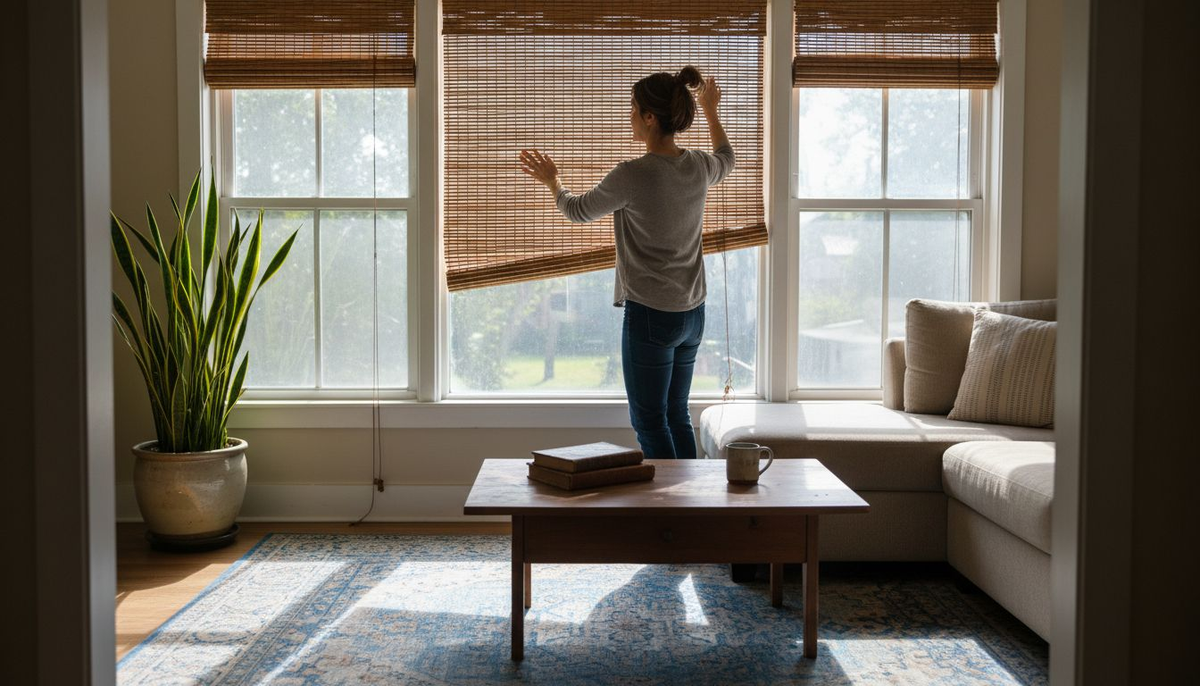
Functionality centers on balancing two competing needs: maintaining privacy and allowing natural light. When closed, the overlapping slats create a barrier that prevents clear views into your space while still permitting soft, diffused light to filter through. This design works particularly well in living rooms, bedrooms, and home offices where you want brightness without sacrificing privacy. The natural bamboo blinds available today come in various slat widths and finishes to suit different aesthetic preferences.
Market trends show strong consumer interest in sustainable materials. The 40% rise in demand for natural fiber window coverings since 2021 reflects a broader shift toward eco-conscious home improvement. Homeowners and decorators increasingly recognize that bamboo blinds offer a triple benefit: they look beautiful, function effectively, and align with environmental values. This combination explains why bamboo has moved from niche status to mainstream appeal in the window treatment market.
Sustainability and environmental benefits
Bamboo stands out as one of the most renewable materials available for home products. While oak or maple trees require 20 to 50 years to reach harvest maturity, bamboo achieves full growth in just 3 to 5 years. This rapid regeneration means bamboo forests can be harvested repeatedly without long-term depletion, creating a sustainable supply chain that hardwood forests cannot match.
The carbon footprint comparison favors bamboo significantly. Manufacturing bamboo blinds produces fewer greenhouse gas emissions than creating vinyl blinds from petroleum-based plastics or harvesting slow-growth hardwoods. Bamboo plants also absorb more carbon dioxide during growth than most trees, further offsetting environmental impact. When you choose bamboo over synthetic alternatives, you’re selecting a material that actively contributes to carbon reduction rather than adding to atmospheric pollution.
Consumer behavior reflects this environmental awareness. The 40% increase in natural fiber window covering demand since 2021 demonstrates that sustainability has moved from optional feature to purchasing priority. Homeowners now actively seek products that reduce environmental harm without compromising style or function. This trend aligns with broader green building standards that prioritize renewable materials in residential construction and renovation.
Key sustainability advantages include:
- Renewable resource that regrows quickly without replanting
- Lower manufacturing energy requirements than synthetic materials
- Biodegradable at end of life, reducing landfill waste
- Minimal chemical processing compared to treated wood or vinyl
- Supports sustainable forestry practices in producing regions
Bamboo blinds represent more than a design choice. They signal a commitment to environmental responsibility that extends beyond your home to global resource management.
For those exploring sustainable window treatments, privacy bamboo shades offer practical guidance on selecting options that balance ecological impact with functional performance. Understanding these environmental benefits helps you make informed decisions that support both your home aesthetic and broader sustainability goals. Additional context on environmentally friendly blinds can deepen your knowledge of how different materials compare across environmental metrics.
Privacy and light filtering performance
Bamboo blinds excel at creating visual barriers without plunging rooms into darkness. The horizontal slat design allows you to adjust how much light enters while maintaining privacy from outside observers. When fully lowered, the overlapping bamboo pieces prevent clear sightlines into your space, protecting your activities from street view or neighbor visibility. Yet the natural gaps between slats permit soft, diffused light to filter through, creating a warm glow rather than harsh shadows.
This light diffusion reduces glare on screens and reflective surfaces, making bamboo blinds particularly valuable in home offices or media rooms. The natural texture of bamboo scatters incoming sunlight, spreading it evenly across the room instead of creating concentrated bright spots. This effect maintains comfortable ambient lighting throughout the day without requiring you to close blinds completely and rely on artificial lighting.
UV protection represents another significant performance feature. Bamboo blinds block over 80% of harmful ultraviolet rays that fade furniture, artwork, and flooring. This protection extends the life of your interior investments while reducing skin exposure to UV radiation during peak sunlight hours. The natural composition of bamboo provides inherent UV resistance that synthetic materials often require chemical treatments to achieve.
Privacy levels vary by installation height and surrounding environment:
- Ground floor windows benefit from maximum privacy settings
- Upper floor installations can use lighter filtering for more natural light
- Windows facing busy streets need tighter slat spacing
- Homes with significant setback from roads can opt for wider gaps
Pro Tip: Adjust your bamboo blinds to the half-closed position during morning and evening hours when low sun angles create the most privacy challenges. This simple adjustment maintains your view of the outdoors while preventing passersby from seeing inside.
The balance between privacy and natural light makes bamboo blinds versatile across different rooms. Bedrooms benefit from complete privacy with moderate light filtering, while living spaces can emphasize brightness with partial closure. Understanding these performance characteristics helps you set realistic expectations and optimize blind positioning for your specific needs. For detailed privacy considerations, explore privacy bamboo shades to match your home’s unique requirements.
Energy efficiency advantages
Bamboo blinds function as thermal barriers that reduce heat transfer through windows, one of the largest sources of energy loss in homes. During summer months, closed bamboo blinds can reduce heat gain by up to 25%, keeping interior spaces cooler and reducing air conditioning demand. The natural insulating properties of bamboo combined with the air gaps between slats create a buffer zone that slows heat movement.

Winter performance matters equally. When closed at night, bamboo blinds trap a layer of still air between the window glass and the interior space. This air pocket acts as insulation, reducing heat loss through single-pane or older double-pane windows. The result is lower heating costs and more consistent indoor temperatures throughout cold months.
Comparison across common blind materials reveals bamboo’s competitive advantage:
| Material | Summer Heat Reduction | Winter Insulation | Sustainability Score |
|---|---|---|---|
| Bamboo | 20-25% | Moderate | High |
| Vinyl | 15-20% | Low | Low |
| Wood | 18-22% | Moderate | Medium |
| Fabric Roller | 10-15% | Low | Medium |
The energy savings translate directly to lower utility bills. A typical home with bamboo blinds on south-facing windows can reduce cooling costs by 12 to 18% during peak summer months compared to uncovered windows. These savings compound over years, offsetting the initial blind purchase cost while providing ongoing financial benefits.
Pro Tip: Maximize energy efficiency by pairing bamboo blinds with insulated cellular liners or installing them in conjunction with curtains. This layered approach creates multiple thermal barriers that further reduce heat transfer and can increase energy savings to 30% or more.
The combination of natural material properties and smart design makes bamboo blinds an effective tool for managing home energy consumption. Unlike purely decorative window treatments, these blinds actively contribute to climate control and cost reduction. Understanding their thermal performance helps you appreciate the full value proposition beyond aesthetics and privacy benefits.
Customization and style options
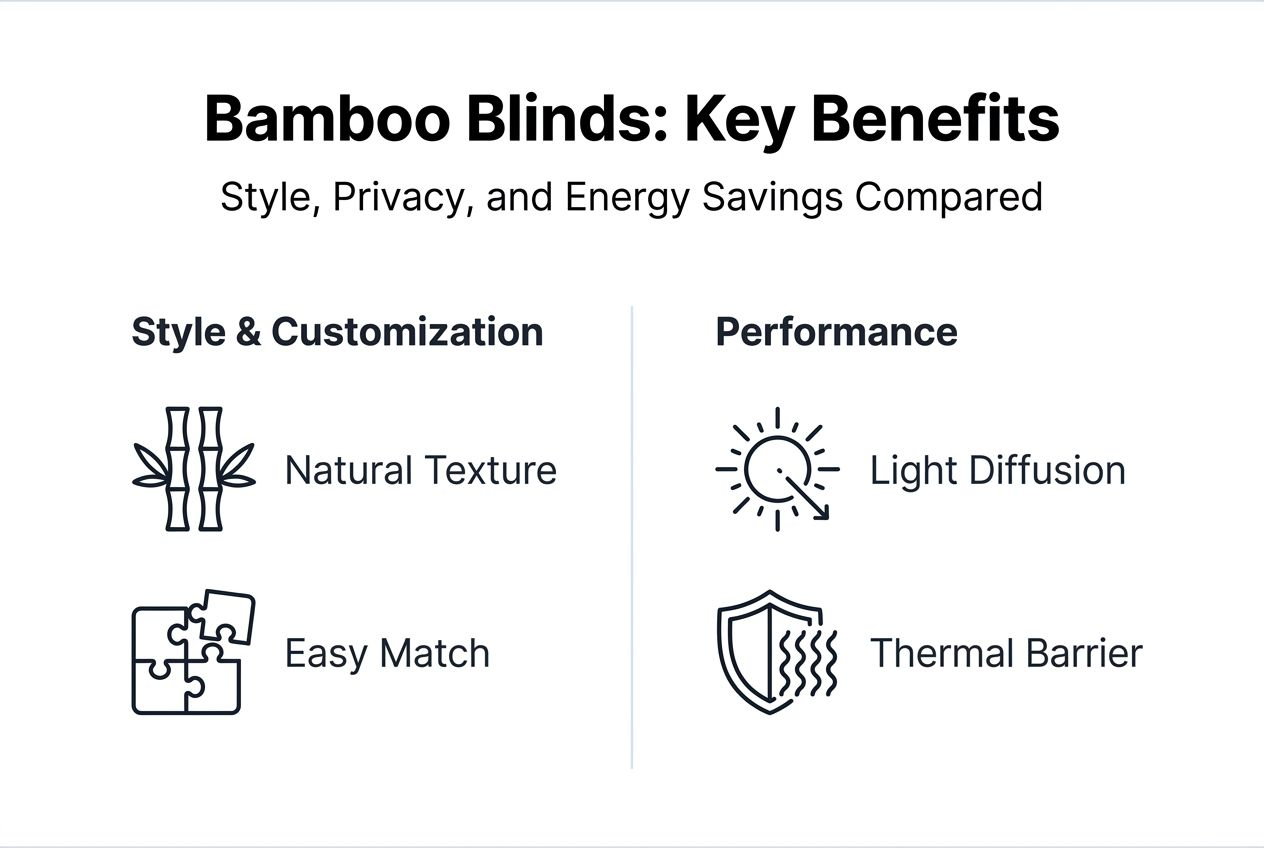
Bamboo blinds come in extensive customization options that allow precise matching to your interior design vision. Slat width represents the first key choice, typically ranging from narrow quarter-inch reeds to wide two-inch slats. Narrow slats create a tighter weave with more uniform appearance and enhanced privacy, while wider slats emphasize the natural bamboo texture and allow more light filtration.
Finish options span natural tones from honey blonde to deep espresso, achieved through staining processes that enhance or darken the bamboo’s inherent color. Natural finishes showcase the raw beauty of bamboo grain and color variation, creating an organic look that pairs well with neutral palettes. Darker stains add sophistication and work beautifully in contemporary or traditional settings where richer tones complement existing furniture.
Mounting styles affect both function and appearance:
- Inside mount sits within the window frame for a clean, built-in look
- Outside mount covers the entire window frame and surrounding wall
- Cordless operation eliminates dangling cords for child safety and cleaner aesthetics
- Motorized systems enable remote control and smart home integration
Design compatibility extends across multiple interior styles. Rustic and farmhouse aesthetics benefit from natural bamboo finishes that emphasize organic materials and textures. Modern minimalist spaces use darker stains with clean lines to create sophisticated focal points without visual clutter. Coastal and tropical themes naturally incorporate bamboo’s inherent beachy feel, while eclectic designs mix bamboo with contrasting materials for dynamic visual interest.
Pro Tip: Order free swatches to see actual bamboo color and texture in your home lighting before committing to full-size blinds. Natural materials vary significantly in appearance under different light conditions, and swatches eliminate the guesswork from color selection.
Customization extends to operational features as well. Top down bottom up bamboo shades allow light entry from the top while maintaining lower privacy, perfect for street-level rooms. For ultimate convenience, premium motorized bamboo blinds integrate with home automation systems for scheduled adjustments and voice control. These options transform bamboo blinds from simple window coverings into sophisticated elements of your home’s overall design and technology ecosystem.
Maintenance and durability considerations
Bamboo blinds require minimal maintenance to retain their appearance and function over years of daily use. Regular cleaning involves simple dusting with a soft cloth or vacuum brush attachment to remove accumulated particles. This weekly routine prevents buildup that can dull the finish or settle into the spaces between slats. For deeper cleaning, a slightly damp cloth with mild soap removes fingerprints, cooking residue, or other marks without damaging the bamboo surface.
Durability stems from bamboo’s natural resistance to warping and splitting. Unlike solid wood blinds that can twist or crack in fluctuating humidity, bamboo’s fibrous structure allows slight expansion and contraction without structural damage. This characteristic makes bamboo blinds particularly suitable for kitchens, bathrooms, and other high-moisture environments where traditional wood blinds would deteriorate quickly.
To maximize blind lifespan and maintain optimal performance:
- Avoid excessive moisture exposure by ventilating humid rooms properly and wiping spills immediately.
- Keep blinds raised during window cleaning to prevent water damage from spray and drips.
- Adjust blinds gently rather than forcing stuck mechanisms, which can stress mounting hardware.
- Inspect cord systems or motorized components annually for wear and replace damaged parts promptly.
- Apply furniture polish sparingly to maintain sheen without creating sticky residue that attracts dust.
- Rotate blind positions periodically if only certain sections receive direct sunlight to ensure even aging.
Common damage sources include prolonged direct water contact, which can cause staining or mildew growth, and mechanical stress from improper operation. Prevention focuses on mindful use rather than intensive maintenance routines. Unlike fabric blinds that require professional cleaning or delicate synthetic materials that scratch easily, bamboo tolerates normal household activity without special precautions.
The natural aging process adds character rather than diminishing appearance. Bamboo develops a subtle patina over time as exposure to light and air gradually deepens its color. This evolution creates a lived-in warmth that enhances rather than detracts from the blind’s aesthetic appeal. Proper care ensures this natural aging occurs evenly and gracefully rather than resulting in spotty discoloration or structural weakness.
Common misconceptions about bamboo privacy blinds
Several persistent myths discourage homeowners from considering bamboo blinds despite their proven performance. Addressing these misconceptions helps you make decisions based on facts rather than outdated assumptions.
The sun protection myth suggests bamboo blinds offer insufficient UV blocking compared to heavy curtains or synthetic blinds. Reality contradicts this belief. Modern bamboo blinds block over 80% of harmful UV rays, protecting your skin, furniture, and flooring from damage. The natural density of bamboo slats creates an effective barrier that rivals or exceeds many synthetic alternatives. Proper installation with appropriate slat overlap ensures comprehensive protection throughout daylight hours.
Fragility concerns stem from bamboo’s association with lightweight garden stakes or decorative items. Window treatment bamboo undergoes different processing that creates substantial durability. The slats resist cracking, warping, and splitting better than many hardwoods, and properly manufactured bamboo blinds withstand years of daily raising, lowering, and adjustment without structural failure. The material’s natural flexibility actually contributes to longevity by allowing slight movement without permanent deformation.
Customization limitations represent another false belief. Some assume bamboo comes only in natural tan colors with limited style options. Modern manufacturing offers extensive choices:
- Multiple stain colors from light honey to deep walnut
- Various slat widths creating different visual textures
- Cordless, corded, and motorized operation systems
- Inside mount, outside mount, and specialty mounting configurations
- Integration with liners and backing for enhanced light control
The maintenance burden myth suggests bamboo requires constant attention or special cleaning products. Actual care demands mirror those of any quality blind: regular dusting and occasional spot cleaning. Bamboo’s natural resistance to moisture and pests reduces maintenance compared to fabric blinds that harbor allergens or wood blinds that require periodic refinishing. Simple routines maintain appearance and function without specialized knowledge or expensive treatments.
Cost assumptions sometimes place bamboo in either the cheap or expensive category without nuance. Quality bamboo blinds occupy the mid to upper price range, offering better value than budget synthetic options while costing less than premium hardwood alternatives. The combination of durability, energy efficiency, and aesthetic appeal creates long-term value that justifies the initial investment through reduced replacement needs and lower utility costs.
Buying and installation guidance
Successful bamboo blind selection starts with accurate window measurement. Incorrect dimensions result in gaps that compromise privacy and energy efficiency or blinds that don’t fit the mounting space at all. For inside mounts, measure the width at top, middle, and bottom of the window frame, using the narrowest measurement to ensure proper fit. Measure height from the top of the frame to the sill in three places, using the longest measurement. Outside mounts require measuring the area you want covered, typically extending several inches beyond the frame on all sides.
Practical steps for ordering and installing bamboo blinds:
- Request free swatches to evaluate color and texture under your home’s specific lighting conditions before ordering.
- Use online design tools like the window treatment design studio to visualize different styles in your space.
- Choose mounting type based on window frame condition and desired aesthetic, considering inside mount for clean lines or outside mount for maximum coverage.
- Select operational system matching your household needs, prioritizing cordless or motorized options for homes with children or pets.
- Verify all measurements twice before finalizing orders, as custom-cut blinds typically cannot be returned or exchanged.
- Review installation instructions thoroughly before beginning, gathering all necessary tools including drill, level, and measuring tape.
- Consider professional installation for large windows, complex configurations, or motorized systems to ensure proper function and warranty compliance.
Common installation mistakes include mounting brackets unevenly, which causes blinds to hang crooked and operate poorly, and placing brackets too close to window edges, which prevents full blind extension. Using appropriate anchors for your wall type prevents bracket failure, particularly important for heavy bamboo blinds on drywall without stud backing. Testing blind operation before completely tightening mounting hardware allows adjustment if alignment issues appear.
The ordering process benefits from planning. Measure all windows requiring blinds at once to maintain consistency in color batch and finish, as natural materials can vary slightly between production runs. Allow two to four weeks for custom manufacturing and shipping, longer during peak home improvement seasons. Budget for potential professional installation costs if you lack confidence in DIY skills or face challenging window configurations.
Quality indicators help distinguish superior bamboo blinds from inferior products. Look for tight, even weaving or slat alignment, smooth finish without rough spots or splinters, and sturdy mounting hardware made from metal rather than plastic. Warranty coverage reflects manufacturer confidence in durability, with reputable brands offering multi-year guarantees on both materials and operational components.
Explore stylish and sustainable bamboo blinds at Value Blinds Direct
You’ve learned how bamboo privacy blinds combine environmental responsibility with practical benefits like energy savings and UV protection. Now it’s time to explore options designed specifically for your home.
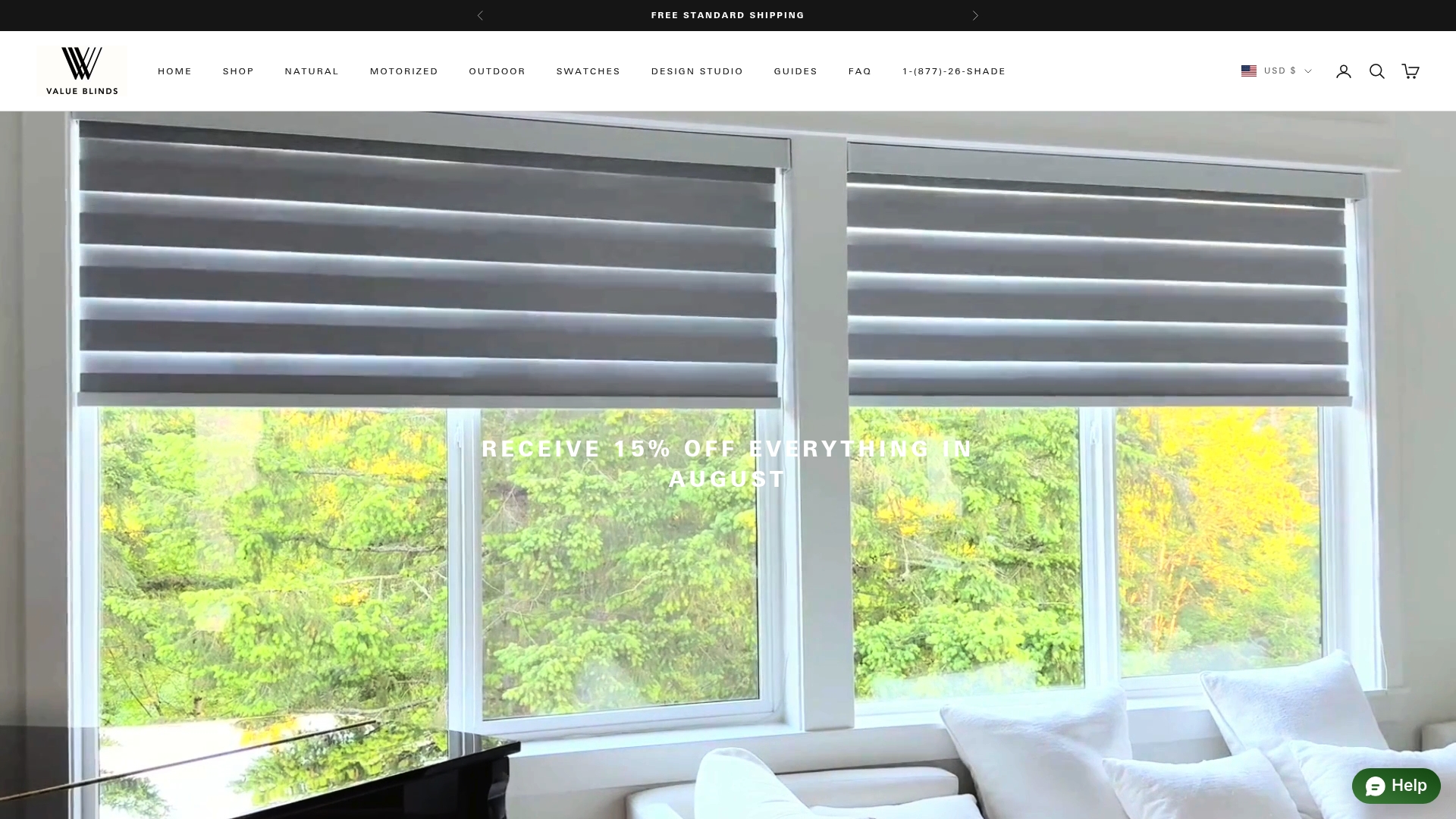
Value Blinds Direct offers premium bamboo blinds that deliver the style and performance discussed throughout this guide. The window treatment design studio lets you visualize different bamboo finishes and styles in your actual room photos, eliminating guesswork from the selection process. Browse the complete natural bamboo blinds collection to compare slat widths, colors, and operational features that match your functional needs and aesthetic preferences. Before committing, order free fabric swatches to evaluate bamboo texture and color under your home’s unique lighting conditions. This hands-on approach ensures your final selection exceeds expectations. Upgrade your windows with sustainable materials that reduce energy costs while enhancing your home’s natural beauty.
Frequently asked questions about bamboo privacy blinds
What makes bamboo blinds more sustainable than wood or plastic?
Bamboo reaches harvest maturity in 3 to 5 years compared to 20 to 50 years for hardwood trees, creating a rapidly renewable resource. Manufacturing bamboo blinds produces lower carbon emissions than petroleum-based vinyl blinds and requires less energy than processing hardwoods. Bamboo also absorbs more carbon dioxide during growth than most tree species, actively contributing to atmospheric carbon reduction.
Can bamboo blinds be used in humid rooms like bathrooms?
Yes, bamboo naturally resists warping and moisture damage better than solid wood, making it suitable for bathrooms and kitchens. The fibrous structure allows slight expansion and contraction without cracking or permanent deformation. Ensure proper ventilation to prevent prolonged direct water contact, and wipe any splashes promptly to maintain optimal appearance and prevent potential mildew growth.
How do bamboo blinds compare in blocking sunlight versus curtains?
Bamboo blinds block over 80% of UV rays while allowing filtered natural light through the gaps between slats, creating soft ambient lighting. Heavy curtains provide complete blackout when closed but eliminate all natural light. Bamboo offers a middle ground for rooms where you want sun protection and privacy without total darkness, though curtains remain superior for bedrooms requiring complete light blocking.
Are bamboo blinds easy to clean without special products?
Regular dusting with a soft cloth or vacuum brush attachment keeps bamboo blinds clean with minimal effort. For deeper cleaning, use a slightly damp cloth with mild soap to remove marks or residue, then dry immediately. No special cleaners or treatments are required, making maintenance simpler and less expensive than fabric blinds that need professional cleaning or delicate synthetic materials requiring specific products.
What are best practices to measure windows for bamboo blinds?
Measure width at the top, middle, and bottom of your window frame, using the narrowest measurement for inside mounts to ensure proper fit. Measure height from frame top to sill in three places, using the longest measurement. For outside mounts, measure the total area you want covered, typically extending 2 to 4 inches beyond the frame on all sides. Always double-check measurements before ordering custom-cut blinds to avoid costly errors.
Recommended
- Privacy Bamboo Shades: Stylish Security for Windows
- Natural Bamboo Blinds - Eco-Friendly Window Treatments for Stylish Homes
- Top Down Bottom Up Bamboo Shades: Light, Privacy, and Style
- Value Blinds

Value Blinds®
Trusted window treatments provider
Value Blinds® is a trusted provider of Greenguard, OEKO-TEX, and FSC-certified window treatments based in Portland, Oregon. Specializing in sustainable, motorized, smart-controlled, and outdoor-ready blinds and shades, the company is built on a foundation of simplified shopping, premium eco-friendly materials, and transparent pricing without the inflated cost.