
Choosing roman shades: ultimate 2026 guide for style and fit
Choosing roman shades can feel overwhelming when you’re faced with endless fabric options, style variations, and precise measurement requirements. Many homeowners make costly mistakes that result in poor fit, inadequate light control, or styles that clash with their décor. This guide walks you through every decision, from fabric selection to installation, ensuring your roman shades enhance both the function and beauty of your space with confidence.
Table of Contents
- Prerequisites And Preparation
- Choosing The Right Fabric For Your Roman Shades
- Customization Options: Styles, Lift Systems, And Linings
- Measuring For A Perfect Fit
- Installation And Setup Of Roman Shades
- Safety And Functional Features To Consider
- Troubleshooting Common Mistakes
- Expected Results And Outcomes After Choosing Roman Shades
- Explore Value Blinds Direct For Your Roman Shade Needs
Key takeaways
| Point | Details |
|---|---|
| Measure precisely | Take width and height measurements at three points each and always use the smallest dimensions to ensure proper fit. |
| Balance fabric properties | Choose between natural and synthetic fabrics based on durability needs, light filtering preferences, and maintenance requirements. |
| Customize for function | Select fold styles, lining types, and lift systems that match your room’s privacy, light control, and convenience needs. |
| Prioritize safety features | Opt for cordless or motorized systems to eliminate strangulation hazards, especially in homes with children or pets. |
| Plan installation carefully | Gather proper tools, follow systematic steps, and expect 30 to 45 minutes per window for DIY installation. |
Prerequisites and preparation
Before you select roman shades, assess your room’s specific lighting and privacy requirements. A bedroom demands blackout capabilities, while a living room might benefit from light filtering fabrics that maintain ambiance. Understanding these needs upfront prevents expensive reorders and disappointing results.
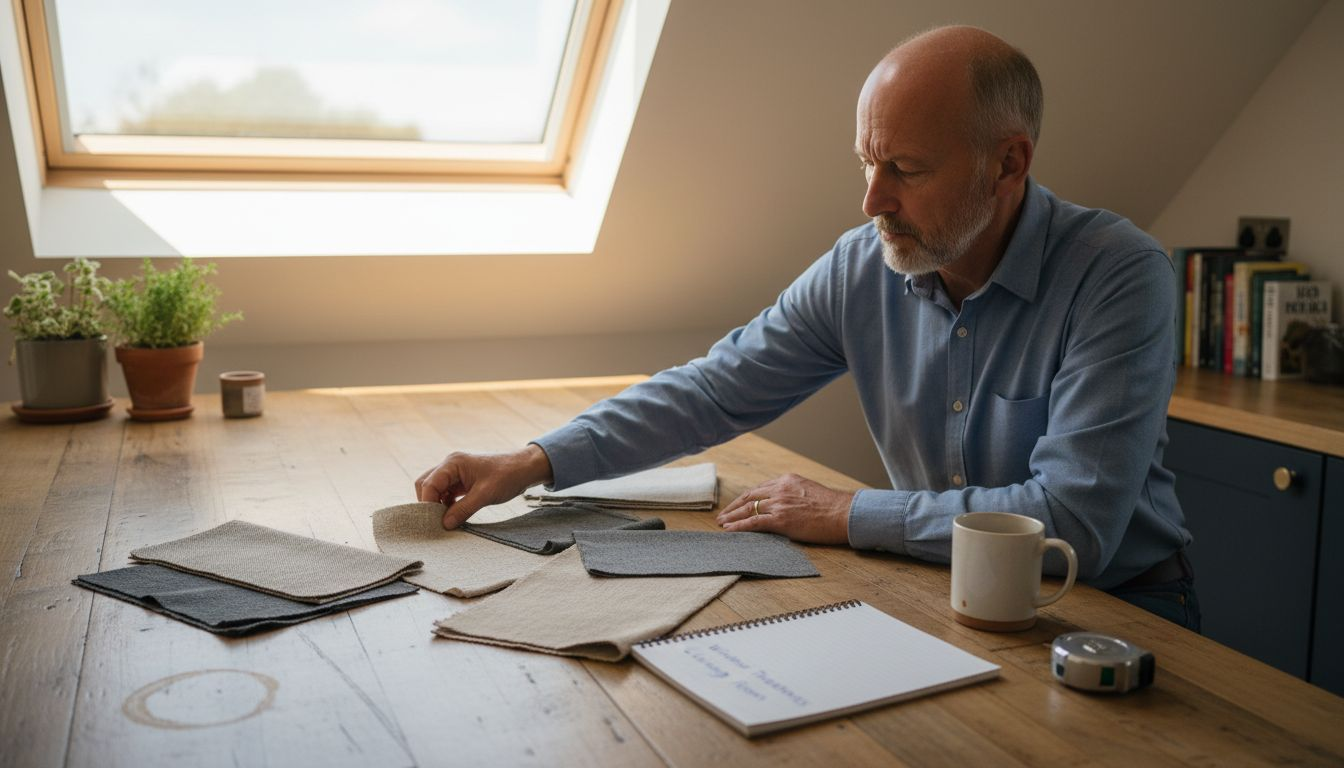
Ordering free fabric swatches helps you preview colors and textures in your actual lighting conditions. Screen images rarely capture true fabric appearance, so physical samples let you test how materials look at different times of day. This step saves you from selecting shades that clash with your existing décor or fail to achieve the desired aesthetic.
Gather essential measuring tools including a metal tape measure or laser measure for accuracy. Check your window condition and note the available mounting space, whether inside the frame or on the wall above. Understanding your how to measure for shades options early prevents installation surprises and helps you choose the right mount type.
Pro Tip: Take photos of your windows from multiple angles and note any obstructions like handles or locks that might interfere with shade operation or mounting hardware placement.
Choosing the right fabric for your roman shades
Fabric selection dramatically impacts both the appearance and performance of your roman shades. Natural fabrics like linen and cotton offer timeless elegance with rich textures that add warmth to any room. They breathe well and drape beautifully, creating soft, organic folds that complement traditional and transitional interiors.
Synthetic fabrics such as polyester and polyester blends deliver superior durability and fade resistance. They withstand direct sunlight without deteriorating, maintain color vibrancy longer, and resist moisture damage in humid environments. Cleaning is simpler with synthetics, as many are machine washable or require only light vacuuming.
| Fabric Type | Durability | Fade Resistance | Cleaning | Light Filtering | Best For |
|---|---|---|---|---|---|
| Linen | Moderate | Low | Dry clean | Medium | Traditional spaces, low sun exposure |
| Cotton | Moderate | Moderate | Machine wash | Medium to high | Casual rooms, moderate light |
| Polyester | High | High | Machine wash | Variable | High traffic areas, sunny rooms |
| Blends | High | High | Easy care | Customizable | Versatile application, busy households |
Fabric density and weave directly affect light filtering and privacy levels. Tightly woven fabrics block more light and provide greater privacy, while loosely woven materials create ambient filtering that softens harsh sunlight. Consider how each room functions throughout the day and choose fabrics that support those activities without compromising comfort or style.
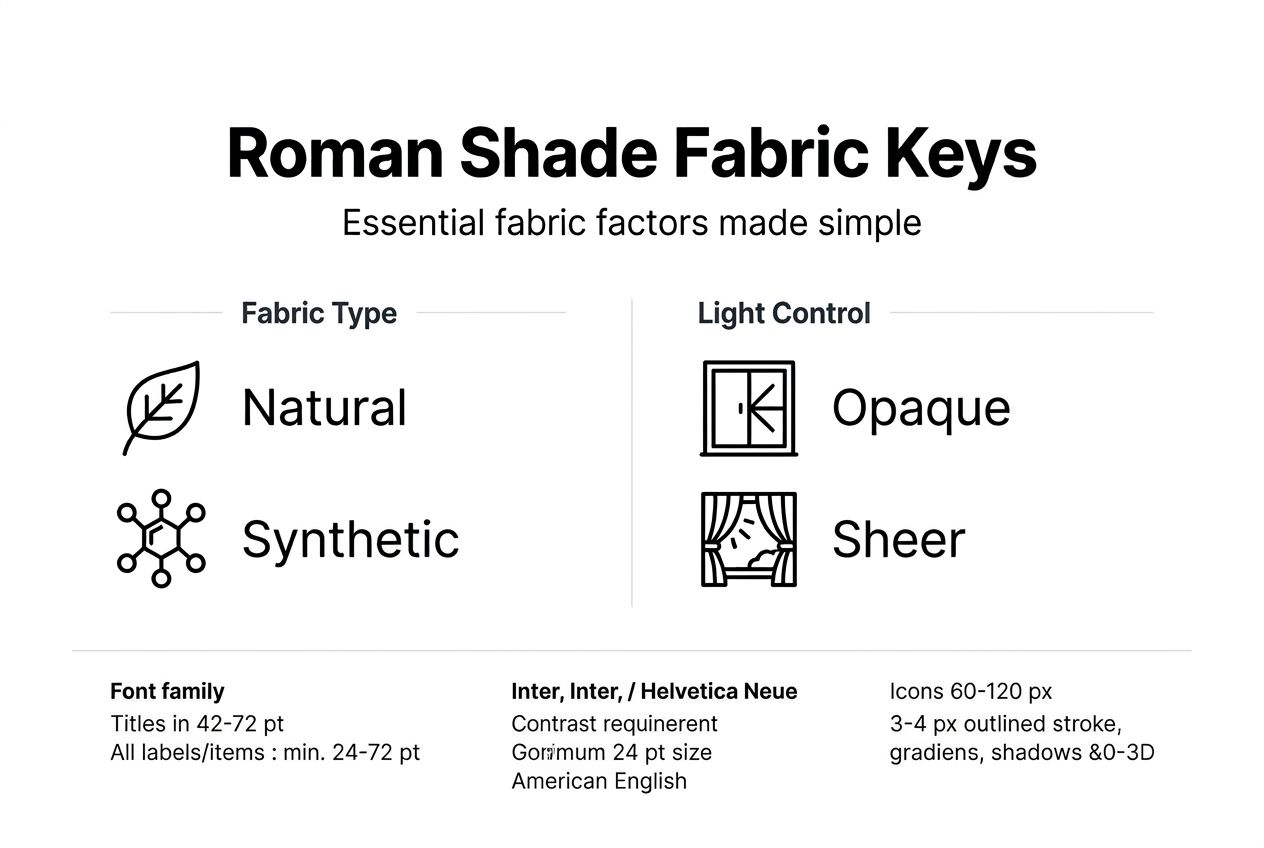
Pro Tip: Natural fabrics pair beautifully with hobbled fold styles that showcase texture, while smooth synthetics work well with flat folds for a sleek, modern appearance.
Customization options: styles, lift systems, and linings
Roman shade fold styles transform the same fabric into distinctly different looks. Flat roman shades create clean, contemporary lines with smooth fabric panels that stack neatly when raised. Hobbled folds introduce soft, cascading pleats that remain visible even when the shade is fully raised, adding dimensional texture and classic elegance.
Lining types expand functionality beyond basic light control. Blackout linings eliminate virtually all light penetration, making them essential for bedrooms, home theaters, or any space requiring complete darkness. Light filtering linings soften harsh sunlight while maintaining daytime privacy, and thermal linings add insulation that reduces energy costs by minimizing heat transfer through windows.
Lift systems range from traditional manual cord and chain pulls to modern cordless and motorized options. Motorized roman shades cost 30 to 50% more but offer significant convenience and precise light control. They integrate seamlessly with smart home systems, allowing you to program schedules or control multiple shades simultaneously from your phone.
- Manual cord lifts provide reliable, cost effective operation with minimal maintenance requirements
- Cordless options eliminate dangling cords while enabling easy raising and lowering with a simple pull
- Motorized systems offer remote control operation, perfect for hard to reach windows or whole home automation
- Continuous loop chains work well for larger, heavier shades that require more lifting power
Evaluate your budget, daily convenience needs, and home technology integration when selecting lift systems. For comprehensive details on automation benefits, explore this motorized roman shades guide that explains installation and smart home compatibility.
Measuring for a perfect fit
Accurate measurements prevent the most common and frustrating roman shade mistakes. Start by deciding between inside mount (fitting within the window frame) and outside mount (covering the entire window and surrounding wall). Inside mounts create a clean, built in look but require adequate frame depth, while outside mounts maximize light blockage and work with any window type.
- Measure the width at the top, middle, and bottom of the window opening or desired coverage area
- Record the smallest width measurement to ensure the shade fits without binding or gaps
- Measure the height on the left side, center, and right side of the window
- Use the smallest height measurement to prevent the shade from extending beyond the window sill
- For inside mounts, verify frame depth is at least 2 inches to accommodate mounting brackets and shade mechanism
- For outside mounts, add 3 to 4 inches to width and height measurements for proper light blockage and aesthetic coverage
- Double check all measurements before ordering and write them down clearly to avoid transcription errors
Small measurement errors multiply into significant fit problems. A shade that’s even half an inch too wide won’t fit inside the frame, while one that’s too narrow creates light gaps on both sides. For detailed measurement techniques and common pitfalls to avoid, review this measuring windows for shades resource.
Pro Tip: Measure in inches rather than feet and inches to reduce calculation errors, and always round down to the nearest eighth of an inch for inside mount precision.
Before finalizing your order, confirm measurements with a second person and verify you’ve noted inside versus outside mount clearly. Proper preparation at this stage saves expensive reorders and ensures your roman shades arrive ready for seamless installation. Additional guidance is available through this window shades installation guide covering measurement verification.
Installation and setup of roman shades
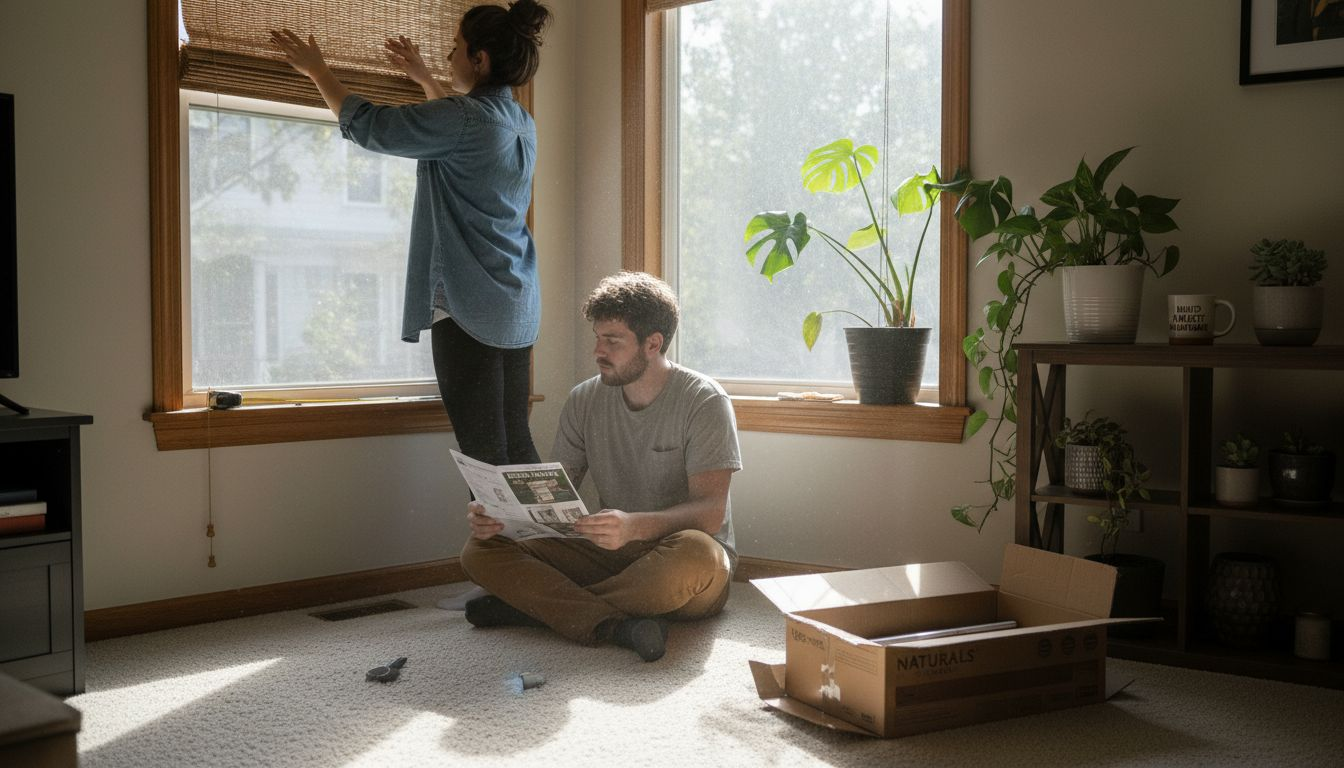
Successful installation requires specific tools and safety awareness. Gather a power drill with appropriate drill bits, a level (laser or bubble), a pencil for marking, a screwdriver, and a step ladder. Wear safety glasses when drilling overhead, and ensure your ladder is stable on level ground to prevent falls during installation.
- Hold mounting brackets in position and mark screw hole locations with a pencil, using a level to ensure perfectly horizontal placement
- Pre drill pilot holes to prevent wood splitting and make screw insertion easier, especially in hardwood frames or trim
- Secure mounting brackets with provided screws, checking that they’re flush against the mounting surface and firmly attached
- Snap or slide the shade headrail into the installed brackets according to manufacturer instructions, confirming it locks into place
- Test the lifting mechanism by raising and lowering the shade several times to verify smooth operation without binding
- Make minor adjustments to bracket position if the shade hangs unevenly or operates roughly
Installing roman shades typically takes 30 to 45 minutes per window for an experienced DIYer with basic tools. First time installers should allow extra time for familiarizing themselves with components and ensuring proper technique. Rushing through installation often leads to crooked shades or stripped screw holes that require repair.
“Always verify your shade operates smoothly before removing packaging materials. Testing immediately after installation allows you to address issues while tools are handy and the process is fresh in your mind.”
For comprehensive installation steps with visual guidance, consult this step by step installation guide that covers various mounting scenarios. Additional resources are available through Home Depot roman shades installation tutorials with troubleshooting tips.
Safety and functional features to consider
Cordless shades eliminate strangulation hazards, making them essential for homes with young children or pets. Traditional corded window treatments pose serious safety risks, but modern cordless mechanisms provide safe operation without compromising convenience. The slight upfront cost increase delivers invaluable peace of mind and meets current safety standards.
Blackout linings offer privacy and superior light control beyond standard fabrics. They’re particularly valuable in bedrooms where complete darkness improves sleep quality, or in home offices where screen glare from windows reduces productivity. Blackout options also enhance home theater experiences by creating true darkness for optimal viewing conditions.
Energy efficient fabrics reduce heating and cooling costs while improving year round comfort. Cellular or honeycomb constructions trap air in pockets that insulate against heat transfer, keeping rooms cooler in summer and warmer in winter. These thermal properties compound over time, delivering measurable utility savings that offset the initial investment.
- Cordless designs provide child safe, pet safe operation with clean aesthetics and simple raising mechanisms
- Motorized options add convenience while eliminating cords entirely, ideal for multi window rooms or hard to reach installations
- UV protective fabrics prevent furniture, flooring, and artwork from fading due to prolonged sun exposure
- Moisture resistant materials work well in bathrooms and kitchens where humidity levels fluctuate throughout the day
- Fire retardant treatments add an extra safety layer, particularly important in commercial spaces or high rise residences
Evaluating safety and functional features during selection prevents regret later. These enhancements protect your family, preserve your furnishings, and maximize the practical value of your roman shades investment.
Troubleshooting common mistakes
Inaccurate measurements create the most frequent and frustrating problems with roman shade orders. Always measure at three points and use the smallest dimension to guarantee fit. Rushing measurements or estimating leads to shades that bind, leave gaps, or don’t fit the mounting space at all.
Incorrect mounting type selection causes installation headaches and poor aesthetics. Inside mounts require sufficient frame depth, typically at least 2 inches, to accommodate hardware and the shade mechanism. Outside mounts need extra width and height coverage to block light effectively and look proportional to the window.
- Verify your window frame has adequate depth before committing to inside mount shades
- Add sufficient overlap measurements for outside mounts to prevent light leakage around edges
- Check for obstructions like window cranks, handles, or protruding trim that interfere with shade operation
- Account for window depth variations by measuring at multiple points rather than assuming uniform dimensions
- Confirm your chosen lift system works with your mount type before ordering
Misaligned hardware causes shades to hang crookedly or operate roughly. Use a quality level during bracket installation and double check horizontal alignment before drilling permanent holes. Even slight misalignment compounds across the shade width, resulting in uneven fabric stacking or binding during raising and lowering.
For additional installation troubleshooting and technique refinement, reference these window shades installation tips covering common pitfalls and their solutions. Addressing these mistakes proactively saves time, money, and frustration.
Expected results and outcomes after choosing roman shades
Properly selected and installed roman shades transform your space within hours. Most DIY installations require 30 to 45 minutes per window, allowing you to complete a single room in an afternoon or tackle your entire home over a weekend. The immediate visual impact refreshes your interior with clean lines and custom fitted elegance.
Functional benchmarks include smooth, effortless operation through the shade’s full range of motion. You should achieve your desired light control, whether complete blackout, gentle filtering, or adjustable levels throughout the day. Safety compliance means cordless or motorized systems operate reliably without creating hazards for children or pets.
- Shades should raise and lower evenly without tilting, binding, or requiring excessive force
- Light blockage matches your selection, with blackout linings eliminating virtually all light penetration
- Privacy levels meet room requirements, preventing visibility from outside during day and night
- Energy efficiency improvements become noticeable as thermal linings reduce heating and cooling costs
- Aesthetic integration enhances your décor with fabrics and styles that complement existing furnishings
User satisfaction stems from confident decision making throughout the selection process. When you understand fabric properties, customize features to match your needs, and install correctly, roman shades deliver lasting value. They elevate your home’s appearance while providing practical benefits that improve daily comfort and functionality.
Expect your roman shades to maintain performance and appearance for years with minimal maintenance. Quality fabrics resist fading and wear, while reliable mechanisms continue operating smoothly through thousands of cycles. The combination of style, function, and durability makes roman shades a smart long term investment in your home.
Explore value blinds direct for your roman shade needs
Now that you understand how to choose and install roman shades perfectly, Value Blinds Direct offers the customization and quality to bring your vision to life. Browse extensive fabric collections, fold styles, and lining options that match your specific light control and aesthetic preferences.
Explore cordless collections for child safe, pet safe window treatments that eliminate dangerous cords while maintaining elegant operation. Motorized cellular shades integrate with smart home systems for convenient whole home control. The window treatment design studio provides personalized assistance to refine your selections and ensure perfect results. Free swatches, expert support, and quality warranties back every purchase, giving you confidence in your investment.
FAQ
What should I consider when choosing fabric for roman shades?
Balance natural fabrics like linen and cotton, which offer classic aesthetics and texture, against synthetic options like polyester that provide superior durability and fade resistance. Consider your room’s sun exposure, how often you’ll clean the shades, and whether light filtering or privacy takes priority. Natural fabrics suit traditional spaces with moderate light, while synthetics excel in high traffic areas with intense sun exposure.
How do I measure windows accurately for roman shades?
Measure width and height at three separate points each, always using the smallest measurement to ensure proper fit without binding. Decide between inside mount, which fits within the window frame for a built in look, or outside mount, which covers the frame and surrounding wall for maximum light blockage. Verify frame depth for inside mounts and add overlap for outside mounts. Detailed techniques are available in this measuring for shades guide.
Are motorized roman shades worth the extra cost?
Motorized options cost 30 to 50% more but deliver significant convenience and precise light control, especially for hard to reach windows or when managing multiple shades simultaneously. They integrate with smart home systems for scheduled operation and remote control from anywhere. If you value automation, have mobility limitations, or want seamless whole home control, motorization justifies the investment. Learn more through this motorized roman shades guide.
How can I ensure safe roman shades in a home with children?
Choose cordless or motorized shades that eliminate cord strangulation hazards entirely, meeting current safety standards for homes with children or pets. Verify products carry safety certifications and follow installation instructions precisely to ensure mechanisms operate correctly. Cordless lift systems provide simple, safe operation with a gentle pull, while motorized options remove all manual cords for complete peace of mind.