
Custom Window Shades and Blinds: Enhancing Modern Homes
Finding window shades that reflect personal style while improving comfort can feel daunting for many urban homeowners. With over 40 percent of American city households seeking energy-efficient updates, custom window treatments have become essential for modern living spaces. This guide explains how tailored blinds and shades offer unique solutions for privacy, light control, and design flexibility, helping you create a home that stands out in any global city.
Table of Contents
- Custom Window Shades and Blinds Defined
- Types and Styles for Every Space
- Key Features and Functional Benefits
- Customization Options and Smart Integration
- Cost Factors and Common Pitfalls
- Comparisons With Ready-Made Alternatives
Key Takeaways
| Point | Details |
|---|---|
| Customized Solutions | Custom window treatments offer unique personalization to fit individual design and functional needs, outperforming standard options. |
| Technological Advancements | Smart integration capabilities allow remote control and energy monitoring, enhancing convenience and efficiency. |
| Value of Professional Consultation | Investing in professional measurements and consultation helps avoid costly mistakes and ensures optimal fit and function. |
| Long-term Financial Considerations | While initial costs for custom treatments may be higher, energy savings and durability can provide significant long-term value. |
Custom Window Shades and Blinds Defined
Window treatments are more than simple coverings - they are sophisticated design elements that transform interior spaces by controlling light, ensuring privacy, and enhancing aesthetic appeal. Window blinds represent a dynamic category of window coverings composed of adjustable slats crafted from materials like wood, metal, and plastic, offering precise light management and architectural elegance.
Unlike traditional curtains, custom window shades and blinds provide homeowners unprecedented control over their interior environments. These versatile window treatments come in multiple configurations - from horizontal to vertical orientations - allowing precise customization. Modern designs range from sleek roller shades to classic wooden blinds, each delivering unique functional and decorative benefits. Window shade styles can dramatically alter room ambiance while serving practical purposes like temperature regulation and light filtering.
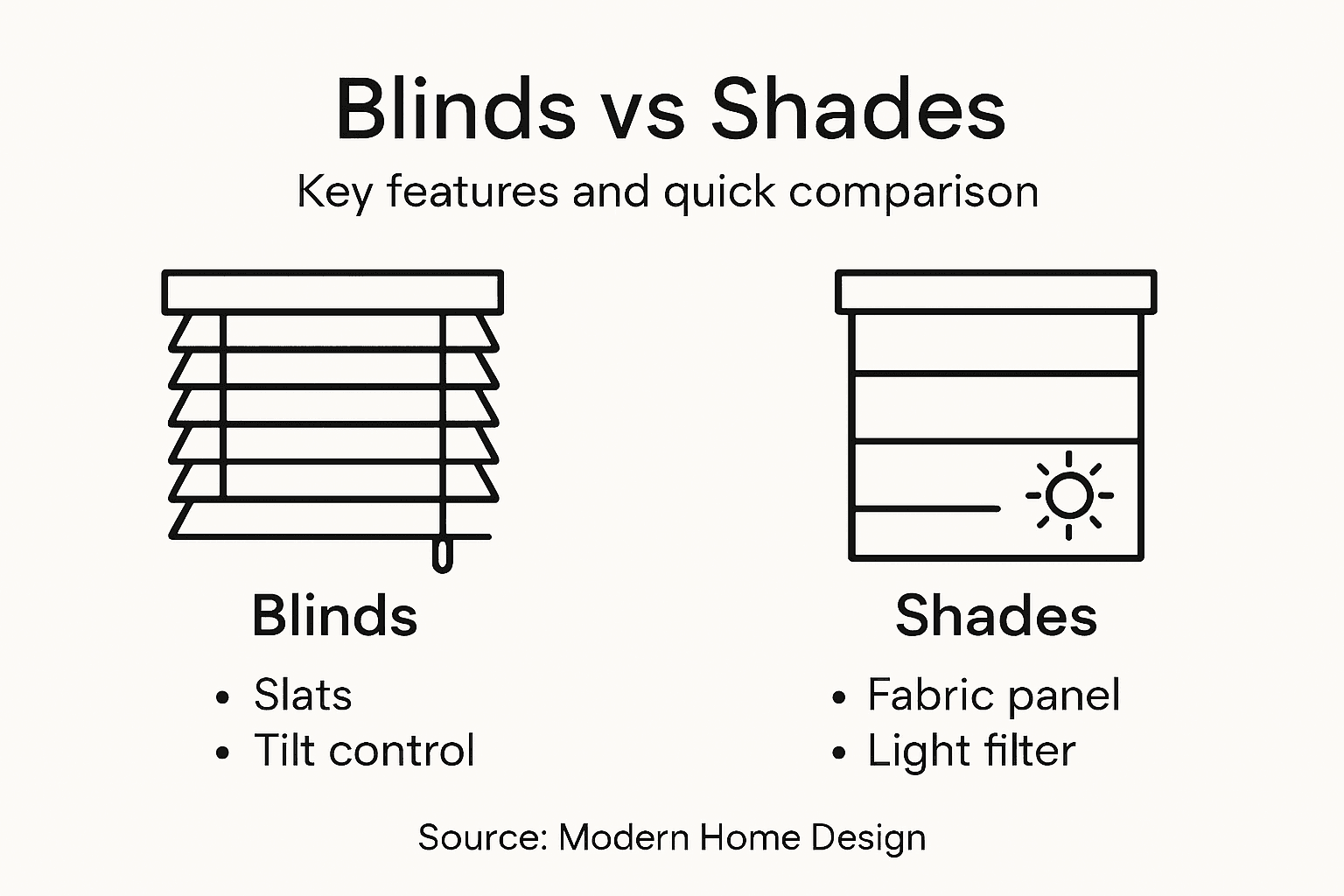
The fundamental difference between blinds and shades lies in their construction. Blinds feature independent horizontal or vertical slats that can be tilted and adjusted, whereas shades are constructed from continuous fabric panels that roll, fold, or stack. This structural variation enables different light control and aesthetic approaches, allowing homeowners to select window treatments matching their specific design preferences and functional requirements.
Here’s a comparison of blind and shade construction and characteristics for quick reference:
| Aspect | Blinds | Shades |
|---|---|---|
| Main Structure | Adjustable slats | Continuous fabric panels |
| Light Control | Precise with slat adjustment | Varies by fabric type |
| Style Variety | Wood, metal, vinyl | Roller, Roman, cellular |
| Design Effect | Architectural, tailored look | Soft, seamless appearance |
Pro tip: When selecting window treatments, measure your windows precisely and consider both aesthetic compatibility and practical functionality to achieve optimal results.
Types and Styles for Every Space
Custom window treatments are not one-size-fits-all solutions but nuanced design elements that adapt to unique architectural spaces and personal aesthetic preferences. Window treatment styles encompass a remarkable diversity of designs, ranging from minimalist roller shades to elaborate Roman blinds, each offering distinctive visual and functional characteristics.
Different rooms demand different window covering approaches. Living spaces might benefit from light-filtering roller shades that create soft, diffused illumination, while bedrooms require blackout options for optimal sleep environments. Home offices frequently utilize venetian blinds for precise light control, enabling professionals to manage glare on computer screens. Kitchen and bathroom installations typically call for moisture-resistant materials like vinyl or synthetic fabrics that withstand humidity and facilitate easy cleaning.
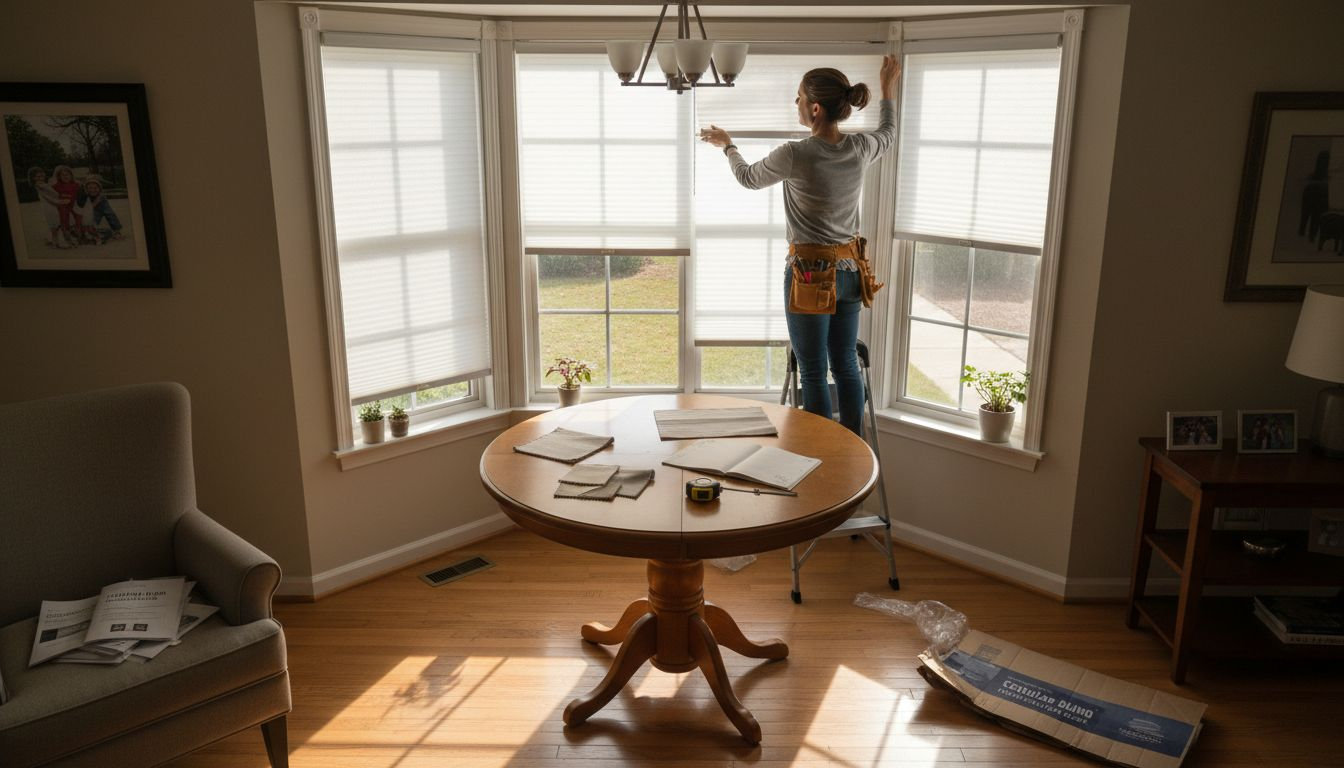
The selection process involves carefully balancing practical requirements with design aesthetics. Modern window treatments integrate advanced features like cordless mechanisms, motorized controls, and energy-efficient materials. Homeowners can choose from an array of textures, colors, and patterns that complement existing interior design schemes - transforming window coverings from mere functional elements into statement design pieces that enhance overall room composition.
Pro tip: Consider sampling multiple fabric swatches and testing them in your actual room lighting to ensure the perfect visual and functional match for your specific space.
Key Features and Functional Benefits
Custom window treatments offer far more than aesthetic appeal - they represent sophisticated solutions for environmental control, privacy management, and energy efficiency. Window blinds and shades provide homeowners with unprecedented control over interior comfort, delivering multiple functional benefits that extend well beyond traditional window coverings.
The core functional advantages of modern window treatments encompass several critical dimensions. Light management remains paramount, with advanced designs enabling precise illumination control through adjustable slat angles and light-filtering fabrics. Thermal insulation represents another significant benefit, with cellular and honeycomb shades creating air pockets that minimize heat transfer, potentially reducing heating and cooling expenses by up to 20%. Privacy configurations range from transparent to complete blackout, allowing residents to customize their visual boundaries dynamically.
Technological innovations have transformed window treatments into intelligent home integration points. Motorized options with smartphone connectivity enable remote operation, scheduling, and even integration with smart home ecosystems. Energy-efficient materials like reflective fabrics and thermal linings actively contribute to temperature regulation, while cordless and child-safe mechanisms address safety concerns for families with young children. The cumulative result is a window treatment that functions as a multifaceted home enhancement tool.
Pro tip: Invest in window treatments with multiple functional layers, prioritizing designs that combine aesthetic appeal with energy efficiency and smart technology capabilities.
Customization Options and Smart Integration
The evolution of window treatments has transformed these once-simple coverings into sophisticated, intelligent home systems that offer unprecedented personalization and technological integration. Smart window shades now represent cutting-edge home automation solutions, enabling homeowners to precisely control their interior environments through advanced technological features.
Customization options have expanded dramatically, allowing individuals to tailor window treatments to their exact specifications. Homeowners can now select from an extensive range of materials, colors, and textures, with precise measurements ensuring perfect fit and function. Size customization extends beyond traditional dimensions, with options for specialty window shapes like arched, circular, and irregularly sized openings. Advanced fabric technologies now offer additional customization through properties like UV resistance, thermal regulation, and light-filtering capabilities.
Smart home integration represents the most transformative aspect of modern window treatments. Voice-activated controls compatible with platforms like Alexa and Google Home enable seamless operation, while smartphone apps provide remote management and scheduling capabilities. Some advanced systems incorporate adaptive learning technologies that automatically adjust based on sunlight intensity, room temperature, and personal preferences. Energy monitoring features can track and optimize home energy consumption, providing real-time insights into environmental impact and potential cost savings.
Pro tip: When exploring smart window treatment options, prioritize systems with open-protocol compatibility to ensure long-term integration with emerging smart home technologies.
Cost Factors and Common Pitfalls
Understanding the financial landscape of custom window treatments requires careful consideration of multiple interconnected variables. Window treatment costs encompass far more than initial purchase price, involving complex calculations of long-term value, energy efficiency, and installation expenses that can significantly impact overall investment.
Window treatment pricing varies dramatically based on several critical factors. Material selection represents the primary cost driver, with options ranging from budget-friendly vinyl to premium wooden and motorized designs. Basic roller shades might start around $50 per window, while custom, high-end motorized treatments can exceed $500 per window. Size complexity, fabric quality, and additional technological features like smart home integration exponentially increase pricing. Homeowners should anticipate additional expenses for professional measurement, custom cutting, and installation, which can add 20-40% to the total project cost.
Common financial pitfalls include underestimating total project expenses and overlooking long-term value considerations. Cheaper window treatments often lack durability, requiring more frequent replacements and potentially higher cumulative costs. Energy-efficient options with superior insulation properties might seem expensive initially but can generate significant utility savings over time. Installation mistakes like improper measurements or unsuitable material selection can lead to costly replacements, making professional consultation and precise planning crucial for budget-conscious consumers.
The following table summarizes cost factors and common pitfalls in custom window treatments:
| Cost Factor | Impact on Pricing | Pitfall to Avoid |
|---|---|---|
| Material quality | Premium raises costs | Cheap options lack durability |
| Technology integration | Motorized adds expense | Overlooking long-term value |
| Size customizations | Complex shapes cost more | Poor measurements increase cost |
| Installation | Professional adds 20-40% | DIY errors lead to replacement |
Pro tip: Calculate your total cost of ownership by considering not just initial purchase price, but potential energy savings, durability, and replacement frequency.
Comparisons With Ready-Made Alternatives
Custom window treatments represent a significant upgrade from traditional ready-made solutions, offering homeowners unprecedented levels of personalization and functionality. While off-the-shelf options might seem convenient and budget-friendly, they often fall short in addressing specific architectural nuances and individual design requirements that custom treatments effortlessly resolve.
Ready-made alternatives typically present several inherent limitations. Standard sizes restrict installation possibilities, often resulting in ill-fitting window coverings that compromise both aesthetic appeal and functional performance. Mass-produced options frequently lack advanced features like precise light control, energy efficiency, and smart home integration. Premade blinds and shades are generally constructed using lower-grade materials, resulting in reduced durability and shorter lifespans compared to meticulously crafted custom solutions that can be tailored to withstand specific environmental conditions and usage patterns.
The comparative value proposition becomes even more compelling when considering long-term benefits. Custom window treatments allow precise measurements that eliminate gaps, ensuring superior insulation and potential energy savings. Homeowners can select specialized fabrics resistant to UV degradation, moisture, and temperature fluctuations - options rarely available in standardized product lines. Additionally, custom treatments offer design flexibility that transforms window coverings from mere functional elements into integral components of interior design, enabling seamless integration with existing decor and architectural characteristics.
Pro tip: Invest time in professional measurements and consultation to understand how custom window treatments can provide superior value compared to generic, one-size-fits-all alternatives.
Elevate Your Home with Custom Window Shades and Blinds
Struggling to find window treatments that perfectly balance style, light control, and energy efficiency Custom window shades and blinds are the solution you need to transform your living spaces with precision and elegance. At Value Blinds, we understand the challenge of blending functionality with design This is why our extensive collection features premium materials, cordless and motorized options, and energy-saving fabrics that meet your unique needs and elevate your home’s comfort and look.
Discover the latest trends and innovations by exploring our New Arrivals collection.
Take control of your home’s atmosphere today by choosing tailored window treatments that promise durability, ease of installation, and smart integration With expert guidance, free swatches, and flexible shipping all available at Value Blinds, upgrading your home has never been easier. Visit us now and start designing your perfect window solution.
Frequently Asked Questions
What are custom window shades and blinds?
Custom window shades and blinds are personalized window treatments designed to control light, ensure privacy, and enhance the aesthetics of your home. They come in various materials, styles, and configurations, offering precise customization for different interior environments.
How do I choose between blinds and shades for my home?
Blinds have adjustable slats that allow for precise light control, while shades are made from continuous fabric panels, offering a softer appearance and varying degrees of light filtering. The choice depends on your design preferences and functional requirements, such as privacy and thermal insulation.
What are the benefits of motorized window treatments?
Motorized window treatments offer convenience through remote operation, scheduling, and integration with smart home systems. They can enhance energy efficiency, provide precise light control, and improve safety by eliminating cords, making them ideal for homes with children or pets.
How do I ensure the right fit for custom window treatments?
To ensure a perfect fit, it’s crucial to measure your windows accurately. Consider hiring a professional for consultations and measurements. Custom treatments can also accommodate unique window shapes and sizes, providing a tailored solution that enhances both aesthetics and functionality.
Recommended
- Kinds of Window Shades: Enhancing Style and Comfort
- Smart Home Window Shading: Complete Guide
- 7 Best Home Improvement Projects for Stunning Results
- Understanding What Blinds Are in Style for Your Home
- Windows | Buffalo Roofing & Exteriors | San Antonio to Corpus Christi, TX
- Bricks, Mortar & Maintenance: Materials for Durability - Plan My Extension