
How to select outdoor shades for style and efficiency
Selecting outdoor shades that balance aesthetics with functionality can feel overwhelming. You want protection from harsh UV rays and heat while maintaining your home’s visual appeal. Many homeowners struggle to navigate fabric types, color choices, and operational features when choosing outdoor shades. This guide walks you through the essential factors for selecting outdoor shades that enhance both your home’s style and energy efficiency. You’ll learn how fabric openness affects UV protection, which materials suit different outdoor spaces, and how motorization can simplify daily use. By understanding these key elements, you’ll make informed decisions that deliver lasting comfort and value.
Table of Contents
- Key takeaways
- Understanding fabric openness and color effects
- Choosing the right type and material of outdoor shades
- Assessing motorized vs. manual operations and installation considerations
- Maintaining and caring for outdoor shades for durability and performance
- Explore stylish outdoor shades at Value Blinds
- Frequently asked questions
Key Takeaways
| Point | Details |
|---|---|
| Fabric openness effects | The openness percentage dictates UV protection and heat reduction, with lower openness blocking more UV rays and lowering temperatures. |
| Color and heat | Light colors reflect heat and help keep spaces cooler while dark colors absorb heat and influence appearance. |
| Motorization benefits | Motorized shades offer convenient automatic control and precise light management to fit sun angles and schedules. |
| Durability and maintenance | Durability and maintenance are critical for long term satisfaction, so choose fade resistant fabrics, mildew resistance, and easy care materials. |
Understanding fabric openness and color effects
Fabric openness percentage directly determines how much UV radiation passes through your outdoor shades. This measurement represents the ratio of open space to woven material in the fabric. 1-5% openness blocks 95-99% UV rays, providing maximum protection for you and your furniture. Higher openness percentages like 10-14% allow more light through while still offering moderate UV protection.
The relationship between openness and temperature control is significant. Shades with 1% openness block 99% of UV rays and provide 80% shading, which can reduce outdoor temperatures by 10-15°F. This dramatic temperature drop makes covered patios and decks far more comfortable during peak sun hours. For spaces where you want filtered natural light with strong protection, 3-5% openness strikes an ideal balance.
Color selection amplifies or diminishes these protective effects. Light colored fabrics reflect solar heat rather than absorbing it, keeping the area beneath your shades cooler. White, beige, and light gray shades work particularly well in hot climates where heat reflection is a priority. Dark colors absorb more heat but can create richer visual contrast and complement certain architectural styles.
Pro Tip: Combine low openness fabrics with light colors for maximum heat rejection. This pairing delivers the strongest UV protection while keeping your outdoor space significantly cooler than surrounding areas.
When evaluating living room shade options for adjacent indoor spaces, consider how your outdoor shade choices affect interior comfort. Outdoor shades that block heat before it reaches windows reduce cooling costs and improve overall home energy efficiency. The fabric openness you select creates a direct impact on how much solar heat gain enters your home through nearby windows and doors.
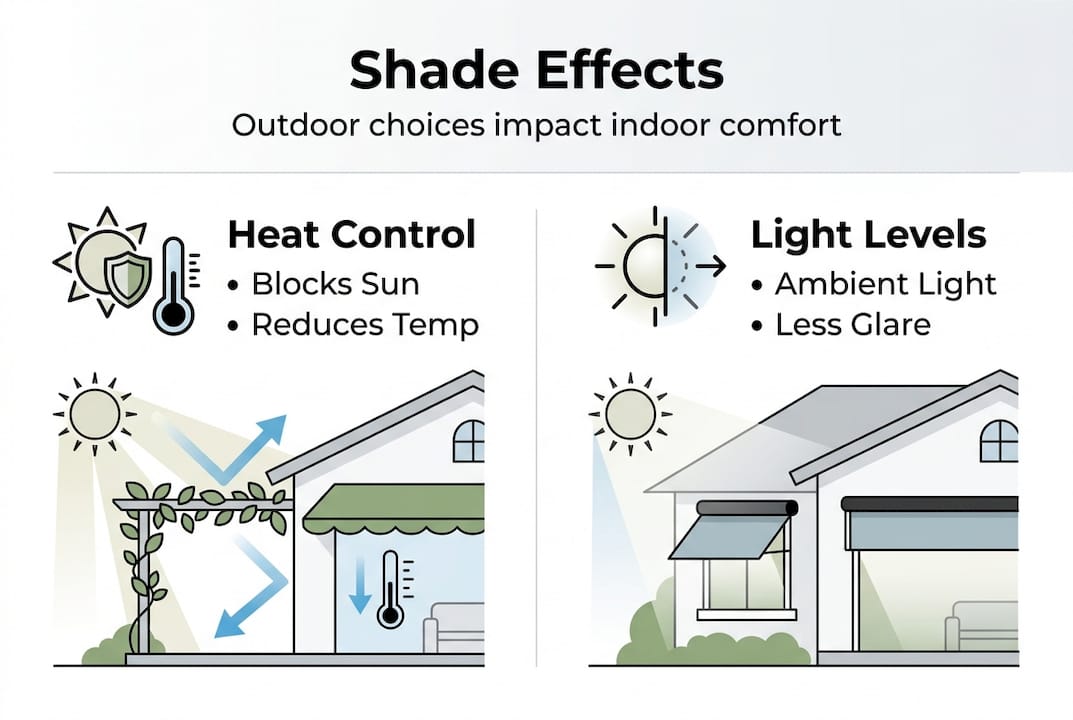
Different outdoor activities require different light levels. For dining areas where you want ambient light during evening meals, 5-10% openness provides visibility while maintaining UV protection during earlier hours. For pool areas where glare reduction matters most, stick with 1-3% openness to minimize reflected light from water surfaces.
Choosing the right type and material of outdoor shades
Outdoor shade types vary significantly in appearance, operation, and suitability for different spaces. Roller shades offer clean lines and simple operation, making them popular for modern homes. Solar screens provide excellent UV protection while maintaining outward visibility. Retractable awnings give you flexibility to expose or cover areas based on weather conditions and time of day.
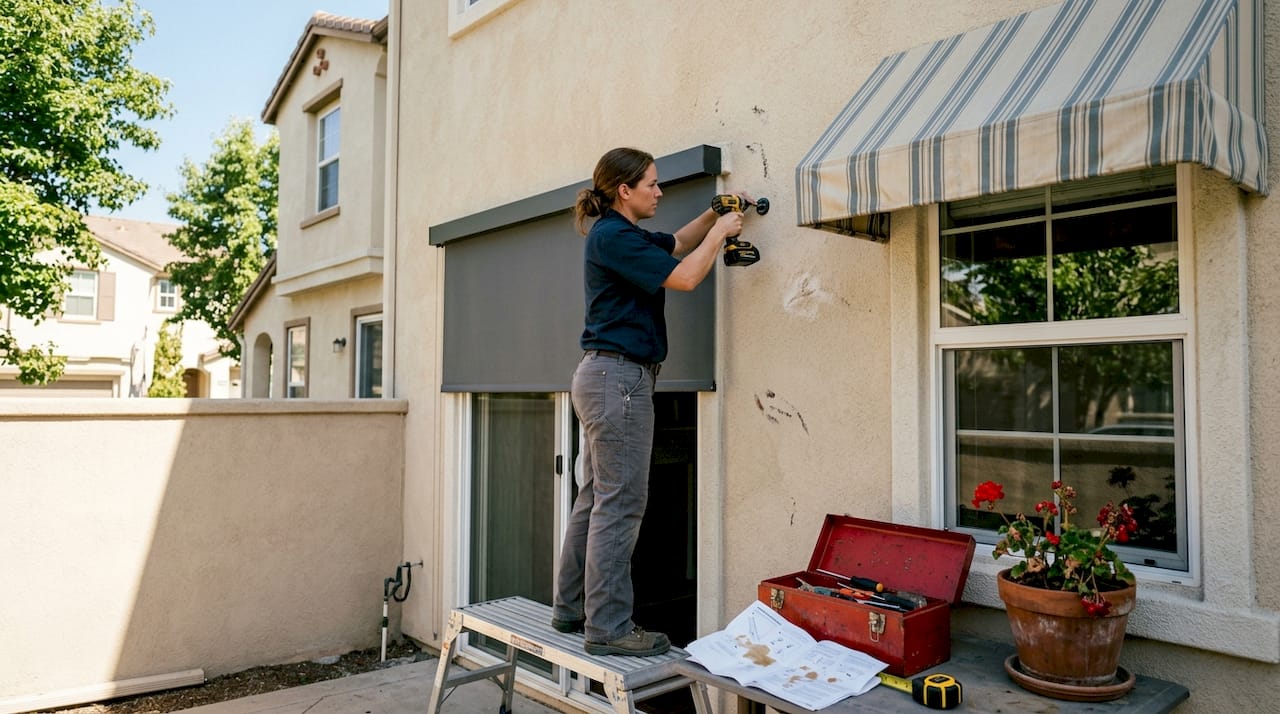
Material selection impacts both durability and performance. Woven polyester fabrics resist fading and mildew while maintaining their protective properties for years. Acrylic materials offer vibrant color options and excellent UV resistance. PVC-coated fabrics provide waterproof protection, making them ideal for areas exposed to rain or sprinkler systems. Selecting shade types and materials depends on your specific needs for UV protection, visual style, and long-term durability.
Consider these material characteristics when making your selection:
- Polyester blends deliver affordability and reliable UV blocking with moderate wind resistance
- Solution-dyed acrylic maintains color vibrancy and resists fading better than printed fabrics
- PVC-coated materials offer complete waterproofing but may trap more heat than breathable fabrics
- Mesh fabrics allow air circulation while blocking UV rays, reducing heat buildup beneath the shade
| Material Type | UV Protection | Durability | Maintenance Level | Best Use Case |
|---|---|---|---|---|
| Polyester blend | High (95-98%) | Good | Low | General patio coverage |
| Solution-dyed acrylic | Very High (98-99%) | Excellent | Low | High-sun exposure areas |
| PVC-coated fabric | Maximum (99%+) | Excellent | Medium | Rain-exposed locations |
| Mesh fabric | High (90-95%) | Good | Low | Ventilated spaces |
Architectural compatibility matters when selecting shade styles. Traditional homes often look best with classic awning styles or roman shade designs. Contemporary architecture pairs well with minimalist roller shades in neutral tones. Mediterranean or Spanish-style homes complement canvas awnings with decorative valances.
The exterior shades collection at Value Blinds showcases various styles suited to different architectural preferences. Browse outdoor patio shades to see how different materials and colors coordinate with existing outdoor furniture and hardscaping.
Your outdoor space usage patterns should guide material selection. High-traffic entertainment areas benefit from durable, easy-to-clean materials. Quiet reading nooks can use lighter fabrics that create soft, filtered light. Poolside installations require water-resistant materials that won’t develop mold or mildew.
Assessing motorized vs. manual operations and installation considerations
Motorized outdoor shades transform how you interact with your outdoor spaces. Remote control operation lets you adjust shades without leaving your seat. Smart home integration enables scheduling based on time of day or sun position. Motorized shades provide convenience and precise light control that maximizes outdoor comfort throughout the day.
The benefits of motorization extend beyond simple convenience. Large shades covering expansive patios or multiple windows become practical to operate. You can program shades to lower automatically during peak sun hours, protecting furniture from UV damage even when you’re away. Wind sensors can retract shades automatically during storms, preventing damage to both the shades and mounting hardware.
Manual operation remains a solid choice for many installations. Crank mechanisms provide reliable control without electrical requirements. Spring-loaded systems offer quick deployment and retraction. Manual shades cost less upfront and eliminate concerns about power sources or battery replacement. For smaller installations or budget-conscious projects, manual operation delivers excellent value.
Follow these steps to evaluate which operation type suits your needs:
- Measure the total shade area and height; installations over 8 feet wide or 10 feet high benefit significantly from motorization
- Assess accessibility; shades mounted above head height or across multiple windows favor motorized control
- Calculate usage frequency; daily operation makes motorization more valuable than occasional seasonal use
- Review power availability; motorized shades need either hardwired power or battery charging access
- Consider smart home integration; if you use home automation, motorized shades integrate seamlessly
Pro Tip: For mixed installations, motorize the largest or most frequently adjusted shades while using manual operation for smaller, less-used areas. This approach balances convenience with cost effectiveness.
Installation site assessment determines mounting success and long-term performance. Examine the mounting surface for structural integrity. Brick, concrete, and solid wood provide excellent anchor points. Stucco or vinyl siding may require additional backing or reinforcement. Check for adequate clearance above and beside the installation area for mounting brackets and shade housing.
Wind exposure significantly impacts shade selection and mounting requirements. Coastal areas or elevated locations need reinforced mounting systems and wind-rated fabrics. Sheltered patios can use standard mounting hardware. For motorized systems, verify power source locations before finalizing mounting positions. Hardwired installations require conduit runs and electrical boxes. Battery-powered systems need accessible locations for periodic charging or battery replacement.
Learn more about motorized exterior shades benefits to understand how automation enhances both convenience and energy savings. Smart motorization responds to changing conditions automatically, optimizing comfort without manual intervention.
Maintaining and caring for outdoor shades for durability and performance
Regular maintenance preserves both appearance and functionality of your outdoor shades. Dirt, pollen, and environmental debris accumulate on fabric surfaces, gradually reducing UV protection effectiveness. Clean shades monthly during heavy-use seasons and quarterly during off-peak months. This schedule prevents buildup that becomes harder to remove over time.
Gentle cleaning methods protect fabric integrity while removing contaminants. Mix mild dish soap with lukewarm water for a safe cleaning solution. Use a soft brush or sponge to work the solution into the fabric, then rinse thoroughly with a garden hose. Avoid pressure washers, which can damage fabric weave and waterproof coatings. Let shades dry completely before retracting to prevent mildew growth.
Consider these care practices for optimal shade longevity:
- Inspect mounting hardware quarterly for loose screws or corrosion
- Lubricate moving parts annually with silicone-based lubricant
- Remove leaves and debris from shade pockets and roller tubes
- Check motorized components for proper operation and battery charge levels
- Store removable shades indoors during winter or extreme weather events
Harsh chemicals damage outdoor shade fabrics and coatings. Bleach breaks down UV-resistant treatments and weakens fabric fibers. Ammonia-based cleaners can discolor certain materials. Stick with pH-neutral soaps specifically formulated for outdoor fabrics. Test any new cleaning product on an inconspicuous area before applying it to the entire shade.
Hardware inspection catches small problems before they become major repairs. Examine mounting brackets for stress cracks or separation from mounting surfaces. Check cord locks and spring mechanisms for smooth operation. For motorized shades, verify that limit switches stop the shade at proper positions. Proper cleaning and maintenance ensure your outdoor shades continue delivering effective UV protection and temperature control season after season.
Weather-related precautions extend shade life significantly. Retract shades during high winds to prevent fabric stress and hardware damage. If severe weather approaches and you have manual shades, take a few minutes to secure them. Motorized shades with wind sensors handle this automatically, but verify sensor operation periodically.
Fabric treatments maintain protective properties between deep cleanings. UV protectant sprays designed for outdoor fabrics can restore some protective capability to aging shades. Water repellent treatments help fabrics shed rain and resist staining. Apply these treatments according to manufacturer instructions, typically once or twice per season.
Seasonal storage considerations apply to removable shade systems. Clean shades thoroughly before storage. Ensure complete drying to prevent mildew. Roll rather than fold fabric to avoid permanent creases. Store in a dry, temperature-controlled space away from rodents and insects. Label stored shades by location to simplify reinstallation.
For permanent installations, end-of-season inspection identifies needed repairs before the next use cycle. Replace worn cords or frayed fabric edges promptly. Touch up scratched or chipped hardware finishes to prevent rust. Document any issues for professional repair during the off-season. Visit outdoor patio shades resources for care guides specific to your shade type and material.
Explore stylish outdoor shades at Value Blinds
You now understand the key factors for selecting outdoor shades that enhance both style and energy efficiency. Value Blinds offers an extensive selection of outdoor shade solutions designed to meet your specific needs. Our exterior shades collection features customizable options with various fabric openness levels, colors, and materials that align with the guidance you’ve learned here.
Whether you prefer motorized convenience or manual simplicity, our outdoor patio shades deliver the UV protection and temperature control you need. Each product includes detailed specifications for fabric openness, UV blocking capability, and material composition. Use our window treatment design studio to visualize different shade styles and colors on your home before making a final decision. Our design tools let you experiment with fabric options and see how they complement your outdoor space. Expert support is available to help you select the perfect combination of style, protection, and functionality for your unique situation.
Frequently asked questions
What fabric openness percentage is best for blocking UV rays?
Fabric openness between 1-5% blocks 95-99% of harmful UV rays, providing the strongest protection for your skin and outdoor furniture. Lower openness percentages also deliver greater shading and temperature reduction. For maximum UV protection combined with significant cooling, choose 1-3% openness with light-colored fabrics that reflect rather than absorb solar heat.
Are motorized outdoor shades worth the investment?
Motorized shades deliver substantial value for large installations or hard-to-reach mounting locations. They provide convenient remote control, precise light management, and can integrate with smart home systems for automated operation. If you use your outdoor space daily or have multiple shades to operate, motorization pays for itself through improved convenience and consistent UV protection. Manual shades work well for smaller, easily accessible installations where budget is a primary concern.
How do I maintain outdoor shades to last longer?
Clean your outdoor shades monthly during peak use with mild soap and water, avoiding harsh chemicals that damage fabric treatments. Inspect mounting hardware and moving parts quarterly, lubricating mechanisms annually with silicone-based lubricant. Retract shades during high winds and severe weather to prevent stress damage. For removable systems, store shades indoors during winter after thorough cleaning and drying to prevent mildew and extend fabric life.
Can I install outdoor shades myself or should I hire a professional?
Many outdoor shade systems include comprehensive installation instructions suitable for DIY installation if you have basic tool skills. Manual shades with straightforward mounting brackets are the most accessible for self-installation. Motorized systems requiring electrical wiring typically need professional installation to ensure safe operation and proper integration with home power systems. Assess your comfort level with power tools, ladder work, and electrical connections before deciding. Professional installation guarantees proper mounting, operation, and warranty coverage.
What color outdoor shades work best for heat reduction?
Light colors like white, cream, and light gray reflect the most solar heat, keeping covered areas significantly cooler than dark-colored alternatives. White shades can reflect up to 70% of solar heat compared to dark colors that absorb heat and transfer it to the space below. However, color choice should balance heat reflection with your home’s aesthetic. Light neutral tones complement most architectural styles while delivering excellent thermal performance. For modern homes where dark shades match the design better, prioritize low fabric openness percentages to compensate for increased heat absorption.