
Kitchen window shades: style meets energy efficiency
TL;DR:
- Modern kitchen shades combine style, moisture resistance, and energy efficiency for demanding environments.
- Cellular and faux wood shades are top choices for insulation and moisture handling in kitchens.
- Motorized and smart shades offer convenience and significant energy savings through automation.
Your kitchen works harder than any other room in your home, and your windows should keep up. Many homeowners assume that energy-efficient shades mean sacrificing style, settling for bland, utilitarian coverings just to save on utility bills. That assumption is outdated. Modern kitchen window shades now deliver stunning aesthetics alongside real performance gains, from moisture resistance to measurable reductions in heating and cooling costs. This guide walks you through the best shade types, how to compare them honestly, and how to customize a solution that fits your kitchen’s unique demands.
Table of Contents
- The unique demands of kitchen window shades
- Comparing top shade types for kitchens
- Smart and motorized shades: Function meets innovation
- Choosing and customizing the perfect shades for your kitchen
- Our take: Why great kitchen shades are worth the investment
- Find your ideal kitchen window shades with Value Blinds™
- Frequently asked questions
Key Takeaways
| Point | Details |
|---|---|
| Energy efficiency boost | Upgrading to cellular or smart shades can cut kitchen energy use by up to 20.5% daily. |
| Moisture and heat resilience | Choose shades designed for kitchen environments to ensure durability and easy cleaning. |
| Style without compromise | Modern window shade options let you customize color, control, and texture for any kitchen. |
| Smart home integration | Smart and motorized shades add convenience and long-term savings to your kitchen. |
The unique demands of kitchen window shades
Kitchens are brutal environments for window treatments. Steam from boiling pasta, grease from the stovetop, direct sunlight shifting throughout the day, and the constant need to balance privacy with ventilation all create a uniquely challenging space. A shade that works beautifully in a bedroom may warp, stain, or mold within months when placed above a kitchen sink.
The right kitchen shade needs to check several boxes at once:
- Moisture resistance: Fabrics and materials must withstand humidity and occasional splashes without warping or growing mold.
- Easy cleaning: Smooth, wipeable surfaces or machine-washable fabrics save you time and frustration.
- Light control: Kitchens need flexible light options, bright for cooking, dimmer for morning coffee, and everything in between.
- Privacy without blocking airflow: Especially important for windows near doors or street-facing walls.
- Energy performance: Reducing solar heat gain in summer and heat loss in winter directly impacts your utility bills.
Cellular (also called honeycomb) shades and faux wood shades consistently rise to the top for kitchen environments. Cellular shades trap air in their honeycomb-shaped pockets, creating a natural insulating barrier. Faux wood shades resist moisture far better than real wood and are easy to wipe clean. Both options are available through energy efficient kitchen shades that prioritize performance without compromising on looks.
Pro Tip: Always measure your windows with the sink and cooktop in mind. Avoid hanging fabric shades so low that steam or water splashes can reach the material directly. A few extra inches of clearance can extend the life of your shades significantly.
Double-cell cellular shades are particularly impressive performers. Double-cell honeycomb shades provide insulation rated R-3 to R-5, reducing heat loss by up to 78.7% compared to bare double-pane windows in winter tests. That is not a marginal improvement. That is the kind of number that shows up on your heating bill.
For homeowners who want a tailored look beyond off-the-shelf options, exploring customized window shade solutions opens up a wide range of materials, colors, and configurations designed specifically for demanding spaces like kitchens.
Comparing top shade types for kitchens
Not all shades are created equal, especially in a kitchen. Here is how the most popular types compare across the factors that matter most in this room.
| Shade type | Moisture resistance | Cleaning ease | Insulation | Style range | Cost range |
|---|---|---|---|---|---|
| Roller shades | Good | Easy (wipe) | Low | Wide | $ to $$ |
| Cellular shades | Moderate | Moderate | Excellent (R-3 to R-5) | Moderate | $$ to $$$ |
| Faux wood blinds | Excellent | Very easy | Low to moderate | Classic | $ to $$ |
| Woven/natural shades | Poor | Difficult | Low | Bohemian/organic | $$ |
| Motorized/smart shades | Varies by material | Varies | High (when cellular) | Wide | $$$ |
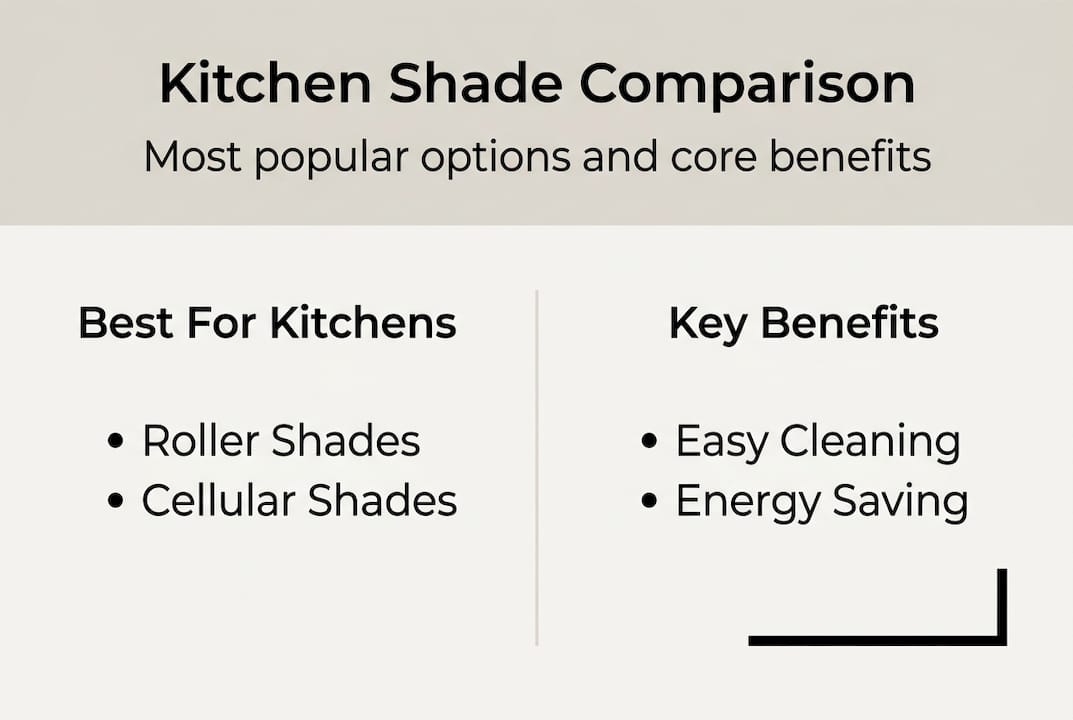
Roller shades are the go-to for easy maintenance and a clean, modern look. They come in a huge range of opacities, from sheer to blackout, making them flexible for kitchens with varying light needs. The downside is that standard roller shades offer minimal insulation on their own.
Cellular shades win on energy performance. As noted above, their honeycomb structure is purpose-built for thermal regulation. Pair them with cellular and honeycomb blinds in a double-cell configuration and you get the strongest insulation available in an interior shade.
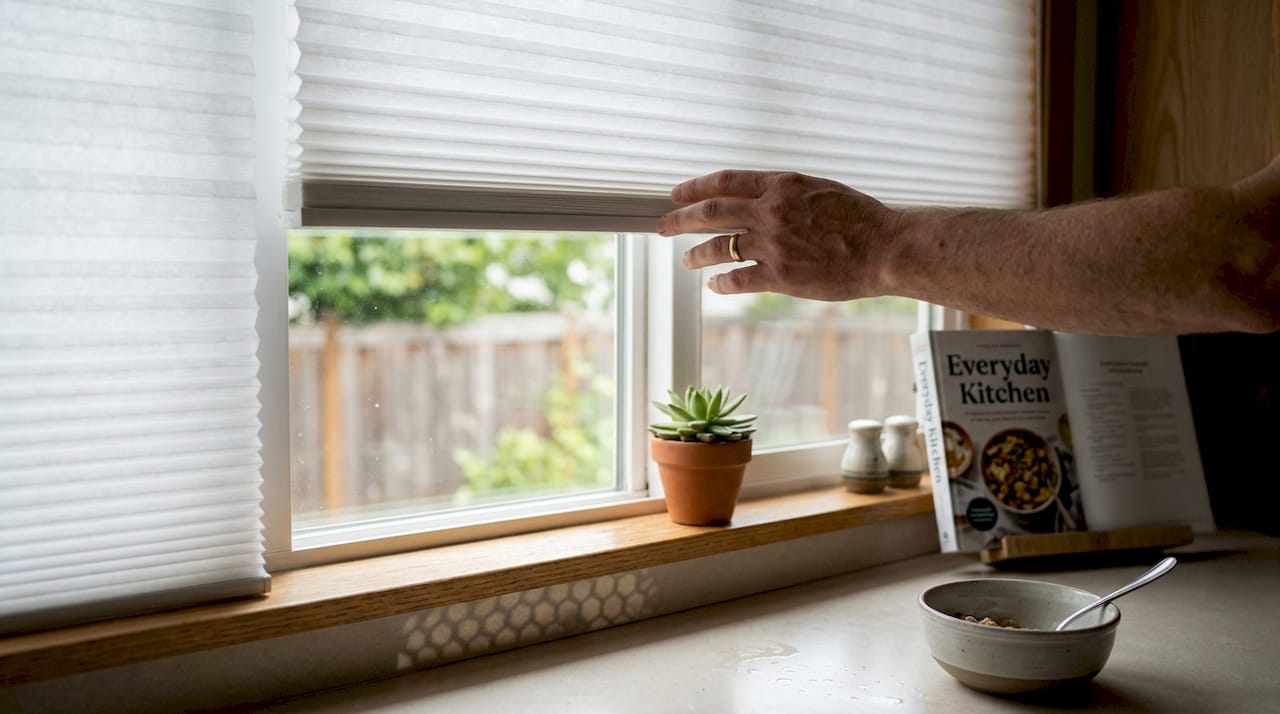
Faux wood blinds are the practical favorite for kitchens near sinks. They look like real wood, clean up with a damp cloth, and hold up against humidity without warping. Their insulation value is lower than cellular, but they make up for it in durability and style.
Woven and natural fiber shades look gorgeous but are genuinely not ideal for kitchens. Grease and moisture get trapped in the fibers, and cleaning them is a headache. Save those for living rooms and bedrooms.
Motorized and smart shades are the most exciting category right now. Automated interior insulating shades reduce daily HVAC energy consumption by up to 20.5% with smart or dynamic controls compared to standard mini-blinds. That is a meaningful reduction, especially in kitchens where solar heat gain can spike temperatures fast on sunny afternoons.
For a full look at what is trending in 2026, the modern shade options available today blend aesthetics with serious performance upgrades.
Smart and motorized shades: Function meets innovation
Motorized shades used to feel like a luxury reserved for high-end custom homes. That has changed. Prices have come down, installation has become simpler, and the energy data now justifies the investment for everyday kitchens.
Here is what makes smart shades particularly well-suited to kitchen environments. Kitchens get busy. You are juggling hot pans, chopping vegetables, and managing kids at the counter. Reaching over to adjust a shade manually is inconvenient at best and unsafe at worst. With motorized shades, you adjust light levels with a tap on your phone or a voice command.
The energy case is equally strong. Smart motorized shades with sensors and timers cut HVAC peak loads by 15 to 35%, with payback periods of 5 to 12 years when energy rebates are factored in, and up to 25% total energy savings over time.
| Feature | Benefit | Estimated savings |
|---|---|---|
| Timer-based scheduling | Shade adjusts with sun position | 10 to 20% HVAC reduction |
| Sensor-driven automation | Responds to heat and light in real time | Up to 25% energy savings |
| Integration with smart home | Syncs with thermostats and lighting | Compound efficiency gains |
How do you decide if motorized shades are right for your kitchen? Work through these steps:
- Assess your window exposure. South and west-facing kitchen windows get the most solar heat gain. These are the best candidates for smart shade automation.
- Evaluate your daily routine. If you cook frequently during peak sunlight hours, automated shading pays off faster.
- Check for utility rebates. Many energy providers offer rebates for qualifying smart window treatments, shortening the payback period considerably.
- Choose compatible materials. Motorized cellular shades combine the best of both worlds, automation and top-tier insulation.
- Plan your control method. Decide between app control, voice integration, or a wall switch based on your household’s comfort with technology.
Pro Tip: Combine motorized shades with low-E (low-emissivity) glass for maximum efficiency. Low-E glass reduces radiant heat transfer, and smart shades add another layer of dynamic control. Together, they can dramatically reduce kitchen temperature swings throughout the day.
For more on setting up a connected window system, the smart home shading guide is a great starting point. If you love the look of soft fabric with motorized convenience, motorized roman shades are worth a close look. For a natural aesthetic with modern function, woven motorized shades bring warmth and technology together.
Choosing and customizing the perfect shades for your kitchen
Selecting the right kitchen shade is not just about picking a color you like. It is a layered decision that touches on light management, privacy, climate control, cleaning habits, and how your kitchen actually gets used day to day.
Start by thinking through these factors:
- Light needs: Do you cook in the morning with harsh eastern sun? Do afternoon shadows make your kitchen dark? Map out your light patterns before choosing opacity levels.
- Privacy requirements: Ground-floor kitchens facing a street or neighbor need more privacy coverage than a second-floor window above a backyard.
- Climate: Hot climates benefit most from reflective or solar shades that block heat gain. Cold climates gain most from cellular shades that retain warmth.
- Cleaning frequency: Honest self-assessment here. If you cook heavily with oils and spices, choose a material you can actually wipe down without a fuss.
- Decor style: Modern kitchens favor clean roller shades or sleek cellular options. Farmhouse and transitional kitchens often look best with woven textures or soft roman shades in neutral tones.
When it comes to customization, the details matter more than most people expect. Color affects how much light a shade filters even at the same opacity level. Lighter colors reflect more sunlight. Cordless options are safer for homes with children and cleaner in appearance. Texture adds visual depth to simple kitchen designs.
For energy efficiency, pairing shades with low-E glazing outperforms manual shade operation by 8 to 10% when dynamic controls are used. Exterior shades offer the maximum heat block but are less practical for most interior kitchen setups.
Here is a straightforward process to follow:
- Measure precisely. Measure width and height at three points each (top, middle, bottom for width; left, center, right for height). Use the smallest measurement for inside-mount shades.
- Evaluate window exposure. Note which direction each window faces and how many hours of direct sun it receives.
- Select your material. Match material to your kitchen’s moisture level, cleaning habits, and insulation needs.
- Plan installation. Decide between inside and outside mount based on your window depth and trim style.
- Order swatches first. Colors look different in kitchen lighting. Always test swatches before committing.
For kitchens where privacy is a top concern, privacy shades for kitchens offer solutions that let light in while keeping your space from being visible from outside.
Our take: Why great kitchen shades are worth the investment
We have worked with thousands of homeowners and designers, and one pattern keeps showing up. Kitchen shades get treated as an afterthought. Budgets get stretched on appliances and countertops, and then a cheap, ill-fitting shade gets ordered at the last minute. The result is higher energy bills, daily frustration, and a kitchen that never quite looks finished.
The uncomfortable truth is that kitchen windows are one of the highest-impact places to invest in your home. They directly affect temperature comfort, cooking conditions, and the visual impression of your most-used room. Designers consistently note that well-chosen window treatments are what separate a polished kitchen from one that feels unfinished.
Custom options are not just about aesthetics. A perfectly fitted cellular shade performs better than a standard-size option because there are no gaps for heat to escape or enter. The energy savings tips we share consistently show that proper fit multiplies the performance of any shade type.
Pro Tip: Invest in custom sizing for at least your primary kitchen windows. The performance and visual difference over standard sizes is worth every dollar.
Find your ideal kitchen window shades with Value Blinds™
Ready to transform your kitchen windows with style and purpose? At Value Blinds, we make it easy to find shades that work as hard as your kitchen does.
Browse our full selection of stylish functional blinds designed for real kitchen conditions, from moisture-resistant faux wood to high-performance cellular options. Book a session with our design studio for personalized guidance on materials, colors, and configurations that match your kitchen’s layout and lifestyle. For the best combination of energy savings and clean aesthetics, our premium cellular shades are a customer favorite that delivers on every front.
Frequently asked questions
Which shade type offers the best energy savings in kitchens?
Double-cell cellular shades provide the best energy savings, reducing heat loss by up to 78.7% in winter tests compared to bare double-pane windows, thanks to their R-3 to R-5 insulation rating.
Are motorized kitchen shades worth the investment?
Yes. Smart motorized shades cut HVAC peak loads by 15 to 35% and typically pay for themselves within 5 to 12 years, especially when utility rebates are applied.
How do I clean kitchen window shades effectively?
Choose moisture-resistant materials like faux wood or vinyl-coated roller fabrics, and wipe them down regularly with a damp cloth to prevent grease and grime buildup.
Can I mix privacy and natural light in my kitchen window shades?
Absolutely. Day/night cellular shades and top-down bottom-up designs let you control exactly how much light enters while keeping your kitchen private from outside views.
Do window shades really help lower kitchen energy bills?
Automated insulating shades reduce daily HVAC energy consumption by up to 20.5%, which translates directly to lower utility bills and a more comfortable kitchen year-round.