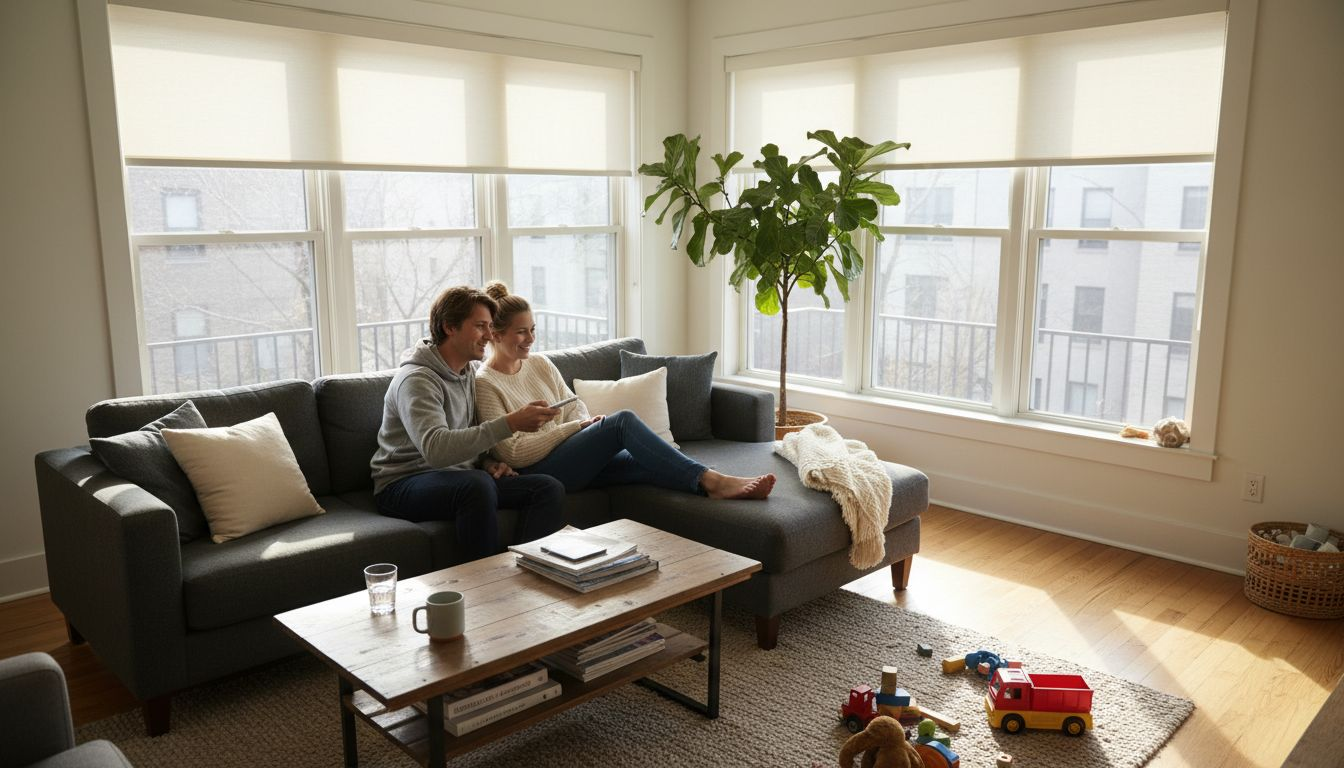


Remote Operated Blinds Cut Energy Bills Up to 25% in 2026
Imagine slashing your home’s energy costs by a quarter while never touching a window cord again. Remote operated blinds can cut your home’s energy bills by up to 25% while adding convenience and style. These motorized window treatments combine smart technology with practical energy savings, offering U.S. homeowners a powerful upgrade. Whether you want automated climate control or seamless integration with your smart home, remote operated blinds deliver both function and modern appeal.
Table of Contents
- Introduction To Remote Operated Blinds And Their Benefits
- How Remote Operated Blinds Improve Home Energy Efficiency
- Customization And Smart Home Integration Features
- Installation, Maintenance, And Convenience Considerations
- Common Misconceptions About Remote Operated Blinds
- Cost-Benefit And Investment Considerations For Homeowners
- User Experience And Interior Aesthetic Impact
- Conclusion And Next Steps For Homeowners
- Explore Custom Remote Operated Blinds At Value Blinds Direct
- FAQ
Key Takeaways
| Point | Details |
|---|---|
| Energy Savings | Motorized blinds reduce home energy costs by up to 25% through automated light and insulation control. |
| Installation Flexibility | Battery-powered models eliminate complex wiring and cut installation time by approximately 30%. |
| Smart Home Ready | Compatible with Alexa, Google Home, and major smart home protocols for voice and app control. |
| Customization Options | Available in diverse materials, colors, and opacity levels to match any interior design style. |
| Cost Recovery | Energy savings and convenience benefits typically offset initial investment within 5 years. |
Introduction to Remote Operated Blinds and Their Benefits
Remote operated blinds are motorized window treatments you control via smartphone apps, dedicated remotes, or voice commands. Unlike traditional manual blinds, these systems automate your window coverings with a simple button press or voice instruction.
The technology behind these blinds has advanced significantly in recent years. Modern systems integrate seamlessly with smart home platforms, making them accessible to homeowners without technical expertise. You can schedule blinds to open at sunrise or close during peak heat hours, optimizing natural light without manual adjustment.
Energy efficiency stands out as the primary benefit. By automatically managing sunlight exposure, these blinds reduce heating and cooling loads on your HVAC system. During summer, closed blinds block solar heat gain. In winter, they provide an extra insulation layer against cold windows. This intelligent climate control translates directly into lower utility bills.
Convenience ranks as another major advantage. Hard-to-reach windows, heavy treatments, and mobility limitations all become non-issues with motorized operation. You control every window covering from your couch, bed, or even away from home through smartphone apps.
Customization options let you match blinds to your home’s aesthetic. Choose from materials like cellular fabric, natural wood, or synthetic composites. Select colors, textures, and opacity levels that complement your interior design. The custom remote blinds market offers extensive personalization to suit any style preference.
- Automated scheduling maximizes energy efficiency without daily manual adjustments
- Multiple control methods provide flexibility for different situations and preferences
- Integration with existing smart home ecosystems creates unified home automation
- Child-safe cordless operation eliminates strangulation hazards common with traditional blinds
How Remote Operated Blinds Improve Home Energy Efficiency
The energy-saving mechanism starts with thermal insulation. Window glass conducts heat rapidly, making windows the weakest point in your home’s thermal envelope. Quality blinds create an air pocket between the window and room, slowing heat transfer. Cellular or honeycomb designs excel here, trapping air in their structure for enhanced insulation.

Automation transforms this insulation potential into actual savings. Manual blinds only save energy when you remember to adjust them at optimal times. Motorized systems operate on schedules aligned with sun position and temperature patterns. They close automatically during afternoon heat or overnight cold, maintaining consistent thermal protection.
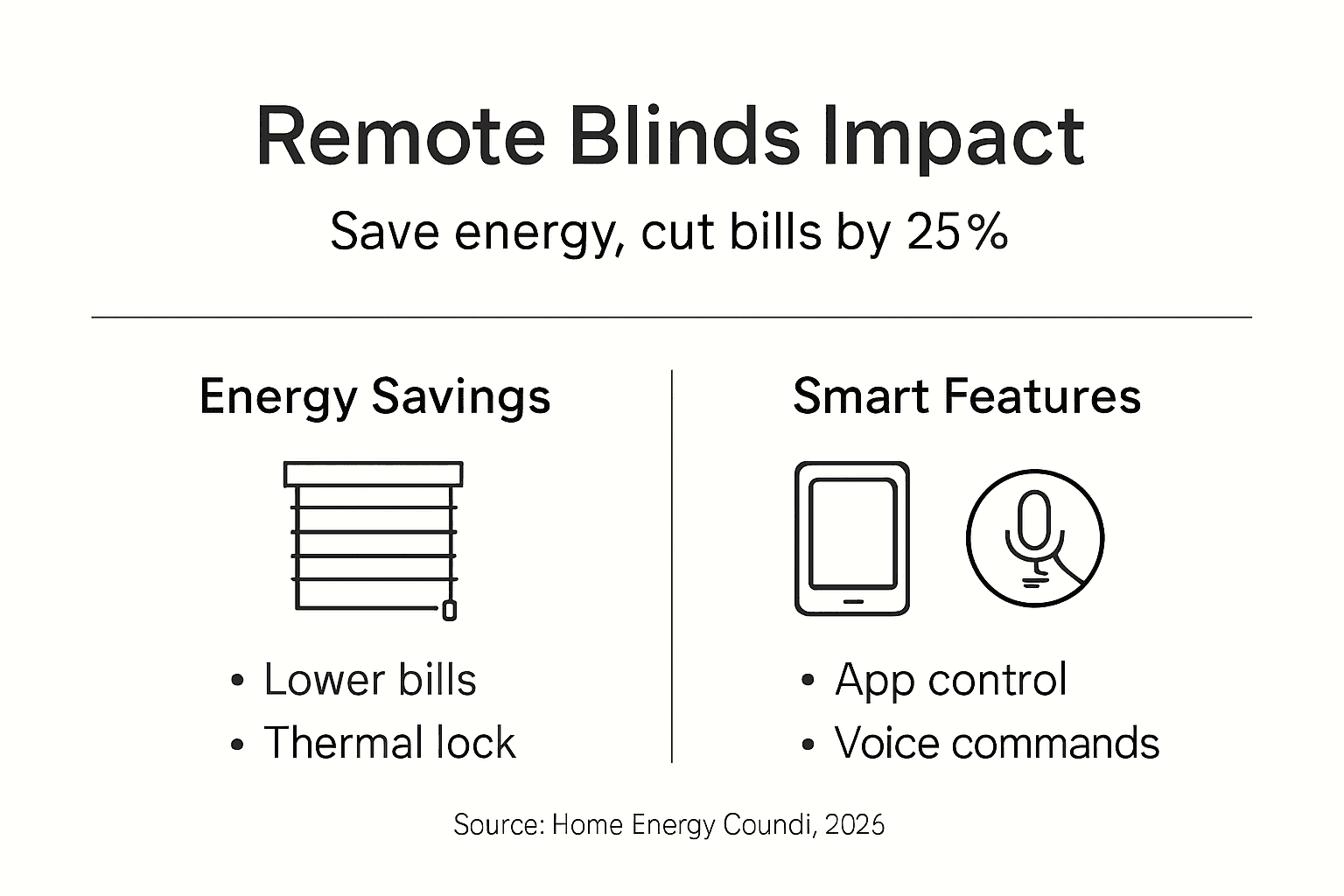
Remote operated blinds can cut your home’s energy bills by up to 25% according to U.S. Department of Energy research. This reduction comes from decreased HVAC runtime as blinds stabilize indoor temperatures. Your heating and cooling systems work less to maintain comfort, directly lowering electricity and gas consumption.
Smart home integration amplifies these benefits. Connect blinds to thermostats and weather apps for dynamic responses to conditions. When outdoor temperature spikes, blinds close automatically. As sun moves across your home, blinds adjust room by room to block direct rays. This intelligent coordination optimizes energy use beyond what manual operation could achieve.
- Morning automation: blinds open to reduce lighting needs and provide natural warmth in winter
- Afternoon protection: blinds close on south and west windows during peak solar heat gain
- Evening insulation: blinds close as outdoor temperatures drop to retain interior warmth
- Seasonal programming: adjust schedules for longer summer days and shorter winter daylight
Energy Savings Spotlight: Homes in hot climates see the greatest impact during cooling season, with properly automated blinds reducing air conditioning costs by 20-30%. Northern homes benefit most during heating season, when nighttime insulation prevents heat loss through windows.
The energy control features available in modern systems make implementation straightforward. Many products include preset energy-saving modes that adjust automatically based on local sunrise, sunset, and temperature data. For maximum efficiency, explore Alexa controlled blinds energy savings options that integrate with your existing smart home ecosystem.
Customization and Smart Home Integration Features
Your customization journey starts with material selection. Cellular shades offer superior insulation with honeycomb air pockets. Wood blinds provide timeless elegance and natural texture. Roller shades deliver sleek minimalism in countless fabrics. Each material performs differently for light control, privacy, and energy efficiency, so match your choice to room function and aesthetic goals.
Color and opacity options let you fine-tune both appearance and performance. Light-filtering fabrics soften harsh sunlight while maintaining outside views. Blackout materials block light completely for bedrooms and media rooms. Room-darkening options split the difference, providing privacy without total darkness. Neutral tones blend with any decor, while bold colors make windows focal points.
Smart home compatibility depends on communication protocols. Most systems support Wi-Fi for direct smartphone control. Zigbee and Z-Wave protocols integrate with hubs like Samsung SmartThings or Hubitat. This connectivity enables automation routines that coordinate blinds with lights, thermostats, and security systems. Your blinds become part of a unified smart home rather than isolated devices.
Control methods multiply your operational flexibility. Dedicated remotes work without smartphones or internet connectivity. Smartphone apps provide control from anywhere with cellular data. Voice assistants let you adjust blinds hands-free while cooking, cleaning, or carrying items. Wall switches offer traditional tactile control familiar to all household members.
| Feature | Battery-Powered Blinds | Wired Blinds |
|---|---|---|
| Installation Complexity | Simple retrofit, no electrician needed | Requires electrical wiring, professional install recommended |
| Power Source | Rechargeable or replaceable batteries | Direct AC power, no battery changes |
| Cost | Lower upfront, battery replacement over time | Higher initial cost, minimal ongoing expenses |
| Ideal Application | Existing homes, rental properties, DIY projects | New construction, permanent installations, high-use windows |
| Smart Features | Full app and voice control available | Full integration with advanced scheduling options |
The custom remote blinds options market has expanded to serve diverse needs. You can specify exact dimensions for unusual window sizes, add decorative trim, or select specialty fabrics for moisture resistance in bathrooms. Motorized blinds remote control systems range from basic single-channel remotes to sophisticated multi-zone controllers managing entire floors.
Pro Tip: Verify protocol compatibility with your existing smart home hub before purchasing. Not all blinds support every protocol, and adding a separate hub for blinds defeats the integration purpose. Check manufacturer specifications or consult with customer service to confirm compatibility.
For optimal energy performance, consider cellular blinds energy control features that maximize insulation value. If budget concerns arise, explore flexible payment plans that spread costs over manageable monthly installments.
- Material choice impacts insulation, light control, and maintenance requirements
- Color selection affects heat absorption and room brightness
- Protocol compatibility determines which smart home systems you can integrate
- Control redundancy ensures operation even when technology fails
Installation, Maintenance, and Convenience Considerations
Power source decisions shape your installation experience. Battery-powered blinds eliminate electrical work entirely. You mount the headrail, install the motor, insert batteries, and pair with your control system. This simplicity makes battery models ideal for retrofits, rental properties, and DIY projects. Battery-powered motorized blinds eliminate the need for complex wiring, facilitating easier installation and reducing installation time by up to 30%.
Wired blinds require running electrical lines to each window. This involves opening walls, routing cables, and connecting to your home’s electrical system. Professional installation ensures code compliance and preserves warranties. The tradeoff rewards you with permanent power, eliminating battery changes. Wired systems suit new construction or major renovations when walls are already open.
Installation complexity varies by blind type and mounting location. Inside-mount blinds fit within the window frame for a clean appearance but demand precise measurements. Outside-mount blinds attach to wall or trim, offering more measurement flexibility. Ceiling mounts work for skylights and specialty applications. Each mounting style affects both appearance and light control effectiveness.
Maintenance demands remain minimal across all motorized blind types. Fabric shades need occasional vacuuming or dusting. Wood blinds benefit from periodic cleaning with appropriate wood care products. Motors require no maintenance beyond battery replacement in wireless models. Most batteries last 1-3 years depending on usage frequency and battery quality.
- Rechargeable battery systems reduce long-term replacement costs and environmental impact
- Solar-powered options exist for windows with consistent sun exposure
- Hardwired systems provide unlimited power for high-traffic windows used multiple times daily
- Hybrid models offer battery backup for wired systems, ensuring operation during power outages
Common myths about operational costs deserve debunking. Motorized blinds consume minimal electricity, typically under 0.5 watts in standby mode. Over a full year, this adds mere dollars to your electric bill. Battery costs remain modest too, with quality rechargeable batteries providing years of service. The energy savings far exceed these minor operational expenses.
Pro Tip: Consider professional help for wired installation to maintain warranty coverage and ensure safe electrical connections. Poor wiring can damage motors, create fire hazards, and void manufacturer warranties. The installation cost pays for itself through reliable long-term operation.
For those comfortable with tools, DIY motorized blinds kits convert existing manual blinds to motorized operation. This retrofit approach minimizes costs while preserving blinds you already own. Detailed instructions and support from manufacturers make the process accessible to moderately skilled homeowners.
Common Misconceptions About Remote Operated Blinds
Myth one claims motorized blinds guzzle electricity and drain batteries constantly. Reality proves the opposite. Motors only consume power during the brief seconds of operation. Standby power draw measures below 0.5 watts, less than a nightlight. Modern battery technology provides 1-2 years of typical use per charge. Smart charging circuits prevent overcharging and extend battery lifespan further.
Myth two insists these blinds cost too much for average homeowners. Initial investment does exceed manual blinds, but the complete financial picture tells a different story. Energy savings accumulate month after month, offsetting the upfront premium. Convenience value adds intangible benefits that improve daily life quality. Most homeowners recover costs within 5 years through reduced utility bills alone.
Myth three assumes installation always requires professional help and extensive wiring. Battery-powered systems debunk this completely. You can install most models in under an hour per window using basic tools. Mounting brackets attach with screws, motors clip into place, and pairing with remotes takes minutes. Only hardwired systems need electricians, and even those installations proceed quickly in new construction.
Myth four suggests smart blinds become obsolete as technology changes. Quality products use established protocols like Zigbee and Z-Wave that ensure long-term compatibility. Manufacturers provide firmware updates maintaining functionality with evolving smart home platforms. Unlike proprietary systems, open-standard blinds adapt to future technologies through software rather than hardware replacement.
- Standby power consumption equals less than one LED bulb running continuously
- Premium models include solar charging panels for truly wireless, maintenance-free operation
- Installation difficulty matches hanging curtain rods for battery-powered inside-mount blinds
- Standard warranties cover 2-5 years, with motors often lasting 10+ years of normal use
Understanding these realities helps you evaluate options confidently. The motorized blinds benefits extend beyond initial perceptions when you examine actual performance data and owner experiences. Misconceptions often stem from outdated information about early motorized products that suffered limitations modern versions have overcome.
Cost-Benefit and Investment Considerations for Homeowners
Initial costs vary widely based on blind type, window size, and feature selection. Basic battery-powered roller shades start around $200-300 per window for standard sizes. Premium cellular shades with advanced insulation reach $400-600 per window. Wired systems add $100-200 per window for electrical installation. Custom sizes, specialty fabrics, and designer finishes increase costs further.
Energy savings provide tangible financial returns. A typical home with 10 windows might spend $1,500-3,000 on motorized blinds. Annual energy savings of 15-25% on heating and cooling translate to $200-500 depending on climate and home size. Simple math shows cost recovery in 4-6 years, with continued savings thereafter. In extreme climates with high energy costs, payback periods shorten to 3-4 years.
Convenience value defies precise quantification but significantly impacts quality of life. Automated morning routines save time and mental energy. Voice control assists mobility-limited residents. Remote access provides security when traveling. These lifestyle improvements justify investment beyond pure financial metrics for many homeowners.
Property value considerations matter for long-term homeowners and those planning to sell. Smart home features appeal to buyers, potentially increasing home value and marketability. While you may not recoup the full blind cost at sale, homes with modern automated systems attract premium buyers willing to pay for move-in-ready technology.
| Factor | Battery-Powered | Wired |
|---|---|---|
| Equipment Cost Per Window | $200-400 | $300-500 |
| Installation Cost Per Window | $0-50 (DIY possible) | $100-200 (professional required) |
| Ongoing Costs | Battery replacement every 1-3 years | Minimal electricity, no batteries |
| Energy Savings Potential | 15-25% of window-related heating/cooling | 15-25% of window-related heating/cooling |
| Best For | Retrofits, budget-conscious, rental properties | New builds, permanent installations, luxury upgrades |
Evaluating your specific situation requires systematic analysis:
- Calculate total window treatment needs by counting windows and measuring sizes.
- Research product options matching your budget, aesthetic preferences, and smart home compatibility.
- Estimate annual energy costs and potential savings percentage based on climate zone.
- Compare installation options between DIY battery systems and professional wired installation.
- Factor in long-term maintenance costs including batteries, cleaning, and potential repairs.
- Decide which windows benefit most from automation, prioritizing high-traffic and energy-critical locations.
- Explore financing options if upfront costs exceed available budget but long-term value justifies investment.
The custom window blinds cost discussion includes detailed breakdowns helping you budget accurately. Remember that partial automation works too. Start with main living areas and bedrooms, adding other windows as budget allows. Incremental implementation spreads costs while delivering immediate benefits in priority spaces.
User Experience and Interior Aesthetic Impact
Daily comfort improves dramatically with automated light control. Wake naturally as blinds open gradually, simulating sunrise even in winter darkness. Work from home without glare on screens as blinds track sun position automatically. Relax in evenings with privacy assured and ambient lighting perfected through partial shade positioning.
Interior design flexibility expands with motorized systems. Traditional corded blinds create visual clutter and limit furniture placement. Cordless motorized treatments maintain clean lines and unobstructed window views. This streamlined appearance suits modern minimalist aesthetics while working equally well in traditional or eclectic spaces.
Customization elevates design impact beyond standard window treatments. Match wood blind stains to trim and furniture. Coordinate fabric colors with accent walls and upholstery. Layer sheer and blackout shades for ultimate light control versatility. These choices transform windows from functional necessities into design features enhancing your home’s character.
Lifestyle benefits extend to security and peace of mind. Program blinds to open and close while traveling, creating the appearance of occupancy that deters burglars. Protect furniture and flooring from UV damage through consistent sun blocking during peak hours. Eliminate concerns about forgetting to close blinds, as automation handles it reliably.
- Precise positioning allows subtle light adjustments impossible with manual operation
- Silent or near-silent motors maintain peaceful home environments
- Group controls adjust multiple windows simultaneously for consistent room ambiance
- Scenes coordinate blinds with lights and music for entertaining or relaxation modes
“Homeowners report 90% satisfaction with motorized window treatments, citing convenience and energy savings as top benefits. The technology has matured to the point where reliability matches or exceeds manual blinds, eliminating early adoption concerns.”
The aesthetic impact of motorized wood blinds style options demonstrates how technology enhances rather than compromises design. Natural materials combine with discreet motors for the best of both worlds: timeless beauty with modern convenience. Your home’s interior benefits from cohesive design where window treatments complement rather than clash with your vision.
Conclusion and Next Steps for Homeowners
Remote operated blinds deliver measurable energy savings, daily convenience, and design flexibility that justify their investment for most U.S. homeowners. The technology has matured beyond early limitations, offering reliable operation and broad compatibility with existing smart homes. You gain automated climate control, enhanced security, and simplified window management through a single upgrade.
Your path forward depends on budget, home type, and automation priorities. Battery-powered systems offer the quickest, most affordable entry point, especially for retrofitting existing homes. Wired installations suit new construction or renovation projects where walls are already open. Either approach provides the core benefits of motorized operation and smart home integration.
Personalization ensures your window treatments match both functional needs and aesthetic preferences. Consider room-by-room requirements. Bedrooms benefit from blackout options and gradual morning opening. Living areas need glare control and privacy flexibility. Kitchens and bathrooms may require moisture-resistant materials. This tailored approach maximizes value from your investment.
Take action by exploring design options through online tools or consulting with window treatment specialists. Measure your windows accurately, research product specifications, and compare features across brands. Many retailers offer free samples so you can evaluate materials and colors in your actual lighting conditions before committing.
Explore Custom Remote Operated Blinds at Value Blinds Direct
Transform your home’s energy efficiency and style with expertly designed motorized window treatments. Our window treatment design studio guides you through customization options tailored to your specific windows, decor preferences, and smart home setup.
Browse our extensive high-quality blinds collection featuring cellular, wood, and roller options in countless colors and materials. Each product includes detailed specifications for motor type, control compatibility, and energy performance. Our energy efficient blinds category highlights top-performing options for maximum utility savings. Expert support staff answer technical questions, help with measurements, and recommend solutions matching your budget. Simple online ordering and flexible shipping bring custom motorized blinds directly to your door, with installation instructions and support ensuring successful setup. Start designing your perfect window treatments today.
FAQ
What is the average lifespan of battery-powered motorized blinds?
Quality battery-powered motorized blinds typically last 10-15 years with proper care. The motors themselves often outlast the fabric or slats, which may need replacement after 7-10 years depending on sun exposure and usage. Battery systems require replacement every 1-3 years, but this minor maintenance keeps motors running smoothly throughout their lifespan.
Can I integrate remote operated blinds with my existing smart home system?
Most modern motorized blinds support Wi-Fi, Zigbee, or Z-Wave protocols compatible with major smart home platforms including Alexa, Google Home, Apple HomeKit, and Samsung SmartThings. Verify protocol compatibility with your specific hub before purchasing. Some proprietary systems require dedicated hubs, limiting integration flexibility.
How often do batteries need to be replaced in battery-operated models?
Battery replacement frequency depends on usage patterns and battery type. Standard alkaline batteries last 6-12 months with typical daily use. Rechargeable lithium batteries extend this to 12-24 months per charge. Solar-charging models with battery backup rarely need intervention. Low-battery indicators provide advance warning before power depletion.
Are remote operated blinds noisy when operating?
Modern motorized blinds operate quietly, typically producing 40-50 decibels, comparable to a quiet conversation. Premium motors run even more quietly, with some nearly silent models generating under 35 decibels. Noise levels depend on motor quality, blind weight, and installation precision. Properly installed systems should never disrupt sleep or conversations.
Is professional installation necessary for all motorized blind types?
Battery-powered blinds rarely require professional installation, as they mount like traditional blinds without electrical work. Most homeowners install them successfully using basic tools and included instructions. Wired systems do need professional electrical installation to ensure code compliance, safety, and warranty coverage. Consider your skill level and project scope when deciding between DIY and professional help.