
Waterproof Window Shade: Durable Solutions for Humid Homes
Humidity in coastal homes can silently ruin window treatments, but more American homeowners are making the switch to waterproof window shades for peace of mind. With over 60 percent of American coastal properties reporting annual moisture control challenges, durable shades are no longer just an option, they are a necessity. You will discover how the right moisture-resistant window coverings can withstand harsh conditions while keeping your living spaces stylish, personalized, and easy to maintain.
Table of Contents
- What Makes A Window Shade Waterproof
- Types Of Waterproof Window Shades Available
- Ideal Materials For Damp And Coastal Spaces
- Customization And Easy Installation Features
- Comparing Waterproof Shades To Other Options
- Care, Maintenance, And Longevity Tips
Key Takeaways
| Point | Details |
|---|---|
| Waterproof Materials | Choose synthetic fabrics like vinyl or PVC for superior moisture resistance and durability in humid environments. |
| Customization Options | Homeowners can personalize waterproof window shades with a variety of colors, textures, and mounting configurations for a perfect fit. |
| Maintenance Tips | Use soft microfiber cloths and mild cleaning solutions to preserve the water-repellent properties and aesthetic appeal of waterproof shades. |
| Performance Comparison | Waterproof shades outperform traditional window treatments in humid areas, offering better moisture resistance and durability for long-term use. |
What Makes a Window Shade Waterproof
Waterproof window shades are specialized coverings designed to withstand high moisture environments, protecting interior spaces from humidity damage. The key to their performance lies in their unique material composition and advanced manufacturing techniques that create a barrier against water penetration. Synthetic fabric technologies play a critical role in developing these resilient window treatments.
The fundamental characteristics of waterproof window shades involve multiple protective elements. These typically include tightly woven synthetic materials like vinyl or polyester with specialized water-resistant coatings. The coating prevents moisture absorption, while the dense fabric weave blocks water molecules from passing through. Advanced manufacturing processes ensure that every fiber and seam contributes to the shade’s overall moisture resistance, creating a comprehensive defense against humidity and potential water damage.
Moisture resistance goes beyond simple water repellency. Truly waterproof window shades must maintain structural integrity and prevent mold, mildew, and fabric deterioration. This requires selecting materials that not only block water but also resist microbial growth and maintain their aesthetic quality in challenging environmental conditions. Homeowners in coastal or humid regions need window treatments that can consistently perform under persistent moisture exposure without degrading or losing their visual appeal.
Pro tip: When selecting waterproof window shades, always request material samples and verify their moisture resistance ratings through manufacturer specifications.
Types of Waterproof Window Shades Available
Homeowners seeking moisture-resistant window treatments have several specialized options designed to withstand challenging environmental conditions. Waterproof shade options range from advanced synthetic materials to innovative design solutions that protect interior spaces from humidity and potential water damage. These window coverings are engineered to maintain both functionality and aesthetic appeal in high-moisture environments.
Roller shades represent one of the most popular waterproof window treatments, typically constructed from vinyl or PVC fabrics that naturally resist moisture penetration. Cellular shades offer another excellent option, featuring specialized moisture-resistant coatings that create an additional protective barrier against humidity. Aluminum and faux wood blinds provide durable alternatives for damp areas, with their inherent material properties preventing water absorption and potential structural degradation.
Beyond basic moisture resistance, modern waterproof window shades often incorporate advanced features that enhance their performance. Some models include integrated UV protection, energy-efficient designs, and motorization capabilities that allow for convenient operation in challenging environments. Homeowners in coastal regions, bathrooms, kitchens, and other high-humidity spaces can select from a variety of styles that balance practical water resistance with sophisticated design aesthetics.
Pro tip: When purchasing waterproof window shades, carefully inspect the manufacturer’s moisture resistance ratings and request detailed material specifications to ensure optimal performance in your specific environment.
Ideal Materials for Damp and Coastal Spaces
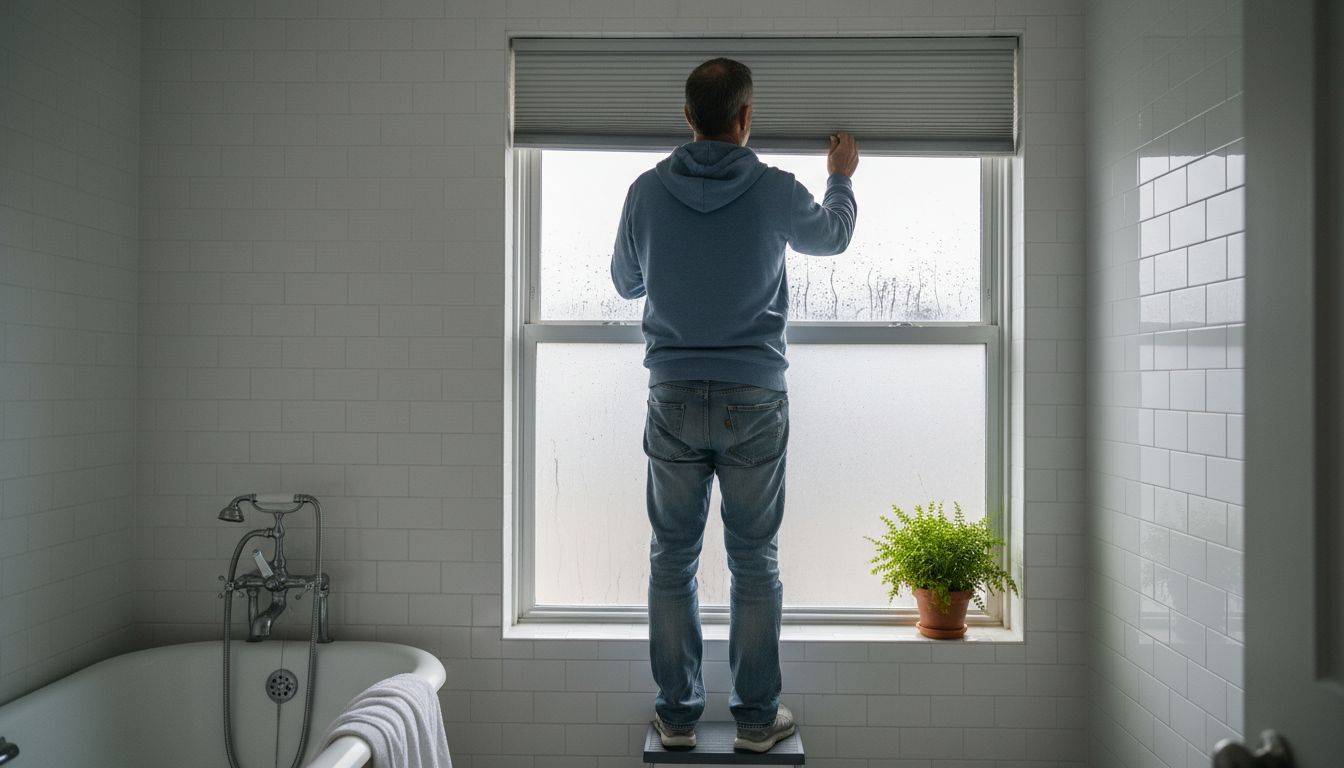
Selecting window treatments for humid environments requires careful consideration of material properties and performance characteristics. Bathroom window covering ideas highlight the critical importance of choosing materials that can withstand constant moisture exposure. Synthetic fabrics, marine-grade materials, and specially treated textiles offer superior durability in challenging coastal and high-humidity environments.
Vinyl and PVC-based materials emerge as top performers for damp spaces, providing exceptional water resistance and minimal maintenance requirements. These synthetic materials resist mold, mildew, and structural degradation, making them ideal for bathrooms, kitchens, and coastal homes where humidity levels fluctuate dramatically. Aluminum and treated wood composites also offer remarkable resilience, featuring protective coatings that prevent water absorption and maintain structural integrity under challenging conditions.
Advanced manufacturing techniques have revolutionized moisture-resistant window treatments, introducing innovative solutions like sealed seams, water-repellent coatings, and antimicrobial treatments. These technological improvements ensure that window shades can now function effectively in environments previously considered too humid for traditional fabric coverings. Homeowners can now select window treatments that not only protect against moisture but also complement their interior design aesthetic, combining functionality with style in demanding environmental conditions.
Here is a summary comparing common waterproof window shade materials and their strengths:
| Material | Moisture Resistance | Durability in Humid Areas | Style Versatility |
|---|---|---|---|
| Vinyl | Excellent | Long-lasting | Basic to modern |
| PVC | Superior | Withstands frequent damp | Limited colors |
| Aluminum | Moderate | Resists rust, strong | Sleek, metallic |
| Faux Wood | High | Mimics wood, stable | Warm, classic |
Pro tip: When selecting window treatments for humid spaces, prioritize materials with documented moisture resistance and request detailed performance specifications from manufacturers.
Customization and Easy Installation Features
Waterproof window shades have evolved beyond traditional one-size-fits-all solutions, offering homeowners unprecedented flexibility in design and installation. Bathroom window treatment ideas demonstrate the incredible range of customization options available for moisture-resistant window coverings. Modern manufacturers now provide comprehensive measurement tools, digital design studios, and expert consultation services that simplify the selection and installation process.
Customization features for waterproof window shades extend far beyond basic sizing. Homeowners can select from a wide variety of color palettes, texture options, and mounting configurations to perfectly complement their interior design. Advanced technologies enable precise measurements through online tools that guide customers through accurate width and length calculations, ensuring a perfect fit for unique window dimensions. Optional features like motorized controls, cordless designs, and integrated light-filtering capabilities provide additional personalization opportunities.
The installation process for waterproof window shades has been streamlined to accommodate DIY enthusiasts and professional installers alike. Manufacturers now include comprehensive installation guides, video tutorials, and support resources that make mounting these specialized window treatments straightforward and accessible. Innovative mounting hardware, pre-measured brackets, and quick-connect systems reduce installation time and complexity, allowing homeowners to achieve professional-looking results with minimal technical expertise.
Pro tip: Utilize digital measurement tools and request free sample swatches before purchasing to ensure perfect color matching and precise window coverage.
Comparing Waterproof Shades to Other Options
When evaluating window treatment options for humid environments, homeowners must carefully consider the unique performance characteristics of different materials. Shades, blinds, and curtains comparison reveals significant differences in moisture resistance and durability that can dramatically impact long-term functionality and maintenance requirements. Waterproof shades stand out as the most effective solution for spaces prone to high humidity and potential water exposure.
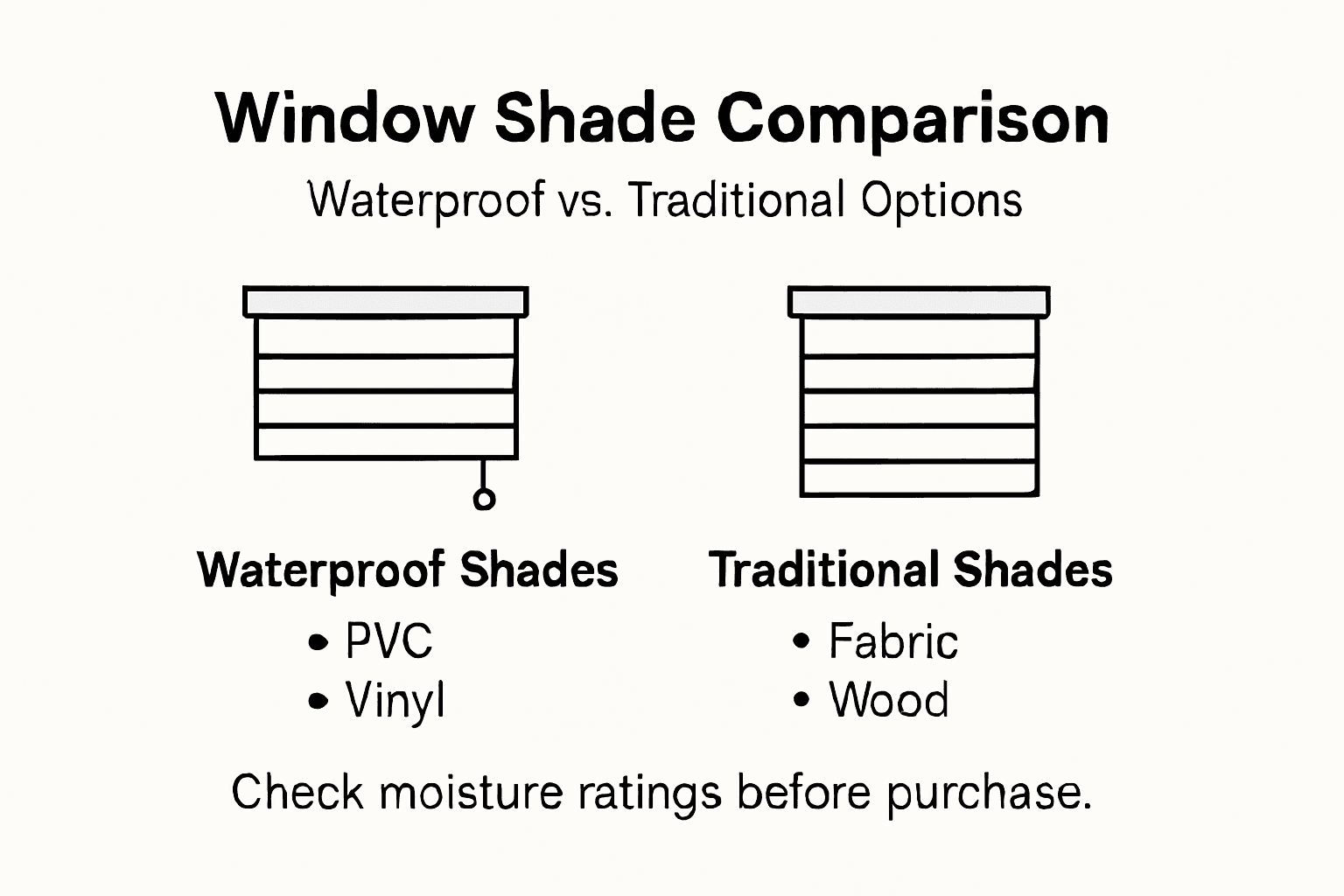
Traditional window coverings like curtains and standard blinds fall short in moisture-rich environments. Curtains tend to absorb moisture quickly, leading to staining, mold growth, and rapid deterioration. Standard blinds with slatted designs create multiple entry points for water and humidity, compromising their structural integrity over time. In contrast, waterproof shades feature seamless designs with specialized synthetic fabrics that actively repel moisture, preventing water infiltration and maintaining their aesthetic appeal in challenging conditions.
The performance advantages of waterproof shades extend beyond simple water resistance. These advanced window treatments offer superior insulation, enhanced privacy, and easier maintenance compared to alternative options. Their smooth, integrated design eliminates potential moisture trapping points, while advanced synthetic materials provide increased durability and resistance to environmental stressors. Homeowners in coastal regions, bathrooms, kitchens, and other high-humidity spaces can rely on waterproof shades to deliver consistent performance and aesthetic value.
Pro tip: When comparing window treatments, prioritize materials with documented moisture resistance ratings and seamless construction to ensure long-term durability in humid environments.
Care, Maintenance, and Longevity Tips
Maintaining waterproof window shades requires a strategic approach that preserves their protective qualities and aesthetic appeal. Energy efficient window treatments share similar care principles, emphasizing gentle cleaning techniques and proactive maintenance. Regular and careful cleaning prevents moisture buildup, material degradation, and potential microbial growth that could compromise the shade’s performance.
Cleaning waterproof window shades demands specific techniques tailored to their synthetic materials. Homeowners should use soft microfiber cloths with mild, non-abrasive cleaning solutions specifically designed for moisture-resistant fabrics. Avoid harsh chemicals, bleach, or aggressive scrubbing that could damage the water-repellent coatings. Gentle spot cleaning and periodic dusting help maintain the shade’s protective properties and prevent dirt accumulation that might compromise its water-resistant characteristics.
Longevity for waterproof window shades depends on multiple factors beyond routine cleaning. Proper installation, minimizing direct sunlight exposure, and maintaining consistent humidity levels can significantly extend the lifespan of these specialized window treatments. Periodic professional inspections can help identify potential wear points, inspect mounting hardware, and ensure that the moisture-resistant properties remain intact. Homeowners should also pay attention to manufacturer-recommended maintenance schedules and store care instructions to maximize their investment.
Pro tip: Create a dedicated maintenance schedule for your waterproof window shades, documenting cleaning dates and conducting quarterly visual inspections to catch potential issues early.
Compare the maintenance needs for waterproof window shades versus traditional window treatments:
| Treatment Type | Cleaning Ease | Mold Prevention | Expected Lifespan |
|---|---|---|---|
| Waterproof Shades | Wipe with cloth | Highly resistant | 7-12 years (average) |
| Curtains | Frequent washing | Low resistance | 2-5 years (humid areas) |
| Standard Blinds | Dust, spot clean | Moderate risk | 3-6 years |
Discover Custom Waterproof Window Shades Built for Humid Homes
Humidity and moisture can cause serious challenges for homeowners seeking durable and stylish window treatments. This article highlights how waterproof window shades crafted from advanced synthetic materials like vinyl and PVC offer superior protection against mold, mildew, and water damage while maintaining aesthetic appeal. If you want window coverings that stand up to damp environments without sacrificing design, you need solutions that combine moisture resistance, easy installation, and customization.
At Value Blinds, we specialize in premium custom window treatments designed for resilience and style. Our collection includes roller shades, cellular shades, and other waterproof options featuring energy efficiency and simple installation tools. Visit our New Arrivals to explore the latest trends.
Experience the perfect blend of protection and beauty with our tailored solutions. Take the next step to safeguard your home against humidity by browsing our range of waterproof shades at Value Blinds. For outdoor moisture challenges, check out our Retractable Awnings for Versatile Outdoor Shade Solutions | Enhance Your Space. Embrace innovative window treatments that bring durability, comfort, and style into your living space today.
Frequently Asked Questions
What makes waterproof window shades ideal for humid environments?
Waterproof window shades are designed with synthetic materials, such as vinyl and polyester, that resist moisture penetration. Their advanced coatings and tightly woven fabrics prevent water absorption while maintaining structural integrity, making them suitable for high-humidity areas.
How do I maintain my waterproof window shades?
To maintain waterproof window shades, use a soft microfiber cloth and mild cleaning solutions specifically for moisture-resistant fabrics. Regular spot cleaning and dusting prevent mold growth and material degradation while keeping the shades in optimal condition.
What types of materials are best for waterproof shades?
The best materials for waterproof shades include vinyl and PVC for their exceptional water resistance, as well as aluminum and treated wood composites, which can withstand high humidity without absorbing moisture or degrading over time.
How do waterproof window shades compare to traditional window treatments?
Waterproof shades offer superior moisture resistance and durability compared to traditional curtains and standard blinds. They are designed to repel water, prevent mold growth, and maintain aesthetic appeal even in damp environments, while other options may absorb moisture and deteriorate quickly.