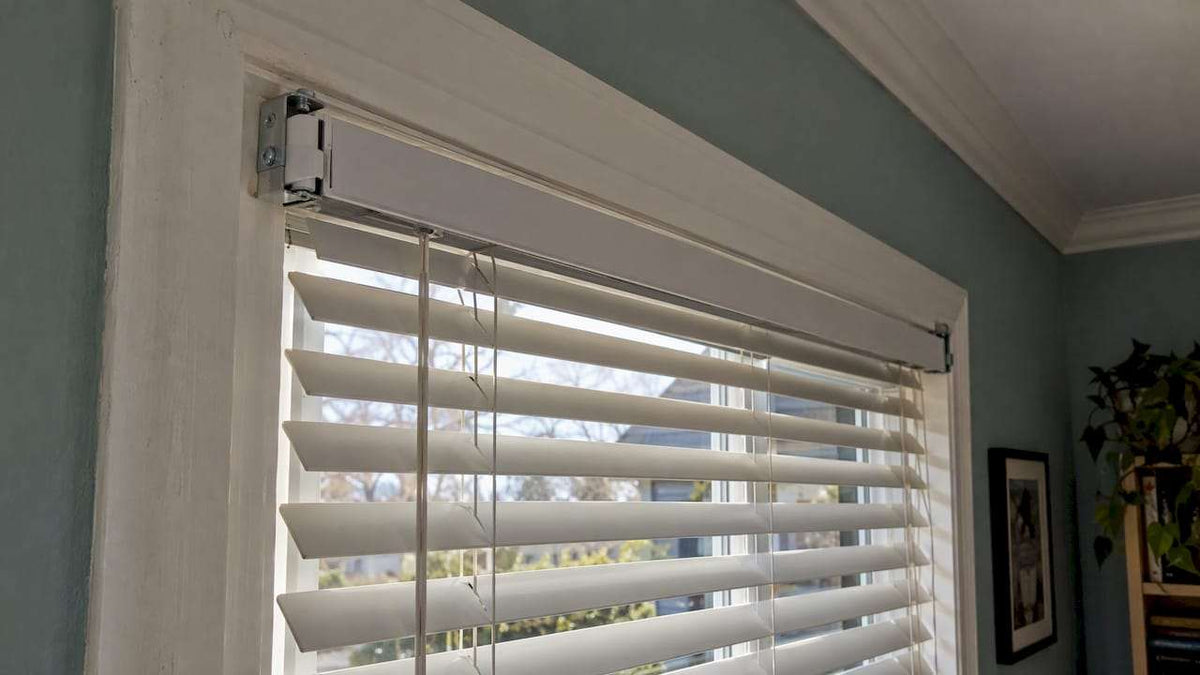

Why Fire Retardant Shades Matter for Rentals
Fire retardant shades matter in a rental because window coverings hang vertically, close to heat sources, and are in every room. A treated or flame-resistant fabric is designed to resist ignition and slow the spread of flames, which gives tenants more time to get out. They can also help you meet local fire code, satisfy insurers and keep common areas compliant. Here is what the label actually means, where the rules come from, and how to pick and maintain shades that hold up. 🔥
TL;DR
- Hanging fabric can let flames travel up and across it quickly. Flame-retardant treatment is meant to resist ignition and slow that spread, not to make a shade fireproof.
- Legal requirements depend on your state, city and building type. Some codes exempt window curtains inside individual dwelling units but cover hallways, lobbies and other shared spaces.
- Ask for an independent lab test report (NFPA 701 is the common US test), not just a “fire retardant” line on a product page.
- Treatment can wear off with washing, humidity and sun exposure, so plan to inspect and keep records.
- When you buy, pair fire performance with durability and cordless operation, since rentals take a beating.
Table of Contents
- Why fire safety belongs in the window treatment decision
- Fire retardant, flame resistant, fireproof: what the words mean
- Are fire retardant shades required in rentals?
- How to verify a fire retardant claim
- What fire retardant shades can and cannot do
- Keeping the protection working over time
- Choosing shades for a rental: fire performance plus real-world toughness
- Our perspective
- Ready to outfit your rental?
- A quick landlord checklist
- FAQ
- Sources
Why fire safety belongs in the window treatment decision
Most landlords pick blinds based on price, privacy and how well they survive a tenant turnover. Fire behavior rarely makes the list. It should, at least for a quick check.
Textile specialists at SATRA point out that vertically suspended curtains can let flames spread readily upward and across the fabric. The same source lists smoking materials, candles and other intense heat sources as typical ways fires start inside buildings. Think about a rental: a candle on a sill, a space heater pushed too close, a kitchen window next to a stove, an overloaded outlet behind a curtain. Tenants change often, and you don’t control their habits.
Flame-retardant treatment is intended to improve resistance to ignition and to reduce how fast flame spreads if something does ignite. That is a modest promise, and an honest one. It is about buying time and limiting how much a window covering contributes to a fire.
Fire retardant, flame resistant, fireproof: what the words mean
These terms get tossed around like they’re interchangeable. They aren’t.
- Flame retardant: usually a fabric treated (often with a liquid) so it is harder to ignite and less flammable. The Michigan Bureau of Fire Services explains that flame-retardant materials are treated to make them difficult to ignite.
- Flame resistant: made from fibers or materials that are inherently resistant, so the protection is built in rather than applied afterward.
- Fireproof: a word to be careful with. Even under NFPA 701 test conditions, “flameproof” means a material will not readily ignite or propagate flame, which is not the same as being immune to fire.
In plain terms, fire retardant fabrics are designed to slow flame spread and self-extinguish once the initial flame source is removed. They are not designed to stop all burning. If a listing promises that a shade is “fireproof,” ask for the paperwork behind it.
One more detail worth knowing: for synthetic materials, the Michigan bulletin notes that flame resistance is added during manufacturing and after-market products won’t work on them. So spraying a store-bought treatment on a polyester shade is not a fix you can rely on.
Are fire retardant shades required in rentals?
Sometimes. It depends on where the property is and how it is classified. There is no single national rule for every private rental, so treat this as a checklist of questions for your local fire marshal or building department rather than a universal answer.
Here is a real example of how nuanced it gets. California’s Title 19 requires drapes, curtains and other decorative materials that would increase fire and panic hazard in listed occupancies to be nonflammable or treated and maintained flame retardant. Those occupancies include R-1, R-2, R-2.1, R-3.1 and R-4. But the same section carves out exceptions, including window curtains and drapes inside dwelling units of R-1 and R-2 occupancies. In other words, an apartment’s interior window treatments may be exempt in that state, while corridors, lobbies, shared lounges and other non-dwelling spaces in the same building are a different story.

Other places write their own rules. British Columbia’s fire code, for instance, says flame-retardant treatments must be renewed as often as needed so materials pass the NFPA 705 match flame test. That is Canadian, but it shows the direction many codes take: it is not enough to buy treated fabric once. It has to stay treated.
So where might a requirement come from?
- State or local fire code: especially for multifamily buildings, shared spaces, assisted living, student housing and short-term rentals that operate like small lodging.
- Your lease or association rules: some HOAs, condo boards and master leases set their own standards.
- Your insurer: ask whether your policy or a fire inspection reports mention window coverings.
- Building type: an owner-occupied single-family home rented out is different from a ten-unit building with a shared hallway.
A quick call to the local fire prevention office usually settles it. Ask which occupancy class your building falls under and whether decorative materials need to be treated or tested.
How to verify a fire retardant claim
A product page that says “fire retardant” is a starting point. Proof is a test report.
Michigan’s Bureau of Fire Services stresses that when a code calls for flameproofed curtains or drapes, they must be tested to NFPA 701 by an approved independent laboratory. The same bulletin warns that NFPA 701 (a textile test) and ASTM E84 (a surface-burning test) are not interchangeable in both directions. So if an inspector asks for one, a report for the other may not satisfy them.
When you request documentation, look for:
- The specific test standard named (for example NFPA 701) and which method was used
- The laboratory that did the testing
- The exact fabric or product tested, not a similar one
- Care instructions that preserve the treatment
- A label or tag on the product where your local rules require it
Outside the US, standards look different. In the UK, for example, BS 5867-2:2008 sets performance levels and testing procedures for curtains, drapes and window blinds, and compliant curtains must carry a permanent label. SATRA adds that its Type B test is often regarded as suitable for non-domestic use, depending on the building’s risk assessment, and that this is not a blanket requirement for every private rental. If you manage properties abroad, check what the local standard is rather than assuming NFPA 701 applies.
Keep a folder, digital or paper, with the spec sheet and any lab report for each product you install. If an inspector or insurer asks, you’ll have it in thirty seconds.
What fire retardant shades can and cannot do
Let’s be straightforward about expectations, because good safety planning starts there.
What they are intended to do:
- Resist catching fire from a small ignition source
- Slow how quickly flame moves across the fabric
- Self-extinguish when the flame source is removed
What they are not:
- A substitute for working smoke alarms, clear exits and a tenant who doesn’t leave candles unattended
- A guarantee that fabric will never burn or char under sustained heat
- A permanent property, in every case (more on that below)
SATRA notes that testing can assess whether a curtain is likely to catch fire and cause a hazard in normal use or foreseeable misuse. That phrase “foreseeable misuse” is rental life in a nutshell. 😅
Keeping the protection working over time
This is where many landlords get caught out. Treatment is not always forever.
The Michigan bulletin warns that treatment life can vary with washing, dry cleaning, exterior exposure, humidity, application quality and the material itself, so a one-time “fire retardant” claim isn’t necessarily permanent. SATRA likewise notes that laundering may affect a fabric’s fire-retardant properties.
Practical habits that help:
- Follow the care instructions exactly. Wipe or vacuum rather than machine-wash or dry-clean unless the manufacturer says it is fine.
- Inspect at every turnover. Look for water stains, heavy grease, sun-faded or damaged fabric, and anything a tenant has added or altered.
- Watch humid spaces. Kitchens, bathrooms and sunrooms stress treated fabric more.
- Log it. Note install dates, product specs and any re-treatment.
- Replace rather than patch when a shade is damaged or you can’t confirm its status.
For wider thinking on how cleaning, humidity and treatment quality play out between tenants, this budget rental property repairs guide is a handy companion when you’re planning turnover maintenance.
Choosing shades for a rental: fire performance plus real-world toughness
Fire performance is one box to tick. Rental shades also need to survive moving boxes, pets, kids, cleaning and the occasional tug. When we help landlords and property managers think it through, we look at five things together:
| What to weigh | Why it matters in a rental |
|---|---|
| Documented fire performance | Proof for inspectors, insurers and your own peace of mind |
| Material and cleanability | Wipe-clean surfaces are easier to keep in good condition and avoid washing that might affect treatment |
| Cord safety | Cordless designs remove loose cords from reach of kids and pets |
| Light control and privacy | Tenants notice this first, and it affects how the unit shows |
| Uniform look | Matching shades across a building present well and make replacements simple |
On the last two: a consistent look from the street is a quiet selling point, and our guides on how blinds affect tenant retention and window treatments and tenant satisfaction go deeper on why. For ideas on options that suit renters, see our rundown of renter-friendly window treatments.
If children live in the unit, safety does not stop at flames. Our cordless blinds safety guide covers child and pet protection in detail.
Matching shade types to rooms
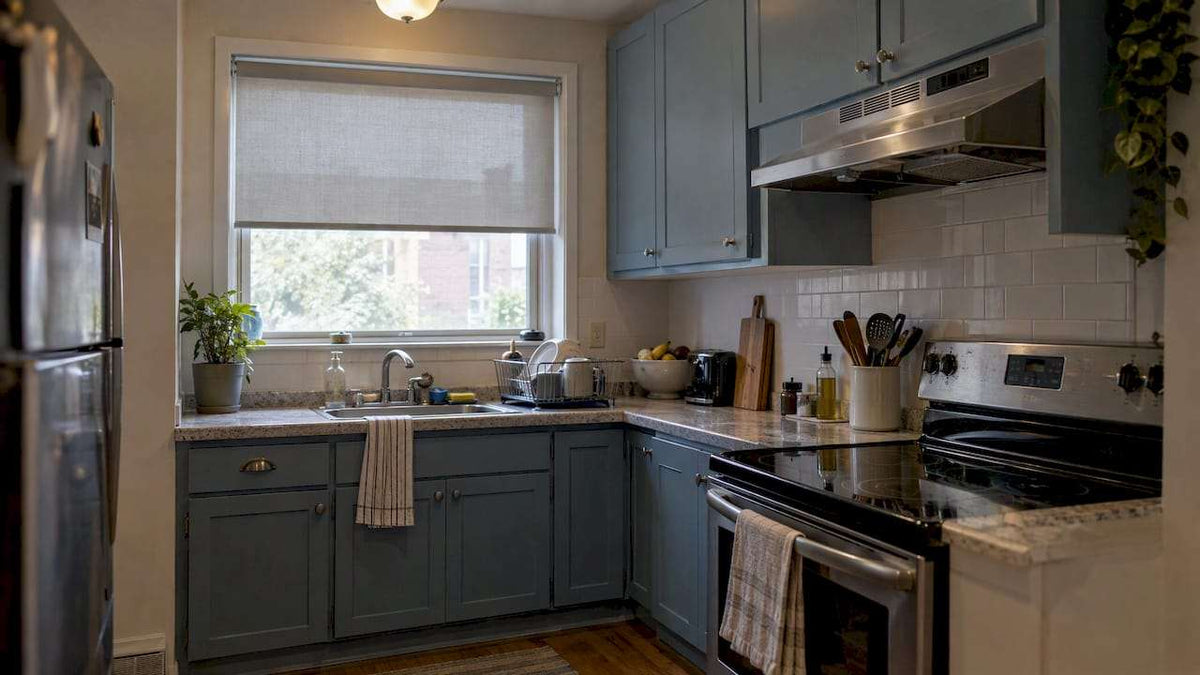
- Kitchens and shared hallways: these are the spots most likely to draw scrutiny. Pick a shade with documented fire performance and a surface you can wipe down. Faux wood blinds are a popular tough, easy-clean option for busy rooms.
- Bedrooms and living rooms: light-filtering cellular shades add insulation and a clean look, and roman shades give a softer, more finished feel for higher-end units.
- Wide windows and sliding doors: vertical blinds cover large openings without fuss.
Whichever you choose, confirm the fire documentation for the exact product and fabric before you order in bulk.
Our perspective
We hear the same thing from landlords and property managers again and again: “I just need something that looks good, lasts, and won’t cause me headaches.” Fire safety fits right into that list, even if it doesn’t get top billing. 🙌
Here is how we think about it. A window covering is a decorative item that hangs in every room, so it is worth choosing on purpose. We build our catalog around custom, made-to-order blinds and shades, with cordless and motorized options, so you can match a look and a level of safety to each space instead of settling for whatever is on the shelf. Our fire retardant collection is where we gather options for people who want that extra layer of care, and our guide to fire retardant blinds explains safety and selection in more detail.
Our advice? Decide what your local code and insurer expect first. Then ask for the paperwork on any product you’re considering, choose durable materials, and write down your maintenance plan. It’s a small amount of effort up front that saves real stress later.
Sunny
Ready to outfit your rental?
We make custom blinds and shades in a wide range of styles, from roller and zebra to cellular, roman, faux wood and vertical, and we offer free swatches so you can check fabric in your own light. Professional measuring and installation are available too, which is handy when you’re doing several units at once.
Start with our fire retardant collection, or browse the full range of blinds and shades and tell us what your building needs.
A quick landlord checklist
- Find out your building’s occupancy class and ask the local fire office what applies to decorative materials.
- Check your lease, HOA or condo rules, and your insurance policy.
- Request the test standard and lab report for any shade you plan to buy.
- Choose cordless, wipe-clean, durable options for high-traffic rooms.
- Keep spec sheets and install dates in one place.
- Inspect shades at each turnover and replace any you can’t vouch for.
FAQ
Are fire retardant shades the same as fireproof shades?
No. Fire retardant fabrics are designed to resist ignition and slow flame spread, and to self-extinguish once the flame source is gone. They can still char or burn under strong, sustained heat. Treat “fireproof” claims with caution and ask for the test report.
Does my rental have to have fire retardant window coverings?
It depends on your state or city, the building type and who manages the property. Some codes, like California’s Title 19, cover shared areas of certain occupancies but exempt window curtains inside individual dwelling units. Your local fire marshal can tell you which rules apply to your building.
How do I know a shade is really fire retardant?
Ask for an independent laboratory test report that names the standard, such as NFPA 701, and covers the exact fabric you’re buying. A marketing line alone isn’t proof. Keep the report on file for inspections.
Does cleaning remove the fire retardant treatment?
It can. Washing, dry cleaning, humidity and sun exposure may all reduce the life of a treatment, according to fire-service guidance. Follow the maker’s care instructions and re-check or replace shades when you can’t confirm their condition.
Can I spray a fire retardant product on existing blinds?
Not reliably. For synthetic materials, flame resistance is added during manufacturing, and after-market products may not work on them. If a code requires treated materials, replace the shade with one that has documented performance.
Sources
- Flammability testing of curtains and drapes (SATRA)
- Flame Retardants “Flameproofing” Interior Finish (Michigan Bureau of Fire Services)
- Cal. Code Regs. Tit. 19, § 3.08 Decorative Materials
- Section 2.3 Interior Finishing, Furnishing and Decorative Materials (British Columbia Fire Code)