
Custom Roller Shades Blackout: the Homeowner's Guide
TL;DR:
- Custom blackout roller shades are tailored from durable polyester with a vinyl backing to block light effectively and prevent glare. They offer various mounting, roll direction, and lift mechanism options, which enhance performance and style depending on room needs. Proper measurement, layering with curtains, and choosing suitable fabric and mount type are essential for optimal light control, privacy, and energy efficiency.
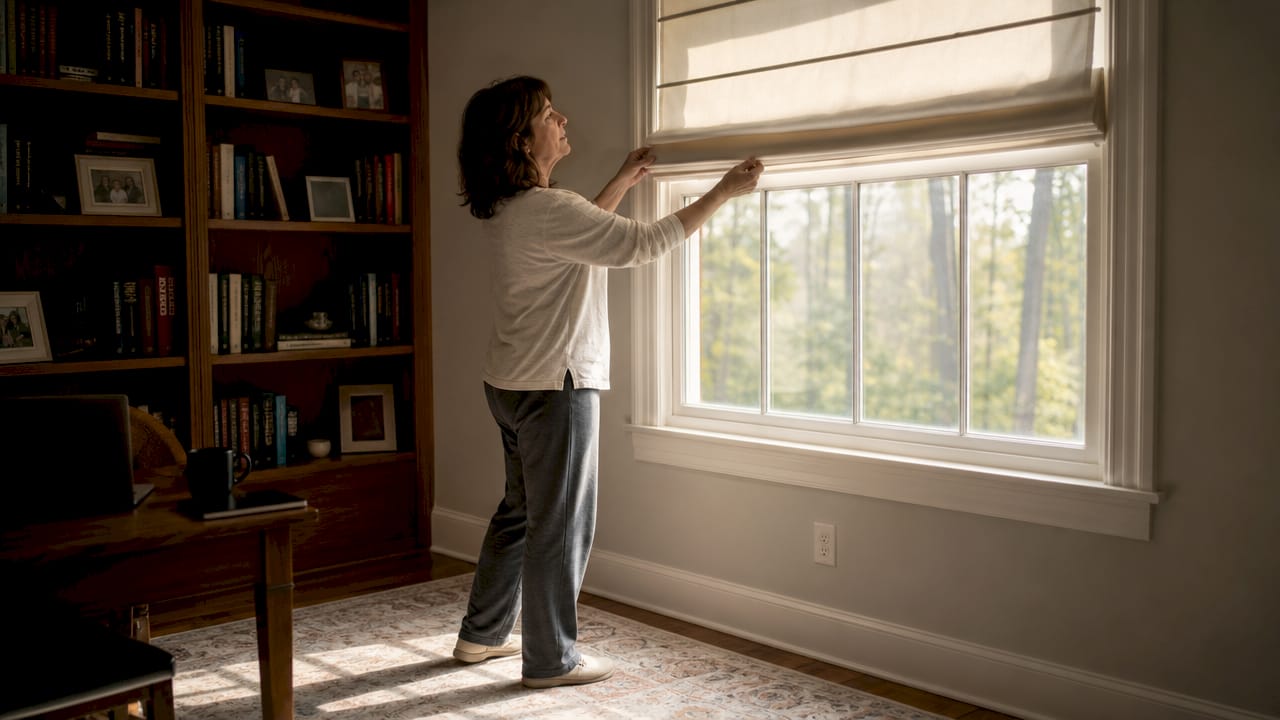
Custom roller shades blackout is the term for made-to-order window coverings built from light-blocking fabric that eliminates glare, protects privacy, and fits your exact window dimensions. Unlike off-the-shelf options that leave gaps and let in light from the edges, custom fitted blackout shades are cut to your measurements and configured to your room’s specific needs. They work in bedrooms, nurseries, home offices, and media rooms where controlling light is non-negotiable. This guide covers materials, customization choices, how they compare with other window treatments, installation steps, and the real comfort benefits you gain from getting them right.
What materials make custom roller shades blackout effective?
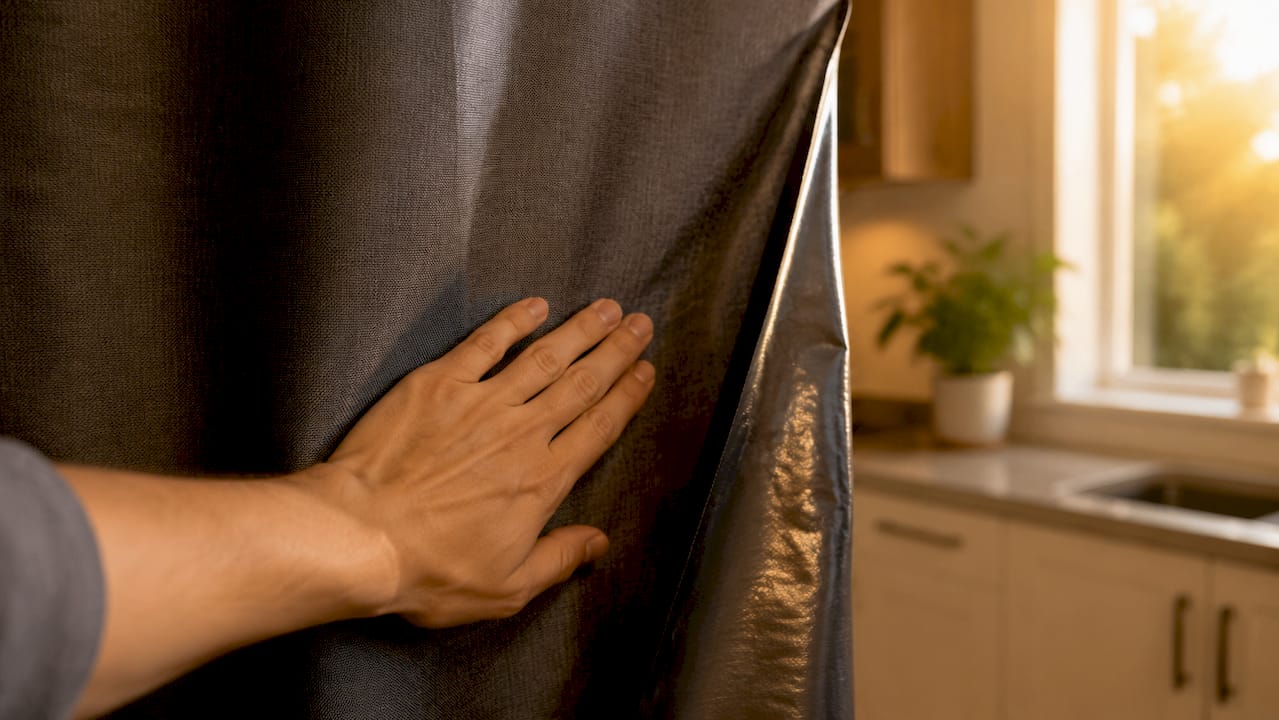
The fabric is everything. Custom blackout roller shades are typically constructed from 100% polyester with a vinyl or acrylic backing that prevents light from passing through the weave. The polyester base gives the shade structure, durability, and the ability to hold color without fading. The backing layer is what does the actual blocking work.
Here is what to look for when evaluating fabric quality:
- Vinyl-backed polyester: The most common construction for true blackout performance. The vinyl layer bonds directly to the fabric and seals the weave completely.
- Triple-weave fabric: A newer option that sandwiches a black yarn layer between two outer fabric layers, eliminating the need for a separate backing while maintaining a clean appearance on both sides.
- Textured and plain finishes: Available in multiple colorways from neutral linens and warm grays to bold charcoals and crisp whites, so the shade works as a design element rather than just a functional cover.
- Fabric weight: Heavier fabrics hang flatter and resist warping over time, which matters for wide windows where a lightweight shade can bow in the center.
The color you choose affects more than aesthetics. Darker fabrics absorb heat from sunlight, which can raise the surface temperature of the shade itself. Lighter fabrics reflect more heat back through the window, making them a better choice for south-facing rooms in warm climates. For guidance on pairing fabric type with your room’s function, the Valueblindsdirect resource on custom fabric selection breaks down the tradeoffs clearly.
Pro Tip: Request a physical swatch before ordering. Screen colors vary significantly from actual fabric, and a swatch lets you test the fabric against your wall color and lighting before committing to a full order.
How do customization options shape performance and style?
Getting a custom window shade right means making several decisions beyond just width and height. Each choice has a direct effect on how the shade performs day to day.
-
Inside mount vs. outside mount. An inside mount sits within the window frame for a clean, recessed look. An outside mount covers the frame and extends beyond it, which reduces light leakage at the sides and makes a small window appear larger. For maximum blackout performance, outside mount is the stronger choice because it eliminates the gap between the shade edge and the wall.
-
Roll direction. Standard roll means the fabric unrolls from the front of the tube, keeping the shade closer to the window. Reverse roll brings the fabric down from the back of the tube, pressing it closer to the glass. Reverse roll reduces the gap between the shade and the window, which helps with both light blocking and insulation.
-
Lift mechanism. Cordless and motorized options are the most practical for homes with children or pets because they eliminate dangling cords that pose safety risks. Motorized shades connect to smart home systems like Google Home or Amazon Alexa, letting you schedule shade positions automatically. Chain-lift mechanisms are the most affordable and work well for adults-only spaces where convenience is less critical.
-
Chain side and chain color. Choosing which side the chain hangs on matters for furniture placement and traffic flow. Chain color options let you match hardware finishes in the room.
-
Exact width and drop. Made to order roller blinds are cut to the millimeter. Standard sizes from big-box retailers rarely match real window dimensions, which is why light gaps are so common with off-the-shelf products.
-
Fabric color and opacity level. Some manufacturers offer light-filtering versions of the same roller shade profile, so you can order a matching shade for an adjacent window where full blackout is not needed.
The combination of outside mount, reverse roll, and motorized lift gives you the best overall performance for a bedroom or media room. For a home office where you want flexibility between full blackout and natural light, a cordless chain with a light-filtering option on a second shade gives you that range without adding complexity.
How do blackout roller shades compare with other window treatments?
Not all light-blocking window treatments perform the same way. The table below compares the most common options across the factors that matter most to homeowners.
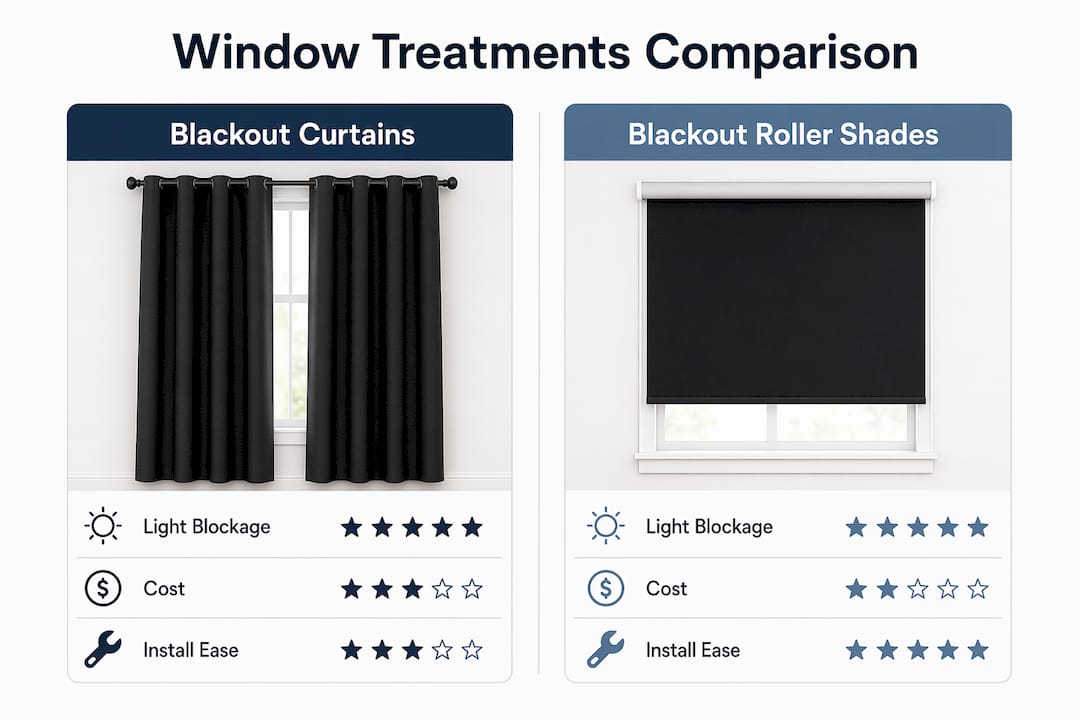
| Treatment | Light blockage | Installation complexity | Energy efficiency | Cost range |
|---|---|---|---|---|
| Custom blackout roller shades | High (gaps possible at edges) | Low to moderate | Good | Moderate |
| Blackout curtains | High (gaps at sides and top) | Low | Moderate | Low to moderate |
| Cellular shades (blackout) | High | Moderate | Excellent | Moderate to high |
| Faux wood blinds | Moderate (slat gaps) | Moderate | Low | Low to moderate |
| Exterior solar shades | Low to moderate | High | Very good | High |
Blackout curtains are the easiest and cheapest entry point, but they rarely seal light at the top or sides without a pelmet or valance. Cellular shades offer the best insulation because their honeycomb structure traps air, but they cost more and are harder to clean. Faux wood blinds let light through every slat gap, making them a poor choice for true darkness.
Blackout roller shades sit in the middle of this spectrum. They block the fabric area completely but allow some light around the edges, particularly with inside-mount installations. This is why industry experts recommend layering blackout roller shades with curtains or drapes to seal those edge gaps. The roller shade handles the primary light block while the curtain covers the perimeter. This layered approach also adds a second insulating barrier, which improves energy performance beyond what either treatment achieves alone.
Pro Tip: For a media room or nursery where total darkness is the goal, pair an outside-mount blackout roller shade with a floor-to-ceiling curtain panel on a ceiling-mounted rod. The curtain overlaps the wall by at least 6 inches on each side to eliminate side light entirely.
What are the practical steps for installing blackout roller shades?
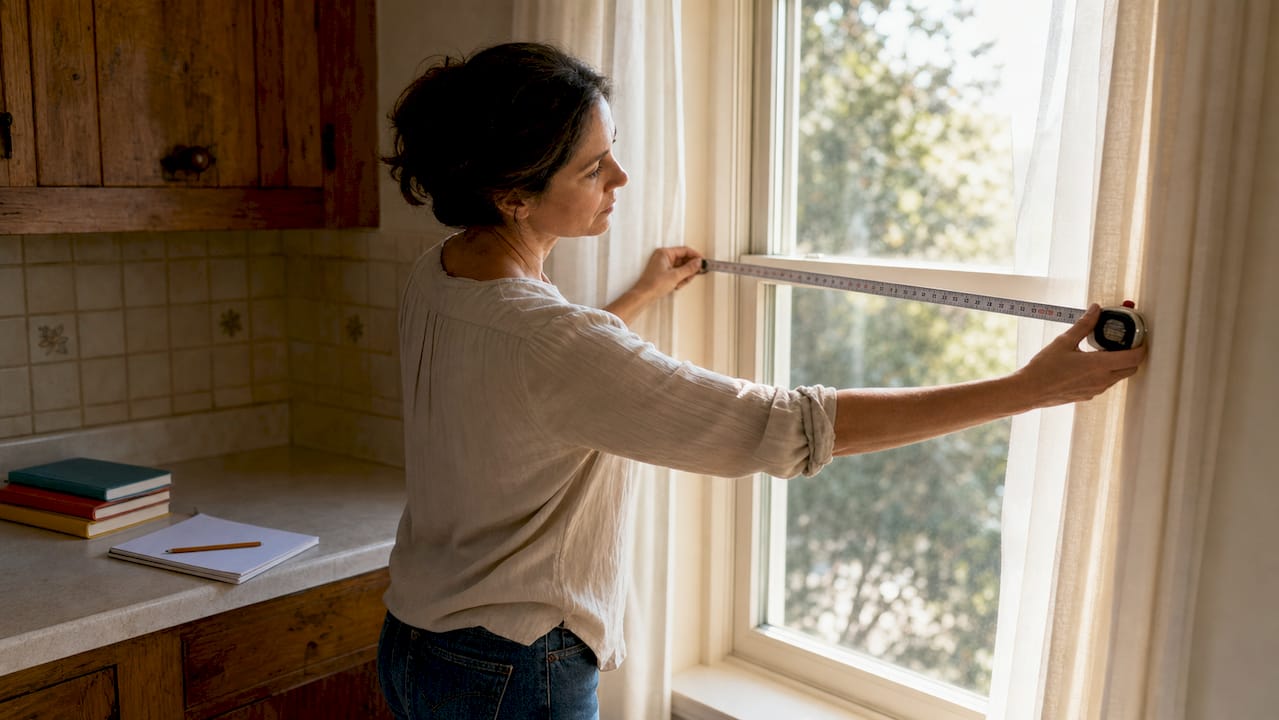
Measuring correctly is the single most important step. A shade that is even a quarter-inch too wide will not fit inside the frame. One that is too narrow leaves visible gaps.
Measuring for inside mount:
- Measure the width at the top, middle, and bottom of the window opening. Use the narrowest measurement.
- Measure the height on the left, center, and right. Use the longest measurement.
- Deduct the amount specified by the manufacturer (usually 3/8 inch to 1/2 inch) to allow the shade to operate without rubbing the frame.
Measuring for outside mount:
- Measure the width of the area you want covered, adding at least 2 inches on each side beyond the frame.
- Measure the height from where you want the shade to mount down to the sill or floor, adding 2 to 4 inches above the frame to block top-edge light.
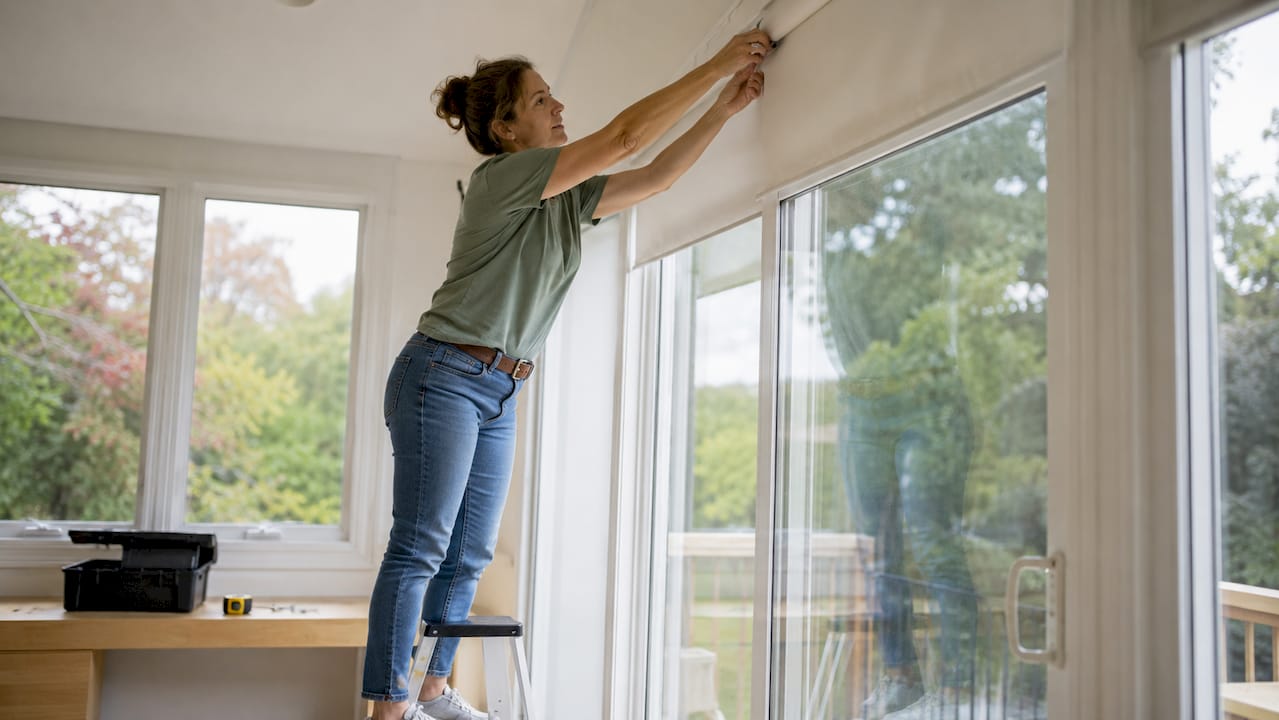
Once you have your measurements, the installation process for most made to order roller blinds follows these steps:
- Mark bracket positions with a pencil and level.
- Drill pilot holes and secure the brackets with the included screws.
- Snap the roller tube into the brackets.
- Test the roll direction and adjust tension if the shade rolls too fast or too slow.
- Attach the bottom bar weight if included, which keeps the shade hanging flat.
Maintenance is straightforward. Wipe the fabric with a damp cloth and mild soap for surface dust. Avoid soaking the fabric, which can separate the vinyl backing from the polyester layer. For motorized shades, check the battery level or power connection every six months. The brackets and hardware rarely need attention, but tighten any loose screws annually to prevent the shade from tilting in the frame.
How do blackout shades improve comfort, privacy, and energy savings?
The functional benefits of light blocking roller shades extend well beyond darkness. Sleep quality is the most documented benefit. Light exposure during sleep suppresses melatonin production, which disrupts sleep cycles. A bedroom with effective blackout coverage removes that stimulus entirely, which is why shift workers, parents of young children, and anyone sensitive to early morning light consistently report better sleep after installing proper blackout shades.
Privacy is equally significant, particularly in urban settings where windows face neighboring buildings or busy streets. A blackout shade prevents anyone outside from seeing into the room at night when interior lights are on, which is the moment when standard sheer or light-filtering shades become completely transparent from the outside.
“Blackout roller shades serve as a practical base layer for darkening rooms, best paired with additional treatments to achieve total light sealing.” — Industry insight on layered window treatments
Energy savings are a third benefit that homeowners often underestimate. Custom blackout roller shades contribute to home energy savings by improving window insulation. Windows are the weakest point in a home’s thermal envelope. A shade pressed close to the glass creates a still-air buffer that slows heat transfer in both directions. In summer, it reduces solar heat gain. In winter, it slows heat loss through the glass. For homes with older single-pane windows, this effect is especially pronounced. Pairing blackout roller shades with energy-efficient window treatments compounds these savings further.
Key takeaways
Custom blackout roller shades deliver the best results when fabric quality, mount type, and lift mechanism are chosen together rather than independently.
| Point | Details |
|---|---|
| Fabric construction matters | Choose 100% polyester with vinyl backing for true blackout performance and durability. |
| Outside mount reduces light gaps | Mounting beyond the frame eliminates edge light leakage that inside mounts cannot prevent. |
| Layering maximizes darkness | Pairing roller shades with curtains seals perimeter gaps for total room darkening. |
| Motorized lift adds safety and convenience | Cordless and motorized options remove cord hazards and allow smart home scheduling. |
| Energy savings are real | Blackout shades insulate windows and reduce heat transfer in both summer and winter. |
Why I think most people underestimate what a custom shade actually does
Most buyers focus entirely on whether a shade looks good in the product photo. That is the wrong starting point. After working with window treatments across dozens of home configurations, the pattern I see consistently is this: people buy a shade for style and then discover it does not block light the way they expected. The fabric was fine. The mount type was wrong.
An inside-mount shade on a deep-set window can work beautifully. The same shade on a shallow frame with a south-facing exposure will glow around the edges every morning. The fix is not a better shade. It is an outside mount with a 3-inch extension on each side. That one decision changes everything.
I also see people skip the layering step because they think it looks too heavy or formal. It does not have to. A simple linen drape panel hung from a ceiling-mounted rod over a clean white blackout roller shade looks minimal and works completely. The roller shade handles the light. The drape handles the perimeter. Neither one has to do a job it was not designed for.
The other misconception worth addressing: price does not always predict blackout performance. A mid-range shade with the right fabric construction and mount type will outperform an expensive shade installed incorrectly every time. Spend your attention on the spec sheet before you spend your money on the product.
For renters specifically, outside mount with command strip-compatible brackets or tension rod systems gives you the same performance without drilling. The options for custom light control in rental-friendly formats have expanded significantly in recent years.
— Sunny
Design your custom blackout shades with Valueblindsdirect
Valueblindsdirect makes the process of ordering custom blackout roller shades straightforward, with a full range of fabric options, lift mechanisms, and mount configurations available online.
The Window Treatment Design Studio at Valueblindsdirect lets you enter your exact measurements, choose your fabric and opacity level, select cordless or motorized lift, and preview the result before ordering. Free swatches are available so you can confirm color and texture in your actual room lighting before committing. Expert support is included if you have questions about mount type or fabric selection. For anyone who wants total light control without guesswork, this is the most direct path to getting it right the first time.
FAQ
What is the difference between blackout and room-darkening roller shades?
Blackout roller shades use a fully opaque fabric with a vinyl or acrylic backing that blocks 100% of light through the fabric itself. Room-darkening shades reduce light significantly but allow a small amount to filter through the weave.
How do I measure for custom fitted blackout shades?
Measure width at three points and use the narrowest measurement for inside mount. For outside mount, add at least 2 inches beyond the frame on each side and 2 to 4 inches above the frame to block top-edge light.
Do blackout roller shades block all light?
The fabric blocks light completely, but edge gaps are common with inside-mount installations. Pairing an outside-mount shade with curtain panels eliminates most perimeter light leakage.
Are cordless blackout roller shades safe for homes with children?
Yes. Cordless lift systems remove the strangulation hazard posed by traditional chain or cord mechanisms, making them the recommended choice for any room where children or pets are present.
Can blackout roller shades help reduce energy bills?
Custom blackout roller shades improve window insulation by creating a still-air buffer between the shade and the glass, which reduces heat transfer in both summer and winter and lowers heating and cooling costs over time.