
Best Blinds for Large Windows: Top 5 Options
TL;DR:
- Large windows require specially designed treatments to prevent sagging and maintain light control. Options include vertical blinds, panel track blinds, cellular shades, motorized roller shades, and plantation shutters, each suited to different sizes and styles. Selecting the right treatment depends on window width, energy needs, and interior design preferences.
The best blinds for large windows are window treatments specifically designed to cover wide or tall spans without sagging, warping, or losing light control. Standard off-the-shelf blinds fail on oversized windows because they lack the structural support and sizing capacity those windows demand. The right window treatments for large windows solve three problems at once: they cover the full span, manage heat and light effectively, and look intentional rather than improvised. This article covers the top five large window blind options, from vertical blinds and cellular shades to motorized roller shades and plantation shutters, so you can match the right solution to your home.
1. Vertical blinds and panel track blinds: best for extra-wide spans
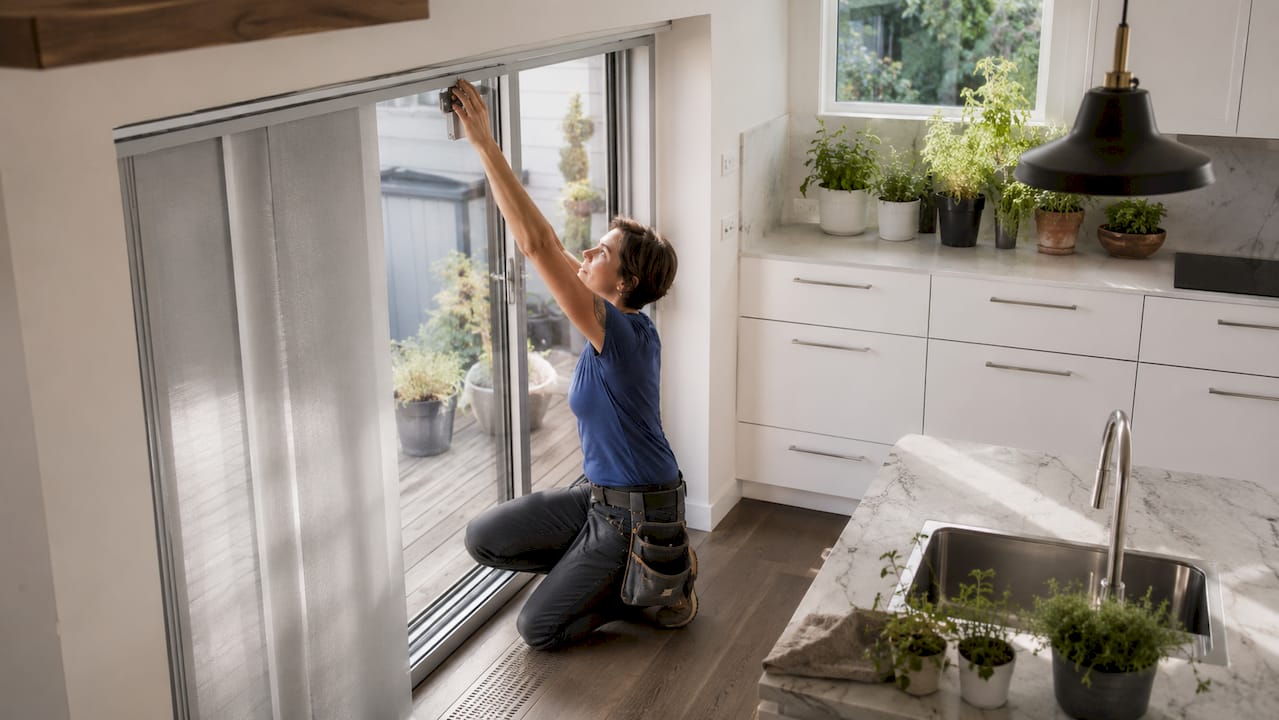
Vertical blinds are the most practical solution for very wide windows. Vertical blinds span up to 192 inches in width, making them the go-to choice for sliding glass doors, picture windows, and wide living room walls. That coverage range puts them well ahead of most roller shade systems when raw width is the priority.
Panel track blinds take the same concept further with a cleaner, more modern look. Wide fabric panels slide along ceiling-mounted tracks, creating a smooth, architectural effect that suits contemporary interiors. Panel track systems can span up to 332 inches by joining multiple tracks together. That makes them the widest-coverage window treatment available for residential use.
Both systems stack neatly to one side when open, so they never block your view or eat into your usable window space. Material options range from sheer voile and linen weaves to blackout fabrics and solar screen mesh. You can match the panel color and texture to your existing décor without compromising on function.
- Coverage: Vertical blinds reach 192 inches; panel tracks reach 332 inches
- Operation: Smooth cord, wand, or motorized control
- Light control: Available in sheer, light-filtering, and blackout fabrics
- Style: Vertical blinds suit traditional and transitional interiors; panel tracks suit modern and minimalist spaces
- Motorization: Both systems support motorized operation for hands-free control
Pro Tip: For sliding glass doors, choose a vertical blind with a split-draw configuration. It lets you open either side independently, which is far more practical than a single-draw system that piles all the slats on one end.
2. Cellular shades: the top energy-efficient choice for tall windows
Cellular shades, also called honeycomb shades, are the best shades for big windows when energy efficiency is the primary concern. Their structure traps air inside individual honeycomb cells, creating an insulating barrier between the glass and your living space. About 30% of home heating energy is lost through windows, and cellular shades directly address that loss by reducing heat transfer at the glass surface.
The insulation benefit is real and measurable. A double-cell or triple-cell honeycomb shade provides more insulating layers than a single-cell version, which matters most in climates with harsh winters or intense summer heat. For tall windows where a large glass surface is exposed to the elements, that added thermal resistance translates directly into lower energy bills and more consistent indoor temperatures.
Cellular shades also offer one of the cleanest visual profiles of any window treatment. Their flat, fabric face suits both modern and traditional interiors without competing with your furniture or architecture. For tall windows specifically, the cordless and motorized lift options make operation practical. Reaching a cord on a 10-foot window is awkward at best and unsafe for households with children.
- Insulation: Single, double, and triple-cell options for increasing thermal performance
- Light control: Available in light-filtering, room-darkening, and blackout fabrics
- Operation: Cordless, top-down/bottom-up, and motorized lift systems
- Style: Clean, minimal profile suits most interior styles
- Safety: Cordless designs eliminate cord hazards for children and pets
The cordless day and night cellular shades from Valueblindsdirect combine a light-filtering layer and a blackout layer in a single shade, giving you flexible control from morning brightness to full nighttime privacy.
Pro Tip: Choose a top-down/bottom-up cellular shade for tall windows that face a street or neighbor. You get natural light from the top half while keeping the lower half private.
3. Motorized roller shades: sleek design for hard-to-reach windows
Motorized roller shades are the best choice when you want a clean, minimal look combined with effortless daily operation. Standard roller shades cap at 108 to 144 inches wide, which covers most residential windows. For spans beyond that, a panel track system or side-by-side roller configuration handles the extra width.
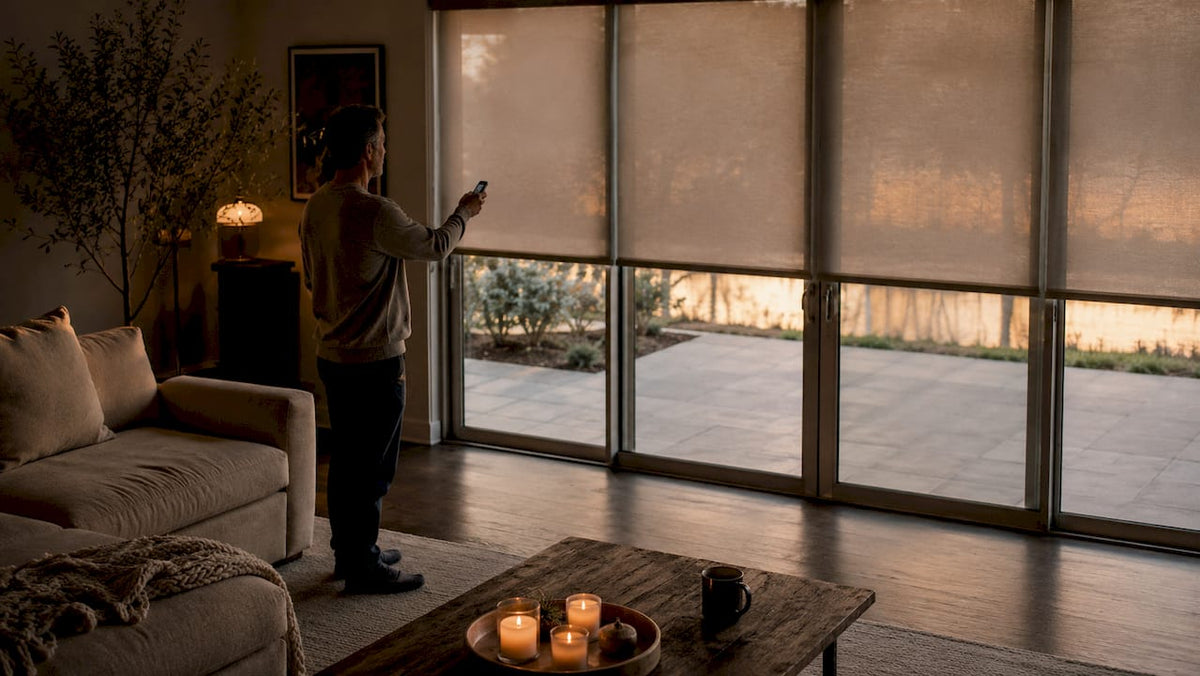
The real advantage of motorization shows up on large windows that are difficult to reach. Motorized vertical blinds and roller shades offer remote and smart home operation for windows that would otherwise require a step stool or extended reach. Integration with systems like Google Home, Amazon Alexa, or Apple HomeKit lets you control every shade in a room from your phone or with a voice command.
Fabric selection matters more on large windows than small ones because the visual impact is amplified. Solar screen fabrics are a strong choice for south and west-facing windows. Solar screen roller shades reduce solar heat gain by 30–40% while preserving your outward view. That means you keep the connection to your yard or landscape without turning your living room into a greenhouse.
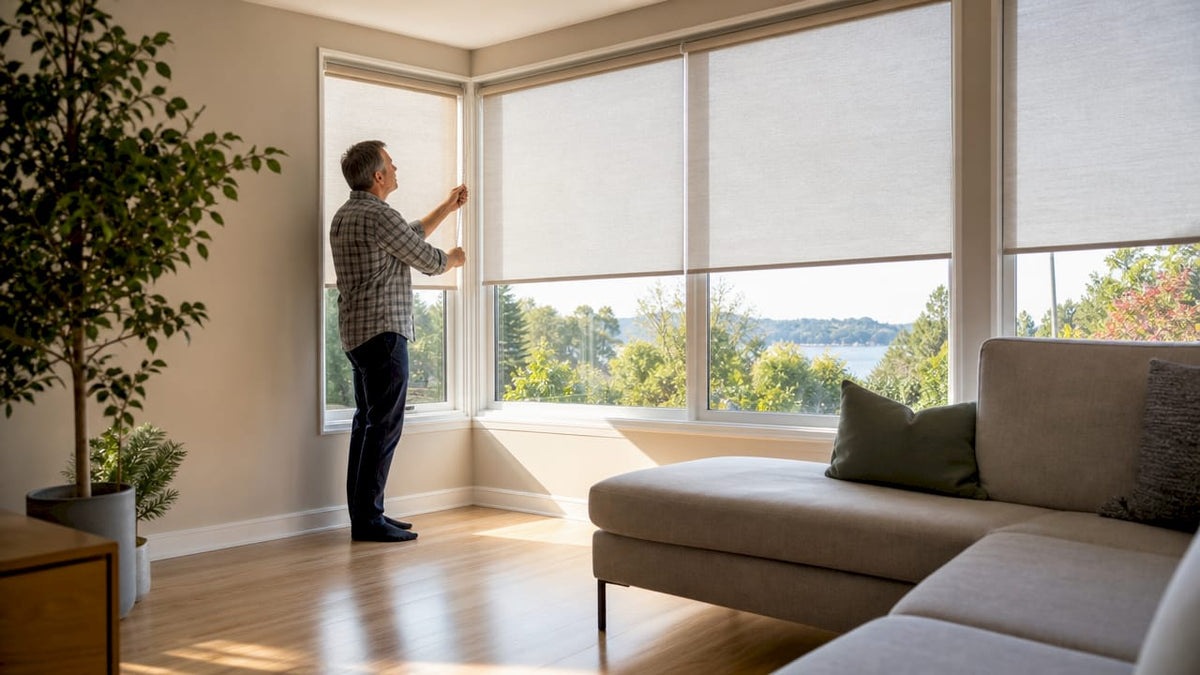
Large-window roller shades need heavier tubes and stronger brackets to prevent sagging across wide spans. Motorization helps by distributing the lifting load evenly rather than relying on manual cord tension. When you order custom roller shades for large windows, confirm that the supplier specifies tube diameter and bracket weight ratings for your exact width.
- Fabric options: Blackout, room-darkening, light-filtering, and solar screen
- Smart control: Compatible with Google Home, Amazon Alexa, and Apple HomeKit
- Heat reduction: Solar screen fabrics cut heat gain by 30–40%
- Construction: Heavier tubes and reinforced brackets required for wide spans
- Style: Minimal, flat profile suits modern and contemporary interiors
Pro Tip: For floor-to-ceiling windows, pair a solar screen shade with a blackout roller shade on a dual bracket. You get daytime glare control and full nighttime privacy from a single, clean installation.
4. Plantation shutters: durable and stylish for oversized windows
Plantation shutters are the premium option for homeowners who want a window treatment that functions as a permanent architectural feature. Custom-made shutters for large windows maintain stability without sagging and add an insulating layer that helps regulate indoor temperatures year-round. Off-the-shelf shutters bow and warp on wide spans. Custom fabrication eliminates that problem entirely.
The adjustable louvers give you precise control over light and privacy without moving the entire panel. You can angle the louvers to direct light toward the ceiling for diffused brightness, or close them fully for blackout-level privacy. That level of control is difficult to replicate with fabric-based window treatments.
“Plantation shutters add measurable resale value to a home. They read as a permanent fixture rather than a decorative accessory, which buyers and appraisers treat differently than fabric blinds.”
Plantation shutters for large windows come in several configurations. Bi-fold panels fold back flat against the wall when open, which is ideal for wide windows where you want maximum glass exposure. Multi-panel sliding systems work well for floor-to-ceiling glass walls. Both configurations are available in wood, faux wood, and composite materials, with composite being the best choice for high-humidity rooms like kitchens and bathrooms.
- Sizing: Custom-made to exact dimensions, no sagging on wide spans
- Light control: Adjustable louvers for precise angle control
- Insulation: Adds a thermal layer that reduces heat transfer
- Configurations: Bi-fold, multi-panel sliding, and hinged styles
- Materials: Wood, faux wood, and composite options
5. Comparing large window blind options: which one fits your home?
Choosing between these window treatments comes down to three factors: your window’s dimensions, your energy efficiency goals, and your interior style. The table below summarizes the key differences.
| Type | Best for | Energy efficiency | Max width | Style fit |
|---|---|---|---|---|
| Vertical blinds | Very wide windows, sliding doors | Moderate | 192 inches | Traditional, transitional |
| Panel track blinds | Extra-wide spans, modern interiors | Moderate | 332 inches | Modern, minimalist |
| Cellular shades | Tall windows, cold or hot climates | High | Varies by product | Universal |
| Motorized roller shades | Hard-to-reach windows, smart homes | Moderate to high | 108–144 inches | Modern, contemporary |
| Plantation shutters | Premium installs, permanent fixtures | High | Custom | Traditional, transitional |
Operable window coverings like blinds, shades, and shutters give you year-round flexibility to manage privacy, natural light, and solar heat gain. That flexibility is what separates a well-chosen window treatment from a purely decorative one.
If energy savings are your top priority, cellular shades or plantation shutters deliver the best insulation. If you have an extremely wide window or sliding glass door, vertical blinds or panel track blinds are the only practical options. For homeowners who want a modern look with smart home control, motorized roller shades with solar screen fabric are the strongest choice.
For living rooms with large picture windows, the best living room blind ideas often combine a solar screen shade for daytime use with a blackout layer for evenings. That layered approach handles every lighting condition without requiring multiple separate treatments.
Key takeaways
The best blinds for large windows balance structural capacity, light control, and insulation, with cellular shades and plantation shutters leading on energy efficiency and vertical blinds leading on raw coverage width.
| Point | Details |
|---|---|
| Match width to the right system | Vertical blinds cover up to 192 inches; panel tracks reach 332 inches for the widest spans. |
| Prioritize insulation for energy savings | Cellular shades reduce heat loss through windows, directly lowering heating and cooling costs. |
| Use motorization for hard-to-reach windows | Remote and smart home control eliminates the need to manually operate shades on tall or wide windows. |
| Choose custom sizing for shutters | Off-the-shelf plantation shutters sag on large windows; custom fabrication prevents bowing and warping. |
| Layer treatments for full light control | Combining a solar screen shade with a blackout layer handles every lighting condition in one installation. |
What I’ve learned from years of watching homeowners get large windows wrong
The most common mistake I see is homeowners buying the most beautiful blind they can find and then discovering it physically cannot cover their window. A 120-inch wide picture window eliminates most standard roller shades immediately. The product looks perfect in the showroom photo and arrives completely wrong for the job. Sizing has to come first, always.
The second mistake is underestimating how much a large glass surface affects room temperature. A south-facing floor-to-ceiling window without proper window treatments turns a living room into an oven by early afternoon in july. Cellular shades or solar screen roller shades are not optional in that situation. They are functional necessities.
My honest recommendation: if your windows are wider than 96 inches or taller than 84 inches, motorization is worth every dollar. Manually operating a heavy roller shade or reaching for a cord on a 10-foot window gets old within a week. The motorized blinds guide from Valueblindsdirect covers the technical side of motor selection and smart home compatibility in detail if you want to go deeper on that decision.
The last thing I want to say is this: do not let style override function on large windows. A sheer linen panel looks stunning on a wide window in a magazine. In a real home facing west, it does nothing for heat or privacy. Pick the treatment that solves your actual problem first, then find the most attractive version of that solution.
— Sunny
Custom large window solutions from Valueblindsdirect
Valueblindsdirect carries a full range of custom window treatments built specifically for large windows, including motorized cellular shades, solar screen roller shades, panel track blinds, and cordless options for child-safe installations. Every product is available in custom sizes, so your blinds fit your exact window dimensions rather than the nearest standard size. The Window Treatment Design Studio connects you with experts who help you select the right treatment for your window size, room orientation, and style goals. From measurement to installation support, Valueblindsdirect makes the process straightforward for homeowners tackling large or non-standard windows.
FAQ
What are the best blinds for very wide windows?
Vertical blinds and panel track blinds are the best options for very wide windows. Vertical blinds cover spans up to 192 inches, while panel track systems reach up to 332 inches by joining multiple tracks.
Are cellular shades good for large windows?
Cellular shades are an excellent choice for large windows, particularly tall ones. Their honeycomb structure reduces heat loss, and cordless or motorized lift systems make them practical to operate on windows beyond normal reach.
How wide can motorized roller shades go?
Standard motorized roller shades max out at 108–144 inches wide. For wider spans, a side-by-side roller configuration or a panel track system provides the additional coverage.
Do plantation shutters work on oversized windows?
Custom-made plantation shutters work well on oversized windows because they are fabricated to exact dimensions, which prevents the sagging and bowing that occurs with standard-size shutters on wide spans.
What blinds are most energy efficient for large windows?
Cellular shades and plantation shutters provide the best insulation for large windows. Cellular shades trap air in honeycomb cells to reduce heat transfer, while plantation shutters add a rigid thermal layer that helps regulate indoor temperatures year-round.
Recommended
- How to Choose Blinds for Large Windows: Style, Fit, Function
- Best Custom Window Treatments – Expert Comparison 2025
- Motorized Blinds for Large Windows: 2026 Homeowner’s Guide
- Roman Shades for Large Windows: Style and Function

Value Blinds®
Trusted window treatments provider
Value Blinds® is a trusted provider of Greenguard, OEKO-TEX, and FSC-certified window treatments based in Portland, Oregon. Specializing in sustainable, motorized, smart-controlled, and outdoor-ready blinds and shades, the company is built on a foundation of simplified shopping, premium eco-friendly materials, and transparent pricing without the inflated cost.