
Decorating with Bamboo Blinds: Your Style Guide
TL;DR:
- Decorating with bamboo blinds has evolved from a beach-style cliché to a sophisticated design element adding warmth and eco-conscious appeal. Proper selection, sizing, and care are essential for achieving the desired aesthetic and longevity, especially considering moisture and privacy needs. Regular maintenance, such as dusting and annual mineral oil conditioning, helps prolong their lifespan and keeps them looking natural and polished.
Decorating with bamboo blinds has moved well past the bohemian-beachhouse cliché. Today, designers are styling bamboo as a serious design element that adds warmth, texture, and an eco-conscious edge to everything from city apartments to coastal cottages. The challenge most homeowners and renters face is not finding bamboo blinds. It is choosing the right type, fit, and style for their specific space, then knowing how to care for them properly. This guide covers exactly that: selection criteria, popular styles, a clear comparison, and practical care tips you can use today.
Table of Contents
- Key takeaways
- 1. Decorating with bamboo blinds: what to know before you buy
- 2. Traditional bamboo slat blinds
- 3. Cordless bamboo shades for modern interiors
- 4. Outdoor bamboo roll-up shades
- 5. Decorative printed bamboo shades
- 6. Layering bamboo blinds with curtains
- 7. Top down bottom up bamboo shades
- 8. How to style bamboo blinds across different rooms
- 9. Comparing bamboo blind types: a quick reference
- 10. Care and maintenance to protect your investment
- My honest take on bamboo blinds after years in home design
- Find your perfect bamboo blinds at Valueblindsdirect
- FAQ
Key takeaways
| Point | Details |
|---|---|
| Match style to room function | Choose light-filtering styles for living rooms and higher-privacy options for bedrooms and bathrooms. |
| Custom sizing is achievable | Bamboo blinds can be trimmed at home with basic tools, making them a realistic option for non-standard windows. |
| Layer for better results | Pairing bamboo blinds with curtains adds insulation, privacy, and a more finished, polished look. |
| Moisture is the main threat | Regular dusting and minimal moisture during cleaning protect bamboo blinds from warping and mold. |
| Condition annually | Applying mineral oil every 6 to 12 months prevents cracking and keeps blinds looking new for years. |
1. Decorating with bamboo blinds: what to know before you buy
Before you order anything, a few key factors will determine whether your bamboo blinds look intentional or accidental.
Material quality matters more than price. Not all bamboo is harvested or processed the same way. Look for blinds made from solid bamboo reeds rather than pressed or composite materials. Solid reeds hold their shape better over time and tend to have richer natural color variation, which is a large part of their visual appeal.
Light filtering and privacy levels vary widely across bamboo styles. Open-weave bamboo shades let in a soft, diffused glow that feels warm and organic. Tighter weaves and denser slat construction give you more privacy. For bedrooms or street-level windows, pair your bamboo blinds with a fabric liner or blackout roller shade mounted behind them. This layered approach is one of the best bamboo blinds for privacy setups you can achieve without sacrificing the natural aesthetic.
Here is what to check before purchasing:
- Weave density: Tighter weaves block more light and provide more privacy.
- Moisture rating: Avoid untreated bamboo in bathrooms or high-humidity kitchens unless the product is specifically rated for those conditions.
- Cord vs. cordless: Cordless options are safer for homes with children or pets and look cleaner in modern interiors.
- Mount type: Inside mount gives a built-in look; outside mount adds the illusion of height and width to a window.
- Return policy: Always order a physical swatch first so you can see the actual color and texture in your lighting conditions.
On sizing, standard bamboo blinds rarely fit every window perfectly. The good news is that DIY trimming is feasible using a permanent adhesive, a utility knife, and a marker. Measure twice, cut slowly, and you can tailor most bamboo blinds to fit windows as narrow as 20 inches without visible damage to the reed structure.
Pro Tip: Order one extra inch of width when in doubt, since it is far easier to trim bamboo down than to add material back.
2. Traditional bamboo slat blinds
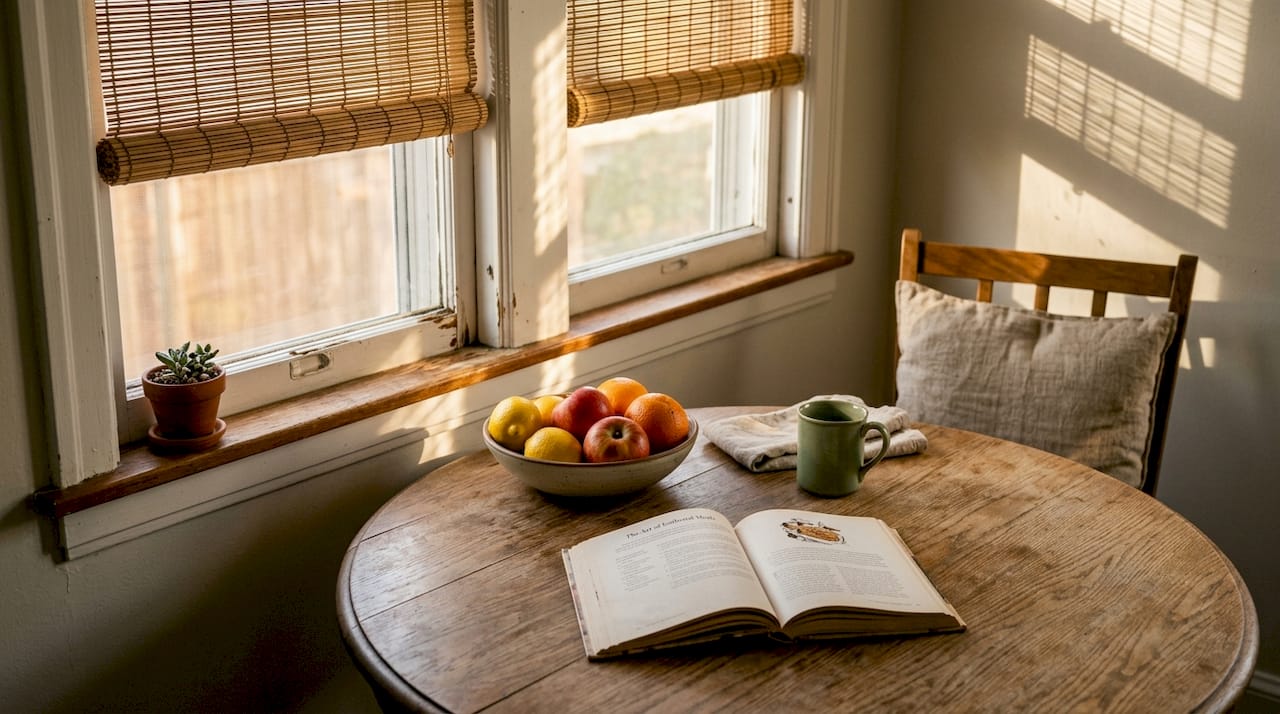
Classic bamboo slat blinds are made from horizontal reeds tied together with visible cotton or polyester cord. The construction is simple, the look is timeless, and they work in virtually any room. Natural tones range from pale honey to deep walnut, which means they pair effortlessly with both light Scandinavian palettes and richer, more layered bohemian interiors.
The visual texture is the real draw here. Unlike flat roller shades, slat blinds cast interesting shadow patterns as the light shifts throughout the day. That quality alone makes them worth considering for living rooms or dining areas where atmosphere matters.
3. Cordless bamboo shades for modern interiors
Cordless bamboo shades have become the go-to choice for renters and families alike. The cleaner profile works especially well in minimalist and transitional interiors. Functionally, a 72-inch cordless shade with adjustable hooks can diffuse light and reduce glare without the dangling hardware that makes corded models look dated.
From a bamboo blinds interior design standpoint, cordless operation also means no cord loops interrupting the visual flow of a well-styled window. For tall windows in particular, this is a significant aesthetic upgrade over traditional corded models.
4. Outdoor bamboo roll-up shades
Using bamboo shades outdoors is one of the most underused ideas in patio and porch design. Outdoor bamboo shades are typically cordless, roll up cleanly when not in use, filter light softly, and provide a degree of UV protection that helps protect outdoor furniture from fading.
The rustic, natural look fits covered patios, pergolas, and screened porches especially well. The main consideration is product selection: make sure the blinds are labeled for exterior use, since indoor bamboo treated for interior humidity will degrade quickly when exposed to rain and direct sun.
5. Decorative printed bamboo shades
Printed bamboo shades bring a different energy. Instead of the raw, natural reed texture, these shades feature artwork, botanical patterns, or geometric designs printed directly onto woven bamboo fabric. They function more like wall art that also controls light.
This style works beautifully in rooms that need a focal point but lack the wall space for large art pieces. A nature-inspired print above a reading nook, for example, adds personality without committing to permanent installation. This is a practical consideration for renters who cannot repaint or hang heavy frames.
6. Layering bamboo blinds with curtains
One of the most effective bamboo window treatments ideas is pairing your bamboo blinds with curtains. Bamboo blinds with curtains deliver both function and visual interest in a way that either element alone cannot. Natural-tone bamboo paired with warm patterned curtains creates a layered, lived-in feel. Dark bamboo slats paired with heavy velvet panels add a moody, dramatic quality that works in media rooms and bedrooms.
The curtain rod should be mounted a few inches above the blind’s header and extend several inches wider on each side. This framing technique makes windows appear larger and the overall window treatment look intentional rather than improvised.
7. Top down bottom up bamboo shades
This mechanism is one of the smarter functional choices available in bamboo blinds interior design. Top down bottom up shades let you lower the top of the shade while keeping the bottom raised, allowing natural light in from the top while maintaining eye-level privacy. This is particularly useful in ground-floor rooms that face a street or a neighbor’s walkway.
The mechanism does add some cost compared to standard roll-up models, but for bathrooms, street-facing living rooms, and bedrooms, the privacy control is worth the investment.
8. How to style bamboo blinds across different rooms
Knowing how to style bamboo blinds well comes down to understanding what each room needs from its window treatment.
Living rooms benefit from light-filtering open-weave styles that keep the space bright but reduce harsh glare. Pair them with sheer linen curtains in a neutral tone for a relaxed, organic look.
Bedrooms call for tighter weaves or a liner behind the bamboo to block enough light for sleep. Adding a blackout cellular shade behind the bamboo gives you the best of both aesthetics and function.
Kitchens are where DIY trimming pays off most, since kitchen windows rarely match standard sizes. Bamboo blinds provide a warm textured natural look that fits coastal, farmhouse, and transitional kitchen designs equally well. Keep the weave tight enough to manage grease splatter, and opt for cordless operation to keep the window area clean.
Outdoor spaces deserve the full roll-up bamboo treatment. On a pergola or covered patio, bamboo shades soften afternoon sun without blocking airflow, and they add an organic design element that blends naturally with garden surroundings.
Pro Tip: In rooms with high ceilings, mount bamboo blinds two to three inches above the window frame and use panels at least a foot taller than the opening. The added height makes the room feel larger without any structural changes.
9. Comparing bamboo blind types: a quick reference
| Type | Best room | Privacy level | Moisture tolerance | DIY trim possible |
|---|---|---|---|---|
| Traditional slat blinds | Living room, bedroom | Medium | Low | Yes |
| Cordless roll-up shades | Any interior room | Medium | Low to medium | Yes |
| Outdoor roll-up shades | Patio, porch, pergola | Low to medium | High | Limited |
| Decorative printed shades | Bedroom, office, rental | Low to medium | Low | No |
| Top down bottom up shades | Bathroom, street-facing | High | Low | No |
Pro Tip: If you are renting and need to avoid permanent installation, cordless bamboo shades with tension-mount hardware are the cleanest no-drill option available.
10. Care and maintenance to protect your investment
Moisture control is the most important factor when caring for bamboo blinds, and it is also the most commonly overlooked one. The maintenance routine is not complicated, but it does need to be consistent.
Follow these steps to keep your bamboo blinds looking their best:
- Weekly dusting: Use a soft dry cloth or a low-suction vacuum with a brush attachment. Work along the grain of the reeds, not against it.
- Blot spills immediately: Never rub. Blot moisture straight away, then let the blind air dry completely before rolling it up.
- Deep cleaning every 1 to 2 months: Wipe lightly with a barely damp cloth and a small amount of mild soap. Avoid soaking the reeds at any point.
- Annual conditioning: Apply mineral oil lightly with a soft cloth following the grain. Let it penetrate for 20 minutes, then buff off the excess. This prevents cracking and keeps the reeds supple.
- Avoid high-humidity rooms without protection: Neglecting moisture control leads to warping and mold over time. If you place bamboo blinds in a bathroom or laundry area, use a dehumidifier or confirm the product is humidity-rated.
For eco-friendly window treatments in general, the philosophy is the same: extend the product’s lifespan through regular, gentle care rather than reactive deep cleaning.
My honest take on bamboo blinds after years in home design
I’ve seen a lot of window treatment trends come and go. Bamboo blinds are not a trend. They are a material choice with genuine staying power, and the resurgence in 2026 makes complete sense to me because the design world is finally catching up to what the material actually offers.
What I’ve found is that most people who are unhappy with their bamboo blinds made one of two mistakes. They bought the cheapest option without checking weave density, or they installed them in a high-moisture room without any protective measures. Neither mistake is hard to avoid, but both are hard to undo once the warping starts.
My honest advice: spend slightly more on a tighter weave from a reputable source, add a liner if privacy is a genuine concern, and commit to the annual mineral oil conditioning. Those three things extend the lifespan of bamboo blinds dramatically and keep them looking like a design choice rather than an afterthought.
I also think bamboo blinds are underused by renters specifically. A cordless, inside-mount bamboo shade requires no drilling, installs in minutes with tension hardware, and transforms a generic rental window into something that actually looks considered. When you leave, you take it with you. That flexibility is something solid wood shutters or built-in cellular shades simply cannot offer.
— Sunny
Find your perfect bamboo blinds at Valueblindsdirect
Valueblindsdirect carries a curated collection of natural bamboo blinds spanning traditional slat styles, cordless roll-up shades, and privacy-focused options built for modern interiors. Every blind is available in custom sizing, so you get a precise fit without the DIY guesswork. If you’re not sure where to start, Valueblindsdirect’s design studio connects you with window treatment specialists who can help you match the right style, weave, and finish to your specific room and decor. Free swatches are available so you can see the real texture and color before committing. Browse the full collection, request your swatches, and get your windows working harder for your space.
FAQ
Are bamboo blinds good for privacy?
Bamboo blinds offer moderate privacy depending on weave density. For rooms requiring more coverage, pairing them with a fabric liner or using privacy bamboo shades with a tighter construction delivers better results.
Can bamboo blinds be used in a bathroom?
Standard bamboo blinds are not rated for high-humidity environments and can warp or develop mold without protection. Choose a product specifically labeled for moisture-resistant use, and run a dehumidifier if possible.
How do you clean bamboo blinds without damaging them?
Dust weekly with a soft cloth, blot any spills straight away, and deep clean every one to two months using a barely damp cloth with mild soap. Never soak the reeds, and always allow them to air dry completely.
What decor styles work best with bamboo blinds?
Bamboo blinds fit coastal, Scandinavian, bohemian, farmhouse, and transitional interiors particularly well. Their natural color and texture complement neutral palettes, warm wood tones, and organic textiles.
How long do bamboo blinds last with proper care?
With consistent dusting, minimal moisture exposure, and annual mineral oil conditioning, quality bamboo blinds can last seven to ten years or longer without significant fading or structural deterioration.