
Electric Patio Door Blinds: Your 2026 Homeowner's Guide
TL;DR:
- Electric patio door blinds are motorized window treatments designed to control light and privacy for wide patio doors. They connect seamlessly with smart home systems and offer options like panel track, roller shades, and cellular styles for different needs. Proper selection ensures energy efficiency, privacy, and easy installation for homeowners and renters alike.
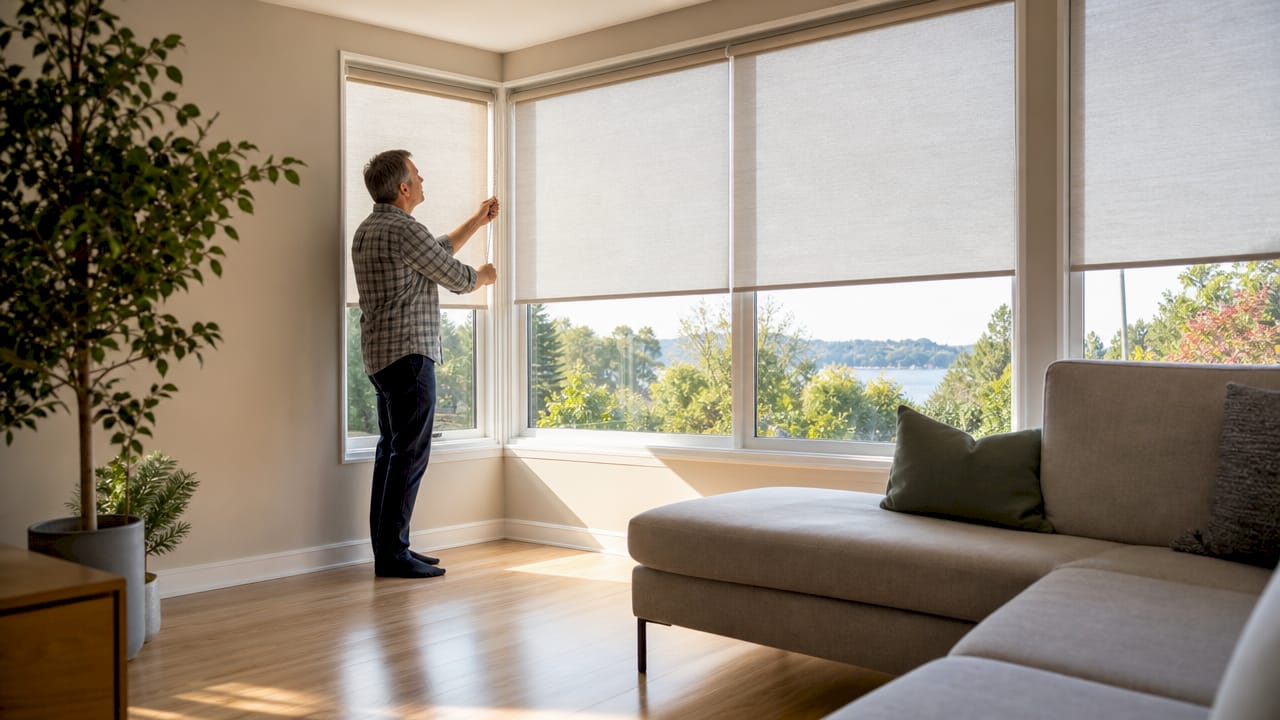
Electric patio door blinds are motorized window treatments designed specifically for patio doors, delivering automated privacy and light control at the touch of a button or a voice command. Unlike standard window blinds, these systems cover the wide spans of sliding, bifold, and folding patio doors while integrating with smart home platforms like Alexa, Google Home, and Apple HomeKit. Brands like Somfy, Lutron, and SonaCell have pushed the category forward with quiet motors, solar charging, and fabric options ranging from sheer solar screen to full blackout. The result is a window treatment that works harder, looks better, and requires far less daily effort than manual alternatives.
What are the main types of electric patio door blinds?
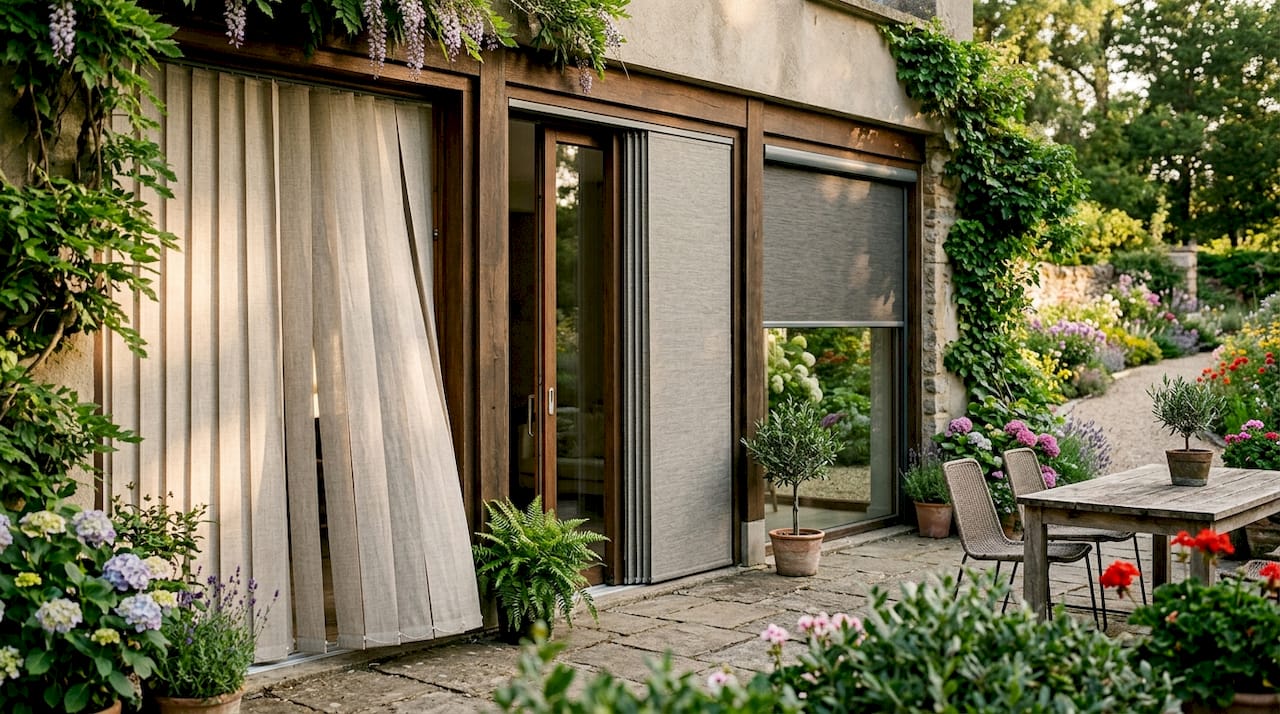
The right motorized patio door shade depends on your door style, privacy needs, and interior aesthetic. Three types dominate the market in 2026.
Vertical blinds are the most budget-friendly option. Individual fabric vanes rotate to control light and slide horizontally to open the door. They suit standard sliding glass doors well and are easy to replace panel by panel. The trade-off is visible gaps between vanes, which limits privacy.
Panel track blinds are the modern upgrade. Wide fabric panels glide along a ceiling or wall track, stacking neatly to one or both sides when open. Panel track blinds offer zero vane gaps and work with a broad range of fabrics including woven wood, blackout, and solar screen. They suit wide patio openings better than any other type and align with current interior design trends.
Motorized roller shades are the minimalist choice. A single fabric sheet rolls up into a slim headrail, keeping the look clean and uncluttered. They pair well with modern interiors and work in both inside and outside mount configurations.
Cellular shades add a thermal layer. Their honeycomb structure traps air, reducing heat transfer through the glass. They are the best pick when energy efficiency is the top priority.
| Type | Best for | Movement style | Privacy level |
|---|---|---|---|
| Vertical blinds | Budget, standard sliders | Side to side | Moderate |
| Panel track blinds | Wide spans, modern style | Side to side | High |
| Motorized roller shades | Minimalist interiors | Up and down | High |
| Cellular shades | Energy efficiency | Up and down | High |
- Vertical blinds: lowest cost, easiest maintenance
- Panel track blinds: best privacy, widest fabric selection
- Roller shades: cleanest look, compact headrail
- Cellular shades: best thermal performance
Pro Tip: For bifold or folding patio doors, panel track systems are the most practical. Each panel aligns with a door section, so the blind folds with the door rather than fighting against it.
How do electric patio door blinds integrate with smart home systems?
Motorized patio door shades connect to smart home ecosystems through several wireless protocols. By mid-2026, major systems support Matter, Zigbee, Alexa, Google Home, and Control4, giving homeowners genuine flexibility in how they automate their window treatments.
The most common control methods are:
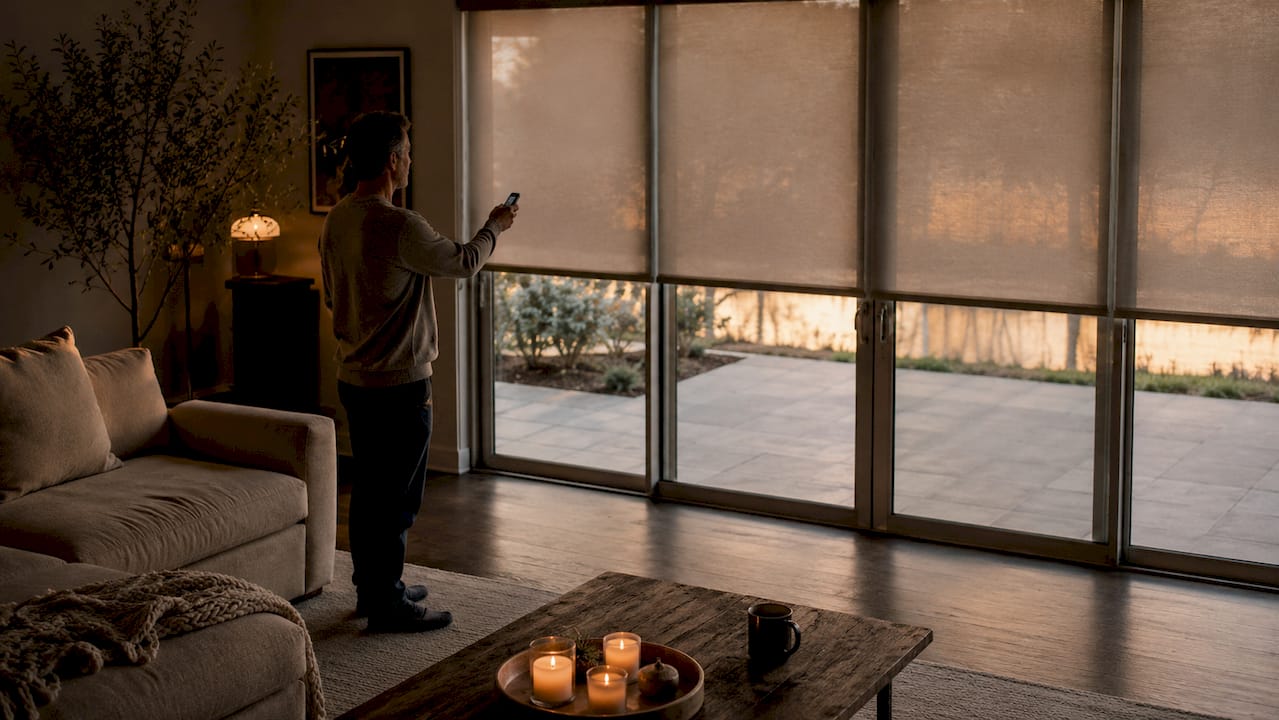
- Remote control: A dedicated handheld remote operates one or multiple shades.
- Wall switch: A hardwired or battery wall button blends into the room like a light switch.
- Smartphone app: Brands like Somfy use the Somfy Home app; Lutron uses the Caséta app for scheduling and scene control.
- Voice commands: Alexa and Google Home let you raise or lower shades without touching anything.
- Sun sensor automation: Sensors detect sunlight intensity and trigger the shades automatically at preset thresholds.
Group control is the feature most homeowners underestimate. Wide patio doors often require two or three separate shade panels. Multi-panel linking lets all panels move simultaneously from a single command, so you never deal with misaligned shades.
Power options break down into three categories. Battery motors are the easiest to install and require no wiring. Solar motors use a small panel to recharge the battery, extending intervals between charges significantly. Wired motors deliver the most reliable power but require an electrician for installation.
Somfy and Lutron motors are the two most widely supported brands across smart home platforms. Lutron’s Homeworks QS and Caséta systems integrate with virtually every major hub. Somfy’s RTS and io-homecontrol protocols cover a wide range of third-party shades and blinds.
Pro Tip: If you use Apple HomeKit, confirm that the motor supports Thread or HomeKit-native control before buying. Not all Zigbee devices bridge cleanly to HomeKit without an additional hub.
What are the benefits of electric patio door blinds for privacy and energy efficiency?
The practical case for automated sliding door blinds goes well beyond convenience. The benefits stack up across privacy, energy costs, UV protection, and furniture preservation.
UV protection is measurable. Light-filtering fabrics block 88–97% of UV rays; blackout fabrics block up to 100%. That matters because UV exposure is the primary cause of fading in hardwood floors, upholstery, and artwork. A motorized shade that closes automatically at peak sun hours protects your interior without any manual effort.
Heat gain is a real problem in warm climates. Motorized patio shades block sun exposure that can push patio surfaces above 130°F, reducing the heat that radiates through glass into your living space. Homeowners in hot climates often underestimate how much a motorized shade reduces indoor temperatures and air conditioning load.
The privacy advantage of motorized treatments is behavioral. Manual blinds often stay partially open because adjusting them is inconvenient. Automated blinds get used consistently because the effort is near zero. Consistent use means consistent privacy, especially for ground-floor patio doors that face a street or neighbor.
Additional benefits worth noting:
- Glare reduction protects screens and makes rooms more comfortable during the day
- Cellular shades reduce heat loss in winter through their insulating honeycomb structure
- Panel track blinds provide no vane gaps, eliminating the sightlines that vertical blinds leave open
- Motorized systems add perceived value to a home, particularly when integrated with a smart home setup
For outdoor applications, tension-zipper patio shades handle openings up to 19 feet wide with wind ratings up to 156 MPH. That level of durability makes them viable for covered patios and pergolas, not just interior door applications.
What are the installation options for renters and homeowners?
Installation complexity varies widely depending on the motor type, mounting method, and door configuration. Homeowners and renters face different constraints, but both have workable options.
- Measure the opening accurately. Measure width and height at three points each. Use the smallest measurement for inside mounts. Add 1.5–3 inches per side for outside mounts to maximize coverage.
- Choose your mounting method. Inside mount fits within the door frame for a clean look. Outside mount attaches to the wall above and beside the frame, covering more glass and blocking more light.
- Select a power source. Battery motors require no wiring and install in minutes. Solar motors add a small charging panel, usually mounted at the top of the headrail. Wired motors need a 120V outlet or hardwired connection near the headrail.
- Install the headrail or track. Most systems use a bracket-and-snap system. Panel track systems require a ceiling or wall-mounted track that spans the full door width.
- Pair the motor to your control system. Follow the brand’s pairing instructions for your remote, app, or smart home hub.
Battery and solar-powered motors are the best fit for renters because they require no electrical work. No-drill brackets and adhesive mounts let renters install a full motorized system without touching the wall with a screw. The SonaCell system, for example, uses a premium aluminum frame with a no-drill installation option that leaves no permanent marks.
Pro Tip: Before buying, check whether your door frame has a flat, clean surface inside the jamb. Warped or painted-over frames can prevent a snug inside mount fit, which causes the shade to bind during operation.
Professional installation makes sense for wired motors, wide panel track systems, or any setup that requires ceiling mounting. The cost varies by region but typically runs $75–$200 per shade for a professional installer. DIY installation is realistic for battery-powered roller shades and vertical blinds on standard-width doors.
How to select the right electric patio door blinds for your home
Choosing the best electric patio shades comes down to five factors: privacy needs, light control, energy goals, door size, and budget.
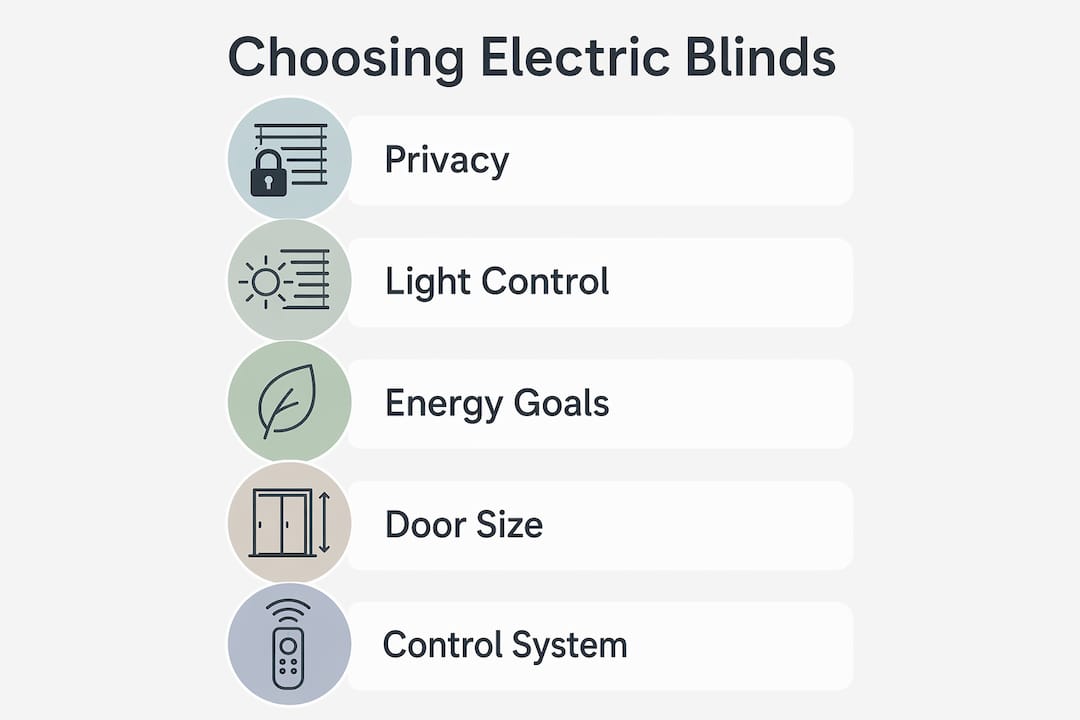
Start with privacy. If your patio door faces a street, a neighbor, or a shared outdoor space, panel track blinds with a blackout or opaque fabric are the strongest choice. If you want daytime privacy without losing natural light, a solar screen fabric in the 3–5% openness range blocks the view in while still admitting diffused light.
Match the fabric to your energy goals. Solar screen fabrics reduce glare and heat gain without blocking the view entirely. Cellular shades provide the best insulation for both heat and cold. Blackout fabrics block all light and most heat but eliminate the outdoor view when closed.
Size the system to your door. Single-panel doors work with any type. Wide sliding doors and bifold doors work best with panel track systems or multiple linked roller shades. Motorized blinds for large glass areas require motors rated for the fabric weight and width.
Choose a control system that fits your life. If you already use Alexa or Google Home, prioritize a motor that integrates natively. If you want simplicity, a remote or wall switch is sufficient. Avoid over-engineering the control system if you do not already use a smart home hub.
Set a realistic budget. Battery-powered roller shades on a standard door start around $150–$300 per panel for a quality system. Panel track systems with smart motors run higher. Custom sizing, premium fabrics, and professional installation add to the total. Consulting a supplier like Valueblindsdirect with a design studio tool helps you price accurately before committing.
Key takeaways
Electric patio door blinds deliver the most value when the motor type, fabric, and control system are matched to the specific door size, privacy need, and smart home setup from the start.
| Point | Details |
|---|---|
| Panel track blinds lead on privacy | Zero vane gaps and wide fabric options make them the top choice for modern patio doors. |
| UV protection is fabric-dependent | Light-filtering fabrics block 88–97% UV; blackout fabrics block up to 100% for full protection. |
| Renters have real options | No-drill brackets and battery motors allow full motorized installs without permanent modifications. |
| Smart home integration is mature | Matter, Zigbee, Alexa, and Google Home support is standard across leading motor brands in 2026. |
| Measure before you buy | Accurate width and height measurements at three points prevent fit issues and binding during operation. |
Why I think most homeowners buy the wrong type first
The most common mistake I see is homeowners choosing vertical blinds for a wide patio door because they are familiar and cheap, then replacing them within two years. Vertical blinds work fine on a standard 6-foot slider. Put them on an 8-foot or 10-foot bifold door and the vanes flex, the gaps widen, and the motor struggles with the weight distribution. The privacy you wanted is gone.
Panel track blinds cost more upfront, but they are the right tool for wide spans. The fabric panels are rigid, the track carries the weight evenly, and the look holds up over years of daily use. I have seen homeowners spend twice as much fixing a cheap vertical blind setup than they would have spent getting panel tracks from the start.
The other thing I would push back on is the idea that smart home integration is optional. A motorized shade you control manually with a remote is still a manual shade in practice. You will forget to close it. You will leave it half-open. The real benefit of motorized window treatments comes from automation: a schedule that closes the shades at noon when the sun hits the glass, or a scene that lowers everything when you say “goodnight.” That is where the energy savings and consistent privacy actually happen.
For renters, the no-drill battery motor category has genuinely matured. Two years ago the options were limited and the motors were noisy. The current generation from brands like SonaCell is quiet, reliable, and leaves no trace when you move out. Do not let a lease stop you from getting a proper window treatment.
— Sunny
Valueblindsdirect motorized patio door solutions
Valueblindsdirect offers custom motorized window treatments built for patio doors of every size and configuration. Whether you need a blackout cellular shade for a south-facing slider or a woven wood panel track for a wide bifold door, the catalog covers it.
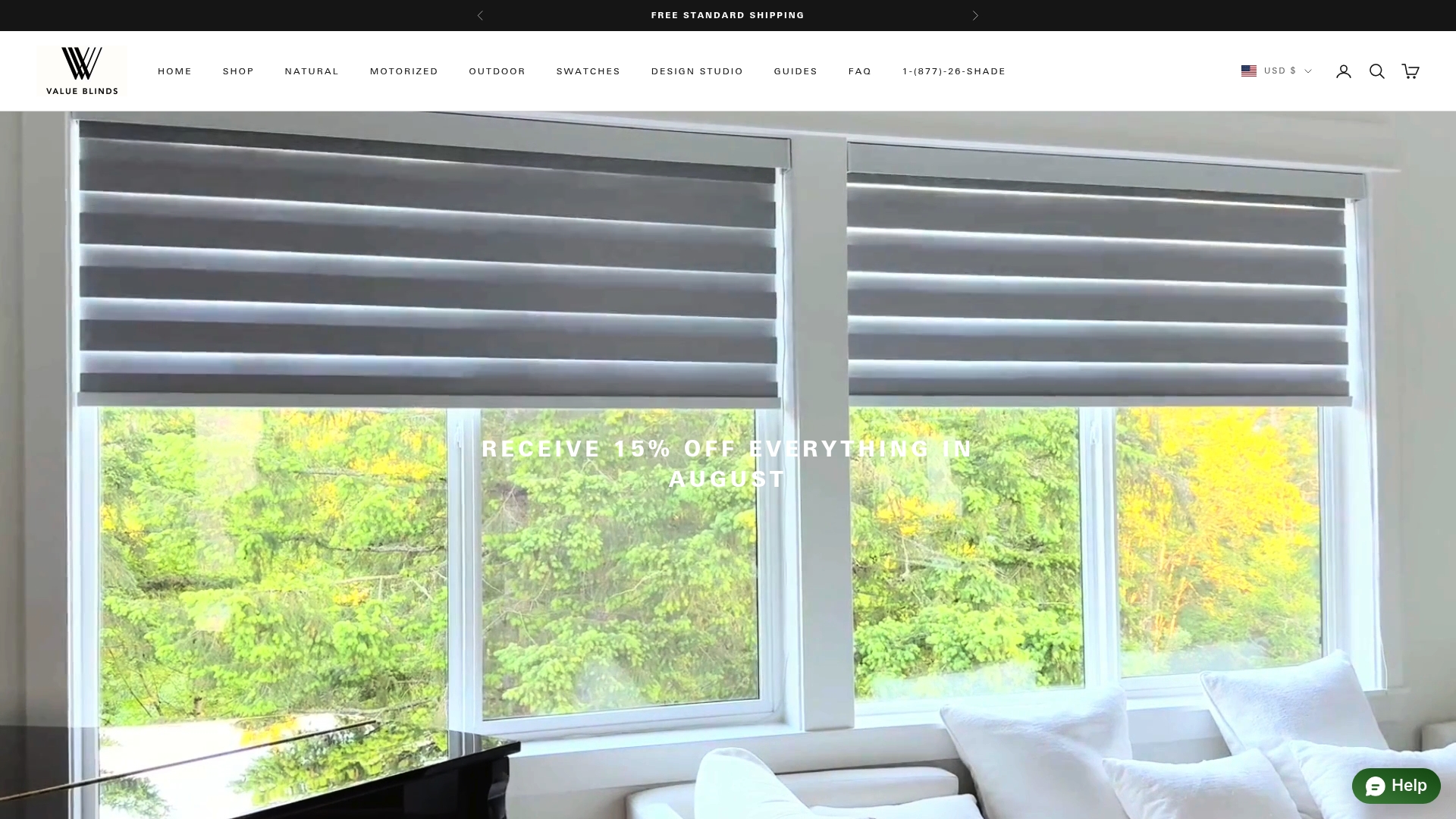
Renters will find cordless and no-drill options that install without tools and leave no permanent marks. Homeowners can configure motorized cellular shades with Alexa, Google Home, and app control built in. The Window Treatment Design Studio walks you through measuring, fabric selection, and motor pairing so you get the right fit the first time. Free swatches, expert support, and a satisfaction guarantee back every order.
FAQ
What are electric patio door blinds?
Electric patio door blinds are motorized window treatments designed for the wide spans of sliding, bifold, and folding patio doors. They operate via remote, app, or voice command and integrate with smart home platforms like Alexa and Google Home.
Which blind type is best for wide sliding glass doors?
Panel track blinds are the best choice for wide sliding glass doors. They cover large spans without gaps, support heavy fabrics like blackout and woven wood, and move smoothly on a ceiling or wall-mounted track.
Can renters install motorized patio door blinds?
Yes. No-drill brackets and battery-powered motors let renters install motorized blinds without screws or wiring, leaving no permanent marks when removed.
How much UV do motorized patio shades block?
Light-filtering solar screen fabrics block 88–97% of UV rays. Blackout fabrics block up to 100%, making them the strongest option for protecting furniture and flooring from sun damage.
Do electric patio door blinds work with Alexa and Google Home?
Most current motorized patio door systems support Alexa, Google Home, and Apple HomeKit through Matter, Zigbee, or brand-specific bridges. Somfy and Lutron are the two most widely compatible motor brands across these platforms.