

Auto Blinds for Windows: Your 2026 Homeowner's Guide
TL;DR:
- Motorized auto blinds enable hands-free control over lighting and privacy through remote, app, or voice commands.
- Proper measurement, motor torque, and platform compatibility are crucial for successful installation, especially on large or unconventional windows.
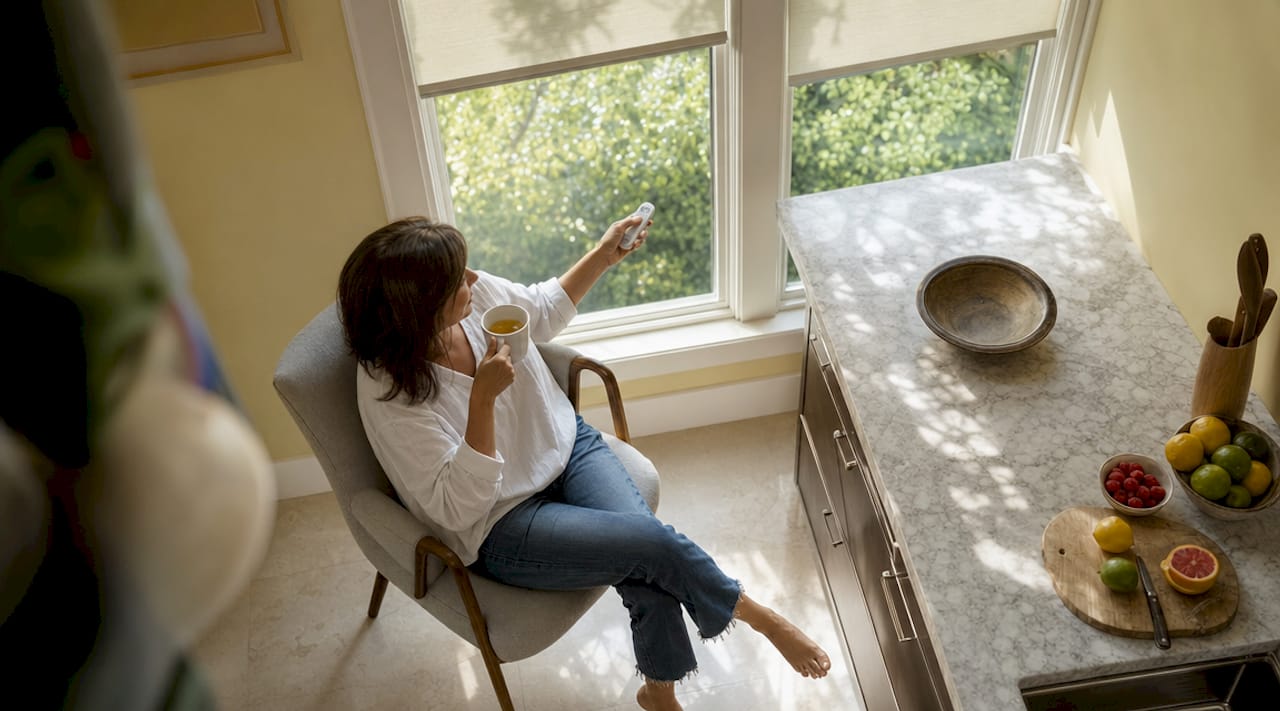
Auto blinds for windows are motorized window treatments that give you hands-free control over light, privacy, and ambiance through remotes, apps, or voice commands. Unlike traditional blinds, these systems connect to platforms like Amazon Alexa, Google Home, and Apple HomeKit, letting you schedule shading automatically or adjust it from across the room. Products like GE Smart Shades and Eve Motionblinds have made this technology accessible to everyday homeowners, not just luxury renovators. Whether you rent an apartment or own a multi-story home, motorized window treatments now fit nearly every budget, window size, and smart home setup.
What types of auto blinds for windows are available?
Motorized window treatments fall into four main categories: roller shades, venetian blinds, cellular shades, and roman shades. Each type can be motorized, but the mechanism and fabric weight affect which motor you need. Roller shades are the most popular choice for motorization because their simple tube-and-fabric design pairs cleanly with tubular motors. Cellular shades rank second, offering strong insulation alongside automation.
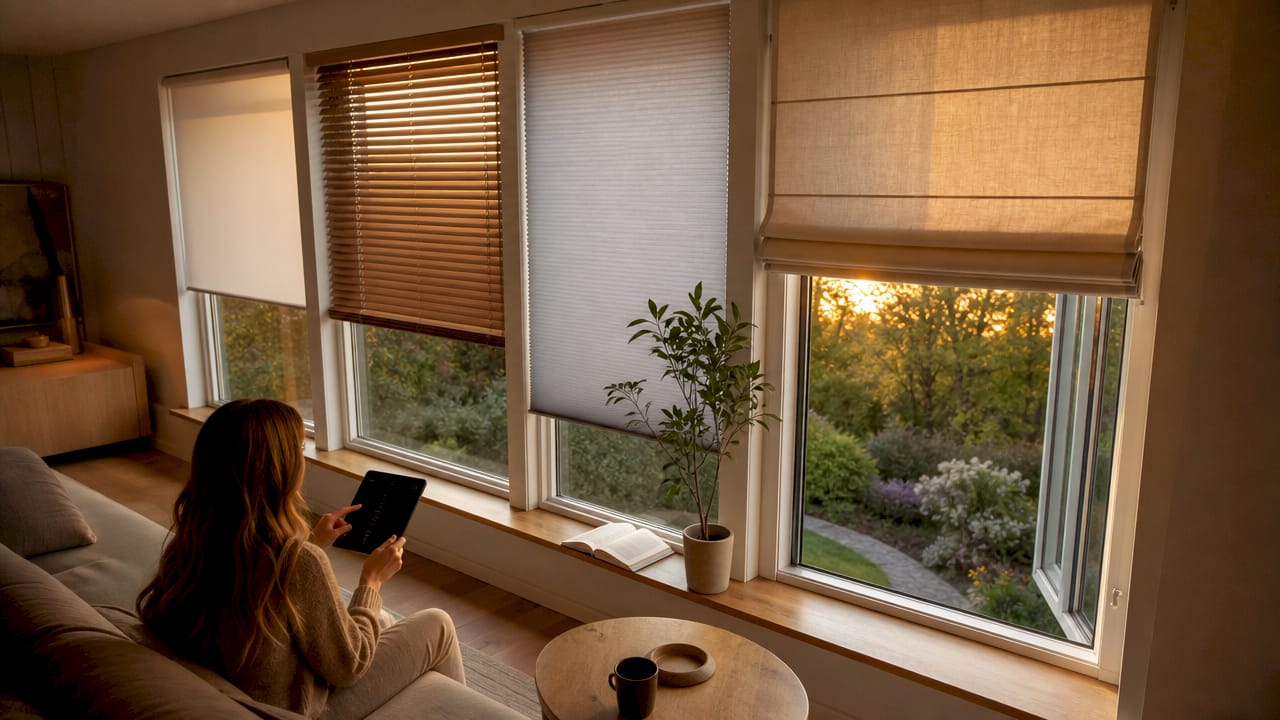
Fabric choice matters as much as blind type. Blackout fabrics block all incoming light, making them ideal for bedrooms and media rooms. Light-filtering fabrics diffuse sunlight while preserving your view. The motorized blinds advantages comparison from Valueblindsdirect breaks down how fabric weight affects motor selection and long-term performance.
Control options range from basic to fully integrated:
- RF remote only: Simple, no Wi-Fi required, works reliably in any home
- App-enabled Wi-Fi control: Adjust shades from your phone anywhere in the world
- Voice control: Works with Alexa, Google Home, and Apple HomeKit
- Scheduling: Automated shading schedules reduce heat gain in summer and heat loss in winter, cutting HVAC loads without any manual input
Cordless motorized blinds are also worth noting. They eliminate the safety hazard of dangling cords, which matters especially in homes with children or pets. The cordless blind options at Valueblindsdirect include both manual cordless and fully motorized versions.
Pro Tip: If you are new to motorized blinds, start with an RF remote model. You can always add a smart hub later to unlock app and voice control without replacing the motor.
How to measure your windows for motorized blind installation
Accurate measuring is the single most common installation mistake homeowners make. Professionals recommend measuring width and height at three points each, then using the smallest dimension for inside mount orders. A difference of even a quarter inch can cause the blind to bind against the frame or leave visible gaps.
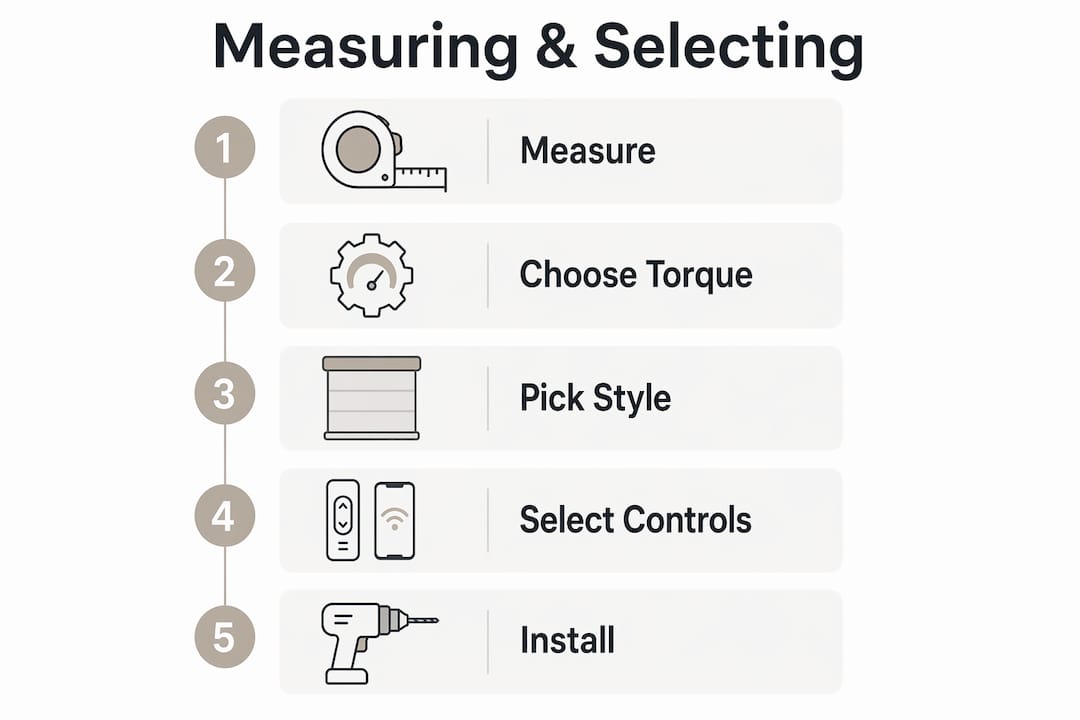
Follow these steps before ordering any motorized window treatment:
- Measure width at top, middle, and bottom. Record the smallest number. For inside mounts, deduct nothing. The manufacturer applies standard deductions.
- Measure height on the left, center, and right. Again, use the smallest figure.
- Measure recess depth from the frame to the glass. This step is where most people skip ahead and regret it. Minimum recess requirements vary by blind type: roller blinds need at least 1.5 inches, venetian blinds need 2 inches, cellular shades need 1.25 inches, and roman shades need 2.5 inches.
- Check for obstructions. Window cranks, handles, and locks can interfere with the blind’s travel path.
- Decide: inside mount or outside mount. Inside mounts look cleaner and are preferred for motorized blinds. Outside mounts work when recess depth is insufficient.
For a detailed walkthrough with diagrams, the inside mount measuring guide from Valueblindsdirect covers every blind type with specific deduction tables.
Pro Tip: Use a metal tape measure, not a fabric one. Metal tapes hold straight across wide windows, giving you a more accurate reading than a flexible tape that sags in the middle.
How to choose and install auto blinds for large or heavy windows
Large motorized blinds require a different selection process than standard window sizes. The key variable is torque, which is the rotational force the motor applies to lift or roll the blind. A motor with insufficient torque will overheat, stall, or fail within months. High-torque tubular motors rated at 10 N·m can support payloads up to 50 kg, making them suitable for oversized or commercial-grade window coverings. That specification matters because undersized motors are the leading cause of premature failure in large blind installations.
Use this table to match your window size and fabric weight to the right motor specification:
| Window width | Fabric type | Recommended torque | Max payload |
|---|---|---|---|
| Up to 48 inches | Light filtering | 3 to 5 N·m | Up to 15 kg |
| 48 to 84 inches | Light filtering or blackout | 6 to 8 N·m | Up to 30 kg |
| 84 inches and wider | Blackout or heavy fabric | 10 N·m or higher | Up to 50 kg |
| Any width | Exterior or solar shade | 10 N·m minimum | Verify per product |
Motor selection for large windows is driven by torque and load requirements first, and brand ecosystem compatibility second. That is a counterintuitive point for homeowners who start by picking a smart home platform and then search for compatible products. The motorized blinds for large windows guide from Valueblindsdirect walks through this selection process with real product examples.
For installation, hardwired motors are preferable for large blinds because they eliminate battery replacement on heavy, hard-to-reach units. If hardwiring is not an option, look for motors with solar charging panels that recharge from the window’s natural light exposure.
Can you retrofit existing blinds with motorization?
Yes, retrofit motor kits let you add automation to blinds you already own without buying entirely new window treatments. The SwitchBot Blind Tilt is the most widely used retrofit option on the market. It clips onto the tilt rod of existing horizontal blinds and automates the tilt function through an app, voice commands via Alexa, Google Home, or Siri, and a solar-powered battery that rarely needs manual charging.
The critical constraint is mechanical compatibility. SwitchBot Blind Tilt works with blind poles between 6.2mm and 10.2mm in diameter. If your existing blinds fall outside that range, the retrofit will not work. Beyond diameter, retrofit tilt motors control only the tilt angle of the louvers. They cannot raise or lower the blind. That distinction matters if you want full lift automation, which requires either a new motorized blind or a more complex retrofit system.
Key points to check before buying a retrofit kit:
- Measure your tilt rod diameter before ordering
- Confirm whether you need tilt-only or full lift automation
- Check if a hub is required for group control or third-party integrations
- Verify smart assistant compatibility with your existing ecosystem
For homeowners who want to save money before committing to full replacement, the DIY motorization guide at Valueblindsdirect covers retrofit kits with cost comparisons against new motorized blinds.
Pro Tip: Retrofit kits work best on blinds that are less than five years old and in good mechanical condition. Worn tilt mechanisms will not improve with a motor attached. They will just fail faster.
How do auto blinds integrate with smart home ecosystems?
The Matter standard is the most significant development in smart home window treatment control in the past decade. Matter 1.3 enables hub-free local control of motorized blinds using Thread-enabled iPhones, including iPhone 15 Pro, iPhone 16, and iPhone 16 Pro running iOS 18 or later. Local control means your blinds respond instantly and continue working even when your internet is down. Adding a hub extends range and enables remote access from outside your home.
Eve Motionblinds motors support both Matter and Thread natively. Setup involves scanning a Matter QR code during pairing, after which the blinds appear in Apple Home, Google Home, or any other Matter-compatible app. GE Smart Shades take a similar approach, connecting directly to leading smart home platforms and supporting automatic scheduling for privacy, comfort, and energy efficiency.
Practical benefits of smart home integration for motorized window treatments include:
- Morning routines: Blinds open automatically at sunrise to replace your alarm clock with natural light
- Away mode: Blinds cycle on a schedule while you travel, creating the appearance of occupancy
- Temperature response: Blinds close during peak afternoon heat to reduce cooling costs
- Voice commands: “Hey Google, close the living room blinds” works without reaching for a remote
For a full breakdown of platform compatibility and setup steps, the smart home window shading guide covers Matter, Alexa, Google Home, and Apple HomeKit configurations in detail.
Key takeaways
Auto blinds for windows deliver the most value when you match motor torque to window size, measure recess depth before ordering, and choose a smart home platform before selecting a product.
| Point | Details |
|---|---|
| Measure recess depth first | Minimum depth varies by blind type; roller blinds need 1.5 inches, roman shades need 2.5 inches. |
| Match motor torque to load | Large windows need 10 N·m or higher torque motors to prevent overheating and early failure. |
| Retrofit has real limits | SwitchBot Blind Tilt works only on tilt rods between 6.2mm and 10.2mm and cannot replace full lift motors. |
| Matter enables hub-free control | Thread-enabled iPhones running iOS 18 can control Eve Motionblinds locally without a hub. |
| Scheduling cuts energy costs | Automated shading reduces HVAC loads by blocking heat gain and loss at peak times. |
What I’ve learned after years of watching homeowners get this wrong
The most expensive mistake I see consistently is buying a motorized blind based on aesthetics, then discovering the motor is underpowered for the window. A beautiful fabric on a 96-inch wide window with a 5 N·m motor will stall within six months. The motor spec table is not optional reading. It is the starting point.
The second mistake is skipping the recess depth measurement. I have seen homeowners order inside mount blinds for windows with only one inch of depth, then wonder why the blind protrudes past the frame and binds on every operation. Measuring takes five minutes. Reordering takes three weeks.
On the retrofit question, I think SwitchBot Blind Tilt is genuinely underrated for renters who cannot install permanent hardware. It adds real automation without drilling a single hole. But I would not recommend it to anyone who wants full lift control or whose existing blinds are already showing wear. In those cases, a new motorized blind from a brand like Valueblindsdirect is the cleaner, longer-lasting answer.
For smart home integration, my honest advice is to pick your ecosystem first and then find compatible products. Trying to retrofit Matter compatibility onto a Wi-Fi-only blind is a frustrating exercise. Start with the platform you already use and work outward from there.
— Sunny
Explore motorized window treatments at Valueblindsdirect
Valueblindsdirect offers a full catalog of motorized window treatments including cellular shades, roller shades, and natural woven shades with built-in motorization. Every product is custom-sized to your exact measurements, with free swatches available before you commit. The Window Treatment Design Studio walks you through fabric selection, mount type, and motor options in one place, with expert support available if you have questions about torque specs or smart home compatibility. Free shipping and a manufacturer warranty come standard on motorized orders.
FAQ
What are auto blinds for windows?
Auto blinds for windows are motorized window treatments controlled by a remote, app, or voice assistant. They replace manual cord or wand operation with an electric motor that raises, lowers, or tilts the blind on command or on a schedule.
How deep does my window recess need to be for inside mount motorized blinds?
Recess depth requirements vary by blind type. Roller blinds need at least 1.5 inches, venetian blinds need 2 inches, cellular shades need 1.25 inches, and roman shades need 2.5 inches measured from the frame to the glass.
Can I add motorization to blinds I already own?
Yes, retrofit kits like SwitchBot Blind Tilt add tilt automation to existing horizontal blinds without replacement. The kit requires a tilt rod between 6.2mm and 10.2mm in diameter and controls tilt only, not full lift operation.
Do motorized blinds work without Wi-Fi?
RF remote-controlled motorized blinds work entirely without Wi-Fi. Smart models using Matter and Thread, such as Eve Motionblinds, support local control via Thread-enabled iPhones without an internet connection, though remote access from outside the home requires a hub.
What motor torque do I need for large motorized blinds?
Windows wider than 84 inches or covered with heavy blackout fabric require a motor rated at 10 N·m or higher with a payload capacity up to 50 kg. Undersized motors overheat and fail prematurely on large or heavy window coverings.