

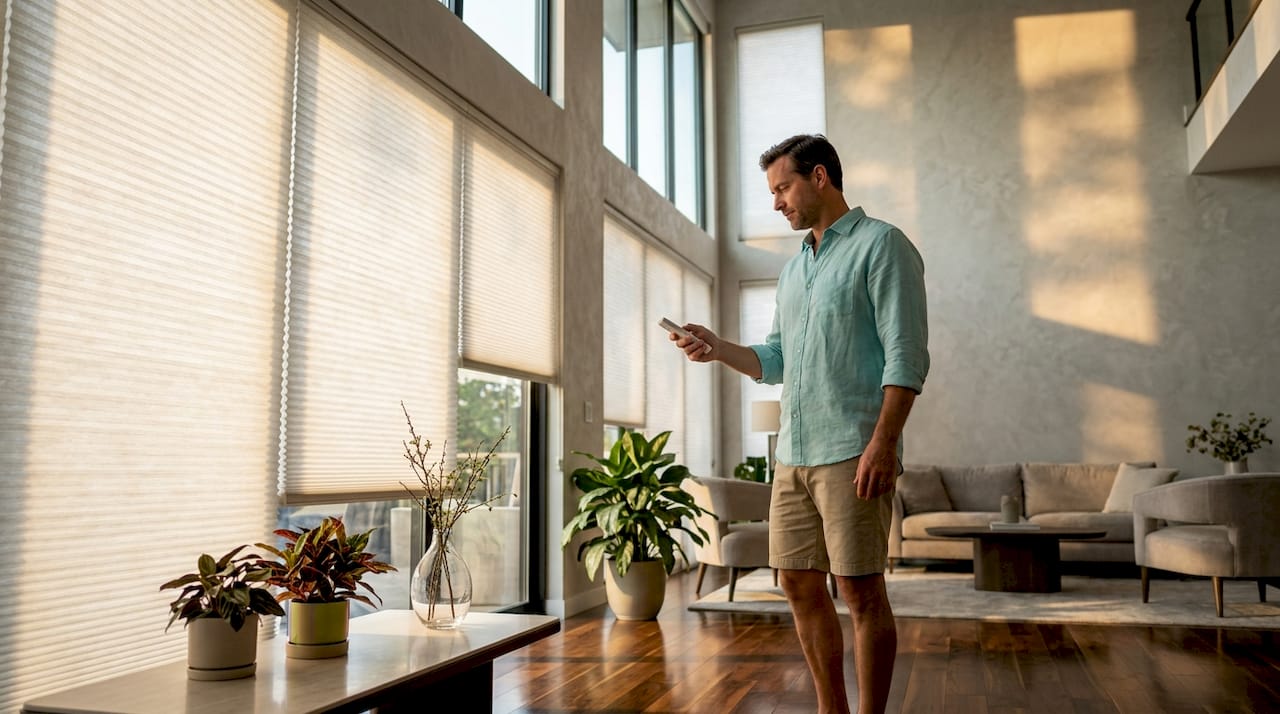
Motorized Blinds for Large Windows: 2026 Homeowner's Guide
TL;DR:
- Motorized blinds for large windows are now practical, offering energy savings, smart integration, and stylish design without professional help. Selecting the right motor torque, material weight, and mounting type is crucial to ensure durability and performance. Budget options range from retrofit kits to full custom installations, with automation significantly improving efficiency and convenience.
If you’ve ever wrestled with a cord on a 10-foot window or watched afternoon sun bleach your furniture while manual blinds sat halfway up, you already know the problem. Motorized blinds for large windows aren’t a luxury upgrade anymore. They’re a practical solution to a real daily frustration, and in 2026, the technology has matured enough that you can get smart, stylish coverage without hiring a specialist or spending a fortune. This guide covers everything you need to choose wisely: styles, motor specs, energy efficiency, installation realities, and what to budget.
Table of Contents
- Key takeaways
- Motorized blinds for large windows: styles and materials that work
- Technical factors that change everything on large windows
- Energy efficiency: what motorized blinds actually do
- What you should budget for large window motorization
- How to plan and install motorized blinds correctly
- My honest take after seeing dozens of these installations
- Find the right fit at Valueblindsdirect
- FAQ
Key takeaways
| Point | Details |
|---|---|
| Motor power matters more than you think | Large, heavy blinds need high-torque motors to lift evenly without misaligning or wearing out early. |
| Automation beats convenience alone | Scheduling blinds by sunrise, temperature, or time of day can cut cooling and heating costs by up to 70%. |
| Costs vary widely by approach | Retrofit kits start around $150; full custom motorized systems can exceed $2,500 per window with installation. |
| Mounting type affects performance | Inside vs. outside mount changes both light control and ease of motor installation on large windows. |
| Smart home integration is now accessible | Most current motorized systems work with Alexa, Google Home, and Matter without requiring professional setup. |
Motorized blinds for large windows: styles and materials that work
Not every blind type translates well to large windows. The sheer weight and width of a covering changes how it behaves, how it needs to be motorized, and how good it looks when it’s done.
Here’s a breakdown of the main categories worth considering:
- Roller shades are the most popular choice for large windows. A single fabric tube keeps the profile clean and minimal, and they’re available in blackout, light-filtering, and solar-screen materials. They work exceptionally well on wide windows because there are no slats to align.
- Cellular (honeycomb) shades add a thermal layer to the equation. Their air-pocket construction reduces heat transfer through the glass, which matters a great deal on floor-to-ceiling or west-facing windows. Single-cell versions work in moderate climates; double-cell is worth the extra cost in extreme heat or cold.
- Vertical blinds are genuinely underrated for large or patio-adjacent windows. They handle extra-wide spans better than most horizontal options, and motorized versions glide quietly without the rattling that plagues older cord-based systems.
- Zebra shades alternate solid and sheer bands, giving you adjustable privacy and light control without committing to full blackout. They’ve become one of the more stylish choices for living rooms with oversized windows.
- Venetian blinds in wood or faux-wood add warmth and texture, though they’re heavier than fabric options. That weight matters more on large windows, which we’ll address in the motor section.
When it comes to materials, the key distinction for large windows is weight per square foot. Heavier fabrics and hard materials (like wood slats) require more powerful motors and are more prone to uneven movement. For large window treatments, lighter fabrics with blackout coatings often give you the best of both worlds: light control without the mechanical complications.
Pro Tip: If you’re unsure which fabric weight fits your window, request free swatches before ordering. Holding the material against your window in different lighting conditions tells you far more than a product photo.
On pricing, custom motorized options vary considerably. Retrofit, mid-range, and premium motorized systems span from basic $150 retrofit kits to premium $800 to $2,500+ full installations, depending on size, material, and smart home integration.
| Type | Best for | Light control | Weight concern |
|---|---|---|---|
| Roller shades | Wide spans, clean look | High | Low |
| Cellular shades | Energy efficiency | Moderate to high | Low to moderate |
| Vertical blinds | Extra-wide or sliding door windows | Moderate | Low |
| Zebra shades | Living rooms, flexible privacy | Adjustable | Low |
| Venetian blinds | Warm, textured aesthetic | High | High |
Technical factors that change everything on large windows
Here’s what most buying guides skip: the mechanical demands on motorized window coverings change significantly once you’re dealing with large or heavy blinds. A motor that works perfectly on a 36-inch window can fail, strain, or misalign on a 72-inch one.
The central issue is torque. Wider, heavier blinds need more rotational force to lift and lower evenly. Underpowered motors wear out faster, make noise, and can cause uneven movement where one side travels faster than the other. This uneven movement is called “racking,” and it’s the most common failure mode in large window installations.
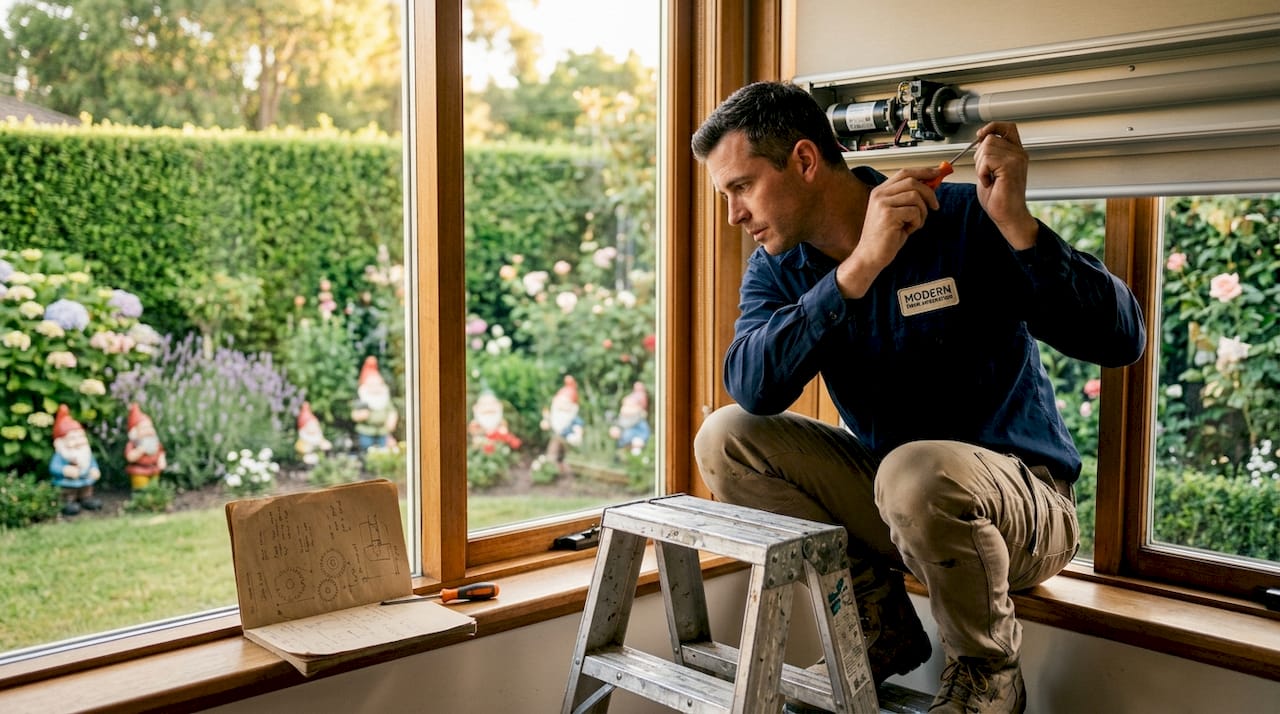
For heavy blinds like wood venetians, dual-shaft motors are the right answer. A dual-shaft motor applies torque at both ends of the rod simultaneously, keeping lift perfectly level. Some heavy-duty systems support payloads up to 40kg, which covers even the most substantial blinds. Single-shaft motors save money upfront but cost more in repairs and replacements later on large windows.
Power source options
- Battery-powered motors are the easiest to install since there’s no wiring involved. They work well for moderate-use windows but will need recharging or battery replacement more often on large, frequently used windows.
- Hardwired motors offer the most reliability and are the right pick for high-use rooms or large windows with heavy coverings. Installation is more complex, especially in retrofits.
- Solar-powered motors sit in a sweet spot for south or west-facing large windows that receive consistent sun. The solar panel charges the battery continuously, reducing maintenance to nearly zero.
Pro Tip: For large south-facing windows, a solar-powered motor often pays for itself through reduced battery costs within the first two years, especially when paired with automated scheduling.
Smart home integration
Current motorized systems from reputable brands connect with Alexa, Google Home, Apple HomeKit, and the Matter protocol, which standardizes device communication across platforms. The practical benefit for large windows goes beyond voice control. Automated shading triggers based on sunrise, sunset, and room temperature let the system manage heat gain and privacy without you touching anything.
Industry reviewers recognize SmartWings motorized roller shades and Lutron Caséta as top 2026 smart blind picks for large windows because of their reliable motor torque, integration range, and quiet operation.
Energy efficiency: what motorized blinds actually do
There’s a common misconception worth addressing directly. Motorized blinds and automated window shades improve energy efficiency through solar control, not through sealing air leaks. Windows themselves can contribute up to 40% of envelope heat losses in a home, primarily through air infiltration, a problem that window coverings alone cannot fix.
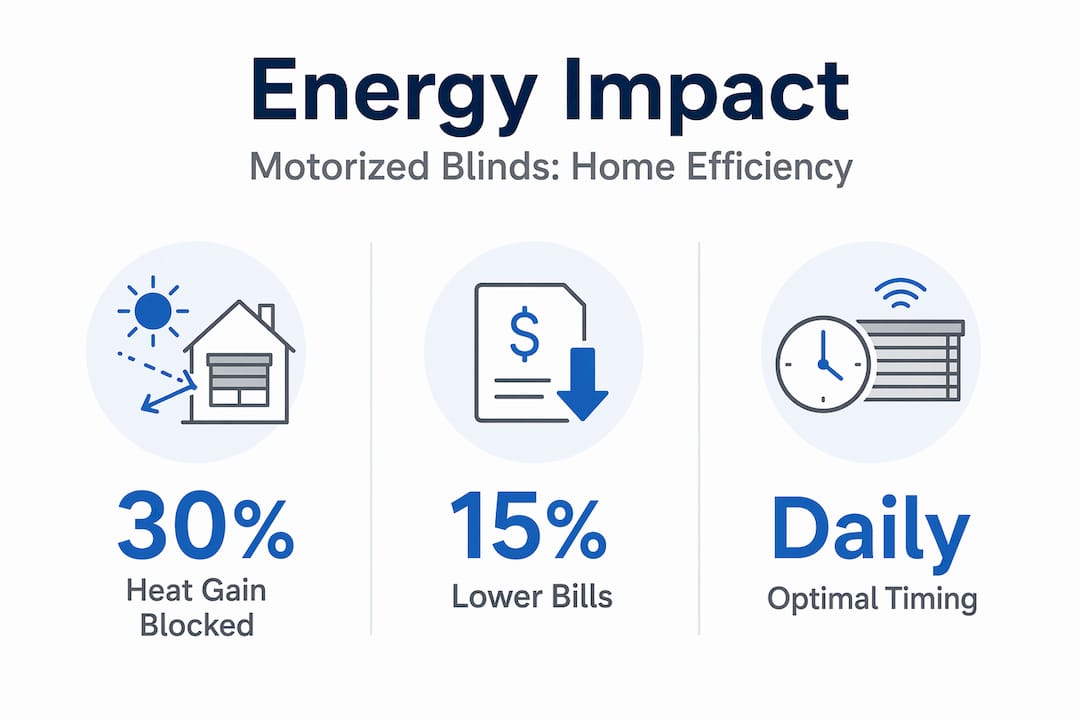
What motorized blinds do exceptionally well is manage solar heat gain. In summer, closing the blinds on a west-facing window before peak afternoon heat prevents the room from warming significantly, reducing how hard your AC has to work. In winter, opening them during peak sun hours adds passive warmth. The difference between doing this manually (inconsistently) and doing it automatically (every day, on schedule) is where the real energy savings come from.
Energy savings from solar shading can reach 25% to 70% depending on shading type and how well the automation is set up. That’s a wide range because results depend on your climate, window orientation, and whether you’re using blackout, light-filtering, or solar-screen fabrics.
The best way to think about it: motorized blinds are an energy management tool, not an insulation solution. Used intelligently, they complement window upgrades rather than replace them.
“Motorized blinds are increasingly seen as investments not just in convenience but in energy efficiency and home comfort.” — CCR-Mag, 2026
Automation also removes the human factor. Manual systems get used inconsistently, especially on large windows that are hard to reach. Smart blinds for big windows set to a sunrise and sunset schedule work the same every day without effort.
What you should budget for large window motorization
Realistic pricing is more nuanced than most product pages suggest. Here’s how to think through costs:
-
Retrofit motorization kits ($150 to $400) add a motor to blinds you already own. This is the lowest-cost entry point, but compatibility with large or heavy blinds is limited. Always check the weight rating before buying. You can save up to $500 with DIY retrofit kits if your existing blinds meet the weight specs.
-
Mid-range custom motorized blinds ($400 to $900 per window) are made to your exact measurements with a motor already integrated. This is the most practical option for most homeowners with large windows who want reliability and style without maxing out the budget.
-
Premium systems with installation ($800 to $2,500+ per window) include professional measurement, custom fabrication, hardwired installation, and full smart home setup. For windows above 8 feet or in difficult mounting locations, professional installation often prevents costly mistakes.
-
Additional costs to factor in: Smart hub or bridge devices for integration ($50 to $150), wiring if going hardwired (variable by electrician), and replacement motors down the line (typically $50 to $200 per motor for mid-range systems).
Full custom motorized window coverings can exceed $2,500 per window when installation complexity and premium materials are factored in, so getting multiple quotes and understanding exactly what’s included matters before you commit.
How to plan and install motorized blinds correctly
Getting the installation right on large windows starts before you buy anything. Measurement errors that cost you $20 on a standard window cost you $400 on a custom motorized one.
- Measure width and height at three points each (top, middle, bottom for width; left, center, right for height). Use the smallest measurement to avoid gaps.
- Decide on inside mount or outside mount before measuring. Inside mount gives a cleaner look but requires sufficient mounting depth for the motor housing, which varies by product. Outside mount covers more of the wall, improves light blocking on large windows, and is more forgiving of irregular window frames.
- For DIY installation on moderate-sized windows, battery-powered motors are far simpler than hardwired. The installation steps for motorized shades follow a similar process to standard blinds, with the addition of pairing the remote or app. Most manufacturers estimate two to four hours per window for a first-time DIY install.
- For windows above 8 feet, professional installation is worth the cost. Mounting at height while aligning a heavy blind and managing wiring is genuinely difficult and a fall risk on a ladder.
Pro Tip: Before finalizing your motor choice, check the manufacturer’s maximum blind width and weight ratings, not just the window size. Many motors rated for “large windows” cap out at 80 inches wide or 25 lbs, which won’t cover an extra-wide bay window.
Maintenance is minimal but matters. Dust the tracks monthly, check motor connections twice a year, and recharge or replace batteries before they drain completely since a dead battery mid-cycle can cause the blind to freeze at an awkward position.
My honest take after seeing dozens of these installations
I’ve seen homeowners spend serious money on beautiful motorized systems only to have them fail within a year, and the cause is almost always the same: the wrong motor for the window size. People see “motorized” on a product page and assume the technology handles the rest. It doesn’t.
Matching motor torque to your specific blind weight and width is the single most important decision in this process. A dual-shaft motor on a wide venetian isn’t optional. It’s what determines whether you’re still happy with your purchase in year three or calling for a repair in year one.
The energy efficiency angle is real, but only when you actually use the automation. I’ve visited homes where expensive smart blinds sit on manual override because the homeowner never finished the app setup. That’s money left on the table. The automated light management is where the genuine return on investment lives, and it takes maybe 20 minutes to configure schedules properly once everything is mounted.
One thing I genuinely think will matter more in the next two years: Matter protocol compatibility. The industry is finally converging on a universal smart home standard, and systems bought today that support Matter will stay compatible with future devices without constant workarounds. If you’re choosing between two otherwise equal options, the one with Matter support is the better long-term bet.
— Sunny
Find the right fit at Valueblindsdirect
If you’ve been reading through the options and wondering where to actually start, Valueblindsdirect makes the selection process far less overwhelming for large windows.
The Window Treatment Design Studio lets you visualize custom motorized options built to your exact dimensions, which matters enormously when you’re covering a 9-foot window rather than a standard one. The catalog covers everything from motorized vertical blinds ideal for floor-to-ceiling spans, to premium zebra shades with smart controls for flexible light management. Free swatches, expert support, and detailed measurement guides are available to take the guesswork out of your decision before you spend a dollar.
FAQ
What type of motorized blind works best for very wide windows?
Roller shades and vertical blinds handle extra-wide spans most reliably because they avoid the alignment issues that affect slatted styles. For widths over 80 inches, look for systems with dual-shaft motors to prevent uneven lifting.
How much do motorized blinds cost for large windows?
Costs range from about $150 for basic retrofit kits to over $2,500 per window for premium custom systems with professional installation. Most homeowners with large windows spend between $400 and $900 per window on mid-range custom options.
Can motorized blinds actually lower my energy bills?
Yes, when used with automated scheduling. Solar shading through motorized blinds can reduce cooling and heating costs by 25% to 70% depending on window orientation, climate, and the type of shading fabric you choose.
Do I need an electrician to install motorized blinds?
Not always. Battery-powered and solar-powered motorized systems require no wiring and are DIY-friendly. Hardwired systems, which offer the most reliability for heavily used large windows, typically require an electrician for a safe installation.
Will my motorized blinds work with Alexa or Google Home?
Most current motorized blind systems from major brands support voice control through Alexa, Google Home, and Apple HomeKit. Systems with Matter protocol support offer the broadest long-term compatibility across smart home platforms.