

Privacy Window Coverings: Best Options for Every Room
TL;DR:
- Privacy window coverings enhance home security and comfort by blocking outside views while allowing natural light to enter. Different options like films, blinds, shades, and curtains suit various rooms and privacy needs, with layering providing flexible solutions, especially for renters. Modern trends include motorized, cordless, and sustainable materials, increasing convenience, safety, and eco-friendliness.
Privacy window coverings are specialized window treatments designed to block outside views while allowing natural light to filter through, directly improving home security, comfort, and aesthetics. Whether you live in a ground-floor apartment with foot traffic outside or a suburban home facing a neighbor’s window, the right covering changes how your space feels and functions. Options range from rabbitgoo decorative privacy films and IKEA FRIDANS blackout roller blinds to HORNVALLMO pleated blinds with top-down-bottom-up operation. Each solves a different version of the same problem: keeping your life private without turning your home into a cave.
What are the main types of privacy window coverings?
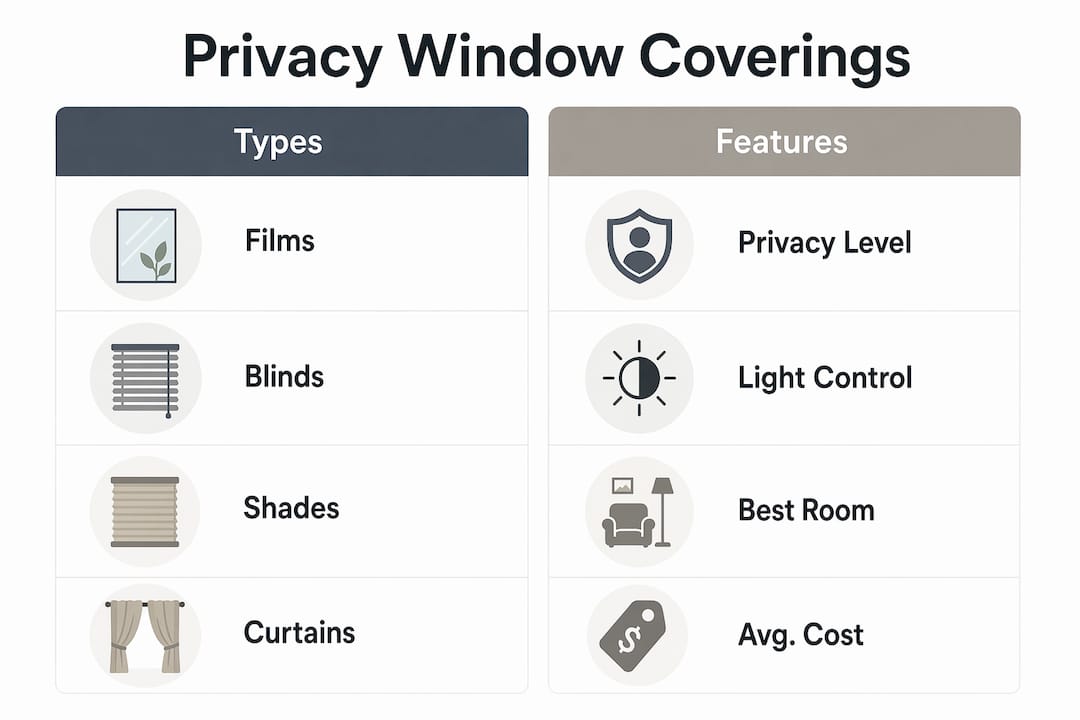
Privacy window coverings fall into four broad categories: films, blinds, shades, and curtains. Each works differently, costs differently, and suits different rooms.
Privacy films are adhesive or static-cling sheets applied directly to glass. Rabbitgoo privacy window film, for example, blocks up to 99% UVB and 84% UVA rays while maintaining daylight visibility from inside. That means you get full sun exposure without giving passersby a clear view of your living room. Films are the most affordable entry point, and options like frosted or stained glass patterns double as decor.
Blinds offer adjustable control. IKEA’s FRIDANS block-out roller blind fully blocks light and provides complete privacy at all hours, making it ideal for bedrooms and media rooms. Room darkening blinds sit one step below full blackout, cutting glare without total darkness. Both styles mount inside or outside the window frame and adjust with a pull cord or, in newer models, a cordless lift system.
Shades include cellular, roller, and Roman styles. Cellular shades trap air in honeycomb pockets, adding insulation alongside privacy. Light filtering shades diffuse sunlight without blocking it entirely, which works well in living rooms where you want brightness but not direct exposure. HORNVALLMO pleated blinds with top-down-bottom-up operation let you lower the top half while keeping the bottom raised, giving you sky views and street privacy simultaneously.
Curtains and drapes are the most decorative option. Sheer curtains filter light softly but offer minimal privacy after dark when interior lights are on. Blackout curtains solve that problem completely. Layering a sheer panel with a heavier drape gives you the flexibility to switch between open, filtered, and fully private throughout the day.
| Type | Privacy Level | Light Control | Best Room | Avg. Cost |
|---|---|---|---|---|
| Privacy film | High (daytime) | Diffused daylight | Bathroom, office | Low |
| Blackout blinds | Full | Complete block | Bedroom, nursery | Low to mid |
| Pleated shades | Adjustable | Partial to full | Bathroom, living room | Mid |
| Cellular shades | High | Filtered to full | Any room | Mid to high |
| Blackout curtains | Full | Complete block | Bedroom, media room | Low to high |
Pro Tip: If you want privacy without sacrificing daylight, combine a light filtering shade for daytime use with a blackout curtain panel you can draw at night. This layered approach costs less than a single motorized solution and gives you more control.
How to choose privacy window coverings based on room use
Choosing the right covering starts with understanding how each room actually gets used, not just how it looks on a floor plan. Interior designer Monica Leed recommends auditing room usage rhythms before purchasing anything. That means noting when each room gets direct sun, when it needs full darkness, and when you need privacy from neighbors versus the street.
Follow this room-by-room framework:
-
Bedrooms. These need the highest privacy level and the most light control. Blackout blinds or room darkening blinds paired with curtains handle both. East-facing bedrooms get morning sun early, so full blackout matters more there than in west-facing rooms.
-
Bathrooms. Privacy is non-negotiable, but ventilation and moisture resistance matter too. Pleated blinds with adhesive brackets (like HORNVALLMO) install without drilling and resist humidity. Privacy films on fixed glass panels are another strong option since they require zero maintenance.
-
Living rooms. These rooms need partial privacy during the day and full privacy at night. Light filtering shades work well for daytime, but without a secondary layer, they become transparent after dark when interior lights are on. A sheer shade plus a heavier drape solves this.
-
Kitchens. Grease and steam make fabric-heavy options harder to maintain. Faux wood blinds or moisture-resistant roller shades clean easily and still provide solid privacy from street level.
-
Home offices. Glare on screens is the primary enemy. A light filtering shade on a west-facing window cuts afternoon glare without forcing you to work in artificial light all day.
Beyond room type, consider window orientation. West-facing windows get intense afternoon sun that bleaches furniture and creates screen glare. East-facing windows flood rooms with morning light that can disrupt sleep. Selecting the right covering for each orientation prevents both discomfort and long-term damage to floors and furniture.
Certain materials and layering techniques also improve energy efficiency and noise reduction, which matters in urban apartments or homes near busy roads. Cellular shades are the standout here. Their honeycomb structure traps air and dampens sound, functioning as a passive soundproof window covering without any special installation.
Pro Tip: Before ordering anything, measure every window carefully. Mis-measuring creates coverage gaps that defeat the purpose of the covering entirely, or results in a shade so oversized it blocks light you actually wanted.
Comparing privacy options by cost, maintenance, and effectiveness
Not every privacy solution fits every budget or lifestyle. Here is how the main options stack up across the factors that matter most to homeowners and renters.
Privacy films score highest on affordability and DIY ease. Rabbitgoo static-cling film requires no tools, no glue, and no landlord permission. It peels off cleanly, making it the top choice for renters. The tradeoff is that decorative films only work during daylight. Once the sun goes down and your interior lights are on, the film provides no privacy at all.
Blackout blinds like FRIDANS offer full privacy around the clock and are straightforward to install. They reduce heat and glare, which lowers cooling costs in summer. The limitation is aesthetic: most blackout blinds come in limited colors and have a utilitarian look that does not suit every room.
Cellular shades are the premium choice for homeowners who want privacy, insulation, and style in one product. They cost more upfront than films or basic blinds, but their energy-saving properties offset that over time. Valueblindsdirect’s cordless cellular shades add child safety to that list of benefits by eliminating dangling cords entirely.
Decorative curtains offer the widest range of styles and the lowest barrier to entry. You can find blackout curtains at almost any price point. The downside is that curtains require more maintenance (washing, ironing) and can look dated faster than blinds or shades.
For renters specifically, the best affordable privacy window solutions are static-cling films, tension-rod curtains, and no-drill blinds. All three install without permanent changes and remove cleanly at move-out.
What are the latest trends in privacy window coverings?
The window covering industry has moved well beyond basic blinds and curtains. Several trends are reshaping what homeowners expect from their window privacy options.
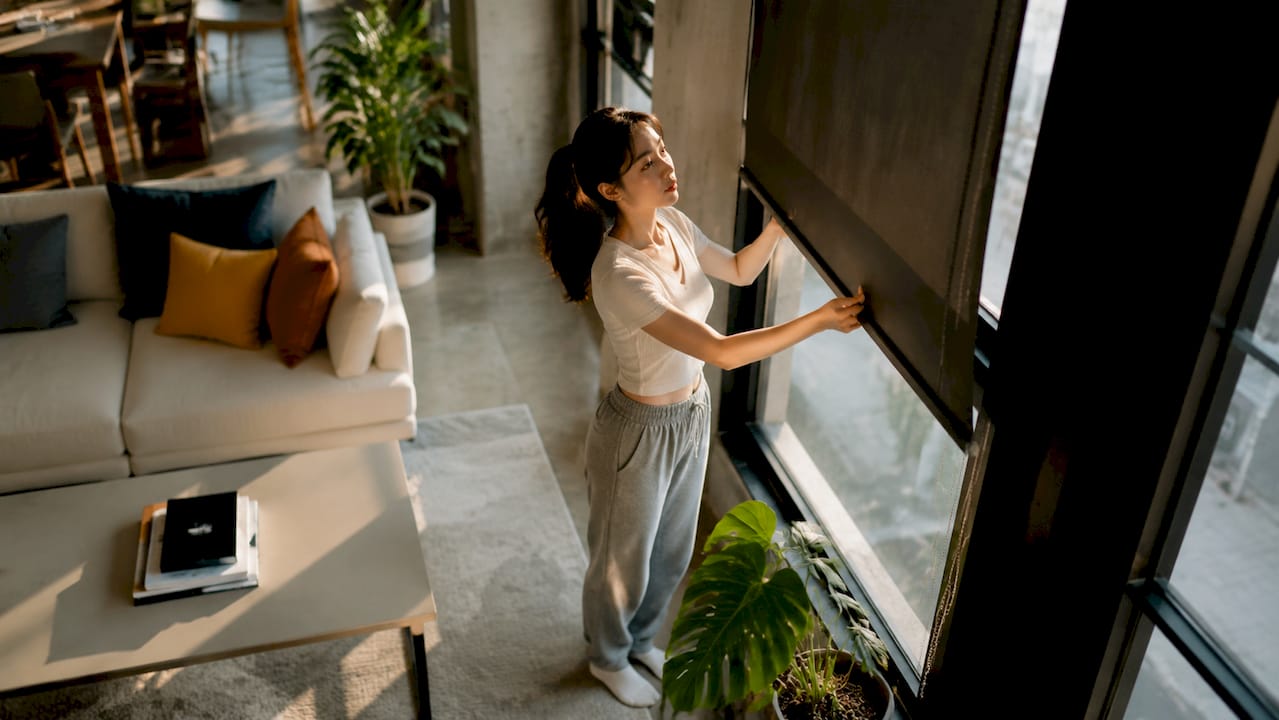
- Motorized and cordless designs are now mainstream. Cordless blinds eliminate cord hazards for children and pets while giving rooms a cleaner look. Motorized shades go further, letting you adjust every window in a room from a single app or voice command.
- Day and night cellular shades use a dual-cell structure that switches between light filtering and full blackout depending on which cell layer faces the room. Valueblindsdirect’s premium day and night cellular shades handle this without any manual swap.
- Sustainable materials are gaining ground. Woven bamboo and natural fiber shades provide privacy through texture density rather than synthetic coatings, appealing to homeowners who prioritize eco-conscious choices.
- Smart home integration connects motorized shades to systems like Google Home or Amazon Alexa, automating privacy and light management based on time of day or occupancy sensors.
- Decorative privacy films with stained glass and geometric patterns have expanded from bathrooms into living rooms and entryways, functioning as art installations that happen to block outside views.
Pro Tip: If you are considering motorized shades, check whether the motor runs on battery or hardwire before ordering. Battery-powered motors install in minutes and work in any room, while hardwired motors require an electrician but never need recharging.
Key takeaways
The most effective privacy window covering strategy combines the right product type for each room’s function with a layered approach that adapts to changing light and privacy needs throughout the day.
| Point | Details |
|---|---|
| Match covering to room function | Bedrooms need blackout; living rooms work best with layered light filtering plus drapes. |
| Films work only in daylight | Static-cling films like rabbitgoo lose effectiveness at night when interior lights are on. |
| Cellular shades do double duty | Honeycomb shades provide privacy, insulation, and sound dampening in one product. |
| Measure before you order | Coverage gaps from mis-measuring defeat the purpose of any privacy covering. |
| Cordless and motorized options add safety | Eliminating cords protects children and pets while giving rooms a cleaner appearance. |
Why I stopped treating window coverings as an afterthought
Most people pick window coverings last, after the furniture, paint, and rugs are already in place. I did the same thing for years, and it cost me more than I expected. Not in money, but in daily frustration: a bedroom that never got dark enough, a home office with afternoon glare that made video calls embarrassing, and a living room where neighbors could see straight in after 6 p.m.
The shift that changed everything was treating window coverings as a functional decision first and a decorative one second. That means asking what each window actually needs before looking at colors or styles. A bathroom window needs moisture resistance and full privacy. A living room window needs flexibility. A bedroom window needs total darkness on demand. Once you answer those questions, the product choices narrow quickly and the right option becomes obvious.
The other mistake I see constantly is buying a single covering type for every window in a home. Layering is not an upsell tactic. It genuinely solves problems that no single product can. A light filtering shade handles daytime privacy and glare. A blackout curtain handles nighttime privacy and sleep quality. Together, they cost less than one motorized solution and outperform it in flexibility.
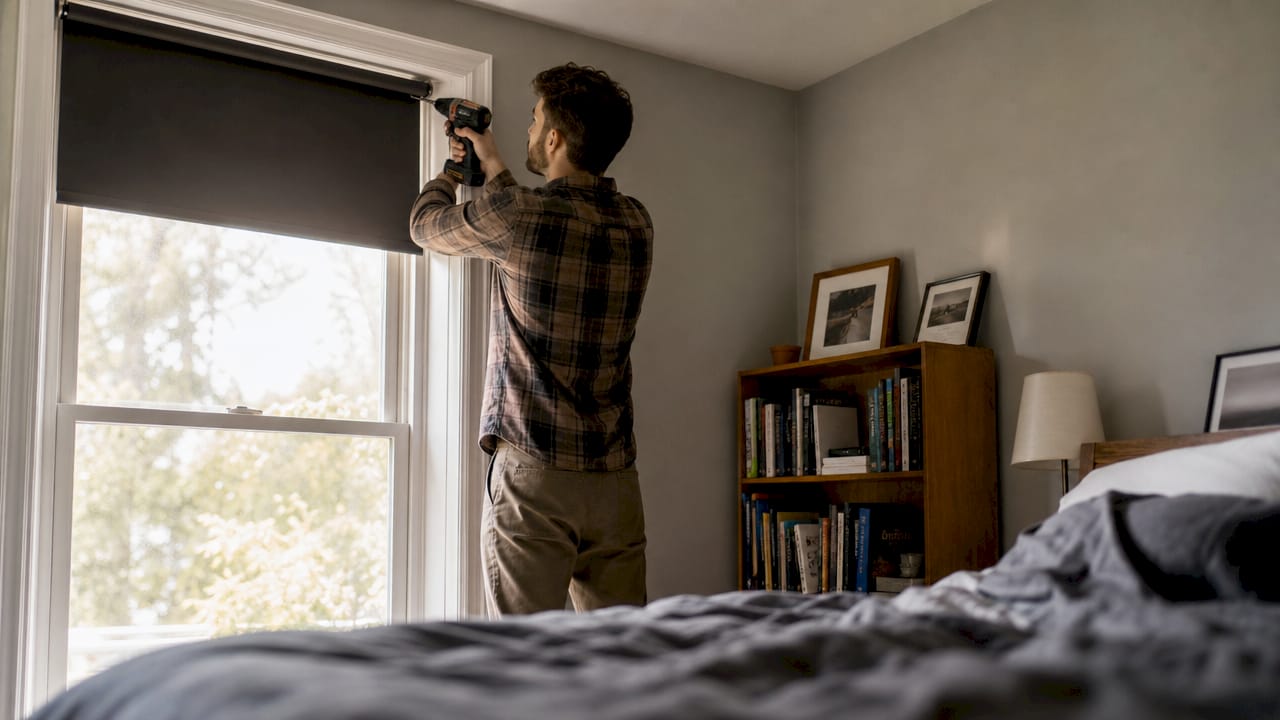
The last thing worth saying: do not skip the measuring step. I have seen beautiful, expensive shades installed with a half-inch gap on each side that let in a strip of light and a clear view from outside. The measurement guide from Valueblindsdirect takes about ten minutes per window and prevents that entirely. Spend the time upfront. You will not regret it.
— Sunny
Find the right window covering with Valueblindsdirect
Valueblindsdirect makes it straightforward to find privacy window coverings that fit your home, your budget, and your style. The product catalog covers everything from cordless blackout cellular shades to motorized zebra blinds, all available with custom sizing so you get a precise fit without a contractor.
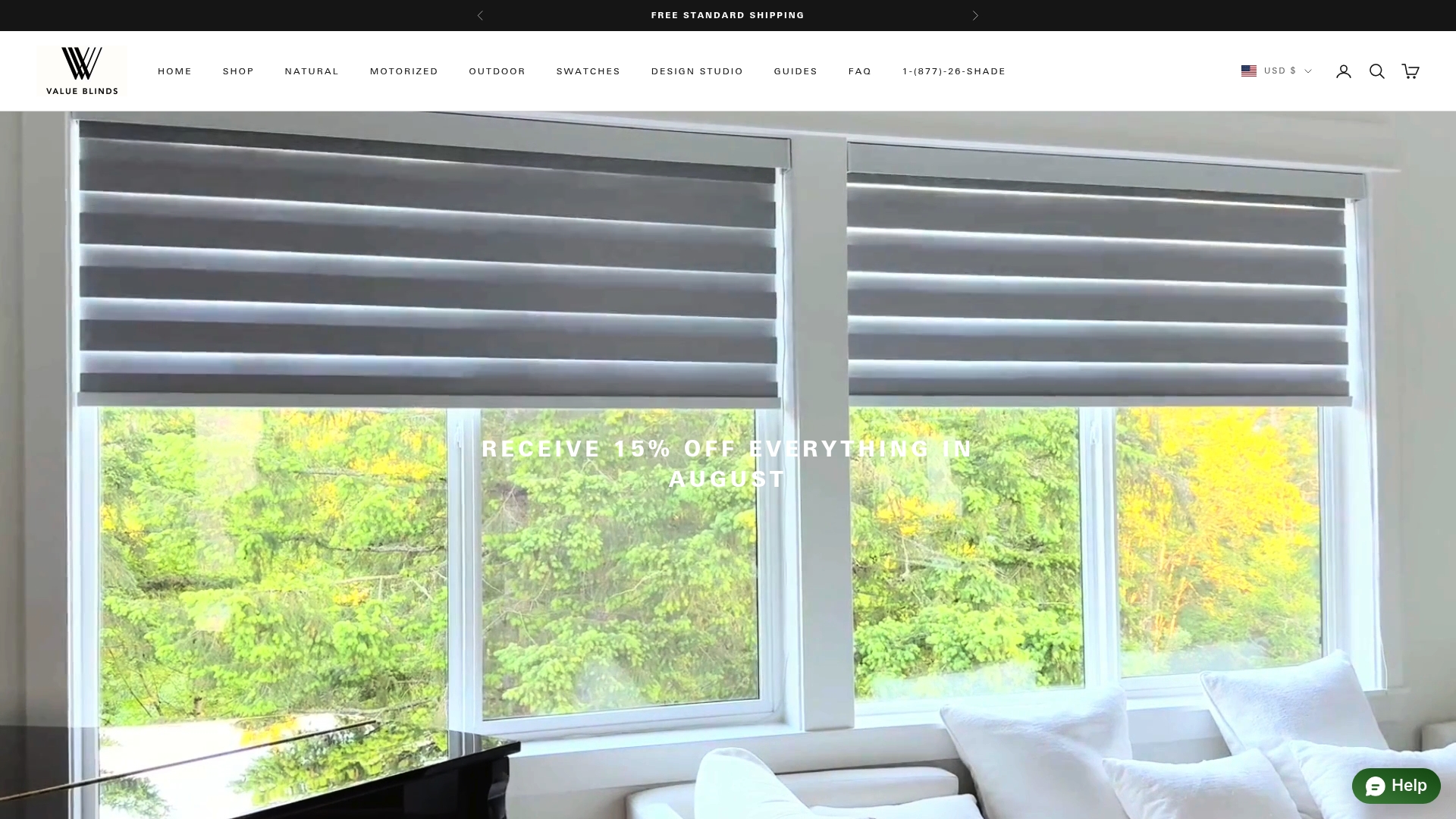
Start with the Window Treatment Design Studio to get personalized recommendations based on your room type, window dimensions, and privacy needs. If you already know what you want, browse the full blinds collection for options at every price point. Free swatches are available so you can check fabric and opacity before committing. Installation guides and expert support come with every order.
FAQ
What are the best blinds for privacy in a bedroom?
Blackout roller blinds or cordless blackout cellular shades provide the highest privacy level for bedrooms, blocking both outside views and light completely. Pairing them with a blackout curtain adds a second layer for total darkness.
Do privacy window films work at night?
Privacy films only work when exterior light is brighter than interior light. After dark, when your interior lights are on, the film becomes transparent from outside, offering no privacy.
What window coverings work best in a bathroom?
Pleated blinds with adhesive brackets, moisture-resistant roller shades, or static-cling privacy films are the top choices for bathrooms. All three handle humidity well and provide full privacy without requiring permanent installation.
Can window coverings help with soundproofing?
Cellular shades with honeycomb construction provide measurable sound dampening alongside privacy and insulation. Layering heavy drapes over cellular shades increases the effect further.
What is the most affordable privacy window solution for renters?
Static-cling privacy films and tension-rod blackout curtains are the most affordable options for renters. Both install without drilling, remove cleanly, and cost significantly less than custom blinds.