

Black Window Shades: Style, Darkness, and Control
TL;DR:
- Black window shades are designed to block all light while creating a modern aesthetic suitable for various rooms. Their blackout rating depends on fabric opacity and installation method, with outside mounting and side channels ensuring complete darkness. Additional benefits include noise reduction, thermal insulation, UV protection, and smart home integration.
Black window shades are window treatments engineered to block light completely while delivering a sharp, modern aesthetic that works in virtually any room. Unlike standard shades, the best black blinds combine opaque or near-opaque fabric with a bold color that absorbs rather than reflects incoming light. Homeowners and renters choose dark window treatments for bedrooms, home theaters, nurseries, and living rooms where both privacy and design matter. This guide covers every decision you need to make, from understanding blackout ratings to measuring for a perfect fit, so you get the performance and style you paid for.
What makes black window shades different from other shades
The term “blackout” describes a fabric’s light-blocking capability, not its color. Color alone does not guarantee blackout performance. A white shade with a dense, opaque liner can block 100% of incoming light, while a black shade made from light-filtering fabric may let in a soft glow. This distinction matters enormously when you are shopping for dark window treatments and expect total darkness.
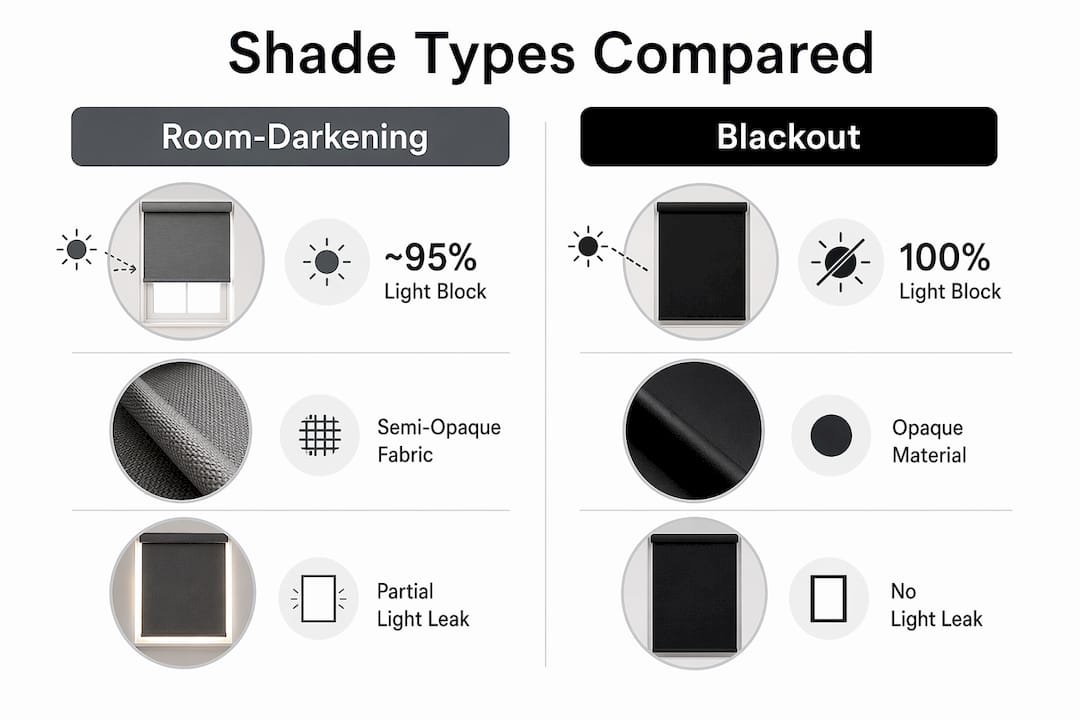
Room-darkening shades reduce about 95% of incoming light, while true blackout shades use fully opaque materials to block 100%. That 5% gap sounds small, but in a pitch-dark bedroom at 6 a.m., it is the difference between sleeping through sunrise and waking up to a glowing border around your window. Always check the product’s blackout rating, not just its color.
Black roller shades and cellular shades sold as “blackout” use materials rated for full light elimination. The fabric composition matters too. Blackout fabrics vary by composition: polyester, vinyl, and cellular materials each deliver different levels of durability, insulation, and noise reduction. Polyester is the most common and affordable. Vinyl is the most opaque. Cellular fabric adds insulation on top of light blocking.
| Feature | Room-darkening shades | Blackout shades |
|---|---|---|
| Light blocked | ~95% | 100% |
| Fabric type | Semi-opaque | Fully opaque |
| Best for | Living rooms, offices | Bedrooms, media rooms |
| Color options | Any color | Any color, including black |
Pro Tip: When buying black roller shades online, filter by “blackout” rating first, then choose color. A black shade without a blackout rating may still let light through seams and fabric weave.
Which types of black shades suit different rooms?
Black roller shades are the most popular choice for a reason. They operate on a simple spring or chain mechanism, roll up cleanly out of sight, and cost less than most other styles. The flat profile suits modern and minimalist interiors, and they are available in widths from 18 inches to over 96 inches for large windows. For renters who want a no-fuss upgrade, black roller shades are the go-to option.
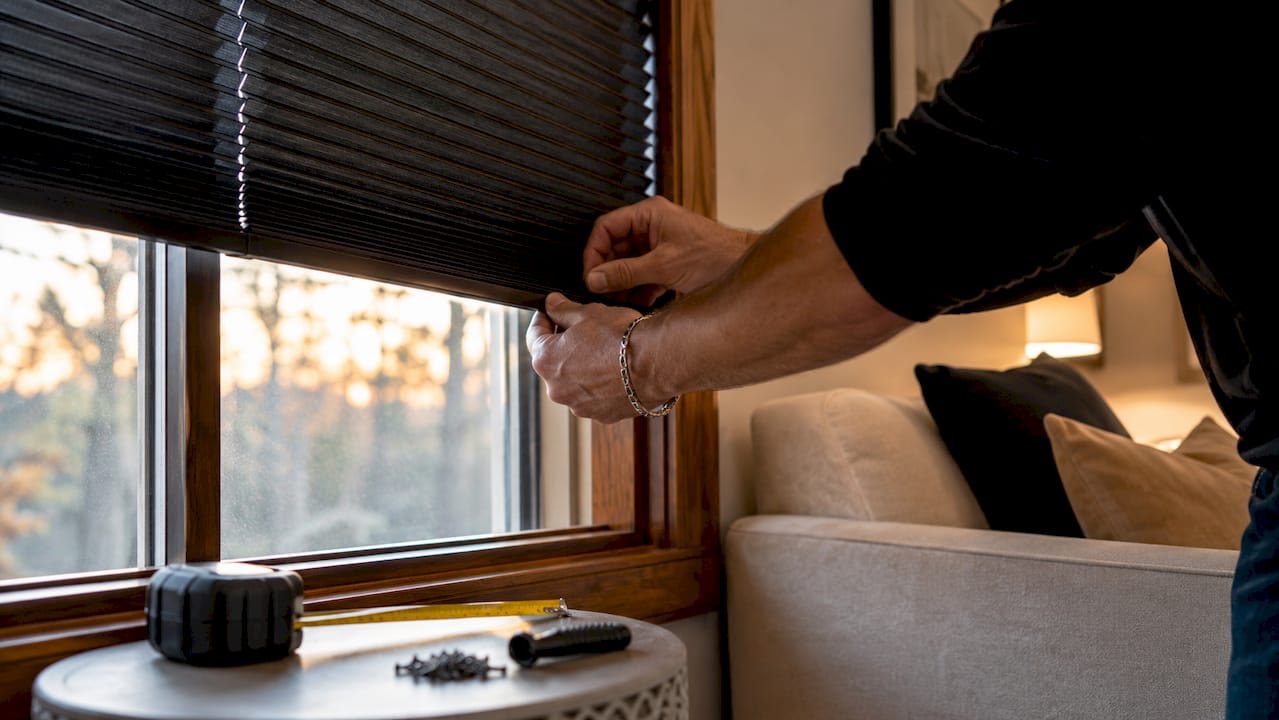
Cellular shades, also called honeycomb shades, go further than just blocking light. Cellular shades offer superior insulation, helping reduce energy costs by blocking heat in summer and retaining warmth in winter. The honeycomb structure traps air in pockets between the fabric layers, acting like a thermal barrier. If your energy bill is a concern alongside light control, cellular blackout shades are the smarter investment.
Roman shades bring a softer, more decorative look to dark window treatments. They fold into horizontal pleats when raised and lie flat when lowered, giving a tailored appearance that suits traditional and transitional interiors. Black Roman shades work especially well in dining rooms and home offices where you want the option of full darkness without sacrificing style. The trade-off is that they are harder to clean and slightly more complex to install than roller shades.
Pleated shades sit between Roman and cellular styles. They fold like an accordion and are thinner than cellular shades, making them a good fit for shallow window frames. Motorized black shades, available in roller, cellular, and zebra styles, add convenience for hard-to-reach windows or for homeowners who want smart home integration with systems like Amazon Alexa or Google Home.
Cordless blackout shades are safer and more visually pleasing than corded versions, particularly in homes with children or pets. Cords pose a strangulation risk that has led to product recalls and safety warnings from the U.S. Consumer Product Safety Commission. Cordless and motorized options eliminate that risk entirely while giving the window a cleaner look.
Pro Tip: For a media room or home theater, pair black roller shades with side channels. The channels press the shade edges against the wall, sealing out the light that typically leaks around the frame.
How to measure and install black shades for true blackout results
Measuring is where most buyers go wrong, and a poorly fitted shade defeats the purpose of buying blackout fabric. Experts recommend measuring at three points, top, middle, and bottom, for both width and height. Window frames are rarely perfectly square, so the smallest measurement is the one you use for an inside mount to avoid binding.
Follow these steps for a precise fit:
- Decide on inside or outside mount. Inside mount sits within the window frame for a clean, recessed look. Outside mount covers the frame entirely and is better for maximum light blocking.
- Measure width at three heights. Record the narrowest measurement for inside mount. For outside mount, add 2 to 3 inches on each side beyond the frame.
- Measure height at three widths. Use the longest measurement for outside mount to cover the full frame.
- Account for the headrail. The headrail adds 1 to 2 inches above the fabric. Factor this into your outside mount height so the shade covers the top of the frame completely.
- Order with deductions in mind. Most manufacturers deduct 3/8 inch from your inside mount width for clearance. Confirm this with the supplier before ordering.
Outside mount shades with 2 to 3 inch overlaps or side channels are the most effective way to eliminate light leakage at the edges. This is the single most overlooked step in how to install black shades. A shade that fits the fabric opening perfectly but leaves a gap at the frame still lets in a visible strip of light on both sides.
Shade fit is the primary driver of blackout effectiveness. Any open space around the edges significantly reduces blocking performance, regardless of how opaque the fabric is. If you are committed to a true blackout result, outside mount with side channels is the only reliable method.
Pro Tip: Use a metal tape measure, not a fabric one. Metal tapes give more accurate readings on hard surfaces, and a quarter-inch error on a wide window can mean a visible light gap on both sides.
What other benefits do black window shades deliver?
Light blocking is the headline benefit, but black window shades deliver several secondary advantages that are worth knowing before you buy.
- Noise reduction. Thicker blackout fabrics dampen ambient sound. The ChrisDowa blackout roller shade, for example, measurably dulled ambient noise during testing by The Spruce. This is not soundproofing, but it takes the edge off street noise and is a real benefit in urban apartments.
- Thermal insulation. Blackout fabric creates a barrier between the glass and the room. In summer, it reflects radiant heat back toward the window. In winter, it slows heat loss through the glass. Cellular blackout shades amplify this effect through their honeycomb air pockets.
- UV protection. Blackout fabric blocks ultraviolet radiation that fades hardwood floors, upholstery, and artwork. This is a long-term benefit that pays off over years of use.
- Room ambiance. Black shades create a dramatic, anchored look that grounds a room visually. Paired with light walls or natural wood furniture, they add contrast without overwhelming the space.
- Smart home compatibility. Motorized black shades from brands like Levolor and those available through Valueblindsdirect integrate with smart home platforms, allowing scheduled operation and voice control.
For renters, cordless window shades are especially practical. They install without permanent hardware in many configurations and come down cleanly when you move out.
Key takeaways
Black window shades deliver true blackout performance only when the fabric is rated opaque and the shade is sized to cover the full window frame with no gaps at the edges.
| Point | Details |
|---|---|
| Color vs. blackout rating | Black color does not guarantee blackout performance; always check the fabric’s opacity rating. |
| Fit determines performance | Outside mount with 2 to 3 inch overlaps or side channels is required for true light elimination. |
| Cellular shades add insulation | Honeycomb fabric blocks light and reduces energy costs by trapping air between layers. |
| Cordless is the safer choice | Cordless and motorized shades eliminate cord strangulation risk and look cleaner on the window. |
| Measure three times | Take width and height measurements at three points each to account for uneven window frames. |
Why I always tell people to buy for fit first, color second
I have seen the same mistake made repeatedly: someone buys a beautiful set of black roller shades, installs them inside the frame, and then wonders why their bedroom still glows at 7 a.m. The shade looks perfect. The fabric is genuinely opaque. But there is a half-inch gap on each side where the frame is slightly wider at the bottom than the top, and light pours through like a spotlight.
The blackout rating and shade fit are the two decisions that determine whether you actually get darkness. Color is third. Style is fourth. I know that feels counterintuitive when you are browsing products and the color is the first thing you see, but the physics do not care about aesthetics.
My honest recommendation: go outside mount whenever the window trim allows it. The shade covers more surface area, the overlap seals the edges, and you get a more dramatic visual impact because the shade appears larger than the window itself. Pair it with side channels if you are serious about a media room or a nursery. The extra hardware costs almost nothing and makes a real difference.
I also think cordless shades are worth the slight price premium in every home, not just homes with kids. The clean look of a shade without a dangling cord is something you notice every single day. It is one of those small upgrades that changes how a room feels without anyone being able to explain exactly why. For anyone exploring cellular blackout options, the combination of insulation and light control makes them the most functional shade you can put on a window.
— Sunny
Find your perfect black shade at Valueblindsdirect
Valueblindsdirect offers a full range of custom black window shades, including cordless roller shades, cellular blackout shades, motorized zebra shades, and more, all sized to your exact window dimensions. Every order comes with measurement guides and expert support so your shades fit right the first time.
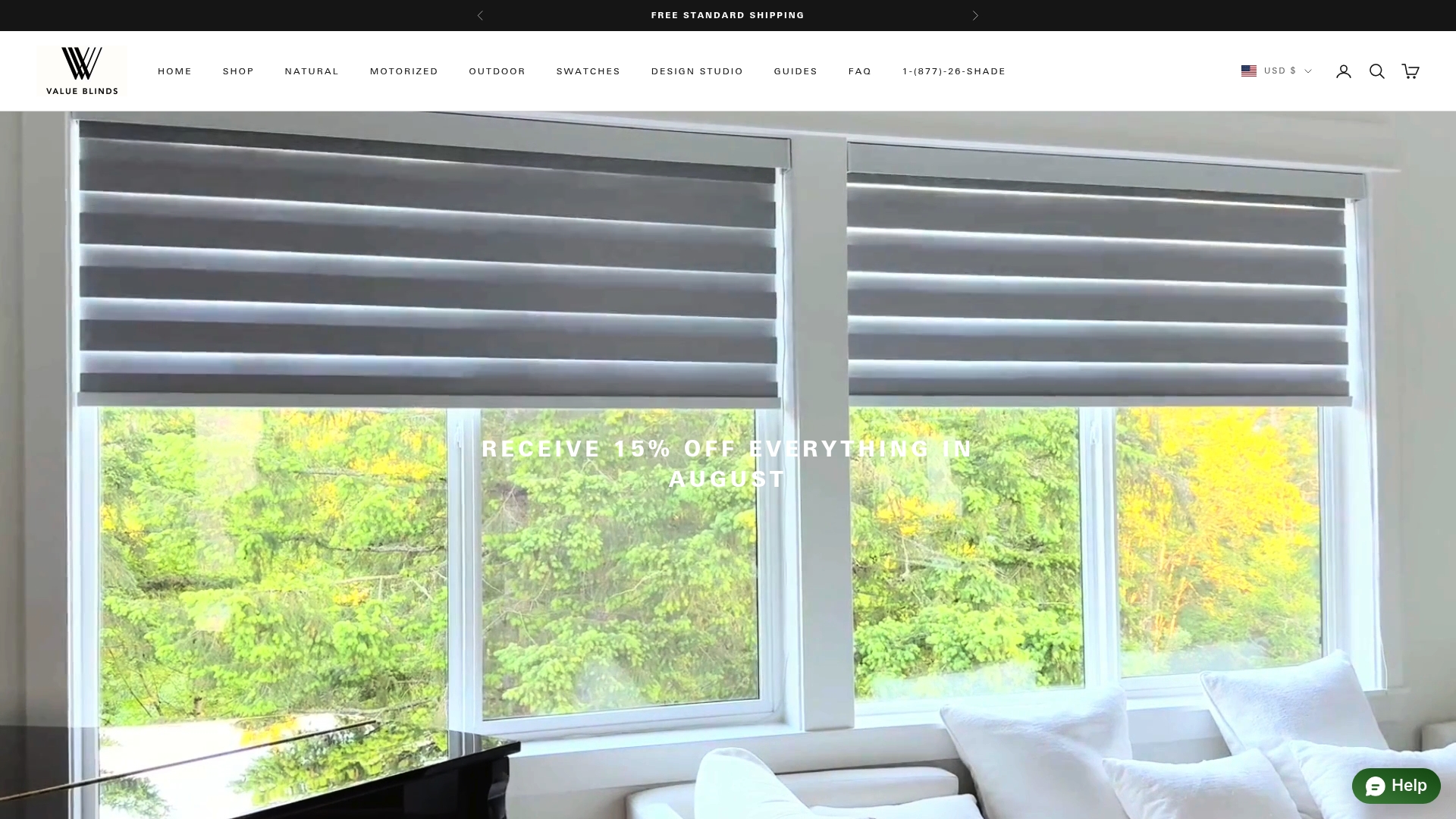
Whether you want the sharp look of black roller shades for a modern living room or the thermal performance of cellular shades for a bedroom, Valueblindsdirect lets you customize fabric, opacity, color, and operating system in one place. Use the Window Treatment Design Studio to visualize your options, get a custom quote, and order with confidence. Free swatches are available so you can check the fabric and color before committing.
FAQ
What is the difference between black shades and blackout shades?
Black shades refer to the color of the fabric, while blackout shades refer to the fabric’s ability to block 100% of incoming light. A black shade can be light-filtering or blackout depending on the material used.
Do black roller shades block more light than white blackout shades?
No. Light-blocking performance depends on fabric opacity, not color. A white shade with a blackout liner blocks 100% of light just as effectively as a black one with the same rating.
How do I stop light from leaking around my black window shades?
Use an outside mount and extend the shade 2 to 3 inches beyond the window frame on all sides. Adding side channels presses the shade edges against the wall and eliminates edge light gaps almost completely.
Are cordless black shades safe for homes with children?
Yes. Cordless shades remove the strangulation risk associated with traditional corded systems and are recommended by safety organizations for any home with young children or pets.
Can black window shades help with energy costs?
Cellular blackout shades in particular reduce energy costs by blocking radiant heat in summer and slowing heat loss in winter. The honeycomb structure traps air between fabric layers, acting as a thermal buffer at the window.