

How to Measure for Inside Mount Blinds for Perfect Fit
Finding the right custom blinds for your home starts long before the installation—it begins with careful and accurate measuring. For many North American homeowners, taking precise window measurements is the first crucial step toward achieving a perfect, seamless fit that enhances any room’s decor. This guide walks you through every detail, from gathering reliable measurement tools to checking for obstructions, so your inside mount blinds look and function exactly as you imagined.
Table of Contents
- Step 1: Gather Required Tools And Prep Windows
- Step 2: Identify Mounting Depth And Obstructions
- Step 3: Measure Window Width At Three Points
- Step 4: Measure Window Height From Top To Sill
- Step 5: Verify And Record Measurements For Accuracy
Quick Summary
| Key Point | Explanation |
|---|---|
| 1. Gather Accurate Tools | Use a steel measuring tape, pencil, and notepad for reliable measurements and avoid fabric tapes. |
| 2. Identify Obstructions | Check for hardware and molding that may interfere with blinds installation and measure mounting depth. |
| 3. Measure Window Width Precisely | Record the narrower width from three points to avoid gaps in the blind installation. |
| 4. Measure Window Height Accurately | Take height measurements from different points and document the shortest one for proper fitting. |
| 5. Verify and Organize Measurements | Cross-check all measurements for consistency and create a well-organized record for future reference. |
Step 1: Gather required tools and prep windows
Measuring for inside mount blinds requires precision and the right preparation. Before you start, you will need to collect specific tools and set up your window area to ensure an accurate measurement process. Getting this initial stage right sets the foundation for a perfect blind fit.
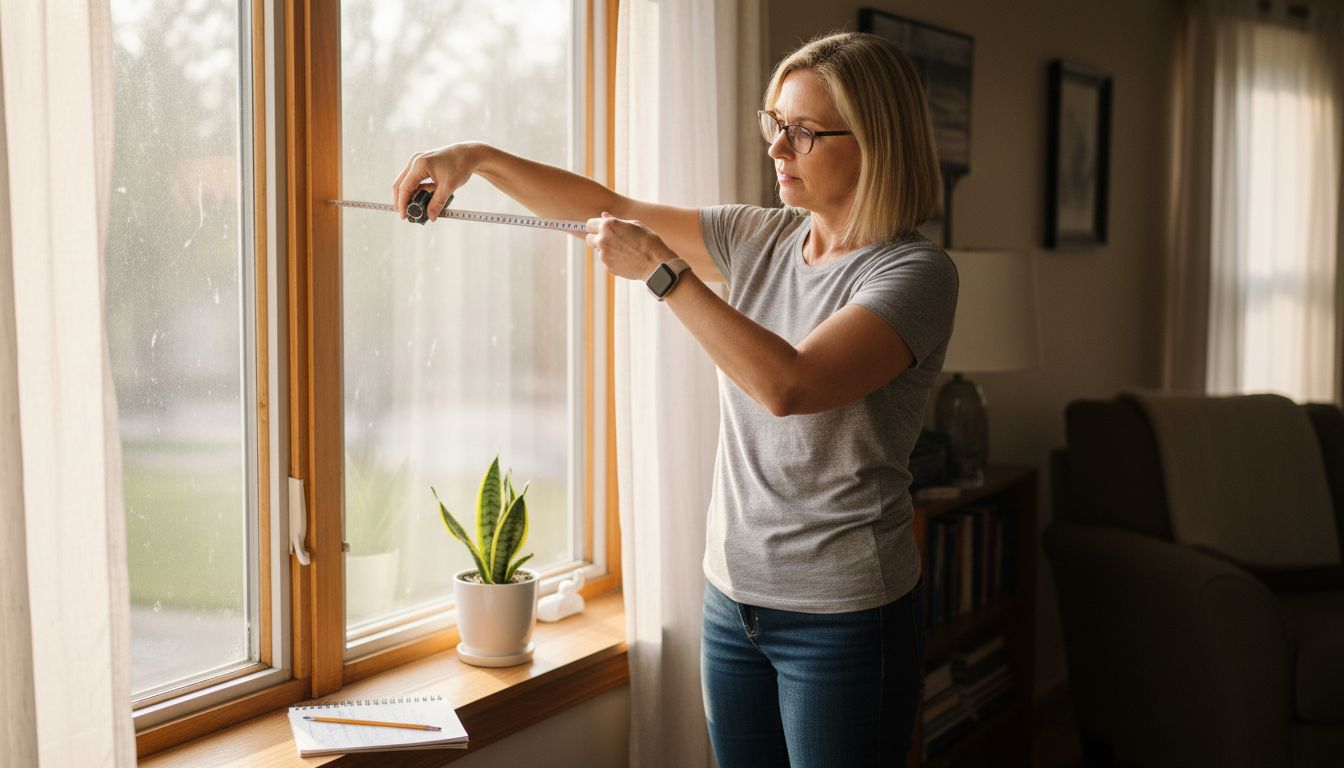
First, gather your essential measurement tools: a reliable steel measuring tape (ideally calibrated for accuracy), a sharp pencil, and a notepad or measurement recording sheet. Avoid using fabric measuring tapes or rulers which can stretch or provide imprecise readings. Clean the window frame thoroughly, removing any dust, cobwebs, or debris that might interfere with your measurements. Check that the window jamb is clear of obstacles like decorative molding or protruding hardware that could impact your blind installation.
Measure carefully and systematically. Start by checking the width at three points inside the window frame: top, middle, and bottom. Record the narrowest measurement to ensure your blinds will fit correctly. For depth, confirm you have at least 2.5 inches of space inside the window frame to accommodate an inside mount blind. This preparation guarantees a professional looking result that fits seamlessly into your window.
Pro tip: Always measure twice and write down each measurement immediately to prevent potential errors or forgotten numbers.
Step 2: Identify mounting depth and obstructions
Successfully installing inside mount blinds requires more than just taking measurements. You will now focus on understanding the specific characteristics of your window that could impact blind installation. This critical step ensures you can determine whether inside mounting is feasible and how to approach potential challenges.
Carefully examine your window frame to identify potential installation obstructions. Look for window handles, locks, decorative molding, or other hardware that might interfere with the blind’s mounting. Measure the mounting depth precisely by determining the distance from the interior wall surface to the window glass or frame. Most inside mount blinds require a minimum of 2.5 to 3 inches of depth to function correctly. Pay special attention to window stops, sills, and any protruding elements that could prevent a smooth installation.
If you encounter limited mounting space or significant obstructions, you may need to consider alternative mounting options. Take detailed notes about each potential interference and their specific measurements. This information will help you make an informed decision about whether inside mounting is appropriate or if an outside mount would be more suitable for your window.
Compare inside mount with outside mount blind installation approaches:
| Feature | Inside Mount | Outside Mount |
|---|---|---|
| Aesthetic | Seamless, built-in look | Covers frame, bold appearance |
| Space Needed | 2.5-3 inches depth | Minimal, outside frame |
| Obstruction Tolerance | Sensitive to obstructions | Easily avoids obstacles |
| Customization | Requires precise sizing | More flexible on size |
| Light Gap Control | Minimal side gaps possible | May cover gaps better |
Pro tip: Use a flashlight and mirror to inspect hard to see areas of the window frame for hidden obstructions that might not be immediately visible.
Step 3: Measure window width at three points
Accurate measurement is the foundation of a perfect inside mount blind installation. In this critical step, you will learn how to precisely measure your window width to ensure a flawless fit that looks professional and functions smoothly.
Take your steel measuring tape and measure width systematically at three distinct points inside the window frame: top, middle, and bottom. Start at the left inner edge and extend your tape measure to the right inner edge for each measurement. Record each width measurement carefully, paying close attention to any variations. Windows are rarely perfectly square, so these three measurements will reveal any subtle irregularities that could impact your blind installation.
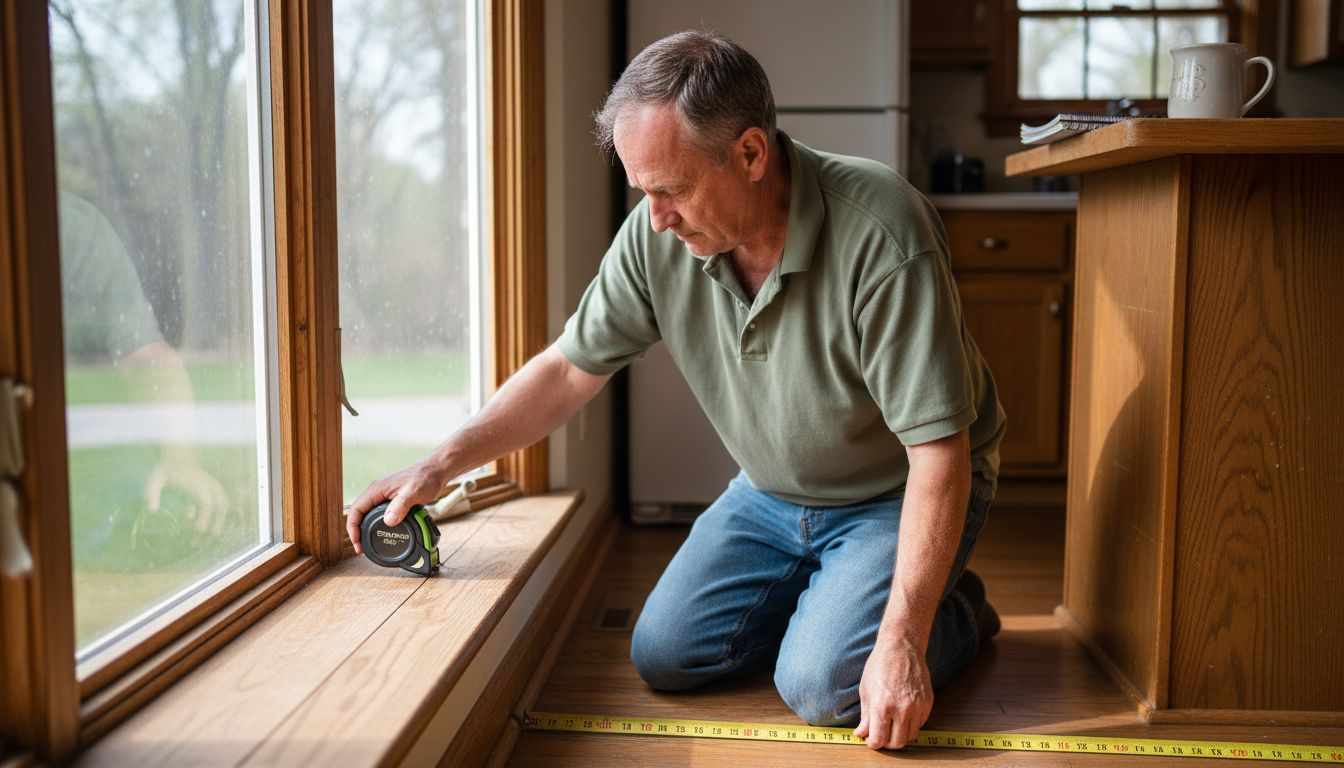
Always record the narrowest measurement as your official window width. This approach guarantees that your blinds will fit correctly without binding or leaving gaps. If the differences between measurements are significant more than 1/4 inch, you may want to consult a professional or consider custom sizing to accommodate your window’s unique shape. Understanding these nuanced measurements will help you make informed decisions about your inside mount blind selection.
Pro tip: Wear reading glasses or use a magnifying glass to ensure you read the measuring tape precisely and avoid potential measurement errors.
Step 4: Measure window height from top to sill
Measuring window height accurately is crucial for achieving a perfect inside mount blind installation. This step will guide you through the precise process of determining your window’s exact vertical dimensions to ensure a seamless and professional result.
Prepare to measure window height systematically by positioning your steel measuring tape at the very top inside edge of the window frame. Carefully extend the tape downward to the window sill, making sure to measure at three distinct points: left side, center, and right side of the window. Each measurement is important because window frames are rarely perfectly uniform. Some areas might have slight variations due to settling, construction irregularities, or previous modifications.
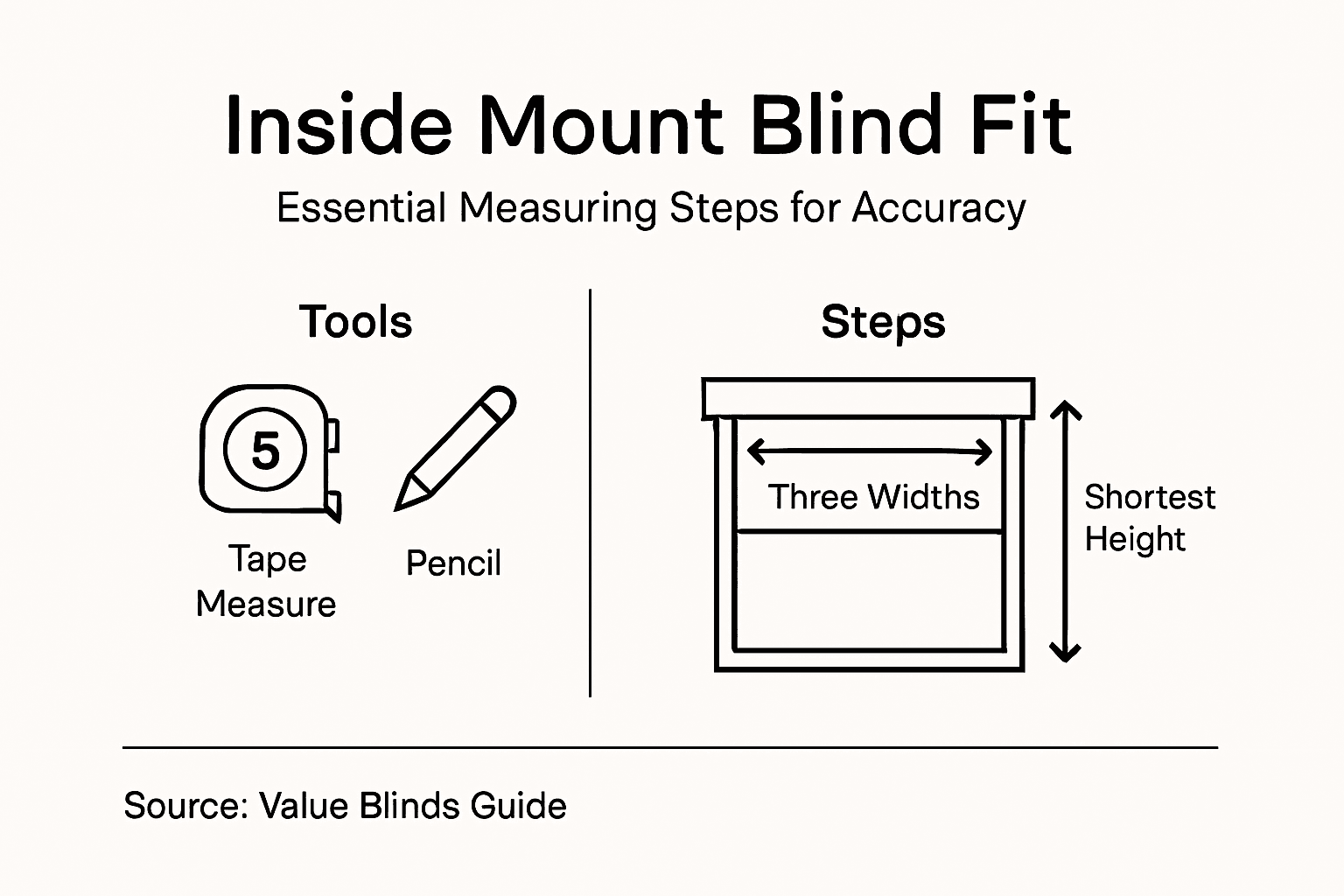
Always record the shortest height measurement as your official window height. This conservative approach prevents potential issues with blind fitting and ensures smooth operation. If you notice significant variations between your measurements more than 1/4 inch differences you may want to consult a professional or consider custom sizing options. By taking multiple measurements, you create a comprehensive understanding of your window’s true dimensions.
Pro tip: Hold your measuring tape straight and taut to prevent sagging or angled measurements that could lead to inaccurate readings.
Step 5: Verify and record measurements for accuracy
With your initial measurements complete, the next critical phase involves thoroughly validating and documenting your window dimensions. This step transforms your raw measurements into reliable data that will guide your blind selection and installation process.
Apply precise measurement verification techniques by methodically reviewing each recorded dimension. Cross-reference your width, height, and depth measurements at different points to confirm consistency. Create a dedicated measurement worksheet where you can clearly document the exact numbers for width, height, and depth at each location top, middle, and bottom. Circle the smallest measurement for both width and height as these will determine your final blind size. Pay special attention to any variations between measurements that might indicate window frame irregularities.
Keep your measurement worksheet organized and legible. Include the date of measurement, window location, and any specific notes about unique characteristics or potential installation challenges. Consider taking digital photographs of your window and attaching them to your measurement documentation as an additional reference. This comprehensive approach ensures you have all the necessary information when selecting and ordering your inside mount blinds.
Pro tip: Use a pencil instead of a pen when recording measurements to allow easy corrections if needed.
Here’s a summary of critical measurement steps and the main objective for each:
| Step | Key Action | Purpose |
|---|---|---|
| Gather Tools | Collect precise measuring tools | Ensure measurement accuracy |
| Identify Obstructions | Check for depth and hardware | Confirm suitability for inside mount |
| Measure Width | Measure at top, middle, bottom | Detect window irregularities |
| Measure Height | Check left, center, right points | Account for frame variations |
| Verify & Record | Organize data, photo reference | Prevent errors, aid blind selection |
Get the Perfect Fit for Your Inside Mount Blinds with Value Blinds
Measuring your windows for inside mount blinds can feel overwhelming with the need for precise width, height, and depth measurements to avoid fitting issues or light gaps. If you want to confidently achieve that seamless, built-in look while avoiding common pitfalls like obstructions or uneven frames, trust the experts at Value Blinds. We specialize in custom window treatments tailored to your exact measurements and style preferences.

Explore our New Arrivals for the latest in blackout, cordless, and motorized blinds designed with ease of installation in mind. Take advantage of our free swatches and expert support to make the measuring process simple and stress-free. Visit Value Blinds now to browse our extensive catalog and order your perfectly fitted inside mount blinds with confidence. Start transforming your home today with window treatments that combine style, durability, and flawless fit.
Frequently Asked Questions
How do I measure the width for inside mount blinds?
To measure the width for inside mount blinds, check the width at three points: the top, middle, and bottom of the window frame. Record the narrowest measurement to ensure a proper fit. Make this a habit to avoid issues during installation.
What depth do I need for inside mount blinds?
You typically need a minimum depth of 2.5 to 3 inches for inside mount blinds to function correctly. Measure from the interior wall surface to the window glass to verify the available space before proceeding.
How can I identify obstructions during the measurement process?
To identify obstructions, examine your window frame for handles, locks, or decorative molding that might interfere with the blind installation. Take detailed notes of these obstructions along with their measurements to inform your mounting decisions.
What should I do if my window measurements are inconsistent?
If your window measurements differ by more than 1/4 inch, this may indicate irregularities in the frame. Consider consulting a professional or opting for custom sizing to accommodate the unique shape of your window.
How can I ensure I record my measurements accurately?
To ensure accurate measurements, use a pencil instead of a pen to allow corrections if needed. Document all measurements immediately on a dedicated worksheet, including the date and any specifics about your window’s characteristics.
Why is it important to measure twice before recording my measurements?
Measuring twice helps to prevent potential errors by confirming consistency in your data. Always use your most precise measurement, especially for width and height, to guarantee that your inside mount blinds fit correctly.