
Blinds to Go How to Measure for Perfect Window Fit
Nearly one in four American homeowners ends up with ill-fitting blinds due to simple measuring mistakes. Getting custom window treatments can be exciting, but a single inaccurate measurement often wastes time and money. With the right step-by-step process and the best tools, you can avoid frustrating installation problems and order blinds that look and function perfectly for your space.
Table of Contents
- Step 1: Gather Essential Measuring Tools And Supplies
- Step 2: Decide Inside Or Outside Mount For Your Blinds
- Step 3: Measure Window Width And Height Precisely
- Step 4: Record Measurements And Double-Check Accuracy
- Step 5: Select Custom Options Based On Measurements
Quick Summary
| Key Point | Explanation |
|---|---|
| 1. Gather essential measuring tools | Use a metal tape measure, pencil, notepad, and ladder for accurate measurements. |
| 2. Choose inside or outside mount | Decide based on window depth and aesthetic preference; inside mounts are sleek, outside mounts provide better light control. |
| 3. Measure width and height precisely | Measure at multiple points, always use the narrowest width and the longest height to ensure a proper fit. |
| 4. Record measurements accurately | Document measurements immediately and verify for consistency; small errors can lead to poor fitting blinds. |
| 5. Select custom options wisely | Choose features based on your room’s needs and measurements; consider style, functionality, and additional customization. |
Step 1: Gather essential measuring tools and supplies
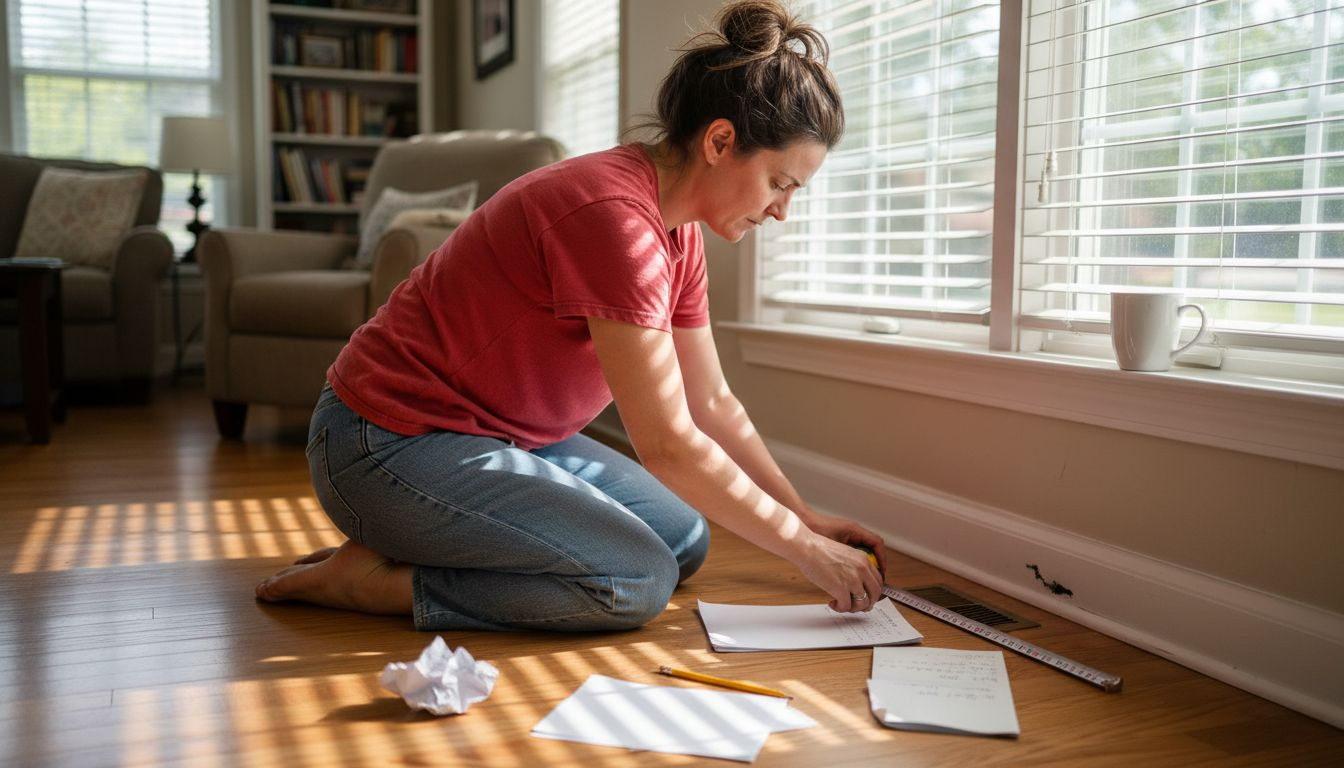
Preparing to measure your windows accurately starts with collecting the right tools. You will need precision measuring equipment to ensure your blinds fit perfectly. Essential measuring tools include a reliable metal tape measure, a pencil, a sturdy notepad, and a reliable ladder or step stool for reaching higher windows.
Choose a metal tape measure that extends at least 25 feet long with clear markings in both inches and centimeters. Avoid fabric measuring tapes as they can stretch and provide inaccurate measurements. Grab a standard carpenter’s pencil for marking measurements and a notepad to record window dimensions systematically. If your windows are high or challenging to reach, select a stable ladder that allows you to measure safely without stretching or overreaching.
Organize your measuring tools before starting the process. Place them in a convenient location near your windows to streamline the measuring task. Double check that your tape measure works smoothly and has clear, legible markings. Having everything prepared will help you complete your window measurements quickly and accurately.
Pro tip: Keep your measuring tape clean and stored in a dry place to maintain its accuracy and prevent rust or damage to the measurement markings.
Step 2: Decide inside or outside mount for your blinds
Choosing between an inside or outside mount is crucial for achieving the perfect window treatment look. Window blind mounting options significantly impact both the aesthetic and functional aspects of your window coverings. An inside mount fits within the window frame, creating a sleek and minimalist appearance that showcases your window’s architectural details.
Inside mounts work best when you have deep window frames with at least 2.5 inches of depth. They provide a clean look that allows molding and trim to remain visible. Outside mounts, by contrast, are installed on the wall surrounding the window frame. These are ideal for windows with shallow recesses, unique shapes, or when you want to make your windows appear larger by covering the entire frame area. Outside mounts also offer superior light blocking and provide more complete privacy since they extend beyond the window frame.
Consider your specific window characteristics and design preferences when making this decision. Measure the window depth carefully if you are leaning toward an inside mount. For rooms requiring maximum light control or with challenging window configurations, an outside mount might be the more practical choice.
Here’s a comparison of inside mount vs. outside mount window blind options to help you choose based on your needs:
| Aspect | Inside Mount | Outside Mount |
|---|---|---|
| Visual Appearance | Minimalist, shows trim | Covers frame, makes window look bigger |
| Light Control | Moderate light gaps | Superior light blocking |
| Privacy Level | Standard privacy | Enhanced overall privacy |
| Frame Requirement | At least 2.5-inch depth needed | Works with shallow frames |
Pro tip: When unsure about your mounting option, take sample measurements for both inside and outside mounts to compare how each style would look in your space.
Step 3: Measure window width and height precisely
Accurate measurements are the foundation of perfectly fitted window blinds. Precise window measurement techniques require careful attention and systematic approach. You will want to use a metal tape measure and record measurements in inches with absolute precision.
For width, measure horizontally at three critical points: the top, middle, and bottom of the window frame. Always record the narrowest measurement to ensure your blinds will fit smoothly. When measuring height, start from the top of the window frame down to the windowsill or your desired bottom point. Take measurements at three locations as well the left side, center, and right side of the window to account for any potential frame irregularities. The longest height measurement will be your reference point for ordering blinds.
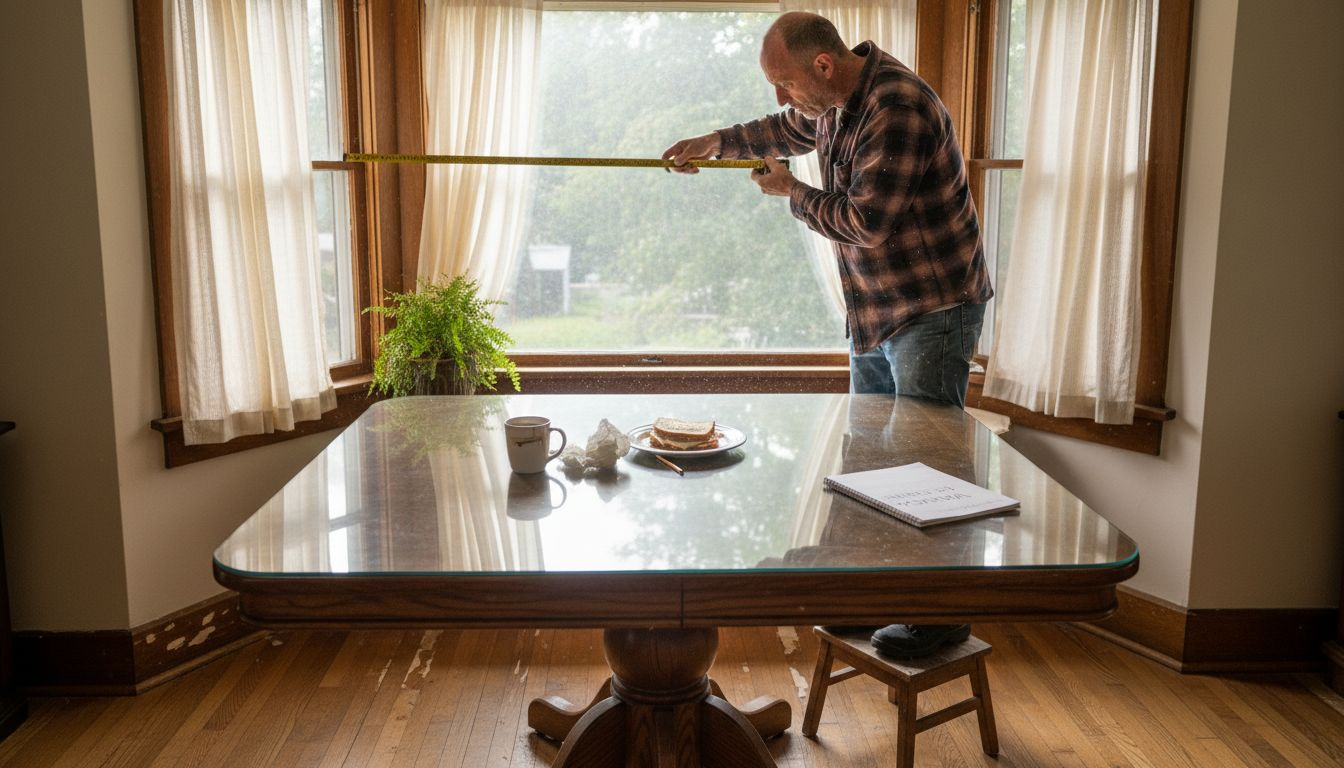
Remember that even small measurement errors can significantly impact your blind installation. Take your time and double check each measurement. If you are installing an inside mount, subtract a small amount from your width measurement to allow for proper fit. If choosing an outside mount, measure the entire area you want the blinds to cover, which might extend beyond the actual window frame.
Pro tip: Always measure twice and write down measurements immediately to prevent confusion or forgotten numbers.
Step 4: Record measurements and double-check accuracy
Precision is paramount when recording window measurements for your new blinds. Accurate measurement techniques demand careful documentation and multiple verification steps. Create a dedicated measurement worksheet or use a clean notepad to record your findings systematically.
Write down each measurement immediately after taking it. For width, record the smallest measurement from your three points top, middle, and bottom. For height, document the longest measurement from your three vertical points. Use a sharp pencil or permanent marker to ensure clarity. Consider creating a simple grid with columns for top, middle, bottom measurements and separate sections for width and height. Circle or highlight the critical measurements you will use for ordering your blinds to prevent any potential confusion.
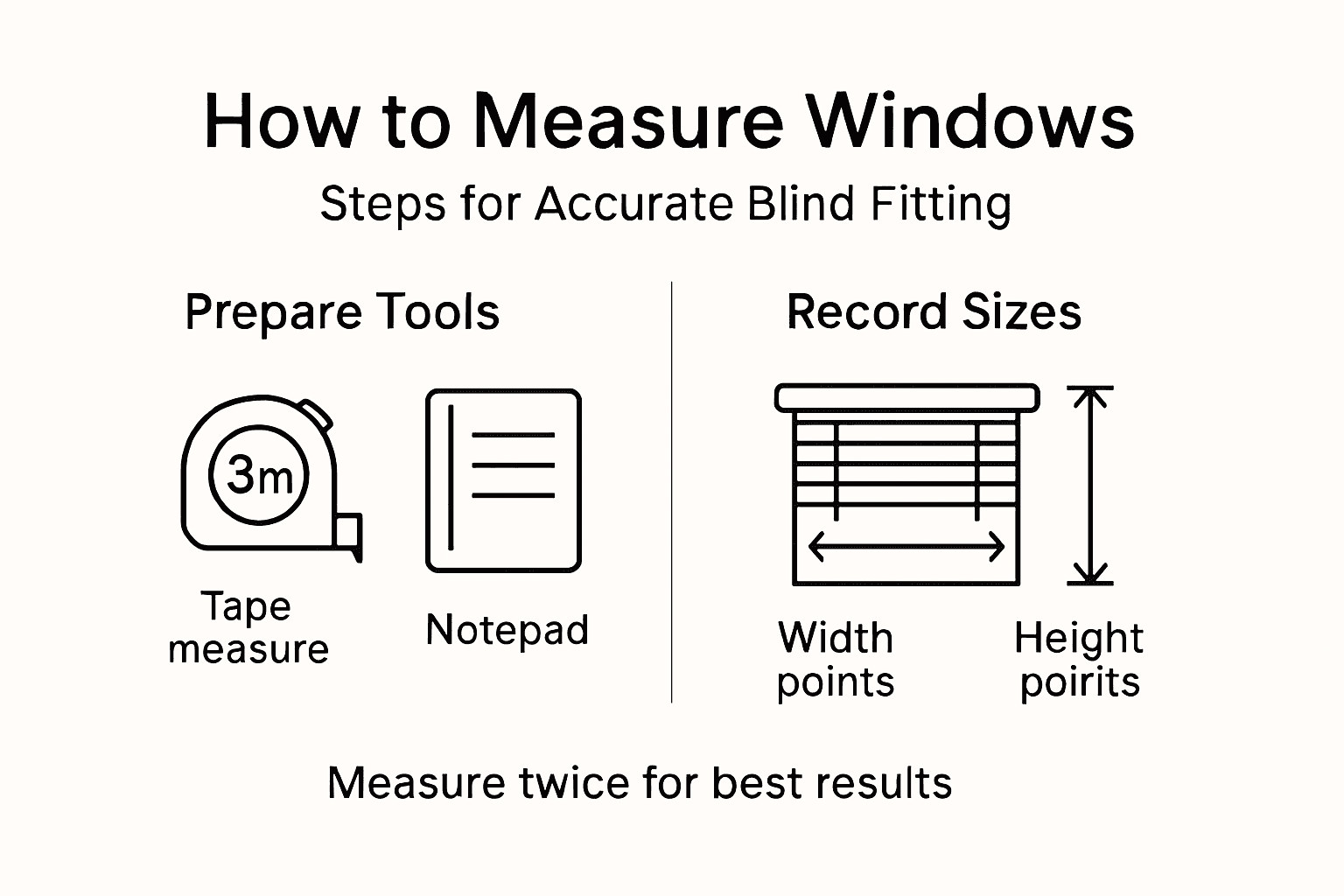
Cross reference your measurements by comparing them with your initial notes. If any measurement seems significantly different from the others, remeasure that specific section. Slight variations can indicate an uneven window frame or measurement error. Take photographs of your windows and measurements as a backup reference. This visual documentation can help if you need to consult with a window treatment professional or double check your initial measurements.
Pro tip: Measure your windows during daylight hours with natural lighting to ensure maximum accuracy and visibility of measurement points.
Step 5: Select custom options based on measurements
With your precise window measurements in hand, you are now ready to explore custom window covering options that match your specific requirements. Your measurements will guide your selections for material, style, and functionality to ensure a perfect fit and optimal performance.
Consider your room’s unique needs when selecting blind features. If you have windows with direct sunlight exposure, look for cellular shades or thermal options that provide enhanced energy efficiency. For bedrooms or media rooms requiring maximum light blocking, blackout materials might be ideal. Your width and height measurements will determine which specific styles and mechanisms can be accommodated. Pay attention to mounting options inside or outside the window frame based on your earlier measurements.
Think beyond basic functionality and explore additional customization features. Color selections, texture choices, and operational mechanisms like cordless or motorized controls can transform your window treatments from simple coverings to design statements. Some advanced options include light filtering gradients, special coatings for UV protection, and smart home integration. Match these selections not just to your measurements but to your room’s aesthetic and practical requirements.
Use this reference table to quickly identify ideal blind features for different room types:
| Room Type | Recommended Features | Functional Benefit |
|---|---|---|
| Bedroom | Blackout or thermal materials | Maximum privacy and darkness |
| Living Room | Light-filtering options | Soft daylight, stylish look |
| Kitchen | Moisture-resistant blinds | Easy cleaning, durability |
| Home Office | Smart controls, UV coating | Convenience, protects screens |
Pro tip: Request free fabric swatches to see how different materials and colors look in your actual space before making a final selection.
Achieve the Perfect Fit for Your Custom Blinds Today
Measuring your windows precisely can be challenging but is essential for flawless blinds that complement your space and lifestyle. Whether you struggle with deciding between an inside mount or outside mount or need exact width and height measurements, accurate data ensures a seamless installation and an elegant finish. At Value Blinds, we understand these challenges and offer a wide range of custom window treatments designed to fit your exact specifications, helping you avoid common fitting frustrations.
Explore our New Arrivals for the latest in blackout, cordless, and motorized shades that perfectly match your personal style and measurement needs. Take advantage of our expert support and free swatches to choose the ideal blind that offers energy efficiency, privacy, and style. Visit Value Blinds now to start customizing your window solutions with confidence and bring your vision to life.
Frequently Asked Questions
How do I measure my windows for blinds?
To measure your windows for blinds, use a metal tape measure to obtain width and height dimensions. Measure the width at the top, middle, and bottom, then use the narrowest measurement. For height, measure from the top of the frame to the desired bottom point at the left, center, and right sides, recording the longest measurement.
What should I consider when choosing between inside mount and outside mount for my blinds?
When deciding between inside and outside mount, consider the depth of your window frame and the aesthetic you want. Inside mounts provide a minimalist look if you have at least 2.5 inches of depth, while outside mounts can create the illusion of larger windows and offer better light control. Check your window measurements before making your decision.
How do I ensure my window measurements are accurate?
To ensure accurate window measurements, measure each dimension twice and record them immediately. Use a dedicated notepad or measurement worksheet to document the smallest width and longest height, and cross-reference your findings. This will help avoid errors due to forgotten numbers or incorrect measurements.
What features should I look for in custom blinds based on my measurements?
When selecting custom blinds, keep your measurements in mind to ensure a proper fit. Look for features that suit your room, such as blackout materials for bedrooms or moisture-resistant options for kitchens. Think about customization options like color and operating mechanisms to enhance functionality and style.
How can I confirm that my blinds will fit before ordering?
To confirm that your blinds will fit, review your recorded measurements and the manufacturer’s specifications to ensure accuracy. Verify any critical dimensions once more and consider measuring your window again if you’re uncertain. Taking these precautions will help prevent sizing issues before ordering.
What tools do I need for measuring my windows?
You’ll need essential tools such as a metal tape measure, a pencil, a sturdy notepad, and possibly a ladder for high windows. Ensure your tape measure is at least 25 feet long for comprehensive coverage, and keep everything organized and nearby for efficiency during the measuring process.
Recommended
- How to Measure Perfect Fit Blinds for a Flawless Installation
- Measuring Windows for Blinds: The Simple Step-by-Step Guide
- How to Measure for Blinds: Accurate DIY Guide for Windows
- Blinds com How to Measure for Perfect Custom Fit Windows
- Profesionálne umývanie okien pre firmy: Prečo na to bežný čistič nestačí?