
Best Blinds for Living Room: Style, Privacy, and Comfort
Blinds do so much more in a living room than just cover the windows. Think of this: insulated cellular shades can cut winter heat loss through windows by up to 40 percent. Surprised? Most people get stuck on color and style and miss the real value. The right blinds can slash your energy bills, bump up privacy, and actually shape the entire feel of your home.
Table of Contents
- How To Choose The Best Blinds For Living Room
- Top Types Of Living Room Blinds Explained
- Blinds For Different Living Room Needs
- Expert Tips For Styling Living Room Windows
Quick Summary
| Takeaway | Explanation |
|---|---|
| Assess your living room’s unique needs. | Evaluate sunlight exposure, privacy, and room style before selecting blinds to ensure they meet specific requirements. |
| Choose blinds based on material and functionality. | Select materials like wood, vinyl, or aluminum to achieve desired aesthetics and adjust light control capabilities. |
| Take accurate measurements for best fit. | Measure windows precisely to ensure that blinds fit properly, enhancing both appearance and functionality. |
| Prioritize energy-efficient options. | Consider blinds like insulated cellular shades that improve thermal performance and reduce energy costs. |
| Layer treatments for visual interest. | Combine blinds with curtains or valances for a more dynamic look that enhances the room’s overall design. |
How to Choose the Best Blinds for Living Room
Selecting the perfect blinds for your living room involves more than just picking a color or style. It requires a strategic approach that balances aesthetics, functionality, and personal preferences. The right window treatment can transform your living space, enhancing both its visual appeal and practical comfort.
Assess Your Living Room’s Unique Requirements
Before diving into blind selection, carefully evaluate your living room’s specific characteristics. Consider the room’s natural light exposure, window sizes, and overall design aesthetic. Window orientation plays a critical role in determining the most suitable blinds. South-facing windows receive more direct sunlight, which means you’ll want blinds that offer excellent light control and heat reduction.
Exploring window treatment options becomes crucial at this stage. According to National Renewable Energy Laboratory, strategic window treatments can reduce solar heat gain by up to 77%, making your blind selection not just a design choice but an energy-efficient decision.
Key factors to consider include:
- Room’s color palette
- Natural light levels
- Privacy requirements
- Window dimensions
- Existing furniture style
Understand Material and Functionality Trade-offs
Different blind materials offer unique benefits. Wooden blinds provide a classic, warm aesthetic and excellent insulation. Vinyl options are moisture-resistant and ideal for rooms with potential humidity. Aluminum blinds offer a modern, sleek look with superior light control.
Functionality should be your primary consideration. Do you need blackout capabilities for afternoon relaxation? Are you seeking light filtering options that create a soft, diffused ambiance? Some homeowners prioritize energy efficiency, while others focus on complete light blockage.
Research from the American Society of Interior Designers suggests that modern blinds aren’t just window coverings but integral design elements that contribute to a room’s overall atmosphere. Consider motorized options for hard-to-reach windows or smart home integration.
Measure and Budget Strategically
Accurate measurements are non-negotiable. Ill-fitting blinds can look unprofessional and function poorly. Measure your windows precisely, accounting for mounting depth and potential obstructions. Most manufacturers recommend measuring to the nearest 1/8 inch for optimal fit.
The following table summarizes key factors to consider when measuring and budgeting for living room blinds, providing a convenient checklist referenced from the article:
| Consideration | Description |
|---|---|
| Accurate Measurement | Measure windows to the nearest 1/8 inch |
| Mounting Depth | Account for depth and window obstructions |
| Budget | Balance cost, durability, and appearance |
| Sample Requests | Request material/color samples before purchase |
| Quality vs. Price | Invest in mid/high quality for long-term value |
| Professional Fit | Ill-fitting blinds reduce appearance & effectiveness |
Budget plays a significant role in your selection. While it’s tempting to choose the cheapest option, investing in quality blinds pays long-term dividends. Mid-range options often provide the best balance between cost, durability, and aesthetic appeal.
Pro tip: Always request samples before making a final decision. This allows you to see how different materials and colors interact with your living room’s lighting and existing decor. Learn more about window treatment selection to make an informed choice that elevates your living space.
Top Types of Living Room Blinds Explained
Living room blinds come in a diverse array of styles, each offering unique aesthetic and functional benefits. Understanding the characteristics of different blind types empowers homeowners to make informed decisions that align with their interior design goals and practical requirements.
Venetian Blinds: Classic Versatility and Precision Control
Venetian blinds represent a timeless window treatment solution that continues to dominate living room design. Characterized by horizontal slats that can be precisely angled, these blinds offer unparalleled light and privacy management. According to the U.S. Department of Energy, venetian blinds can reduce solar heat gain by up to 45% when properly adjusted.
Available in multiple materials including aluminum, wood, and composite, venetian blinds adapt to various design aesthetics. Wooden variants provide warmth and natural texture, while aluminum options deliver a sleek, modern appearance. The ability to adjust slat angles allows for nuanced light filtering, making them ideal for living rooms with varying sunlight intensities.
Roller Blinds: Minimalist Elegance and Practical Functionality
Roller blinds offer a clean, contemporary solution for living rooms seeking streamlined window treatments. These blinds feature a single piece of fabric that rolls up and down, creating a smooth, uncluttered look. Explore more about window shade styles to understand their versatility.
Modern roller blinds come in an extensive range of fabrics, from light-filtering materials that create soft ambient lighting to blackout options that completely eliminate exterior light. Homeowners can select from translucent, semi-opaque, and opaque fabrics to match their specific light control and privacy needs. Research from the National Fenestration Rating Council indicates that strategic fabric selection can significantly impact a room’s thermal performance.
Vertical Blinds: Expansive Coverage and Modern Design
Vertical blinds excel in covering large living room windows, sliding glass doors, and expansive glass surfaces. Their design features vertically hanging slats that can be rotated and drawn to the side, providing flexible light management and visual appeal. Unlike horizontal blinds, vertical options create an illusion of height, making living rooms appear more spacious.
These blinds are particularly effective in rooms with floor-to-ceiling windows or unique architectural features. Materials range from fabric and vinyl to aluminum, allowing homeowners to match their window treatments with existing interior design elements. The ability to stack panels completely to one side offers maximum window exposure when desired.
When selecting living room blinds, consider factors beyond aesthetics. Durability, maintenance requirements, and energy efficiency should guide your decision. Each blind type presents distinct advantages, and the perfect choice depends on your specific living room characteristics, personal style, and functional needs.
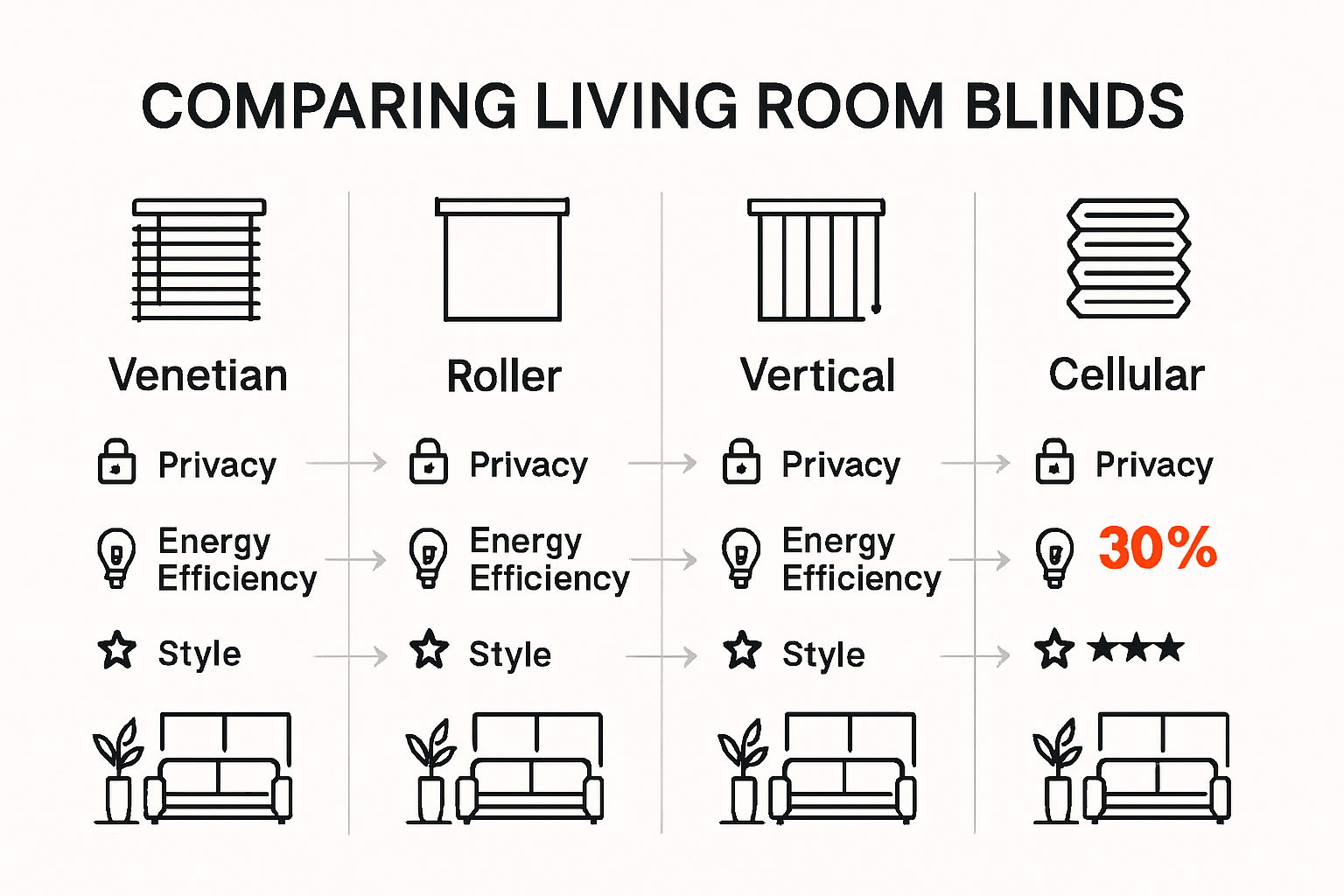
Here is a comparison table to help you quickly assess the main types of living room blinds, highlighting their key features, benefits, and ideal uses as described in the article:
| Blind Type | Key Features | Main Benefits | Best For |
|---|---|---|---|
| Venetian Blinds | Horizontal slats, adjustable angle | Precise light & privacy control | Varied sunlight, traditional or modern styles |
| Roller Blinds | Single fabric panel, rolls up/down | Minimalist look, easy functionality | Clean lines, contemporary spaces |
| Vertical Blinds | Vertical slats, slides to side | Large coverage, visual height | Floor-to-ceiling windows & sliding doors |
| Cellular Shades | Honeycomb structure, multilayered fabric | Superior insulation, energy savings | Energy efficiency, comfort in all climates |
| Zebra/Dual Roller | Alternating opaque/transparent strips | Customizable light & privacy | Flexible light control, modern aesthetics |
| Motorized Blinds | Automated/motorized operation | Convenience, smart integration | Hard-to-reach windows, tech-friendly homes |
Pro tip: Always request fabric samples and consider how different blind types interact with your living room’s natural light, furniture placement, and overall design theme. Learn more about selecting the right window treatments to make an informed decision that enhances your living space.
Blinds for Different Living Room Needs
Living rooms are dynamic spaces with diverse requirements, demanding window treatments that can adapt to multiple scenarios. Understanding how different blind styles address specific needs helps homeowners create versatile and comfortable environments.
Maximizing Energy Efficiency and Comfort
Energy performance is a critical consideration when selecting living room blinds. According to the U.S. Department of Energy, insulated cellular shades can reduce heat loss through windows by up to 40% during winter, translating to approximately 10% heating energy savings. These blinds create an additional thermal barrier, helping maintain consistent indoor temperatures.
Cellular shades, with their unique honeycomb design, trap air between fabric layers, providing superior insulation. Learn more about advanced window treatment strategies to understand how these innovative designs contribute to home comfort and energy management.
Key energy-efficient blind features include:
- Multilayered fabric construction
- Air-trapping cellular design
- Thermal resistance capabilities
- Customizable light filtering options
Privacy and Light Control Solutions
Living rooms require flexible window treatments that balance privacy with natural light. Research from the Lawrence Berkeley National Laboratory reveals that occupants primarily adjust window blinds to reduce glare and manage visual comfort.
Zebra or dual-layer roller blinds offer an innovative solution. These blinds feature alternating transparent and opaque fabric strips that can be aligned to create varying levels of privacy and light transmission. By rotating the layers, homeowners can transition seamlessly between complete visibility and total privacy.
Motorized blinds represent another advanced privacy solution. Programmable options allow automatic adjustments based on time of day, sunlight intensity, or room occupancy. This technology ensures consistent light management without manual intervention.
Specialized Blinds for Unique Living Room Configurations
Not all living rooms have standard window sizes or orientations. Specialty blinds address unique architectural challenges while maintaining aesthetic appeal. Floor-to-ceiling windows, bay windows, and irregularly shaped openings require customized approaches.
Vertical blinds work exceptionally well for large glass surfaces, providing expansive coverage and smooth operation. Motorized tracking systems enable effortless adjustment, making them ideal for wide windows or sliding glass doors. Fabric vertical blinds add softness, while aluminum options deliver a contemporary edge.
The Efficient Window Coverings organization emphasizes the importance of precise measurements and professional consultation when dealing with non-standard window configurations. Custom-fitted blinds ensure optimal performance, preventing light leakage and maintaining a polished appearance.
Consider your living room’s unique characteristics when selecting blinds. Factors like sunlight exposure, room layout, furniture placement, and personal style all influence the most suitable window treatment. Prioritize solutions that offer flexibility, energy efficiency, and aesthetic harmony.
Pro tip: Invest in sample swatches and consult design professionals to explore how different blind styles can transform your living room’s functionality and visual appeal. Discover comprehensive window treatment guidance to make an informed decision tailored to your specific needs.
Expert Tips for Styling Living Room Windows
Styling living room windows requires a thoughtful approach that balances aesthetics, functionality, and personal design preferences. Professional interior designers emphasize that window treatments are more than mere coverings they are integral elements that define a room’s atmosphere and visual narrative.
Color and Texture Coordination Strategies
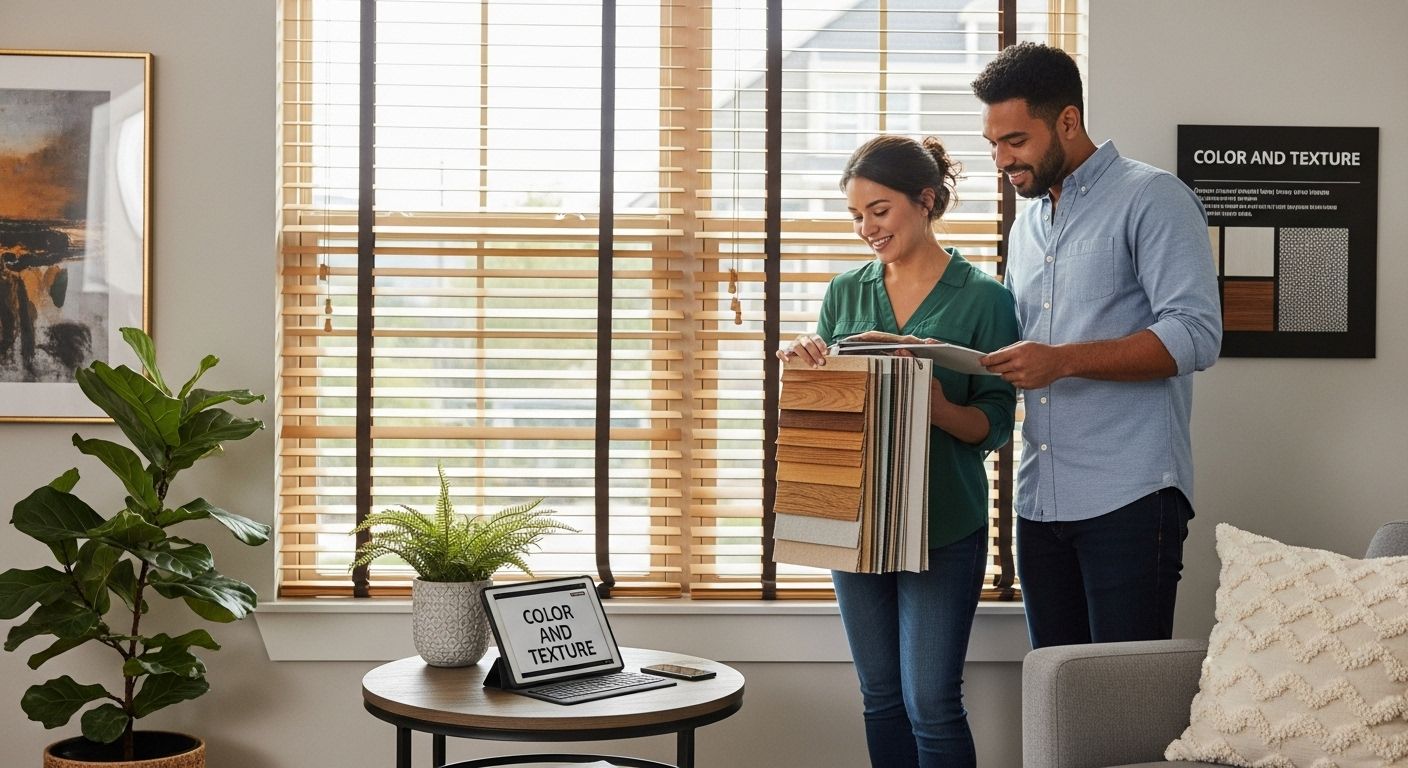
Selecting blinds that harmonize with your living room’s existing color palette is crucial. Interior design experts recommend using window treatments as an opportunity to either complement or create strategic contrast within the space. According to the Color Marketing Group, color psychology plays a significant role in room perception.
Texture becomes equally important when selecting blinds. Layering different textures can add depth and visual interest to your living room. For instance, pairing smooth wooden blinds with textured fabric curtains creates a sophisticated, multidimensional look. Explore custom window treatment techniques to understand how subtle design choices can transform your living space.
Key texture and color coordination principles include:
- Matching blind colors with primary furniture tones
- Creating visual depth through textural variations
- Using neutral base colors with accent details
- Considering natural light’s impact on color perception
Layering and Architectural Enhancement
Professional designers view window treatments as architectural elements that can dramatically alter a room’s perception. The U.S. Department of Energy recommends layering window treatments to maximize both aesthetic appeal and functional performance.
Consider combining blinds with complementary window accessories. Sheer curtains can soften the linear appearance of venetian blinds, while decorative valances can add a refined finishing touch. Motorized blinds with remote control capabilities offer an additional layer of modern sophistication, allowing seamless light and privacy management.
Architectural considerations include:
- Window size and proportion
- Room ceiling height
- Natural light exposure
- Existing architectural details
Functional Design and Maintenance Insights
Beyond aesthetic considerations, expert designers emphasize the importance of practical functionality. Blinds should not only look beautiful but also perform efficiently. Window treatment specialists recommend selecting materials that align with your lifestyle and maintenance preferences.
Consider factors such as ease of cleaning, durability, and resistance to moisture and sunlight. Aluminum and synthetic materials offer excellent longevity in high-traffic living rooms, while wooden blinds provide timeless elegance but require more meticulous maintenance.
Professional maintenance recommendations include:
- Regular dust removal with microfiber cloths
- Periodic deep cleaning based on material type
- Avoiding harsh chemical cleaners
- Professional cleaning for delicate or complex designs
Remember that window treatments are a long-term investment. Take time to explore different options, request fabric samples, and visualize how various blind styles will interact with your living room’s unique characteristics. A carefully selected window treatment can elevate your space from ordinary to extraordinary, creating an environment that reflects your personal style and functional needs.
Frequently Asked Questions
What are the best types of blinds for a living room?
The best types of blinds for a living room include Venetian blinds, roller blinds, vertical blinds, and cellular shades. Each type offers unique benefits such as light control, modern design, and energy efficiency.
How do I choose the right blinds based on my living room’s needs?
To choose the right blinds, assess your living room’s lighting conditions, privacy requirements, and existing decor. Consider factors such as window orientation, material options, and energy efficiency to find the best fit.
Can blinds help with energy efficiency in my living room?
Yes, certain blinds, such as insulated cellular shades, can significantly enhance energy efficiency by reducing heat loss in winter and keeping your living room comfortable year-round.
How can I style my living room using blinds?
Style your living room by coordinating the blinds’ colors and textures with existing furniture. Layering blinds with curtains or valances can add visual interest and enhance architectural features in the room.
Transform Your Living Room Into a Stylish Retreat—The Easy Way
Are you searching for living room blinds that truly balance style, privacy, and energy efficiency? Most people struggle to find window treatments that not only look good but also help with real challenges like heat gain, glare, and privacy. With so many options, it can be hard to find the perfect solution that matches your decor and daily needs.
Explore the Trending Features collection to discover advanced blinds designed for comfort, modern living, and lasting quality. From blackout and motorized blinds to elegant cellular shades, everything is made for easy installation and superior performance. Enjoy free swatches, expert advice, and true customization. Take action now to redefine your space. Shop the full range at Value Blinds Direct and start upgrading your living room today.
Recommended
- Window Blinds and Shades: Complete FAQ Database
- Blinds vs. Shades: Which Window Treatment Is Best for Your Home?
- Motorized Blinds: Enhance Your Home with Convenience and Style
- The Ultimate Guide to Types of Window Shades
- Modern Interior Window Treatments Guide 2025 | Shutter World
- Top Living Room Shutter Ideas for UK Homes 2025 | Shutter World

Value Blinds®
Trusted window treatments provider
Value Blinds® is a trusted provider of Greenguard, OEKO-TEX, and FSC-certified window treatments based in Portland, Oregon. Specializing in sustainable, motorized, smart-controlled, and outdoor-ready blinds and shades, the company is built on a foundation of simplified shopping, premium eco-friendly materials, and transparent pricing without the inflated cost.