
Motorized blackout shades 2026: privacy, light control, energy
Many homeowners assume manual shades are sufficient for privacy and light control, viewing motorized options as unnecessary luxury. This misconception overlooks how motorized blackout shades transform daily living through effortless convenience, substantial energy savings, and customizable privacy. Modern motorized systems integrate seamlessly with smart-home platforms, offering voice commands, automated schedules, and remote control that manual shades simply cannot match. This guide explains how motorized blackout shades work, their benefits for your home, installation considerations, and cost comparisons to help you make an informed decision about upgrading your window treatments.
Table of Contents
- How Motorized Blackout Shades Work: Technology And Features
- Benefits Of Motorized Blackout Shades: Privacy, Light Control, And Energy Efficiency
- Choosing And Installing Motorized Blackout Shades: Fabrics, Colors, And Expert Tips
- Cost Considerations And Long-Term Value Of Motorized Vs Manual Blackout Shades
- Explore Custom Motorized Blackout Shades For Your Home
- What Are Motorized Blackout Shades?
- How Do Motorized Blackout Shades Save Energy?
- Are Motorized Blackout Shades Difficult To Install?
- How Do Motorized Blackout Shades Integrate With Smart Home Systems?
- Do Motorized Blackout Shades Require Frequent Maintenance?
Key takeaways
| Point | Details |
|---|---|
| Effortless privacy and light control | Motorized blackout shades eliminate manual adjustments while providing complete darkness and privacy on demand. |
| Smart-home integration | Voice commands and automated schedules through platforms like Google Home or Alexa offer unprecedented convenience. |
| Significant energy savings | Automated shades reduce energy use by 25% through optimized insulation and timing. |
| Professional installation matters | Expert installation prevents light gaps, motor failures, and alignment issues that compromise performance. |
| Long-term value proposition | Motorized and manual systems often reach similar total costs over five years when factoring energy savings. |
How motorized blackout shades work: technology and features
Motorized blackout shades rely on tubular motors housed within the shade’s roller mechanism to raise and lower fabric or interlocking slats smoothly. These compact motors fit inside the headbox, creating a clean aesthetic without visible hardware cluttering your window frame. The system operates through wireless remote controls, wall switches, or smartphone apps that send signals to the motor, triggering precise movement up or down.
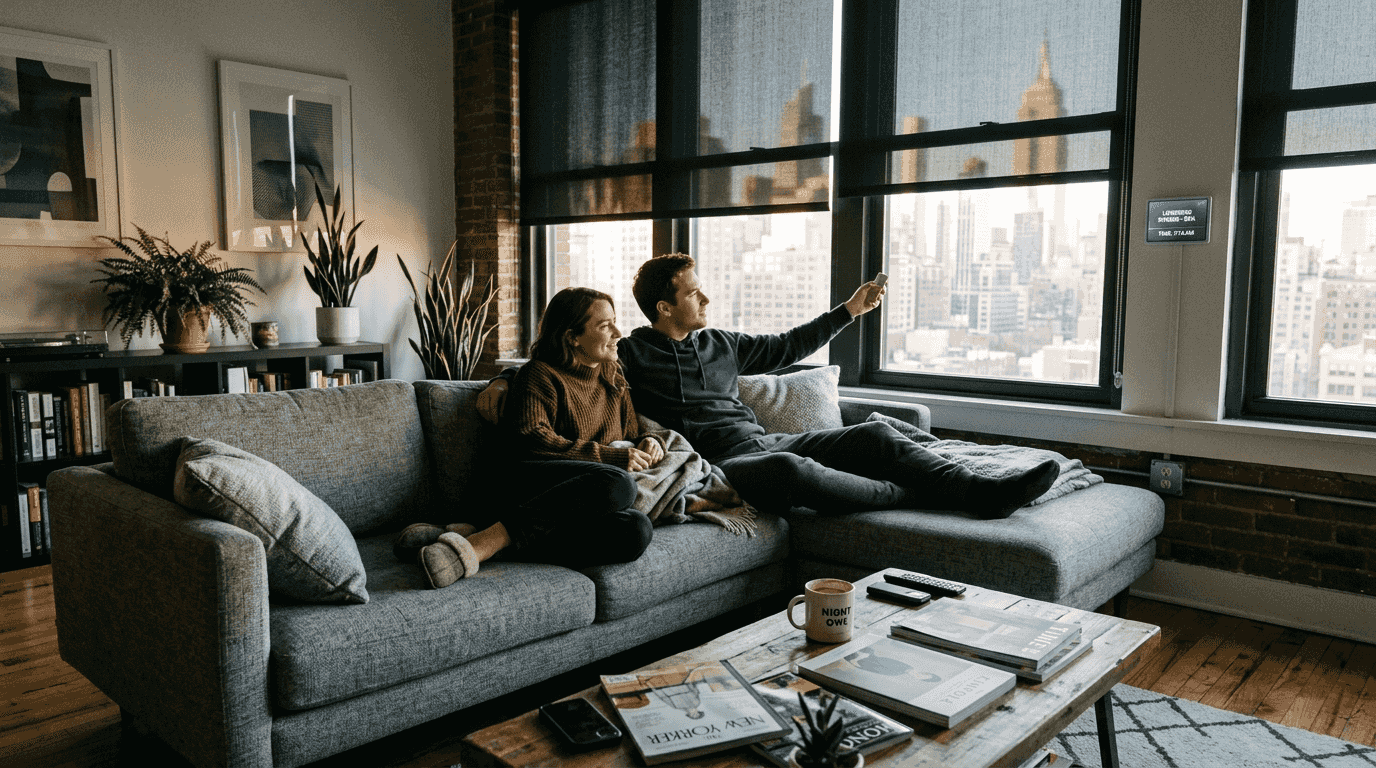
Smart-home integration elevates functionality beyond basic remote operation. Electric roller shutters integrate with platforms like Google Home or Alexa, enabling voice-activated commands such as “close the bedroom shades” or “open all living room blinds.” This hands-free control proves especially valuable when you’re carrying groceries, cooking, or simply relaxing on the couch. Timer programs let you schedule shade movements based on daily routines, automatically closing shades at sunset for privacy or opening them at sunrise for natural light.
Light sensors add another layer of automation by detecting ambient light levels and adjusting shades accordingly. When bright sunlight streams through windows during hot afternoons, sensors trigger shades to lower, reducing solar heat gain. As evening approaches and natural light fades, sensors can raise shades to maximize remaining daylight before switching on artificial lighting. This dynamic response maintains comfortable interior conditions without constant manual intervention.
One-touch operation through centralized controls manages multiple window shades simultaneously. Instead of adjusting each window individually, you can program groups of shades to move together, creating coordinated light control throughout entire rooms or floors. This feature particularly benefits homes with numerous windows or hard-to-reach installations where manual adjustment would be impractical.
Pro Tip: Before purchasing motorized shades, verify compatibility with your existing smart-home ecosystem to ensure seamless integration and avoid connectivity frustrations.
Key technological components include:
- Tubular motors that fit inside roller mechanisms for hidden operation
- Wireless receivers that communicate with remotes and smart-home hubs
- Rechargeable batteries or hardwired power connections for reliable energy
- Light and temperature sensors for automated environmental responses
- Smartphone apps providing remote access from anywhere
Understanding these motorized blinds convenience features helps you appreciate how technology transforms traditional window treatments into intelligent home systems. The combination of motors, sensors, and smart integration creates a responsive environment that adapts to your lifestyle automatically.
Benefits of motorized blackout shades: privacy, light control, and energy efficiency
Motorized blackout shades deliver superior privacy without the hassle of manual adjustments throughout the day. You control exactly when windows are covered, ensuring neighbors or passersby cannot see inside during evening hours or early mornings. Unlike manual shades that might remain open due to inconvenience, motorized systems make privacy effortless through scheduled automation or quick voice commands.
Precise light control represents another major advantage, particularly for bedrooms, home theaters, and spaces requiring darkness. Blackout fabrics combined with motorized operation eliminate unwanted glare and daylight completely, creating ideal conditions for quality sleep or immersive media viewing. You achieve total darkness instantly without fumbling with cords or struggling to align fabric edges that let light leak through.
Energy efficiency provides tangible financial benefits beyond comfort improvements. Automated insulating window shades reduced energy use by 25% during both heating and cooling seasons in controlled studies. This substantial reduction stems from optimized timing that blocks solar heat gain during summer afternoons while retaining interior warmth during winter evenings. Smart programs adjust shading based on outdoor temperatures and sunlight intensity, maximizing insulation when it matters most.
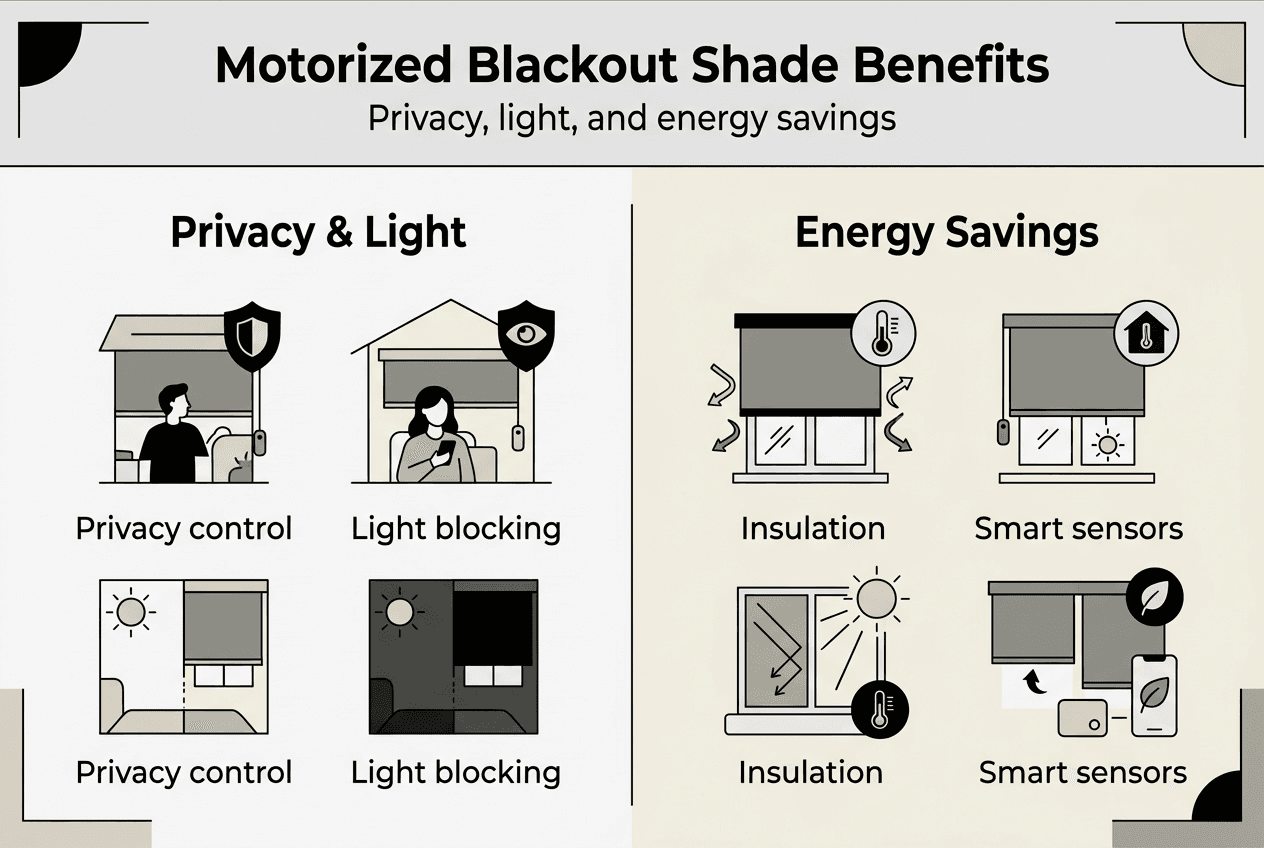
Light sensors enhance these energy savings by responding dynamically to changing conditions throughout the day. Rather than following fixed schedules, sensor-equipped shades adapt to actual sunlight levels, cloud cover, and seasonal variations. This intelligent response reduces HVAC usage by maintaining consistent interior temperatures without overworking heating and cooling systems.
Security benefits emerge as an unexpected advantage of motorized automation. Timed operation simulates occupancy when you’re away by opening and closing shades according to normal daily patterns. Potential intruders see activity suggesting someone is home, deterring break-in attempts. This security layer costs nothing extra once you’ve installed motorized shades with scheduling capabilities.
Primary benefits include:
- Complete privacy on demand without manual effort
- Total light blockage for optimal sleep and media viewing
- 25% reduction in heating and cooling energy consumption
- Automated security through occupancy simulation
- Enhanced aesthetic appeal with hidden mechanical components
- Improved home value through modern technology integration
Explore premium motorized roller shades or motorized zebra blackout shades to experience these benefits firsthand. The combination of privacy, light control, and energy efficiency transforms how you interact with natural light while reducing utility bills month after month.
Choosing and installing motorized blackout shades: fabrics, colors, and expert tips
Fabric selection significantly impacts both light blockage performance and thermal properties of your motorized blackout shades. Tight weave fabrics with dense construction block more light effectively but may retain absorbed heat, potentially increasing interior temperatures during summer months. Looser weaves allow minimal light penetration while permitting better air circulation, though they sacrifice some blackout capability. Consider your primary goal: complete darkness for bedrooms or balanced light control for living spaces.
Color choices influence solar heat gain and overall energy efficiency in surprising ways. Lighter colored blackout shades reflect sunlight, reducing heat absorption and keeping rooms cooler during hot weather. Darker shades absorb more solar energy, which can benefit cold climates by contributing passive heating but may overheat spaces in warm regions. White, cream, and light gray shades typically offer the best thermal performance for most climates, while charcoal and black provide maximum light blockage with higher heat retention.
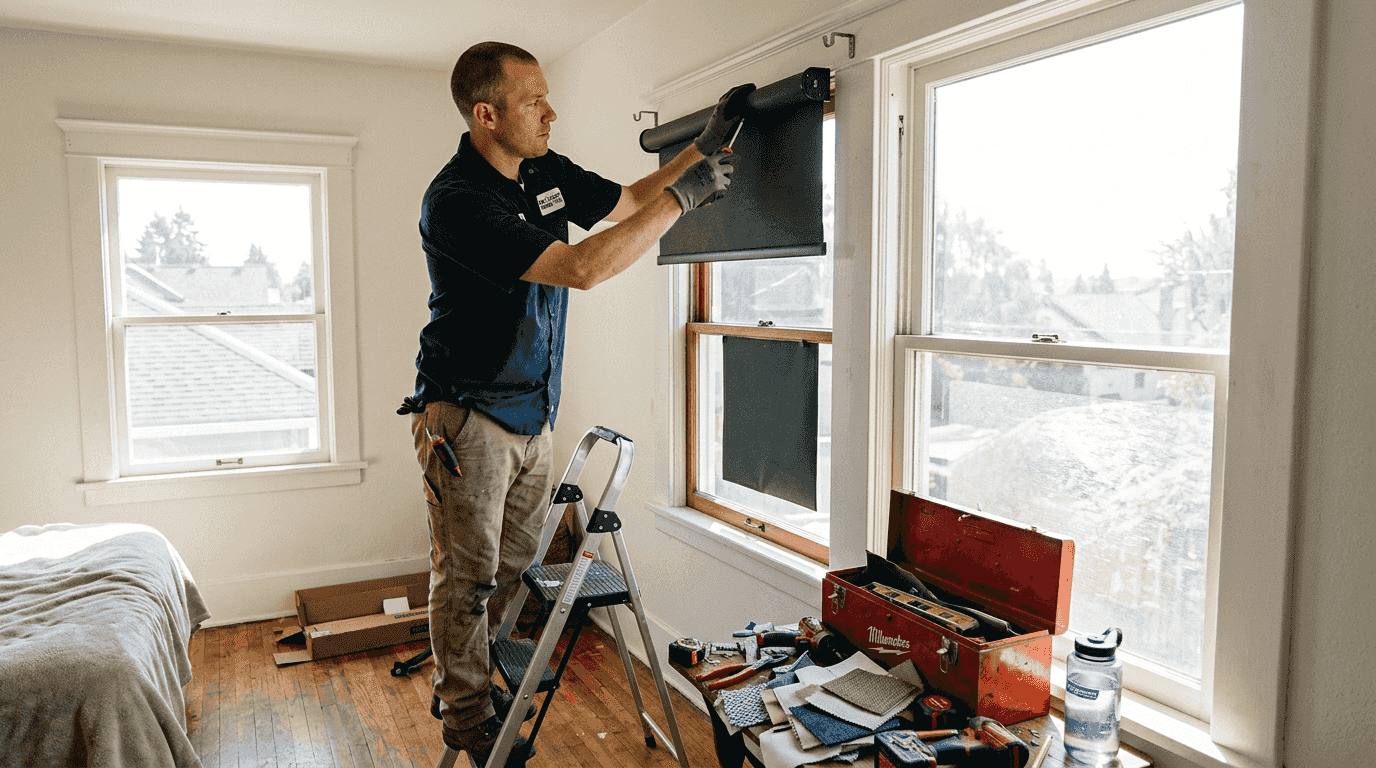
Professional installation proves crucial for optimal motorized shade performance. Proper installation prevents misalignment, motor failure, and light gaps that undermine blackout effectiveness. Expert installers ensure precise measurements, secure motor mounting, and correct fabric alignment that eliminates light leakage around edges. They also verify electrical connections for hardwired systems and program remote controls for seamless operation.
| Fabric Type | Light Blockage | Heat Absorption | Durability | Best Use |
|---|---|---|---|---|
| Tight weave polyester | 95-100% | High | Excellent | Bedrooms needing total darkness |
| Cellular honeycomb | 90-95% | Medium | Very good | Energy efficiency priority |
| Dual layer roller | 85-95% | Low to medium | Good | Flexible light control |
| Woven blackout | 90-98% | Medium | Excellent | Natural aesthetic with blackout |
Key selection factors to evaluate:
- Fabric density and weave pattern for desired light blockage level
- Color choice balancing aesthetics with thermal performance
- Motor type compatibility with window size and shade weight
- Power source options: battery, hardwired, or solar-powered
- Window frame depth and mounting space for motor housing
- Smart-home platform compatibility for integration needs
Pro Tip: Schedule installation with professionals experienced specifically in motorized shade installation to ensure flawless operation and protect manufacturer warranty coverage.
Consider blackout duo-tone honeycomb shades for superior insulation combined with motorized convenience. The cellular construction traps air for enhanced energy efficiency while blackout fabric delivers complete light control. Professional guidance helps match fabric, color, and motor specifications to your specific windows and climate conditions.
Cost considerations and long-term value of motorized vs manual blackout shades
Initial investment in motorized blackout shades exceeds manual alternatives due to motor components, smart-home integration technology, and more complex installation requirements. Expect to pay 40-60% more upfront for motorized systems compared to equivalent manual shades. This price difference reflects quality motors, wireless controls, and programming capabilities that manual shades lack entirely.
Energy savings and convenience benefits often offset the higher upfront expense within a five-year timeframe. Manual and motorized systems end up closer in cost than initial prices suggest when you factor installation, energy bill reductions, and maintenance over time. The 25% energy savings from automated operation translates to meaningful monthly utility cost reductions that accumulate year after year.
Maintenance costs remain relatively similar between manual and motorized options, though motorized systems require occasional motor inspections and battery replacements for wireless models. Manual shades need cord replacements and mechanism repairs as components wear from repeated use. Neither system demands excessive ongoing investment, but motorized shades benefit from periodic professional checkups to ensure motors and sensors function optimally.
Steps to evaluate total cost of ownership:
- Calculate initial purchase price including shades, motors, and controls
- Add professional installation costs for proper mounting and programming
- Estimate annual energy savings based on window area and climate
- Factor maintenance expenses over five years for both options
- Consider home value increase from modern automation features
- Account for intangible benefits like convenience and enhanced security
| Cost Factor | Manual Blackout Shades | Motorized Blackout Shades | 5-Year Difference |
|---|---|---|---|
| Initial purchase | $800 | $1,280 | +$480 |
| Installation | $200 | $350 | +$150 |
| Energy savings | $0 | -$625 | -$625 |
| Maintenance | $150 | $200 | +$50 |
| Home value impact | $0 | +$500 | +$500 |
| Total 5-year cost | $1,150 | $1,205 | +$55 |
Motorized shades add measurable home value through modern technology appeal and documented energy efficiency improvements. Prospective buyers increasingly prioritize smart-home features and sustainable design elements that reduce operating costs. Automated window treatments signal a well-maintained, technologically current property that commands premium pricing in competitive real estate markets.
Compare motorized blinds advantages to understand how automation benefits justify initial investment through cumulative savings and lifestyle improvements. Consider motorized natural woven shades as an option combining organic aesthetics with cutting-edge convenience.
Explore custom motorized blackout shades for your home
Ready to transform your home with the privacy, light control, and energy efficiency of motorized blackout shades? Value Blinds Direct offers customizable motorized blackout shades that combine advanced technology with sophisticated style tailored to your specific windows and preferences. Their extensive selection includes various fabrics, colors, and motor options designed to match any interior aesthetic while delivering superior performance.
Use the Window Treatment Design Studio to visualize how different shade styles, colors, and configurations will look in your actual rooms before making final decisions. This interactive tool helps you experiment with options and find the perfect combination of functionality and appearance. Browse the complete high-quality blinds collection to discover complementary window treatments for every space in your home.
Explore premium motorized roller shades featuring seamless smart-home integration and exceptional blackout performance. Professional support ensures a smooth upgrade from manual to motorized shades, with expert guidance on fabric selection, color choices, and installation planning that maximizes your investment.
What are motorized blackout shades?
Motorized blackout shades are window treatments featuring integrated electric motors that enable remote or smart-home control for raising and lowering shades. They combine specialized blackout fabric designed to block 95-100% of incoming light with automated operation that eliminates manual cord pulling or lifting. The motorized mechanism typically hides within a headbox mounted above the window, maintaining clean aesthetics while providing convenient control through remotes, wall switches, smartphone apps, or voice commands via platforms like Google Home or Alexa.
How do motorized blackout shades save energy?
Motorized blackout shades reduce energy consumption by optimizing window insulation throughout the day based on outdoor temperatures and sunlight intensity. They minimize heat gain during summer by automatically closing when sensors detect intense sunlight, reducing air conditioning demands. During winter, they retain interior warmth by closing at night to prevent heat loss through windows. Automated insulating window shades reduce energy use by 25% compared to unshaded windows or manually operated treatments that remain open due to inconvenience.
Are motorized blackout shades difficult to install?
Installation complexity depends on your technical skills and whether you choose battery-powered or hardwired systems. Battery-powered motorized shades offer simpler installation similar to manual shades, requiring accurate measurements and secure bracket mounting. Hardwired systems need electrical connections that typically require professional electrician involvement. Proper installation is crucial to avoid misalignment, motor failure, and light gaps that compromise blackout effectiveness. Professional installers ensure correct motor programming, precise fabric alignment, and secure mounting that preserves warranty coverage and optimal performance. Review motorized shade installation tips for detailed guidance.
How do motorized blackout shades integrate with smart home systems?
Most modern motorized blackout shades connect to popular smart-home platforms through wireless protocols like Wi-Fi, Zigbee, or Z-Wave. Electric roller shutters integrate with Google Home or Alexa for voice-activated control, allowing commands such as “close the bedroom shades” or “open all shades to 50%.” Users create automated schedules that raise shades at sunrise and lower them at sunset, or program scenes that coordinate shade positions with lighting and temperature settings. Smartphone apps provide remote access from anywhere, letting you adjust shades while away from home for security or comfort preparation before arrival.
Do motorized blackout shades require frequent maintenance?
Motorized blackout shades need minimal maintenance beyond occasional cleaning and periodic battery replacements for wireless models. Wipe fabric surfaces with a dry cloth or vacuum using a brush attachment to remove dust accumulation every few months. Check motor function annually to ensure smooth operation and address any unusual noises promptly. Battery-powered systems typically require new batteries every 12-18 months depending on usage frequency. Hardwired systems eliminate battery concerns but may need professional inspection if electrical connections loosen over time. Most quality motorized shades operate reliably for 10-15 years with basic care.