
Motorized window shades: Style, convenience, and smart upgrades
TL;DR:
- Motorized window shades are now affordable and versatile, offering options for various budgets, fabrics, and control methods. They operate quietly via a built-in electric motor, with power sources including batteries, plug-ins, or hardwiring, and enhance safety, style, and energy efficiency. Proper measurement, choice of power, fabric, and controls, along with quality support, ensure reliable performance and long-term satisfaction.
Motorized window shades used to feel like something reserved for magazine-worthy smart homes with six-figure renovation budgets. That idea is outdated. Today, these shades are available in a wide range of price points, power types, and fabric options that fit everything from a first apartment to a professionally designed estate. Whether you want blackout shades in a nursery that lower on a timer or light-filtering roller shades you can control from your phone while on the couch, the options are broader and more accessible than ever. This guide walks you through everything: how they work, what to look for, and how to choose the right fit for your space.
Table of Contents
- What are motorized window shades and how do they work?
- Types of motorized window shades: Power, fabric, and control options
- Key benefits of motorized window shades: Style, convenience, and efficiency
- Choosing and installing motorized window shades: Key steps and pitfalls
- What most guides miss: Real-world lessons from integrating motorized shades
- Ready to upgrade? Explore custom motorized window shades
- Frequently asked questions
Key Takeaways
| Point | Details |
|---|---|
| Easy retrofit options | Battery-powered motorized shades are simple to add to most windows without complex wiring. |
| Premium pays off | Investing in reputable brands typically leads to quieter operation, longer battery life, and smoother smart integration. |
| Style meets function | A wide variety of fabrics and controls ensures motorized shades can match any home design while boosting convenience. |
| Smart home ready | Most modern shades integrate with popular voice assistants and schedules for hands-free operation. |
| Measure and confirm | Always verify measurements and motor strength to avoid common pitfalls during installation. |
What are motorized window shades and how do they work?
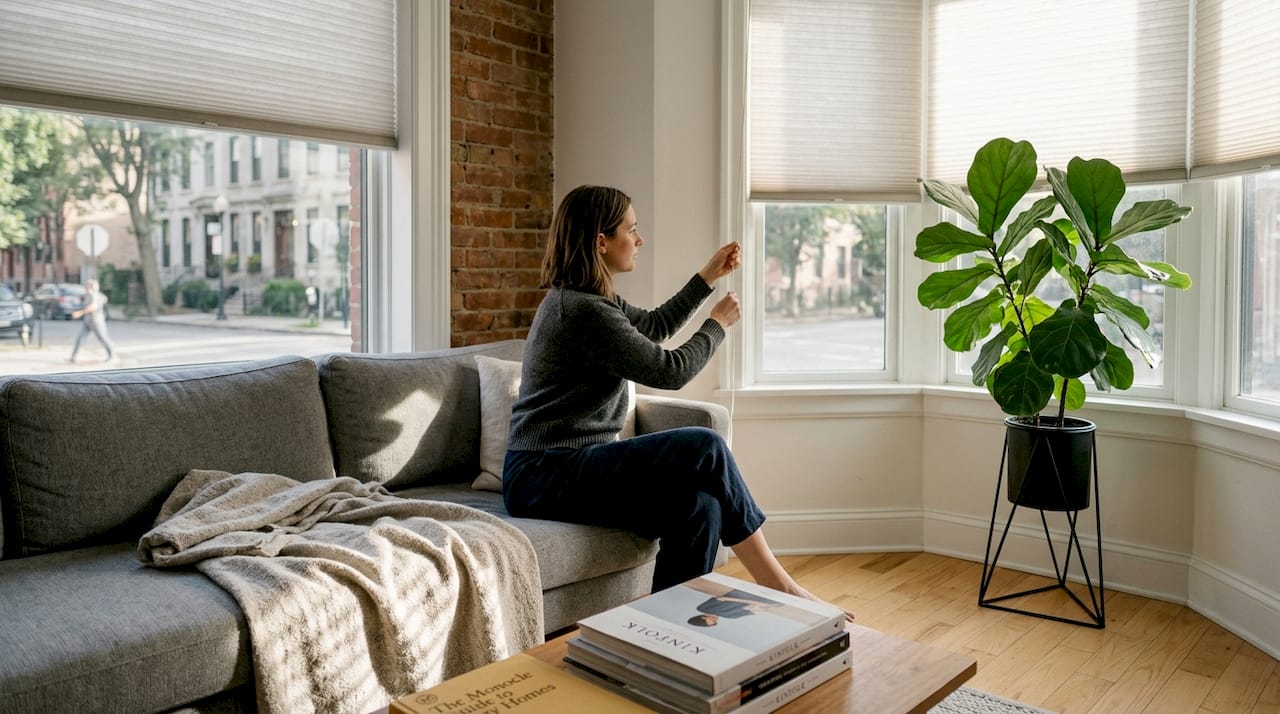
Motorized window shades are window coverings that use a small electric motor built into the roller or headrail to raise and lower the shade automatically. Unlike traditional corded or manual blinds, they operate without any physical pulling or twisting. You trigger them with a remote, a wall switch, a smartphone app, or even a voice command through a smart home device.
The motor sits inside the shade’s tube and connects to a power source. When you send a signal, the motor spins the tube to roll the fabric up or down. The whole mechanism is quiet, precise, and repeatable. High-quality motors can stop at the same exact position every time you activate them, which matters a lot when you’re trying to maintain a consistent look across multiple windows in the same room.
There are three main power types to know:
- Battery-powered: Batteries (usually AA or lithium packs) sit inside the roller tube. No wiring is needed. These are the easiest to install in any existing home because there’s no electrician required.
- Plug-in (corded motor): A thin power cord runs from the motor to a nearby wall outlet. Installation is still DIY-friendly, but you need an outlet near each window.
- Hardwired: The motor connects directly to your home’s electrical system. This requires a licensed electrician and is most common in new construction or full renovations.
Customization is where things get exciting. You can choose from hundreds of fabrics, including blackout, sheer, light-filtering, and woven wood. You can specify exact width and height, pick color and texture, and even choose whether the shade rolls toward the window or away from it. Our motorized blinds guide covers the full range of styles available for different room types and design goals.
“For homeowners, prioritize battery-powered for easy retrofit and customization. Interior decorators favor Lutron and Somfy for premium fabrics, quiet operation, and aesthetic integration that truly enhances home aesthetics.”
Expert Q&A: Motorized Shades for Every Home
Pro Tip: If you’re adding motorized shades to an existing home without a renovation budget, start with battery-powered models. You get all the automation features without touching a single wire.
Types of motorized window shades: Power, fabric, and control options
Understanding the basics sets you up to make a smarter purchase. Here’s a closer look at how power source, fabric choice, and control technology shape what’s right for your home.
Power source comparison
| Power type | Installation | Ongoing cost | Best for |
|---|---|---|---|
| Battery-powered | DIY, no wiring | Battery replacement | Retrofits, rentals, any room |
| Plug-in | DIY, needs outlet | Minimal electricity | Rooms near wall outlets |
| Hardwired | Electrician required | Minimal electricity | New builds, full renovations |
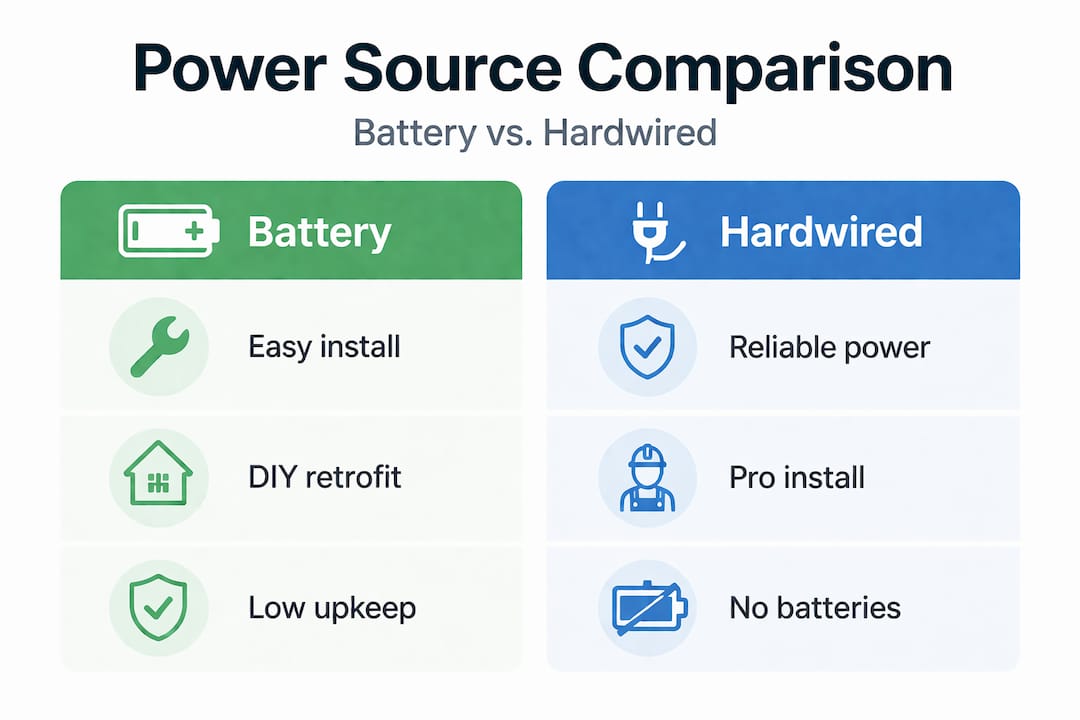
Battery-powered options win on flexibility. Plug-in options are a solid middle ground. Hardwired systems are the most reliable long-term but require upfront investment in professional installation.
Fabric types that matter
Your fabric choice shapes both how the room looks and how light behaves in the space:
- Blackout fabrics block all light. Ideal for bedrooms, home theaters, and nurseries.
- Light-filtering fabrics soften and diffuse natural light without blocking it completely. Great for living rooms and kitchens.
- Sheer and solar fabrics maintain your view while reducing glare and UV rays. Excellent for offices and rooms facing bright exposures.
- Woven and premium textiles add texture and warmth. Popular with interior decorators for their visual richness.
Control technology options
You can control motorized shades in several ways:
- Remote control: A dedicated handset operates individual shades or groups of shades with one button press.
- Wall switch: Looks like a standard light switch and is intuitive for guests or family members not comfortable with apps.
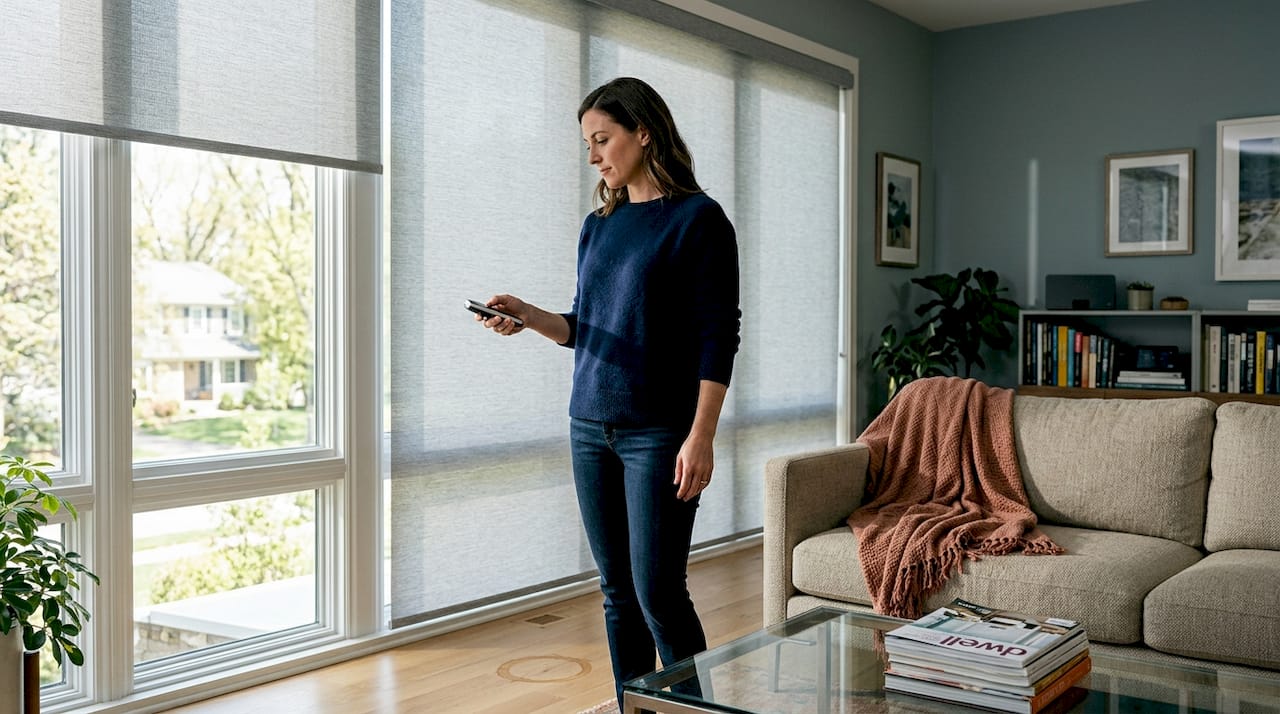
- Smartphone app: Control shades from anywhere, set schedules, and monitor positions in real time.
- Voice control: Works with Alexa, Google Home, and Apple HomeKit through compatible hubs or built-in Wi-Fi.
- Automation and schedules: Program shades to open at sunrise and close at sunset automatically, no manual input needed.
When it comes to premium brands, custom motorized shades often feature Somfy or Lutron motors for a reason. As brand testing confirms, premium brands excel in noise levels, battery longevity, and smart home integration, while budget options carry a higher risk of faster degradation and connectivity issues. That gap matters if you’re outfitting a full room or an entire home.
Numbered selection checklist:
- Decide on power type based on your installation situation.
- Choose your fabric based on light control and aesthetic goals.
- Select your preferred control method.
- Confirm shade width and height measurements.
- Verify motor torque is rated for your shade’s weight and size.
Key benefits of motorized window shades: Style, convenience, and efficiency
Once you understand the types available, the benefits of choosing motorized shades over traditional options become clear. These aren’t just a convenience upgrade. They’re a style, safety, and energy investment.
Seamless style in any room
Motorized shades look cleaner than corded alternatives. There are no dangling cords to hide, no awkward tilting mechanisms, and no visible hardware pulling focus away from your room’s design. The minimal look pairs well with modern, transitional, and even traditional interiors.
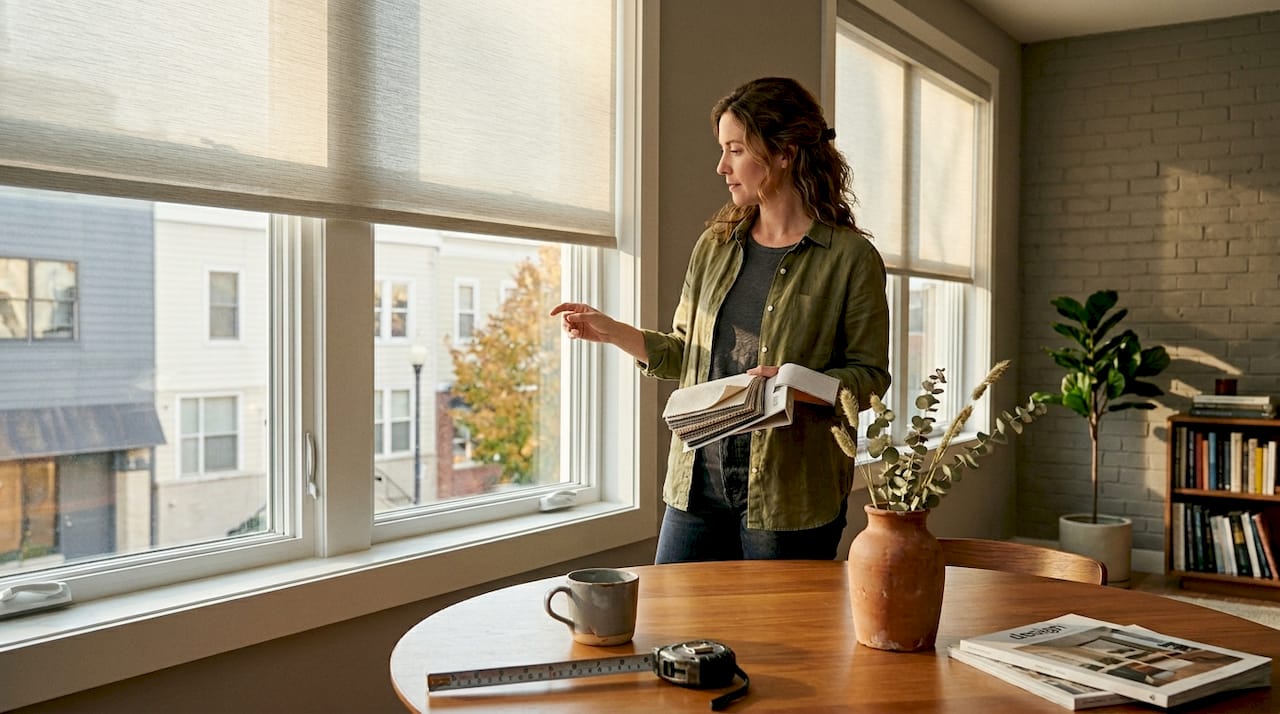
Because you can specify fabric, color, opacity, and exact sizing, the shades integrate into your room rather than sitting on top of it. Interior decorators especially appreciate this level of control because it means the window treatment becomes part of the design, not an afterthought.
Hands-free operation and child safety
This is bigger than it sounds. Cordless and motorized operation removes the looped cords that pose a strangulation hazard for children and pets. It’s a safety upgrade that also happens to look better. For families with young kids, this benefit alone often justifies the switch.
For homeowners with mobility challenges or accessibility needs, being able to operate every shade in the house from a single app or voice command is genuinely life-changing, not just convenient.
Smart home integration
Modern motorized shades connect to platforms you likely already use. You can include them in routines so your bedroom shades close when you say “goodnight,” or your living room shades open when your morning alarm goes off. That kind of seamless integration makes the home feel truly responsive.
Pro Tip: If you already use a smart home platform like Google Home or Amazon Alexa, look for shades with native integration so you don’t need an extra hub. It simplifies setup significantly.
Energy efficiency you can actually measure
Motorized shades contribute to real energy savings when used consistently. Closing shades during peak sun hours in summer reduces solar heat gain, which means your air conditioner works less. Opening them in winter during daylight captures free solar warmth. According to solar shade efficiency data, the right shades can meaningfully reduce HVAC load when programmed to respond to daily sun patterns.
The motorized blinds benefits page breaks this down further with real examples from different room orientations and climates. When shades are on a schedule, the savings happen automatically without you having to think about it.
Key benefits at a glance:
- Cleaner aesthetics with no cords or visible mechanisms
- Child and pet safety through cordless operation
- Accessibility for those with limited mobility
- Smart home routines that automate light and privacy control
- Energy savings from consistent, schedule-driven shade operation
- UV protection for furniture, floors, and artwork
Choosing and installing motorized window shades: Key steps and pitfalls
Having explored the types and benefits, the next step is practical: how do you actually pick and install the right shades without making expensive mistakes?
Step-by-step selection and installation process
- Measure your windows accurately. Width and height measurements need to be precise. Measure to the nearest 1/8 inch. Measure each window individually, since sizes vary even in the same room.
- Choose your power source. Battery-powered for easy retrofit. Plug-in if outlets are accessible. Hardwired only if you’re doing a full renovation with electrical work already planned.
- Select your fabric and opacity. Match light control to room function. Blackout for sleeping spaces, light-filtering for living areas, solar sheer for offices.
- Pick your control method. Remote for simplicity. App-based for smart home compatibility. Voice control for hands-free convenience.
- Verify motor torque ratings. This step is commonly skipped and frequently regretted. Large or heavy shades need a motor rated to handle the weight. Undersized motors wear out quickly.
- Order your shades. Use a company that offers exact custom sizing to avoid gaps or bunching.
- Install the brackets. Most battery and plug-in shades mount with simple brackets that attach to the window frame or wall. Follow the included instructions carefully.
- Program your controls. Set upper and lower stop limits so the shade knows exactly where to stop at the top and bottom of travel.
Common mistakes to avoid
- Wrong torque for large shades. As testing confirms, budget motors often lack the torque needed for oversized shades, leading to premature failure.
- Underestimating battery needs. Wide or frequently used shades drain batteries faster. Budget brands can require changes every few months.
- Poor Wi-Fi signal near windows. If your router is on the opposite side of the house, app-based control may be unreliable. Consider a Wi-Fi extender before finalizing your setup.
- Skipping the torque check. Worth repeating: always verify the motor’s torque rating against the shade’s listed weight.
You can find local product options and professional help through our guide to finding motorized shades near you.
Pro Tip: For very wide windows (over 72 inches), consider ordering two narrower shades instead of one extra-wide shade. This reduces motor strain and gives you more precise light control.
What most guides miss: Real-world lessons from integrating motorized shades
Most articles about motorized shades focus on the features list and stop there. They tell you what things do, but not what actually happens after the install is done and daily life begins. Here’s the honest version.
The up-front cost of premium shades is real, and it surprises people. But the alternative is more expensive over time. Budget motors fail in ways that are inconvenient and costly. The motor stops responding to commands mid-range, stranding the shade halfway up. The battery pack swells and needs to be replaced after 4 months. The app loses connection and requires a full reset. These aren’t hypothetical problems. Testing by independent reviewers has documented faster degradation and connectivity failures in lower-cost models, especially in homes with multiple shades drawing on the same network.
What decorators consistently wish their clients understood upfront: integration planning matters as much as the product itself. A beautiful set of shades that doesn’t connect reliably to your home’s smart system creates daily frustration. Think about your hub, your router placement, and whether your preferred platform (Lutron’s Caséta, Somfy’s TaHoma, or a third-party bridge) matches the shade’s communication protocol before you finalize your order.
Maintenance is also underestimated. Motorized shades are low-maintenance, but not no-maintenance. Battery terminals need occasional cleaning. Tracks and headrails accumulate dust that can affect operation. Fabric panels benefit from gentle vacuuming every few months, especially in homes with pets or high foot traffic.
And then there’s the question of customer support. When something goes wrong, and eventually something will, you want a company that can help you troubleshoot. This is where buying from a reputable source matters enormously. The real-life convenience and style that makes motorized shades worth it only holds up when the product and support structure behind it are solid.
The bottom line: treat motorized shades like appliances. A quality appliance with good support outperforms a cheap one every time. The same logic applies here.
Ready to upgrade? Explore custom motorized window shades
If this guide has you thinking seriously about motorized shades, the next step is simple. At Value Blinds, you can browse a wide selection of custom motorized roller shades, zebra shades, cellular shades, and more, all sized to your exact window dimensions and available in hundreds of fabric choices.
Our online design tools make it easy to visualize shades in your space before you order. You can request free fabric swatches, use our measurement guides to get sizing right the first time, and reach out to our expert support team with any questions about motor types, control compatibility, or fabric selection. Whether you’re outfitting a single room or a full home, we’ll help you find options that match your style goals, your smart home setup, and your budget. Start exploring and see what the right motorized shade can do for your windows.
Frequently asked questions
Are motorized window shades worth the investment?
Yes. Motorized shades deliver automated convenience, child safety through cordless operation, and real energy savings, all while elevating your room’s aesthetics. As experts confirm, both battery-powered and premium options offer strong value depending on your home’s needs.
How long do batteries last in motorized shades?
Premium brands like Lutron typically provide battery life between one and five years. Budget models often require more frequent replacement due to faster power drain and less efficient motor designs.
Can motorized window shades be added to existing homes?
Yes. Battery-powered motorized shades are specifically designed for easy retrofit and require no wiring. As industry experts note, they work in most standard window frames without any structural modifications.
Do motorized shades work with Alexa or Google Home?
Most modern models integrate with major smart home platforms for voice and app-based control. Premium brands like Lutron and Somfy offer the most reliable integration, with broader platform compatibility and fewer connectivity issues.
Which is better: hardwired or battery-powered motorized shades?
Battery-powered shades offer the simplest installation and maximum flexibility, making them the right choice for most retrofits. Hardwired systems suit large new builds or professionally designed spaces where an electrician is already involved, as experts advise based on each home’s specific layout.
Recommended
- Motorized and Smart Shades; Shop Custom Motorized Blinds and Shades
- Motorized Roller Shades: Style and Smart Control
- Motorized Solar Shades: Modern Comfort and Efficiency
- Top Smart Home Window Solutions for Style & Efficiency
- Τι Είναι Smart Lighting: Πλήρης Καθοδήγηση Και Οφέλη - ΞΥΔΑΣ ΕΥΡΑΓΟΡΑ - Οι καλύτεροι στην αγορά. Μεγάλες προσφορές στις Ηλεκτρικές Συσκευές