
Outdoor Shade Solutions for Windy Patios That Last
TL;DR:
- Specialized outdoor shade solutions for windy patios prioritize vented canopies, flexible frames, and reliable retraction mechanisms to withstand gusts. Proper installation, anchoring, and routine retraction during high winds significantly enhance durability and lifespan. Combining windbreaks with wind-resistant shades creates a layered system that effectively reduces wind impact and prolongs shade performance.
Outdoor shade solutions for windy patios are specialized structures engineered to provide sun protection without collapsing, inverting, or tearing when gusts hit. The best options share three features: vented or tiered canopies that let air pass through, frames built from aluminum or fiberglass that flex without breaking, and retraction mechanisms that remove the shade from harm’s way when conditions turn severe. Products reviewed by Bob Vila editors, wind sensor systems from Shelly, and portable umbrella lines from Giant Umbrella Company all demonstrate that wind resistance is a design discipline, not an afterthought. Choosing the right solution starts with understanding which design features actually matter.
1. What makes patio umbrellas wind-resistant
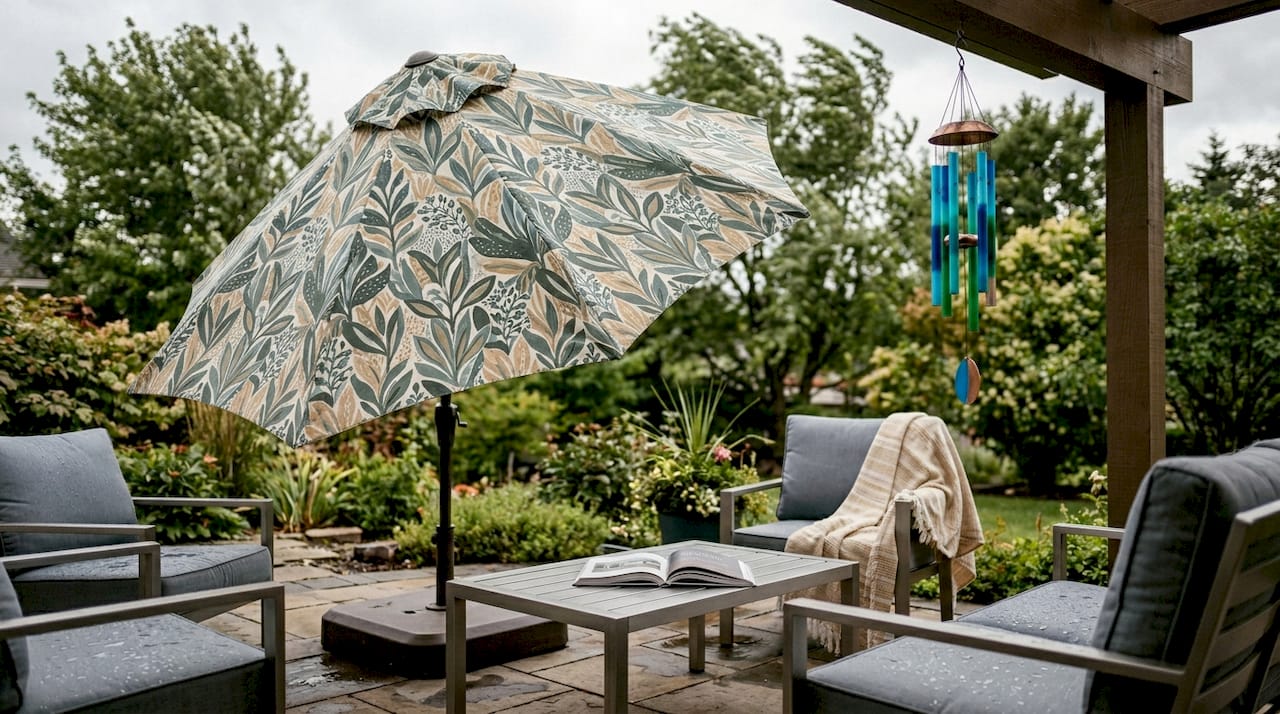
Vented canopy design influences wind uplift and stability more than weight or diameter alone. A single vent releases some pressure, but a double-vent or tiered canopy creates a continuous airflow channel that prevents the pressure pockets responsible for umbrella inversion. Bob Vila’s tested top pick features a double-vented canopy specifically for this reason.
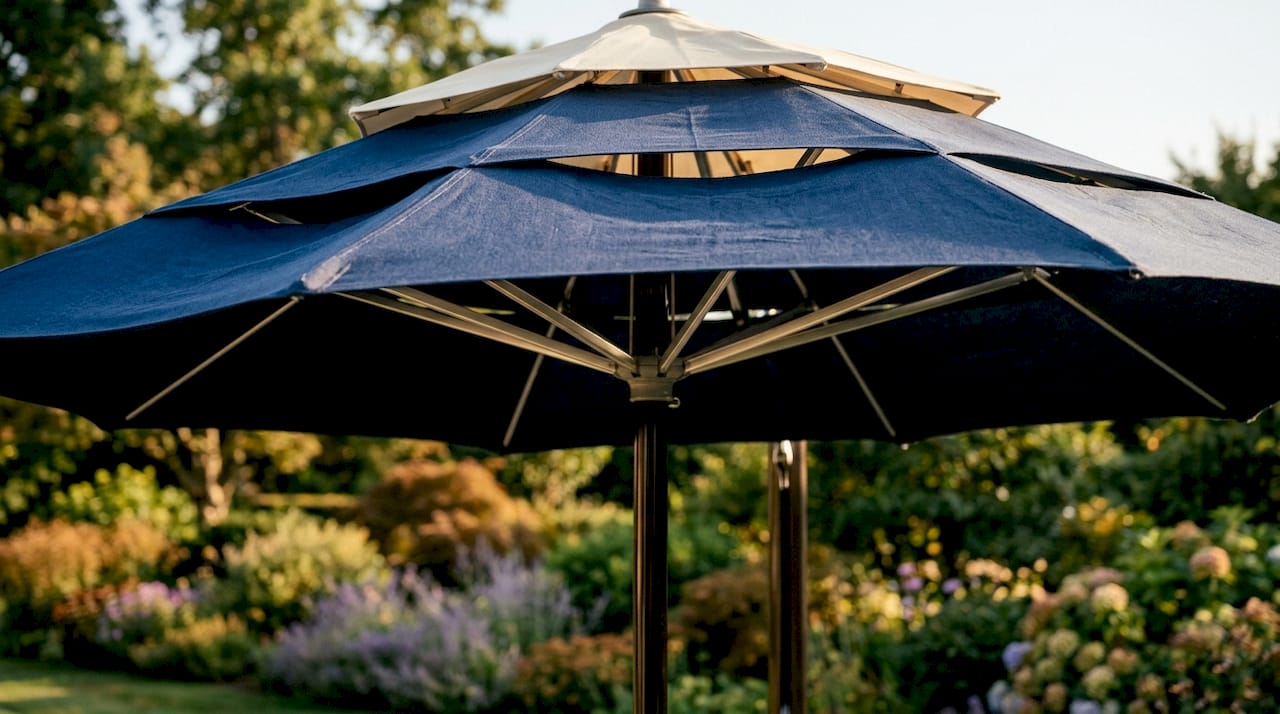
Frame material matters just as much as canopy design. Aluminum poles resist rust and stay lightweight, while fiberglass ribs flex under load instead of snapping. The EliteShade USA 3-Tier umbrella and the Purple Leaf double-top umbrella both use this combination, making them two of the most cited models in expert wind-resistance reviews.
Placement and anchoring complete the picture. A heavy base weighing at least 50 pounds keeps the pole from tipping, and positioning the umbrella near a wall or fence reduces direct wind exposure. Tilt the canopy slightly into the wind rather than keeping it fully horizontal. That small adjustment reduces the surface area catching the gust.
Pro Tip: Close your umbrella whenever sustained winds exceed 20 mph. No vented canopy is designed for continuous high-wind exposure. Closing it takes 10 seconds and adds years to the product’s life.
2. How motorized retractable awnings with wind sensors work
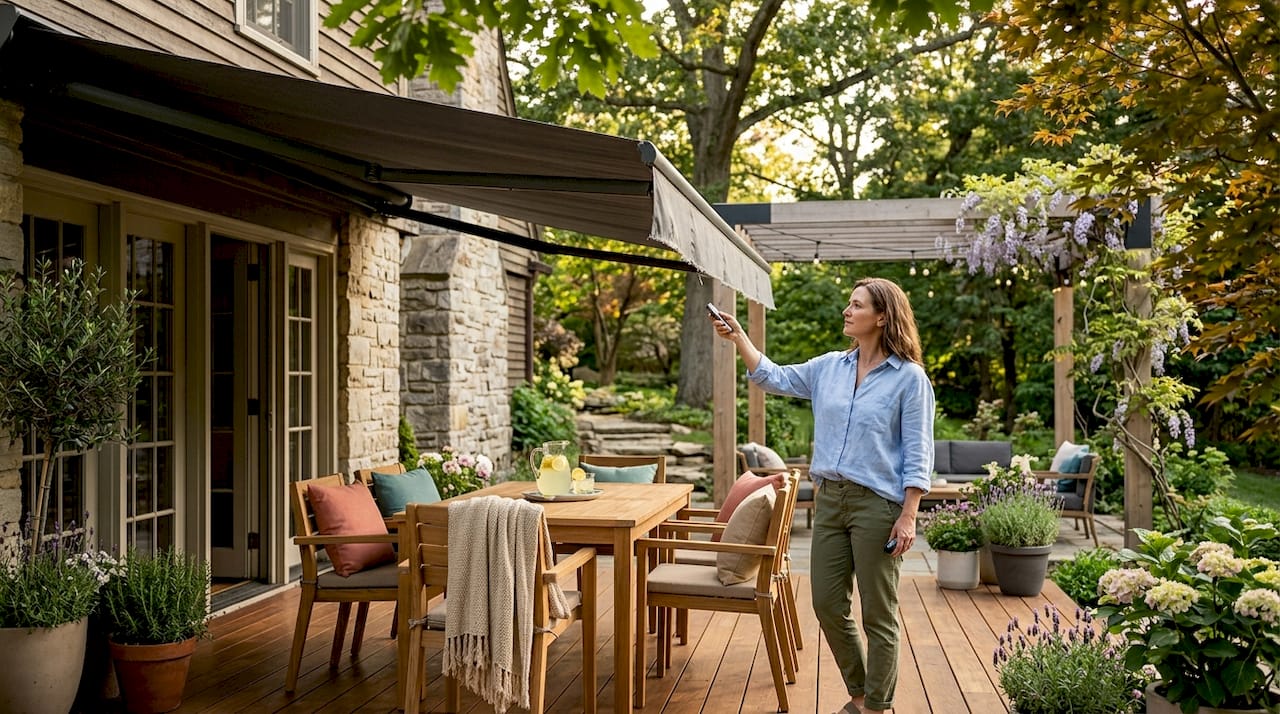
Motorized awnings equipped with wind sensors automatically retract on gusts that exceed a preset threshold, such as 30 km/h, removing the fabric from harm’s way before damage occurs. The system relies on three components working together: a motorized awning, a Shelly relay that processes sensor signals, and a WS90 anemometer that measures wind speed in real time.
Here is how a basic automated setup operates:
- The WS90 wind sensor reads current wind speed continuously.
- When speed crosses the preset threshold, it sends a signal to the Shelly relay.
- The relay triggers the awning motor to retract the fabric fully.
- Once wind drops below the threshold, the system can be set to re-extend automatically or wait for manual confirmation.
- The homeowner monitors and adjusts settings through a smartphone app or smart home platform like Google Home or Amazon Alexa.
Automated wind retraction shifts control from human reaction time to measured sensor response, which prevents the mechanical stress that accumulates when fabric stays extended through repeated gusts. Shelly’s engineering documentation notes that maintaining fabric tautness through automation avoids the costly repairs that come from storm damage.
Pro Tip: Set your retraction threshold in m/s rather than km/h for finer control. A threshold of 8 m/s (roughly 29 km/h) catches strong gusts without triggering nuisance retractions every time a breeze picks up.
3. Shade sails and tensioned fabric solutions for windy areas
Shade sails work well on windy patios because their breathable fabric and tensioned installation reduce the resistance that causes flapping and tearing. High-density polyethylene (HDPE) fabric is the industry standard for shade sails in exposed locations. It allows air to pass through the weave while blocking 90 to 95 percent of UV radiation, making it both wind-friendly and sun-protective.
The mounting system determines whether a shade sail survives wind or fails within a season. Structural steel or treated timber posts set in concrete provide the anchor points needed to keep the sail taut. Loose installation is the most common reason shade sails fail in wind. A properly tensioned sail has no visible sag and no loose edges that can catch air.
Here is a quick comparison of fabric shade options for windy conditions:
| Shade type | Wind suitability | Best use case |
|---|---|---|
| HDPE shade sail | High | Fixed patio with structural posts |
| Roll-up PVC shade | Low to moderate | Calm areas; needs hold-down bars in wind |
| Retractable fabric awning | High (with motor) | Patios with automated wind sensor systems |
| Woven polyester screen | Moderate | Side panels and partial windbreaks |
PVC roll-up shades block up to 80 percent of UV light but are not well suited for windy areas unless secured with bungee cords or hold-down bars. Bob Vila editors specifically note that wind deployment behavior matters more than UV protection alone when choosing shades for exposed patios. For high-wind zones, HDPE shade sails or motorized awnings are the stronger choice.
4. Portable wind-resistant umbrellas for flexible outdoor use
Portable wind-resistant umbrellas solve a different problem than fixed patio shades. They go where you need them, from a backyard patio to a beach setup to a commercial rental space, without requiring permanent installation. The key features that separate a wind-capable portable umbrella from a standard one are:
- Dual-layer ventilated canopy: Two fabric layers with a vented gap between them reduce wind resistance and prevent inversion during gusts.
- Fiberglass ribs: Unlike steel ribs that snap under stress, fiberglass flexes and returns to shape, extending the umbrella’s lifespan in gusty conditions.
- Detachable ground spikes: These anchor the umbrella directly into soil or sand, eliminating the need for a heavy base when you are away from a paved surface.
- Weighted base compatibility: For paved patios, the same umbrella pole fits into a standard weighted base, giving you flexibility across surfaces.
- Aluminum pole construction: Lightweight enough to carry, strong enough to resist bending under moderate wind loads.
Giant Umbrella Company’s typhoon-resistant cantilever model takes this further, using reinforced aluminum frames and vented canopies rated for category 5 wind conditions. That level of engineering is overkill for most residential patios, but it demonstrates how far wind-resistance design has advanced in the commercial umbrella market.
5. Comparing the best patio shade options for windy conditions
Choosing between shade types comes down to your patio size, how often strong winds hit, and how much installation effort you want to invest. This table covers the four main options:
| Shade type | Wind resistance | Installation effort | Cost range | Best for |
|---|---|---|---|---|
| Vented patio umbrella | Moderate to high | Low | $80 to $400 | Small patios, flexible placement |
| Motorized retractable awning | Very high (with sensor) | High | $800 to $3,000+ | Large patios, frequent wind exposure |
| HDPE shade sail | High | Moderate | $50 to $300 | Open areas with structural anchor points |
| Portable windproof umbrella | Moderate to high | Very low | $100 to $500 | Multi-use, travel, commercial rental |
Motorized awnings with wind sensors offer the highest protection for patios that face consistent wind, but they require professional installation and a larger upfront investment. Shade sails are the most cost-effective durable option for open spaces, provided the mounting posts are set correctly. Vented umbrellas hit the sweet spot for most homeowners: affordable, easy to deploy, and genuinely wind-capable when closed during severe gusts.
Frequently retracting or raising shades during gusts extends product life significantly. Bob Vila’s guidance reinforces that the deploy-and-store cycle is not an inconvenience. It is the operating model that wind-rated shades are designed around.
6. Outdoor windbreak solutions that complement your shade setup
Shade structures work better when wind loads are reduced before they reach the canopy. Outdoor windbreak solutions like privacy screens, lattice panels, and dense plantings cut wind speed at the patio perimeter, reducing the stress on any shade product you install.
A solid fence or wall reduces wind speed by roughly 50 percent for a distance equal to 10 times the fence height on the leeward side. A 6-foot fence, for example, creates a calmer zone extending about 60 feet. That reduction matters enormously for umbrella stability and shade sail tension. Bamboo screens, cedar lattice panels, and ornamental grasses all serve as softer windbreak options that add visual interest without requiring permits or major construction.
Combining a windbreak with a weatherproof outdoor shade creates a layered system that outperforms either solution alone. The windbreak handles the raw force of the gust, and the shade handles UV and heat. This pairing is especially effective for homeowners in coastal or open-plain locations where wind is a daily reality rather than an occasional event.
Key takeaways
The most effective outdoor shade solutions for windy patios combine vented or breathable canopy design with secure anchoring and a reliable retraction method, whether manual or automated.
| Point | Details |
|---|---|
| Vented canopy design | Double-vent or tiered canopies prevent pressure buildup and reduce inversion risk in gusts. |
| Wind sensor automation | Shelly-compatible motorized awnings retract automatically at preset wind thresholds, preventing fabric damage. |
| HDPE shade sails | Breathable HDPE fabric and tensioned mounting make shade sails one of the most wind-tolerant fixed options. |
| Deploy-and-store discipline | Retracting shades during high winds is the operating model all wind-rated products are built around. |
| Windbreak layering | Combining a perimeter windbreak with a shade structure reduces wind load and extends product lifespan. |
What I’ve learned from years of watching patios get it wrong
Most homeowners buy a shade product based on looks and price, then blame the product when it fails in a storm. The real failure is almost always in the setup or the habits around it. I have seen beautiful cantilever umbrellas destroyed in a single afternoon because the owner left them open during a thunderstorm warning. The umbrella was not defective. The routine was.
The single most underrated feature in any wind-exposed shade setup is the retraction mechanism. Whether that is a manual crank, a pull cord, or a Shelly-integrated motor, the ease of retraction determines whether you actually use it. If closing your shade takes more than 30 seconds, you will skip it when the sky looks threatening. That skip is what causes failures.
I also think homeowners underestimate how much a perimeter windbreak changes the math. Dropping wind speed at the patio edge by 30 to 40 percent means your shade products operate in a fundamentally different environment. A mid-range vented umbrella in a sheltered patio often outperforms a premium umbrella on an exposed deck. Spend some of your shade budget on a cedar screen or a dense hedge row before upgrading to the most expensive canopy on the market.
For maintenance, a seasonal outdoor cleaning routine that includes wiping down frames, checking anchor hardware, and inspecting fabric for stress tears will catch problems before they become replacements. Wind-exposed shades age faster than sheltered ones. Inspect them twice a year, not once.
— Sunny
Shade solutions built for wind, available at Valueblindsdirect
Valueblindsdirect carries a full range of motorized retractable awnings designed for patios that face real wind exposure, including full-cassette models compatible with wind sensor automation. For homeowners who prefer manual control, the windproof sunshade collection features side rails and heavy-duty fabric that holds up in gusty conditions without requiring a motor. Every product ships with customization options for size and color, so your shade fits the patio rather than the other way around. If you are ready to stop replacing flimsy shades every season, Valueblindsdirect has the durable options worth investing in. Browse the full outdoor patio shades catalog to find the right fit for your space.
FAQ
What is the most wind-resistant patio shade type?
Motorized retractable awnings with wind sensors offer the highest wind resistance because they retract automatically before damage occurs. For fixed options, HDPE shade sails with structural post mounting are the most durable choice.
How do I stop my patio umbrella from blowing over?
Use a weighted base of at least 50 pounds and position the umbrella near a wall or fence to reduce direct wind exposure. Close the umbrella whenever sustained winds exceed 20 mph.
Do shade sails hold up in wind?
HDPE shade sails handle wind well when properly tensioned and anchored to structural posts set in concrete. Loose installation is the primary cause of shade sail failure in windy conditions.
What wind speed should trigger awning retraction?
A threshold of around 30 km/h (roughly 8 m/s) is the standard starting point for automated awning retraction, according to Shelly’s wind sensor setup guidelines. Adjust the threshold based on your local wind patterns to avoid unnecessary retractions.
Are PVC roll-up shades suitable for windy patios?
PVC roll-up shades are not ideal for windy areas without additional securing hardware. Bob Vila editors note that wind deployment behavior matters more than UV protection for exposed patios, and PVC shades require hold-down bars or bungee cords to stay stable in gusts.