Top Bottom Shades: Flexible Privacy And Style
Most American homeowners are searching for smarter ways to manage light and privacy without sacrificing style. With energy costs on the rise, choosing window treatments that support energy efficiency can make a big difference in monthly bills. Top down bottom up shades offer a modern solution for those who want flexible privacy and control. You will discover how these innovative shades support contemporary home decor while maximizing both comfort and savings.
Table of Contents
- Top Bottom Shades Defined And Debunked
- Key Types And Customization Options
- How Dual Control Mechanisms Work
- Benefits For Privacy And Energy Efficiency
- Risks, Installation Tips, And Alternatives
Key Takeaways
| Point | Details |
|---|---|
| Innovative Design | Top Down Bottom Up shades allow independent control of light and privacy through a dual-rail system, redefining traditional window treatment functionality. |
| Customization Options | Homeowners can select from various fabrics, colors, and operational mechanisms to suit their aesthetic and functional preferences. |
| Energy Efficiency | These shades help regulate indoor temperatures and can reduce energy costs by blocking solar radiation and providing insulation. |
| Installation Considerations | Careful measurement and potentially professional installation are crucial for ensuring the optimal performance of motorized options. |
Top bottom shades defined and debunked
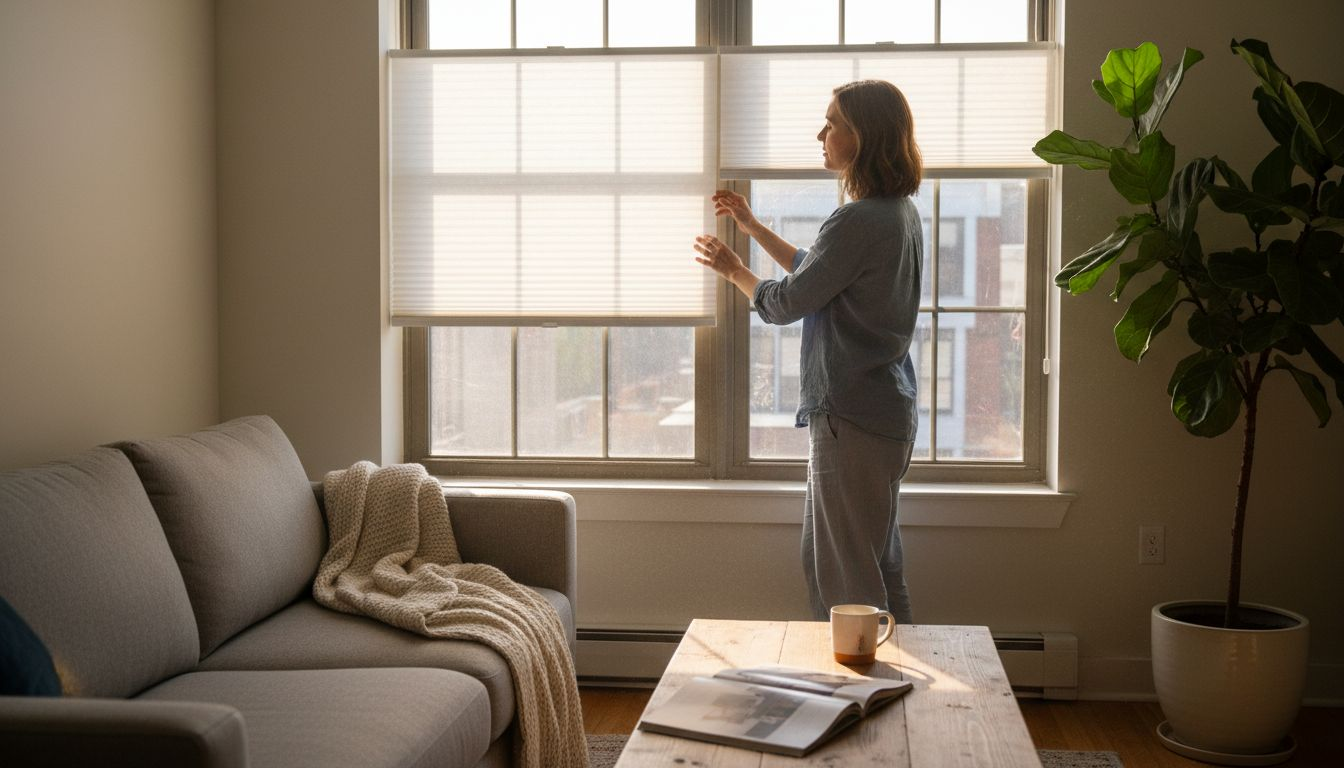
Top Down Bottom Up (TDBU) shades represent a revolutionary window treatment design that challenges traditional shade limitations. Advanced window covering technology allows homeowners unprecedented control over natural light and privacy. These specialized shades feature a unique dual-rail system enabling independent adjustment from both the top and bottom of the window frame.
Unlike conventional window treatments, TDBU shades break the standard operational model. Homeowners can lower the top portion while keeping the bottom section closed, creating strategic light filtering and maintaining visual privacy. This flexible approach means you can enjoy soft natural illumination without compromising personal space or exposing interior rooms to outside view.
The mechanics behind top bottom shades involve three horizontal rails that enable nuanced positioning. Manufacturers offer both corded and cordless versions, accommodating different aesthetic preferences and safety requirements. Families with young children often prefer cordless options, while those seeking traditional control might select corded mechanisms. The adaptability of these shades makes them suitable for bedrooms, home offices, bathrooms, and living spaces where precise light management matters.
Pro tip: When selecting top bottom shades, measure your window dimensions carefully and consider room-specific lighting needs to maximize functionality and style.
Key types and customization options
Top bottom shades offer an impressive array of customization options designed to meet diverse homeowner needs. Window shade varieties range from classic fabric designs to modern light-filtering and blackout materials. Homeowners can select from multiple fabric weights, textures, and opacity levels to match their specific aesthetic and functional requirements.
Customization extends beyond fabric selection to include operational mechanisms and mounting styles. Customers can choose between inside mount and outside mount installations, cordless or corded systems, and manual or motorized controls. Specialized options like thermal insulation, noise reduction, and UV protection provide additional functionality for those seeking enhanced window treatment performance.
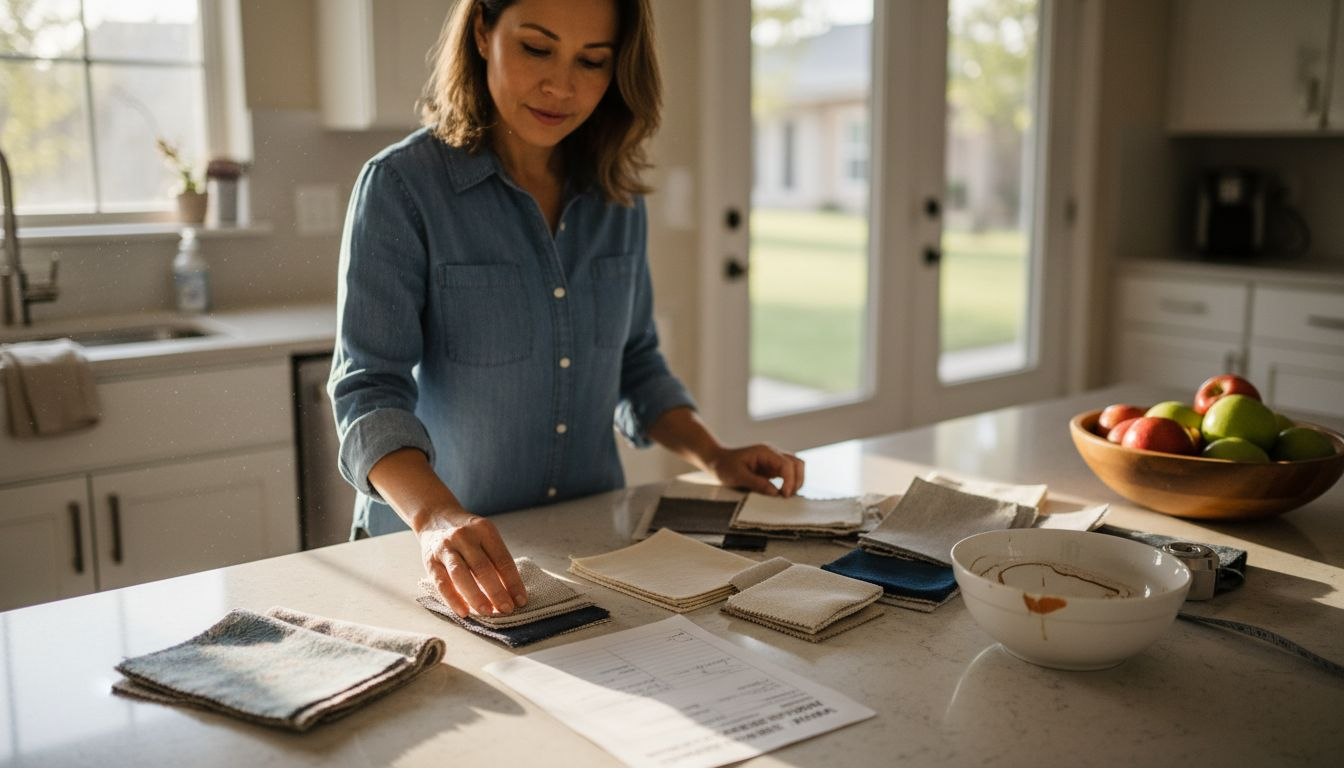
Color and pattern selections play a crucial role in top bottom shade personalization. Neutral tones like white, beige, and gray remain popular for their versatility, while bold color choices can transform a room’s visual dynamics. Textured fabrics such as woven wood, cellular, and linen materials offer sophisticated design elements that complement various interior design styles, from minimalist to traditional.
Pro tip: Always request fabric samples before final purchase to ensure color accuracy and texture match with your existing room decor.
How dual control mechanisms work
Top down bottom up shades utilize a sophisticated three-rail control system that revolutionizes window light management. This innovative design features a fixed headrail at the top, a movable bottom rail, and a floating middle rail that enables unprecedented flexibility in positioning. Homeowners can independently adjust different sections of the shade, creating unique configurations that balance natural light and privacy.
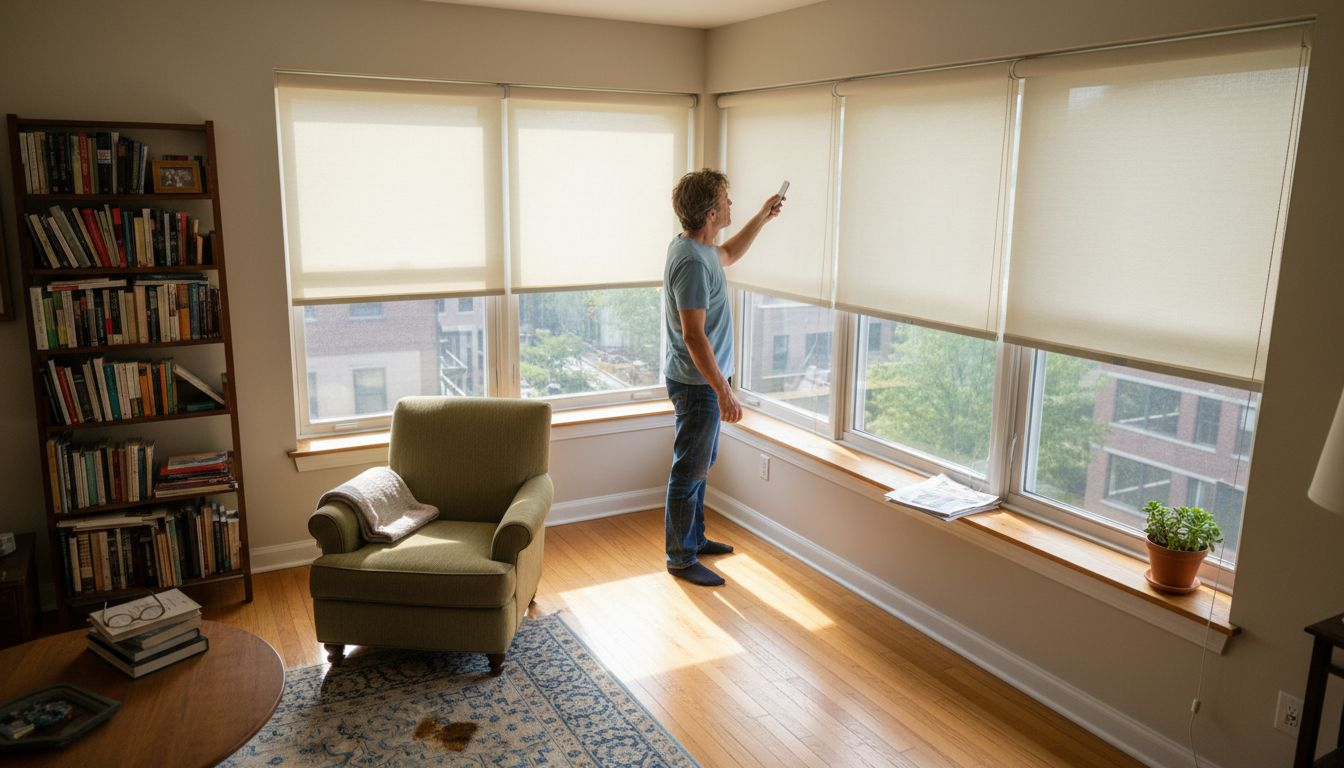
The operational mechanics involve two primary control methods: corded and cordless systems. Corded versions use separate lifting mechanisms that allow precise movement of top and bottom rails, while cordless options employ a push-pull mechanism that enables smooth, hands-on adjustment. Motorized versions take convenience a step further, allowing remote or smartphone-controlled positioning that eliminates manual interaction entirely.
Each rail’s independent movement creates remarkable versatility in light filtering and privacy control. For instance, users can lower the top rail to allow soft overhead illumination while keeping the bottom section closed, effectively blocking street-level views. Alternatively, they can raise the bottom rail partially, creating a dynamic light entry point that transforms the room’s ambiance without compromising personal privacy.
Here’s a comparison of top bottom shade control mechanisms and their unique advantages:
| Control Type | Ease of Use | Safety Considerations | Ideal For |
|---|---|---|---|
| Corded | Precise, familiar | Poses risk for small children | Adults, traditional users |
| Cordless | Simple, smooth motion | No cords, safer environment | Homes with young children |
| Motorized | Effortless, remote | Requires power, advanced setup | Tech-savvy households |
Pro tip: Practice operating your top bottom shade in different configurations to discover the most comfortable and aesthetically pleasing light management technique for each room.
Benefits for privacy and energy efficiency
Top bottom shades offer remarkable advantages in both privacy protection and energy efficient window coverings. These innovative window treatments create a sophisticated barrier that allows homeowners to control exterior visibility while simultaneously reducing heat transfer and improving overall home thermal performance. By strategically positioning shade sections, residents can block direct views from outside while maintaining natural light penetration.
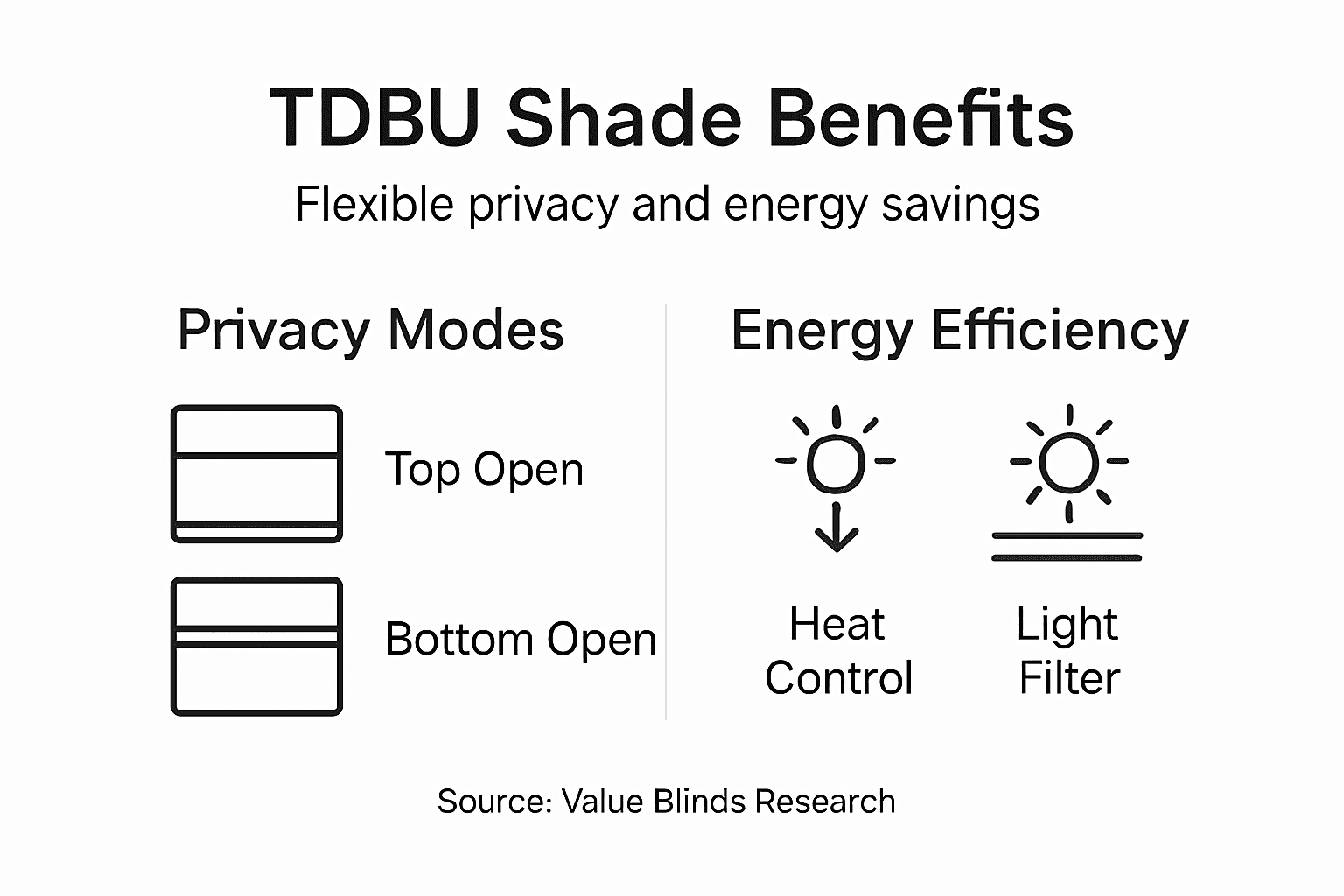
Privacy management represents a critical benefit of these versatile window treatments. Different positioning configurations enable users to obstruct specific viewing angles without completely eliminating natural illumination. For instance, homeowners can lower the top rail to block second-story visibility from street level, or raise the bottom rail to prevent ground-level observers from seeing interior spaces. This granular control transforms traditional window coverage into a dynamic privacy management system.
Energy efficiency emerges as another significant advantage of top bottom shades. The ability to precisely control light and heat entry helps regulate indoor temperatures more effectively than traditional window treatments. Cellular or honeycomb fabric options provide additional insulation, creating an extra thermal barrier that reduces heating and cooling costs. During summer months, these shades can block solar radiation, while winter configurations can help retain interior warmth, potentially reducing energy expenses by up to 25 percent.
Pro tip: Select light-colored shade fabrics for better heat reflection and maximum energy efficiency in sun-exposed windows.
Risks, installation tips, and alternatives
Motorized top bottom shades come with unique challenges, particularly in shade control and automation systems. The complexity of managing two independent rails can create technical difficulties for homeowners seeking seamless smart home integration. Precise motor pairing and careful configuration become essential to ensure smooth operation and prevent potential mechanical failures.
Installation requires meticulous attention to detail. Homeowners should prioritize accurate measurements, ensuring perfect alignment of mounting brackets and rails. Critical installation steps include verifying window frame squareness, selecting appropriate mounting depth, and confirming sufficient clearance for rail movement. Professional installation is recommended for motorized versions, as improper setup can lead to uneven operation, increased wear, and potential damage to the shade mechanism.
Alternative window treatment options provide flexible solutions for those experiencing challenges with top bottom shades. Traditional roller shades, cellular shades, and roman shades offer similar light control with potentially simpler mechanisms. For rooms requiring maximum privacy and light management, consider layered treatments such as combining sheer and blackout fabrics or integrating complementary window coverings that provide multiple functionality levels.
Below is a summary of alternative window treatments and their key benefits compared to TDBU shades:
| Treatment Type | Light Control Features | Privacy Management Strength | Maintenance Level |
|---|---|---|---|
| Roller Shades | Simple up/down movement | Moderate | Low |
| Cellular Shades | Superior insulation, light filter | High | Moderate |
| Roman Shades | Soft folds, elegant appearance | Good | Moderate |
| Layered Systems | Combine functions, flexible use | Maximum | Varies by approach |
Pro tip: Always request a professional installation demonstration and practice manual operation before fully committing to motorized top bottom shade systems.
Discover Flexible Privacy and Style with Custom Top Bottom Shades
Struggling to find window treatments that combine versatile light control with personalized privacy? Top bottom shades solve this challenge by offering independent adjustment of multiple shade sections. Whether you want to let in soft natural light while keeping prying eyes away or enhance energy efficiency in your home, these shades give you unmatched control and style.
Explore our Best Sellers collection for top-rated custom window treatments designed to fit your unique needs.
Take control of your windows today with premium custom shading solutions from Value Blinds. Shop now and enjoy expert guidance, free swatches, and easy customization that transforms your living space into a comfortable, stylish sanctuary.
Frequently Asked Questions
What are top down bottom up shades?
Top down bottom up shades (TDBU) are a unique window treatment design that allows independent adjustment from both the top and bottom of the window, giving homeowners control over natural light and privacy.
How do top down bottom up shades enhance privacy?
TDBU shades enable users to block specific views from outside while still allowing natural light to enter the room. By adjusting the top or bottom portion independently, homeowners can fully customize their privacy without sacrificing illumination.
What are the different control mechanisms for top down bottom up shades?
Top down bottom up shades come with various control mechanisms, including corded, cordless, and motorized options. Corded systems allow precise adjustments using lifting cords, while cordless options provide a safer alternative for homes with children. Motorized versions enable remote or smart device control for added convenience.
How do top down bottom up shades contribute to energy efficiency?
These shades help regulate indoor temperatures by controlling light and heat entry into the home. With options like cellular fabrics providing extra insulation, TDBU shades can significantly reduce heating and cooling costs, especially when used to block solar radiation or retain warmth during the winter.