
6 Stylish DIY Hanging Planters for Urban Homeowners
Making your small city apartment feel lively and personal is tough when every inch counts. You want vibrant greenery to brighten your home, but bulky planters and crowded windowsills only add clutter. Luckily, there are smarter ways to add fresh plants without sacrificing valuable space or style.
This list breaks down the best modern hanging planter ideas tailored for busy urban living. You’ll find practical solutions for choosing durable materials, maximizing sunlight, and creating your own unique displays. Get ready to discover creative methods that let your plants thrive up high—while keeping your apartment both organized and beautiful.
Table of Contents
- 1. Choose The Right Materials For Long-Lasting Planters
- 2. Easy Macramé Hangers To Elevate Small Spaces
- 3. Upcycle Everyday Items Into Modern Hanging Planters
- 4. Install Planters Near Windows For Light And Style
- 5. Low-Maintenance Plant Choices For Busy Lifestyles
- 6. Caring For Your DIY Planters For Lasting Beauty
Quick Summary
| Takeaway | Explanation |
|---|---|
| 1. Choose durable materials | Material selection affects planter lifespan and plant health; opt for weather-resistant options. |
| 2. Utilize vertical space | Macramé hangers maximize limited floor space by elevating plants, enhancing visual appeal. |
| 3. Upcycle creatively | Transform household items into unique planters, reducing waste and showcasing personal style. |
| 4. Optimize light placement | Hang planters near windows for improved plant health and to create dynamic focal points indoors. |
| 5. Select low-maintenance plants | Choose resilient varieties that require minimal care, perfect for busy lifestyles. |
1. Choose the Right Materials for Long-Lasting Planters
Material selection makes or breaks a hanging planter’s success. The right choice determines how long your planter lasts, how well your plants thrive, and whether you’ll enjoy maintaining it for years to come.
Your hanging planter faces unique challenges that ground-level pots don’t encounter. Weight, water drainage, exposure to weather, and daily UV rays all demand materials tough enough to handle a suspended lifestyle. Common hanging planter materials include plastic, natural fibers, wire cages, and composite options, each with distinct advantages for urban spaces.
Plastic remains the most popular choice for urban homeowners. It’s affordable, lightweight, and retains moisture well, making it ideal for apartment dwellers who can’t access their planters frequently. Plastic won’t rot or rust, and it comes in countless colors to match your décor.
Natural fiber liners like moss or coco coir add aesthetic appeal. These materials look beautiful and breathable, but they require more frequent watering since they don’t retain moisture as effectively. They work wonderfully if you’re committed to daily care.
Wire cages with liners offer the best of both worlds. The cage structure supports weight effectively, while the liner protects plants and retains moisture. You can swap liners seasonally to refresh your look without replacing the entire planter.
Consider these material factors for your space:
- Durability under sunlight: Plastic and composite materials resist fading better than natural fibers
- Weight management: Lighter materials like plastic and resin prevent stress on mounting hardware
- Moisture retention: Weather-resistant materials like plastic and composite keep soil hydrated longer
- Visual appeal: Natural fibers and ceramic liners add designer touches to urban homes
- Maintenance needs: Plastic and resin require minimal upkeep compared to unprotected wood or metal
Urban apartments benefit most from low-maintenance materials. Limited access, harsh city pollution, and temperature fluctuations demand planters that won’t degrade quickly. Plastic and composite materials consistently outperform in these demanding conditions.
The material you choose directly impacts both your plant’s health and your maintenance burden—don’t sacrifice durability for looks.
Pro tip: Layer your materials for maximum performance: use a plastic planter for water retention, then place it inside a decorative fiber or ceramic cover that you can easily swap seasonally without disturbing your plants.
2. Easy Macramé Hangers to Elevate Small Spaces
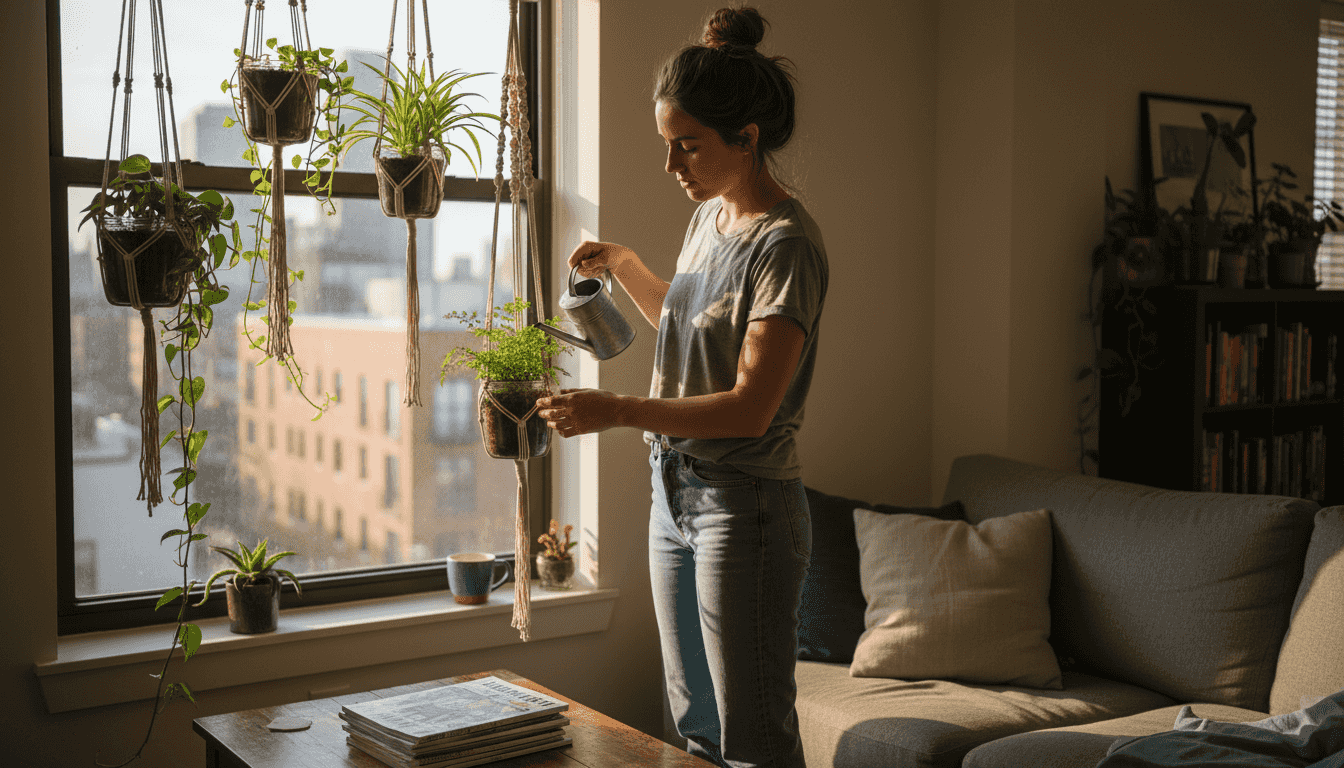
Macramé hangers transform cramped apartments into vertical gardens. These knotted cord holders let you hang plants near windows and ceilings, freeing up precious floor space while adding bohemian charm to your home.
Urban apartments struggle with limited square footage. Every inch counts when you’re decorating a small bedroom or studio. By moving plants upward with macramé plant hangers, you gain breathing room at ground level and create visual interest overhead.
The beauty of macramé lies in simplicity. You don’t need advanced skills to create a functional hanger. Basic knots like square knots and lark’s head knots form the foundation of most designs. These straightforward techniques mean beginners can succeed on their first attempt.
Light becomes your secret advantage. Hanging plants near windows maximizes sun exposure without requiring extra floor space. Multiple plants suspended at different heights create a layered green wall that makes small spaces feel larger and more alive.
Macramé hangers offer flexibility that fixed shelving cannot match. You adjust the length, move plants seasonally, or swap between lightweight pots easily. This adaptability works perfectly for urban homeowners who rearrange frequently.
Here’s what you gain from macramé hangers:
- Space optimization: Vertical displays free floor and shelf space
- Light maximization: Hanging near windows improves plant health
- Customizable heights: Create dynamic visual layers throughout your room
- Lightweight construction: No heavy drilling or permanent fixtures needed
- Bohemian aesthetic: The textured knotwork adds instant style and warmth
- Cost-effective: Cord and knots cost far less than ready-made solutions
The textural appeal works with any décor style. Whether your apartment leans minimalist, industrial, or eclectic, macramé adds softness and visual texture that complements your existing design.
Hanging plants with macramé transforms your vertical space into a living gallery that makes small apartments feel intentional and stylish.
Starting your first macramé hanger takes about an hour. Cotton or jute cord works best for beginners since they’re forgiving and come in natural colors that suit most interiors. Learning just two knots opens endless design possibilities.
Pro tip: Use adjustable cord lengths to create a tiered plant display at varying heights, then anchor multiple hangers to a single wall hook or ceiling beam for a lush, gallery-like effect without needing multiple mounting points.
3. Upcycle Everyday Items Into Modern Hanging Planters
Transform trash into treasure by turning household items into stylish hanging planters. Upcycling combines sustainability with creativity, letting you design unique planters while keeping waste out of landfills.
Your home likely contains perfect planter candidates right now. Old glass jars, tin cans, fabric scraps, wooden pallets, and repurposed containers all work beautifully when reimagined as hanging gardens. This approach costs almost nothing while delivering custom pieces you won’t find in stores.
Sustainability meets style when you upcycle thoughtfully. You’re reducing waste while creating functional art that reflects your personal taste. Each upcycled planter tells a story about resourcefulness and environmental consciousness.
Common household items work surprisingly well as planters. Mason jars offer transparency that shows off soil and roots, while tin cans bring industrial charm. Woven baskets add texture, and PVC pipes create modern geometric displays. The key is ensuring proper drainage and secure hanging hardware.
Personalization options are endless with upcycled materials. Paint wooden containers, stain fabric liners, or leave raw edges for rustic appeal. Your finished planters reflect your style while serving a practical purpose.
Here are excellent items to upcycle into hanging planters:
- Glass jars and bottles: Perfect for small succulents or trailing vines
- Tin cans and food containers: Industrial aesthetic with painted finishes
- Wooden crates or pallets: Rustic charm with weathered character
- Old baskets or woven containers: Textured bohemian appeal
- Fabric scraps: Liner material or decorative wrapping
- PVC pipe sections: Modern geometric planting arrangements
Vertical planter arrangements allow you to create layered displays that maximize visual impact in small spaces. Multiple upcycled pieces hung at different heights create dynamic installations that elevate your décor.
Safety matters when upcycling hanging planters. Ensure containers have adequate drainage holes to prevent waterlogging. Use sturdy mounting hardware rated for the combined weight of container, soil, and plants. Test everything before trusting it with your greenery.
Upcycling transforms ordinary household items into conversation-starting planters that showcase your creativity and commitment to sustainable living.
Pro tip: Before hanging any upcycled planter, drill small drainage holes in the bottom and line it with landscape fabric to prevent soil escape while allowing water drainage, ensuring your plants thrive without damaging walls or floors.
4. Install Planters Near Windows for Light and Style
Windows are your secret weapon for healthy hanging plants and stunning interior design. Positioning planters near windows maximizes natural light while creating eye-catching focal points that transform your living space.
Plants need sunlight to thrive, and urban apartments often lack adequate light sources. By hanging planters directly at windows, you solve the light problem while adding greenery that frames your view and brightens your home. This simple placement change makes a dramatic difference in plant health and room ambiance.
Window placement optimizes plant growth naturally. South-facing and east-facing windows typically provide the most consistent light throughout the day. Your trailing vines and hanging plants receive ample sunlight without relying on artificial grow lights, reducing energy costs.
The aesthetic benefits are equally important. Hanging plants at windows create layered visual interest that draws eyes upward and softens hard window lines. This placement works for every design style, from minimalist to bohemian to industrial.
Window-adjacent hanging plants improve oxygenation while serving as living décor that changes with the seasons. Your windows become dynamic displays rather than plain glass surfaces.
Consider these window placement advantages:
- Maximum light exposure: Plants receive consistent natural sunlight daily
- Improved plant health: Stronger growth and vibrant foliage without artificial lighting
- Enhanced aesthetics: Greenery frames views and softens window frames
- Space efficiency: Uses vertical space above radiators or furniture
- Easy maintenance access: Watering and care happen at convenient window height
- Temperature benefits: Plants near windows experience natural air circulation
Adjustable-length hangers give you flexibility to position plants at optimal heights. Some days your plants need maximum sun exposure, while other times filtered light works better. Adjustable systems let you adapt quickly without reinstalling hardware.
Light direction matters tremendously for different plant species. Research your specific plants to determine whether they prefer bright direct light or filtered sunlight. Window direction and seasonal sun angles affect how much light your plants actually receive.
Windows transform from simple architectural features into living galleries when framed with hanging planters that showcase greenery at eye level and above.
Pro tip: Install your hanging planters on adjustable hooks or rails that run parallel to your window frame, allowing you to slide plants left and right seasonally to follow the sun’s changing angle throughout the year.
5. Low-Maintenance Plant Choices for Busy Lifestyles
Busy schedules shouldn’t mean sacrificing greenery in your home. The right plant choices thrive on neglect, perfect for urban professionals who travel, work long hours, or simply forget to water regularly.
You don’t need a green thumb to succeed with hanging planters. Certain species practically demand minimal care while delivering lush, beautiful foliage. These plants tolerate irregular watering, varying light conditions, and occasional forgetfulness without losing their appeal.
Low-maintenance plants reduce stress and guilt. No more worrying about dying greenery when you’re busy. These resilient varieties actually prefer less fussing, making them ideal companions for hectic urban lifestyles.
Trailing varieties work beautifully in hanging planters while requiring surprisingly little attention. Pothos vines cascade elegantly while tolerating low light and infrequent watering. Spider plants produce adorable baby plantlets without demanding constant care. Succulents store water internally, thriving on neglect rather than attention.
Easy-care indoor hanging plants such as Scindapsus, Dragon Ivy, and Tradescantia offer beautiful foliage with minimal upkeep and adaptability to indoor conditions. These species require moderate indirect light and infrequent watering, making them perfect for apartments where natural light varies throughout the day.
Top low-maintenance hanging plants for busy homeowners:
- Pothos: Tolerates low light, forgiving of irregular watering
- Spider plants: Produce offspring for propagation, minimal care needs
- Succulents: Store water internally, thrive on neglect
- Tradescantia: Cascading vines, adaptable to various light levels
- Dragon Ivy: Elegant foliage, low pest susceptibility
- Rhipsalis: Unique branching structure, enjoys moderate humidity
These plants resist common pests and diseases that plague fussier varieties. Your hanging garden stays healthy even when you travel for weeks or work overtime. Water once every two weeks or even less frequently, and your plants reward you with vigorous growth.
Light flexibility is another major advantage. These species don’t demand south-facing windows or specialized grow lights. They adapt to whatever indirect light your apartment provides, making placement decisions stress-free.
The best plant for a busy lifestyle is one that thrives despite your neglect, turning forgetfulness into a feature rather than a failure.
Pro tip: Group multiple low-maintenance plants together in a single hanging arrangement, allowing them to create humidity for each other while requiring just one watering schedule and single mounting point.
6. Caring for Your DIY Planters for Lasting Beauty
Your DIY hanging planters deserve proper maintenance to stay beautiful and functional for years. Smart care routines keep plants healthy, prevent damage to your planters, and protect your investment in these stylish home additions.
Neglecting maintenance shortens your planters’ lifespan and compromises plant health quickly. A few simple practices prevent expensive problems like root rot, pest infestations, and structural failure. These tasks take minimal time once you establish a routine.
Watering remains the most critical care element. Each plant species has different moisture needs, so research your specific varieties before establishing a schedule. Check soil moisture with your finger before watering, and adjust frequency based on seasonal changes and humidity levels.
Drainage prevents the most common planter failure. Ensure water flows freely through holes at the planter’s bottom, preventing water from pooling around roots. If your DIY planter lacks adequate drainage, roots rot within weeks, killing your plants and potentially damaging the planter itself.
Proper care for hanging planters includes regular watering tailored to plant needs, periodic fertilizing during growth seasons, and consistent pruning to maintain shape. Monitoring for pests prevents infestations before they become serious problems requiring chemical intervention.
Essential maintenance tasks for lasting beauty:
- Water wisely: Check soil moisture before watering, adjust seasonally
- Ensure drainage: Verify water flows freely to prevent root rot
- Fertilize seasonally: Feed plants during active growth periods
- Prune regularly: Remove dead foliage and trim overgrowth
- Monitor for pests: Catch infestations early before spreading
- Clean periodically: Wipe planters and hangers to remove dust buildup
- Check hardware: Inspect hooks and mounting systems for wear
Cleaning your planters extends their lifespan dramatically. Dust accumulates on plastic and upcycled materials, dulling their appearance. A quick wipe with a damp cloth restores shine and removes debris that traps moisture.
Structural integrity matters for safety, especially with upcycled materials. Regularly inspect wooden planters for rot, wire cages for rust, and all hanging systems for weakness. Replace worn hardware before failure causes accidents or plant loss.
Consistent care transforms casual decorating into a sustainable practice that keeps your plants thriving and planters looking showroom-fresh year after year.
Pro tip: Create a simple care calendar marking watering days, fertilizing months, and monthly hardware checks, keeping maintenance consistent and preventing the guesswork that leads to plant decline.
Below is a summarizing table outlining key insights and actionable tips derived from the outlined considerations and strategies for creating and maintaining hanging planters efficiently in urban living environments.
| Topic | Description | Key Benefits |
|---|---|---|
| Material Choices | Selecting durable and low-maintenance materials like plastic, natural fibers, and composite options for hanging planters. | Enhanced longevity, ease of maintenance, and adaptability for urban conditions. |
| Utilizing Macramé | Creating macramé hangers for vertical gardens in small spaces. | Optimized space usage, aesthetic enhancement, and easy adaptability. |
| Upcycled Planters | Repurposing household items into hanging planters. | Sustainable practices, cost-effectiveness, and personalized creative touches. |
| Optimal Placement | Hanging planters near windows to maximize natural light. | Improved plant health, enhanced visual design, and effective space utilization. |
| Plant Selection | Choosing low-maintenance plants suitable for busy lifestyles. | Resilient greenery with minimal care requirements, adapting to varied urban conditions. |
| Maintenance Practices | Routine care tasks to ensure healthy plants and planter durability. | Prolonged lifespan, aesthetic upkeep, and reduced need for replacement. |
Enhance Your Urban Garden with Stylish Window Solutions
Creating a thriving vertical garden with DIY hanging planters is a brilliant way to maximize your urban space and bring nature inside. But to truly elevate your greenery, paired window treatments can control sunlight, protect your plants, and complement your décor effortlessly. If managing natural light and adding style near your windows feels challenging, consider modern options like No Drill Blinds - Easy-to-Install Modern Window Treatments for Your Home that require no complicated installation and perfectly fit apartment living.
Achieve the perfect balance of light and privacy while highlighting your hanging garden. Visit Value Blinds today to explore customizable blinds and shades designed for durability and style. Transform your windows and create inviting spaces where your plants flourish and your home shines. Start enhancing your urban oasis now with products that bring convenience and elegance together.
Frequently Asked Questions
What materials should I use for my DIY hanging planters?
Choosing the right materials for DIY hanging planters is crucial for durability and plant health. Consider lightweight options like plastic or natural fibers for easy handling and moisture retention. Use materials that suit your aesthetic while ensuring proper drainage.
How can I optimize small spaces with hanging planters?
Hanging planters are perfect for maximizing limited space in urban homes. Install your planters near windows to take advantage of natural light and create a vertical garden that frees up floor space. Arrange plants at varying heights to enhance visual appeal.
What are some easy plant choices for busy homeowners?
For those with hectic lifestyles, low-maintenance plants are ideal. Options like Pothos and Spider plants can thrive with infrequent watering and adapt well to varying light conditions. Choose these resilient varieties to maintain greenery effortlessly.
How do I care for my hanging planters?
Maintaining your hanging planters involves regular watering, ensuring proper drainage, and monitoring for pests. Establish a simple care routine by checking soil moisture every week and pruning dead leaves monthly for the best results.
Can I upcycle household items for my hanging planters?
Yes, everyday items can be creatively transformed into unique hanging planters. Old jars, cans, and baskets can work beautifully as planters when prepared with drainage holes. Upcycle materials to create personalized planters that also help reduce waste.
What is the best way to hang my planters securely?
To hang your planters securely, use durable mounting hardware rated for the combined weight of the planter, soil, and plants. Regularly check the integrity of hooks or cords and replace any worn components to ensure safety and stability.