
Wood or Faux Wood Blinds: Choosing for Style and Durability
Finding a window treatment that balances style, durability, and energy efficiency can feel challenging in modern urban homes. As city living brings evolving climate demands and diverse interior designs, homeowners often weigh the pros and cons of wood blinds versus faux wood for every room. By focusing on the core differences in material and performance, you can confidently select blinds that offer lasting beauty without the upkeep headaches.
Table of Contents
- Defining Wood and Faux Wood Blinds
- Core Differences In Material And Construction
- Benefits And Drawbacks For Homeowners
- Comparing Cost, Maintenance, And Longevity
- Selecting The Best Blind For Your Home
Key Takeaways
| Point | Details |
|---|---|
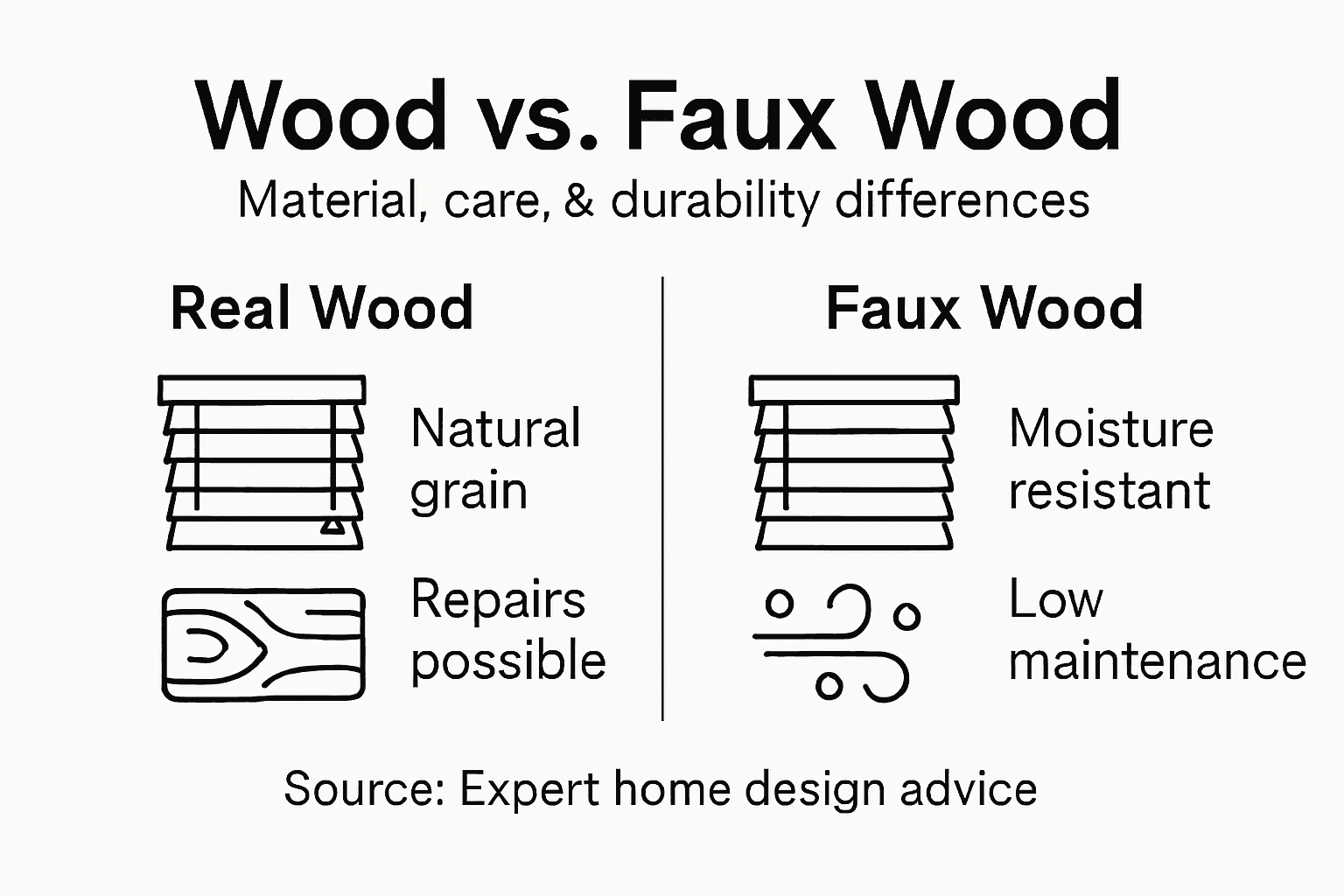
| Material Differences | Real wood blinds provide natural beauty but require more maintenance, whereas faux wood blinds offer durability and moisture resistance with less upkeep. |
| Cost Consideration | Faux wood blinds are generally more budget-friendly initially and in long-term maintenance compared to real wood options. |
| Environmental Suitability | Select faux wood for moisture-prone areas like kitchens and bathrooms, while real wood is ideal for dry, temperature-controlled spaces. |
| Maintenance Commitment | Consider your willingness to maintain blinds; real wood demands regular care, while faux wood is lower maintenance and easier to clean. |
Defining Wood and Faux Wood Blinds
Choosing the right window blinds starts with understanding what you’re actually comparing. Wood and faux wood blinds look similar at first glance, but they’re made from fundamentally different materials with distinct performance characteristics.
Wood blinds are crafted from real hardwood materials like basswood, oak, or pine. These are milled, stained, and assembled to create a natural window covering with authentic grain and warmth. Faux wood blinds replicate this aesthetic using engineered composite materials, typically a blend of polyurethane, vinyl, and wood byproducts.
The core difference? Real wood offers organic beauty and a natural feel, but requires specific care. Faux wood delivers that look while resisting moisture, temperature swings, and daily wear more effectively.
Here’s what sets them apart:
- Material composition: Real wood versus engineered composite (vinyl-based or PVC blends)
- Weight and installation: Wood blinds are heavier and need sturdy brackets; faux wood is lighter and easier to mount
- Moisture resistance: Faux wood handles kitchens and bathrooms; real wood prefers dry spaces
- Staining and fading: Real wood develops patina naturally; faux wood maintains color consistency
- Cost range: Wood typically costs 20-40% more due to raw materials and craftsmanship
Both options deliver on style when selected for your specific space—the key is matching the material to your room’s environment and your maintenance comfort level.
Urban apartments and modern homes often lean toward faux wood because they handle humidity from neighboring units and varying climate control. Decorators frequently choose solid wood blinds for living rooms and bedrooms where aesthetic impact matters most and moisture isn’t a concern.
Faux wood works exceptionally well in kitchens, bathrooms, laundry rooms, and entryways where steam, splashing, and temperature fluctuations are daily realities. Real wood shines in bedrooms, home offices, and formal dining areas where you want that warm, finished wood aesthetic without worrying about moisture exposure.
The choice ultimately hinges on your specific room conditions and how much time you’re willing to invest in maintenance versus accepting a lower-maintenance alternative.
Pro tip: Measure your window dimensions and check humidity levels in your space before deciding—a faux wood blind in a steamy bathroom beats a warped real wood blind every time.
Here’s a quick comparison of key decision factors between real wood and faux wood blinds:
| Decision Factor | Real Wood Blinds | Faux Wood Blinds |
|---|---|---|
| Best Room Placement | Dry, formal spaces | Kitchens, baths, entryways |
| Care Requirement | Professional, ongoing | Occasional DIY dusting |
| Initial Cost | Higher investment | More budget-friendly |
| Longevity Potential | Up to 15 years with care | 8-12 years, low upkeep |
| Customization Depth | Extensive stains, finishes | Fewer authentic textures |
Core Differences in Material and Construction
Once you understand what wood and faux wood blinds are, the real distinctions emerge when you examine how they’re built. The construction process fundamentally shapes durability, appearance, and how each blind responds to your home environment.
Real wood blinds start with solid hardwood slats sourced from sustainable forests. Each slat is milled to precise thickness, sanded smooth, and finished with stains or paints that highlight the natural grain. The slats connect using wooden dowels and cord systems, creating a structure that relies on the inherent strength of the wood itself.
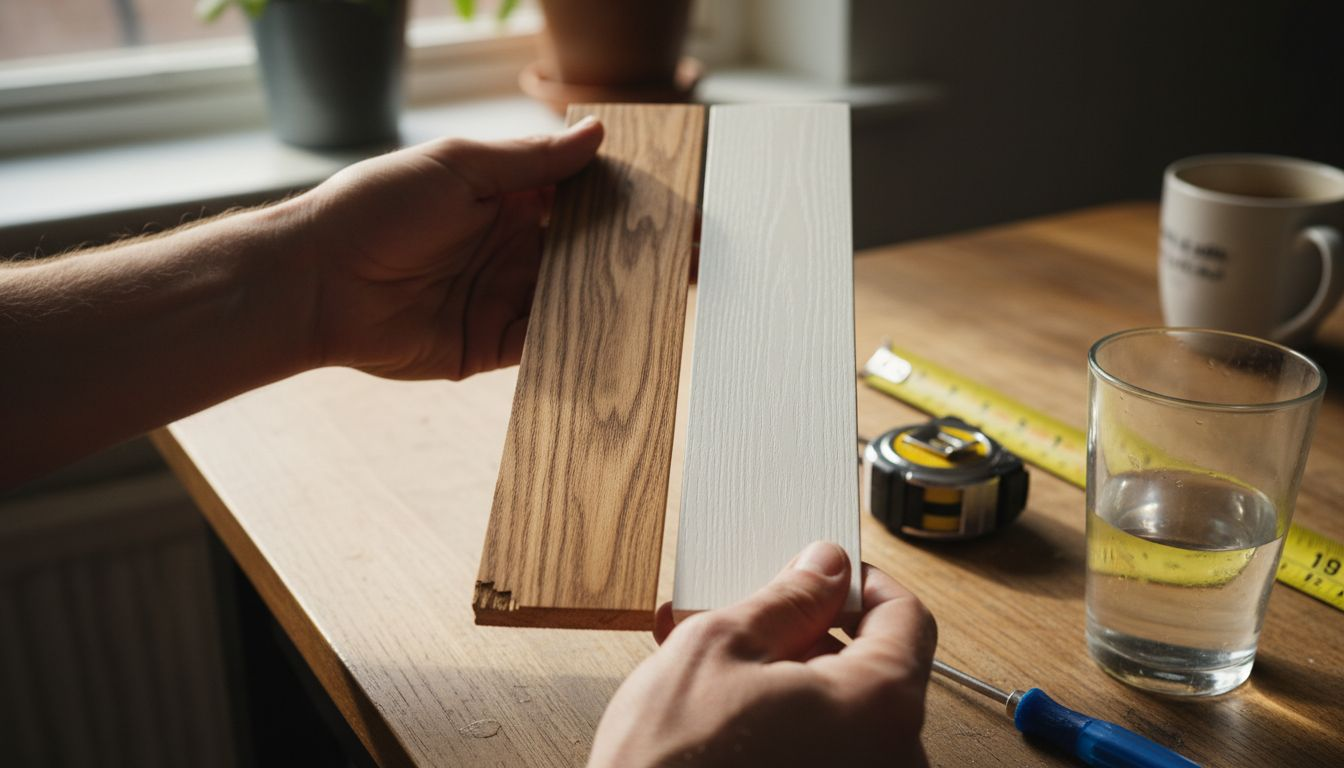
Faux wood blinds use engineered materials that mimic wood’s appearance without its vulnerabilities. The slats are molded from vinyl-polyurethane composites or PVC, then wrapped or painted to look identical to real wood. Metal or composite internal components provide structural support instead of relying on wood’s natural properties.
Here’s where construction quality matters most:
- Slat thickness: Real wood typically ranges 2-2.5mm; faux wood averages 1.5-2mm but offers superior consistency
- Weighting systems: Real wood uses heavier materials for balance; faux wood needs lighter weight distribution
- Cord durability: Faux wood’s rigid slats put less stress on cords; wood slats flex and shift, requiring reinforced systems
- Moisture handling: Real wood swells and contracts; faux wood remains dimensionally stable across humidity changes
Construction differences directly impact longevity—understanding how each type handles physical stress helps you predict maintenance needs and lifespan.
When manufacturing blinds, the key differences between blinds and shades also influence how you’ll operate them. Wood slats require careful handling because wood absorbs water through end grain, making joints potential weak points. Faux wood’s sealed surface prevents water infiltration at seams.
Real wood blinds feature exposed wood grain and natural color variation, meaning no two blinds look identical. This authenticity appeals to homeowners seeking character. Faux wood delivers uniformity—every slat matches perfectly, ideal for contemporary aesthetics or situations where consistency matters.
The construction approach also determines repair possibilities. Real wood blinds can be refinished, recut, or repaired by specialists. Faux wood is more challenging to repair and typically requires full replacement if structural damage occurs.
Your room’s traffic patterns and daily wear affect which construction approach serves you better. High-traffic areas benefit from faux wood’s durability, while bedrooms and formal spaces can showcase real wood’s craftsmanship.
Pro tip: Test slat flexibility in-store by gently pressing a slat—real wood flexes noticeably while quality faux wood resists movement, indicating stronger construction for your space.
Benefits and Drawbacks for Homeowners
Every blind type comes with trade-offs. Understanding what you gain and lose with each option helps you make a decision aligned with your priorities, budget, and lifestyle.
Wood Blinds: The Upside
Real wood blinds deliver warmth and character that synthetic materials struggle to replicate. The natural grain variations, rich stain colors, and solid construction create an upscale aesthetic that many homeowners find worth the investment.
Key advantages include:
- Timeless appeal: Real wood never looks cheap or dated, holding value across design trends
- Customization depth: Stains, paint colors, and finishes offer unlimited aesthetic directions
- Tactile quality: The weight and feel of wood blinds signal quality to anyone who touches them
- Longevity: Properly maintained real wood blinds last 10-15 years or more
Wood Blinds: The Drawbacks
Real wood requires commitment. It’s sensitive to humidity, susceptible to warping, and demands regular maintenance. Kitchen steam or bathroom moisture can cause permanent damage if blinds aren’t protected.
Significant limitations:
- Moisture vulnerability: Humidity causes swelling, warping, and joint separation
- Fading risk: Direct sunlight degrades stains and paint finishes over time
- Maintenance demands: Annual cleaning, occasional refinishing, and careful operation required
- Cost barrier: Premium pricing limits accessibility for many homeowners
- Weight and installation: Requires heavy-duty brackets and professional installation in some cases
Faux Wood Blinds: The Upside
Faux wood blinds excel in practical performance while maintaining a sophisticated look. Custom blinds benefits extend to faux wood options, allowing you to achieve premium aesthetics without premium vulnerability.
Major advantages:
- Moisture resistance: Kitchens, bathrooms, and laundry rooms pose no problems
- Durability: Superior resistance to warping, fading, and structural damage
- Easy maintenance: Wipe-clean surfaces require minimal effort
- Affordability: 20-40% less expensive than comparable real wood blinds
- Lightweight: Easier installation and compatible with standard brackets
Faux Wood Blinds: The Drawbacks
Faux wood can’t replicate every aspect of real wood, and its limitations matter to some homeowners. The material feels slightly different, and certain stain colors lack authenticity compared to genuine hardwood.
Notable drawbacks:
- Plastic appearance: High-end options look great, but budget versions reveal their synthetic nature
- Limited repair options: Damage typically requires full slat replacement rather than refinishing
- Temperature sensitivity: Extreme cold can make vinyl brittle; extreme heat may cause slight warping
- Sound quality: Faux wood slats produce slightly different acoustic properties when opening and closing
The right choice depends on your room’s environment and how much you value aesthetic authenticity versus practical durability and cost-effectiveness.
Urban apartment dwellers with shared walls often prefer faux wood because neighboring humidity doesn’t affect performance. Homeowners in dry climates with dedicated design spaces frequently choose real wood for its undeniable character.
Consider your honest maintenance tolerance. If you’re unlikely to perform seasonal upkeep, faux wood prevents regret. If you enjoy caring for quality materials and have moisture-controlled spaces, real wood rewards that investment.
Pro tip: Request sample swatches of both materials in your actual room lighting before deciding—colors and textures read completely different in natural versus artificial light.
Comparing Cost, Maintenance, and Longevity
When you’re deciding between wood and faux wood blinds, the financial picture extends beyond the initial purchase. Understanding true cost ownership—including maintenance, repairs, and replacement timelines—reveals which option actually saves money over time.
Initial Purchase Price
Real wood blinds typically cost $300-$800 per window for quality options. Faux wood blinds range from $150-$400 for comparable sizes and features. The price difference reflects material costs, manufacturing complexity, and durability differences.
For a typical urban apartment with five windows, expect:
- Real wood: $1,500-$4,000 total investment
- Faux wood: $750-$2,000 total investment
Annual Maintenance Costs
Maintenance expenses accumulate differently for each type. Real wood demands consistent care to prevent damage and maintain appearance.
Real wood maintenance:
- Professional cleaning: $100-$200 annually
- Occasional refinishing: $300-$500 every 3-4 years
- Repair services: $50-$150 per incident
- Protective treatments: $50-$100 per application
Faux wood maintenance:
- Basic cleaning with microfiber cloth: No cost (do-it-yourself)
- Professional deep cleaning: $50-$100 annually (optional)
- Repairs: Rarely needed; slat replacement $20-$50 per slat
Over a decade, maintenance costs for real wood can exceed the original purchase price, while faux wood remains virtually maintenance-free once installed.
Lifespan and Replacement
Real wood blinds last 10-15 years with proper care, but many fail earlier due to moisture or neglect. Faux wood typically lasts 8-12 years in standard conditions, though harsh environments may shorten this timeline.
Consider replacement frequency:
- Real wood: Replace every 10-12 years (potential earlier if damaged)
- Faux wood: Replace every 8-10 years (more predictable timeline)
A real wood blind that warps after three years costs far more than purchasing faux wood initially. Understanding energy-efficient blind options also factors into long-term value calculations, as newer blinds often offer better insulation performance than aging models.
Total Cost of Ownership
Calculate across 20 years to see the true picture:
Real wood scenario:
- Initial: $2,000 (five windows)
- Maintenance: $2,500 over 20 years
- Replacement at year 12: $2,000
- Total: $6,500
Faux wood scenario:
- Initial: $1,000 (five windows)
- Maintenance: $500 over 20 years
- Replacement at year 10: $1,000
- Total: $2,500
Faux wood saves approximately $4,000 over two decades while requiring significantly less effort.
When Real Wood Justifies Cost
Real wood blinds make financial sense when several conditions align: dry climate with stable humidity, room used occasionally rather than daily, commitment to professional maintenance, and aesthetic priority over budget.
Faux wood becomes the obvious choice for kitchens, bathrooms, busy family spaces, and humid climates where real wood faces constant moisture challenges.
Pro tip: Calculate your five-year maintenance commitment honestly—if you won’t consistently clean and care for real wood, faux wood’s lower total cost of ownership makes it the financially smarter choice.
Selecting the Best Blind for Your Home
You’ve weighed the trade-offs. Now comes the practical decision: which blind actually works best for your specific spaces and lifestyle? The answer depends on answering a few key questions about your home.
Assess Your Room Environment
Start by honestly evaluating where the blinds will live. Moisture-prone rooms like kitchens, bathrooms, and laundry areas strongly favor faux wood. These spaces experience daily humidity spikes that warp real wood inevitably.
Dry rooms like bedrooms, living rooms, and home offices can support either option. Real wood thrives in temperature-controlled spaces without moisture exposure.
Key environmental factors:
- Bathroom or kitchen placement: Faux wood only
- Direct sunlight exposure: Faux wood resists fading better
- Stable humidity and temperature: Real wood acceptable
- High-traffic family spaces: Faux wood’s durability wins
- Formal or showcase rooms: Real wood’s aesthetics shine
Consider Your Maintenance Commitment
Real wood blinds require ongoing attention. Professional cleaning annually, occasional refinishing, protective treatments—this demands both time and budget dedication.
Faux wood needs basic care: occasional dusting and wipe-downs with a microfiber cloth. Most homeowners handle this themselves without professional help.
Ask yourself honestly: Will you commit to professional maintenance, or will these blinds receive basic care only? If you’re uncertain, faux wood prevents future regret.
The following table summarizes how different home environments influence blind selection:
| Home Setting | Ideal Blind Type | Rationale |
|---|---|---|
| Urban Apartment | Faux Wood | Handles humidity, low upkeep |
| Suburban Dry Home | Real Wood | Aesthetic focus, low humidity |
| High-Traffic Room | Faux Wood | Durable, resists damage |
| Formal Living Space | Real Wood | Showcases authentic grain |
| Moisture-Prone Space | Faux Wood | Resists warping, easy clean |
Factor in Your Budget Reality
Initial budget matters less than total cost of ownership. Real wood costs more upfront but requires continuous investment. Faux wood costs less initially and minimally thereafter.
For five windows over 10 years, real wood averages $6,000+ total while faux wood averages $2,000-$3,000. The math favors faux wood for most homeowners.
Evaluate Aesthetic Priorities
Do you prioritize authenticity and warmth? Real wood delivers unmatched natural beauty and character that elevates sophisticated spaces. Faux wood offers excellent aesthetics at half the cost with zero maintenance stress.
When choosing blinds for privacy and light control, both options perform identically. The aesthetic choice depends purely on how much you value real wood’s authentic grain versus practical durability.
Make Your Final Decision
Choose real wood if:
- You have dry, climate-controlled spaces
- You’re willing to invest in professional maintenance
- Aesthetic authenticity justifies higher costs
- You plan to stay in your home 10+ years
Choose faux wood if:
- Your rooms experience moisture or humidity
- You prefer minimal maintenance and care
- Budget efficiency matters to your decision
- You want predictable, worry-free performance
The best blind isn’t always the most expensive—it’s the one that matches your room conditions, maintenance tolerance, and honest lifestyle reality.
Urban apartments almost universally favor faux wood due to humidity from neighboring units and climate variations. Suburban homes with dedicated dry spaces can leverage real wood’s aesthetic benefits without constant moisture worries.
Pro tip: Request sample swatches installed in your actual windows for 48 hours—see how each material looks in your specific lighting, with your furniture, before committing to a full order.
Find the Perfect Balance Between Style and Durability with Custom Wood and Faux Wood Blinds
Choosing between real wood and faux wood blinds often comes down to balancing your room’s environment with your desire for authentic style and practical durability. This article highlights key challenges like moisture sensitivity, maintenance commitment, and budget considerations that every homeowner faces when selecting window treatments. Whether you want the rich natural grain of Solid Wood Blinds or the moisture-resistant strength of Faux Wood Blinds, making the right match for your space is essential.
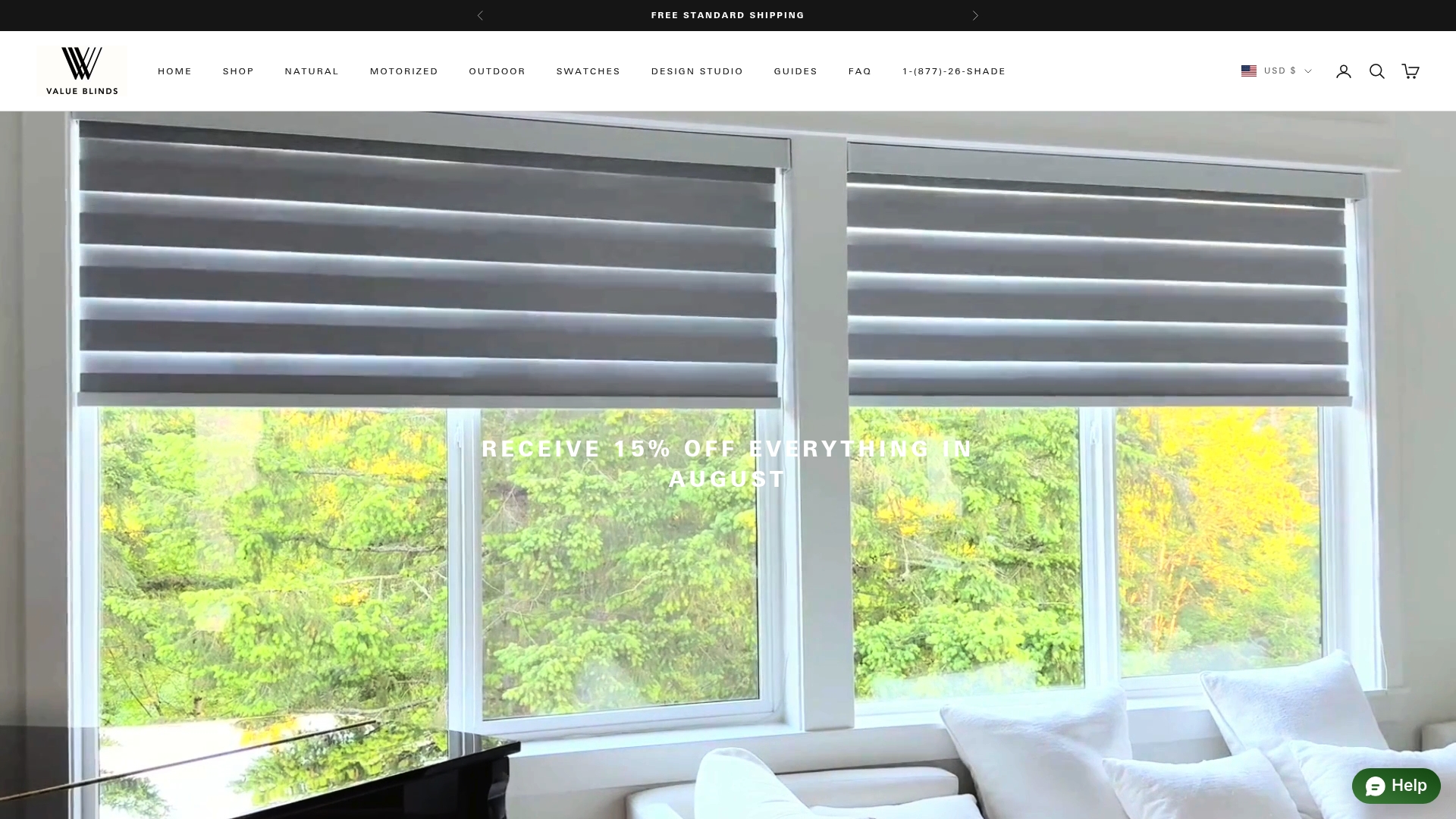
Explore Value Blinds’ extensive selection of customizable wood and faux wood options designed to fit any lifestyle and home environment. With easy ordering, free swatches, expert support, and flexible shipping, you can confidently enhance your home’s aesthetic and functionality today. Don’t wait until moisture damage or fading affects your investment. Visit Value Blinds now to measure, customize, and secure your perfect blinds for lasting beauty and performance.
Frequently Asked Questions
What are the key differences between wood and faux wood blinds?
Wood blinds are made from real hardwood, offering natural beauty and durability but requiring more maintenance. Faux wood blinds are made from engineered materials, providing a similar look with better moisture resistance and less upkeep.
Which type of blinds is better for high-humidity areas like kitchens and bathrooms?
Faux wood blinds are ideal for high-humidity areas since they resist moisture, warping, and fading. Real wood blinds may get damaged in these environments due to their susceptibility to moisture.
How long do wood and faux wood blinds typically last?
Real wood blinds can last 10-15 years with proper care, while faux wood blinds generally last 8-12 years. The lifespan can depend on the environments they are placed in and maintenance efforts.
What maintenance do wood and faux wood blinds require?
Real wood blinds require regular professional cleaning and occasional refinishing to maintain their appearance. Faux wood blinds only need occasional dusting and can often be cleaned with a simple wipe-down, making them lower maintenance overall.