
Remote Controlled Vertical Blinds: Smart Comfort
Controlling the glare from afternoon sun across your living room or office space can be a daily frustration for anyone trying to relax or be productive. Remote controlled vertical blinds put precise light and privacy control directly in your hands without the hassle of manual cords. With automatic window shading devices proven to reduce building energy consumption for heating, cooling, and lighting while enhancing comfort, these innovative blinds offer tech-savvy homeowners a smarter, more efficient way to simplify everyday comfort and optimize their home environment.
Table of Contents
- What Are Remote Controlled Vertical Blinds?
- Types, Mechanisms, and Design Variations
- Smart Features and Integration Capabilities
- Costs, Installation, and Maintenance Factors
- How They Compare to Manual and Other Blinds
Key Takeaways
| Point | Details |
|---|---|
| Convenience of Automation | Remote controlled vertical blinds offer effortless control over light and privacy without manual adjustments. |
| Energy Efficiency | These blinds can reduce energy consumption by optimizing natural light and heat gain throughout the day. |
| Smart Home Integration | They can connect with smart home systems, allowing for automated scheduling and responsive adjustments based on environmental conditions. |
| Design Versatility | Available in various materials and styles, these blinds can be tailored to suit different room functions and aesthetics. |
What Are Remote Controlled Vertical Blinds?
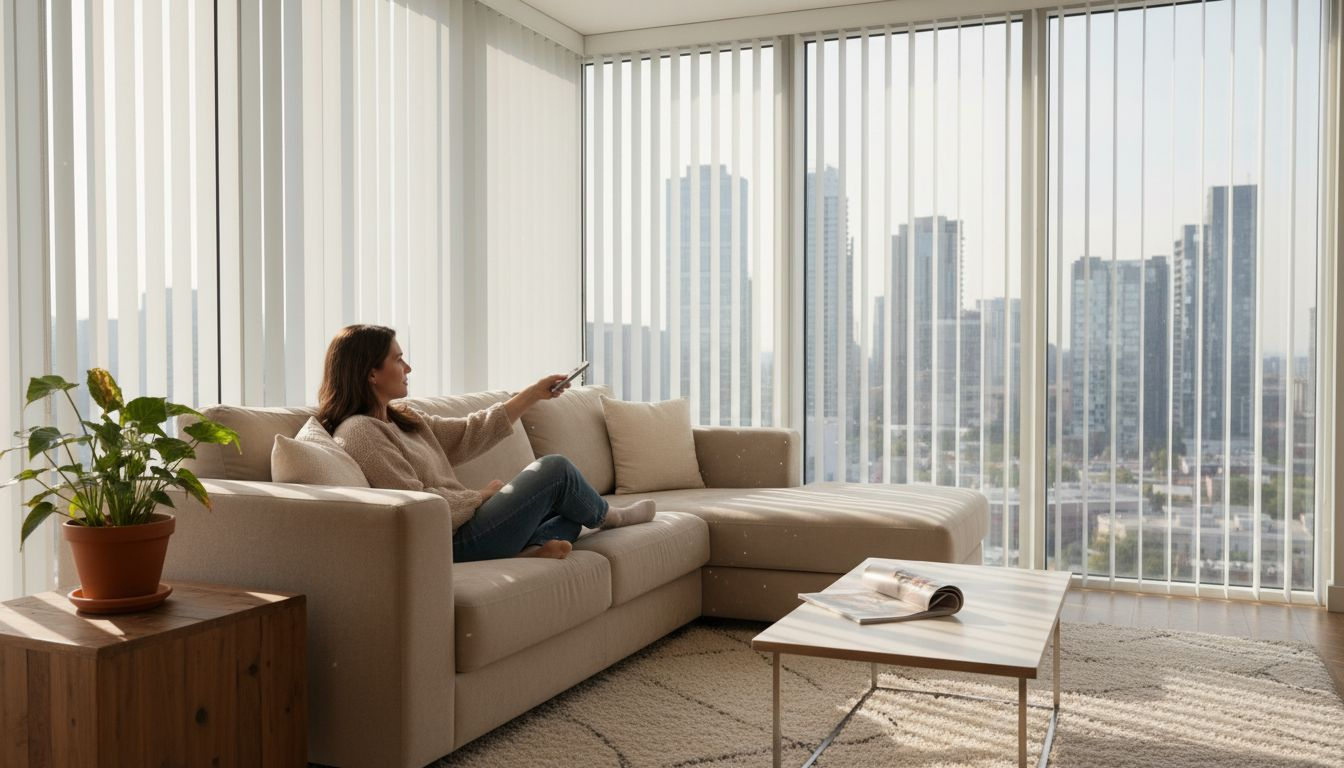
Remote controlled vertical blinds are motorized window coverings that let you adjust slats and shade position from across the room—or anywhere with the right remote. No more walking to every window manually. These blinds combine vertical slat design with electric motors and wireless control, giving you instant command over light, glare, and temperature in your home.
Unlike traditional manual vertical blinds, remote controlled versions operate through a motor system that responds to your commands. You control the vertical position (raising and lowering) and the angle of individual slats (rotating left or right). This dual control means you get precise management of natural light without touching a single cord.
How They Work
The mechanics are straightforward. A small motor sits in the headrail of your blinds. When you press the remote, it sends a wireless signal to that motor, which then adjusts either the slats’ angle or the blind’s vertical position. Modern systems can connect to your home network, allowing control from smartphone apps alongside physical remotes.
These blinds deliver measurable benefits:
- Daylight control: Admit exactly the amount of natural light you want without fully raising or lowering blinds
- Glare reduction: Rotate slats to block harsh afternoon sun that hits your screen or furniture
- Temperature management: Adjust slats seasonally to control heat gain in summer and heat retention in winter
- Precise positioning: Fine-tune coverage from multiple angles instead of “all the way up” or “all the way down”
Why They Matter for Your Home
Motorized vertical blinds controlled by remote systems allow users to easily adjust shade position for comfort and energy efficiency. The key advantage is control. Instead of choosing between full coverage or no coverage, you get infinite positions in between. This flexibility improves both visual comfort and indoor lighting quality.
Research shows that automated window shading devices can reduce building energy consumption for heating, cooling, and lighting while preventing glare and enhancing occupant comfort. That’s not marketing speak—that’s measurable energy savings combined with better living conditions.
For tech-savvy homeowners, the real advantage is integration. Your blinds become part of a larger smart home ecosystem. Schedule them to close during peak heat hours, open gradually as sunrise approaches, or respond to voice commands alongside other connected devices.
Remote controlled vertical blinds give you the precision of manual adjustments with the convenience of automation—no daily compromise required.
The installation fits standard window openings, and motorized options integrate seamlessly into existing decor. Whether you’re renovating a single room or outfitting an entire home, these blinds adapt to your space and your schedule.
Pro tip: Start with remote control on your primary windows—bedrooms and home office spaces where light control directly impacts comfort and productivity. Once you experience the convenience, expanding to other rooms becomes an obvious next step.
Types, Mechanisms, and Design Variations
Remote controlled vertical blinds come in several distinct types, each designed for different needs and aesthetics. The variation goes beyond just color—it covers control systems, materials, and how the blinds respond to your environment. Understanding these differences helps you choose what actually fits your home and lifestyle.
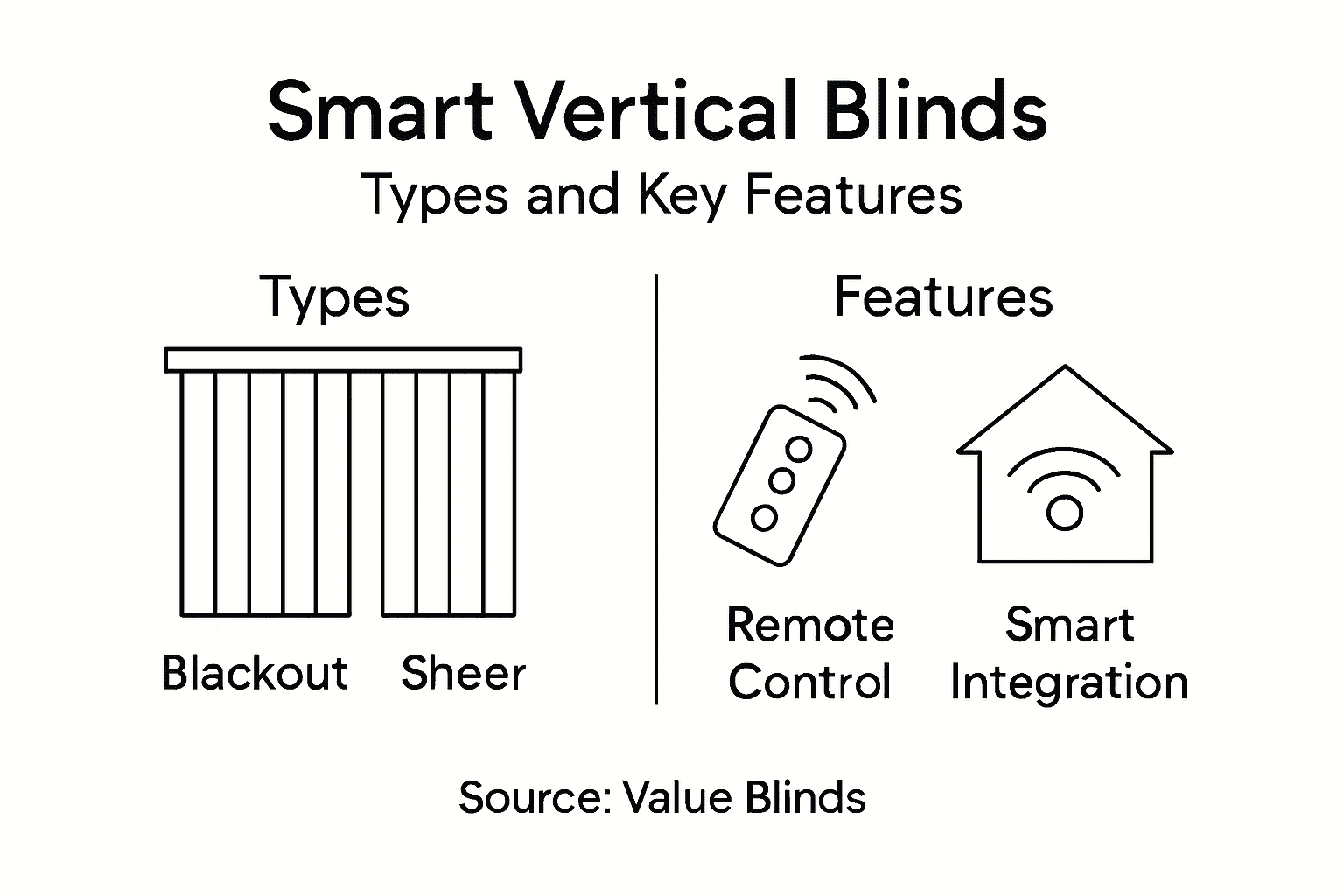
The most common distinction is between fabric types. Blackout vertical blinds block nearly all light, making them ideal for bedrooms or media rooms. Light-filtering options maintain privacy while letting diffused natural light through, perfect for living spaces and home offices. Some designs use dual-layer sheers that give you both privacy and daylight flexibility in one system.
How the Motors and Controls Work
Remote controlled vertical blinds use motorized mechanisms including motors connected to microcontrollers, UV sensors, Bluetooth modules, and sometimes solar power. The motor sits discreetly in the headrail and handles all the heavy lifting—literally. When you send a command, it knows whether to rotate slats or move the entire blind up and down.

Control methods vary significantly:
Here’s a quick breakdown of popular control options for remote controlled vertical blinds:
| Control Method | Main Benefit | Typical Setup Requirement |
|---|---|---|
| Remote control | Instant adjustments from sofa | Simple, battery-powered transmitter |
| Smartphone app | Schedule or control on phone | WiFi or Bluetooth connectivity |
| Voice command | Hands-free operation | Smart home assistant integration |
| Automated sensor | Self-adjusts for sunlight | UV sensor module, programming |
- Remote control: Traditional wireless button remotes for instant adjustment
- Smartphone apps: Control from anywhere in your home or remotely when away
- Voice commands: Integration with smart home assistants for hands-free operation
- Automated schedules: Timers that open and close based on specific times or sunlight levels
- Sensor-based adjustment: UV sensors detect intense sunlight and adjust automatically to reduce glare
Material and Design Options
Vertical blind materials engineered for durability include polyester blends, vinyl-coated fabrics, and specialty composites designed to resist fading and temperature fluctuations. Some materials are waterproof, making them suitable for kitchens or bathrooms where moisture matters.
The design variations extend to slat width (typically 2.75 or 3.5 inches), color options, and whether you want a single-layer or multi-layer construction. Multi-layer designs offer enhanced insulation and can create a more premium appearance.
The right type depends on your room’s function—light control for bedrooms, durability for kitchens, and privacy balance for living spaces.
Solar-powered options exist for homes with good southern or western exposure, eliminating the need for electrical wiring in some cases. Battery-operated systems provide flexibility for renters or temporary installations.
Pro tip: Match fabric weight and material to your room’s primary challenge—choose blackout for sleep spaces, moisture-resistant materials for bathrooms, and UV-protective fabrics for rooms with intense afternoon sun exposure.
Smart Features and Integration Capabilities
Remote controlled vertical blinds go far beyond basic raise-and-lower functionality. Modern systems pack intelligence that adapts to your environment, learns your preferences, and connects seamlessly with your existing smart home devices. This is where convenience meets technology.
The core appeal is automation tied to real-world conditions. Your blinds can sense when sunlight becomes intense and automatically adjust to reduce glare before it hits your workspace. Schedule them to open gradually at sunrise or close during peak afternoon heat. These aren’t rigid timers—they’re responsive systems that work with your home’s unique light patterns throughout the day.
How Smart Integration Works
Integrating IoT technologies into vertical blinds enables remote and automatic control based on environmental conditions like UV light intensity. Your blinds communicate through Bluetooth and wireless modules, connecting to smartphone apps and smart home ecosystems. Microcontrollers manage the logic—deciding when to adjust based on sensor input and user preferences.
This connectivity creates several practical advantages:
- Smartphone control: Adjust blinds from bed, the office, or while traveling
- Voice integration: Command your blinds alongside Alexa, Google Home, or Apple Siri
- Scheduled automation: Set different configurations for morning, afternoon, evening, and night
- Sensor-based response: UV sensors trigger adjustments without you lifting a finger
- Multi-room coordination: Sync blinds across your home for consistent lighting or privacy
Energy Management Through Smart Blinds
One of the most underrated benefits is energy savings. Automated blinds reduce cooling costs by blocking heat during summer afternoons. In winter, they can open fully during the day to maximize passive solar gain, then close at night to retain warmth. Your system tracks these patterns and optimizes timing based on seasonal changes.
The data tells the story. Smart blinds reduce HVAC strain significantly when timed correctly. You’re not just adjusting light—you’re controlling temperature swings that your climate system otherwise has to fight.
Smart blinds don’t just make your home more comfortable—they make it more efficient by automating decisions you’d otherwise make manually.
Override capability matters too. Automated schedules can be interrupted with a single remote button or app tap, so you maintain full control even as the system handles routine adjustments.
Pro tip: Start by automating your bedroom (closing 30 minutes before sleep) and home office (adjusting mid-morning when sun angles shift). Once these routines prove themselves, expand to living areas where you’ll see measurable energy savings.
Costs, Installation, and Maintenance Factors
Price is often the first question, and the honest answer is that remote controlled vertical blinds span a wide range. You can find affordable retrofit kits that add motorization to existing blinds, or invest in premium custom systems built from scratch. The variation depends on customization level, motor type, and whether you want advanced smart features like scheduling or sensor integration.
Basic motorized vertical blinds start around budget-friendly territory, while fully customized smart systems with integrated home automation can run significantly higher. Battery-operated models typically cost less to install since they skip the wiring complexity that hardwired systems require. Consider your priorities—do you want multiple rooms automated, or are you starting with one or two key windows?
Installation: Simpler Than You Might Think
Smart motorized vertical blinds typically feature straightforward installation with mounting hardware provided, though wiring requirements vary by model. Battery-operated versions reduce installation complexity significantly, making them ideal if you want to avoid electrical work. Standard mounting takes a few hours—it’s the kind of project many homeowners tackle themselves, though professional installation is always available.
Installation considerations include:
- Mounting location: Confirm your window frame can support the weight and motor system
- Power source: Decide between hardwired (cleaner look, permanent power) or battery-operated (flexible placement)
- Smart hub requirements: Some systems need a central hub; others operate standalone via remote
- App connectivity: Verify your WiFi reaches all blind locations if remote app control matters
Maintenance: Keep It Simple
Once installed, maintenance is minimal compared to the convenience gained. Fabric care follows standard blind cleaning—vacuuming with a brush attachment or light dusting depending on material type. Avoid harsh chemicals that could damage motorized components.
Motor health checks happen infrequently. Monitor battery recharge cycles if your system is battery-operated, and test the motor function quarterly by running a full cycle. Most motors last years without intervention when treated properly.
Long-term reliability comes down to fabric care and occasional motor testing—nothing complicated, just basic attention.
If issues arise, most manufacturers provide warranty coverage for motor defects. Keep your documentation and warranty information accessible.
Pro tip: If you’re renting or uncertain about permanent installation, choose battery-operated models with temporary mounting brackets—you get full smart functionality without landlord concerns, and you can take them when you move.
How They Compare to Manual and Other Blinds
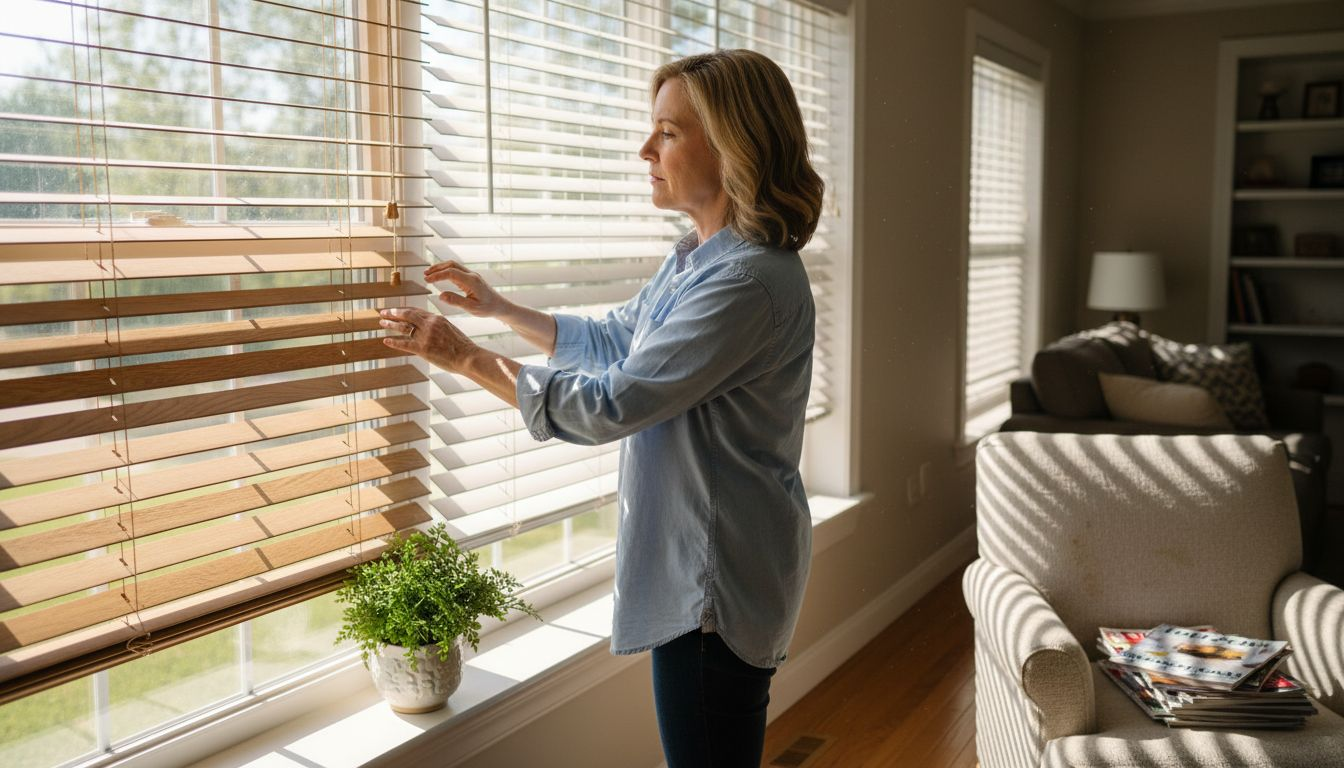
Manual vertical blinds require physical effort every time you want to adjust light or temperature. You walk to the window, grab the cord or wand, and make adjustments. It works, but it’s repetitive, and most people don’t adjust them as often as they should. Remote controlled vertical blinds eliminate this friction entirely.
The real difference shows up in consistency and precision. Motorized blinds provide enhanced user control, enabling occupants to override automatic settings or switch between manual and automatic modes. This flexibility results in higher occupant satisfaction, better glare control, and improved energy efficiency compared to fixed or manually adjusted alternatives.
Performance Advantages
Remote controlled blinds outperform manual ones in measurable ways. They adapt continuously throughout the day without requiring you to remember adjustments. Studies show that automated control enables precise adjustment that improves occupant comfort and reduces the need for manual intervention. This precision translates directly to better glare prevention and daylight optimization.
Key performance differences include:
- Consistency: Automated adjustments happen reliably every day without human intervention
- Precision: Fine-tune angles to exact positions, not just fully open or closed
- Responsiveness: Sensors detect changing light conditions faster than you notice them
- Energy savings: Continuous optimization reduces HVAC strain throughout the day
- Convenience factor: No walking to windows or coordinating multiple manual adjustments
Comparison to Other Motorized Options
Motorized roller shades and cellular shades offer automation, but vertical blinds provide distinct advantages. Vertical slat design allows simultaneous control of direction and coverage—you can block harsh side light while admitting forward-facing daylight. This level of directional control doesn’t exist with roller or cellular designs.
Vertical blinds also handle wide window openings more effectively. A 12-foot expanse with vertical blinds uses a single motor system, whereas cellular shades would require multiple units or custom engineering.
See how remote vertical blinds compare to other smart window coverings:
| Feature | Vertical Blinds | Roller Shades | Cellular Shades |
|---|---|---|---|
| Directional light control | Excellent, multi-angle | Limited to up/down | Minimal, up/down only |
| Wide opening coverage | Single motor possible | Multiple units needed | Custom solutions often |
| Insulation performance | Moderate | Low | High |
| Aesthetic flexibility | Many slat colors/sizes | Sleek, minimal look | Soft, layered look |
Remote controlled vertical blinds deliver the automation of motorized systems with the superior light control that only vertical slats provide.
Rollers are cleaner aesthetically and easier to maintain. Cellular shades offer better insulation. But for tech-savvy homeowners prioritizing directional light control and energy optimization, remote controlled vertical blinds occupy a unique performance tier.
Pro tip: If you currently have manual vertical blinds you like, consider retrofit motorization kits before replacing everything—you keep the blinds you know while gaining all the automation benefits of a remote controlled system.
Experience Ultimate Convenience with Remote Controlled Vertical Blinds
Controlling your home’s natural light and privacy should never feel like a chore. If you find yourself struggling with manual adjustments or uneven sunlight that disrupts your comfort and energy use, remote controlled vertical blinds offer a smart, effortless solution. With precision slat rotation and automated positioning, you control your environment exactly how you want—without leaving your seat.
Elevate your home with customizable motorized blinds from Value Blinds that combine style, durability, and energy efficiency. Explore our broad collection of high-quality blinds that includes cordless and easy-to-install options designed for modern living. Don’t wait—transform your space today with our expert guides and personalized service at Value Blinds. Start your journey toward smart comfort now.
Frequently Asked Questions
What are remote controlled vertical blinds?
Remote controlled vertical blinds are motorized window coverings that allow you to adjust the slats and shade position from a distance, providing convenience and precise control over natural light and temperature in your home.
How do remote controlled vertical blinds work?
These blinds are equipped with a motor in the headrail that responds to commands from a remote or smartphone app. When you press a button, the motor adjusts either the angle of the slats or the vertical position of the blinds.
What are the benefits of using remote controlled vertical blinds?
They provide precise control over light and glare, improved energy efficiency by managing heat gain and loss, and the convenience of operating them from anywhere in your home, without manual adjustments.
How do remote controlled vertical blinds compare to manual blinds?
Remote controlled vertical blinds offer enhanced precision and consistency in light control, responding automatically to environmental changes. In contrast, manual blinds require physical effort for adjustments and do not provide the same level of control and automation.