
What Does Cordless Lift System Mean? A Plain-English Guide
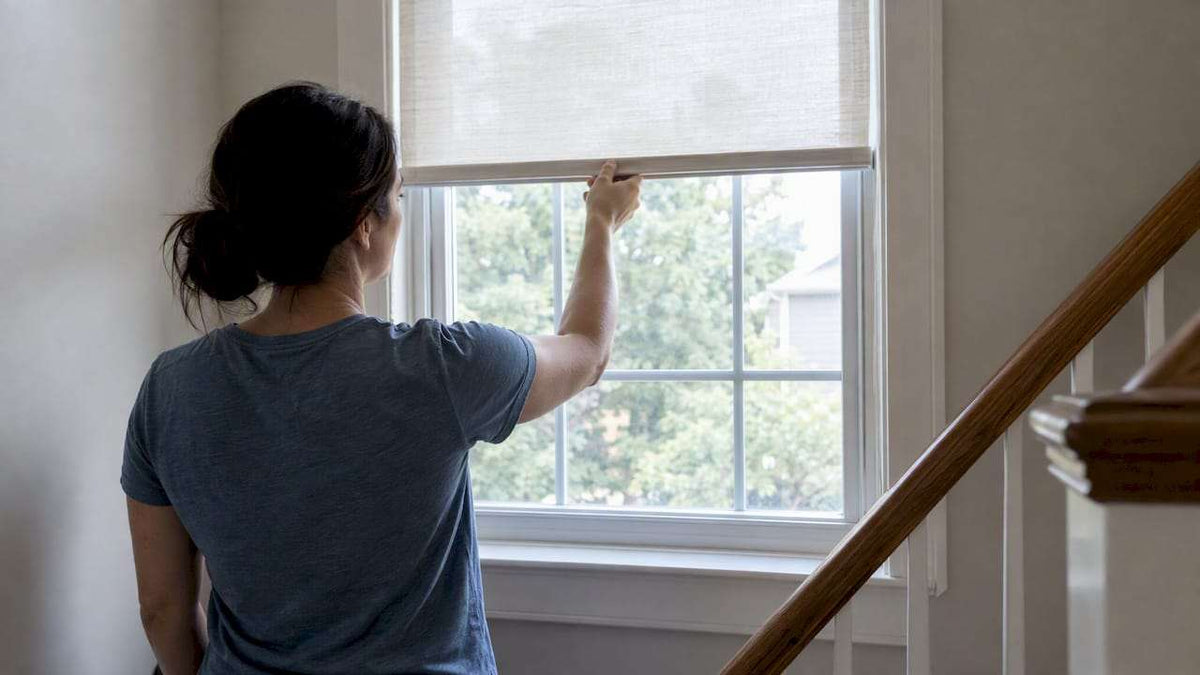
A cordless lift system is the mechanism that raises and lowers a blind or shade with no pull cord, chain or loop hanging within reach. You push or pull the bottom rail (or tap a button) and the shade moves, then stays exactly where you leave it. Inside the headrail, a hidden spring or a small motor does the work that a dangling string used to do. 🎉
That’s the whole idea. The rest of this guide covers how it works, why it matters for kids and pets, where it falls short, and how to pick the right version for each window in your home.
TL;DR
- Cordless lift system = a lifting mechanism with no exposed operating cords. You move the shade by hand on the bottom rail, or by remote or app if it is motorized.
- How it works: a spring-assisted tension mechanism hidden in the headrail balances the weight of the shade, so it holds at any height without a locking cord.
- Why it matters: the U.S. Consumer Product Safety Commission says the safest choice when young children are around is to go cordless.
- Limits: manual cordless is best for windows you can easily reach. Tall, wide or hard-to-reach windows are better served by motorization.
- Look for: the Best for Kids™ label, which signals independent testing for cord safety.
Table of Contents
- What a cordless lift system actually is
- How a cordless lift works, step by step
- Why cordless matters: the safety story
- Look for the Best for Kids™ label
- The benefits of a cordless lift (beyond safety)
- Where cordless falls short
- Which lift is right for each room?
- Our take on cordless lift systems
- Ready to go cordless? Start here
- Cordless lift systems by shade type
- A quick buying checklist
- FAQ
- Sources
What a cordless lift system actually is
Traditional blinds have cords. One cord (or a pair) runs down the side of the window to raise the blind, and another may tilt the slats. Those cords end in loops, tassels or tangles, and that is exactly where the trouble starts.
A cordless lift system removes all of that from the part of the product you can touch. The lifting hardware lives inside the headrail (the top box of the blind or shade). From the room you see a clean bottom rail and nothing else.
You will hear a few different phrases for the same thing:
- cordless lift
- cordless operation
- cordless window treatments
- spring-assisted lift
- “no-cord” or “cord-free” blinds
They all point to the same promise: no accessible cords to operate the product. The term describes how the shade moves, not what the shade is made of. Roller shades, cellular shades, Roman shades, wood blinds and faux wood blinds can all come with a cordless lift.
How a cordless lift works, step by step
The most common type is the manual, spring-assisted system. Here is what happens when you use it.
- You grab the bottom rail. On many shades there is a small handle, tab or the rail itself.
- You pull down or push up. The fabric or slats move along the window with very little effort.
- You let go. Internal tension and friction hold the weight of the shade at that height.
The tension is the clever part. According to the CPSC’s window covering guidance and manufacturer descriptions of in-headrail cores, a spiral spring balances the weight of the shade, and friction keeps it parked. Because the spring offsets the weight, the shade does not need a locking cord to stay put. A spring-loaded roller shade works in a similar spirit: the tube winds the fabric back up when you give it a light tug.
If you have ever wondered why one cordless shade glides and another feels stiff, it usually comes down to the weight of the shade, the width, and how well the spring was matched to it. Custom shades are built to the size you order, so the mechanism is matched to that specific shade.
Manual cordless vs. motorized cordless
There are two big flavors, and they are both cordless:
| Manual cordless | Motorized | |
|---|---|---|
| How you operate it | Push or pull the bottom rail | Remote, wall switch, app or schedule |
| Power | None (spring tension) | Rechargeable battery, plug-in or hardwired |
| Best for | Windows you can reach easily | High, wide or awkward windows |
| Hands-free? | No | Yes |
| Typical budget | Generally the more budget-friendly option | Generally a step up in cost |
| Child safety | No accessible cords | No accessible cords |
The short version: motorized is cordless too, but cordless is not always motorized. Both remove the dangling-cord hazard. The difference is whether you have to physically reach the shade.
Why cordless matters: the safety story
This is the big reason cordless went from a nice-to-have to the default.
The CPSC lists corded window coverings among the top hidden hazards in the home. Children have strangled on the cords of blinds and shades, and the agency notes it can happen in moments, even with an adult nearby. The agency’s advice is simple: when young kids are present, the safest option is to go cordless.
Pets are part of the picture too. Cats love to bat at dangling things, and dogs can get tangled. A cordless lift removes the temptation and the loop in one move. If you want more on this, we cover it in our guides on child and pet protection with cordless blinds and a parent’s guide to cordless window treatments.
The rules changed, so cordless is now the norm
If you are shopping and wondering why corded options seem to have vanished, that is no accident. The industry’s safety standard, ANSI/WCMA A100.1, has been tightened over the years. A 2018 update meant the vast majority of window coverings sold in the U.S. had to be cordless or have inaccessible or short cords. A revised version took effect on June 1, 2024, pushing more products in that direction.
So cordless isn’t a passing trend. It’s the new standard way to build a window covering. 👍
Already have old blinds? Check them
Here’s the part people skip. Cordless products on the shelf today don’t help if the corded blinds from years ago are still hanging in the nursery. The CPSC advises replacing older window coverings with accessible cords, and notes that retrofit kits exist but are a secondary measure compared with replacing the product. If your blinds predate the safety changes and have loose cords, putting them on your to-do list is worth it.
Look for the Best for Kids™ label
Not every “cordless” claim is the same, so a label helps. The Window Covering Safety Council runs the Best for Kids™ certification, which lets shoppers identify cordless options at a glance. Products must meet specific criteria before they can carry it, and it is the quickest check for parents, grandparents, landlords and property managers.
A few practical tips when you shop:
- Check the label or product listing for Best for Kids™ rather than trusting the word “cordless” alone.
- Ask about cords you can’t see. Some designs have inner cords that are inaccessible, which is different from having no cords at all. A truly cordless lift is the cleanest answer if kids are around.
- Mind other hazards. Keep cribs, beds and play furniture away from windows, no matter what kind of covering you have.
If you are setting up a nursery, a calm sleep space matters beyond the window. This safe sleep guide for babies is an Australian resource, so check local guidance for the U.S. before following any specifics.
The benefits of a cordless lift (beyond safety)
Safety is the headline, but people stay happy with cordless for everyday reasons:
- A cleaner look. No strings swinging at the edge of the window. Shades line up neatly and the whole room looks calmer.
- Easier cleaning. No cords to gather dust or tangle around the rail.
- Simple operation. There’s no pulley to figure out. If you can push a drawer, you can use it.
- Better for tight spaces. Behind a sofa, beside a desk or over a kitchen sink, there are no cords to snag.
- Flexible positioning. Many cordless designs stop at any height, so you can leave a roller shade halfway to cut glare while keeping the view.
- Design options. Many cordless styles offer top-down/bottom-up setups, which let you lower the top for light and privacy at once.
Not sure which style fits? Our cordless blinds collection is a good place to browse.
Where cordless falls short
We like cordless a lot, but we would not tell you it’s perfect everywhere. 😊 Being honest here saves you a return later.
Very tall or very wide windows. Reaching the bottom rail of a shade on a two-story window or a big patio opening is awkward. A shade that wide can also be heavy, which makes a manual pull less pleasant.
Hard-to-reach spots. Windows above a tub, over a deep kitchen counter or behind furniture mean stretching. In those cases, motorized options or continuous-loop systems with tensioners can be more functional, as industry guidance notes.
Frequent use. If a shade moves several times a day, a remote or schedule beats tugging on a rail.
Fingerprints. You touch the bottom rail, so on light fabrics a handle or tab can help you keep the fabric clean.
A learning curve. A good cordless shade needs a gentle, even pull. Yanking one side can make it skew. Pull from the center.

For a deeper side-by-side, see our cordless vs. corded blinds comparison.
Which lift is right for each room?
Think about who uses the window, how often and how high it sits. Here’s a quick guide.
| Room or window | Suggested lift | Why |
|---|---|---|
| Nursery or kids’ room | Cordless or motorized, Best for Kids™ | Removes accessible cords |
| Bedroom | Manual cordless, or motorized for blackout | Easy reach, quiet use |
| Living room, standard windows | Manual cordless | Simple and budget-friendly |
| Living room, big picture windows | Motorized | Weight and width |
| Kitchen | Cordless faux wood or roller shades | No cords near the sink or stove |
| Stairwell or high transom | Motorized | Out of reach |
| Home office | Motorized with a schedule | Glare control without getting up |
| Rental unit | Manual cordless | Low-maintenance, safer for tenants |
If you are trying to decide between the two main cordless routes, our cordless window shades guide walks through the types in more detail.
Our take on cordless lift systems
We talk to homeowners, decorators, property managers and parents every week, and the same question keeps coming up: “Is cordless worth it?” Our honest answer is yes, and not just for families with little ones.
Here’s how we think about it at Value Blinds:
- Cordless is the baseline, not the upgrade. With the industry now built around cordless and inaccessible-cord designs, we’d start every conversation there.
- Match the lift to the window, not the trend. A manual cordless roller shade on a reachable bedroom window is a great, simple answer. A motorized shade on a tall living room window is a better one. Buying motors for every window is overkill, and forcing manual pulls on a huge window is frustrating.
- Safety isn’t a feature to trade away. Whatever you choose, make sure the cord hazard is actually gone, and look for the Best for Kids™ certification when kids or pets share the space.
- Measure carefully. A spring lift works best when the shade is made to the exact size of the window. That is why we offer measuring guides and a professional measuring and installation service for people who would rather not do it themselves.
- Try before you commit. Fabric looks different at home than on a screen, so order free swatches and hold them against your window in morning and evening light.
Cordless should make your life easier, and if it feels like a chore, something is off. Tell us about the window and we’ll help you find the right fit.
— Sunny
Ready to go cordless? Start here
We make custom window treatments, including roller shades, zebra shades, cellular shades, Roman shades, natural woven shades, wood and faux wood blinds, and motorized options. Not sure where to start? Use our Window Treatment Design Studio to play with styles, or browse the cordless blinds collection and the full blinds range. If you want hands-free control for an extra-large or hard-to-reach window, take a look at our motorized natural woven shades. For prices, check each product page, since they depend on size and options.
Cordless lift systems by shade type
The idea is the same across products, but the feel differs.
Roller shades
Roller shades often use a spring-loaded tube. You pull the bottom rail down, and a light tug lets the shade roll back up. They are simple, clean and work well with blackout or light-filtering fabric. Our guide to cordless roller shades covers the details.
Cellular (honeycomb) shades
Cordless cellular shades move by pushing or pulling the bottom rail. Many can also be set top-down/bottom-up, so you can let light in at the top while keeping privacy at eye level. Cordless is especially common here because the cells are lightweight and glide easily.
Wood and faux wood blinds
Cordless horizontal blinds lift by the bottom rail, and the slats usually tilt with a wand. That is great for kitchens and bathrooms, where faux wood handles humidity well. You can browse solid wood blinds for a warmer, natural look.
Roman shades
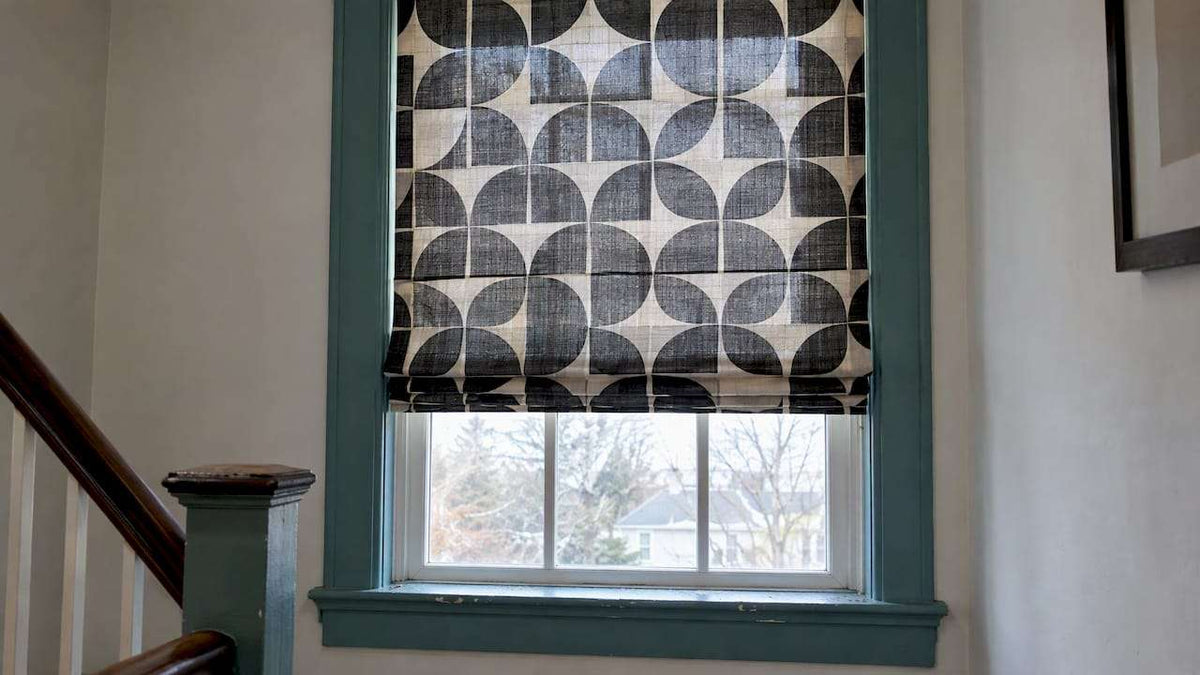
Roman shades fold into soft pleats. Cordless versions keep the fabric looking tidy because there are no cord lines running through the folds, which is a plus for a decorator’s eye.
Vertical blinds
Vertical blinds don’t lift, they slide and rotate, usually on a wand. That means no hanging cords to worry about on sliding doors. See our vertical blinds for patio openings.
A quick buying checklist
Before you order, run through these questions:
- How high is the window? If you can’t reach the bottom rail comfortably, think motorized.
- Who lives here? Kids, pets or tenants point toward Best for Kids™ certified options.
- How often will it move? Daily moves favor a remote or app.
- How wide is it? Wide, heavy shades are easier with a motor.
- Do you have power nearby? Motorized shades can run on batteries, plug-in or hardwired setups, so ask what suits your wall.
- Do you need blackout, waterproof or energy-efficient fabric? The lift system and the fabric are chosen separately.
- Will you measure yourself? A precise measurement matters. Consider professional help if the window is unusual.
FAQ
Is a cordless lift system the same as motorized?
No. Cordless means there are no accessible operating cords. Manual cordless shades are moved by hand, while motorized shades are also cordless but use a motor and a remote, app or schedule. Both avoid dangling cords.
Are cordless blinds really safer for children and pets?
Yes. The CPSC says the safest option when young children are present is cordless, because there are no cords to wrap around a neck or paws. For extra confidence, look for the Best for Kids™ label, and keep furniture such as cribs away from windows.
How does a cordless blind stay up without a cord?
A hidden spring-assisted mechanism in the headrail balances the weight of the shade, and internal friction holds it in place. You don’t need a lock. Just let go of the bottom rail at the height you want.
Can I convert my old corded blinds to cordless?
Retrofit kits exist, but the CPSC treats them as a secondary measure, and says replacing older products with accessible cords is more effective. If your blinds are old and corded, replacing them is the better route.
Do cordless shades work on large windows?
They can, but very tall, wide or heavy shades are harder to operate by hand. For those windows, motorized shades are usually the more practical choice.
Sources
- CPSC: Window Covering Cords
- CPSC: Are Your Window Coverings Safe? (safety alert)
- Window Covering Safety Council: Best for Kids™
- Window Covering Safety Council: 2018 safety standard takes effect
- Window Covering Safety Council: revised safety standard, June 2024