Article: Natural Bamboo Aesthetics Explained: Look, Light and Care
Natural Bamboo Aesthetics Explained: Look, Light and Care
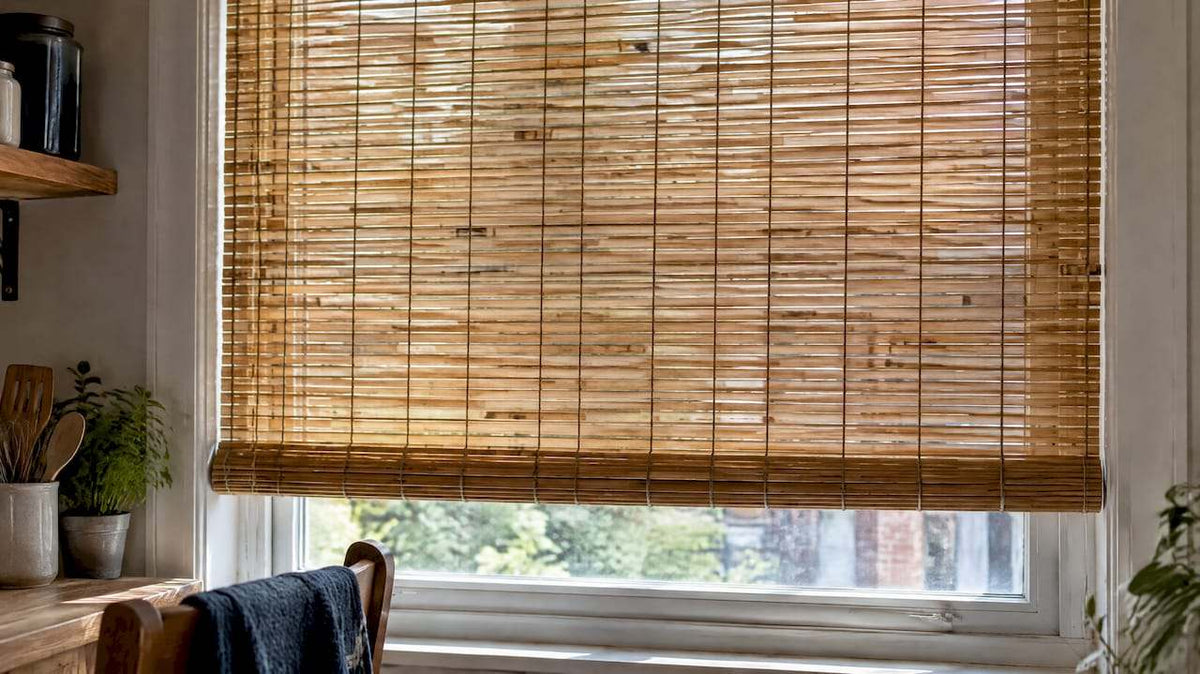
Natural bamboo looks the way it does because of three things: a warm, grassy color that ranges from pale blonde to caramel, a visible texture of nodes and grain, and a soft, filtered glow instead of a hard shadow. Once you know how those three work, it’s much easier to choose a bamboo window treatment you’ll still love in year five. 🌿
Below we explain what “natural” really means, why small variations are a feature and not a flaw, how color and weave change the mood of a room, and how to keep the look fresh.
TL;DR
- Bamboo’s charm comes from visible nodes, subtle color shifts and a warm, diffused light. Those variations are inherent to the material, not defects.
- “Natural” bamboo is raw and blonde. “Carbonized” bamboo is heat-treated to a caramel-brown tone, and it hides fading better in sunny rooms.
- Weave matters: tighter weaves filter roughly 60-70% of light, while matchstick styles filter about 40-50%.
- Bamboo blinds are not the same as “bamboo” fabrics. The FTC calls soft bamboo textiles rayon, and the chemistry is very different.
- Want the full look with less guesswork? Browse our natural bamboo blinds and order free swatches first.
Table of Contents
- What “natural bamboo aesthetics” actually means
- Why the “imperfections” are the point
- Natural vs. carbonized: it’s a color story, and a treatment story
- Weave and slat style: how the shade “reads” from across the room
- Light: the glow is half the aesthetic
- Bamboo blinds vs. “bamboo” fabric: don’t mix them up
- Making bamboo age gracefully
- How to style natural bamboo
- Our take on natural bamboo
- Ready to bring the look home?
- Common misconceptions about bamboo blinds
- FAQ
- Sources
What “natural bamboo aesthetics” actually means
Bamboo is a grass, not a tree. It grows fast and is harvested in roughly 5 to 7 years, compared with decades for trees, which is part of why it feels so right in a modern, low-impact home. But the aesthetic is about more than sustainability. It’s a mix of:
- Texture. You can see and sometimes feel the grain, the fine lines and the little ridges where the stalk was divided.
- Warmth. Bamboo’s tones sit in the yellow-to-brown family, so even a pale shade feels warmer than white polyester.
- Organic irregularity. No two slats or reeds are identical.
- Soft light. Light passes between and through the weave and lands in a gentle pattern on the wall.
Think of it as the opposite of a flat, uniform fabric shade. A roller shade is clean and quiet. A bamboo shade has a point of view.
Why the “imperfections” are the point
Architects often describe bamboo’s appeal as tectonic: the way its structure, including nodes and natural variation, reads as honest and calming. One manufacturer’s product notes make the practical version of this point: slight differences in color or width are inherent characteristics of an organic material, not flaws.
So if you receive a bamboo shade and one slat is a shade lighter than its neighbor, or a node sits slightly off the line, that’s the material doing what it does. If you want everything to look identical, a solid-color fabric shade is the better call. If you want that handmade, high-end feel, variation is exactly what you’re paying for.
💡 Tip: Order a swatch and hold it up in the actual room, at the time of day you use it most. Bamboo changes character between morning and late afternoon light more than most materials.

Natural vs. carbonized: it’s a color story, and a treatment story
This is the question people ask most. The difference is the treatment, not just the shade of brown.
| Natural bamboo | Carbonized bamboo | |
|---|---|---|
| Color | Raw, pale, blonde | Deeper, caramel-brown |
| How it’s made | Raw material, dried and finished | Heat-treated for color |
| Mood | Airy, Scandinavian, coastal | Cozy, earthy, warm |
| In direct sun | Can lighten over time | Masks fading better |
| Best for | Bright, neutral rooms with soft light | Sunny rooms, dens, bedrooms |
Both are durable. The practical difference shows up on a south- or west-facing window. Untreated blonde bamboo tends to bleach lighter with UV exposure, while carbonized bamboo keeps its look more steadily. If you love the blonde tone, look for a UV-resistant finish. According to the same source, specialized coatings can extend color stability by around 40% compared to untreated alternatives.
Which color fits which room?
- Pale natural: Brightens a small room, pairs with white walls, light oak and linen. Great for living rooms and home offices.
- Honey and amber tones: The crowd-pleaser. Works with most wood floors and warm paint colors.
- Deep caramel or brown: Adds contrast against light walls, and suits bedrooms where you want a moodier feel.
Weave and slat style: how the shade “reads” from across the room
Color gets the attention, but weave decides the whole personality.
- Fine, tight weave: Looks tailored and calm. Filters more light, roughly 60-70%, and gives more privacy.
- Matchstick style: Thin round sticks, a casual, beachy look. Filters less, about 40-50%, so you get a brighter room and less privacy in the daytime.
- Woven with varied reeds and grasses: The most textural, with a layered, organic look.
- Uniform slats: A more structured, modern or architectural feel.
The same source also notes that construction is the best predictor of lifespan. Well-made woven bamboo shades can last 8 to 12 years indoors in climate-controlled spaces, while lower-quality matchstick construction averages 3 to 6 years. Those are one publisher’s figures, so treat them as a guide, but the lesson holds: a beautiful shade you replace every three years isn’t a bargain.
Light: the glow is half the aesthetic
Bamboo doesn’t black out a room. It diffuses it. Sunlight comes through as a warm, textured wash and a slatted shadow pattern, which is why bamboo rooms feel calm in the daytime.
That has trade-offs worth knowing:
- Privacy. In daylight, a tight weave gives good privacy. At night with lights on indoors, anyone outside may see silhouettes. A liner or layered treatment helps.
- Sleep. If you need a dark bedroom, bamboo alone won’t do it. Pair it with a liner or layer it with a blackout shade.
- Heat and glare. Filtering light also cuts glare and some heat. For more on that, see our guide to energy savings with bamboo privacy blinds and privacy and light filtering performance.
If you want the bamboo look and tighter control, mix and match: bamboo in the living room and dining room, a blackout-capable shade in the bedroom.
Bamboo blinds vs. “bamboo” fabric: don’t mix them up
This is where “natural” gets slippery. 🙃 Bamboo blinds are made from the dried, finished plant. Soft “bamboo” sheets, towels and clothing are a different thing entirely.
The Federal Trade Commission has taken action against national retailers for labeling rayon products as bamboo. Turning bamboo into a soft fiber means dissolving it chemically, so the result is rayon, even if the tag leans on the word bamboo. And the “green” story is more complicated than it sounds: a 2024 study in Environmental Science & Technology on biobased microfibers and earthworms questions whether such fibers are automatically gentler than conventional plastic microfibers.
What does that mean for your windows? A bamboo blind keeps the plant’s natural structure, with no fiber-dissolving step. Still, “natural” is not a magic word. Ask for product-specific details (material, finish, construction) instead of trusting a generic eco label. Our green home window treatments guide walks through what to look for.

Making bamboo age gracefully
Bamboo does change over time, and that’s part of the charm. You can steer it, though.
- Plan for the sun. In a strongly lit room, choose carbonized tones or a UV-protective finish. Our own maintenance and durability notes cover day-to-day care.
- Keep it dry. Moisture-prone spots like bathrooms and covered porches need extra care. Per the research we reviewed, outdoor use calls for moisture-treated material to prevent warping and mold.
- Dust gently. A soft brush or microfiber cloth along the weave is usually enough.
- Expect gradual lightening. If you want a dramatically consistent color for a decade, choose a darker tone.
If your windows get strong sun, it also helps to understand how frames and glazing shape fading and heat. This Dutch-language guide to choosing window coverings for large window sections covers durability and appearance in high-sun areas, and the principles carry over.
How to style natural bamboo
Bamboo is a team player. A few combos that work:
- Bamboo + white walls + black metal accents: Modern organic.
- Bamboo + linen drapes: Soft, layered, hotel-calm. Hang the drapes outside the shade for a fuller frame.
- Bamboo + rattan and jute: Cohesive, a little coastal. Add a smooth material (glass, ceramic) so the room doesn’t turn into a basket shop.
- Dark carbonized bamboo + deep green or navy: Rich and moody.
One rule: let one material lead. If your floor, ceiling beams and furniture are all warm wood, a paler bamboo can add contrast. If the room is cool and gray, honey tones add warmth.
Our take on natural bamboo
We talk to a lot of homeowners and decorators choosing between bamboo, wood and fabric. A few things we keep coming back to:
- Start with the room, not the product. Sun exposure, privacy needs and the feeling you want drive the decision more than any spec sheet.
- Embrace variation. The people happiest with bamboo are the ones who see its irregularity as character.
- Use free swatches. Color on a screen is unreliable. Seeing the real material in your own light settles most debates.
- Layer when you need to. Bamboo for beauty, a second layer for blackout or extra privacy. Together they beat either alone.
- Match the treatment to the window. Warm, sunny rooms and cozy bedrooms often love carbonized tones. Bright, quiet rooms often suit pale natural ones.
Our Window Treatment Design Studio is a good place to experiment before you commit.
— Sunny
Ready to bring the look home?
We offer natural bamboo blinds alongside natural woven shades, solid wood blinds and more, all custom-made for your windows. Start with the natural bamboo blinds collection, request free swatches to check color in your light, and use our measurement guides to get the fit right. If you’d rather not measure yourself, we also offer professional measuring and installation. Prefer a motorized option? Our natural woven shades with motorization pair the organic look with push-button convenience. ✨
Still comparing materials? Our solid wood blinds offer a similar natural warmth with a more uniform grain.
Common misconceptions about bamboo blinds
“Bamboo is always eco-friendly.” The plant is fast-growing and renewable, but the product matters: construction, finishing and where you use it all count. We cover this in our sustainability section and misconceptions guide.
“Bamboo looks the same as wood.” Wood has a continuous grain. Bamboo has nodes, fibers and a grassier feel.
“All bamboo is brown.” It runs from creamy blonde through honey to deep caramel, depending on the treatment.
“It’s only for tropical or boho rooms.” In a tight weave and a neutral tone, it fits a quiet modern or farmhouse home just as well.
FAQ
What is the difference between natural and carbonized bamboo?
Natural bamboo is raw and blonde. Carbonized bamboo is heat-treated to a deeper caramel-brown color. In strong sun, raw bamboo can lighten over time, while carbonized bamboo hides fading better.
Do bamboo blinds block light?
They filter it rather than block it. Tight weaves filter roughly 60-70% of light and matchstick styles about 40-50%, according to one bamboo shade guide. For true darkness, add a liner or layer a blackout shade behind.
What is the downside of bamboo fabric?
Soft bamboo fabric is typically rayon, made through a chemical-heavy process, and the FTC has penalized retailers for misleading bamboo claims. Bamboo blinds are a different product, made from the dried plant itself.
Are color variations in bamboo blinds normal?
Yes. Differences in shade and slat width are part of an organic material and often what gives bamboo its high-end, handmade look. If you want perfect uniformity, a fabric shade is a better fit.
Can I use bamboo blinds outdoors?
Only with moisture-treated material, since untreated bamboo can warp or grow mold outside. For covered porches and decks, also consider our motorized retractable awnings.
Sources
- Bamboo Window Shades: Types, Costs & Durability Data
- FTC: penalty action over bogus bamboo marketing (Kohl’s and Walmart)
- Are Biobased Microfibers Less Harmful than Conventional Plastic Microfibers? (ACS Publications)
- Bamboo roll up blinds for indoor and outdoor use (Naturtrend)