
Four Light Control Labels Help Blind Buyers Choose by Room
For buyers of blinds and shades, light control is the degree and timing of daylight your covering allows into a room, ranging from a sheer glow to total blackout. That choice shapes glare, privacy, your view, everyday comfort, and even your energy bills. Getting it right means matching the level of control to how you actually live in each room, not just picking what looks nice on a shelf.
TL;DR:
- For bedrooms facing streetlights, choose room darkening or blackout fabric with an outside mount and side channels, because small gaps can defeat darkness.
- Sheer shades provide little nighttime privacy when indoor lights are on; street facing rooms need a room darkening layer behind a sheer daytime layer.
- Blinds adjust light angle through tilting slats, while shades rely on fabric openness or backing, so choose based on whether angle or coverage matters.
- Cellular shades can deliver heating season savings of up to 20% compared with uncompensated windows in some studies, but performance depends on climate and use.
- Motorize hard to reach or high glare windows first, and test a simple schedule before extending automation throughout the home.
Table of Contents
- 1. What “sheer,” “light-filtering,” “room-darkening,” and “blackout” actually mean
- 2. How coverings actually control light: mechanisms, fabrics, and mounts
- 3. Choosing a control level by room: quick, practical picks
- 4. Layering and automation: building a system that actually keeps up with your day
- 5. Keeping light control features working over time
- 6. Light control versus privacy control: they overlap, but they are not the same thing
- Sunny’s quick buyer checklist
- Your next step toward the right window coverings
- FAQ
- Sources
1. What “sheer,” “light-filtering,” “room-darkening,” and “blackout” actually mean
These four words show up on nearly every product page, but they describe real, testable differences in how much light and view passes through a fabric. Knowing the difference saves you from ordering a “cozy” shade that turns out to let in a streetlight all night.
- Sheer: Lets in most daylight and keeps a soft view out; offers almost no privacy after dark when lights are on inside.
- Light-filtering: Diffuses direct sun into a glow, cuts glare, and blurs the view both ways while still brightening a room.
- Room-darkening: Blocks the large majority of light and most of the view, leaving only small gaps around edges or seams.
- Blackout: Blocks nearly all light when properly mounted, making it the choice for sleep, naps, or home theaters.
Solar shades complicate this slightly because they are rated by openness, a percentage that tells you how much of the fabric’s weave is actual open space. For a sun-drenched living room, a lower openness percentage trims glare without going fully opaque. For a bedroom facing a streetlight, you likely want room-darkening or blackout rather than a filtering fabric, since even a small gap defeats the purpose at night.
Interior window attachments like blinds and shades are genuinely versatile. They let occupants adjust daylight throughout the day, reduce glare, and improve comfort, and because they are operable, many are suited to automated scheduling rather than a fixed, one-time setting, according to window attachment guidance from PNNL. That flexibility is exactly why the same window might need a different setting at 8 AM than it does at 8 PM.
2. How coverings actually control light: mechanisms, fabrics, and mounts
The label on the box matters less than how the product physically works. Blinds and shades control light through genuinely different mechanisms, and that difference decides whether you get smooth, continuous adjustment or a few fixed positions.
Blinds, whether wood, faux wood, or aluminum, use slats you tilt open or closed, giving you continuous control over light angle without raising or lowering the whole unit. Shades, by contrast, are a single piece of fabric or material that you raise or lower, so your only lever is height, not angle, which makes the fabric’s openness and backing far more important to how light behaves at any given position.
A little fabric and construction details drive performance more than most buyers expect:
- Openness factor determines how much light passes through a woven shade at any height, independent of how far you raise or lower it.
- Blackout linings add an opaque backing layer to an otherwise lighter fabric, boosting darkness without switching to a fully blackout shade.
- Reflective or foil backings bounce heat and light away from the glass, helping with glare and summer heat gain at the same time.
- Cellular (honeycomb) construction traps air in pockets, which adds insulation on top of whatever light control the front fabric provides.
Mounting choice matters just as much as fabric. An inside mount sits within the window frame and looks clean, but it leaves small gaps along the sides where light can sneak through, especially noticeable in a dark bedroom. An outside mount, especially one with a few extra inches of fabric overlap, blocks more of that edge light, and side channels, tracks that the shade slides into on both sides, are a dedicated fix for light leak on cellular and roller shades used in media rooms or nurseries. If you already own a shade that darkens less than you hoped, switching the mount style or adding side channels is often a simpler fix than replacing the fabric.
3. Choosing a control level by room: quick, practical picks
Different rooms have different light problems, and the right product usually becomes obvious once you name that problem clearly.
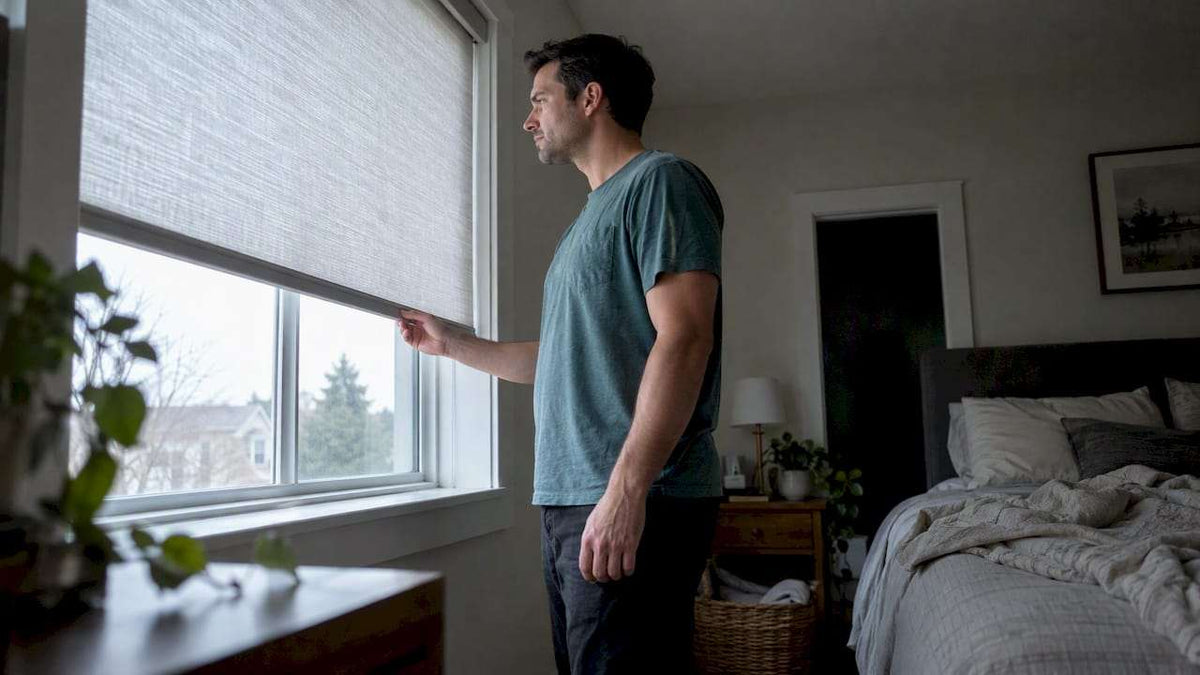
- Bedrooms: The dominant issue is usually early morning sun or street lighting, so blackout roller or cellular shades with an outside mount and side channels are worth the investment for anyone who is light-sensitive.
- Living rooms: Glare on a TV or afternoon heat is the typical complaint, so light-filtering or a mid-range openness solar shade keeps the room bright without the squint.
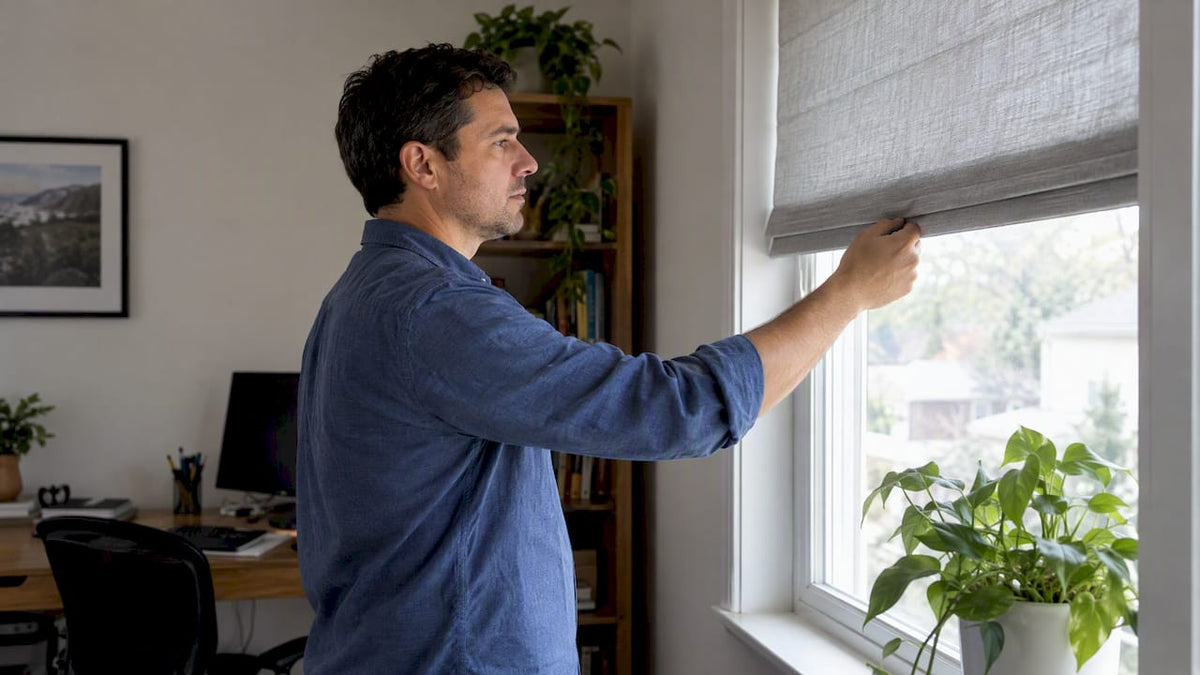
- Home offices: Screen glare is the enemy here, so a light-filtering shade paired with a top-down bottom-up feature lets you block the top of the window while keeping your view and daylight at desk height.
- Kitchens: Splashes and humidity matter as much as light, so a cordless roller or faux wood blind in a wipeable, moisture-resistant material handles both glare and cleanup.
- Street-facing windows: Privacy competes with light here, so a dual-layer setup, sheer behind a room-darkening shade, gives you daytime brightness and nighttime privacy without separate purchases.
Cost generally climbs with features rather than opacity alone. A basic light-filtering roller shade costs less than the same shade with a blackout lining, and adding motorization or a top-down bottom-up mechanism adds further to the price regardless of fabric choice. Rooms with changing needs across the day, like a home office or a south-facing living room, benefit most from dual-layer or top-down bottom-up systems because they avoid forcing one fixed compromise.
4. Layering and automation: building a system that actually keeps up with your day
A single shade is a compromise. A layered system, a sheer or light-filtering layer for daytime glow, an operable shade for glare and heat, and an optional blackout layer for bedrooms or media rooms, lets you dial in exactly the light you want at any hour without swapping hardware.
Automation is what makes that layering effortless instead of a daily chore. Research on automated window shades from Illinois Tech found that motorized, scheduled shades are more likely to actually operate in an energy-smart way than shades people have to remember to adjust by hand. Manual shades tend to get set once and left alone, which erases a lot of their potential benefit.
- Start with hard-to-reach or high-glare windows: skylights, stairwell windows, and south-facing glass benefit most from a motor.
- Set a simple schedule first: close for the hottest afternoon hours, open at sunrise, and adjust from there once you see how the room behaves.
- Layer motorized and manual together: a motorized light-filtering shade with a manual blackout curtain behind it still gives you full range without full automation cost.
Pro Tip: Automate one or two problem windows before committing to a whole-house system, so you learn your actual schedule needs before spending more.
We carry motorized window shades built for exactly this kind of scheduling, along with free swatches and measurement tools so you can test fabric and openness before committing to a layered setup.
5. Keeping light control features working over time
A shade that blocked light perfectly on installation day can drift over months if it is not cared for, usually through dust buildup, sagging fabric, or a cord mechanism that no longer pulls the slats fully flat.
Dust is the quiet enemy of light-filtering and sheer fabrics, since it settles into the weave and dulls the diffusion effect you paid for. A soft brush attachment or a microfiber cloth run along the slats or fabric every few weeks keeps the material doing its job. Cellular shades need a gentler touch, a vacuum on low suction with a brush head, since their folded construction traps dust in creases that a cloth cannot reach.
Blackout and room-darkening fabrics rely on full coverage to work, so check regularly that side channels are still seated correctly and that the fabric has not warped or shrunk slightly, which happens more in humid kitchens and bathrooms. A blind’s tilt mechanism also needs occasional attention. If slats stop closing flush, a quick check of the tilt wand or motor calibration usually restores full closure. For motorized shades, keeping the control app or remote’s schedule updated with the seasons matters more than any physical cleaning, since a summer schedule left running into winter will fight the sun instead of working with it.

6. Light control versus privacy control: they overlap, but they are not the same thing
It is easy to assume a darker shade is automatically a more private one, but light control and privacy control solve different problems and sometimes pull in opposite directions.
Light control is about how much daylight and glare a covering lets through. Privacy control is about whether someone outside can see into your room, which depends heavily on contrast between inside and outside light levels, not opacity alone. A sheer shade offers almost no privacy once your lights are on at night, even though it looked perfectly private at noon with the sun behind it. A light-filtering shade improves privacy somewhat by blurring the view both directions, but it is still not a true privacy solution after dark.
This is exactly why street-facing rooms and bedrooms often need a dual-layer answer rather than a single fabric choice. A room-darkening or blackout layer handles true privacy and sleep needs at night, while a sheer or filtering layer in front of it handles daytime brightness without exposing the room. Buyers who only ask “how much light control do I need” and skip the privacy question often end up re-ordering once they realize a gorgeous, bright fabric leaves them visible to the street every evening.
Sunny’s quick buyer checklist
Here is the short version. First, name your room’s real goal: sleep, glare relief, privacy, or just softer daylight. Second, pick a control level and product family that matches it, sheer, filtering, room-darkening, or blackout. Third, finalize your mount and decide if motorization fits your schedule. Order free swatches and use a measurement guide before you buy anything.
— Sunny
Your next step toward the right window coverings
We make this whole process easier once you know what you want: free swatches, measurement guides, and a design studio take the guesswork out of matching fabric to room.
- Cellular and roller shades for insulation and glare control in living rooms and offices.
- Blackout and room-darkening options for bedrooms and media rooms.
- Motorized shades for windows you want on a schedule, not a to-do list.
- Professional measuring and installation services handled by experienced installers for a precise fit.
Browse our full shades and blinds collection to start matching products to the rooms you just planned for, or head to our home page to explore everything in one place.
FAQ
What does light control mean when buying blinds or shades?
Light control is how much daylight a covering allows into a room and when, ranging from sheer (most light) to blackout (least). Buyers typically choose based on glare, privacy, sleep needs, and energy comfort for that specific room.
What is the difference between room-darkening and blackout shades?
Room-darkening fabrics block most light but can still let in small amounts around edges or through the weave, while blackout fabrics and linings block nearly all light when properly mounted. For more detail on choosing between them, see our guide to blackout versus room-darkening options.
Do cellular shades actually save energy?
Cellular shades trap air in their honeycomb structure, and a Department of Energy factsheet found they can deliver heating-season savings of up to 20% compared with uncompensated windows in some studies. Performance depends on your climate and how consistently the shades are used.
Does mounting style affect how much light a shade blocks?
Yes. Outside mounts with extra fabric overlap and side channels reduce the edge gaps that inside mounts leave, which noticeably improves blackout and room-darkening performance without changing the fabric itself.
Are motorized shades worth it for light control?
Motorized shades make it far more likely your shades are actually adjusted on an energy-smart schedule rather than left in one position, according to a study from Illinois Tech. Several product lines provide motorized options for buyers who want consistent control without manual adjustment.
Sources
For readers who want the research behind the energy and comfort claims here, these are the primary sources worth reading directly. We also recommend checking how interior doors and adjacent glazing affect room layout and daylighting, covered well in this guide on interior door choices from our partners at One Day Doors & Closets.