
Custom Shade Opacity: 5 Levels, Room Choices Backed by Research
Opacity is simply how much light a shade lets through versus blocks, and it sets the mood for every room it covers. Sheer shades keep your view wide open and your room bright. Semi-sheer and light-filtering options soften daylight while adding privacy. Room-darkening and blackout shades go the other direction, trading view for darkness and control. Fabric, color, weave, and layering all shift these outcomes, so the label on the box is just your starting point.
TL;DR:
- For south facing office windows, choose light filtering or low openness solar shades; western sunset glare may require more opaque coverage.
- Solar shades with 5% to 7% openness preserve a usable outside view while reducing glare and heat; choose lower openness for stronger protection.
- Adding a blackout liner behind a light filtering shade combines daytime light with darkness when needed, without requiring one fixed opacity.
- Energy Department modeling found cellular shades can reduce heating energy use versus unshaded windows, though results vary by climate and product design; check AERC ratings.
- Homes with children or pets should prioritize cordless or motorized controls, which reduce cord entanglement hazards and simplify adjustments at inaccessible windows.
Table of Contents
- What do the standard shade opacity levels actually mean?
- How does opacity affect daylight, privacy, glare, and view?
- What does openness percentage mean for solar shades?
- Which opacity level fits each room in your home?
- How do fabric, color, and layering change the way opacity performs?
- What do energy studies say about insulating shades?
- How do cordless and motorized controls fit into the opacity decision?
- How do you decide when your goals for light and privacy conflict?
- Ready to choose your opacity? Here’s where to start
- FAQ
- Sources
What do the standard shade opacity levels actually mean?
Shade opacity isn’t one number. It’s a spectrum, and each point on that spectrum trades daylight for privacy in a different way. Once you know what each level actually looks like in a real window, picking one gets a lot easier.
- Sheer: nearly see-through, preserves your view and lets in the most daylight, but offers very little privacy on its own. Living rooms with great views often use sheers layered with drapery for evening privacy.
- Semi-sheer / light-filtering: diffuses direct sun into a softer glow, cuts some glare, and gives moderate privacy. This range works well in living spaces and kitchens where you still want brightness.
- Semi-opaque: adds more privacy while still letting soft daylight through. Home offices and bathrooms often land here, since you don’t need a clear view out.
- Room-darkening / opaque: blocks most daylight and view, giving strong privacy. This is the usual pick for bedrooms and media rooms.
- Blackout: blocks nearly all incoming light. Bedrooms, home theaters, and shift workers who sleep during the day tend to need this level.
Our light filtering sheer shades guide walks through how that first tier balances openness with a bit of privacy, if you want a deeper look.
How does opacity affect daylight, privacy, glare, and view?
Every step up in opacity buys you more privacy and better glare control, and every step down buys you more daylight and a clearer view outside. There’s no getting both at the maximum, so the real question is which trade-off matches your room.
- Daylight versus privacy: sheer and semi-sheer maximize natural light but offer limited screening from outside eyes, while opaque and blackout flip that completely.
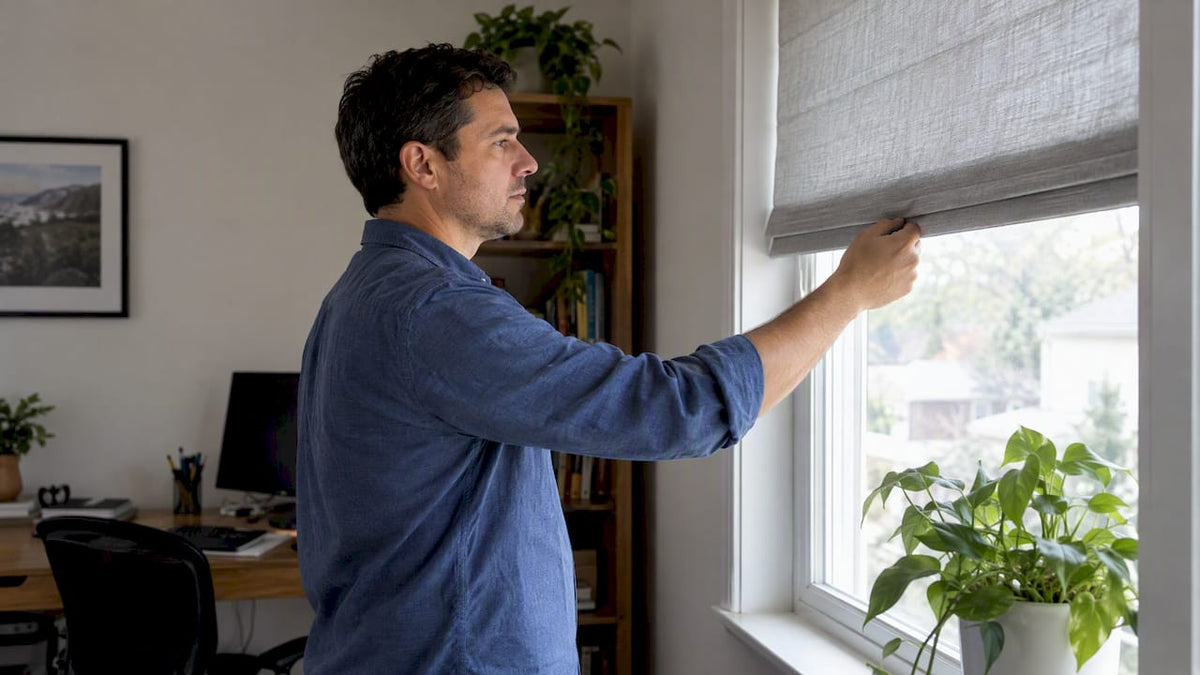
- Glare on screens: light-filtering fabrics diffuse harsh sun, which helps a south-facing home office where glare washes out a monitor, while a fully opaque shade may be needed for a west-facing room that gets a blinding sunset.
- TV and media rooms: room-darkening or blackout levels cut reflections on screens far better than sheer or semi-sheer fabrics ever will.
- Plants and daylight-dependent spaces: sunrooms or windows with houseplants generally do best with sheer or light-filtering shades, since blackout fabric starves them of the light they need.
A south-facing office usually calls for light-filtering or a low-openness solar shade, while a west-facing living room at sunset often benefits from something closer to semi-opaque to tame the glare without going fully dark.
What does openness percentage mean for solar shades?
Openness percentage, often called the openness factor, describes how much of a solar shade fabric’s surface is actual weave versus open gaps. It’s measured using testing protocols like those detailed in the AERC’s optical and thermal properties procedures, and it’s a different measurement from the opacity terms used for roller or cellular fabrics, even though both describe how much light gets through.
- Low openness: blocks more light and heat, with less visible view through the fabric. Best for sun-facing windows or persistent glare problems.
- 5% to 7% openness: a middle ground that keeps a usable view while still cutting a good amount of glare and heat.
- Higher openness: preserves a clearer view outside but offers less protection from heat and glare, better suited to shaded windows or northern exposures.
Pick a lower openness percentage when sun exposure or glare is your main complaint, and a higher one when keeping your view matters more than blocking every bit of light.
Which opacity level fits each room in your home?
Matching opacity to the room is less about rules and more about what you actually do in that space. Here’s a quick room-by-room starting point.
- Living room: semi-sheer or light-filtering for daytime brightness, layered with heavier curtains or a secondary shade for evening privacy.
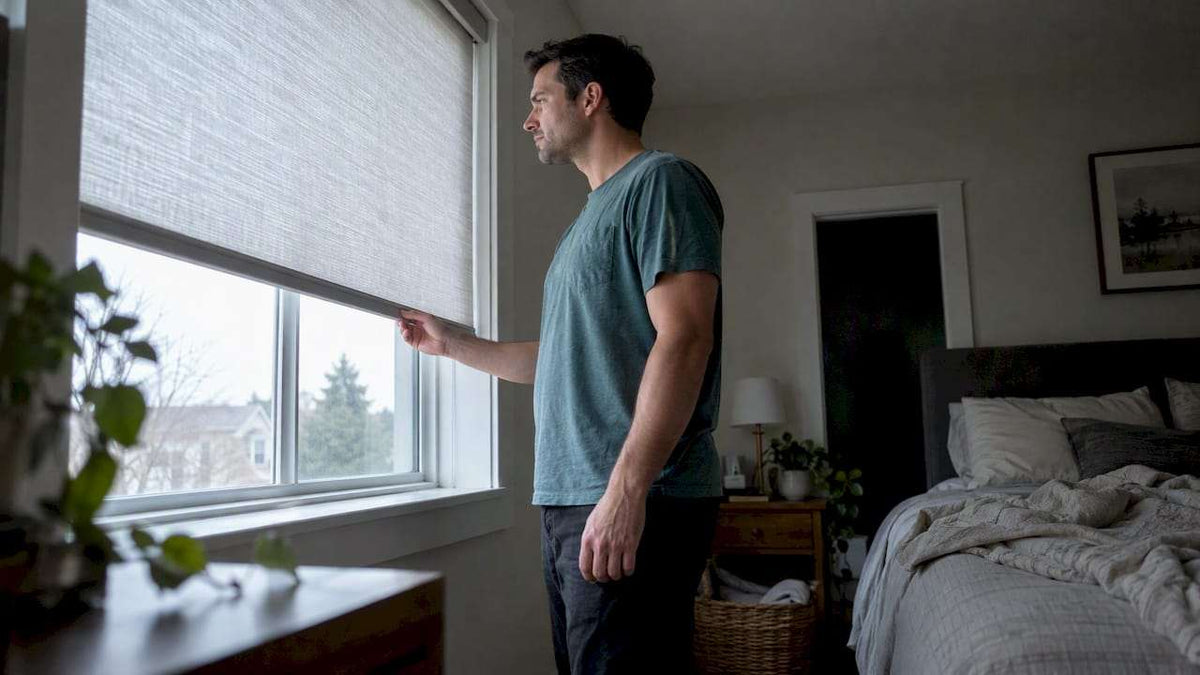
- Bedroom: room-darkening or blackout, especially if sleep quality or daytime TV viewing is a priority.
- Home office: light-filtering fabric or a low-openness solar shade to manage glare, paired with motorized control so you can adjust it through the day without leaving your desk.
- Bathroom: privacy comes first, so semi-opaque or opaque shades in moisture-resistant materials make sense.
- Nursery: blackout for naps and nighttime sleep, with cordless or motorized operation for safety around young children.
Before you decide, ask yourself three quick questions: What’s my main goal (view, privacy, or darkness)? Which direction does the window face? And do I actually need to see outside, or is screening what matters more? Those three answers point you to the right opacity almost every time.
How do fabric, color, and layering change the way opacity performs?
The opacity label on a shade is only part of the story. Fabric choice, color, and how you layer shades can shift the real-world result quite a bit.
- Light colors transmit more visible light and can make a “light-filtering” shade feel brighter than expected.
- Dark colors reduce visible light transmission and increase the perceived opacity of the same base fabric.
- Tighter weaves and heavier fabrics cut translucency and glare more than loose, lightweight weaves, while textured weaves help diffuse harsh light instead of blocking it outright.
- Layering strategies, like adding a blackout liner behind a light-filtering shade, or using a dual-roller system with top-down/bottom-up operation, let you combine daylight access with privacy on your own schedule.
What do energy studies say about insulating shades?
Shade construction does more than control light. It affects how much your heating and cooling systems have to work. Field work and modeling from the Energy Department and Oak Ridge National Laboratory found that cellular shades deliver measurable energy benefits, particularly during heating season, and that different constructions, like cell-in-cell designs or low-e surfaces, change how much benefit you get.
Cellular shades can meaningfully cut home heating energy use compared to windows with no shading at all, according to modeling from the Energy Department and ORNL, which also notes that window attachment performance varies by climate zone and product design, a point echoed in LBNL’s broader energy savings modeling. AERC ratings give you a way to compare that performance by climate before you buy. If energy savings or draft reduction matters to you, insulating cellular shades are worth a close look.
How do cordless and motorized controls fit into the opacity decision?
Opacity is only half the equation. How you operate the shade matters too. CPSC guidance on cordless window coverings recommends cordless or motorized options to reduce cord entanglement hazards, which matters most in homes with young children or pets. Motorized shades also let you adjust opacity through the day, opening for morning light and closing before a glaring sunset, without ever touching a wand. For homes with kids or windows that are hard to reach, cordless or motorized operation is worth prioritizing alongside your opacity choice.

How do you decide when your goals for light and privacy conflict?
When view, darkness, and energy performance all pull in different directions, pick the one outcome you can’t live without and build around it. A bedroom that needs total darkness for sleep can still get daytime flexibility from a layered solar shade paired with a blackout liner. Natural light genuinely supports well-being, but Stanford research on dynamic shading points to adjustable solutions as the practical way to balance daylight, glare, and energy use rather than forcing a single fixed choice. Order a few swatches and try a sample install before committing to a whole house.
— Sunny
Ready to choose your opacity? Here’s where to start
Whatever opacity you land on, explore our roller shades, cellular shades, Roman shades, and more. Our free swatches let you test color and weave against your actual window light before you order anything.
- Order free fabric swatches to compare how light-filtering and blackout options look in your own room.
- Use our measurement guide to get accurate dimensions before you buy.
- Book our Pro Measure & Install service if you’d rather have an expert handle the details.
- Browse motorized light-filtering cellular shades if dynamic daytime control is your priority.
If you’re also updating interior doors alongside your windows, glass interior doors can help keep natural light moving between rooms while your new shades handle the windows themselves.
FAQ
What are the different types of curtain opacity?
Curtain and shade opacity generally falls into several bands: sheer, semi-sheer or light-filtering, semi-opaque, room-darkening, and blackout. Each level trades daylight and view for privacy and glare control, with sheer letting in the most light and blackout blocking nearly all of it.
What are the levels of opacity?
The common levels, from lightest to darkest, are sheer, semi-sheer/light-filtering, semi-opaque, room-darkening, and blackout. Fabric color and weave can shift how any single level actually performs in your window.
What are the different types of window shading options available?
Window shading options include roller shades, cellular (honeycomb) shades, Roman shades, solar shades, and natural woven shades, each available across the sheer-to-blackout opacity range. Many of these also come in cordless or motorized versions for easier daily control.
What are the differences between different levels of solar shade openness?
Solar shade openness describes how much of the fabric is open weave versus solid material, with lower openness blocking more heat and light while higher openness preserves a clearer view.
What opacity is best for a bedroom?
Room-darkening or blackout shades are the typical choice for bedrooms, since they maximize privacy and reduce light that can interrupt sleep. Pairing a lighter daytime shade with a blackout liner gives you flexibility without sacrificing nighttime darkness.
Sources
- Interior Cellular Shades Boost Home Energy Performance
- Electrolyte design for dynamic windows based on reversible metal electrodeposition | Stanford Digital Repository