
What Is a Textured Window Shade? A Homeowner's Guide
TL;DR:
- Textured window shades add visual depth and diffuse light, enhancing both style and privacy in any room. They come in woven wood, natural fiber, and embossed fabric options, each suited to different decor and functional needs. Proper selection and maintenance ensure these shades improve lighting, insulation, and room aesthetics over time.
A textured window shade is a fabric-based window covering defined by woven patterns, embossed finishes, or natural fiber surfaces that add visual depth while filtering light and providing privacy. Unlike flat, smooth roller shades, textured window treatments create a tactile quality that changes how a room feels, not just how it looks. They work in living rooms, bedrooms, kitchens, and home offices, serving both decorative and functional roles. Valueblindsdirect offers a wide range of these treatments, from natural woven shades in bamboo and grasscloth to embossed roller fabrics built for room darkening.
What is a textured window shade, exactly?
A textured window shade is defined by its surface variation. Woven patterns, embossed finishes, or natural materials give these shades a tactile and visual quality that flat fabrics simply cannot replicate. That surface variation is not just decorative. It directly affects how light scatters through the fabric, how much privacy the shade provides, and how the room feels at different times of day.
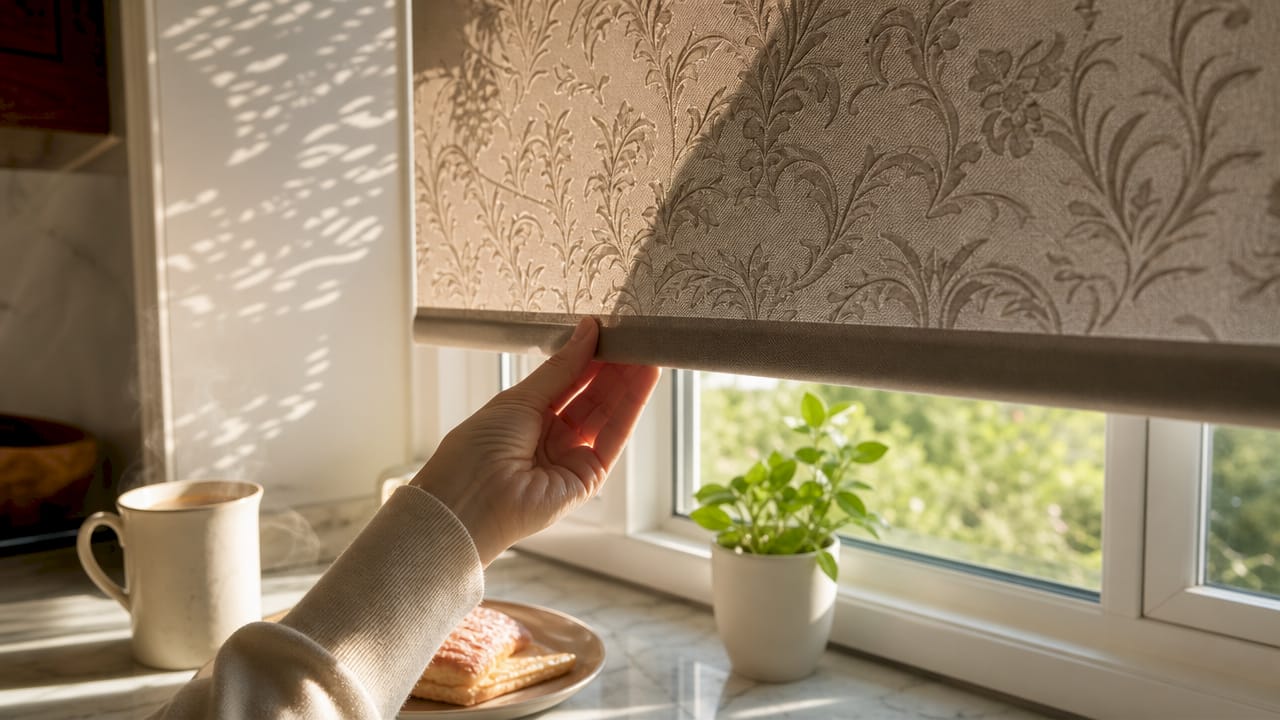
The industry term for this category is “textured window treatments,” which covers any shade or blind where the surface structure plays a functional role alongside its aesthetic one. Woven wood shades, natural fiber shades, and embossed roller shades all fall under this umbrella. Each uses a different material or construction method, but all share the same defining characteristic: a surface you can see and feel.
Textured shades differ from smooth shades in one critical way. Smooth shades block or pass light in a uniform, predictable pattern. Textured shades scatter and diffuse light, creating softer, more layered illumination in a room. That diffusion is why a linen roller shade feels warmer and more inviting than a plain white polyester one, even at the same opacity level.
What types of textured window shades are available?
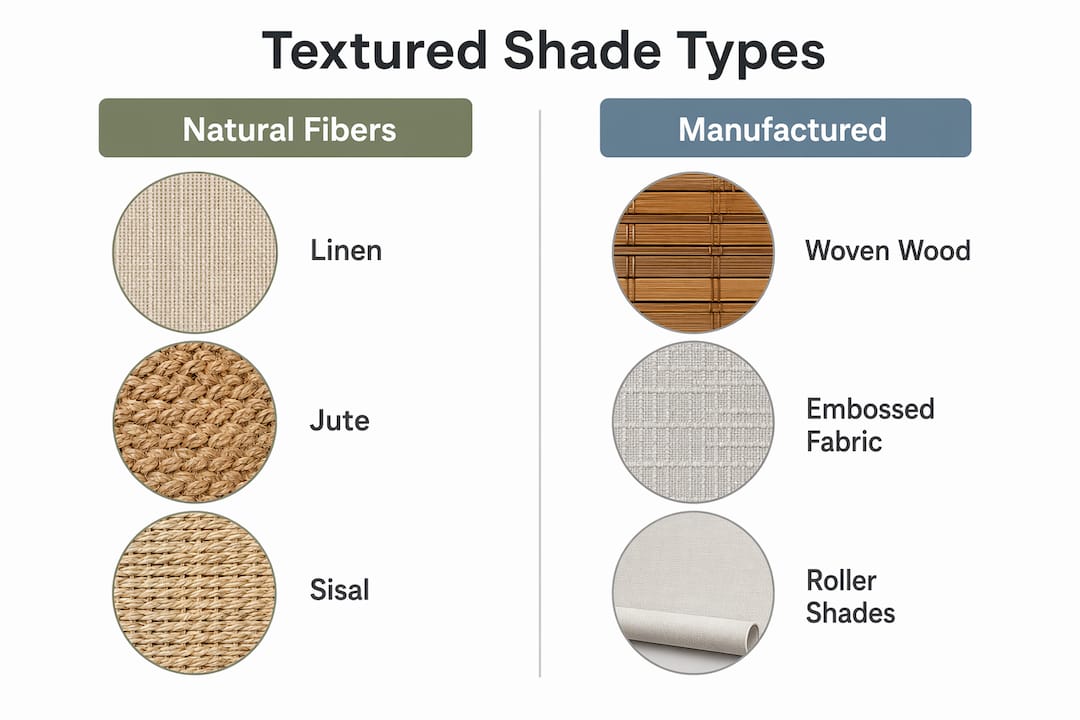
The three main categories of textured window shades are woven wood shades, natural fiber shades, and embossed fabric roller shades. Each category uses different materials and weave structures, which directly affects light control, privacy, and visual style.
Woven wood shades
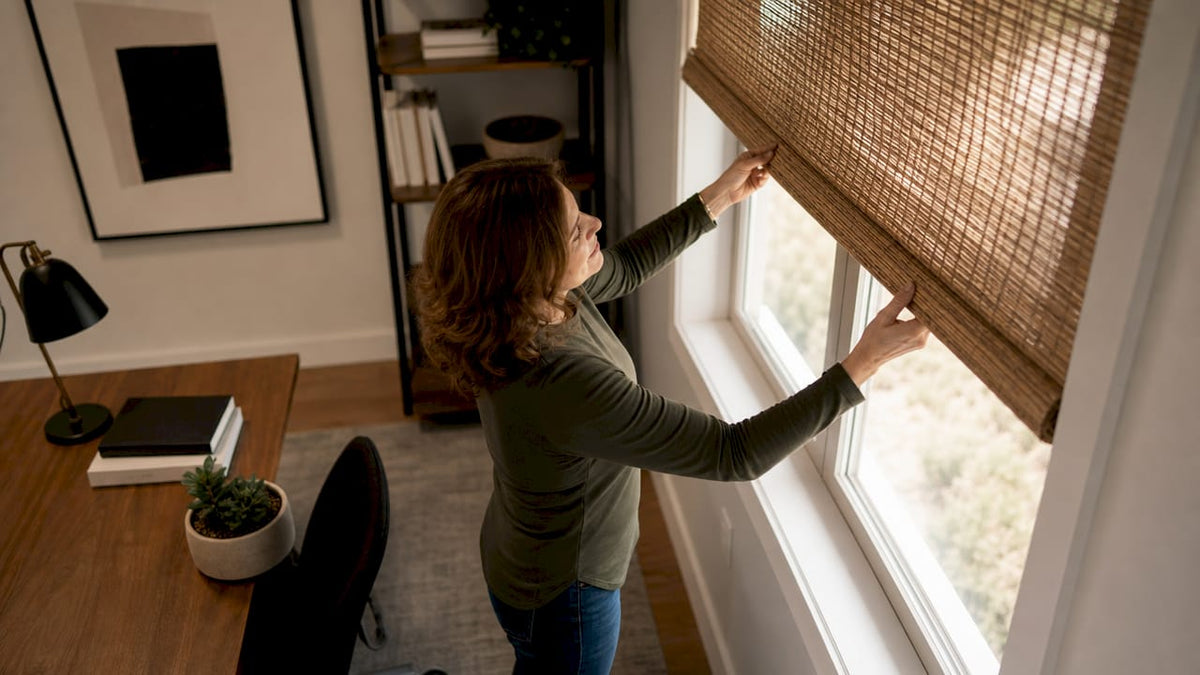
Woven wood shades use thin strips of wood, bamboo, or reeds woven together into a flexible panel. The open weave allows filtered natural light to pass through while adding a warm, organic texture to the window. They work best in living rooms and dining rooms where soft, ambient light is preferred over full privacy. Natural woven materials like bamboo and grasscloth also carry an eco-friendly appeal, making them a strong choice for homeowners prioritizing sustainable decor.
Natural fiber shades
Natural fiber shades use materials like linen, jute, or sisal woven into a tighter panel than woven wood styles. The tighter weave provides more privacy and better light filtering. Linen shades, in particular, create a soft, diffused glow that works well in bedrooms and reading nooks. These shades pair naturally with neutral color palettes and organic decor styles.
Embossed fabric roller shades
Embossed roller shades use polyester or blended fabrics pressed with a pattern during manufacturing. The embossing creates a raised surface texture without adding bulk. These shades are available in light-filtering and room-darkening versions, making them the most versatile option across types of window shades. They suit modern and transitional interiors where a clean profile matters but flat fabric feels too plain.
| Shade type | Primary material | Light control | Best room use |
|---|---|---|---|
| Woven wood | Bamboo, reed, wood | Filtered, open | Living room, dining room |
| Natural fiber | Linen, jute, sisal | Filtered, moderate | Bedroom, study |
| Embossed roller | Polyester, blended | Filtered or blackout | Any room |
| Grasscloth | Grass, seagrass | Filtered, open | Sunroom, entryway |
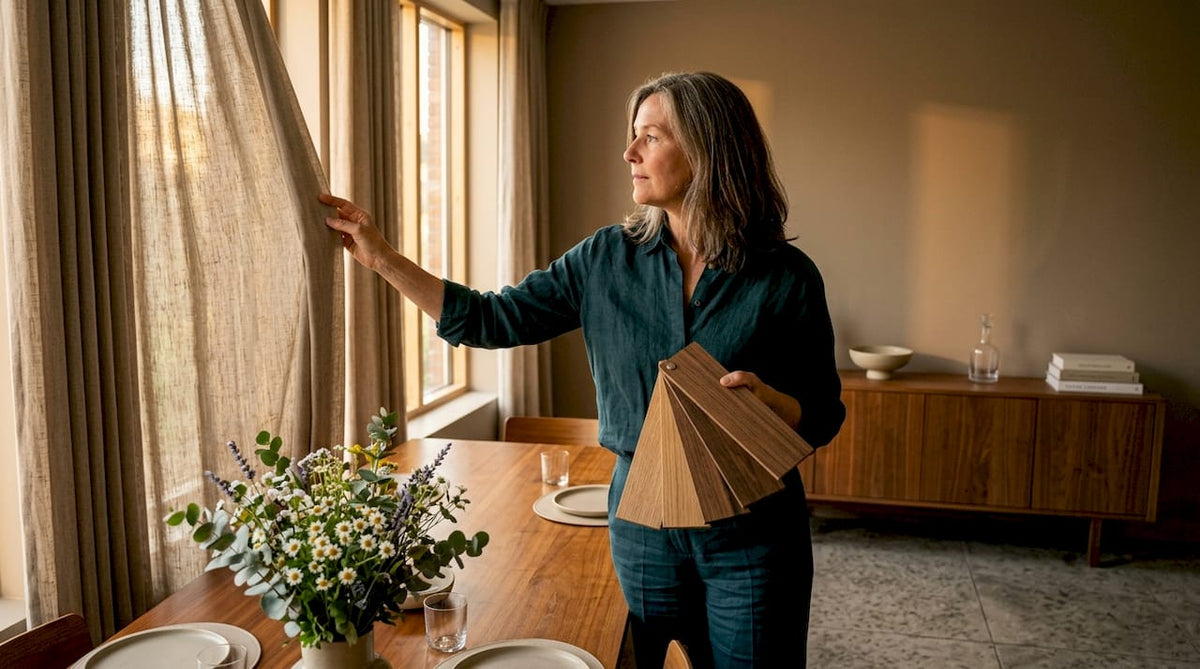
Pro Tip: Order free fabric swatches before committing to a shade. Texture reads very differently on a screen than it does in natural light inside your home.
How do textured window shades improve light control and privacy?
Fabric opacity and weave structure are the two factors that determine how much light a textured shade filters and how much privacy it provides. A loose weave, like woven bamboo, lets in significant natural light but offers limited privacy, especially at night when interior lights are on. A tight weave or embossed blackout fabric blocks most light and provides strong privacy around the clock.
Textured shades also affect thermal comfort. Certain textured shades improve thermal efficiency by adding an insulating layer at the window, which reduces heat loss in winter and heat gain in summer. Cellular shades, which have a honeycomb cross-section, are the strongest performers in this category. Their structured texture traps air and creates a buffer between the glass and the room.
The privacy benefits of textured shades go beyond simple opacity. A woven texture scatters light in multiple directions, which blurs silhouettes from outside even when the shade is not fully opaque. This is why a medium-weave linen shade can provide daytime privacy in a ground-floor room without making the space feel dark or closed off. For a detailed look at how different fabrics perform, Valueblindsdirect’s Privacy and Light Simulator lets you test shade options before buying.
Key functional benefits of textured window shades include:
- Light diffusion: Woven and embossed surfaces scatter incoming light, reducing glare without blocking the view entirely.
- Privacy layering: Texture creates visual noise that obscures interior details from outside, even in semi-sheer fabrics.
- Thermal insulation: Structured fabrics like cellular and honeycomb designs add measurable insulation at the window.
- Mood control: Textured roller shades reduce incoming light effectively, creating a cozy atmosphere in bedrooms and media rooms.
Pro Tip: Match shade opacity to room function. Use open-weave woven wood shades in social spaces where ambient light matters, and choose embossed blackout fabrics in bedrooms where full darkness is the goal.
How to choose the best textured window shade for your space
Choosing the right textured shade starts with understanding how you actually use the room. Interior design expert Monica Leed recommends asking specific lifestyle questions before selecting any window treatment: Do you need complete darkness to sleep? Do you want to preserve a view? Do you prefer a simple, cordless operation? Functional needs should drive the decision before aesthetics come into play.
Follow these steps to make a confident choice:
- Identify the room’s primary function. A bedroom needs different light control than a home office or a sunroom. Start here before looking at fabrics.
- Determine your privacy requirement. Ground-floor rooms facing a street need tighter weaves than second-floor rooms facing a garden.
- Assess your natural light. South-facing windows receive intense afternoon sun. North-facing windows get soft, consistent light. Choose fabric opacity accordingly.
- Match texture to your decor style. Woven bamboo suits rustic and coastal interiors. Embossed polyester works in modern and minimalist spaces. Linen fits transitional and Scandinavian styles.
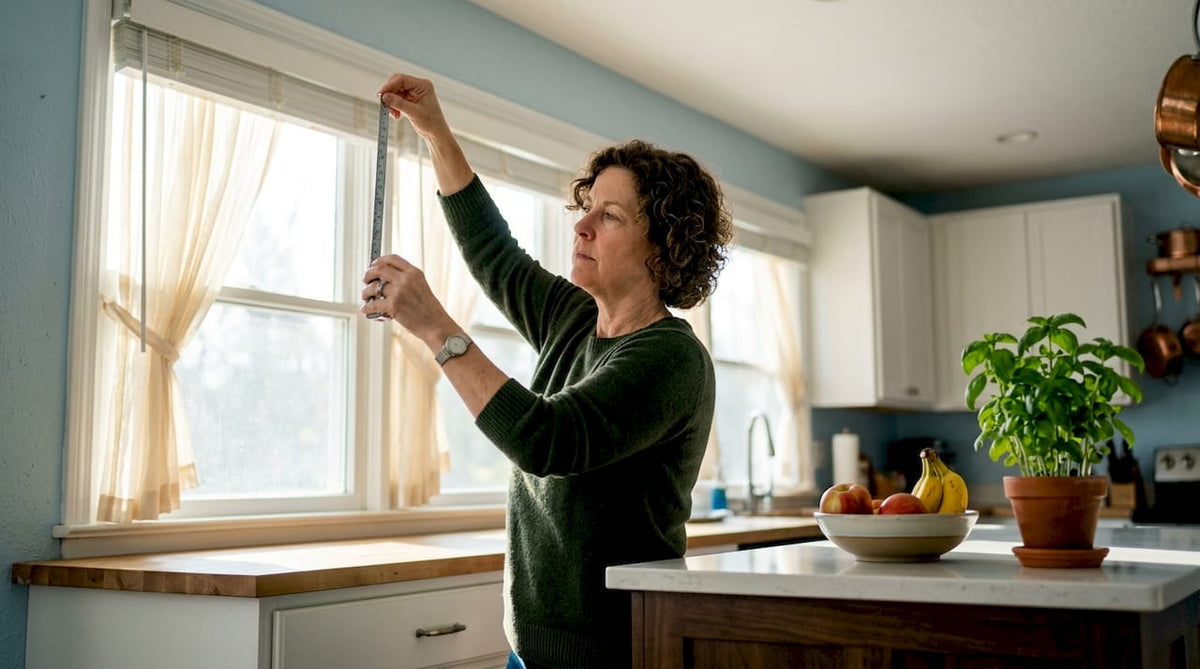
- Decide between custom and ready-made. Custom window shades offer better fit and tailored aesthetics compared to ready-made options. For non-standard window sizes or specific design goals, custom is the stronger investment.
- Set a realistic budget. Natural fiber shades cost more than embossed polyester options. Factor in installation and any motorization upgrades you want.
Coordinating shade texture with your existing decor is simpler than it sounds. A room with wood floors and linen upholstery naturally calls for a woven or natural fiber shade. A room with concrete floors and metal accents pairs better with an embossed geometric roller fabric. The texture of the shade should echo at least one other material already present in the room. That repetition creates visual coherence without requiring a full redesign. For current design directions, interior design trends show textured window treatments consistently appearing alongside natural materials and layered lighting schemes.
Styling tips and maintenance for textured window shades
Textured shades work best when they connect to at least one other texture in the room. In a modern living room with smooth walls and polished surfaces, a woven wood shade introduces warmth and prevents the space from feeling sterile. In a rustic bedroom with exposed wood beams, a linen roller shade adds softness without competing with the architecture. The goal is contrast that feels intentional, not random.
Layering textured shades with curtains is one of the most effective styling moves available. A woven bamboo shade paired with linen drapes creates depth at the window and allows multiple levels of light control. The shade handles privacy and light filtering during the day. The drapes add warmth and full coverage at night. This layered approach is a consistent feature in 2025 window shade trends and shows no sign of fading.
Maintenance varies by material, but the core principle is the same: gentle and consistent care extends the life of any textured shade. Proper upkeep includes gentle dusting and occasional spot cleaning depending on the material type.
| Material | Dusting method | Spot cleaning | Avoid |
|---|---|---|---|
| Woven bamboo | Soft brush or vacuum on low | Damp cloth, mild soap | Soaking or machine washing |
| Linen | Lint roller or soft brush | Blot with cold water | Heat or harsh detergents |
| Embossed polyester | Dry microfiber cloth | Mild soap and water | Abrasive scrubbing |
| Grasscloth | Soft brush only | Dry blotting only | Any moisture |
For woven and natural fiber shades, avoid direct water contact on the full panel. Moisture can warp the weave and cause discoloration. Spot clean only, and allow the shade to dry fully before raising it. Embossed polyester shades are the most forgiving and can handle light damp cleaning without damage.
Key Takeaways
Textured window shades deliver both aesthetic depth and functional light control, making them one of the most practical upgrades available for any room in a home.
| Point | Details |
|---|---|
| Definition matters | Textured shades use woven, embossed, or natural fiber surfaces to diffuse light and add visual depth. |
| Match type to room | Woven wood suits social spaces; natural fiber fits bedrooms; embossed roller works anywhere. |
| Function before style | Identify light, privacy, and lifestyle needs before choosing a fabric or texture. |
| Custom beats ready-made | Custom shades fit non-standard windows better and allow precise fabric and opacity choices. |
| Maintenance is simple | Gentle dusting and spot cleaning preserve texture and extend shade lifespan significantly. |
Why texture is the most underrated decision in window treatments
Most homeowners spend their window treatment budget on color and think texture is a secondary concern. I’ve seen that approach backfire consistently. A flat white roller shade in a room full of natural wood and linen upholstery creates a visual disconnect that no amount of throw pillows can fix. Texture is what makes a window feel like part of the room rather than a hole in the wall.
The functional argument for textured shades is equally strong. Window treatments influence daily light rhythms and comfort more than decorative elements alone. A woven bamboo shade in a home office changes how you feel at 3:00 PM when afternoon glare hits the screen. A linen shade in a bedroom changes how you wake up. These are not small quality-of-life differences.
The mistake I see most often is choosing a shade based on a screen image. Texture is a tactile and light-dependent quality. It looks completely different in a north-facing room than in a south-facing one. Order swatches. Hold them up to your actual window at different times of day. That 10-minute test will tell you more than any product photo. Textured shades are a long-term investment, and the right one will make your room feel finished in a way that smooth shades rarely achieve.
— Sunny
Textured window shades, made to order at Valueblindsdirect
Valueblindsdirect makes it straightforward to find the right textured window shade for any room in your home. The Window Treatment Design Studio gives you access to custom sizing, a broad selection of textured fabrics, and design tools that show how different shades perform in your space before you order.
The catalog includes natural woven shades in bamboo and grasscloth, embossed roller fabrics in light-filtering and blackout options, and cellular shades with structured honeycomb textures built for energy efficiency. Free swatches are available so you can test fabric and texture in your actual lighting conditions. Expert support is on hand if you need help matching a shade to a specific room or decor style. Every order ships with a warranty and clear installation guidance.
FAQ
What is the difference between textured and smooth window shades?
Textured shades use woven, embossed, or natural fiber surfaces that scatter and diffuse light, while smooth shades pass or block light in a uniform pattern. Textured options add visual depth and create softer room illumination.
Are textured window shades good for privacy?
Yes. A woven or embossed surface scatters light and blurs silhouettes from outside, providing daytime privacy even in semi-sheer fabrics. Tighter weaves and blackout embossed fabrics deliver full privacy at any hour.
Do textured shades help with energy efficiency?
Certain textured shades, particularly cellular and honeycomb styles, add an insulating layer at the window that reduces heat loss in winter and heat gain in summer, lowering energy costs in rooms with variable sunlight.
How do I clean a textured window shade?
Maintenance depends on the material. Woven bamboo and grasscloth shades need a soft brush and dry spot cleaning only. Linen shades respond well to cold water blotting. Embossed polyester shades tolerate mild soap and a damp cloth.
Should I choose custom or ready-made textured shades?
Custom shades provide a better fit for non-standard window sizes and allow you to select the exact fabric, opacity, and texture for your room. Ready-made options work for standard window dimensions but offer fewer material choices.
Recommended
- Smart Home Window Shading: Complete Guide
- Order Window Shades Online: the Homeowner’s Guide
- Complete Guide to Decorative Fabric Window Shades
- Easy Install Window Shades: Step-by-Step Guide for All Homes

Value Blinds®
Trusted window treatments provider
Value Blinds® is a trusted provider of Greenguard, OEKO-TEX, and FSC-certified window treatments based in Portland, Oregon. Specializing in sustainable, motorized, smart-controlled, and outdoor-ready blinds and shades, the company is built on a foundation of simplified shopping, premium eco-friendly materials, and transparent pricing without the inflated cost.