
Best Outdoor Blinds for Patios: Weatherproof Picks
TL;DR:
- Outdoor blinds in the U.S. are best made from solar mesh or marine-grade fabric to withstand weather conditions. Wind-resistant systems like zipper-track and cassette enclosures provide superior durability, especially in exposed locations. Motorized shades with sensors offer convenience and extend the lifespan of outdoor blinds.
For most U.S. patios and porches, the best outdoor blinds are solar mesh or marine-grade fabric shades mounted on a zipper-track or cassette system. That combination handles wind, rain, and UV exposure better than any other setup at a comparable price. Solar mesh fabrics can block up to 90% of UV while staying breathable enough to keep airflow moving on hot days — a real win for covered patios in the South and Southwest.
- Best for: Wind-exposed porches, year-round outdoor living, and spaces that see both intense sun and seasonal rain
- One tradeoff to know: Maximum weather performance usually means a more utilitarian look. If curb appeal is your top priority, you may trade some durability for a softer aesthetic (bamboo, coated polyester) — more on that below.
Valueblindsdirect’s outdoor collection covers both solar mesh and motorized windproof options, with free swatches so you can test fabric performance before you commit.
Table of Contents
- What materials work best for outdoor blinds?
- How is wind resistance actually engineered?
- Are motorized outdoor blinds worth the extra cost?
- How do you measure for outdoor blinds correctly?
- What do outdoor blinds cost, and what should warranties cover?
- How long do outdoor blinds last, and how do you maintain them?
- How do you choose the right outdoor blind for your situation?
- Why custom outdoor blinds from a reputable supplier reduce buying risk
- How do top outdoor blind brands compare?
- What does outdoor blind installation actually cost?
- Are outdoor blind materials environmentally friendly?
- Key Takeaways
- The tradeoff most homeowners don’t see coming
- Valueblindsdirect makes custom outdoor blinds easy to get right
- Useful sources and recommended reading
What materials work best for outdoor blinds?
Picking the right fabric is the single decision that determines how long your patio shades last. Here’s a quick breakdown of the main options:
| Material | Durability | Wind suitability | UV blocking | Waterproofing | Typical price range |
|---|---|---|---|---|---|
| Solar mesh / HDPE | High | Moderate–high | Up to 90% | Breathable, not waterproof | $80–$300+ per shade |
| Marine-grade PVC/vinyl | Very high | High | up to 90% | Fully waterproof | $150–$500+ per shade |
| Coated polyester | Moderate–high | Moderate | up to 90% | Water-resistant | $100–$300 per shade |
| Bamboo / natural | Low–moderate | Low | up to 90% | Not waterproof | $60–$200 per shade |
*Solar mesh (HDPE fabric) is the go-to choice for hot, sunny climates. It blocks UV while staying breathable, which prevents heat buildup under a covered patio. Look for a fabric gauge of at least 300 gsm and a documented UV rating.
Marine-grade PVC/vinyl is built for coastal and rainy climates. It resists salt air, mold, and heavy rain, and thicker woven PVC fabrics hold up far better in wind than the cheap tube-style roll-up versions, which can deform in gusts. Always check for mildew resistance and UV stabilization in the spec sheet.
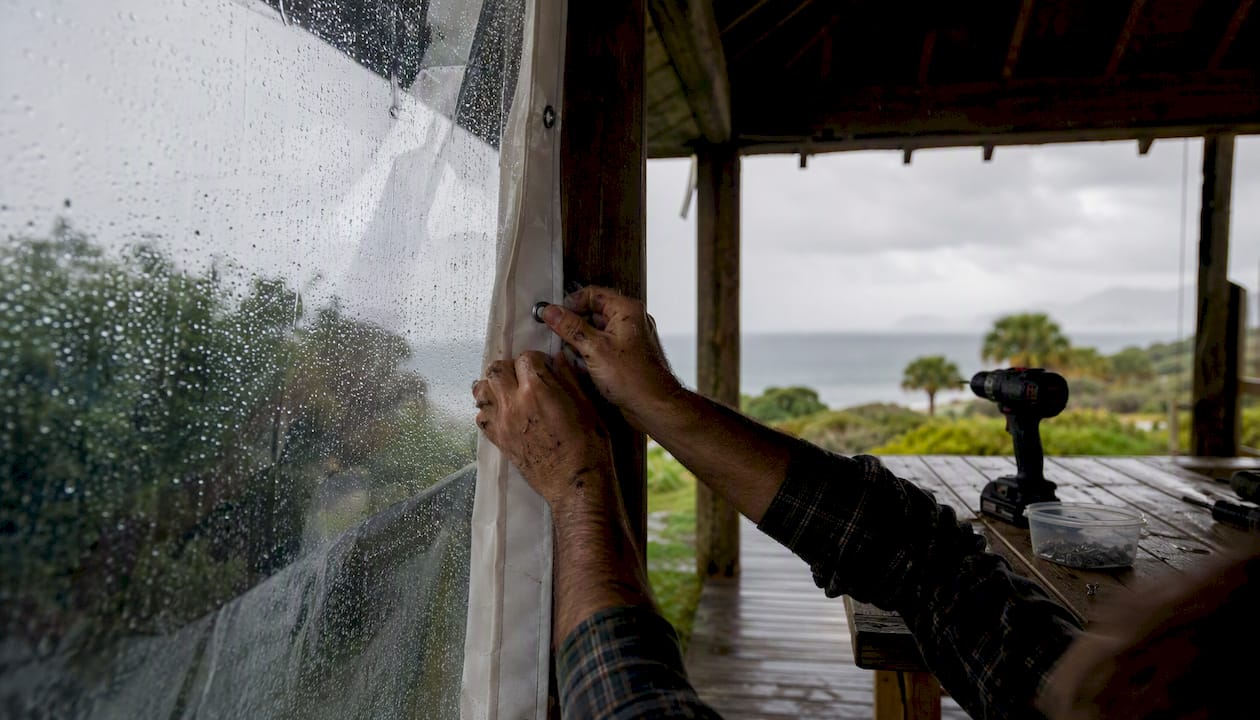
Coated polyester sits in the middle: more affordable than marine-grade vinyl, more durable than bamboo, and a solid pick for sheltered porches in moderate climates. Buyers should choose materials explicitly rated for outdoor use with documented fade and mildew resistance.
Bamboo and natural options look gorgeous and work fine on a sheltered, covered porch. They’re not built for rain or wind, though — and solid wood shutters or painted wood blinds are often the better call when curb appeal is the priority.
Pro Tip: Pick your material based on your worst weather day, not your average one. A solar mesh shade that survives a Gulf Coast thunderstorm will look just as good on a calm sunny afternoon.
How is wind resistance actually engineered?
Wind is the number-one killer of outdoor blinds. The system holding the fabric matters just as much as the fabric itself.
- Zipper-track (zip screens): The fabric edge feeds into a channel on each side, creating a sealed perimeter. This is the highest-performing wind-resistance system for roller-style blinds — the fabric can’t billow or flap because it’s locked in on both sides. Best for exposed decks and open patios.
- Guide-wire systems: Steel cables run vertically along each side of the shade and keep the fabric tensioned. Less expensive than zipper-track, and fine for partially sheltered areas, but the fabric can still flutter in strong gusts.
- Bottom-rail wind-locks: Anchor clips or hooks at the base of the shade attach to the floor or a rail. A useful add-on for any system in moderate-wind zones, but not a substitute for proper side retention.
- Full cassette enclosures: The rolled fabric retracts into a sealed housing when not in use, protecting it from UV and weather 24/7. Paired with a zipper-track, this is the most complete outdoor blind system available.
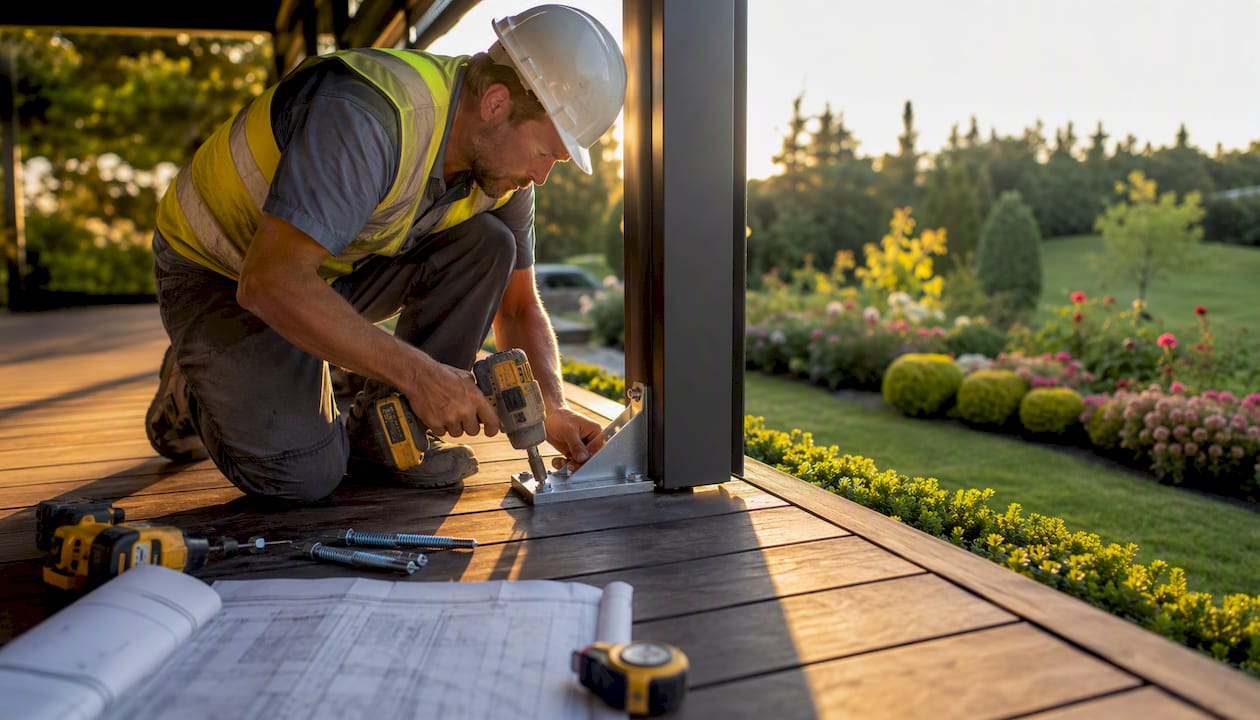
For installation, anchoring points matter enormously. Mounting into structural framing (rafters, fascia, or posts) rather than into drywall or thin cladding keeps the whole system secure under load. Allow a small clearance gap at the bottom for thermal expansion — a blind mounted too tight will bind or buckle in summer heat.
For genuinely extreme wind zones, permanent structures like pergolas or retractable awnings provide a level of structural resistance that no blind system alone can match. Blinds work beautifully as a complement to a pergola, but if you’re in a hurricane-prone area, start with the structure first.
Are motorized outdoor blinds worth the extra cost?
Short answer: yes, especially for large spans or exposed locations. Here’s why.
Benefits of motorization:
- No dangling cords (safer for kids and pets)
- One-touch or scheduled operation — no manual cranking on a hot afternoon
- Wind and rain sensors that automatically retract the blind before damage occurs, which increases longevity on exposed porches
- Integration with smart home platforms for multi-zone automation
Power options compared:
- Battery (rechargeable): Easiest to install, no wiring needed, typically lasts 6–12 months per charge depending on use frequency
- Solar-powered motor: Self-sustaining for sun-exposed installations; pairs well with outdoor shades that are already in direct sun
- Hardwired: Most reliable for heavy daily use, but requires an electrician and conduit routing
Smart integration lets you tie your shades to weather stations, thermostats, or lighting schedules. That kind of automation isn’t just convenient — it actively protects the fabric by pulling it in before a storm hits. Valueblindsdirect’s automatic outdoor blinds guide covers sensor setup and motor options in detail.
Pro Tip: If hardwiring would mean cutting through finished ceilings or masonry, go battery or solar. The installation savings alone often cover the motor cost, and modern rechargeable motors are genuinely reliable.
How do you measure for outdoor blinds correctly?
Getting the measurement right the first time saves you a return, a reorder, and a lot of frustration. Here’s the process:
Step-by-step measurement checklist:
- Decide on outside-mount vs. inside-mount. Most outdoor blinds are outside-mount (mounted to the ceiling, fascia, or posts), which gives better weather coverage.
- Measure the width of the opening at three points (top, middle, bottom) and use the widest measurement.
- Measure the drop (height) from the mounting point to the floor or desired stopping point.
- Add overlap: for outside-mount, add at least 2–3 inches on each side to block light and wind gaps.
- Note the mounting surface: ceiling, fascia board, or post. Each requires different hardware.
- If motorized, plan the motor route and sensor placement before ordering.
Common mistakes to avoid:
- Measuring the glass only, not the full opening including trim or beams
- Forgetting to account for drainage tilt (a slight forward angle prevents water pooling on the fabric)
- Using standard wood screws in coastal areas — stainless steel fasteners resist salt corrosion
- Ignoring thermal expansion: leave a small gap at the bottom rail so the fabric doesn’t bind in summer heat
DIY installation is realistic for most single-blind setups on wood framing. Large spans (over 10 feet wide), masonry mounting, or motorized wiring are the situations where professional installation pays for itself. Cellular shades, by the way, are designed for indoor insulation — they’re not built for outdoor weatherproofing, so don’t confuse the two product categories when measuring.
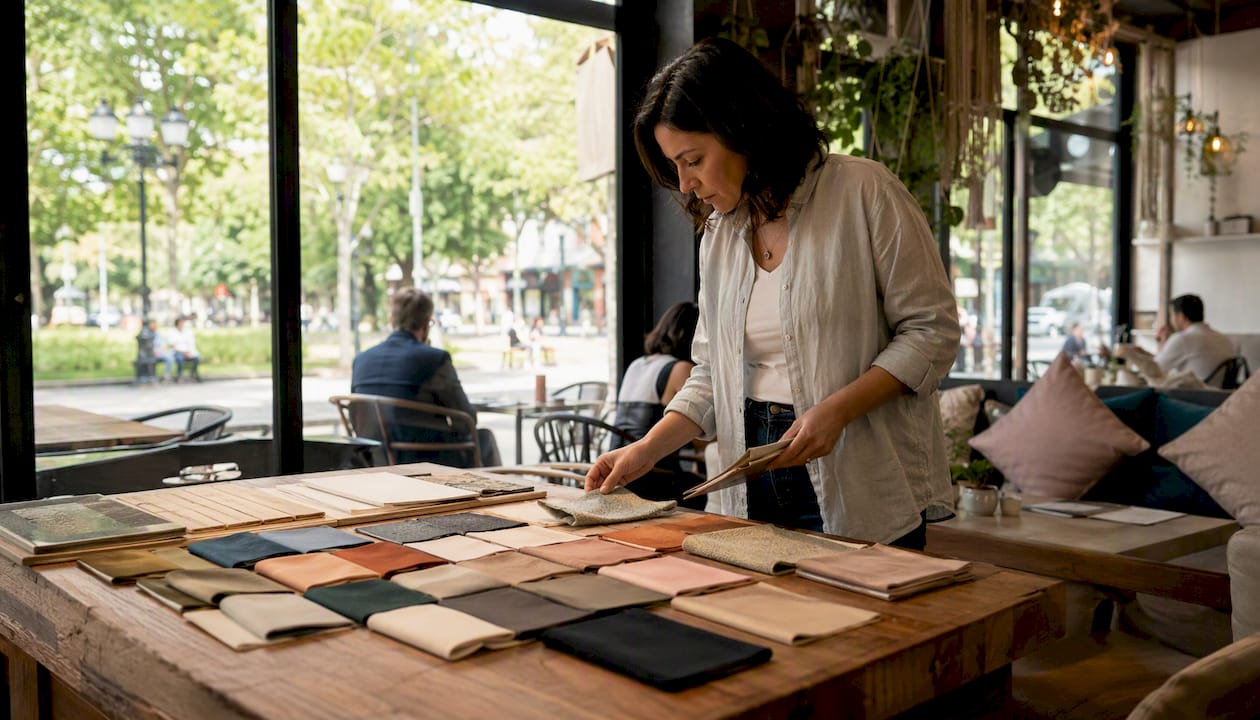
Pro Tip: Always request fabric swatches before finalizing your order. A swatch lets you check the actual opacity, texture, and color in your specific light conditions.
What do outdoor blinds cost, and what should warranties cover?
Typical price ranges:
- Budget roll-up shades (basic PVC or polyester): $50–$150 per panel. Fine for sheltered, low-wind areas. Expect a shorter lifespan.
- Midrange coated fabric or PVC systems: $150–$400 per panel. Better durability, more fabric options, often available in custom sizes.
- Premium custom motorized zipper-track or cassette systems: $400–$1,200+ per panel. Built for year-round exposure, full wind resistance, and smart integration.
Price drivers include material grade, panel width and drop, motorization, custom color matching, and valance style. A motorized cassette system for a 12-foot span will cost significantly more than a manual guide-wire shade for a 6-foot window — that’s expected.
What a solid warranty should cover:
- Fabric performance (UV fade, mildew) for at least 3–5 years
- Motor warranty of at least 2–3 years (5 years is better)
- Hardware and structural components for at least 1–2 years
- Transferability to a new homeowner (adds resale value)
Red flags in warranty language: watch for “cosmetic fading excluded,” very short motor coverage (under 1 year), or no mention of labor costs for replacement. Always ask the vendor what “normal wear” means in their specific terms.
Total investment including professional installation typically adds $100–$300 per blind depending on complexity, mounting surface, and whether electrical work is needed.
How long do outdoor blinds last, and how do you maintain them?
Lifespan varies a lot by material and how well you maintain the system.
- Basic PVC roll-up shades: 3–7 years with regular cleaning
- Coated polyester: 5–10 years in moderate climates
- Marine-grade fabric on a cassette system: 8–15+ years, especially when retracted during storms
- Bamboo/natural: 3–6 years, less in humid or rainy climates
Cleaning by material:
- Solar mesh: Monthly rinse with a garden hose; annual wash with mild soap and a soft brush
- PVC/vinyl: Wipe down with a damp cloth monthly; use a vinyl cleaner for mold spots
- Coated polyester: Spot-clean as needed; avoid abrasive scrubbers that strip the coating
- Bamboo: Dust regularly; avoid soaking — water warps natural fibers
Seasonal care checklist:
- Roll up or remove blinds before major storms or extended winter periods
- Store removed shades rolled (not folded) in a dry location
- Check fasteners and mounting hardware annually — replace any corroded screws
- Test motor battery levels each spring; recharge or replace before peak season
Pro Tip: Pairing your outdoor blinds with a regular exterior window maintenance schedule keeps the whole system — frame, hardware, and fabric — in better shape longer.
On the sustainability side, HDPE solar mesh fabrics are often recyclable, and some manufacturers take back worn fabric for processing. PVC is less eco-friendly at end of life, though longer-lasting systems offset some of that impact through reduced replacement frequency.
How do you choose the right outdoor blind for your situation?
Match your material and system to your climate first, then your budget. Here’s a quick decision map:
Climate-to-system guide:
- Coastal or windy: Marine-grade PVC or vinyl + zipper-track system + stainless hardware
- Hot and sunny (Southwest, South): Solar mesh with 80–90% UV block + cassette enclosure
- Rainy or humid (Pacific Northwest, Southeast): Marine-grade fabric with drainage tilt + mildew-resistant coating
- Sheltered porch, mild climate: Coated polyester or bamboo + guide-wire or basic roller
- Year-round, multi-zone use: Motorized cassette system with wind/rain sensors
Questions to ask any vendor before ordering:
- What is the wind rating or tested wind speed for this system?
- Is the fabric rated for UV resistance and mildew resistance?
- Are fabric swatches available before I order?
- What motor options and smart integrations are supported?
- What is the lead time for custom sizing?
- What does the warranty cover, and is it transferable?
Red flags in product listings: no wind rating listed, no UV or mildew specs, vague hardware descriptions, or warranty language that excludes fading entirely. If a listing doesn’t answer those questions upfront, ask — or move on.
Why custom outdoor blinds from a reputable supplier reduce buying risk
Off-the-shelf blinds rarely fit outdoor openings precisely, and a poor fit is where weather performance breaks down. A blind that’s even an inch too narrow on each side lets wind get under the fabric, which causes flapping, wear, and eventually hardware failure. Custom sizing eliminates that gap.
Valueblindsdirect’s outdoor shades collection includes solar mesh and motorized windproof options built for patio and porch use, with fabric samples available so you can verify performance before ordering. Their motorized windproof sunshades offer 2–30% openness levels, giving you control over privacy, airflow, and UV blocking in one product.
Key proof points worth knowing:
- Free swatches available so you can test fabric in your actual light conditions
- Measurement guides and installation resources on-site to reduce ordering errors
- Motorization options with sensor compatibility for wind and rain protection
- Warranty coverage on both fabric and motor components
- Expert support via phone and chat for pre-purchase questions
Solar mesh fabrics can block up to 90% of UV — and when that fabric is custom-cut to your exact opening and mounted on a cassette or zipper-track system, you get the full benefit of that UV rating without the gaps that let weather in.
How do top outdoor blind brands compare?
The outdoor blind market breaks into a few clear tiers, and knowing where each type of supplier sits helps you shop smarter.
Specialty outdoor blind suppliers (like Valueblindsdirect) focus on custom sizing, weather-rated fabrics, and motorization. They typically offer the widest range of fabric specs, the most accurate sizing, and better warranty terms than mass-market retailers. The tradeoff is a longer lead time (often 1–3 weeks for custom orders) versus same-day pickup at a big-box store.
Mass-market retailers carry budget PVC roll-up shades and basic polyester options at low price points. These work for sheltered, low-wind patios but rarely come with wind ratings or meaningful warranty coverage. Cheap PVC tube-style shades are particularly vulnerable to wind deformation.
Premium structural systems (motorized louvered pergolas, retractable awnings) sit above the blind category entirely. The StruXure Pergola X, for example, carries ICC certification for building code compliance and is engineered for hurricane-force winds — but it’s a structural installation, not a blind. It’s the right answer for extreme exposure, not for a standard covered porch.
For most homeowners, the sweet spot is a custom solar mesh or marine-grade fabric blind from a specialty supplier, with motorization added for large spans or exposed locations. That combination delivers weather performance, longevity, and value that neither budget retail nor full structural systems can match at the same price point.
What does outdoor blind installation actually cost?
Installation costs vary by mounting surface, span width, and whether motorization is involved.
Typical installation cost ranges:
- DIY installation (wood framing, single blind): $0 labor + hardware ($20–$60 for stainless brackets and screws)
- Professional installation, standard manual blind: $75–$200 per blind depending on height and access
- Professional installation, motorized system: $150–$400 per blind, more if electrical conduit is needed
- Masonry or concrete mounting: Add $50–$150 per blind for anchor drilling and specialty hardware
The total expected investment for a single motorized custom outdoor blind on a standard wood-framed patio typically falls in the $500–$1,500 range, including the blind itself, hardware, and professional installation. A full porch with four panels and motorization can run $2,000–$5,000+ depending on system type and span.
DIY is genuinely realistic for most single-blind setups on accessible wood framing. The standardized window replacement principle applies here too: consistent mounting points and standard opening sizes make installation faster and reduce the chance of errors. Where it gets complicated is masonry, high ceilings, or motorized wiring — those are the jobs worth paying a professional for.
Are outdoor blind materials environmentally friendly?
The sustainability picture for outdoor blinds is mixed, and worth understanding before you buy.
HDPE solar mesh is one of the better options environmentally. The fabric is often made from recycled materials, and some manufacturers accept worn fabric back for recycling. It’s also long-lasting, which reduces replacement frequency.
Marine-grade PVC/vinyl is durable (less frequent replacement = lower lifetime impact) but is petroleum-based and difficult to recycle at end of life. Some manufacturers are moving toward phthalate-free formulations, which is worth asking about.
Coated polyester sits in the middle. The base fabric is recyclable in some programs, but the coating complicates the process. Longevity is the main environmental argument for choosing a higher-grade coated polyester over a cheap option that needs replacing every few years.
Bamboo is a renewable resource and biodegradable, making it the most eco-friendly material on this list — but its shorter outdoor lifespan means more frequent replacement, which offsets some of that advantage.
The most sustainable choice is usually the one that lasts longest in your specific climate. A marine-grade fabric system that runs 12 years beats three rounds of budget PVC shades on almost every environmental metric.
Key Takeaways
The best outdoor blinds for U.S. patios combine weather-rated fabric (solar mesh or marine-grade PVC) with a wind-resistant mounting system (zipper-track or cassette) and, for exposed locations, motorization with wind/rain sensors.
| Point | Details |
|---|---|
| Match material to climate | Solar mesh for hot/sunny; marine-grade PVC for coastal, rainy, or windy locations. |
| Wind system matters as much as fabric | Zipper-track and cassette systems outperform guide-wire in exposed locations. |
| Motorization protects your investment | Wind/rain sensors automatically retract blinds before damage occurs, extending lifespan. |
| Always verify warranty and request swatches | Confirm UV fade, mildew, and motor coverage before ordering; test fabric in your actual light. |
| Valueblindsdirect for custom, weather-ready options | Custom sizing, motorized windproof shades, free swatches, and warranty-backed outdoor collection. |
The tradeoff most homeowners don’t see coming
Here’s an honest take: most people shopping for outdoor blinds start with aesthetics and end up wishing they’d started with weather performance. The bamboo shade that looks perfect in the showroom photo lasts two seasons on a Gulf Coast porch. The solar mesh that seemed “too industrial” at first glance is still going strong in year eight.
The other thing that surprises people is how much the mounting system matters. A premium fabric on a poorly anchored guide-wire setup will fail faster than a midrange fabric on a properly installed zipper-track. The blind is only as good as what holds it in place.
When clients ask whether to add a pergola or just use blinds, the honest answer is: blinds alone are fine for most covered patios in moderate climates. For genuinely exposed locations — oceanfront, high-altitude, or hurricane zones — start with a structural solution and add blinds as a complement, not a substitute. A blind is not a wall.
One practical example: a homeowner measuring for a 14-foot patio span ordered a standard-width blind and assumed the overlap would cover the gap. It didn’t. The fix was a custom-width order with a 3-inch side overlap on each end. That extra 6 inches of fabric eliminated the wind flutter entirely and added maybe $40 to the total cost. Measure twice, order custom.
Valueblindsdirect makes custom outdoor blinds easy to get right
Skip the guesswork of off-the-shelf sizing. Valueblindsdirect offers custom-cut outdoor shades in solar mesh and motorized windproof fabrics, built specifically for patio and porch use. Free swatches let you test the actual fabric before you order, and the on-site measurement guide walks you through every step so your blind fits the first time.
Motorization options include battery, solar, and hardwired motors with sensor compatibility for wind and rain protection. Every order is backed by warranty coverage on both fabric and motor components, with expert support available by phone and chat if you have questions before or after purchase.
Ready to find your perfect fit? Browse the full outdoor shades collection or head to the Window Treatment Design Studio to get personalized help with sizing, fabric selection, and motorization options.
Useful sources and recommended reading
- Valueblindsdirect outdoor shades collection — browse solar mesh, PVC, and motorized windproof options with custom sizing
- Automatic outdoor blinds: the complete patio guide — covers motorization, sensors, and installation considerations
- Outdoor sun blinds: your homeowner’s guide — measurement tips and fabric selection for sun protection
- Best outdoor shades of 2026 (Bob Vila) — editor-tested roundup with UV-blocking data and swatch recommendations
- Which material is best for outdoor blinds? — material durability and mildew-resistance guidance
- Shade ideas for your patio or backyard (The Spruce) — when to use structural solutions vs. blinds alone
- Window Treatment Design Studio — get personalized help with sizing, fabric, and motorization before you order
Order free swatches before you buy. Seeing and touching the fabric in your own outdoor light is the single best way to avoid a return.