
Outdoor Sun Blinds: Your 2026 Homeowner's Guide
TL;DR:
- Outdoor sun blinds are durable coverings that block UV rays, reduce heat, and add privacy to outdoor spaces. The effectiveness depends mainly on fabric openness, with lower openness offering more UV protection and privacy. Proper measurement and choice of features like material, color, and operation increase longevity and outdoor comfort.
Outdoor sun blinds are durable shade coverings designed to block UV rays, reduce heat, and add privacy to patios, pergolas, and porches while keeping airflow intact. The right blind does more than shade your space. It protects your furniture from fading, cuts glare during afternoon hours, and turns an uncomfortable deck into a livable room. Solar shades, roller shades, and motorized options each serve different needs, and fabric openness is the single most important spec to understand before you buy. This guide covers every major decision point so you can choose with confidence.
What types of outdoor sun blinds are available?
The four main categories of outdoor sun blinds are solar roller shades, natural material shades, motorized shades, and blackout shades. Each suits a different combination of climate, privacy need, and aesthetic preference.
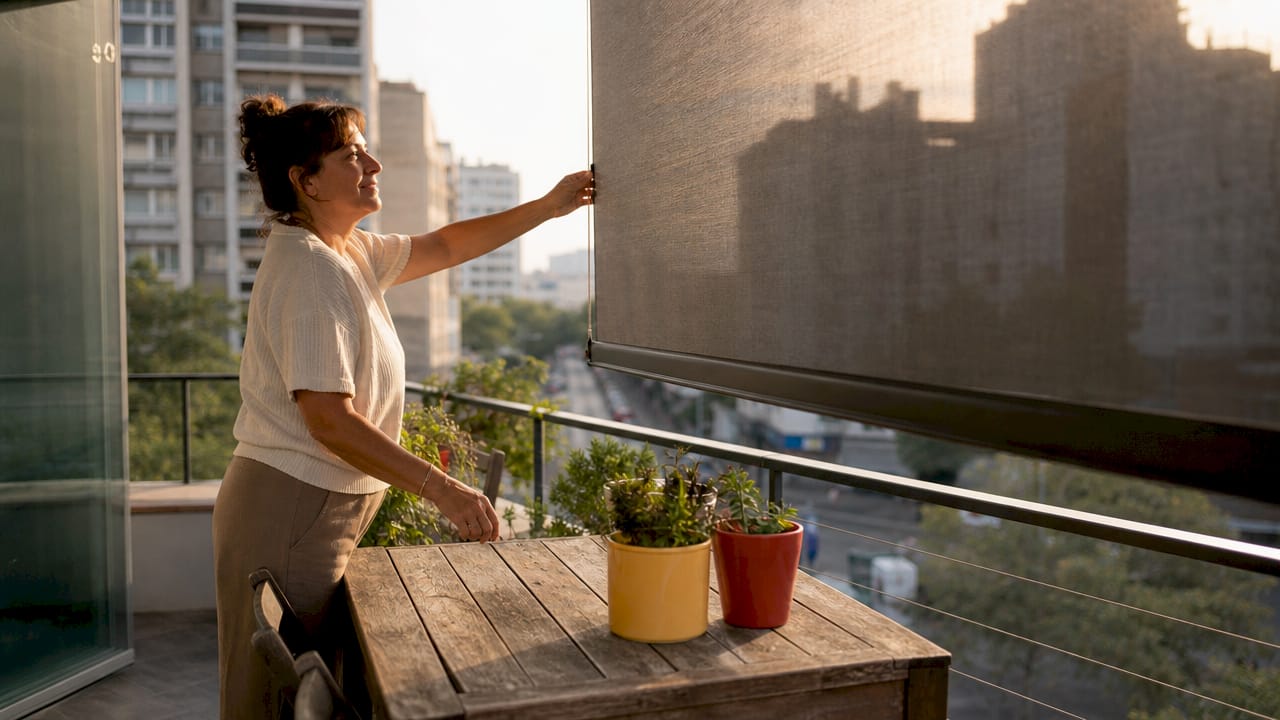
- Solar roller shades use PVC or knitted HDPE solar fabric to filter sunlight while preserving your view. A 5% openness solar fabric blocks roughly 95% of UV rays and still lets you see through to the yard. These are the most popular choice for open patios and pergolas.
- Cordless roller shades eliminate dangling cord hazards. Cordless solar designs are the safest option for households with children and pets, and they operate with a simple push or pull.
- Natural material shades, including bamboo roll-up styles, deliver a warm, rustic look at a lower price point. Bamboo shades suit covered porches and shaded patios well, though they need more maintenance than synthetic fabrics in wet climates.
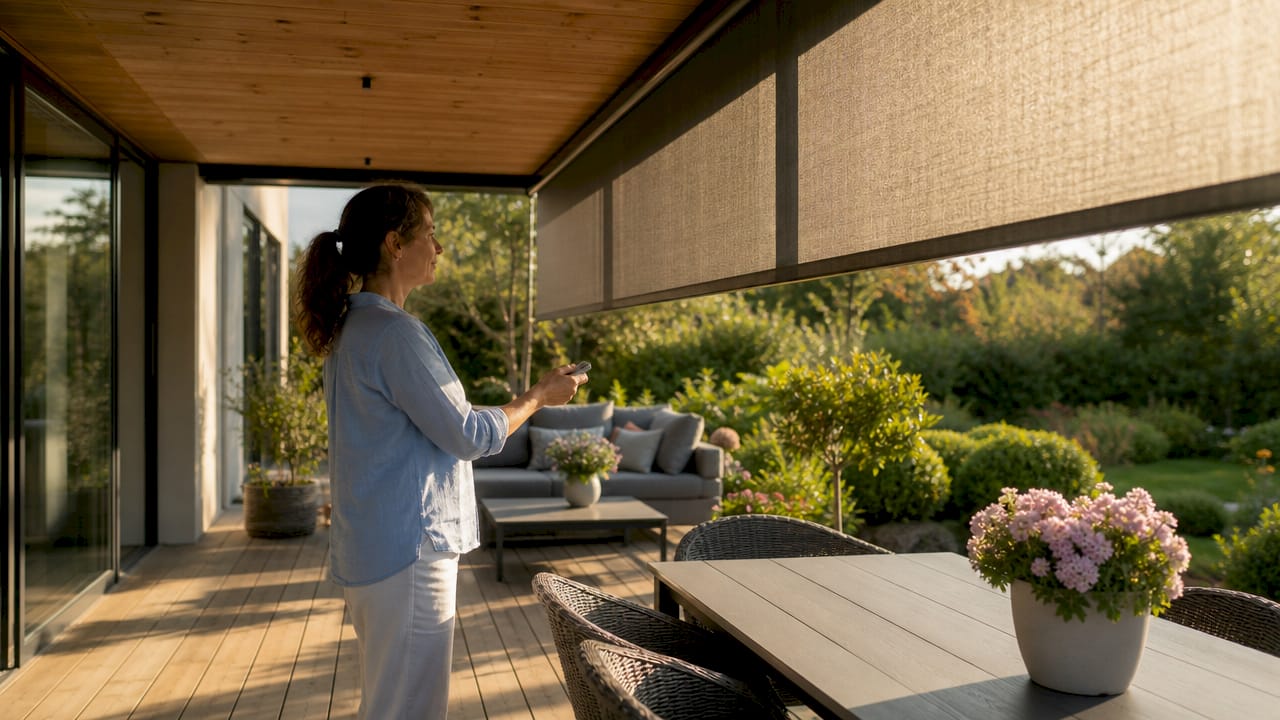
- Motorized outdoor shades offer remote or app-based control. Motorized windproof models include retractable aluminum valances that protect the fabric when the shade is rolled up, extending product life significantly.
- Blackout outdoor shades block all light and are best for covered patios where you want full privacy and complete glare elimination, such as an outdoor home theater or a west-facing porch in a hot climate.
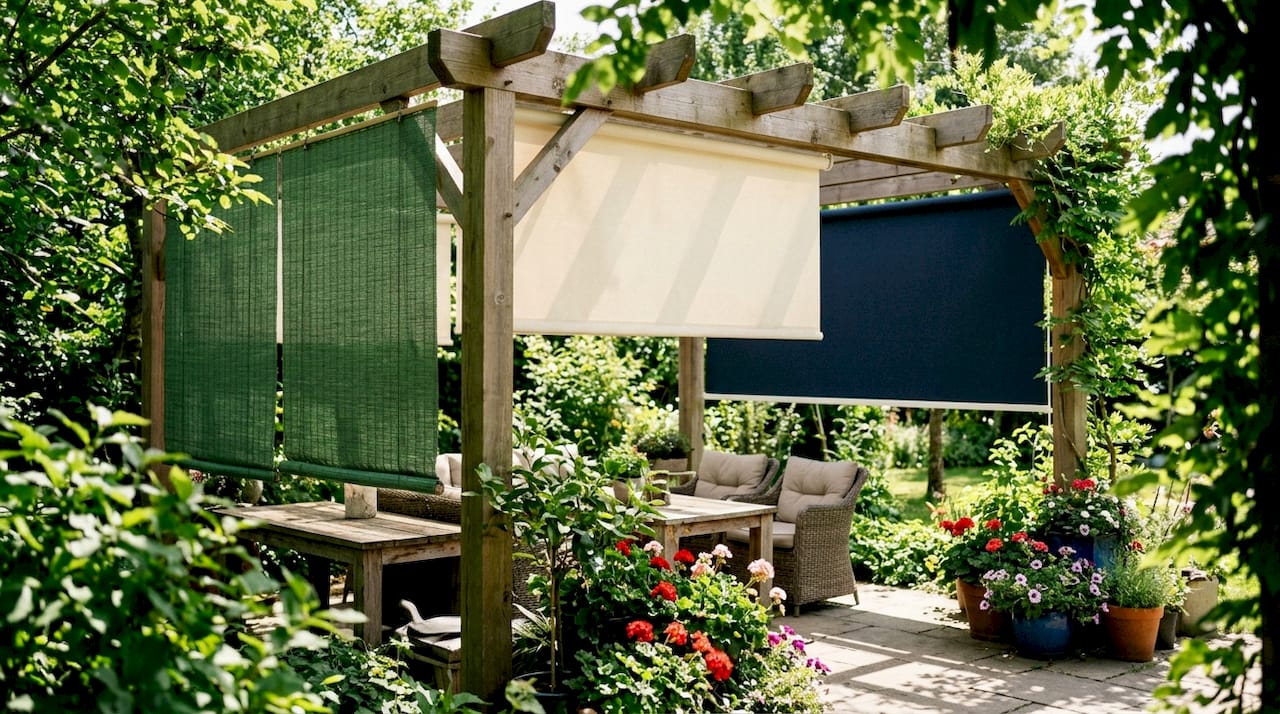
The right type depends on your outdoor structure. Open pergolas benefit most from solar shades that filter without blocking airflow. Enclosed porches can handle heavier blackout options. Motorized shades work best on large spans where manual operation becomes awkward.
How effective are outdoor sun blinds at blocking UV rays and heat?
Outdoor solar shades block between 90% and 97% of UV rays, and the exact figure depends almost entirely on fabric openness. That single number, the openness factor, controls how much light, air, and visibility passes through the fabric.
Understanding fabric openness
Openness factor is expressed as a percentage. A lower number means a tighter weave, more UV blockage, and less visibility. A higher number means more airflow and a clearer view, but less sun protection.
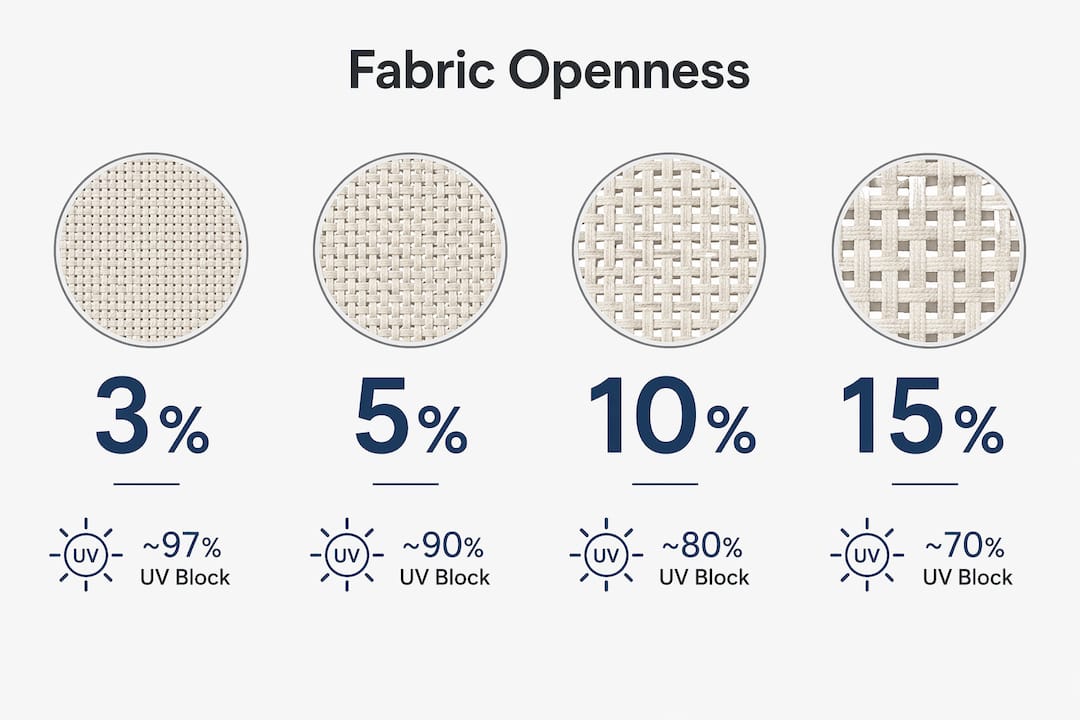
| Openness Factor | UV Blockage | Visibility | Best Use |
|---|---|---|---|
| 3% | ~97% | Low | Maximum privacy, intense sun exposure |
| 5% | ~95% | Moderate | Balanced protection and view |
| 8% | ~92% | Good | Mild climates, partial shade |
| 10%+ | ~90% | High | Light filtering, breezy spaces |
A 3% openness fabric blocks roughly 97% of UV rays, making it the right pick for south-facing patios that receive direct sun all afternoon. A 5% fabric blocks about 95% and gives you a clearer view of the yard, which most homeowners prefer for everyday use.
How heat reduction works
Solar blinds reflect infrared heat and block glare without eliminating all light or visibility. That distinction matters. A solar shade keeps your patio cooler by stopping heat before it reaches the surface, not by sealing the space shut. Knitted HDPE fabric, in particular, allows airflow while blocking UV rays, which prevents the stagnant heat buildup you get with solid panels or canvas awnings. The result is a space that feels genuinely cooler, not just darker.
Pro Tip: If your patio faces west, choose a 3% openness fabric. West-facing spaces receive the hottest afternoon sun, and the tighter weave pays for itself in comfort within the first summer.
What features should homeowners look for when choosing outdoor sun blinds?
The best patio shade solution for your space depends on five key features: material durability, weatherproofing, privacy level, color, and installation type.
Material durability and weather resistance
Weatherproof outdoor blinds use UV-stabilized PVC or knitted HDPE fabrics that resist fading, mold, and moisture. These materials hold their shape and color through rain, humidity, and direct sun exposure. Natural materials like bamboo look beautiful but require seasonal sealing in wet regions to prevent warping and mildew. For year-round outdoor use, synthetic solar fabrics are the more durable choice.
Privacy and visibility balance
Privacy level is a direct function of openness factor. A 3% fabric gives you strong privacy from the street while still letting diffused light through. A 10% fabric feels open and airy but offers little privacy at night when interior lights are on. Most homeowners find the 5% range hits the right balance for daytime use on a residential patio.
Color and heat absorption
Colors range from light neutrals like beige and light gray to darker tones like charcoal, and the choice affects both aesthetics and heat performance. Lighter colors reflect more heat and work well in hot climates. Darker colors absorb more heat but improve outward visibility because of the contrast they create between inside and outside. Charcoal is the most popular choice for solar shades because it maximizes the view-through effect.
Installation options
Ceiling-mount and wall-mount options fit different outdoor structures. Top-mount works best on pergolas with overhead beams. Wall-mount suits covered patios and verandas where the shade drops from a fascia board. Measure your mounting surface before ordering, because the bracket type determines how the shade sits and how well it seals against the frame.
- Cordless operation removes cord hazards and simplifies daily use.
- Side rails on windproof models keep the shade stable in breezy conditions.
- Retractable valances protect the rolled fabric from UV degradation when the shade is up.
Pro Tip: Order a fabric swatch before committing to a color. The difference between “beige” and “light gray” looks subtle on a screen but reads very differently against your home’s exterior.
How to measure and install outdoor sun blinds
Getting the measurement right is the most important step in the entire process. A shade that is even two inches too narrow leaves a gap that lets in direct sun and defeats the purpose.
- Measure the width of the opening at three points: top, middle, and bottom. Use the narrowest measurement and deduct half an inch on each side for clearance if you are doing an inside mount.
- Measure the height from the mounting point to the floor or desired drop point. Add six inches to account for the roller housing at the top.
- Choose your mount type. Outside mounts cover the full opening and are easier to install. Inside mounts give a cleaner look but require more precise measurements.
- Check your mounting surface. Concrete and stucco require masonry anchors. Wood beams accept standard screws. Confirm the surface can support the weight of the shade, especially for larger motorized units.
- Install the brackets first, then hang the shade and test the operation before tightening everything fully.
For motorized outdoor shades, connect the power source before mounting the shade to avoid working overhead with live wires. Most motorized units pair with a remote or a smart home app during setup.
Pro Tip: Clean your outdoor shade fabric with mild soap and cold water twice a year. Avoid pressure washers, which can damage the weave and reduce UV-blocking performance over time. Check the patio sealing checklist for broader outdoor maintenance tips that extend the life of your entire outdoor setup.
Beyond sun protection: other benefits of outdoor shades
Weather-resistant blinds do more than block the sun. They add a layer of function to your outdoor space that most homeowners do not fully consider until after installation.
- Energy savings. Blocking solar heat at the patio level reduces the heat load on adjacent interior rooms. Spaces with large glass doors benefit most, because the shade stops heat before it reaches the glass.
- Insect control. Some outdoor shade systems combine solar fabric with fine mesh screens, giving you UV protection and a barrier against mosquitoes and flies at the same time.
- Increased privacy. A solar shade on a street-facing porch blocks the view from passing traffic without making the space feel closed in. This is especially useful for ground-floor patios in urban or suburban settings.
- Aesthetic upgrade. Custom outdoor patio shades in coordinated colors tie together the look of an outdoor living area. A well-chosen shade color can make a plain concrete patio feel like a designed outdoor room.
- Furniture protection. UV rays fade cushions, rugs, and wood furniture faster than most homeowners expect. A shade that blocks 95% of UV rays extends the life of outdoor furnishings significantly.
For homeowners who want to select outdoor shades for both style and efficiency, the combination of the right openness factor and a coordinated color makes the biggest difference in both performance and appearance.
Key Takeaways
Outdoor sun blinds deliver the best results when fabric openness, material durability, and installation method are matched to the specific outdoor space and climate.
| Point | Details |
|---|---|
| Fabric openness drives performance | A 3% openness fabric blocks 97% of UV rays; 5% blocks 95% with better visibility. |
| Material choice affects longevity | Knitted HDPE and UV-stabilized PVC outlast natural materials in wet or high-sun climates. |
| Cordless and motorized options add safety | Cordless designs remove cord hazards; motorized shades suit large or hard-to-reach spans. |
| Color affects heat and visibility | Darker shades like charcoal improve view-through; lighter tones reflect more heat. |
| Accurate measurement prevents gaps | Measure width at three points and add height allowance for the roller housing before ordering. |
What I’ve learned from years of watching homeowners get this wrong
Most homeowners focus on price and color when choosing outdoor shades. Those two factors matter, but they are not the ones that determine whether the shade actually works. The fabric openness factor is the decision that shapes everything else, and most people pick it last, almost as an afterthought.
The most common mistake I see is choosing a 10% or higher openness fabric because it “looks lighter” in a showroom, then being frustrated that the patio is still hot and the neighbors can see in. A 5% fabric in charcoal would have solved both problems. The second most common mistake is skipping side rails on a windy site. A shade without side rails in a coastal or elevated yard will flap constantly, wear out the fabric, and eventually tear at the seams.
Motorized shades are worth the extra cost for any span wider than eight feet. Manual operation on a large shade is awkward, and most homeowners stop using it consistently within a season. A motorized unit gets used every day because it takes two seconds to operate.
Custom sizing is not a luxury. A shade that fits the exact opening performs better, looks better, and lasts longer than a standard-size shade trimmed to fit. Valueblindsdirect offers custom sizing across its outdoor shade range, which removes the guesswork from ordering. If you are unsure about fabric selection, request swatches before committing. The difference between fabrics is impossible to judge accurately on a screen.
— Sunny
Valueblindsdirect outdoor shades: built for your space
Valueblindsdirect carries a full range of custom outdoor patio shades, from cordless solar rollers to motorized windproof models with side rails. Every shade ships in custom sizes, so you get a precise fit without trimming or workarounds.
The Window Treatment Design Studio walks you through fabric openness, color selection, and mounting options with expert guidance. For homeowners who want the easiest daily operation, the motorized outdoor sunshade collection includes windproof models with 2%–30% openness options and smart control compatibility. Free swatches are available so you can confirm your color choice against your home’s exterior before ordering.
FAQ
What is the best openness factor for a patio sun blind?
A 5% openness factor works best for most residential patios, blocking about 95% of UV rays while maintaining a clear outward view during the day.
Are outdoor sun blinds weatherproof?
Solar shades made from UV-stabilized PVC or knitted HDPE fabric are weather-resistant and hold up well against rain, humidity, and direct sun. Natural materials like bamboo require more maintenance in wet climates.
Can outdoor solar shades reduce my energy bills?
Solar shades block infrared heat before it reaches glass doors and windows, reducing the heat load on adjacent interior rooms and lowering cooling demand during summer months.
What is the difference between solar shades and blackout outdoor blinds?
Solar shades filter light and preserve visibility while blocking UV rays and heat. Blackout outdoor shades block all light and are best for full privacy or outdoor media spaces.
How do I clean outdoor sun blinds?
Wipe the fabric with mild soap and cold water twice a year. Avoid pressure washers, which can damage the weave and reduce UV-blocking performance.