
Sun Blocking Window Shades: A 2026 Homeowner's Guide
TL;DR:
- Sun blocking window shades improve indoor comfort by reducing heat, glare, and UV exposure, which lowers energy costs. Proper installation, size, and material choice are essential for optimal performance, especially with features like motorization for automation and energy savings. Combining layers, such as solar and blackout shades, offers versatile control for different times of day and seasons.
Sun blocking window shades are window treatments designed specifically to reduce heat, glare, and ultraviolet light penetration, improving indoor comfort while protecting furnishings and cutting energy costs. The right shade does more than dim a room. It controls how much solar energy enters your home, which directly affects your HVAC workload and your monthly utility bill. Whether you rent an apartment with west-facing windows or own a house in a sun-drenched climate, choosing the correct shade type, material, and fit makes a measurable difference. Brands like Valueblindsdirect and technologies ranging from motorized rollers to cellular honeycomb designs now give homeowners more precision than ever before.
What types of sun blocking window shades are available?
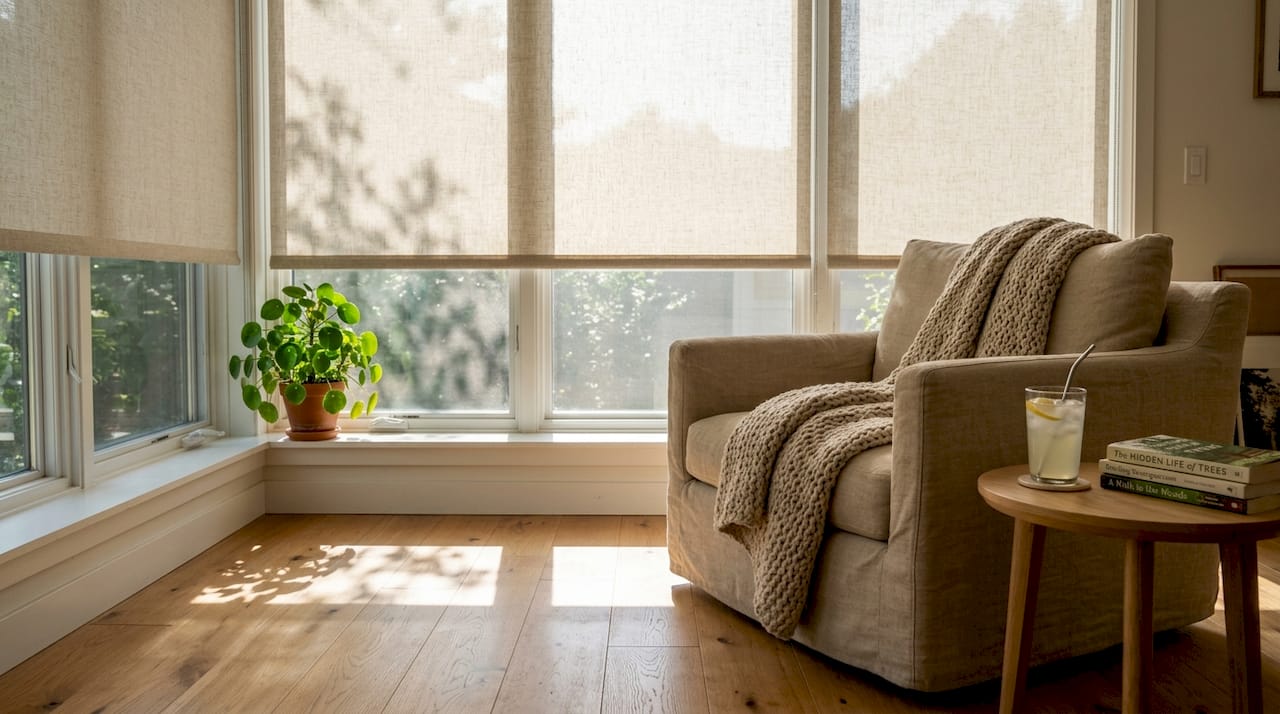
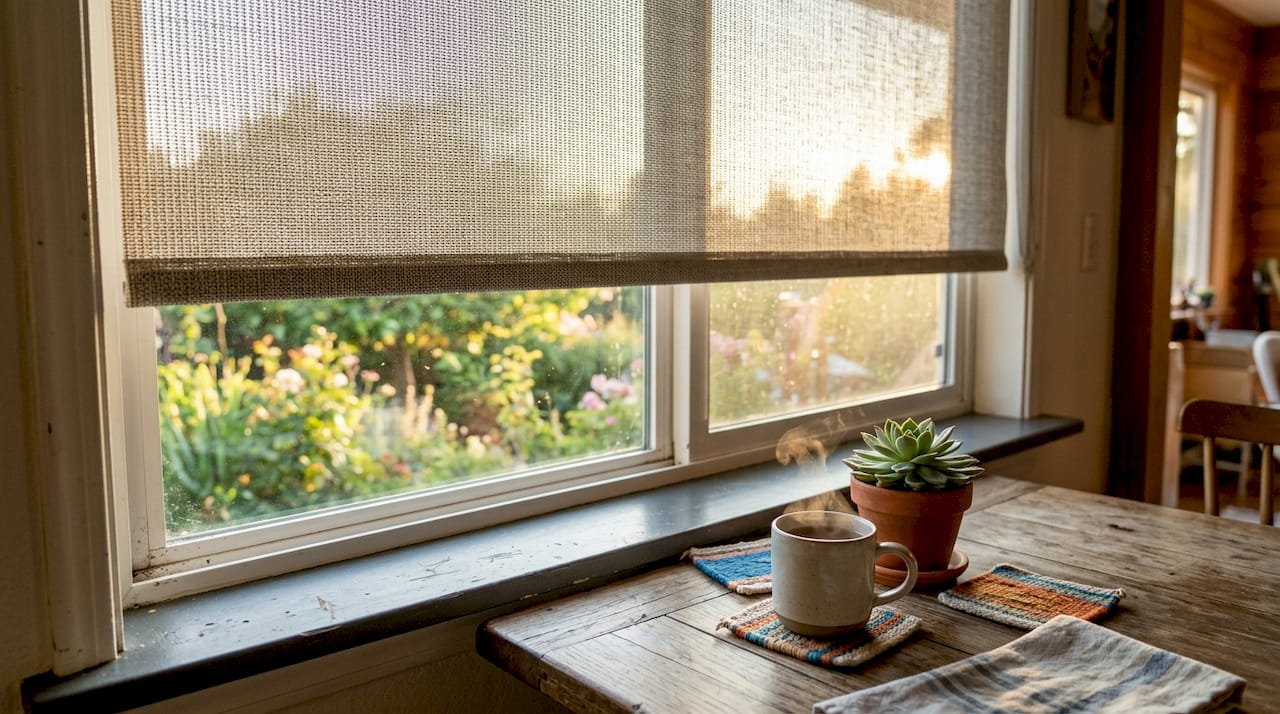
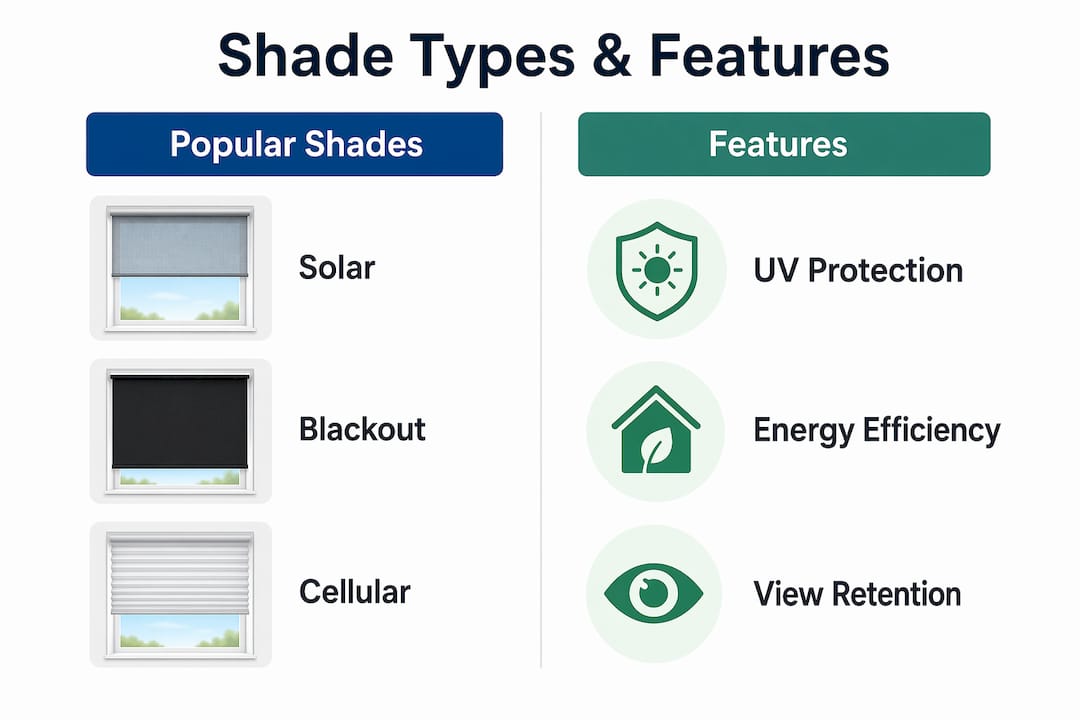
Solar shades are the most popular starting point for sun protection for windows. They use an open-weave fabric that filters UV rays and reduces glare without eliminating your outdoor view. Solar shades with 1%–5% openness protect hardwood floors from UV bleaching while still letting you see outside. The lower the openness percentage, the more light and heat the fabric blocks.
Blackout roller shades take a different approach. They use a dense, opaque fabric that eliminates virtually all incoming light, making them the best window shades for sun in bedrooms, media rooms, or any space where complete darkness matters. They offer strong UV protection but sacrifice the outdoor view entirely.
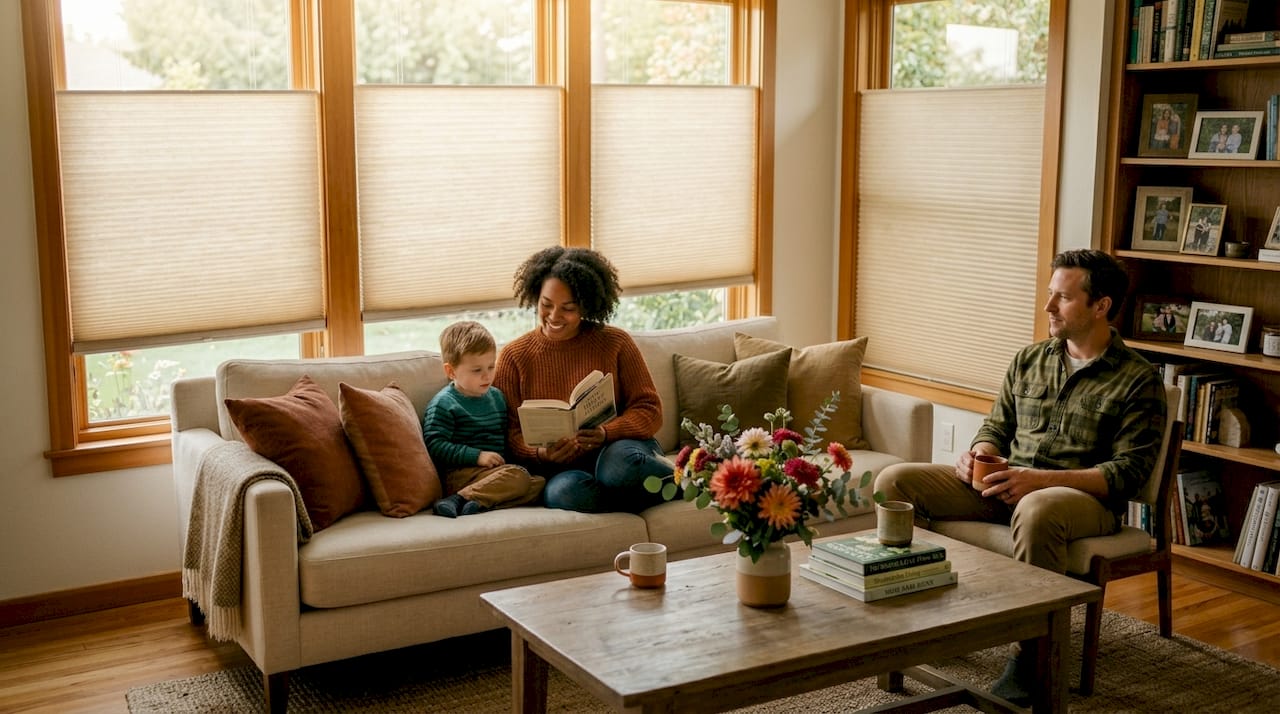
Cellular shades, also called honeycomb shades, are the top choice for energy efficiency. Their signature air pockets act as insulation, and honeycomb shades reduce summer heat gain by up to 60%. That number matters because it translates directly into less air conditioning demand on hot afternoons.
Woven wood shades and zebra shades round out the main categories. Woven shades use natural materials like bamboo or jute to filter light softly, adding texture while reducing glare. Zebra shades alternate between sheer and solid fabric bands, letting you dial in exactly how much light enters by shifting the bands into alignment or offset positions.
| Shade type | UV protection | Light blockage | Energy efficiency | View retention |
|---|---|---|---|---|
| Solar shades | High | Moderate | Moderate | Yes |
| Blackout roller shades | Very high | Complete | Moderate | No |
| Cellular (honeycomb) shades | High | Moderate to high | Very high | Partial |
| Woven wood shades | Moderate | Low to moderate | Low to moderate | Partial |
| Zebra shades | Moderate to high | Adjustable | Moderate | Adjustable |
Pro Tip: If you want both view retention during the day and full darkness at night, pair a solar shade with a blackout roller on a double bracket. You get two shades in one window without sacrificing either function.
How do material, coverage, and installation affect performance?
The single most important factor in sun blocking performance is not the fabric rating. It is how completely the shade covers the window. Full-coverage shades reduce UV exposure by approximately 97%, while partial-coverage options reduce it by only around 75%. That gap exists because UV rays and heat enter freely through any uncovered edge, no matter how high-performing the fabric itself is.
Material openness, measured as a percentage, determines how much direct sunlight passes through the weave. A tighter weave means a lower openness factor and stronger solar heat blocking. Openness factor and fabric weave together determine the shade’s solar heat gain coefficient (SHGC), which is the standard metric for how much solar energy a window treatment admits. A lower SHGC means less heat enters the room.
The U-factor is the companion metric. Where SHGC measures solar heat gain, the U-factor measures how well a treatment resists heat transfer through the material itself. SHGC and U-factor together determine a window treatment’s total energy performance, and selecting the right combination depends on your climate zone and window orientation.
Installation fit amplifies or undermines all of these metrics. Shades mounted inside the window frame look clean but often leave side gaps. Outside-mount shades that extend beyond the frame edges close those gaps and deliver noticeably better performance. Side rails and overlapping edges further reduce light leakage, particularly on south- and west-facing windows where direct sun exposure is most intense.
Pro Tip: Before ordering, hold a flashlight against your current shade at night and look for light bleeding around the edges. Any gap you see is a gap where UV and heat enter during the day. Use that test to decide whether you need an outside mount or side channel hardware.
| Installation factor | Impact on performance |
|---|---|
| Inside mount (no overlap) | Higher light leakage at edges |
| Outside mount with overlap | Reduced edge gaps, better UV blocking |
| Side rails or channels | Near-complete perimeter seal |
| Double-layer mounting | Maximum flexibility and protection |
What modern features enhance sun blocking shades?
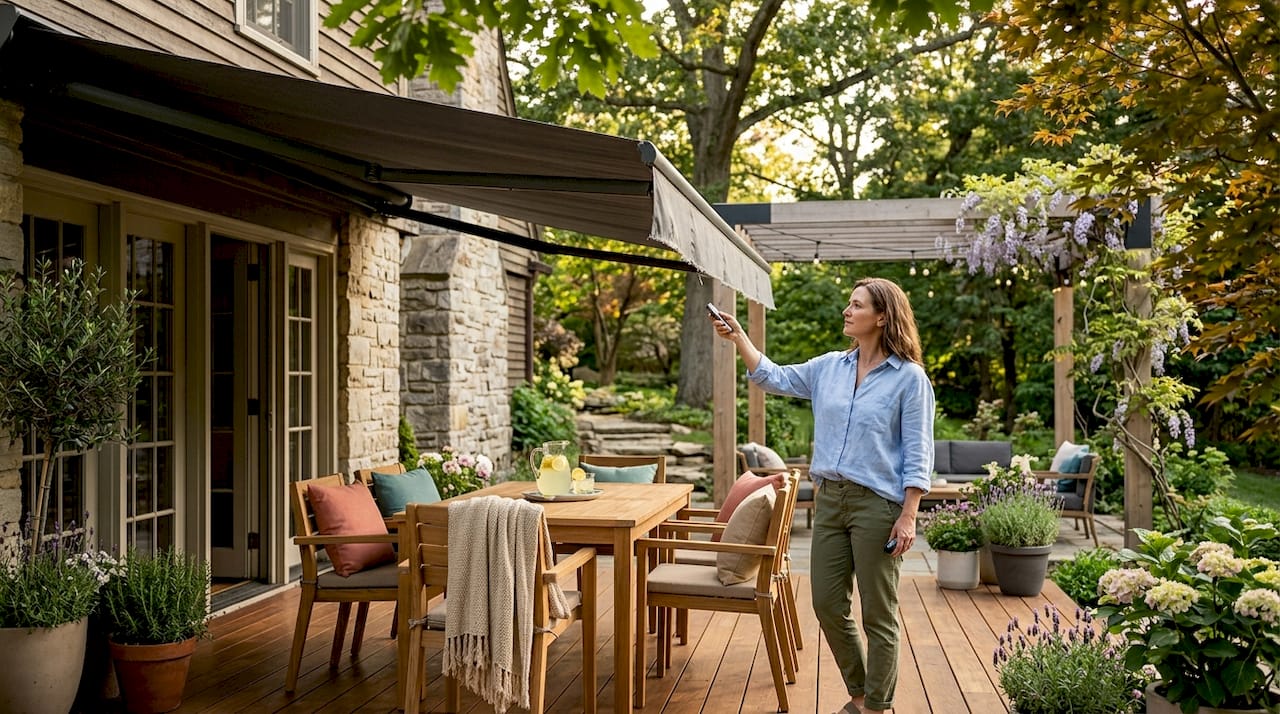
Motorization has changed how homeowners use light blocking shades. Instead of manually adjusting shades throughout the day, you schedule them to close automatically during peak sun hours and open again in the evening. Motorized shades scheduled for sun-facing exposures reduce energy strain on HVAC systems, particularly in south- and west-facing rooms where afternoon heat is most aggressive.
The energy savings are real and quantifiable. Motorized sun blocking shades can reduce energy consumption by 10% to 25% when scheduled correctly. That range depends on your climate, window orientation, and how consistently the shades are used. Consistent automated use outperforms manual adjustment every time, because most people forget to lower shades before leaving the house.
Here is how modern motorized features stack up for practical use:
- Scheduled automation. Set shades to close at 11 a.m. and reopen at 5 p.m. on south-facing windows without touching a button.
- Smart home integration. Connect shades to Google Home, Amazon Alexa, or Apple HomeKit for voice control and zone-based scheduling across multiple rooms.
- Sun-sensor triggers. Some systems detect direct sunlight and lower shades automatically, then raise them when clouds pass or the sun moves.
- Remote and app control. Adjust any shade in the house from your phone, useful for renters who cannot hardwire controls into walls.
Valueblindsdirect offers motorized solar shades designed for large windows, with both manual override and app-based scheduling built in. Cordless options are also available, which is a practical choice for renters who need sun protection without permanent installation changes.
Pro Tip: If you are renting, look for battery-powered motorized shades. They require no wiring, no landlord approval, and no wall damage. You get the full scheduling benefit without any installation complications.
For homeowners interested in pairing motorized window shades with other smart home upgrades, smart home automation features like scheduled garage door operation follow the same logic: automation reduces energy waste and removes the burden of manual habits.
How to choose the best sun blocking shades for your home
Choosing the right shade starts with your window’s orientation. South-facing windows receive the most consistent sun exposure throughout the day, so they benefit most from low-SHGC solar shades or cellular shades with strong insulating properties. West-facing windows take the harshest afternoon heat, making motorized or blackout options a strong choice for those rooms.
Climate matters just as much as orientation. In hot, sunny climates like Florida, Arizona, or Southern California, prioritizing a low SHGC is the right call. In colder northern climates, you may want a higher SHGC in winter to allow passive solar heating, which means choosing shades you can raise during the day and lower at night for insulation.
Here are the key decisions to work through before purchasing:
- View vs. privacy. Solar shades let you see out while blocking UV. Blackout shades give full privacy but eliminate the view. Zebra shades let you toggle between both.
- Moisture-prone rooms. Kitchens and bathrooms need moisture-resistant materials. Faux wood blinds or PVC-based roller shades hold up far better than natural wood or fabric in high-humidity spaces.
- Manual vs. motorized. Manual shades cost less upfront but require consistent use to deliver energy savings. Motorized shades cost more but perform reliably because they operate on a schedule regardless of your habits.
- Layering for versatility. Combining a sheer solar shade with a blackout roller gives you full control across every time of day and season. This is the most flexible setup for living rooms and home offices.
- Custom fit vs. standard sizing. Standard sizes leave gaps at the edges. Custom-fit shades from providers like Valueblindsdirect eliminate those gaps and deliver the full performance the fabric rating promises.
Pro Tip: For home offices with screens, choose a solar shade with a 3% openness factor. It cuts glare enough to eliminate screen reflections without making the room feel dark during working hours.
Key takeaways
Sun blocking window shades deliver their full performance only when the right shade type, material openness, and installation fit work together as a system.
| Point | Details |
|---|---|
| Coverage beats fabric rating | Full-coverage shades reduce UV by 97% vs. 75% for partial options, regardless of fabric quality. |
| Cellular shades lead on insulation | Honeycomb designs cut summer heat gain by up to 60%, making them the top energy-efficiency choice. |
| Motorization pays for itself | Scheduled motorized shades reduce energy consumption by 10%–25% through consistent automated use. |
| SHGC and U-factor guide selection | Match these metrics to your climate zone and window orientation for the best energy outcome. |
| Custom fit closes performance gaps | Outside-mount shades with edge overlap eliminate the side gaps that undermine even high-rated fabrics. |
Why I think most people are buying the wrong shade
I have seen homeowners spend real money on a premium solar fabric with a 1% openness factor, then mount it inside the frame and wonder why the room still heats up. The fabric is doing its job. The installation is not. The gap between the shade edge and the window frame is where the problem lives, and no fabric rating fixes it.
The other mistake I see constantly is treating sun protection as a single-product problem. A solar shade handles daytime glare beautifully. It does almost nothing for nighttime privacy or winter insulation. A blackout shade solves the darkness problem but makes the room feel like a cave at noon. The answer is layering, and it is not complicated. A solar shade on the front bracket and a blackout roller on the rear bracket gives you complete control with one window treatment system.
Motorization is where I think the real value sits for most homeowners in 2026. The energy savings argument is solid, but the bigger benefit is consistency. A scheduled shade closes every day at the right time whether you remember or not. That reliability is what actually moves the needle on your utility bill, not the fabric specification sheet.
My honest recommendation: invest in custom-fit shades, mount them outside the frame with at least two inches of overlap on each side, and add motorization to any south- or west-facing window you use regularly. That combination outperforms any single premium fabric choice every time.
— Sunny
Find your perfect sun blocking shade at Valueblindsdirect
Valueblindsdirect carries a full range of cordless and motorized options built for homeowners and renters who want real sun protection without complicated installation. From cellular shades with day and night control to motorized solar shades sized for large windows, every product is available in custom dimensions so your shade covers the full window, not just most of it. The Window Treatment Design Studio walks you through fabric selection, openness factors, and mounting options with expert support included. Free swatches, accurate measurement guides, and smart home compatibility make the process straightforward from selection to installation.
FAQ
What is the difference between solar shades and blackout shades?
Solar shades use an open-weave fabric to filter UV and glare while retaining your outdoor view, while blackout shades use opaque material to block all incoming light. Solar shades suit living rooms and offices; blackout shades work best in bedrooms and media rooms.
How much UV do sun blocking window shades actually block?
Full-coverage mesh shades reduce UV exposure by approximately 97%, compared to around 75% for partial-coverage options. The coverage fit matters as much as the fabric rating, since gaps at the window edges allow UV to enter regardless of the shade material.
Are motorized sun blocking shades worth the cost?
Motorized shades reduce energy consumption by 10% to 25% when scheduled to close during peak sun hours, which offsets the higher upfront cost over time. The consistent automated operation also outperforms manual shades because it does not depend on daily habit.
What does openness factor mean on a solar shade?
Openness factor is the percentage of open space in the fabric weave. A 1% openness factor blocks more light and heat than a 10% factor. Lower openness provides stronger UV and glare protection but reduces how clearly you can see outside.
Can renters install sun blocking shades without damaging walls?
Yes. Cordless and battery-powered motorized shades mount with minimal hardware, and outside-mount brackets typically require only small screws into the window frame rather than the wall. Many renters use tension-mount or no-drill options that leave no marks at all.