
Top Down Window Shades: Best Options for Your Home
TL;DR:
- Top down window shades offer independent control of the top and bottom of a window for optimal light and privacy management. They utilize dual rails, most commonly with honeycomb fabric, to trap heat, reduce energy costs, and diffuse natural light effectively. Installation varies for homeowners and renters, with smart motorization enhancing convenience and automation capabilities.
Top down window shades are window coverings that operate from both the top and the bottom of a window frame, giving you precise control over light and privacy at the same time. Unlike standard shades that only raise from the bottom, these adjustable window coverings let you lower the shade from the top rail while keeping the lower portion raised for street-level privacy. Cellular top down shades, motorized options, and cordless designs from brands like Valueblindsdirect have made this format one of the most practical choices for modern homes and rentals alike.
How do top down window shades work?
Top down window shades use a dual-operating mechanism with two independent rails: a top rail and a bottom rail. You can move either rail independently, which means you can lower the top of the shade to let daylight stream in from above while the bottom half stays closed for privacy. Standard shades only raise from the bottom, which forces a choice between light and privacy. The dual-rail design eliminates that trade-off entirely.
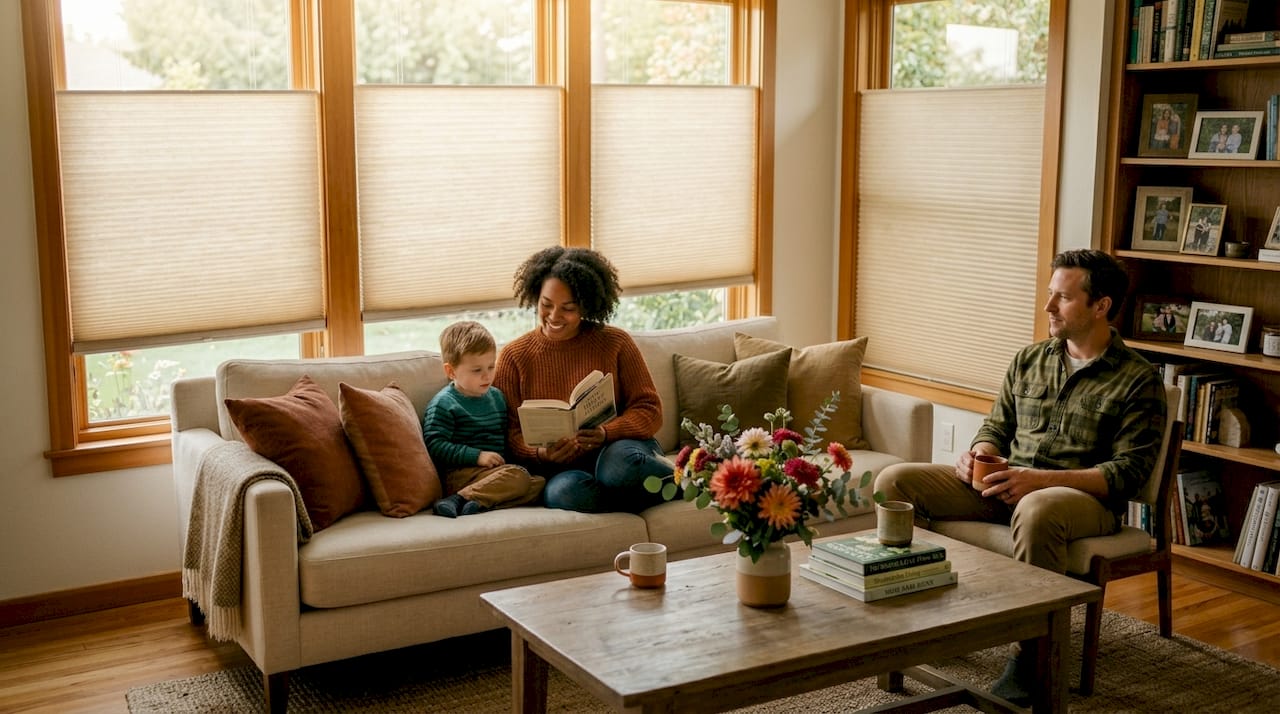
The most common material for this format is honeycomb cellular fabric. The hexagonal air pockets in the fabric trap heat in winter and block solar gain in summer, making cellular top down shades a strong performer for energy efficiency. Top down bottom up shades allow the shade to be lowered from the top and raised from the bottom, and many window covering brands highlight this dual operation as their primary selling point. That flexibility is the core reason this style has grown in popularity for living rooms, bathrooms, and street-facing bedrooms.
The position you choose also changes the quality of light in the room. Lowering the top rail diffuses natural light across the ceiling, which creates a softer, more even glow than direct sunlight through an open lower section. Raising the bottom rail while leaving the top closed gives you a bright lower room with a shaded upper zone, useful for reducing screen glare without blocking the view.
Pro Tip: If you have a window that faces a busy street, set the bottom rail at eye level from outside and lower the top rail to bring in daylight. You get full light without sacrificing privacy.
- Both rails move independently on a single headrail system
- Cordless versions use spring-loaded tension to hold each rail in place
- Corded versions use separate lift cords routed through the fabric
- Motorized versions replace manual cords with a quiet motor in the headrail
What are the main types of top down shades?
Not every top down shade works the same way or suits the same room. The four main categories differ in fabric, opacity, and control method.
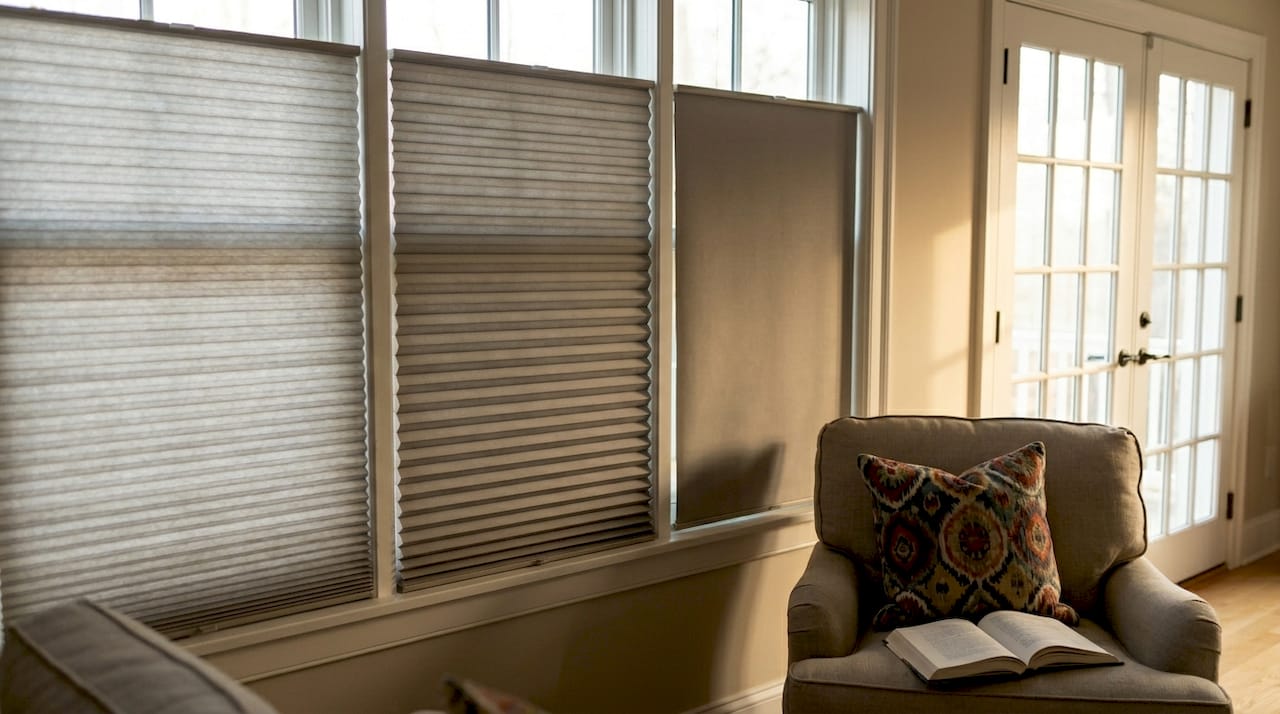
Cellular and honeycomb shades are the most popular format. The fabric structure provides insulation, and cellular shades can reduce heating and cooling costs by up to 20%. That figure matters because it means the shade pays for itself over time through lower utility bills, not just through aesthetics.
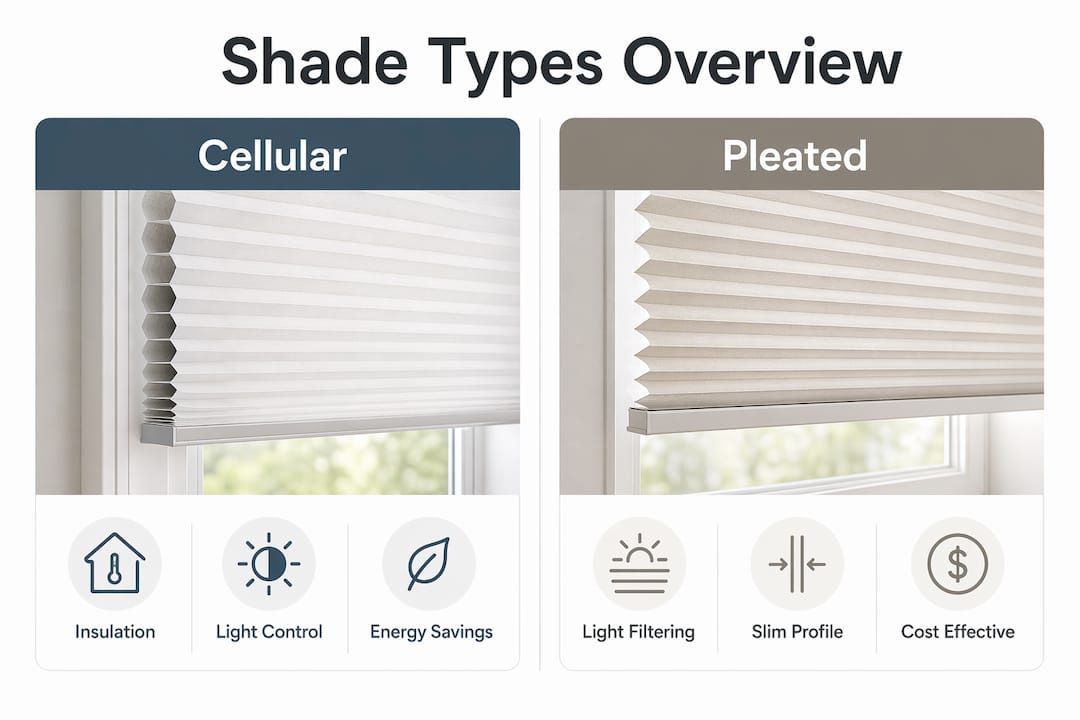
Pleated shades use a single-layer folded fabric instead of the double or triple cell structure. They are thinner and lighter, which suits smaller windows or rooms where insulation is less of a priority. They cost less than cellular options but sacrifice some thermal performance.
Blackout and light-filtering fabrics are available across both cellular and pleated styles. Blackout honeycomb shades block all incoming light and are the right choice for bedrooms, nurseries, and media rooms. Light-filtering fabrics diffuse sunlight without blocking it, which suits living rooms and kitchens where you want brightness without glare. Top down shades come in a range of opacity levels, from sheer to full blackout, so you can match the shade to the room’s function.
Motorized and smart shades add a control layer on top of any fabric type. Remote, voice, and app control are all available depending on the product.
| Type | Best for | Key advantage | Trade-off |
|---|---|---|---|
| Cellular honeycomb | Bedrooms, living rooms | Insulation and dual operation | Higher cost than pleated |
| Pleated | Small windows, rentals | Lightweight and affordable | Less thermal performance |
| Blackout cellular | Nurseries, media rooms | Complete light blockage | Blocks views entirely |
| Light-filtering cellular | Kitchens, offices | Soft diffused light | Limited privacy at night |
| Motorized | Smart homes, large windows | Hands-free control | Requires power source |
How to install top down window shades
Installation method depends on whether you own or rent your space. Permanent installation is straightforward. Renter-friendly options require no drilling and no damage to walls or frames.
Permanent installation for homeowners
- Measure the window width and height. For an inside mount, measure at three points across the width and use the narrowest measurement. For an outside mount, add 2 to 4 inches on each side to block light gaps.
- Mark bracket positions on the inside of the window frame or on the wall above the window for an outside mount.
- Drill pilot holes and screw the mounting brackets into place using the hardware included with the shade.
- Snap the headrail into the brackets until it clicks securely.
- Test both rails to confirm they move independently and hold their position without slipping.
Pro Tip: Always use a level when marking bracket positions. A shade that is even slightly off-level will look crooked every time you adjust it, and correcting it after installation means re-drilling.
Renter-friendly installation options
Renters value non-invasive installation to avoid damage deposits and for ease of removal, which makes cordless and tension rod styles the most practical choice. A DIY approach using tension rods can replicate the look of a custom shade without a single drill hole. No-drill cordless blinds are designed specifically for this situation, combining style and safety while minimizing any damage to walls or frames.
Cordless designs also remove the cord hazard that makes standard blinds risky in homes with children or pets. Cordless blinds for renters eliminate cords entirely and allow easy removal when you move out. For maintenance, wipe cellular fabric with a dry microfiber cloth or use a handheld vacuum on the lowest setting to clear dust from the honeycomb cells.
How can smart home integration enhance your shades?
Smart motorized shades turn a manual adjustment into an automated event. Motorized top down bottom up shades can be controlled via remote, voice assistant, or smartphone app, which makes them a natural fit for modern smart home setups. The practical benefit is not just convenience. Scheduling shades to close during peak afternoon sun hours reduces solar heat gain automatically, which supports the energy savings that cellular fabrics already provide.
Some products now integrate with the Matter protocol, the cross-platform smart home standard supported by Apple HomeKit, Google Home, and Amazon Alexa. The Seamless Smart Roller Shade P7 offers no-hub setup and Bluetooth remote control, which means you do not need a separate smart home hub to get started. That lowers the barrier to entry significantly for homeowners who want automation without a complex installation.
Smart home window shading is increasingly important for homeowners aiming for both convenience and energy savings. Scheduling shades to open at sunrise and close at sunset takes seconds to set up and runs indefinitely without manual input.
- Voice control works with Amazon Alexa, Google Assistant, and Apple Siri depending on the product
- App-based control lets you adjust shades remotely, useful for vacation homes or rental properties
- Automation schedules can be tied to sunrise and sunset times, adjusting daily without reprogramming
- Battery-powered motors avoid the need for hardwired electrical work during installation
What factors should you consider when choosing top down shades?
Selecting the right shade comes down to five practical criteria.
Privacy and light needs are the starting point. A bathroom window facing a neighbor requires blackout or room-darkening fabric. A home office benefits from light-filtering fabric that reduces glare without making the room feel dark. The privacy advantages of top down shades come specifically from the ability to block the lower portion of the window while keeping the upper section open, which is the opposite of what a standard shade can do.
Window size and style affect which mounting option works best. Tall windows benefit from motorized operation because manually adjusting two rails on a 72-inch shade becomes awkward. Bay windows and arched windows may require custom sizing, which is where an online design tool or measurement guide becomes useful.
Budget and material durability are linked. Single-cell honeycomb fabric costs less than double or triple-cell construction but provides less insulation. Polyester fabrics resist moisture better than natural fibers, making them the right choice for kitchens and bathrooms.
Energy efficiency is a measurable factor, not just a marketing claim. Cellular shades with dual operation regulate room temperature by trapping air in their cell structure, and the 20% reduction in heating and cooling costs is the documented result of that insulation effect.
Child and pet safety points directly to cordless designs. Loose cords on standard blinds are a documented strangulation hazard for young children. Cordless and motorized options remove that risk entirely while also keeping the window area cleaner and less cluttered.
Key takeaways
Top down window shades deliver privacy, light control, and energy savings that standard bottom-up shades cannot match, making them the most versatile window covering format for both homeowners and renters.
| Point | Details |
|---|---|
| Dual-rail mechanism | Both top and bottom rails move independently for simultaneous light and privacy control. |
| Cellular fabric insulation | Honeycomb cellular shades can reduce heating and cooling costs by up to 20%. |
| Renter-friendly options | Cordless and no-drill designs allow installation and removal without wall damage. |
| Smart home compatibility | Motorized shades with Matter protocol support work with Alexa, Google Home, and Apple HomeKit. |
| Fabric opacity matters | Choose blackout for bedrooms and nurseries, light-filtering for kitchens and living rooms. |
Why the bottom rail is the feature most buyers ignore
I have seen hundreds of homeowners choose a top down shade for the top-down function and then never actually use it. They lower the shade from the bottom like a standard blind and wonder why they spent more. The real value of this format lives in the bottom rail, not the top. Raising the bottom rail to waist height while leaving the top section open is the move that changes how a room feels. You get a full view of the sky, diffused ceiling light, and complete privacy from street level. That combination is genuinely difficult to achieve with any other window covering format.
The mistake I see most often with renters is choosing a shade that is too opaque for the room. A blackout cellular shade in a living room that faces north will make the space feel like a cave by 3 PM. Light-filtering fabric in the same room keeps it bright and usable. Matching opacity to the window’s orientation and the room’s function is the single decision that separates a shade that works from one that gets replaced within a year.
The trend worth watching is battery-powered motorization. Hardwired motors require an electrician and a commitment to a fixed location. Battery motors install in minutes, work with most smart home platforms, and are now reliable enough for daily use. For renters especially, a battery-powered motorized shade with remote controlled operation is the closest thing to a permanent smart home upgrade that you can take with you when you move.
— Sunny
Find your perfect shade at Valueblindsdirect
Valueblindsdirect carries a full range of top down bottom up shades, from light-filtering cellular options to blackout duo-tone honeycomb designs and smart motorized solar shades. Every shade is available in custom sizes, so you are not limited to standard window dimensions.
If you are not sure where to start, the Window Treatment Design Studio at Valueblindsdirect lets you visualize shades in your space before you buy. Free fabric swatches are available for all major collections, and the full blinds catalog includes cordless, motorized, and cellular options with detailed product specs. For renters, the cordless and no-drill collection is the fastest path to a polished, damage-free window treatment.
FAQ
What is a top down bottom up shade?
A top down bottom up shade is a window covering with two independently movable rails. You can lower the top rail to let in light from above while keeping the bottom section closed for privacy, or raise the bottom rail to open the lower portion of the window.
Are top down shades good for renters?
Yes. Cordless and no-drill top down shades install without permanent hardware and remove cleanly, making them one of the best window treatments for rentals available. Tension rod methods work for lightweight fabric options with no wall contact at all.
Do cellular top down shades actually save energy?
Cellular top down shades reduce heating and cooling costs by up to 20% through the insulating air pockets in their honeycomb structure. The dual-operation feature adds to this by letting you block direct sun during peak hours while still ventilating the upper portion of the window.
Can top down shades be motorized?
Yes. Motorized top down bottom up shades are available with remote, app, and voice control. Products compatible with the Matter protocol work with Amazon Alexa, Google Home, and Apple HomeKit without requiring a separate hub.
What fabric should I choose for a bedroom?
Blackout cellular fabric is the standard recommendation for bedrooms because it blocks all incoming light and provides the best insulation. Duo-tone blackout honeycomb shades add a second fabric layer for complete opacity while maintaining a clean appearance from both inside and outside the room.