

Custom Blinds Explained: Upgrade Your Home Style & Comfort
TL;DR:
- Custom blinds are precisely made to fit windows and offer greater design and functional choices.
- Different types of custom blinds, like cellular or motorized shades, solve specific room needs.
- They improve home comfort, energy efficiency, safety, and overall interior aesthetic.
Most homeowners treat window coverings as an afterthought, something chosen after the furniture is in place and the walls are painted. But custom blinds are far more than a finishing touch. The right window treatment actively shapes how a room feels, how much you spend on heating and cooling, and even how well you sleep. This guide breaks down exactly what makes blinds “custom,” walks through the most popular types, and shows you how smart technology and energy-efficient design can make a real difference in your daily life. Whether you’re decorating a new home or upgrading an existing space, understanding your options puts you firmly in control.
Table of Contents
- What makes blinds ‘custom’?
- Types of custom blinds and their benefits
- Smart and motorized custom blinds: Modern solutions
- How custom blinds impact home comfort and efficiency
- Why custom blinds are the interior design upgrade most homeowners overlook
- Ready to design your own custom blinds?
- Frequently asked questions
Key Takeaways
| Point | Details |
|---|---|
| Custom means a perfect fit | Custom blinds are made-to-order for your windows, so they offer superior appearance and function. |
| Choices match every style | From blackouts to smart features, you control the look and performance of custom blinds. |
| Energy savings add up | Motorized and insulated custom blinds can reduce your energy bills by as much as 25%. |
| Smart blinds provide more comfort | Automated operation and smart controls make blinds safer and easier to use. |
| A top-value home upgrade | Custom blinds boost home value, livability, and style often for less than major renovations. |
What makes blinds ‘custom’?
Let’s start by clarifying exactly what sets custom blinds apart. The word “custom” gets used loosely in retail, but in the window treatment world it has a specific meaning. Custom blinds are made to your exact window measurements, built with your chosen materials, and configured with the control options you select. Nothing is pre-cut, pre-packaged, or pulled off a warehouse shelf.
Off-the-shelf blinds, by contrast, come in fixed sizes. You buy the closest match and either trim them down or live with gaps at the edges. Those gaps are more than cosmetic. They let in light, reduce privacy, and allow heat to escape in winter or enter in summer. A tailored fit and design freedom is what separates custom from standard, and that difference shows up in both appearance and performance.
Here’s a quick comparison to make it concrete:
| Feature | Custom blinds | Ready-made blinds |
|---|---|---|
| Sizing | Exact measurements | Fixed standard sizes |
| Materials | Wide selection | Limited options |
| Control type | Manual, cordless, motorized | Usually corded only |
| Fit quality | Perfect | Approximate |
| Automation | Available | Rarely available |
| Lifespan | Longer with quality materials | Shorter |
The factors that make a blind truly custom include:
- Precise dimensions measured to the fraction of an inch
- Material choices ranging from wood and faux wood to fabric, vinyl, and woven grass
- Control options including cordless lift, top-down/bottom-up, or full motorization
- Finish and color selected to match your exact interior palette
- Automation compatibility with smart home systems like Alexa, Google Home, or Apple HomeKit
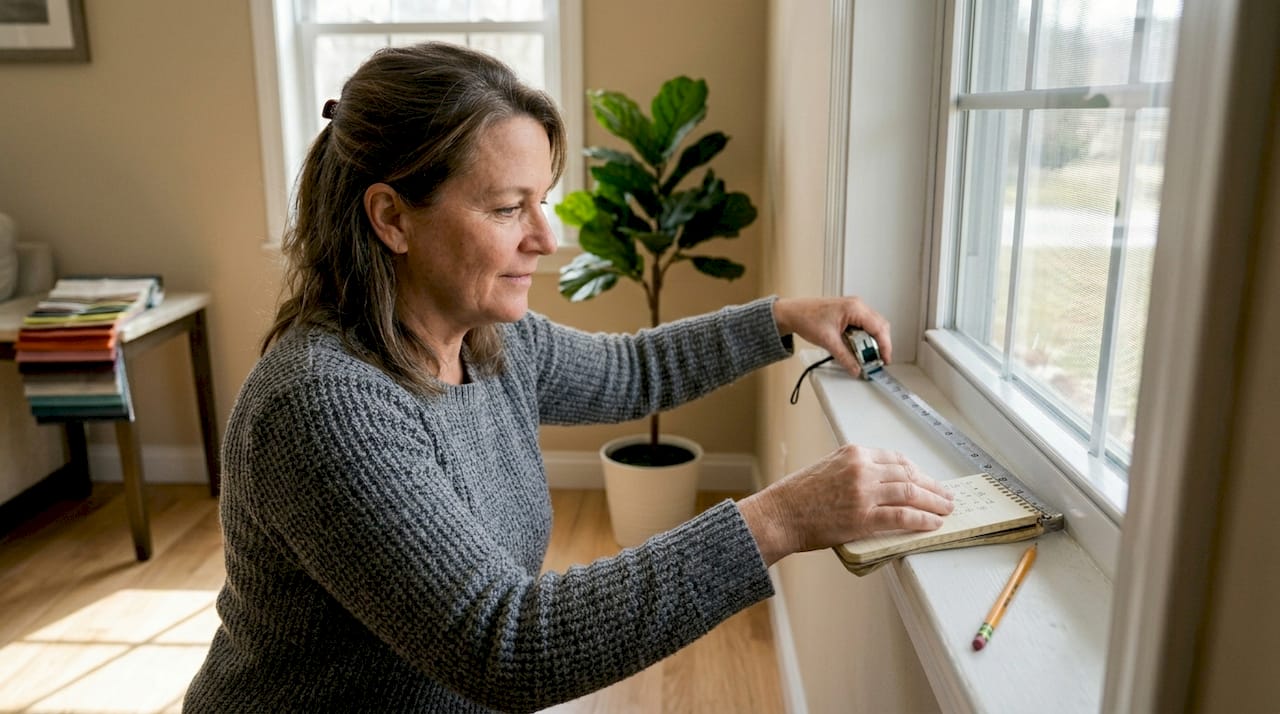
Pro Tip: Always measure your windows twice before ordering. Even a quarter-inch error can affect how well your blinds seal against the frame. Most custom blind retailers provide detailed measurement guides, and some offer professional measuring services for complex windows.
The investment in custom [window treatments basics](https://valueblindsdirect.com/blogs/value-blinds/custom-window treatments-essential-basics-guide) pays off quickly when you realize your blinds actually fit, function as designed, and last years longer than a box-store alternative.
Types of custom blinds and their benefits
With a clear definition in mind, let’s explore your material and functionality choices. The variety of custom blind types can feel overwhelming at first, but each one solves a specific problem. Matching the type to the room makes all the difference.
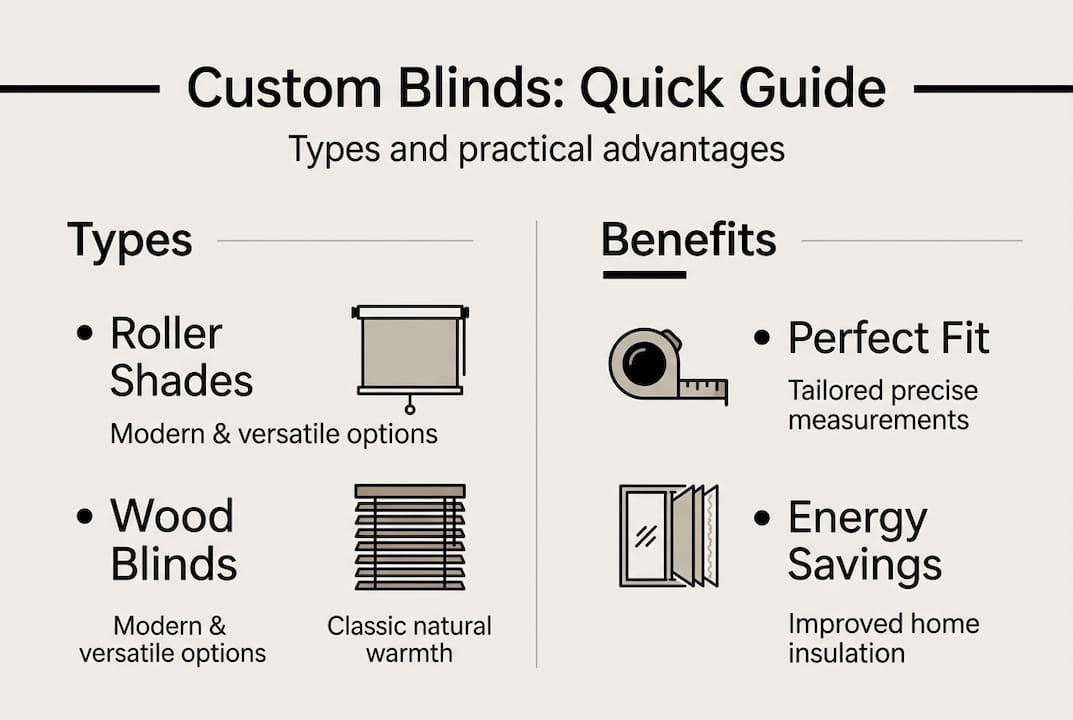
| Type | Material | Best rooms | Efficiency | Customization |
|---|---|---|---|---|
| Roller shades | Polyester, vinyl | Living room, office | Moderate | High |
| Cellular/honeycomb | Fabric | Bedroom, nursery | Excellent | High |
| Vertical blinds | Fabric, vinyl | Sliding doors, large windows | Moderate | Moderate |
| Zebra shades | Dual-layer fabric | Living room, dining room | Moderate | High |
| Wood blinds | Real or faux wood | Living room, study | Good | High |
| Motorized | Any material | Any room | Excellent | Very high |
| Blackout shades | Opaque fabric | Bedroom, media room | High | High |
| Woven/bamboo | Natural fibers | Sunroom, casual spaces | Low | Moderate |
Choosing the right window blinds overview type affects both style and energy efficiency, so it’s worth thinking through your priorities before ordering.
Here’s how to match blind type to your specific need:
- Privacy first: Roller shades with a blackout or room-darkening liner block sightlines completely. Roller shades for privacy are especially popular in street-facing rooms.
- Insulation priority: Cellular (honeycomb) shades trap air in their pockets, acting like a layer of insulation against your window glass. Single, double, or triple-cell options exist for varying climates.
- Automation goals: Motorized blinds work with virtually any material, so you don’t have to sacrifice style for convenience.
- Blackout needs: Bedrooms and home theaters call for blackout shades with sealed side channels to eliminate light bleed around the edges.
- Natural aesthetic: Woven wood and bamboo shades add organic texture, though they filter rather than block light.
Real-world application matters here. A home office benefits from zebra shades that let you adjust between filtered daylight and full privacy without losing natural light entirely. A child’s bedroom calls for blackout cellular shades that block morning light and add a layer of thermal insulation. A sunroom works beautifully with woven bamboo that softens harsh afternoon sun without making the space feel closed off.
Smart and motorized custom blinds: Modern solutions
As technology advances, custom blinds can now be much more than manual window coverings. Motorized blinds use a small battery or hardwired motor to raise, lower, or tilt your blinds on command. They connect to your home’s Wi-Fi or a dedicated hub and respond to apps, remotes, schedules, or voice commands.
Smart blind features you can actually use every day include:
- Voice control through Alexa, Google Assistant, or Siri
- Scheduled automation so blinds open at sunrise and close at sunset without any input
- Remote operation via smartphone app from anywhere in the world
- Scene integration where blinds adjust as part of a broader smart home routine
- Sun-tracking sensors that tilt slats or lower shades automatically based on sunlight intensity
Motorized blinds benefits extend well beyond convenience. When blinds adjust automatically based on time of day or temperature, your HVAC system works less. Remote operated blinds can cut energy bills up to 25%, which adds up significantly over a full year.
Pro Tip: If your motorized blinds stop responding to the app, the fix is usually a simple Wi-Fi reconnection or a battery swap. Keep a note of your hub’s reset process and check that your router firmware is current. Most issues resolve in under five minutes.
The safety and accessibility benefits of motorized blinds are easy to overlook. Cord-free operation removes strangulation hazards for young children and pets. For seniors or anyone with limited mobility, motorized roller shades eliminate the need to reach across furniture or strain to adjust high windows. That’s a practical quality-of-life upgrade that no amount of decorative throw pillows can match.
If you want to explore the efficiency side more deeply, motorized blinds for efficiency covers how automated schedules interact with heating and cooling systems to reduce waste throughout the day.
How custom blinds impact home comfort and efficiency
Beyond smart features and looks, custom blinds have a hidden impact on daily living. Most people feel the difference before they understand why. A room with well-fitted, insulating blinds simply feels more comfortable at any time of year.
“Energy-efficient window treatments contribute substantially to year-round comfort and reduced heating and cooling costs.”
Windows are one of the biggest sources of heat loss in winter and heat gain in summer. A single-pane window can lose up to ten times more heat than an insulated wall of the same size. Custom cellular shades, fitted precisely to the frame, create a dead-air buffer that slows that heat transfer dramatically.
Seasonal comfort considerations worth planning around:
- Summer: Light-filtering or solar shades block UV rays and reduce solar heat gain, keeping rooms cooler without blocking the view entirely
- Winter: Cellular shades trap warm air between the fabric and the glass, reducing the chill that radiates from cold windows
- Year-round: UV-blocking fabrics protect furniture, flooring, and artwork from fading, which saves money on replacements over time
- Privacy day and night: Top-down/bottom-up configurations let natural light in from above while keeping ground-level sightlines blocked
Style factors also feed into comfort in ways that aren’t always obvious. A dark, heavy fabric makes a south-facing room feel cooler and more contained. A light, sheer material in a north-facing room maximizes the limited daylight without sacrificing softness. Color and texture choices aren’t just decorative decisions, they’re functional ones. Energy-saving blinds paired with the right material choice create a layered approach to comfort that works passively, every single day.
Why custom blinds are the interior design upgrade most homeowners overlook
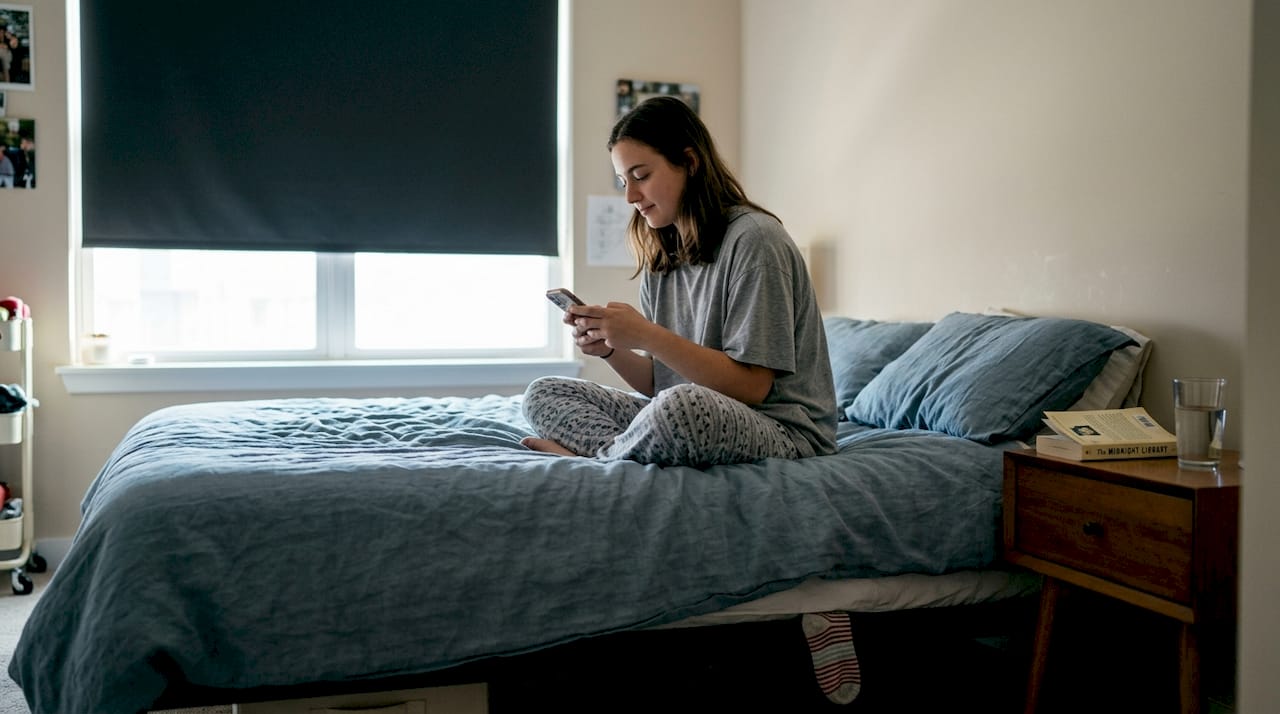
Considering all these practical benefits, here’s why custom blinds deserve a top spot in your interior upgrades. Most homeowners reach for paint first when they want to refresh a space. Paint is fast, relatively cheap, and visually dramatic. But paint doesn’t change how a room feels at 2 p.m. on a hot July afternoon, or how warm it stays on a January morning.
Custom blinds do both. They change the light quality, the temperature, the privacy level, and the acoustic feel of a room all at once. That’s a level of functional impact that a fresh coat of paint simply cannot deliver.
The contrarian truth is that window treatments are often the last item in a renovation budget, but they should be among the first. A beautifully decorated room with ill-fitting, cheap blinds looks unfinished. The same room with precisely fitted, well-chosen custom blinds looks intentional and complete, even with modest furniture.
Invest in the rooms where light and temperature matter most. Bedrooms, home offices, and main living spaces are where you spend the most time, and where the daily dividends of comfort pay off fastest. For inspiration on where to start, custom treatments inspiration offers a solid starting point for planning your approach room by room.
Custom blinds also hold their value in a way that trendy decor does not. When it’s time to sell, well-maintained, high-quality window treatments are a visible signal of a cared-for home.
Ready to design your own custom blinds?
If you’re ready to take the next step, here’s how to begin your custom blinds journey. Value Blinds makes the process straightforward, whether you’re outfitting one window or an entire house.
Start by visiting the window treatment design studio to visualize your options, compare materials, and build your order with your exact measurements. Free swatches let you see and feel fabrics before committing. If you want to explore the full range of styles, browse custom blinds to see roller shades, cellular shades, wood blinds, zebra shades, and motorized options all in one place. Expert support is available to help you match the right product to your room’s needs, and every order comes backed by a satisfaction guarantee.
Frequently asked questions
How do custom blinds differ from off-the-shelf blinds?
Custom blinds are made to your exact window dimensions, giving you a perfect fit, broader design choices, and access to advanced features like motorization. Standard options come in fixed sizes that rarely align precisely with real window measurements.
Are motorized blinds really worth it for homes?
Yes, motorized blinds add daily convenience, improve safety by eliminating cords, and cut energy bills up to 25% through automated scheduling that reduces HVAC workload.
What kinds of rooms benefit most from custom blinds?
Bedrooms, living rooms, and home offices gain the most from custom blinds because light control, privacy, and temperature management matter most in those spaces. The right blind type varies by room function and sun exposure.
How do I maintain custom blinds for long-term performance?
Dust your blinds weekly with a soft cloth or vacuum brush attachment, and spot-clean with a mild detergent as needed. Always follow the manufacturer’s care instructions, since fabric, wood, and vinyl each require slightly different handling.
Can custom blinds help reduce energy bills all year?
Yes. Energy-efficient window treatments reduce heat transfer through glass in both summer and winter, lowering the demand on your heating and cooling system throughout every season.