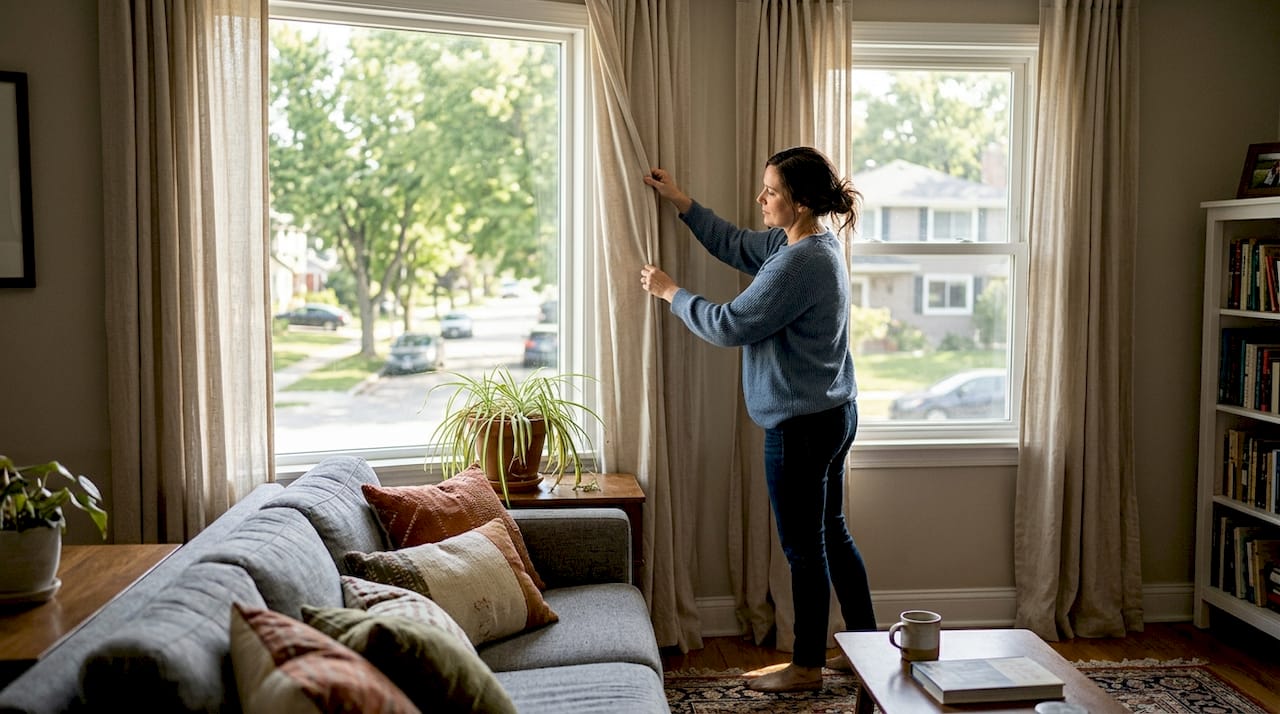


Custom window treatments: styles, benefits & how to choose
Choosing window coverings is one of those decisions that looks simple until you’re standing in a showroom or scrolling through hundreds of options online. The right treatment can slash your energy bills, give you perfect privacy, and pull your entire room together. The wrong one leaves you with gaps, glare, and a style that clashes with everything else. Whether you’re outfitting a single bedroom or every window in your home, understanding how custom window treatments work, what each type offers, and how to match them to your space will save you time, money, and regret.
Table of Contents
- What makes a window treatment ‘custom’?
- Main types of custom window treatments
- Features and benefits of each treatment style
- How automation and smart features enhance custom window treatments
- The end-to-end process: From design to installation
- Choosing the right treatment for your space: Factors to consider
- Find your perfect custom window treatment at Value Blinds
- Frequently asked questions
Key Takeaways
| Point | Details |
|---|---|
| Custom means tailored fit | Custom treatments are measured and made just for your windows, ensuring perfect coverage and operation. |
| Many styles to choose from | Options include cellular, Roman, roller, blinds, shutters, and drapery, each with their own strengths for different needs. |
| Automation boosts efficiency | Motorized and smart features add convenience and can lower your home’s energy costs. |
| Professional measurement matters | Precise measurement and installation are key to getting the look and function you expect from custom window treatments. |
| Match treatment to room | Factor in privacy, light control, design, and energy use when choosing for each space. |
What makes a window treatment ‘custom’?
The word “custom” gets thrown around a lot, but in the window treatment world it means something specific. A custom treatment process involves consultation, precise measurement, material selection, manufacturing, and professional installation. Every step is tailored to your exact windows, not a standard size that’s close enough.
Here’s what sets custom apart from off-the-shelf options:
- Exact fit: No gaps at the sides, no bunching at the bottom. Every inch is accounted for.
- Unique window shapes: Arches, bay windows, skylights, and oversized windows all get proper coverage.
- Material choice: You select the fabric, opacity, color, and finish that match your décor.
- Professional installation: Ensures the treatment hangs correctly, operates smoothly, and holds up over time.
Our measurement guide walks you through exactly what professionals look for when sizing your windows.
“Professional measuring and installation make the difference between ‘just covered’ and ‘truly transformed.’”
Ready-made blinds from a big-box store might save you money upfront, but they rarely fit perfectly. Light leaks around the edges, uneven drops, and awkward operation are all common complaints. Custom treatments eliminate those problems from the start.
Main types of custom window treatments
Now you know the process. Let’s look at the main styles so you can find what fits your taste and needs. The six core categories of custom window coverings each serve a different purpose:
- Cellular/honeycomb shades: The top pick for insulation. Their air-trapping cell structure reduces heat transfer better than any other shade type.
- Roman shades: Soft fabric folds that stack neatly when raised. Elegant and timeless, ideal for living rooms and dining spaces.
- Roller shades: Clean lines, minimal hardware, and a huge range of fabrics from sheer to blackout. Great for modern interiors.
- Blinds (horizontal and vertical): Adjustable slats give you precise control over light and privacy at any time of day.
- Shutters: Solid panels that add architectural interest, boost resale value, and last for decades with minimal upkeep.
- Drapery: The most design-flexible option. Floor-to-ceiling fabric panels can transform a room’s entire atmosphere.
Explore how custom window coverings can be styled and layered for both beauty and performance.
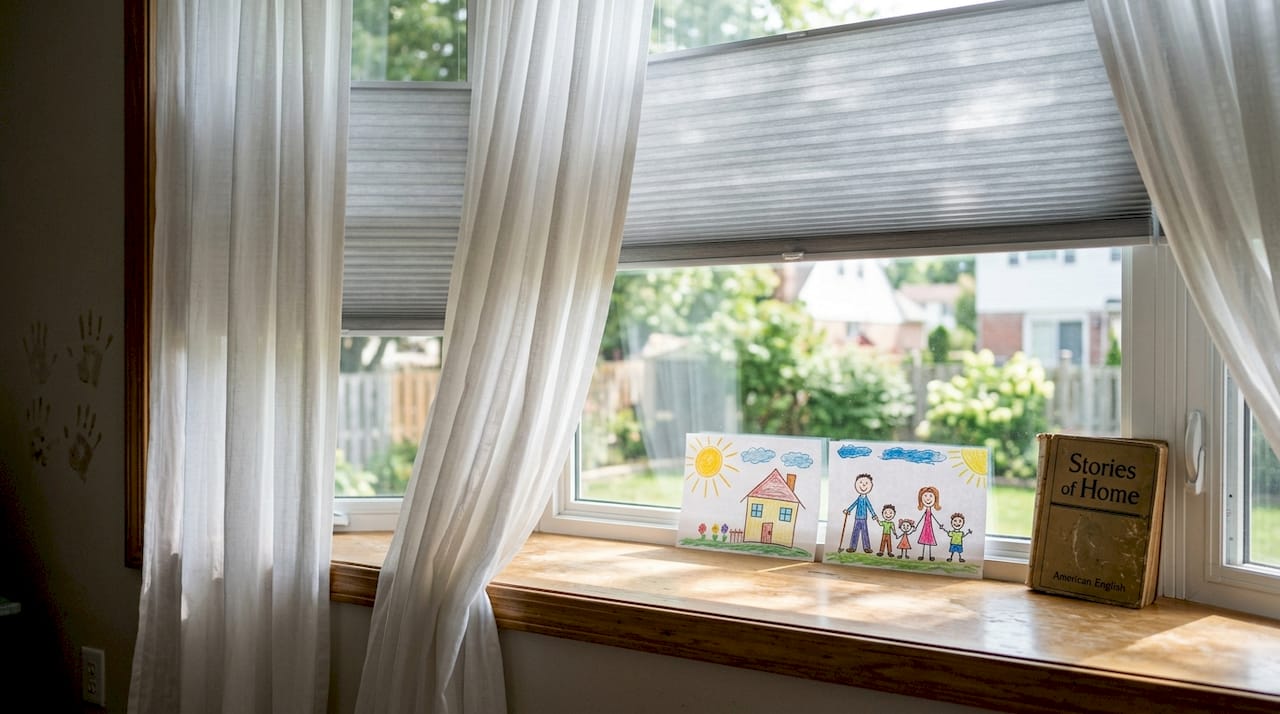
Pro Tip: For the best combination of beauty and efficiency, layer your treatments. Cellular shades behind drapery panels give you insulation plus drama, and you can adjust each layer independently throughout the day.
Features and benefits of each treatment style
With each style identified, let’s compare their most important benefits for your home. Not every treatment excels at everything, and knowing the tradeoffs helps you prioritize what matters most in each room.
The key differences come down to insulation, light control, privacy, and design flexibility. Here’s how the main types stack up:
| Treatment type | Energy efficiency | Privacy | Light control | Ease of operation | Design flexibility |
|---|---|---|---|---|---|
| Cellular shades | ★★★★★ | ★★★★ | ★★★★ | ★★★★ | ★★★ |
| Roman shades | ★★★ | ★★★★ | ★★★ | ★★★ | ★★★★★ |
| Roller shades | ★★★ | ★★★★ | ★★★★ | ★★★★★ | ★★★★ |
| Blinds | ★★★ | ★★★★★ | ★★★★★ | ★★★★ | ★★★ |
| Shutters | ★★★★ | ★★★★★ | ★★★★★ | ★★★★ | ★★★ |
| Drapery | ★★★ | ★★★★ | ★★★ | ★★★ | ★★★★★ |
Cellular shades win on energy performance. Blinds and shutters lead in adjustability. Drapery and Roman shades dominate in design impact. For most homeowners, the best answer is a combination rather than a single type across every window.
Check out these energy efficient tips to understand how your window orientation affects which treatment will save you the most on heating and cooling.
How automation and smart features enhance custom window treatments
Modern window treatments do more than look good. Smart technology takes custom options even further by adding convenience, precision, and real energy savings.
Motorization lets you open and close shades on a schedule, by remote, or through your smart home system. The practical benefits are significant:
- Hard-to-reach windows: Skylights, tall windows, and stairwells become easy to manage.
- Multiple windows at once: Control every shade in a room or your entire home with one tap.
- Scheduled operation: Program shades to lower during peak afternoon heat and raise at sunset automatically.
- Smart home integration: Works with Alexa, Google Home, and Apple HomeKit for voice control.
Automation enhances both usability and energy performance, especially for high or hard-to-reach windows. The U.S. Department of Energy and ENERGY STAR both recognize motorized shades as a meaningful tool for managing heat gain and loss.
The energy savings with motorized blinds can be substantial. Motorized vertical blinds can reduce annual energy bills by up to 25% when programmed to respond to sunlight and temperature changes throughout the day.
Pro Tip: Some motorized cellular and solar shades qualify for utility rebates. Check with your local energy provider and ENERGY STAR before you buy. The savings can offset a significant portion of the upgrade cost.
Learn more about the full range of motorized blind benefits beyond energy savings, including child safety, UV protection for furniture, and increased home security.
The end-to-end process: From design to installation
Ready to begin? Here’s what the full custom window treatment process actually looks like, step by step, so you know exactly what to expect.
The full process covers five stages: consultation, measurement, material selection, manufacturing, and installation. Each one matters.
- Consultation: You discuss your goals, room use, light preferences, and budget. Inside vs. outside mount options are covered here, along with energy efficiency priorities.
- Measurement: A professional takes exact measurements of each window, accounting for depth, width, and any architectural quirks.
- Material selection: You choose fabrics, colors, opacity levels, and hardware finishes based on samples.
- Manufacturing: Your treatments are built to your exact specifications. This is the longest stage.
- Installation: A professional installs everything, checks operation, and makes adjustments on the spot.
Here’s a realistic timeline for each stage:
| Stage | Typical duration | What to expect |
|---|---|---|
| Consultation | 1 to 2 hours | Needs assessment, style discussion, budget review |
| Measurement | 30 to 60 minutes | Precise window dimensions recorded |
| Material selection | 1 to 3 days | Swatches reviewed, final choices confirmed |
| Manufacturing | 2 to 5 weeks | Custom production at the factory |
| Installation | 2 to 4 hours | Professional fitting and final adjustments |
Professional measurement is non-negotiable if you want warranty coverage and a perfect fit. Even a quarter-inch error can cause operational problems or light gaps. Review our window measuring steps to understand what professionals check and why it matters.
Choosing the right treatment for your space: Factors to consider
With the process clear, let’s help you pinpoint the ideal custom treatment for each room. The best choice depends on how you use the space, what you want it to look like, and how much you want to spend.
Here are the key factors to work through before you decide:
- Room function: Bedrooms need blackout or high-privacy options. Living rooms balance light and style. Bathrooms need moisture-resistant materials.
- Light and privacy needs: South-facing windows get intense afternoon sun. North-facing rooms may need sheer options to maximize natural light.
- Décor match: Consider your existing color palette, furniture style, and flooring. Fabric and finish choices should feel intentional, not accidental.
- Energy goals: Inside vs. outside mount affects how well a shade insulates. Outside mount covers more of the window frame and reduces drafts.
- Smart feature preferences: If you have a smart home system already, motorized shades are a natural fit. If not, cordless manual options are still a huge upgrade over standard corded blinds.
- Budget: Custom treatments range widely in price. Prioritize the rooms where you spend the most time and where energy loss is greatest.
For efficient window covering choices that balance all these factors, start with your highest-traffic rooms and work outward.
Pro Tip: Order sample swatches before you commit to any fabric or color. Test them against your walls and furniture at different times of day. Natural light changes dramatically from morning to evening, and a color that looks perfect at noon can feel completely different at dusk.
Find your perfect custom window treatment at Value Blinds
You’ve just covered everything from treatment types and energy performance to smart features and the full ordering process. Now it’s time to put that knowledge to work.
At Value Blinds, we make it easy to go from idea to installation without the guesswork. Our online catalog includes cellular shades, roller shades, Roman shades, wooden blinds, bamboo blinds, motorized options, and more, all fully customizable to your exact window dimensions. Use our free swatch program to test fabrics at home before you order. Our measurement guides and design tools walk you through every decision, and our expert support team is available when you need a second opinion. Every order comes with warranty coverage and flexible shipping. Start with one room and see the difference a perfect fit makes.
Frequently asked questions
How are custom window treatments measured and installed?
Professionals consult with you on your goals, take exact measurements of each window, recommend the right products, and handle installation for a flawless, gap-free result.
Which window treatment type is best for energy efficiency?
Cellular or honeycomb shades offer the greatest insulation value and are especially effective on drafty or large windows where heat loss is highest.
Are there rebates for energy-efficient custom window treatments?
Yes. Many utility companies and ENERGY STAR offer rebates for qualifying products, particularly motorized cellular shades and other high-efficiency window coverings.
Do smart or motorized features add value to custom window coverings?
Automation boosts usability and comfort, maximizes energy savings through scheduled operation, and is especially practical for hard-to-reach or large banks of windows.
How long does it take for custom window treatments from order to install?
The process typically takes 2 to 6 weeks, with most of that time spent in custom manufacturing after your measurements and selections are finalized.