
Durable Window Treatments: What Lasts and Why
TL;DR:
- Durable window treatments withstand daily use, environmental stresses, and maintain appearance over time. Matching materials to room conditions like humidity, sunlight, and wear is crucial for longevity. Faux wood, vinyl, and cordless cellular shades offer the best performance and ease of maintenance.
Durable window treatments are window coverings made from materials and designs that withstand regular use, environmental factors, and maintain their appearance and function for extended periods. The term “long-lasting window coverings” is the broader industry phrase, but durability is always contextual. A treatment that lasts 15 years in a bedroom may fail within two years in a steam-heavy bathroom. Knowing what are durable window treatments means understanding material properties, room conditions, and maintenance demands together. This guide covers the materials, environments, and selection strategies that actually determine lifespan.
What materials and designs make window treatments durable?
Durable window treatments share three core traits: structural stability, finish retention, and resistance to the specific stresses of their environment. Not every material excels in all three, so matching material to room is the first decision that determines longevity.
Faux wood and composite materials consistently rank highest for all-around durability. Faux wood and composites offer moderate pricing with longer service intervals and easier care than natural wood or fabric. They resist warping, cracking, and moisture without the premium cost of solid hardwood.
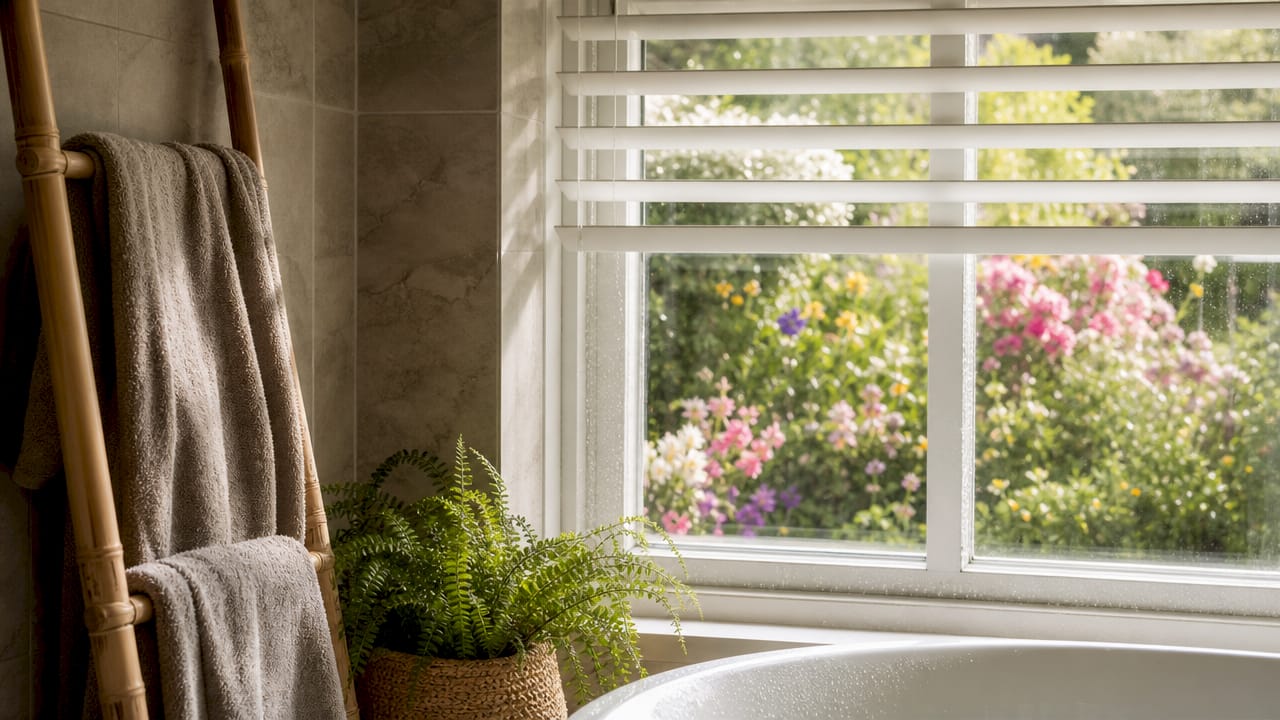
Vinyl is the most moisture-resistant option available. Vinyl blinds tolerate direct water contact, making them the go-to for bathrooms and kitchens where humidity cycles daily. The trade-off is that vinyl can yellow under prolonged UV exposure, so it performs best in lower-light rooms.
High-quality coated fabrics and solar screen textiles handle UV exposure better than uncoated alternatives. Solar shades use tightly woven, UV-stabilized mesh that blocks solar heat without fading. These fabrics retain their color and structural integrity far longer than standard polyester or cotton blends in sun-facing rooms.
Interior shutters represent the highest-durability option in the market. Shutters are custom-built with adjustable louvers and require relatively little maintenance, though they carry a larger upfront investment. Their architectural integration means they rarely need replacing at all.
Key construction features that extend lifespan across all material types:
- Cordless mechanisms: Cordless designs eliminate cord wear and snag risks, removing one of the most common mechanical failure points in window treatments.
- Cellular or honeycomb structure: The air-pocket design adds structural rigidity, helping shades hold their shape over years of daily use.
- Sealed or reinforced edges: Edges that fray or delaminate are the first sign of a treatment nearing the end of its life. Sealed hems and reinforced headrails prevent this.
- UV-resistant coatings: Applied to both fabric and vinyl products, these coatings slow color degradation from direct sunlight.
Pro Tip: When comparing materials at a store or online, flex a slat or fabric sample firmly. A material that springs back cleanly without creasing or cracking will hold up far better than one that shows stress marks immediately.
How does your room environment affect window treatment durability?
The room a treatment lives in determines its lifespan more than the material alone. Durability depends on matching window treatment material to use environment, considering humidity, sunlight exposure, and maintenance tolerance. Five checkpoints matter most: structural stability, finish retention, moisture resistance, cleaning tolerance, and replacement cost.
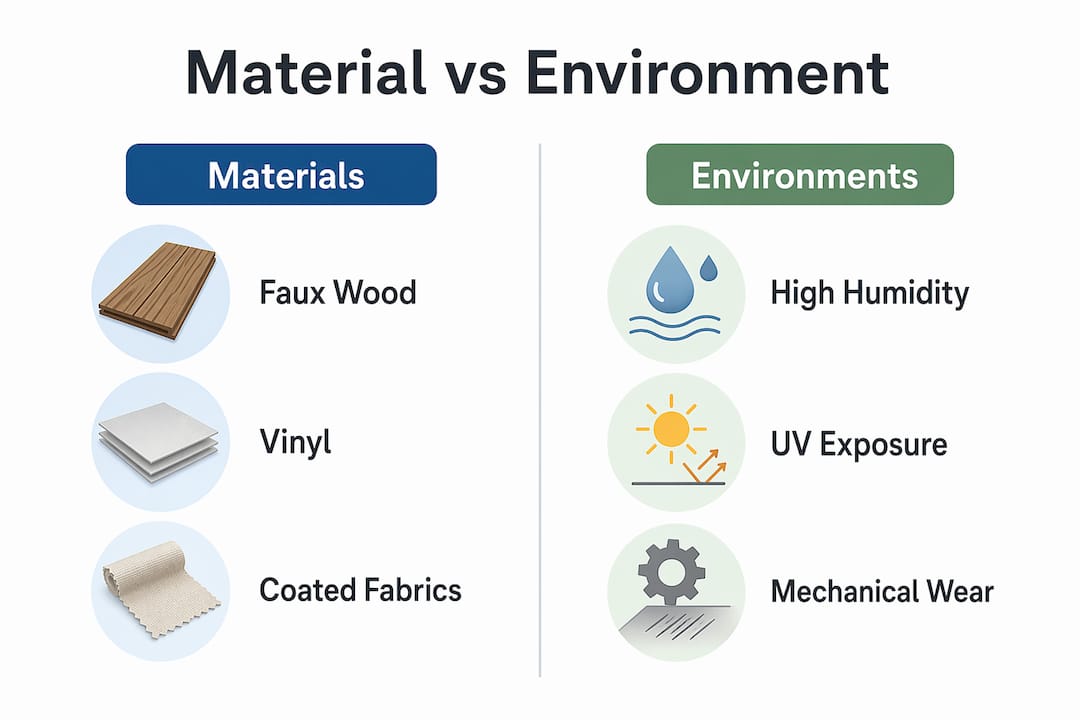
Humidity is the fastest destroyer of natural materials. Bathrooms and kitchens cycle between high moisture and dry air multiple times a day. Real wood blinds absorb this moisture, swell, and eventually warp. Faux wood and vinyl hold their shape through these cycles without any degradation.
Sun-facing rooms present a different challenge. UV radiation breaks down dyes, adhesives, and polymer structures over time. South-facing and west-facing windows receive the most intense afternoon light. Treatments in these rooms need UV-resistant materials or coatings, or they will fade and weaken within a few years regardless of quality.
The table below maps common room environments to the most durable treatment options:
| Room / Environment | Primary Stress Factor | Best Material Choice |
|---|---|---|
| Bathroom / kitchen | High humidity, moisture | Faux wood, vinyl |
| South or west-facing room | UV exposure, heat | Solar shades, coated fabric |
| Living room, low traffic | Dust, light use | Cellular shades, fabric shades |
| Rental property | Heavy use, frequent cleaning | Faux wood, vinyl vertical blinds |
| Child’s bedroom | Cord hazards, rough handling | Cordless cellular shades |
High-traffic environments like rental properties add a third variable: mechanical wear from frequent operation. Treatments in rentals get opened and closed far more often than those in owner-occupied homes. Faux wood blinds and vinyl vertical blinds handle this cycle better than fabric alternatives, which pill, snag, and lose shape under heavy use.
Pro Tip: For rooms that get both high humidity and strong sunlight, such as a kitchen with a south-facing window, choose vinyl over faux wood. Vinyl handles the moisture better, and a UV-resistant coating on the slats addresses the sun exposure.
What are the easiest durable window treatments to maintain?
Low maintenance and long lifespan go together. A treatment that requires complex cleaning or professional servicing will be neglected, and neglect accelerates wear. The easiest options to maintain are also among the most durable.
Cordless cellular shades sit tightly in windows, reducing dust accumulation in the cell pockets. A light dusting with a soft brush or vacuum attachment every few weeks keeps them looking new. Their cordless operation also means no tangled cords to clean around or replace.
Faux wood blinds clean with a damp cloth. Unlike fabric shades, they do not absorb odors or stains. A quick wipe removes grease, dust, and fingerprints without any special products. This makes them especially practical in kitchens where cooking residue settles on every surface.
The lowest-maintenance options by category:
- Faux wood blinds: Wipe clean with a damp cloth. No special cleaners needed. Resistant to staining and odor absorption.
- Vinyl vertical blinds: Individual slats detach for washing. Replacement of a single damaged slat costs very little and takes minutes.
- Cordless cellular shades: Dust regularly with a soft brush. Spot-clean with mild soap and water. Avoid soaking the fabric.
- Solar shades: Wipe the mesh surface with a damp cloth. The open-weave structure resists heavy dust buildup.
Avoid harsh chemical cleaners on any window treatment. Bleach and solvent-based products strip UV-resistant coatings, weaken adhesives, and cause premature fading. For stubborn stains, mild dish soap diluted in water is the safest option across all material types.
Cordless designs also contribute directly to longevity. A cordless mechanism removes potential hazards and reduces mechanical wear points compared to corded treatments. Fewer moving parts means fewer failure points, which translates directly into a longer usable life. For guidance on low maintenance strategies, pairing the right material with the right mechanism is the single most effective step.
How to choose durable window treatments that fit your style and budget
Choosing long-lasting window coverings is a balance between upfront cost, expected lifespan, and how much maintenance you are willing to do. Getting this balance right prevents the replacement cycle that costs far more over time than a better initial choice.
-
Identify the room’s primary stress factor first. Humidity, UV exposure, and mechanical wear each demand different materials. Choosing a treatment before answering this question is the most common mistake homeowners make.
-
Compare total cost, not just purchase price. Natural wood blinds look premium, but they warp in humid rooms and require refinishing over time. Faux wood costs less upfront and lasts longer in most residential environments without any additional care.
-
Consider layering treatments for both durability and style. Expert interior designers advise a strategic, layered approach that selects treatments based on room function to enhance longevity and prevent the replacement cycle. A solar shade paired with a fabric drape, for example, lets the shade handle UV and heat while the drape adds softness and privacy without bearing the full stress of daily sun exposure.
-
Prioritize cordless mechanisms in high-use rooms. Cordless options cost slightly more but eliminate the most common mechanical failure point. For rooms used daily, the added cost pays off within the first year of use.
-
Match the aesthetic to the function, not the other way around. If you love the look of natural wood but need moisture resistance, faux wood delivers the same visual result with better performance. Understanding window treatment basics around style, function, and energy savings helps you make this call confidently.
-
Request fabric or material samples before ordering. Color accuracy on screens varies, and texture affects both appearance and durability. Feeling a sample in your actual room light reveals far more than a product photo.
The window treatment materials comparison comes down to this: faux wood and composites win on all-around durability and value, vinyl wins on moisture resistance, and cellular shades win on insulation and low maintenance. Natural wood and premium fabric remain valid choices in controlled, low-humidity environments where aesthetics are the priority and maintenance is manageable.
Key Takeaways
Durable window treatments require matching material to room environment, with faux wood, vinyl, and cordless cellular shades delivering the best long-term performance across most residential settings.
| Point | Details |
|---|---|
| Material determines lifespan | Faux wood and composites outlast natural wood and fabric in most rooms. |
| Environment drives selection | Match moisture resistance and UV stability to the specific room’s conditions. |
| Cordless designs last longer | Removing cord mechanisms eliminates the most common mechanical failure point. |
| Low maintenance extends life | Regular dusting and mild cleaning prevent premature wear on all treatment types. |
| Layering adds durability | Combining a functional shade with a decorative drape reduces stress on each individual treatment. |
What I’ve learned from watching homeowners repeat the same mistake
I’ve spent years watching homeowners choose window treatments based almost entirely on how they look in a showroom or product photo. The treatment goes up, looks great for six months, and then starts warping, fading, or fraying. They replace it. The cycle repeats.
The uncomfortable truth is that most window treatment failures are not product failures. They are selection failures. A treatment chosen for the wrong room will always underperform, regardless of its quality rating.
The insight that changed how I think about this came from watching how strategic, layered selection based on the main room function prevents the replacement cycle entirely. When you identify what a room actually demands, whether that is moisture resistance, UV protection, or heavy daily use, and then choose accordingly, the treatment simply lasts. There is no mystery to it.
The layering approach is underused in residential settings. Most homeowners pick one treatment per window and expect it to do everything. A solar shade handling UV and heat, combined with a light fabric panel for softness, distributes the stress across two products. Neither one wears out as fast as a single treatment trying to do both jobs.
My practical advice: before you choose anything, spend one week noticing what actually happens at each window. Does afternoon sun hit it directly? Does steam from cooking reach it? Do kids or pets interact with it daily? Those observations tell you more than any product spec sheet. If you want to avoid updating old window coverings every few years, start with the room, not the product.
— Sunny
Valueblindsdirect has the right treatment for every room
Choosing durable window treatments is easier when you have the right tools and products in one place. Valueblindsdirect offers a Window Treatment Design Studio that helps you match material, mechanism, and style to the specific demands of each room in your home.
The catalog includes cordless cellular shades built for daily use, faux wood blinds rated for humid environments, and motorized options for rooms where convenience and longevity both matter. Every product comes with expert support and free swatches so you can confirm material quality before committing. If you want window coverings that hold up for years without constant upkeep, Valueblindsdirect gives you the selection and guidance to get there.
FAQ
What are the most durable window treatment materials?
Faux wood, composite, and vinyl are the most durable materials for most residential settings. They resist moisture, warping, and UV degradation better than natural wood or standard fabric.
Are cordless window treatments more durable than corded ones?
Yes. Cordless treatments eliminate cord wear and mechanical snag points, which are the most common causes of early failure in corded blinds and shades.
What window treatments work best in bathrooms and kitchens?
Faux wood blinds and vinyl blinds perform best in high-humidity rooms. Faux wood resists moisture, heat, warping, and cracking, making it the top choice for bathrooms and kitchens.
How often should I clean my window treatments to extend their life?
Dust blinds and shades every two to four weeks with a soft brush or vacuum attachment. Spot-clean stains promptly with mild soap and water to prevent buildup that degrades materials over time.
What is the easiest window treatment to maintain?
Vinyl vertical blinds and solar shades require the least maintenance. Vinyl vertical blinds and solar shades need only simple wiping to stay clean and functional for years.