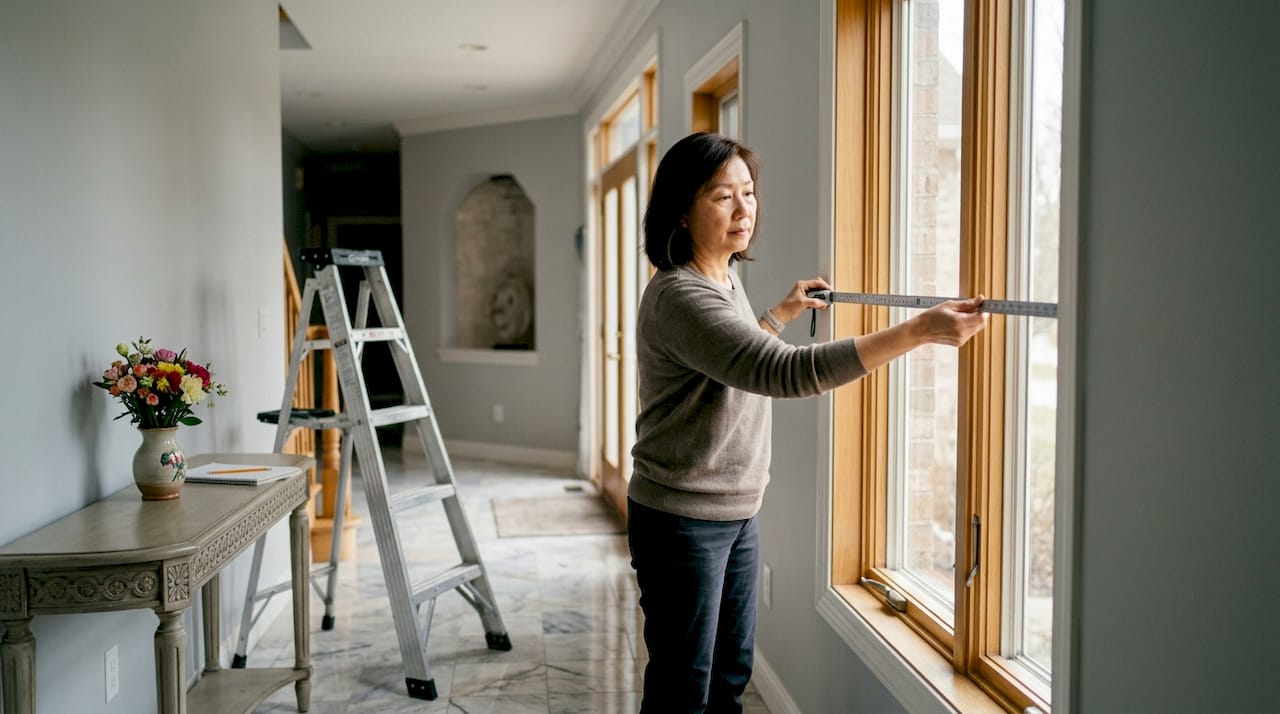


How Custom Shade Sizing Is Determined: A Homeowner's Guide
TL;DR:
- Proper custom shade sizing involves measuring width, height, and depth at multiple points to ensure a perfect fit. The manufacturer applies standard deductions and tolerances, so homeowners should submit exact measurements without pre-deductions. Accurate measurement, clear labeling, and understanding mount style choices prevent costly errors and ensure optimal window coverage.
Custom shade sizing is the process of calculating exact width, height, and depth measurements of your window and applying manufacturer tolerances and design factors to produce a perfectly fitted window treatment. Get it right, and your shades hang flush, block light cleanly, and raise without binding. Get it wrong, and you are looking at gaps, binding fabric, or a return shipment. This guide explains how custom shade sizing is determined, what measurements matter most, and how manufacturers translate your numbers into a finished product.
How custom shade sizing is determined: the core measurements
Three numbers define every custom shade order: width, height, and frame depth. Each one requires more than a single measurement to get right.
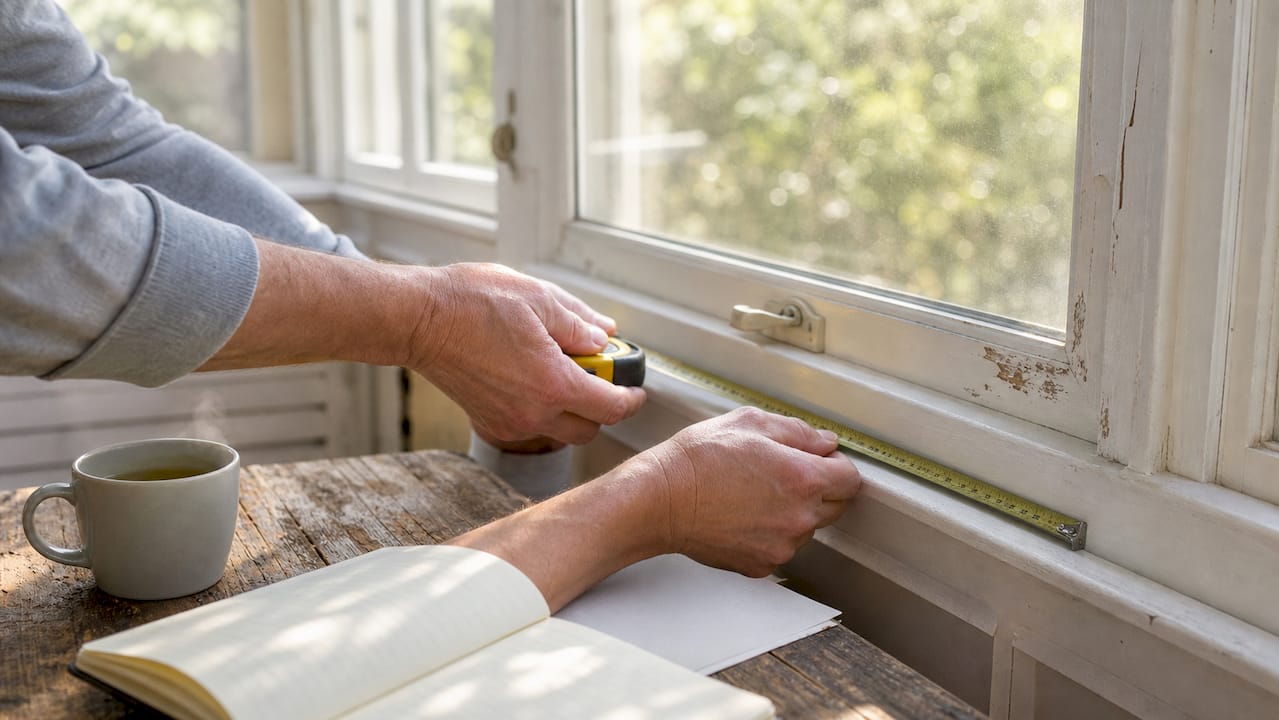
Width is the most critical dimension. Measure the width at the top, middle, and bottom of the window opening. Windows are rarely perfectly square, especially in older homes. Use the smallest of the three width readings for an inside mount order. That prevents the shade from jamming against a narrower section of the frame.
Height follows the same logic in reverse. Measure at the left side, center, and right side of the opening. Record the longest height across those three points. Using the longest value guarantees the shade covers the full window, even where the frame has settled unevenly over time.
Frame depth is the measurement most homeowners skip, and it is the one that determines whether an inside mount is even possible. Typical shades require 1.5 to 3 inches of frame depth for mounting hardware and operating clearance. If your frame is shallower than that, an outside mount is the correct choice.
Inside mount vs. outside mount: what changes
Inside mount shades sit within the window frame for a clean, built-in look. Outside mount shades attach to the wall or trim above the window and overlap the frame on all sides. The measurement process differs significantly between the two.
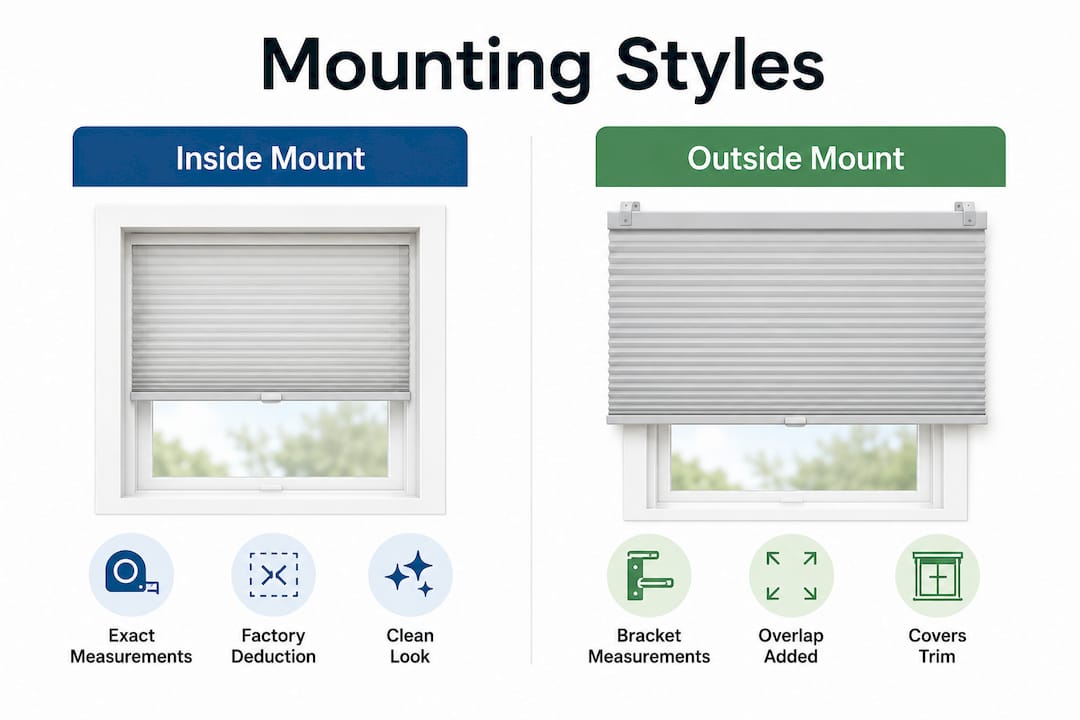
For an inside mount, you provide the exact opening dimensions. The manufacturer then applies a factory deduction to create clearance. For an outside mount, you measure from the points where you want the brackets to sit, then add overlap. Adding 2–3 inches per side beyond the frame is the standard recommendation for blocking light and maintaining privacy. That means a 36-inch window opening typically calls for a shade ordered at 42–44 inches wide for an outside mount.
Pro Tip: Always decide on your mount style before you measure. The numbers you record and the way you use them are completely different depending on which mount you choose.
How do manufacturer tolerances and deductions affect sizing?
Manufacturers do not cut your shade to the exact number you submit. They apply two adjustments before production begins: a factory deduction and a manufacturing tolerance.
The factory deduction is typically around 1/4 inch in total width. This pre-set clearance keeps the shade from rubbing against the frame when you raise or lower it. The manufacturer removes this amount from your submitted width automatically. You should never apply your own deduction before ordering. If you do, the manufacturer applies their standard deduction on top of yours, and the shade ends up too narrow.
The manufacturing tolerance is +/- 1/8 inch. This accounts for normal variation in the cutting and fabrication process. A shade ordered at 36 inches wide may arrive at 35 7/8 inches or 36 1/8 inches. That range is the accepted industry standard, and it does not affect fit or function in a properly measured window.
| Adjustment | Amount | Who applies it |
|---|---|---|
| Factory deduction | ~1/4 inch total width | Manufacturer, automatically |
| Manufacturing tolerance | +/- 1/8 inch | Built into production process |
| Customer deduction | None | You should not apply one |
The practical takeaway is straightforward. Submit your exact window measurements. Let the manufacturer handle the math. Homeowners who try to “help” by pre-deducting clearance almost always end up with a shade that is too small.
What design factors influence the final shade size?
Measurements define the window opening. Design factors define the finished shade. Several choices you make during the ordering process push the final dimensions beyond the raw window numbers.
Overlap for light control is the biggest variable for outside mount shades. The standard recommendation of 2–3 inches per side exists because light travels around the edges of a shade that sits flush with the frame. Blackout shades, in particular, need generous overlap to perform as intended. A shade ordered too close to the frame width will show light gaps even if the fabric itself is fully opaque.
Fabric type and fullness affect width requirements for certain shade styles. Roman shades and cellular shades have stacking folds that compress when raised. The stacked height of those folds at the top of the window is called the stack, and it can obscure several inches of the glass when the shade is open. If you want maximum glass exposure when the shade is up, factor the stack height into your height order. Sheer and light-filtering fabrics also behave differently from blackout fabrics under tension, which can affect how the shade hangs at full drop.
Motorized shades add one more consideration. The motor housing sits inside the roller tube and adds bulk at the top of the shade. Interior design trends in 2026 show growing demand for motorized window treatments, which means more homeowners are navigating this factor for the first time. Check the motor clearance requirements before finalizing your height order, because the motor housing can reduce the effective drop of the shade by an inch or more.
Mounting bracket placement also affects the final look. Brackets installed higher above the window frame create the illusion of taller windows, a technique interior decorators use regularly. If you mount brackets 4–6 inches above the frame, your height order increases by that same amount. Plan this before you measure, not after.
Pro Tip: For blackout or room-darkening shades, always go with an outside mount and add at least 2 inches of overlap on each side. The extra fabric coverage is the only reliable way to eliminate edge light gaps.
What are common measurement mistakes when sizing custom shades?
Most sizing problems trace back to a short list of avoidable errors. Knowing them in advance saves you from a costly reorder.
-
Measuring only once. A single measurement at one point tells you nothing about whether the window is square. Measure more than once and on different days if possible. Humidity and temperature can cause frames to shift slightly, and a second check catches errors before they become orders.
-
Rounding to the nearest inch. Accurate measurement to the nearest 1/8 inch is the industry standard. Rounding to the nearest inch or half inch introduces errors that compound across width, height, and deductions. A 1/2-inch rounding error on width can mean a visible gap on one side of the frame.
-
Applying your own deductions. Submit the exact opening size for inside mounts. The manufacturer’s factory deduction is calibrated for their specific hardware and fabric. Your estimate of the needed clearance is almost certainly different from theirs.
-
Using a fabric or cloth tape measure. Fabric tapes stretch. A metal tape measure gives consistent, repeatable readings. Use one every time.
-
Failing to label measurements clearly. Write down width first, then height, in that order. The window treatment industry uses width x height as the standard format. Reversing them is a common and expensive mistake.
-
Skipping the depth check. Measure your frame depth before committing to an inside mount. A frame that is too shallow forces an outside mount, which changes every other measurement you have already taken. Check the inside mount requirements for your specific shade style before you finalize your order.
Key Takeaways
Custom shade sizing is determined by measuring width, height, and depth at multiple points, then letting the manufacturer apply factory deductions and tolerances to those exact numbers.
| Point | Details |
|---|---|
| Measure at multiple points | Take width at top, middle, and bottom; use the smallest for inside mount orders. |
| Record the longest height | Measure height at left, center, and right; use the longest to guarantee full coverage. |
| Never self-deduct | Submit exact opening dimensions and let the manufacturer apply the standard 1/4-inch factory deduction. |
| Check frame depth first | Frames shallower than 1.5 inches require an outside mount, which changes all other measurements. |
| Add overlap for outside mounts | Plan for 2–3 inches of overlap per side to block light and maintain privacy. |
Why I always tell homeowners to measure three times and order once
The most common call a custom shade retailer receives after delivery is some version of “it doesn’t fit.” In nearly every case, the problem started before the order was placed. Either the homeowner measured at one point, rounded to the nearest inch, or tried to pre-calculate the clearance themselves.
What I have seen repeatedly is that homeowners underestimate how much variation exists in a single window frame. A window that looks perfectly rectangular often has a 1/4-inch or more difference between the top width and the bottom width. That difference is invisible to the eye but shows up immediately when a shade is installed.
The other mistake I see constantly is distrust of the manufacturer’s deduction process. Homeowners assume the factory will cut the shade to their exact number, so they subtract what they think is needed. The factory then subtracts again. The shade arrives undersized, and everyone points fingers. The fix is simple: trust the process. Provide exact measurements, specify your mount style clearly, and let the manufacturer do what they are calibrated to do.
One practical habit I recommend is measuring your windows in the morning and again in the evening. Wood frames in particular expand and contract with temperature and humidity. If your two readings differ, use the smaller width for inside mounts and the larger height for coverage. That one habit eliminates a surprising number of reorder situations.
For decorators working on multiple windows in a single project, label every measurement sheet with the room, window position (north wall, left window), and mount style before you start. Mixing up measurements between windows is far more common than anyone admits, and a clear labeling system costs nothing.
— Sunny
Valueblindsdirect makes custom sizing straightforward
Sizing a custom shade correctly is a process with real stakes. Valueblindsdirect built its Window Treatment Design Studio specifically to remove the guesswork from that process. The studio walks you through each measurement step, confirms your mount style, and applies the correct factory deductions before your order is placed.
Whether you are ordering premium custom shades for a single room or outfitting an entire home, the design studio gives you a structured path from raw window measurements to a finished, correctly sized product. Expert support is available throughout, so you are never left interpreting a measurement guide alone.
FAQ
What is the standard manufacturing tolerance for custom shades?
The industry standard manufacturing tolerance for custom window shades is +/- 1/8 inch. This variation is built into the production process and does not affect the fit or function of a correctly measured shade.
Should I subtract clearance before ordering a custom shade?
No. Submit your exact window opening measurements and let the manufacturer apply their standard factory deduction, typically around 1/4 inch in total width. Applying your own deduction results in a shade that is too narrow.
How do I measure for an outside mount shade?
Measure from the points where you plan to install the brackets, then add 2–3 inches of overlap per side beyond the window frame for light blocking and privacy coverage.
What frame depth do I need for an inside mount shade?
Most shades require 1.5 to 3 inches of frame depth for mounting hardware and operating clearance. Frames shallower than that require an outside mount installation.
Why should I measure width at three points instead of one?
Windows are rarely perfectly square. Measuring at the top, middle, and bottom catches any narrowing in the frame. Using the smallest of the three readings for an inside mount order prevents the shade from binding against a tighter section of the frame.