
Vertical Blinds Sizes: The Complete Fit Guide
TL;DR:
- Vertical blind sizes are determined by measuring width, height, and vane width to ensure proper fit and function. Standard sizes typically range from 72 to 96 inches in width and 84 inches in height, with vane widths from 3.5 to 5 inches for wider openings. Precise measurement, including rounding down and considering mount type, is essential for optimal fit and appearance.
Vertical blinds sizes are defined by three measurements: overall width, overall height, and individual vane width. Getting all three right determines whether your blinds fit cleanly, operate smoothly, and look intentional rather than improvised. Brands like Levolor, Hunter Douglas, and SelectBlinds each offer standard and custom sizing options, but the measurement work starts with you. This guide covers standard dimensions, how to measure correctly, vane selection, and what to do when your window is too wide for a single unit.
What are the standard vertical blinds sizes?
Standard vertical blinds sizes follow consistent ranges that fit most residential windows and sliding doors. The most common width range runs from 72 to 96 inches, with a standard height of 84 inches. A 78" x 84" blind is the go-to size for most sliding glass doors and patio doors. That combination covers the majority of standard openings without requiring a custom order.
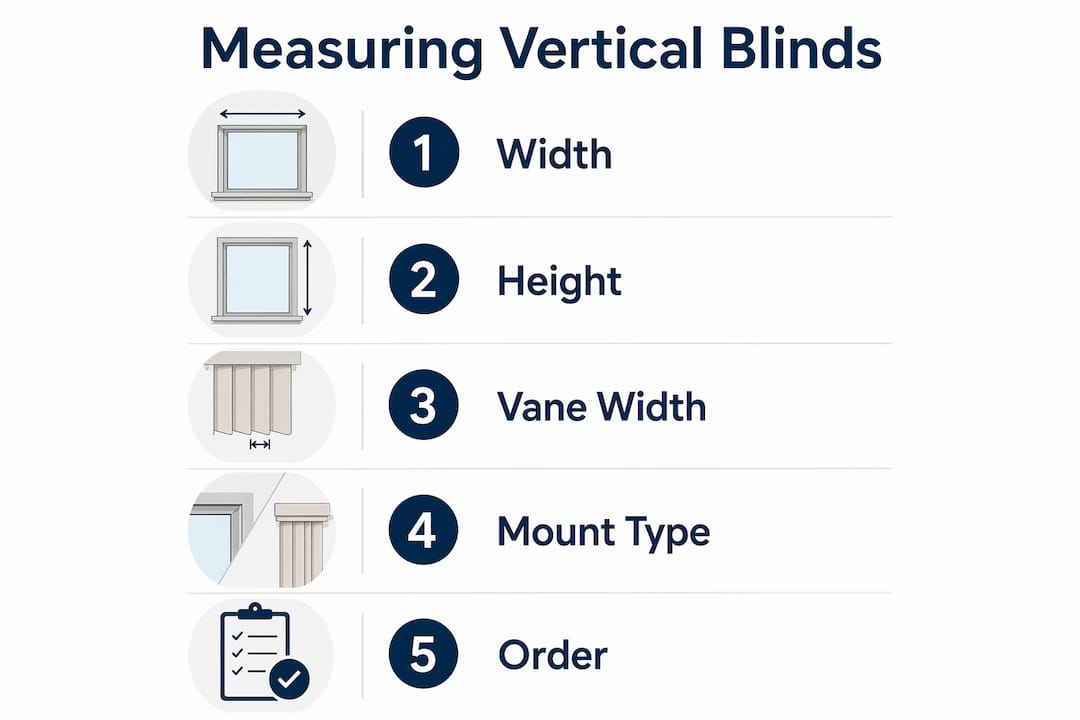
Vane width is the third dimension most buyers overlook. The standard vane width in the US is 3.5 inches, which works well for windows up to 72 inches wide. For openings wider than 72 inches, 4-inch or 5-inch vanes provide better visual coverage and a cleaner look. Wider vanes mean fewer slats across the headrail, which reduces visual clutter and makes large windows feel more deliberate.
Custom vertical blinds dimensions extend the range significantly. A single unit can reach 144 inches wide, and two units combined can cover spans up to approximately 23.6 feet. That flexibility makes vertical blinds one of the most practical choices for oversized openings.
| Window Type | Typical Width | Typical Height | Recommended Vane Width |
|---|---|---|---|
| Standard window | 36"–60" | 48"–72" | 3.5" |
| Sliding glass door | 72"–78" | 84" | 3.5"–4" |
| Large window or wide opening | 80"–96" | 84"–96" | 4"–5" |
| Oversized or bay window | 96"–144" | 84"–108" | 5" (or dual unit) |
How do you measure vertical blinds correctly?
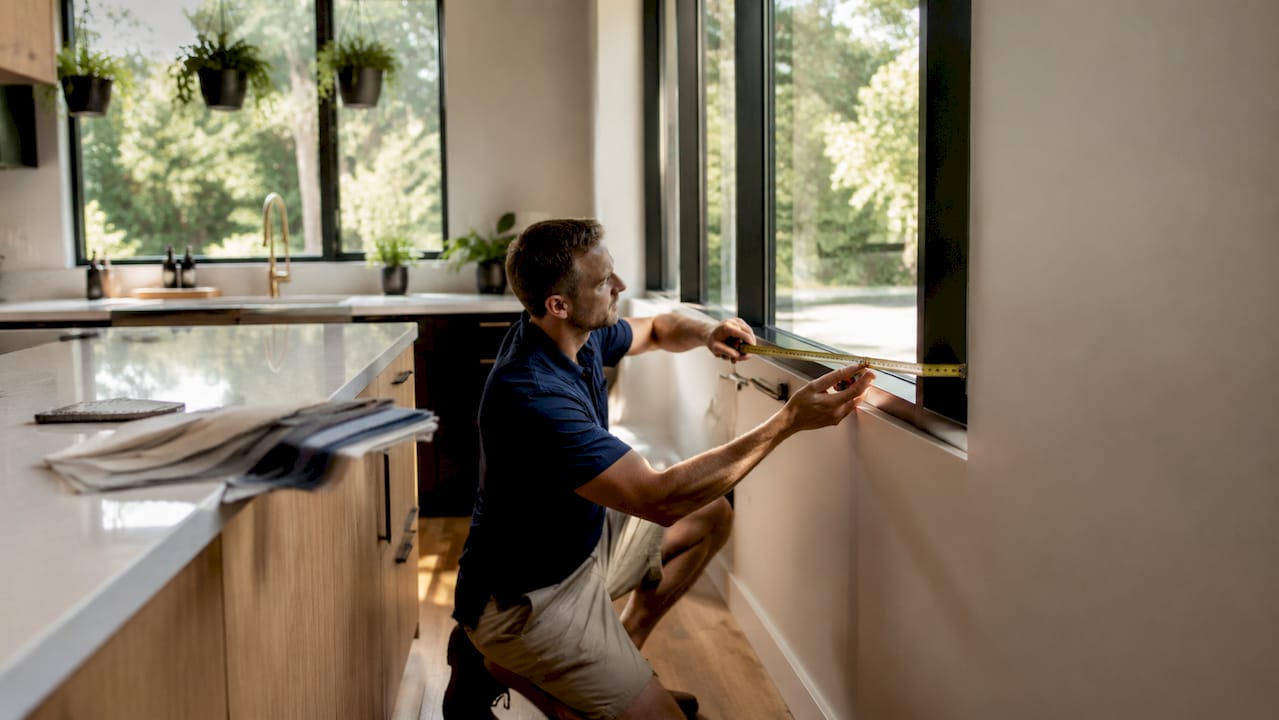
Accurate vertical blinds measurements prevent the two most common problems: blinds that drag on the floor and blinds that leave gaps at the sides. The process is straightforward, but the details matter.
Follow these steps for a reliable measurement:
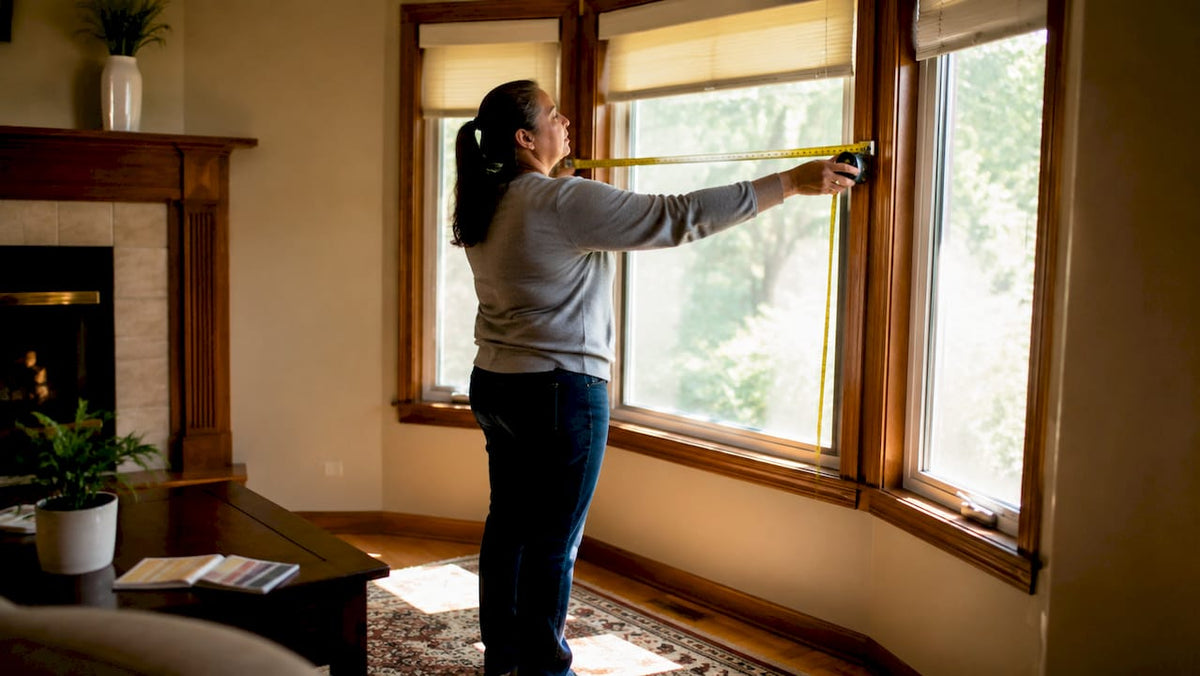
- Measure the width in three places. Take readings at the top, middle, and bottom of the window opening. Use the smallest of the three numbers. Windows are rarely perfectly square, and the narrowest point determines what will actually fit.
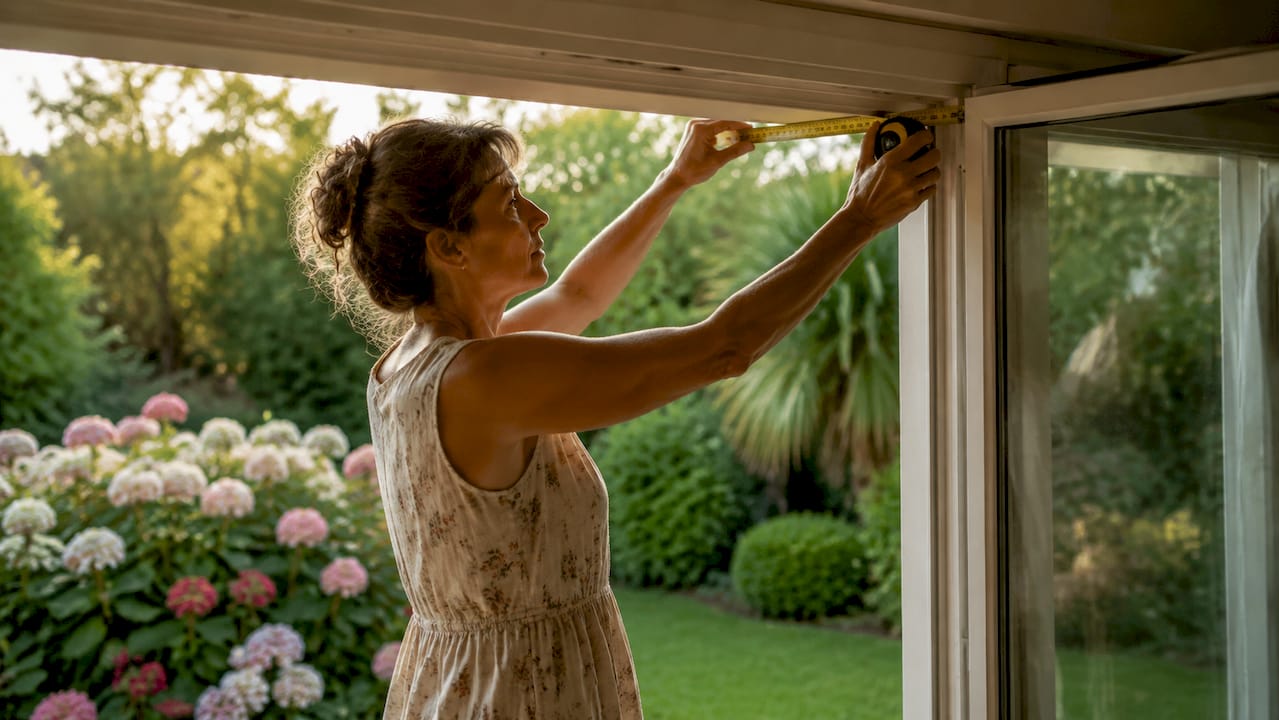
- Measure the height in three places. Measure at the left side, center, and right side. Again, use the smallest measurement as your working number.
- Decide on your mount type before you finalize numbers. Inside mounts sit within the window frame. Outside mounts attach to the wall or trim above the opening.
- Apply the correct deduction for inside mounts. Manufacturers apply a height deduction of approximately half an inch for inside mounts to prevent vanes from dragging on the sill or floor. This deduction is built into most custom orders, but confirm it with your supplier.
- Round down, not up. Round measurements down to the nearest 1/8 inch to keep the fit clean. Rounding up even slightly can cause binding or prevent the headrail from seating correctly.
Pro Tip: Always measure with a steel tape measure, not a fabric one. Fabric tapes stretch slightly over longer spans, which adds up fast on a 96-inch window.
Outside mounts give you more flexibility because you control how far beyond the frame the blind extends. Add at least 2 inches on each side of the frame width to block light and create a fuller look. For height, measure from where the headrail will mount down to the floor or sill, then subtract your clearance.
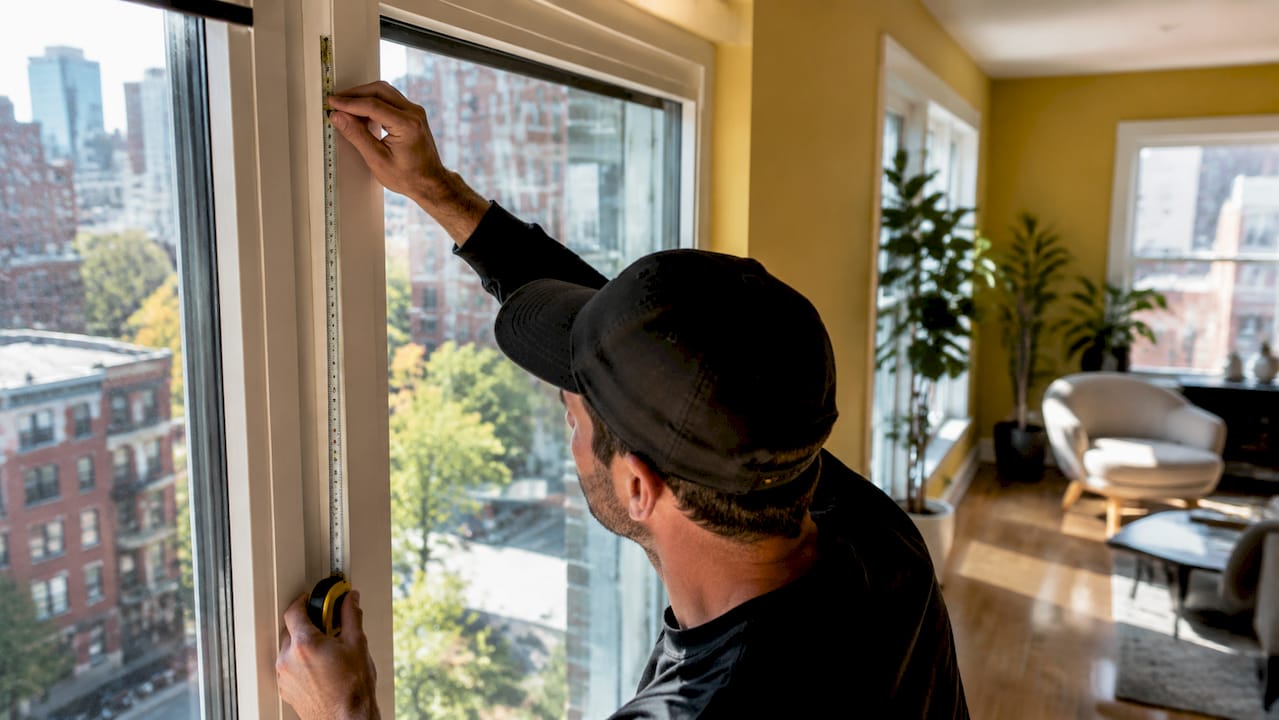
The most common measurement mistake is ignoring the headrail depth. The headrail needs clearance from the window frame or ceiling. Check that your chosen headrail fits within the available depth before ordering. Uneven frames are another frequent problem. Measuring at three points per dimension catches frame irregularities that a single measurement would miss entirely.
How do vane width and fabric affect the final look?
Vane width and material choice shape how your vertical blinds perform and how they read in a room. These two decisions deserve as much attention as the overall dimensions.
Vane width options and their visual impact:
- 3.5-inch vanes suit standard windows and create a traditional, fine-line look. They stack compactly when open, which is useful for windows where you want maximum light when the blinds are pulled back.
- 4-inch vanes work well on sliding doors and medium-large windows. They offer a slightly more modern profile without the bulk of the widest option.
- 5-inch vanes are the right call for very wide openings. Fewer vanes across the span means a cleaner, more architectural look that reads as intentional rather than busy.
Material choices and what they actually do:
- PVC or vinyl vanes resist moisture and clean easily. They are the practical choice for kitchens, bathrooms, and any room with humidity.
- Fabric vanes mimic drapery. Fabric vertical blinds drape softly and stack with a texture that vinyl cannot replicate. The weight of the fabric affects how the vanes hang and how smoothly they rotate.
- Faux wood vanes add warmth without the maintenance of real wood. They work in living rooms and bedrooms where aesthetics matter more than moisture resistance.
- Sheer fabric vanes filter light while maintaining an open feel. They are popular in rooms where privacy is secondary to natural light.
- Motorized options pair well with any material. For large installations, motorized vertical blinds eliminate the physical effort of operating a heavy headrail manually.
Pro Tip: Order fabric samples before you commit to a full set. The same color reads differently in your room’s light than it does on a screen, and the drape of a fabric vane only becomes clear when you hold it in your hand.
Testing samples is the step most buyers skip and most regret skipping. The texture, opacity, and drape of a vane all affect the finished result in ways that product photos cannot fully communicate.
Custom and oversized vertical blinds for wide windows
Vertical blinds for large windows require a different planning approach than standard sizing. When your opening exceeds 144 inches, a single headrail unit is not the answer.
The standard solution is two separate units that meet in the center of the opening. For openings wider than 144 inches, splitting into two units distributes the weight evenly and keeps operation smooth. A single oversized headrail becomes difficult to operate and can sag over time under the weight of the vanes.
Key considerations for wide and irregular windows:
- Stacking direction matters. Decide which side each unit stacks to when open. For a centered split, each unit typically stacks toward its nearest wall. This keeps the center of the window clear when the blinds are fully open.
- Headrail weight increases with width. Wider headrails are heavier. For openings above 96 inches, check that your wall or ceiling mounting surface can support the load. Concrete anchors or toggle bolts may be necessary.
- Bay windows need individual measurements per panel. Each angled section of a bay window is a separate measurement. Do not try to cover a bay window with one continuous unit.
- Corner windows require two separate headrails. There is no single unit that turns a corner. Measure each wall section independently and order two units sized to meet at the corner.
For very wide or heavy-duty sliding door applications, motorized vertical blinds remove the manual effort entirely. A single button or app command operates both units simultaneously, which is particularly useful when the blinds are installed high or in a hard-to-reach location.
Custom sizing from suppliers like Valueblindsdirect means you are not forced to adapt your window to a stock size. You order to your exact measurements, which produces a cleaner result than trimming or padding a standard blind to fit. For guidance on blinds for large windows, the approach to sizing and style selection differs meaningfully from standard windows.
Key takeaways
Choosing the right vertical blinds size comes down to three precise measurements, the correct mount type, and vane dimensions matched to your window’s scale.
| Point | Details |
|---|---|
| Standard size range | Most windows fit 72"–96" wide by 84" tall; sliding doors typically use 78" x 84". |
| Vane width by opening size | Use 3.5" vanes for windows under 72" wide; choose 4"–5" vanes for larger openings. |
| Measure three times per dimension | Take width and height readings at three points each; always use the smallest number. |
| Inside mount deduction | Subtract approximately half an inch from height on inside mounts to prevent vane drag. |
| Oversized windows need dual units | Openings wider than 144" require two separate headrail units meeting at the center. |
Why measurement precision matters more than you think
I have seen more blind returns caused by measurement errors than by wrong color choices. Homeowners often assume windows are square and measure once at the center. That single measurement misses the slight bow or taper that shows up in older homes, and the result is a blind that either binds in the frame or leaves a visible gap on one side.
The half-inch height deduction for inside mounts is the detail that surprises people most. It sounds minor, but vanes that drag on the sill wear out faster and look sloppy from day one. Manufacturers build this deduction into custom orders, but if you are ordering a stock size and trimming it yourself, you have to account for it manually.
My strongest recommendation is to order samples before you finalize your fabric choice. The difference between a sheer fabric vane and a light-filtering vinyl vane is not just visual. It affects how the room feels at different times of day. You cannot evaluate that from a product page. Valueblindsdirect offers free swatches, and using them is the single best thing you can do before placing a full order.
Wider vanes also tend to look better in modern interiors than the traditional 3.5-inch standard. If your window is 80 inches or wider, the jump to 4-inch or 5-inch vanes produces a cleaner, more intentional result. The fewer vanes you have crossing the opening, the more the window reads as a feature rather than a wall of slats.
— Sunny
Find your perfect fit with Valueblindsdirect
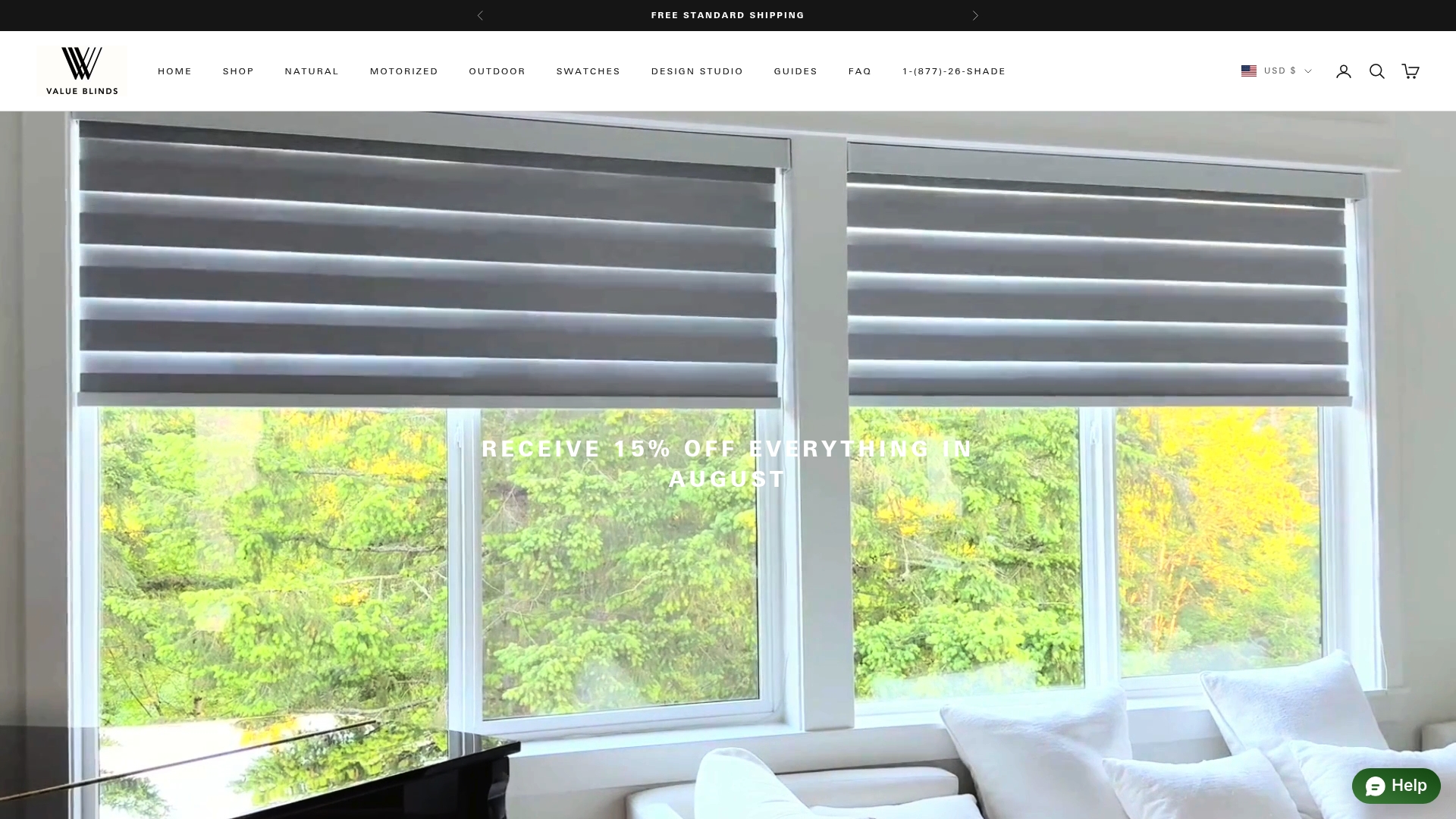
Valueblindsdirect takes the guesswork out of sizing with its Window Treatment Design Studio, an interactive tool that walks you through width, height, vane width, and mount type before you order. You input your measurements, select your material and vane size, and see exactly what you are getting. The studio also connects you with expert support if your window falls outside standard dimensions. For homeowners ready to browse the full range of styles and materials, the vertical blinds collection includes PVC, fabric, faux wood, sheer, and motorized options across all standard and custom sizes. Free swatches are available on most fabric lines, so you can confirm your choice before committing.
FAQ
What is the standard size for vertical blinds?
Standard vertical blinds run 72–96 inches wide and 84 inches tall. The most common size for sliding glass doors is 78 inches wide by 84 inches tall.
What vane width should i choose for a wide window?
Use 3.5-inch vanes for windows under 72 inches wide. For openings above 72 inches, 4-inch or 5-inch vanes provide better coverage and a cleaner visual result.
How do i measure vertical blinds for an inside mount?
Measure width at three points and use the smallest number. Measure height at three points, use the smallest, then subtract approximately half an inch to prevent vanes from dragging on the sill.
Can vertical blinds cover a window wider than 144 inches?
Yes. For openings wider than 144 inches, order two separate headrail units that meet at the center of the opening. This distributes weight evenly and keeps operation reliable.
Should i round up or down when measuring for vertical blinds?
Always round down to the nearest 1/8 inch. Rounding up even slightly can cause the headrail to bind in the frame or prevent a clean fit on inside mounts.