
How to Measure for Vertical Blinds: A Homeowner's Guide
Measuring for vertical blinds means recording both width and height at three points each and choosing inside or outside mount before ordering, since the mount type determines whether a deduction is applied. Value Blinds Direct walks through this process step by step, since even small measuring errors can affect how well a finished blind fits the window.
TL;DR:
- Accurate measurement is essential for proper fit and function of vertical blinds, and choosing the correct mount type impacts all measurements.
- Homeowners should measure window width and height in multiple places, use a steel tape, and record measurements precisely to avoid costly errors.
- Checking window squareness and following step-by-step guidance ensures blinds fit properly, with outside mount favored for irregular or out-of-square windows.
Accurate measurement is the single most important step in getting vertical blinds that fit, function, and look right from day one. One wrong number and your blinds scrape the frame, let in light gaps, or arrive too short to cover the window. This guide walks you through every step of the process, from choosing your mount type to recording your final numbers, so you can order with confidence and avoid the most common mistakes homeowners make.
How to measure for vertical blinds: inside vs. outside mount
Before you pull out your tape measure, you need to decide where your blinds will mount. That decision changes every measurement you take.
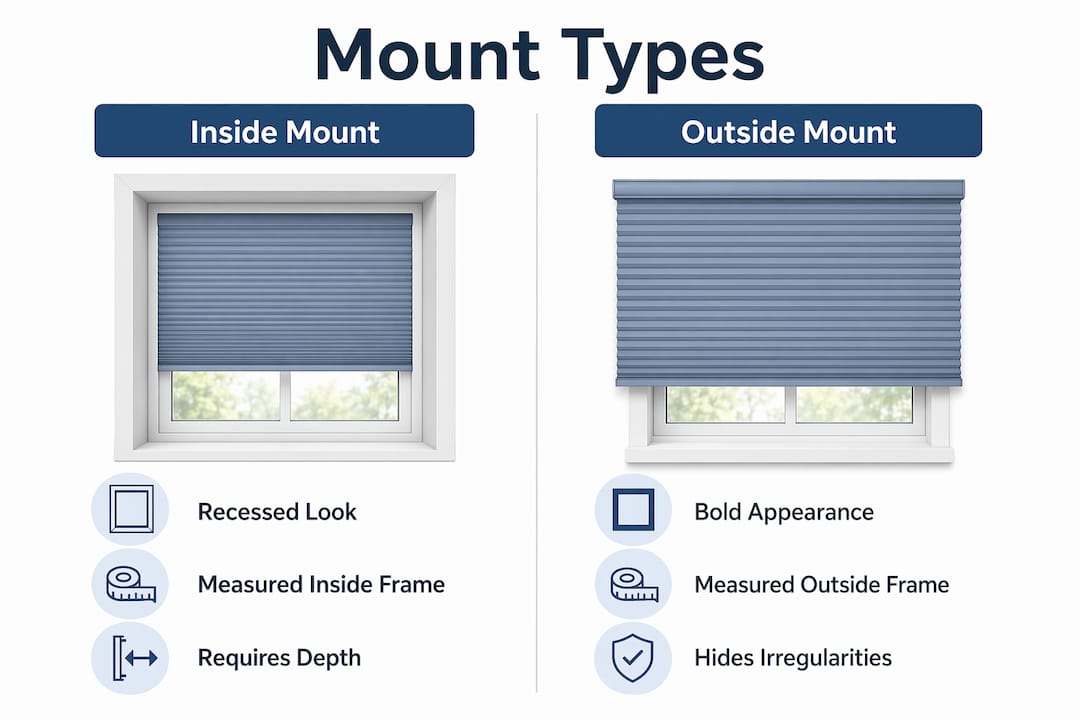
Inside mount means the headrail sits inside the window frame. The blinds hang within the frame opening, giving a clean, built-in look. This works best when your window frame is deep enough to hold the headrail hardware and when your frame is square.
Outside mount means the headrail attaches to the wall or trim above the window. The blinds cover the frame entirely. This is the right choice when your window is shallow, out of square, or when you want to make the window appear larger.
The measurement differences between the two are significant:
- Inside mount width: Measure the inside of the frame. You give the exact opening size. The manufacturer handles the deduction.
- Outside mount width: Measure the full area you want covered, then add 3 to 4 inches total (1.5 to 2 inches per side) to block light and ensure privacy.
- Inside mount height: Measure from the top of the frame opening to the sill.
- Outside mount height: Measure from where the headrail will mount down to where you want the blinds to end, typically the floor or just below the sill.
| Feature | Inside mount | Outside mount |
|---|---|---|
| Look | Recessed, minimal | Bold, window-enlarging |
| Best for | Deep, square frames | Shallow or irregular frames |
| Width measurement | Exact frame opening | Frame plus overlap on each side |
| Light control | Some edge gaps possible | Full coverage with overlap |
Pro Tip: Check your window depth before committing to an inside mount. Most headrails need at least 2.5 inches of depth to sit flush. If your frame is shallower, outside mount is your only real option.
Step-by-step guide to measuring width and height accurately
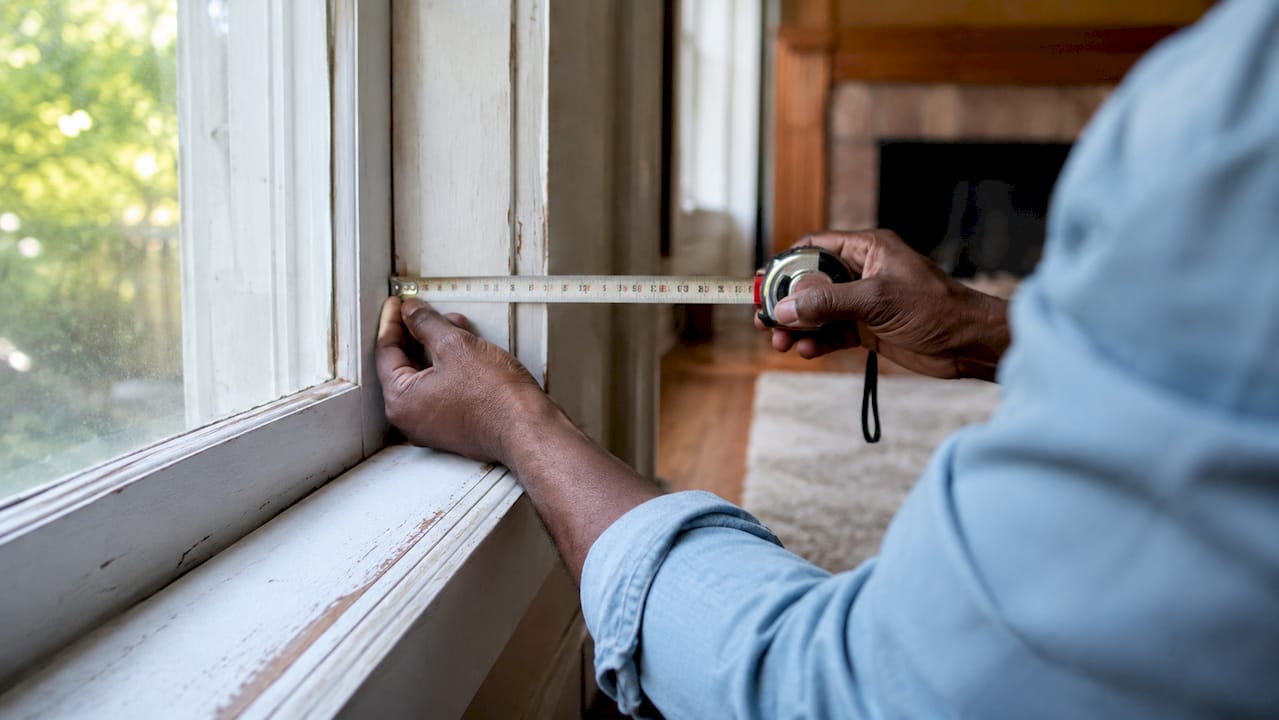
This is where most homeowners make their biggest mistakes. Follow this sequence exactly, and you will get numbers you can order from with confidence.
Measuring width
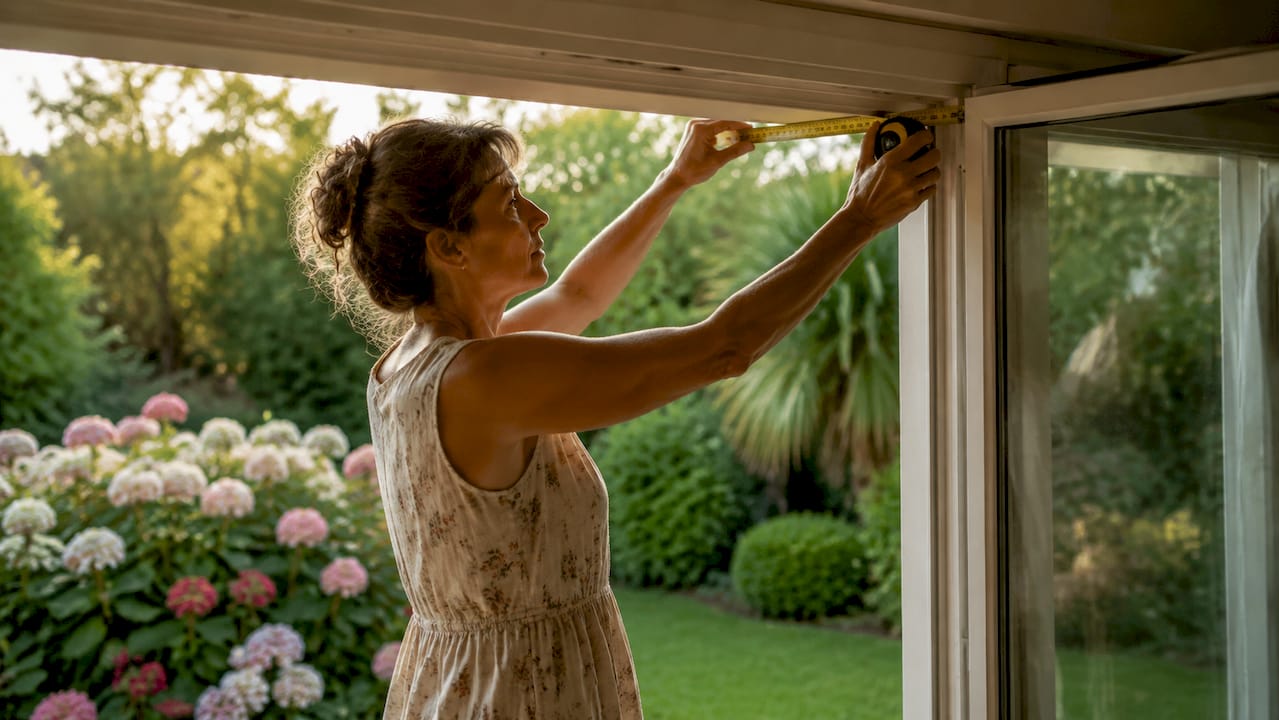
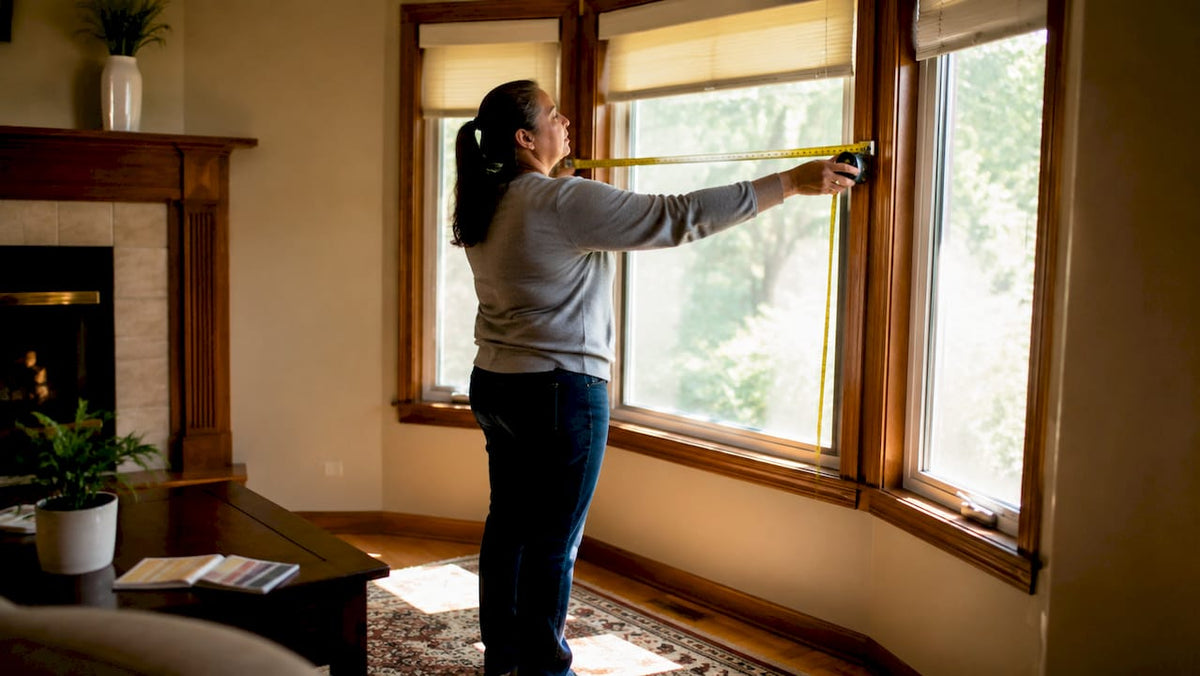
- Use a steel tape measure. Steel tape measures give rigid, exact readings. Cloth tapes stretch and sag, which introduces errors that cost you a reorder.
- Measure in three places. Take your width measurement at the top, middle, and bottom of the window opening.
- Record all three numbers. For an inside mount, use the smallest width of the three. This prevents the headrail from jamming against a narrower section of the frame.
- For outside mount, take your widest measurement across the frame, then add your overlap allowance on each side.
- Measure to the nearest 1/8 inch. Rounding to the nearest inch is one of the most common and costly errors in this process.
Measuring height
- Measure in three places. Take your height measurement on the left side, the center, and the right side of the window opening.
- For inside mount, use the longest height of the three. This guarantees full coverage with no gap at the bottom.
- For outside mount, measure from your planned headrail mounting point down to your desired bottom point. For patio doors, a standard height is approximately 84 inches, though your space may differ.
- Account for the headrail and valance. When measuring outside mount height, add clearance for the mounting hardware above the window opening.
- Write every number down immediately. Do not trust your memory. Label each measurement clearly: width top, width middle, width bottom, height left, height center, height right.
Pro Tip: Take a photo of your written measurements next to the window before you leave the room. It takes five seconds and eliminates any confusion when you sit down to place your order.
One detail that surprises many homeowners: manufacturers typically apply a small internal deduction of 1/8 to 1/4 inch to ensure the blind fits without scraping the frame. You do not need to subtract anything yourself. Give the manufacturer your exact raw measurements and let them handle the adjustment.
For sliding glass doors, the calculation changes again. You need at least 1.5 times the actual door width so the louvers can stack fully to one side without blocking the glass when the door is open.
Does window squareness affect your blind measurements?
Most windows look square. Many are not. An out-of-square frame causes inside-mounted blinds to sit crooked, create visible gaps at the corners, or bind against the frame when you try to operate them.
The test is straightforward. Measure both diagonals of your window opening, corner to corner. If the two diagonal measurements differ by more than 1/2 inch, your window is out of square and an outside mount is the better choice.
Here is what to look for when checking squareness:
- A difference under 1/4 inch is acceptable for inside mount.
- A difference between 1/4 and 1/2 inch warrants caution. Consider outside mount.
- A difference over 1/2 inch means outside mount is strongly recommended.
| Diagonal difference | Recommended action |
|---|---|
| Under 1/4 inch | Inside mount is fine |
| 1/4 to 1/2 inch | Proceed with caution; consider outside mount |
| Over 1/2 inch | Use outside mount to hide irregularities |
Outside mount blinds hide frame irregularities naturally because the headrail sits above the frame entirely. The louvers cover the window opening with overlap on all sides, so minor gaps or uneven edges disappear behind the blind.
Common mistakes when measuring windows for blinds
Even careful homeowners repeat the same errors. Knowing what they are before you measure is the fastest way to avoid them.
- Measuring only once. A single measurement gives you no way to catch errors. Measure every window at least twice, ideally three times, before recording your final number.
- Using a cloth tape. Cloth tapes stretch under tension and sag in the middle. Always use a steel tape for window measurements.
- Assuming identical windows are the same size. Windows in the same room, even side by side, often have slight size variations from settling or construction tolerances. Measure each window individually without exception.
- Rounding to the nearest inch. Vertical blinds are custom products. Rounding introduces errors that compound across the width of the blind. Always measure to the nearest 1/8 inch.
- Ignoring obstructions. Window handles, locks, cranks, and deep sills all affect which mount type works and where your headrail can sit. Note every obstruction before you finalize your measurements.
- Mixing up width and height. Write “W” and “H” next to every number as you record it. Transposing these two figures is a surprisingly common ordering mistake.
Pro Tip: Use a DIY measuring guide as a checklist while you work. Running through a structured list keeps you from skipping steps when you are working quickly.
Key takeaways
Accurate measurement, combined with the right mount choice, is what separates vertical blinds that work perfectly from ones that need to be returned and reordered.
| Point | Details |
|---|---|
| Choose mount type first | Inside or outside mount determines every measurement you take. |
| Measure width in three places | Use the smallest inside-mount width to prevent the headrail from binding. |
| Measure height in three places | Use the longest inside-mount height to guarantee full bottom coverage. |
| Check window squareness | A diagonal difference over 1/2 inch means outside mount is the right call. |
| Never deduct measurements yourself | Give manufacturers your exact raw numbers and let them apply their standard deductions. |
What I have learned from watching homeowners measure their own windows
I have seen a lot of measuring mistakes over the years, and the most expensive ones share a common thread. People rush. They measure once, round to the nearest inch, and assume the two windows in the bedroom are the same size because they look identical. Then the blinds arrive and nothing fits right.
The fix is not complicated. Slow down. Write every number down as you take it. Take three measurements for every dimension, not one. If your window has any quirks, like a deep sill, a protruding handle, or a frame that looks slightly off, photograph it before you order. That photo becomes your reference when you are filling out a custom order form and second-guessing yourself.
I also think homeowners underestimate how much the mount decision matters. Most people default to inside mount because it looks cleaner. But if your frame is shallow or even slightly out of square, inside mount creates more problems than it solves. Outside mount hides a lot of imperfections and gives you more control over light coverage. For complex window shapes or large installations, professional measuring services like those offered by Expressions Remodeling are worth considering. The cost of a professional visit is almost always less than the cost of a reorder.
The best measuring sessions I have seen are the ones where the homeowner treats it like a small project, not a quick task. Set aside 20 minutes. Bring a notepad, a steel tape, and good lighting. Follow a step-by-step window guide and check your work before you close the notebook. That approach gets it right the first time, almost every time.
— Sunny
Get the perfect fit with Valueblindsdirect
Valueblindsdirect takes the guesswork out of ordering custom vertical blinds online. The Window Treatment Design Studio walks you through every step, from choosing your mount type to entering your final measurements, so you can order with confidence. The site’s built-in measuring guides match the methods in this article, and the expert support team is available to answer questions before you place your order.

Whether you are covering a standard window or a wide sliding glass door, Valueblindsdirect offers a full range of quality vertical blinds in custom sizes. Free swatches, clear product specs, and flexible shipping make it easy to get the right blind without leaving home.
FAQ
What tools do I need to measure for vertical blinds?
A steel tape measure, a notepad, and a pencil are all you need. Steel tape gives rigid, accurate readings that cloth tapes cannot match.
Should I measure inside or outside the window frame?
It depends on your mount type. Inside mount uses measurements taken inside the frame opening. Outside mount uses measurements that extend beyond the frame to include your desired overlap on each side.
How much overlap do outside mount vertical blinds need?
Add at least 3 to 4 inches to the total width, which means 1.5 to 2 inches on each side. This overlap blocks light gaps and provides full privacy coverage.
Do I need to deduct anything from my measurements before ordering?
No. Give the manufacturer your exact raw measurements. Manufacturers apply a standard internal deduction of 1/8 to 1/4 inch to account for fit automatically.
How do I know if my window is square enough for inside mount blinds?
Measure both diagonals of the window opening corner to corner. If the difference between the two measurements exceeds 1/2 inch, choose outside mount instead to avoid gaps and crooked installation.
Recommended
- How to Measure for Blinds: Accurate DIY Guide for Windows
- Measuring Windows for Blinds: The Simple Step-by-Step Guide
- How to measure blinds for the perfect fit: complete guide
- How to Measure and Install Blinds for a Flawless Fit