

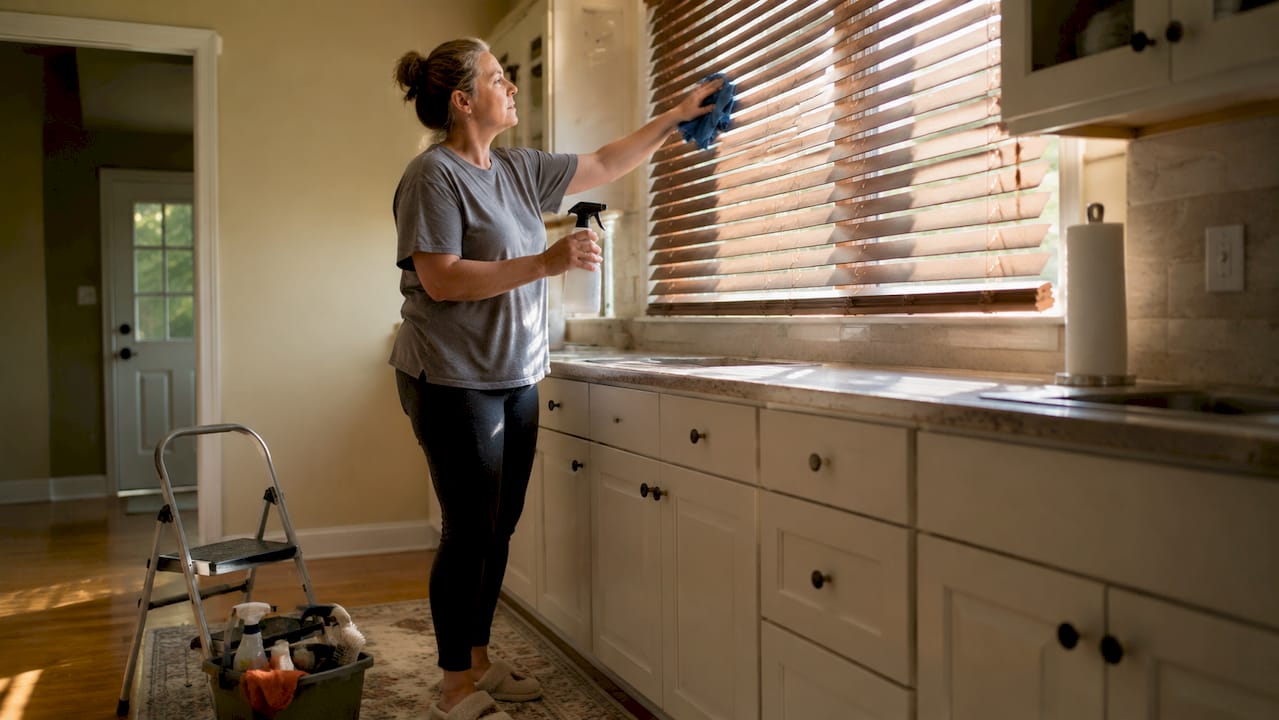
How to Clean Faux Wood Blinds Without Damage
TL;DR:
- Cleaning faux wood blinds requires regular dry dusting and careful damp cleaning with mild solutions, as their moisture-resistant materials allow safer wet cleaning. Proper maintenance includes weekly dusting, monthly spot cleaning, and occasional deep cleans to prevent grime buildup and preserve the finish, cords, and mechanisms. Using the right tools, such as microfiber cloths and gentle cleaning solutions, and avoiding harsh chemicals ensures the blinds stay in good condition for years.
Cleaning faux wood blinds correctly requires two things: regular dry dusting and careful wet cleaning with mild, non-abrasive solutions. Unlike real wood, faux wood blinds are made from PVC or composite materials, which makes them moisture resistant and far more forgiving during cleaning. That said, the wrong approach, like soaking them or scrubbing with harsh chemicals, can still warp slats, strip the finish, or damage the cords. This guide walks you through the best cleaning methods for blinds, the right tools to use, and how to keep your faux wood blinds looking sharp for years.
How to clean faux wood blinds the right way
The core rule for faux wood blind care is simple: start dry, then go damp only where needed. Dust is the most common enemy, and it compounds fast. Dust buildup causes sticky grime and stains if left unaddressed for weeks. That means a quick weekly dusting session does more for your blinds than an occasional deep clean ever will.
Faux wood blinds differ from real wood in one critical way. Their PVC or composite construction allows for wet cleaning without the warping risk that plagues natural wood. This allows for safer wet cleaning, which opens up more cleaning options for stubborn grease or kitchen grime. Still, “moisture resistant” does not mean “waterproof,” so controlled application always beats soaking.
The most effective cleaning routine combines three habits: weekly dusting, monthly spot cleaning, and a full deep clean two to four times per year. Each layer of care builds on the last. Skip the weekly dusting, and your monthly wipe-down turns into a scrubbing session. Stay consistent, and each cleaning session takes under ten minutes.
What are faux wood blinds made of?
Faux wood blinds are manufactured from PVC, composite wood, or a blend of both materials. This composition is what separates them from traditional wood blinds in terms of durability and cleaning flexibility.
Here is why the material matters for cleaning:
- Moisture resistance: PVC and composite slats handle damp wiping without swelling or cracking, unlike natural wood.
- Finish sensitivity: The painted or printed finish on faux wood slats can scratch or dull if you use abrasive pads or strong chemical cleaners.
- Cord and mechanism vulnerability: Even though the slats are durable, the cords, headrail, and tilt rod are mechanical parts that need gentle handling.
- Stain behavior: Grease and cooking residue bond to the slat surface over time, which is why regular dusting prevents the need for aggressive scrubbing later.
- Fade risk: Prolonged direct sunlight degrades the finish color on faux wood slats, so UV exposure is a long-term maintenance concern.
Improper cleaning, such as using bleach, ammonia-based sprays, or abrasive scrubbers, can permanently damage the finish. Once the surface coating is gone, the slat looks dull and becomes harder to clean going forward. Knowing what your blinds are made of is the first step toward choosing the right care approach. For a deeper look at how faux wood compares to real wood in terms of durability and upkeep, the wood vs. faux wood comparison from Valueblindsdirect breaks it down clearly.
Which tools work best for cleaning faux blinds?
The right tools make the difference between a quick, effective clean and one that leaves scratches or water spots. You do not need a cabinet full of specialty products. A few well-chosen items cover every cleaning scenario.
Recommended tools and supplies:
- Two microfiber cloths: Microfiber cloths prevent scratching the slat finish. Use one dry cloth for dusting and one damp cloth for wiping down stains or grease.
- Feather duster or vacuum with soft brush attachment: A feather duster or soft brush vacuum is ideal for weekly dusting between deep cleans.
- Warm water and mild dish soap: This is the go-to cleaning solution. Dawn or any gentle dish soap mixed with warm water handles most stains without damaging the finish.
- Spray bottle: Fill it with your soap solution for controlled, even application. Spraying directly onto the cloth rather than the blind prevents over-wetting.
- Rubber gloves: Optional, but useful when cleaning greasy kitchen blinds to keep your hands clean and improve grip.
What to avoid:
- Abrasive scrub pads or steel wool
- Bleach, ammonia, or solvent-based cleaners
- Soaking the blinds in a bathtub unless they are heavily soiled and fully removable
Pro Tip: Fill a spray bottle with one part mild dish soap and four parts warm water. Mist the solution onto your microfiber cloth rather than directly onto the slat. This gives you full control over how much moisture touches the blind.
For more guidance on natural cleaning methods that skip the chemicals entirely, Valueblindsdirect has a dedicated resource worth bookmarking.
Step-by-step guide to deep cleaning faux wood blinds
Follow this process in order. Skipping steps, especially the dry dusting phase, forces you to work harder later.
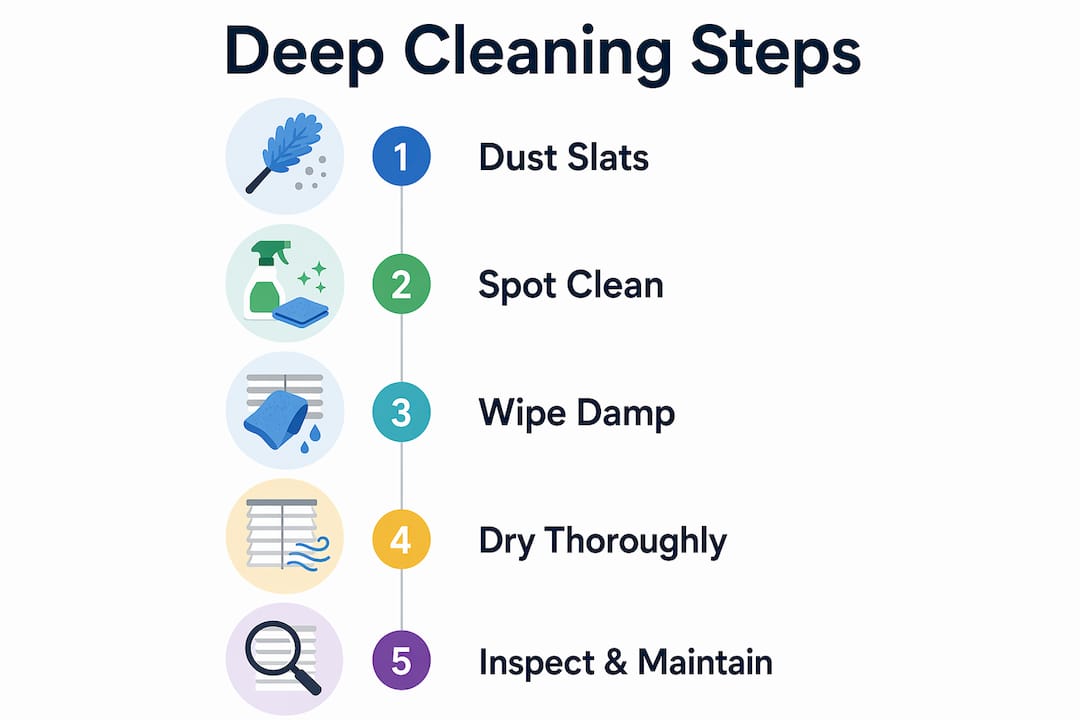
- Close the slats flat and dust the front side. Use a dry microfiber cloth or feather duster. Work from the top slat down to the bottom. This prevents dislodged dust from falling onto already-cleaned slats.
- Flip the slats and repeat on the back. Most people skip this step. The back side collects just as much dust, especially near windows with airflow.
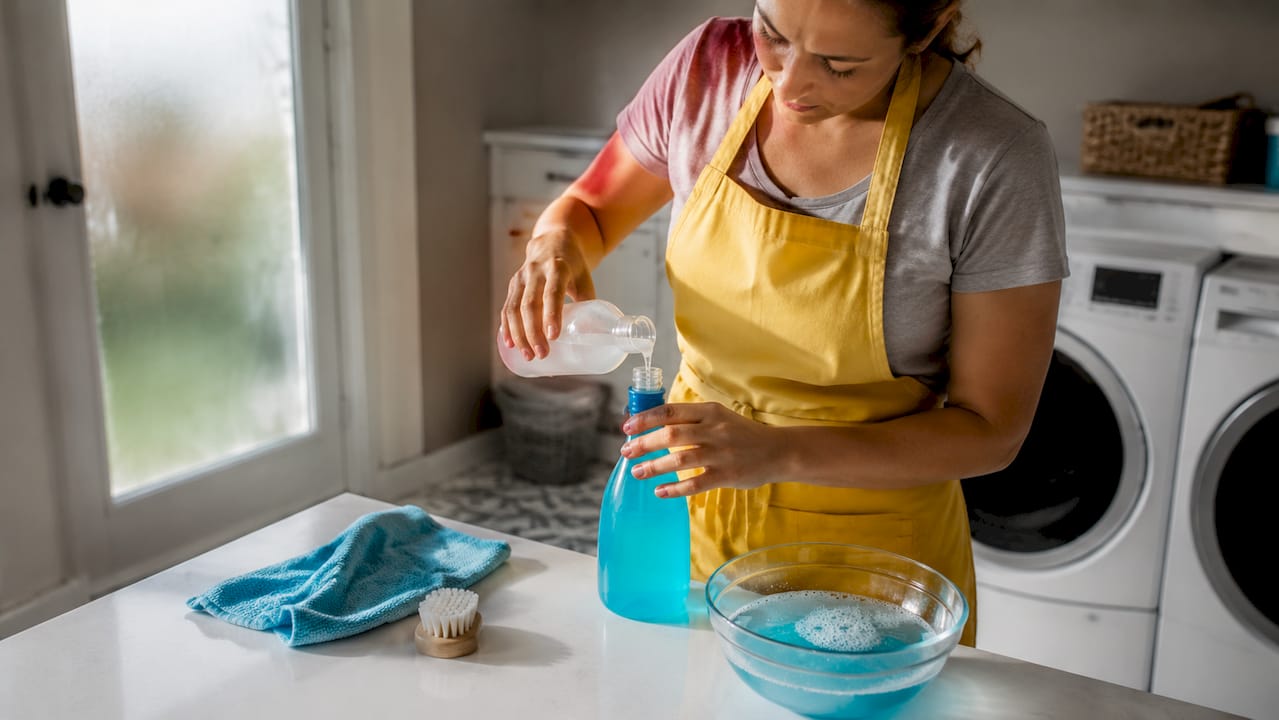
- Mix your cleaning solution. Combine warm water with a few drops of mild dish soap in a spray bottle or bowl. A gentle soap solution is recommended for deep cleaning stained or greasy blinds.
- Wipe each slat with a damp microfiber cloth. Work one slat at a time, wiping from the center outward. Apply light pressure on stained areas. Do not scrub in circles, as this can leave marks.
- Dry each slat immediately. Proper drying prevents water spots and potential warping on faux wood slats. Follow your damp cloth with a dry microfiber cloth on each slat before moving to the next.
- Clean the headrail and cords. Use a vacuum with a soft brush attachment or a lightly damp cloth. Vacuuming the headrail and cords prevents dust accumulation and mechanical malfunction.
- Let the blinds air dry fully before raising or adjusting them. Leave them in the open position for 15–20 minutes.
Pro Tip: Tackle kitchen blinds more frequently than blinds in other rooms. Cooking grease bonds to dust particles and creates a sticky film that is much harder to remove once it sets. A monthly wipe-down in the kitchen beats a quarterly scrubbing session.
Here is a quick reference for cleaning frequency by room:
| Room | Recommended Cleaning Frequency | Primary Concern |
|---|---|---|
| Kitchen | Monthly deep clean | Grease and cooking residue |
| Bathroom | Every 6–8 weeks | Humidity and soap film |
| Living room | Every 2–3 months | General dust buildup |
| Bedroom | Every 3–4 months | Light dust, minimal grime |
How do you maintain faux wood blinds long-term?
Cleaning is only part of faux wood blinds maintenance. The mechanical components, including the headrail, cords, and tilt mechanism, need regular attention to prevent premature failure.
- Inspect cords monthly. Look for fraying, kinking, or uneven tension. Regular maintenance of cords and tilt mechanisms greatly reduces premature blind replacement caused by mechanical failure. Catching a frayed cord early costs nothing. Replacing a full set of blinds costs considerably more.
- Test the tilt rod regularly. The tilt mechanism rotates the slats open and closed. If it feels stiff or skips, clean around the headrail with a soft brush and check for dust buildup inside the rail.
- Vacuum the headrail every month. Use a vacuum with a soft brush to pull dust out of the headrail channel. This is the most overlooked part of blind maintenance, and it directly affects how smoothly the blinds operate.
- Limit direct sun exposure. Prolonged UV exposure fades the finish on faux wood slats. Use sheers or UV-filtering window film in rooms with intense afternoon sun to extend the life of your blinds.
- Close slats when not in use. Keeping slats closed when a room is unoccupied reduces the surface area exposed to airborne dust. This simple habit cuts your cleaning time noticeably over a year.
- Store carefully if removing seasonally. Roll or stack slats flat, never bent. Store in a dry location away from humidity to prevent any adhesive components from loosening.
For homeowners who want to reduce cleaning time across all their window treatments, Valueblindsdirect has a practical guide on low-maintenance window coverings that pairs well with these habits.
Key takeaways
Consistent dry dusting combined with controlled damp cleaning is the most effective way to maintain faux wood blinds without causing damage.
| Point | Details |
|---|---|
| Start with dry dusting | Always dust before any wet cleaning to prevent turning loose dust into muddy streaks. |
| Use microfiber cloths | Two cloths, one dry and one damp, protect the slat finish and prevent scratching. |
| Avoid soaking | Excess moisture damages adhesives and mechanisms; apply solution to the cloth, not the blind. |
| Clean headrail and cords | Monthly vacuuming of mechanical parts prevents failure and extends blind lifespan. |
| Match frequency to room | Kitchen blinds need monthly attention; bedroom blinds can go three to four months between deep cleans. |
What i have learned after years of cleaning faux wood blinds
Most people focus entirely on the slats and completely ignore the headrail and cords. That is the single biggest mistake I see. The cords and tilt mechanism are what make your blinds actually function, and they collect dust just as fast as the slats do. I have seen perfectly clean slats paired with a headrail so clogged with dust that the tilt rod barely turned. The fix took two minutes with a vacuum brush. The neglect took two years.
The second mistake is reaching for whatever cleaner is under the sink. Bleach-based sprays, glass cleaners with ammonia, and multi-surface sprays with solvents all sound harmless, but they strip the finish on faux wood over time. Warm water and a drop of dish soap genuinely works better and costs almost nothing. I keep a labeled spray bottle mixed and ready so there is no temptation to grab something stronger.
The habit that changed everything for me was a 90-second weekly dusting pass. I run a dry microfiber cloth across both sides of every slat, top to bottom, every week. That one habit means my deep cleans stay easy and fast. Skipping it for a month means the next wipe-down takes four times as long because the dust has bonded with humidity and become a film. Consistency is the real cleaning strategy here, not the products.
— Sunny
Find faux wood blinds that are built to last
If you are investing time in proper blind care, it makes sense to start with blinds worth maintaining. Valueblindsdirect carries a full selection of durable faux wood blinds built for real-life use in kitchens, bathrooms, and high-traffic rooms. Cordless options are especially worth considering since they eliminate cord maintenance entirely.

Use the Window Treatment Design Studio at Valueblindsdirect to customize your blinds by size, color, and finish before ordering. Free swatches are available so you can check the material and color in your actual space before committing. When your blinds are the right fit from the start, keeping them clean stays straightforward.
FAQ
How often should you clean faux wood blinds?
Dust faux wood blinds weekly with a dry microfiber cloth or feather duster, and do a full damp wipe-down every one to three months depending on the room. Kitchen blinds need monthly attention due to grease buildup.
Can you use water to clean faux wood blinds?
Yes. Faux wood blinds handle damp cleaning safely because their PVC or composite construction resists moisture. Use a lightly damp microfiber cloth with mild dish soap, and always dry the slats immediately after wiping.
What cleaning products should you avoid on faux wood blinds?
Avoid bleach, ammonia-based sprays, abrasive scrubbers, and solvent-based multi-surface cleaners. Harsh chemicals damage the finish and leave slats looking dull and harder to clean over time.
Is it safe to soak faux wood blinds in a bathtub?
Soaking is generally not recommended unless the blinds are heavily soiled and fully removable. Excess moisture can damage adhesives and internal mechanisms if the blinds are not dried thoroughly and quickly.
How do you prevent dust from building up on blinds?
Keep slats closed when rooms are unoccupied to reduce exposed surface area. A weekly dry dusting routine using a microfiber cloth or soft brush prevents dust from bonding with humidity and turning into a sticky film.