


How to measure blinds for the perfect fit: complete guide
Many homeowners assume measuring for blinds is simple, only to discover their new window treatments don’t fit properly. Poor measurements lead to gaps, uneven coverage, and frustrating returns. Getting precise measurements isn’t complicated when you understand the fundamentals and follow a systematic approach. This guide walks you through every step of measuring your windows for custom blinds, ensuring you get the perfect fit the first time. You’ll learn the essential tools, techniques, and insider tips that make the difference between blinds that look professionally installed and those that clearly miss the mark.
Table of Contents
- Key takeaways
- Understanding window and blind measurement basics
- Step-by-step guide to measuring windows for blinds
- Comparing inside mount vs. outside mount measuring techniques
- Common mistakes and tips for measuring blinds accurately
- Find your perfect blinds at Value Blinds Direct
- FAQ
Key Takeaways
| Point | Details |
|---|---|
| Three point measurements | Measure width at the top, middle, and bottom to capture window irregularities. |
| Mount type decision | Decide inside or outside mount based on depth and aesthetics to prevent measuring errors. |
| Use proper tools | Use a steel tape measure at least twelve feet long and record measurements with pencil and notepad. |
| Recess depth check | For inside mounts, verify the recess depth to ensure the hardware fits without crowding. |
| Verify tolerances | Double check measurements and account for manufacturer tolerances to ensure a precise fit. |
Understanding window and blind measurement basics
Before you grab your tape measure, understanding key measurement concepts prevents costly mistakes. Measuring blinds properly is critical to ensure a seamless fit and avoid ordering errors that waste time and money.
Inside mount blinds install within the window frame, creating a streamlined appearance that showcases your trim and molding. This mounting style requires sufficient recess depth, typically at least 2 inches, to accommodate the blind hardware. Outside mount blinds attach to the wall or trim above and around the window opening. They cover more surface area, hide imperfections, and provide superior light blockage because they extend beyond the frame.
Three fundamental measurements determine blind fit. Width measures the horizontal distance across your window opening. Height captures the vertical distance from top to bottom. Recess depth indicates how far back the window frame extends, which is crucial for inside mount installations. Each measurement plays a specific role in ensuring your blinds operate smoothly and look professionally installed.
Common errors stem from rushing the process or using inadequate tools. Estimating measurements instead of measuring precisely leads to gaps and poor fit. Using a cloth tape measure that stretches or sags produces inaccurate readings. Measuring only once misses window irregularities that affect blind performance. Always work in consistent units, either inches or centimeters, throughout your entire measuring process.
“Precision in measurement is the foundation of successful blind installation. Taking time to measure correctly saves money and frustration down the road.”
Gather these essential tools before you begin:
- Steel tape measure at least 12 feet long for accuracy
- Pencil and notepad to record measurements immediately
- Step stool or ladder for reaching high windows safely
- Helper to hold the tape measure for large or awkward windows
- Calculator to verify dimensions and conversions if needed
Step-by-step guide to measuring windows for blinds
Systematic measuring eliminates guesswork and ensures accurate dimensions every time. Measuring width and height in three spots helps account for window inconsistencies that are invisible to the naked eye but affect blind fit significantly.
Follow this proven sequence for reliable results:
-
Prepare your workspace and identify window type. Clear the area around your window and determine whether you want inside or outside mount based on your window depth and aesthetic preferences. Check for obstructions like handles, locks, or cranks that might interfere with blind operation.
-
Measure window width at three horizontal points. For inside mounts, measure the exact width of the window opening at the top, middle, and bottom. Place your tape measure inside the frame and extend it fully across. Record all three measurements because windows are rarely perfectly square.
-
Measure window height at three vertical points. Take height measurements on the left side, center, and right side of the window opening from the top of the frame to the sill. These multiple readings reveal whether your window frame is level and help you order blinds that fit the actual opening.
-
Check recess depth for inside mount installations. Measure from the front edge of the window opening straight back to the glass or any obstruction. Most blinds require at least 2 inches of depth, though some styles need more. Insufficient depth means you must switch to outside mount.
-
Add allowances for outside mount coverage. Measure the width and height of the area you want to cover, typically extending 3 to 4 inches beyond the window frame on each side and 3 inches above. This extra coverage blocks light gaps and creates a more substantial appearance.
Each measurement serves a specific purpose in the ordering process. Width determines how wide your blind headrail will be. Height dictates the length of the blind material. Depth confirms whether your chosen mount style will work with your window configuration. Recording the smallest width and smallest height from your three measurements ensures your blinds fit even if the window opening varies.
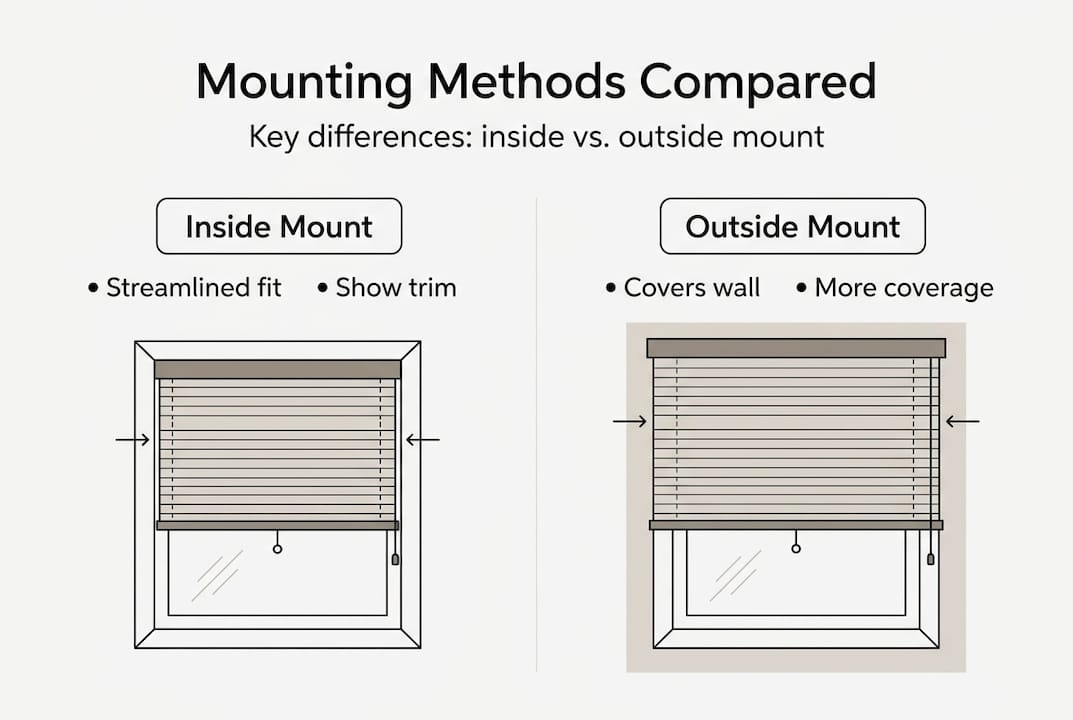
Pro Tip: Always round down to the nearest eighth of an inch when recording measurements. Manufacturers typically deduct small amounts from your dimensions to ensure proper fit and operation, so providing exact or slightly smaller measurements prevents ordering blinds that are too large for your opening.
Comparing inside mount vs. outside mount measuring techniques
Choosing between mounting styles affects both your measuring approach and final appearance. Each mounting style requires different measurement approaches to ensure functionality and aesthetic appeal that matches your vision.
Inside mount creates a tailored look that fits within your window frame. This style works best when you have adequate recess depth and want to showcase decorative trim. The blinds sit flush with or slightly recessed from the wall, creating clean lines and a built-in appearance. Measuring inside mount requires extreme precision because you’re working within fixed dimensions with no room for adjustment.
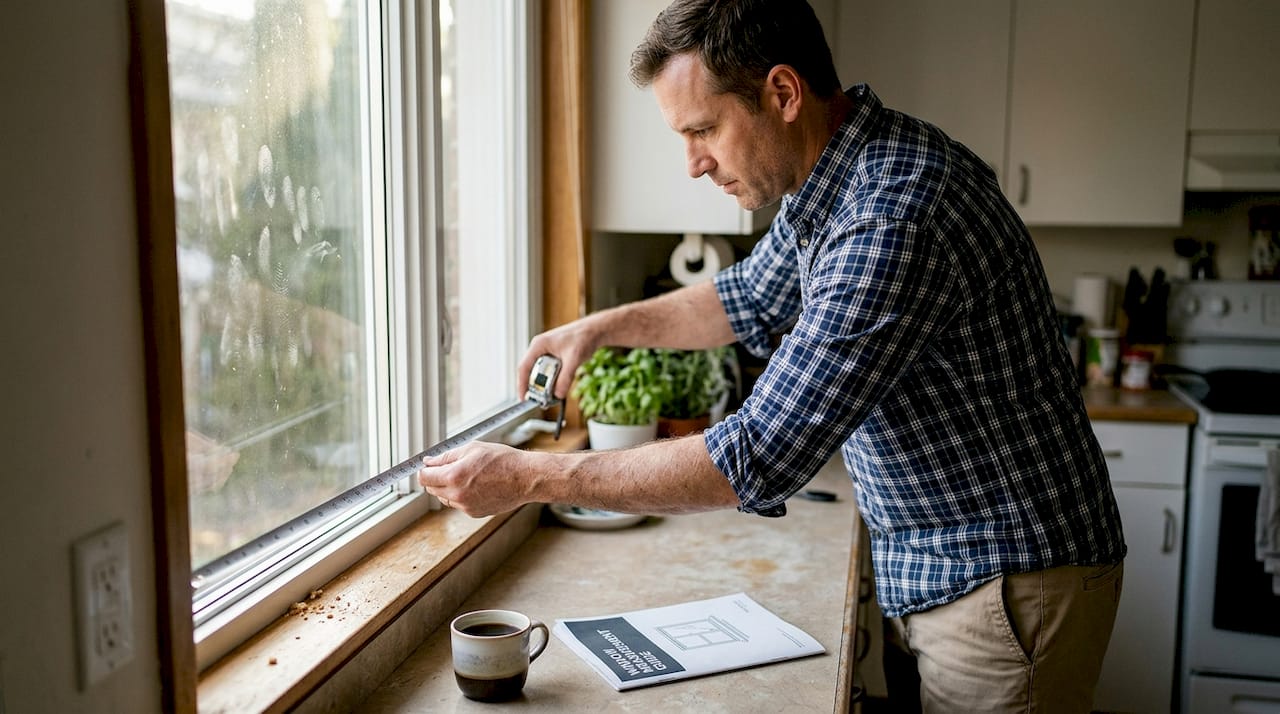
Outside mount offers flexibility and superior light control by covering the entire window area plus surrounding wall space. This mounting style works for shallow windows, those without adequate depth, or situations where you want maximum privacy and darkness. Outside mount also hides window imperfections and creates the illusion of larger windows when blinds extend several inches beyond the frame.
| Feature | Inside Mount | Outside Mount |
|---|---|---|
| Measurement location | Inside window frame at three points | Frame exterior plus desired coverage area |
| Width calculation | Use smallest of three width measurements | Add 3-4 inches on each side of frame width |
| Height calculation | Use smallest of three height measurements | Add 3 inches above frame and to desired length |
| Depth requirement | Minimum 2 inches recess depth needed | No depth requirement, mounts on wall surface |
| Manufacturer deduction | Typically 0.25 to 0.5 inches for clearance | None, blinds made to exact specifications |
| Light gap potential | Minimal when properly measured | Virtually eliminated with proper overhang |
Consider these factors when selecting outside mount:
- Window trim or molding that protrudes from the wall surface
- Insufficient recess depth for inside mount hardware
- Desire for complete light blockage and privacy
- Need to cover window imperfections or damage
- Want to make small windows appear larger
Pro Tip: Inside mounts deliver the cleanest, most architectural look and work beautifully when you have beautiful trim to showcase. However, choose outside mount when window depth is questionable or when maximum light control matters more than showing off your window frame. You can always test depth by placing a small object like a matchbox inside the frame to visualize how much space remains.
Common mistakes and tips for measuring blinds accurately
Even experienced DIYers make measuring errors that compromise blind fit and function. Understanding these pitfalls helps you avoid expensive corrections and ensures your first order arrives ready to install perfectly.
Rounding measurements to convenient numbers seems harmless but creates fit problems. A window measuring 35.75 inches should never be recorded as 36 inches because that extra quarter inch compounds when manufacturers apply their own deductions. Ignoring window trim thickness causes inside mount blinds to hit the trim instead of fitting cleanly within the frame. Measuring only once misses the reality that most windows are slightly out of square, leading to blinds that fit perfectly at one end but leave gaps at the other.
Another frequent error involves mixing up width and height dimensions when recording measurements. This simple transposition means ordering blinds that are wider than they are tall when you need the opposite. Forgetting to measure recess depth before committing to inside mount leads to discovering too late that your window lacks sufficient space for the mounting brackets. Using measurements from one window for multiple windows assumes uniformity that rarely exists, even in new construction.
“The difference between blinds that look professionally installed and those that clearly don’t fit properly often comes down to taking an extra two minutes to measure carefully and record accurately.”
Common measuring mistakes include not measuring multiple times and neglecting window depth, leading to ordering ill-fitting blinds that require returns and reorders.
Apply these expert strategies for flawless measurements:
- Always use a steel tape measure that won’t stretch, sag, or provide inconsistent readings like cloth alternatives
- Write down every measurement immediately after taking it to prevent relying on memory and making transcription errors
- Double-check all recorded dimensions before placing your order by remeasuring and comparing to your notes
- Take photos of your windows with a tape measure in place to create visual documentation you can reference later
- Measure during daylight hours when you can clearly see the window frame edges and any obstructions
- Have a second person verify your measurements, especially for large or high windows that are difficult to reach
Pro Tip: Create a simple sketch of each window with your measurements labeled clearly. Draw arrows indicating where each measurement was taken and note which is the smallest width and height. This visual reference prevents confusion when you’re ready to order and helps customer service representatives understand your specific situation if questions arise.
Find your perfect blinds at Value Blinds Direct
Now that you know exactly how to measure your windows for a perfect fit, explore the extensive selection of high-quality blinds available at Value Blinds Direct. Whether you prefer the natural warmth of solid wood blinds or the versatile functionality of vertical blinds, you’ll find options that match your style and budget.

Value Blinds Direct makes ordering custom blinds simple with easy-to-use measurement guides, design tools, and expert support available whenever you need assistance. Every blind is made to your exact specifications using premium materials that combine durability with beautiful aesthetics. Free swatches let you see and feel fabric options in your own space before committing. With flexible shipping options and comprehensive warranties backing every purchase, you can order confidently knowing your investment is protected. Transform your windows with blinds that fit perfectly and enhance your home’s style.
FAQ
What tools do I need to measure my windows for blinds?
A steel tape measure provides the accuracy and rigidity needed for precise measurements, unlike cloth or plastic alternatives that stretch. You’ll also need a pencil and notepad to record dimensions immediately, preventing memory errors. A step stool helps you reach high windows safely, and having a helper makes measuring large windows much easier.
How do I decide between inside mount and outside mount blinds?
Inside mount creates a clean, tailored look that fits within your window frame and showcases decorative trim beautifully. Outside mount covers more wall area, hides window imperfections, and provides superior light control by eliminating gaps around the frame. Your choice depends on available recess depth, the condition of your window frame, and whether you prioritize aesthetics or maximum light blockage.
What is the most common measuring mistake to avoid?
Failing to measure your window at three different points for both width and height leads to ordering blinds that don’t account for irregular or out-of-square openings. Many people measure once and assume their window is perfectly square, but most windows have slight variations. Always record all three measurements and use the smallest dimension to ensure your blinds fit properly throughout the entire opening.
Can I measure my windows myself or do I need a professional?
Measuring blinds accurately is absolutely achievable as a DIY project when you follow systematic steps and use proper tools. Most homeowners successfully measure their own windows for standard installations using the techniques outlined in this guide. Professional measuring services are helpful for complex situations like unusually shaped windows, but they’re unnecessary for typical rectangular windows when you take your time and double-check your work.
Why do I need to measure width and height in three places?
Windows are rarely perfectly square due to settling, construction variations, or age-related shifting. Measuring at the top, middle, and bottom for width, and left, center, and right for height reveals these inconsistencies. Using the smallest measurement ensures your blinds fit throughout the entire opening rather than binding at the narrowest point, which would prevent smooth operation and create an unprofessional appearance.