
How to Measure for Shutter Blinds: DIY Guide
TL;DR:
- Accurate measurement is essential for professional and cost-effective shutter blind installation, requiring precise tools and techniques.
- Measuring involves multiple points for width, height, and depth depending on the mount style, with rules for inside, outside, and perfect-fit systems.
Accurate measurement for shutter blinds is the single factor that separates a clean, professional installation from a costly reorder. Whether you are sizing a standard inside mount, an outside mount, or a clip-in perfect-fit system, every fraction of an inch matters. This guide walks you through how to measure for shutter blinds using a steel tape measure, a pencil, paper, and a credit card, covering all three mounting styles with step-by-step instructions and the exact mistakes that cause most DIY fits to fail.
What tools do you need before measuring for shutter blinds?
The right tools make every measurement reliable. Grab these before you touch a window.
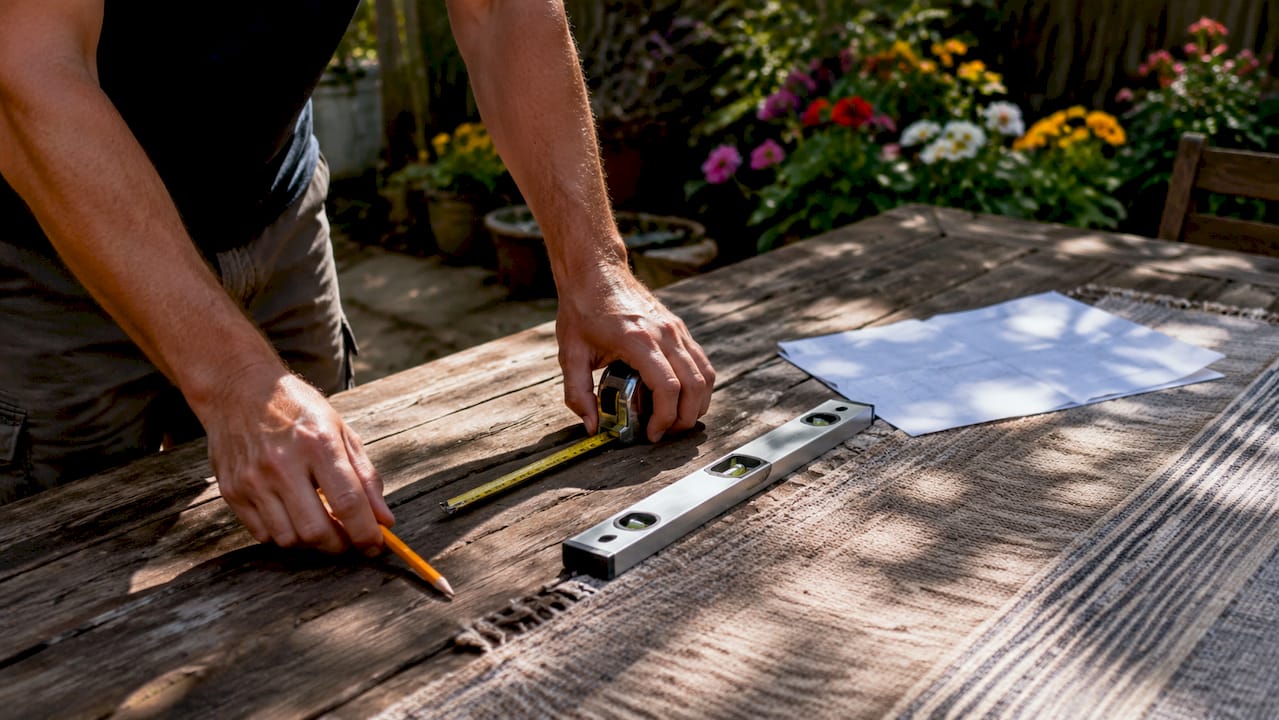
- Steel tape measure: Steel tape measures are the only accurate option for window sizing. Cloth or fabric tapes stretch under tension and introduce errors of up to a quarter inch per measurement.
- Pencil and notepad: Record every measurement immediately. Memory is not a reliable backup.
- Credit card or small ruler: Use this to check rubber bead depth on uPVC windows for perfect-fit systems.
- Step stool: Reach the full height of taller windows without leaning or stretching the tape.
- Level: Confirm your window sill and frame are true before committing to an outside mount.
Before you start, clean the window area and remove any curtains, rods, or obstructions. Check which mount style your window supports: inside mount (blind sits inside the recess), outside mount (blind covers the frame from the wall), or perfect-fit (clips directly onto the rubber beading of a uPVC frame). Each style requires a different reference point, and mixing them up is the most common source of ordering errors.
Pro Tip: Write your measurements in a table with columns for width top, width middle, width bottom, height left, height center, and height right. You will thank yourself when ordering.
How do you measure windows for inside mount shutter blinds?
Inside mount is the most popular choice for shutter blinds because it gives a clean, recessed look. The process requires six total measurements across three widths and three heights.
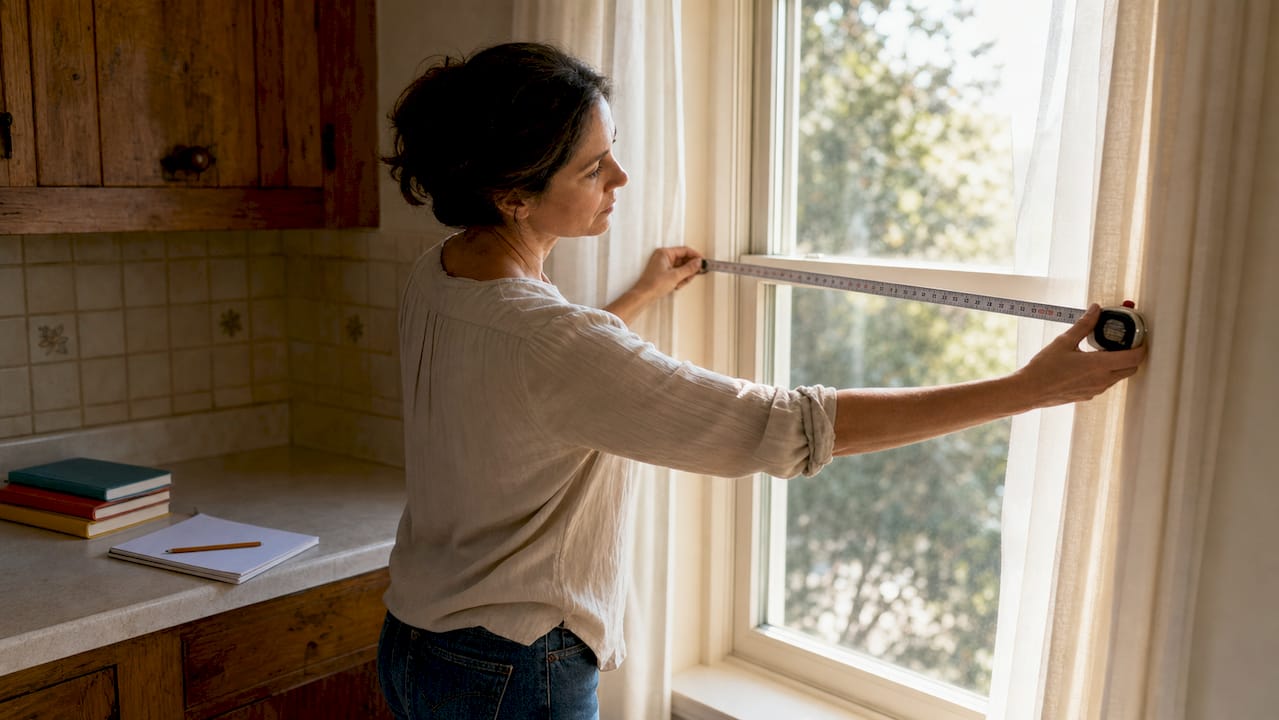
- Measure width at three points. Place your steel tape horizontally inside the window recess at the top, middle, and bottom. Record all three numbers to the nearest 1/8 inch. Taking multiple measurements accounts for frame variances that are common in older homes where walls shift over time.
- Use the smallest width. The narrowest measurement is your ordering width. Using a wider number means the blind will not fit inside the recess.
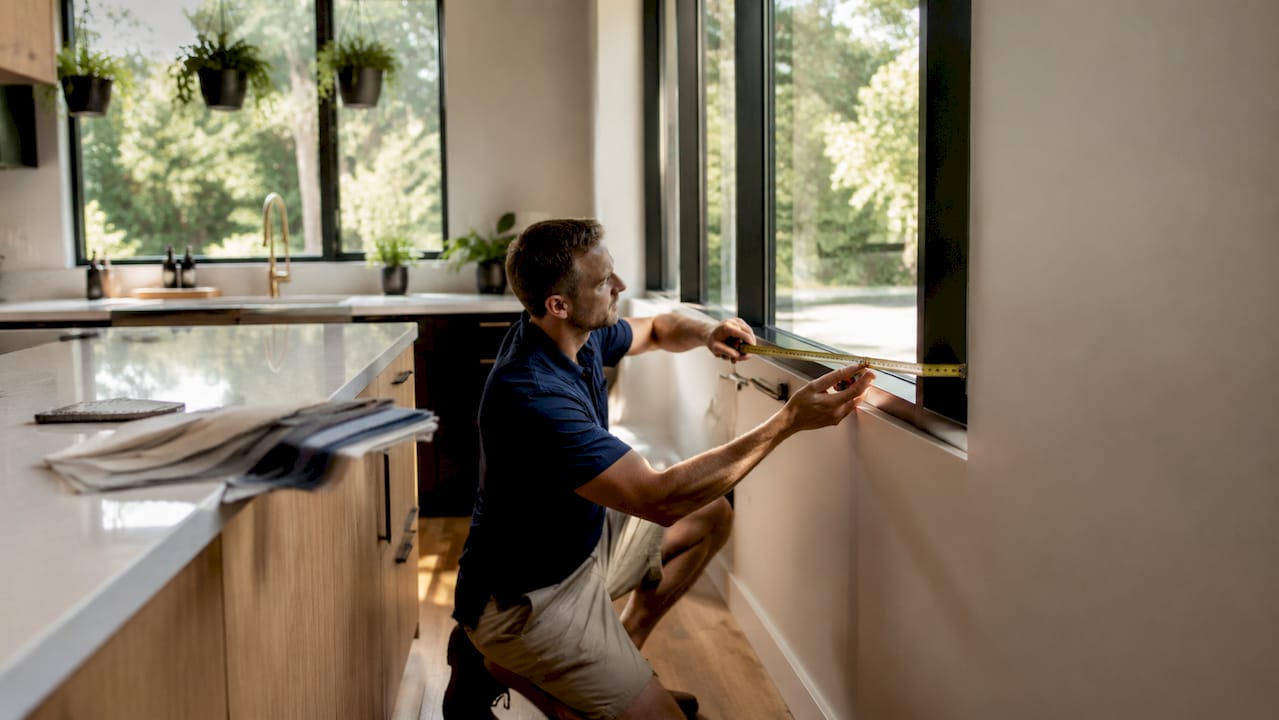
- Measure height at three points. Run the tape vertically from the top of the recess down to the window sill at the left side, center, and right side. Record all three numbers.
- Use the longest height. For inside mounts, the longest height measurement gives full coverage without leaving a gap at the bottom.
- Measure recess depth. Run the tape from the front face of the recess straight back to the glass. Do this at the top left, top right, and bottom center. Recess depth at multiple points determines whether your headrail and brackets will physically fit without pressing against the glass or a window handle.
- Use the shallowest depth. Window recess depth variance affects bracket positioning, and the shallowest usable depth governs hardware fit to avoid obstruction or damage.
Pro Tip: If your window has a handle that protrudes into the recess, measure from the front face of the recess to the back of the handle, not to the glass. That number is your usable depth.
Most windows are not perfectly square. A window that measures 24 inches wide at the top may measure 23 and 7/8 inches at the bottom. That 1/8-inch difference is enough to cause binding or a visible gap. Multi-point measuring is not optional. It is the only way to account for real-world frame imperfections.
A common mistake at this stage is measuring the outer frame instead of the inner recess. The inner recess is the cavity the blind will actually sit inside. If you measure the outer frame, your blind will be too wide and will not mount correctly. Keep your tape inside the recess at all times during inside mount sizing.
What are the steps for measuring outside mount shutter blinds?
Outside mount shutter blinds attach to the wall or window frame above and beside the window opening. They are the right choice when your recess is too shallow for inside mount hardware or when you want to maximize the appearance of window size.
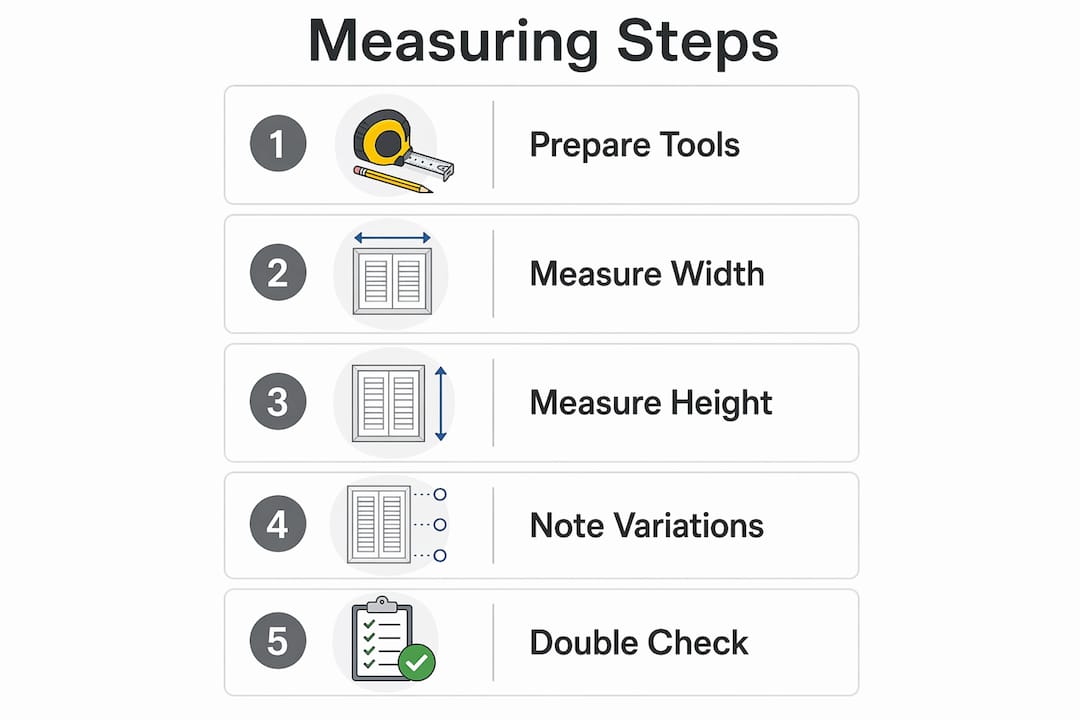
The key difference from inside mount is that you are measuring the coverage area you want, not the recess itself. Outside mount blinds require measuring the full coverage area including overlap to block light and cover the frame properly.
What to measure for outside mount:
- Width: Measure the full width of the window frame from outer edge to outer edge. Add 2–3 inches on each side for light blocking and coverage. Your total ordering width is the frame width plus that overlap.
- Height: Measure from where you want the top of the blind to sit (usually 2–3 inches above the frame) down to where you want the bottom to fall (usually 2–3 inches below the sill).
- Wall clearance: Check for baseboards, trim, handles, or electrical outlets that fall within the coverage area. These can block bracket placement.
Inside mount vs. outside mount: quick comparison
| Factor | Inside Mount | Outside Mount |
|---|---|---|
| Look | Clean, recessed | Bold, frame-covering |
| Recess depth needed | Yes (min. 1.5 inches typical) | No |
| Light blocking | Moderate | Better with overlap |
| Best for | Modern uPVC windows | Shallow recesses, older frames |
| Measurement reference | Inside recess edges | Wall or frame outer edges |
For symmetrical installation, measure the same overlap distance on both sides. Uneven overlap is visible from inside the room and looks unprofessional. Mark your mounting points with a pencil before drilling to confirm alignment.
How do you measure perfect-fit or clip-in shutter blinds?
Perfect-fit shutter blinds clip directly onto the rubber beading of uPVC or aluminum-framed windows. They require no drilling and no wall fixings. The measurement method is completely different from inside or outside mount, and using the wrong reference point is the most common ordering error for this style.
Follow these steps precisely:
- Locate the rubber beading. This is the rubber seal that runs around the inner edge of the window frame, holding the glass in place.
- Measure the visible glass width. Place your tape between the inner edges of the rubber beading on the left and right sides. Do this at the top, middle, and bottom of the glass. Measure visible glass only, not the glass plus the beading or the full window recess.
- Record the shortest width. Use the smallest of the three width measurements as your ordering width.
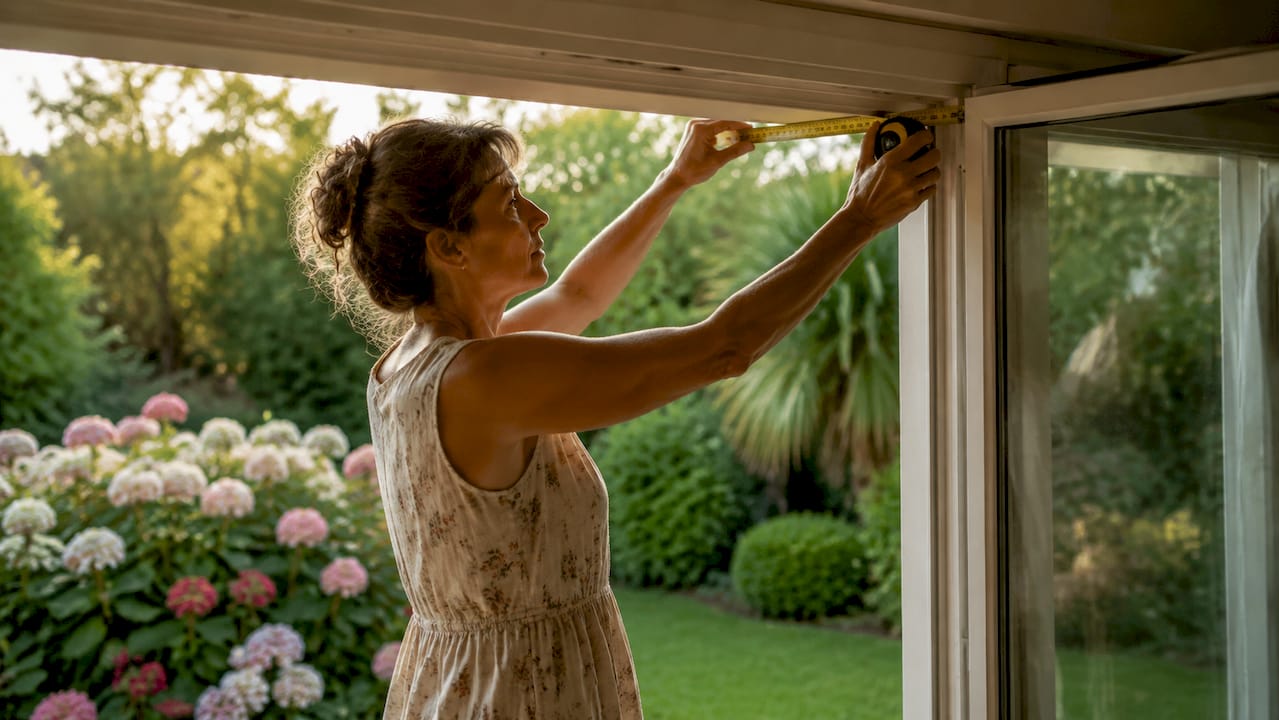
- Measure the visible glass height (drop). Place your tape between the inner edges of the rubber beading at the top and bottom. Measure at the left, center, and right. Record the shortest drop.
- Check rubber bead depth. Slide a credit card or small ruler into the gap between the rubber beading and the frame at each corner. Rubber bead depth typically ranges 18mm–38mm. Insufficient depth prevents the bracket from clipping in securely.
- Check edge clearance. Confirm there is at least 25mm of clear space around the window edges inside the beading. If clearance is less than 25mm, you will need a handle rebate connector or a different blind style entirely.
Perfect-fit measurement reference table
| Measurement | Reference Point | Use |
|---|---|---|
| Width | Inner edge of rubber beading | Ordering width (use shortest) |
| Drop (height) | Inner edge of rubber beading | Ordering drop (use shortest) |
| Bead depth | Beading gap at corners | Bracket compatibility check |
| Edge clearance | Beading to window edge | Handle rebate requirement |
Pro Tip: Never deduct from your smallest measurement when ordering perfect-fit blinds. Manufacturer build tolerances are built into the product. Submit the exact measurement you recorded.
The most frequent error with perfect-fit systems is measuring the full glass pane including the beading, or measuring the recess instead of the visible glass. Either mistake produces a blind that is too large to clip in. Your tape must start and end at the inner edge of the rubber seal, not the outer edge, not the frame, and not the wall.
What common mistakes should you avoid when measuring shutter blinds?
Most measurement failures come down to a short list of repeatable errors. Knowing them in advance saves you from a reorder.
- Using a cloth tape measure. Fabric tapes stretch. A steel tape is the only reliable tool for window sizing.
- Measuring only once. Measuring only once and assuming the window is square is the leading cause of poor fit. Take three measurements for every dimension.
- Using the wrong reference point. Confusing the glass edge, the frame edge, and the recess edge produces three different numbers. Know which one your mount style requires before you start.
- Ignoring depth. Skipping the recess depth check means you may order a blind whose headrail physically cannot fit in the available space.
- Not accounting for obstructions. Window handles, locks, and trickle vents all reduce usable mounting space. Measure around them, not through them.
- Ignoring manufacturer requirements. Each supplier has specific tolerances and ordering instructions. Read them before submitting measurements.
“Reference-point discipline, measuring from the correct points such as the inside edge of rubber beading for perfect-fit shutters, is the single most critical factor for installation success.” — homedecisions.co.uk
For a broader overview of accurate DIY measuring before you order, Valueblindsdirect has a dedicated step-by-step guide that covers multiple blind styles beyond shutter blinds.
Key takeaways
Accurate shutter blind measurement requires the right tools, the correct reference point for your mount style, and at least three measurements per dimension before you order anything.
| Point | Details |
|---|---|
| Use a steel tape measure | Cloth tapes stretch and introduce errors that cause poor fit. |
| Measure three times per dimension | Window frames are rarely square; use the smallest width and longest height for inside mounts. |
| Match reference point to mount style | Inside mount uses recess edges; perfect-fit uses inner rubber beading edges. |
| Check recess depth before ordering | The shallowest depth governs bracket fit and determines if inside mount is even possible. |
| Never deduct from perfect-fit measurements | Submit your exact smallest measurement; manufacturers build tolerances into the product. |
Why precision beats speed every time: a measurer’s perspective
I have seen more reorders caused by a single skipped measurement than by any other mistake in window treatment installation. The pattern is always the same: a homeowner measures width once at the top, assumes the window is square, and submits that number. The blind arrives, and it binds at the bottom because the recess narrows by 3/16 of an inch. That is a $200 lesson in why three measurements per dimension is not overcautious. It is the minimum.
The tool selection issue is just as predictable. People grab whatever tape is in the junk drawer, which is usually a cloth sewing tape. Those tapes are fine for fabric. They are not fine for a window where 1/8 of an inch determines whether a blind clips in or gets sent back.
My strongest advice for first-time DIY installers: treat the reference point as sacred. Write it at the top of your notepad before you measure a single thing. “Inside recess edge” or “inner rubber beading edge” or “outer frame plus 3-inch overlap.” Then do not deviate. Every measurement on that window must come from the same reference point. Mixing reference points across your six measurements is how you end up with a blind that is simultaneously too wide and too short.
The time you spend on thorough measuring is the time you save on returns, reorders, and a second installation day. For perfect-fit blind sizing, that discipline is especially non-negotiable. Document everything, double-check your smallest measurements, and order with confidence.
— Sunny
Get the right fit with valueblindsdirect’s design studio
Getting your measurements right is only half the job. The other half is finding a blind that actually fits your style, your window, and your budget.

Valueblindsdirect’s Window Treatment Design Studio is built for exactly this moment. You can plug in your measurements, visualize how different styles look on your windows, and get expert guidance before you place a custom order. If shutter blinds are not the right fit for a particular window, the studio helps you explore alternatives like cordless and no-drill options that work with tricky frames. The Valueblindsdirect support team is also available to review your measurements and confirm you are ordering the correct size. No guesswork, no reorders.
FAQ
What is the best way to measure blinds for inside mount?
Measure width at the top, middle, and bottom of the recess and use the smallest number. Measure height at the left, center, and right and use the longest number.
How much overlap should outside mount shutter blinds have?
Add 2–3 inches on each side of the window frame for width and 2–3 inches above and below for height to block light and cover the frame fully.
What is the correct reference point for perfect-fit shutter blinds?
Measure between the inner edges of the rubber beading only. Never include the beading itself or the window recess in your measurement.
How do i check if my window supports perfect-fit shutter blinds?
Use a credit card to check the rubber bead depth at each corner. Depth must fall in the 18mm–38mm range, and you need at least 25mm of clear space around the window edges.
Do i need to deduct anything from my measurements when ordering?
For perfect-fit systems, submit your exact smallest measurement with no deductions. Manufacturers build tolerances into the product and size it accordingly.