

Solar Shades vs Roller Shades: Which Fits Your Home?
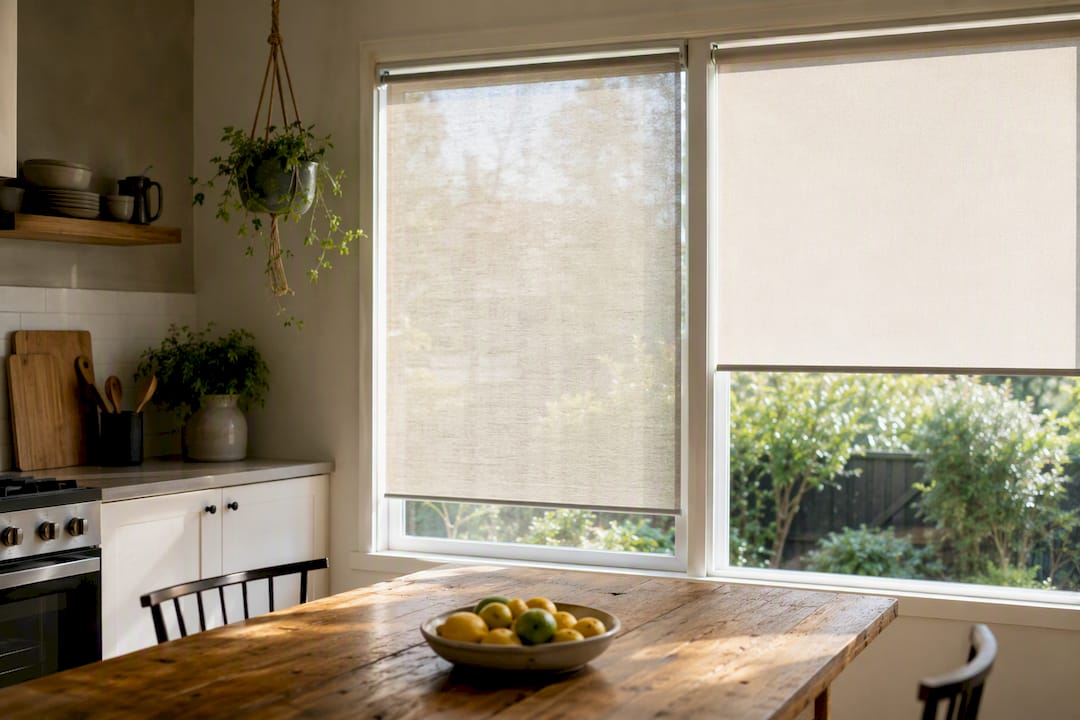
Choose solar shades when you want a bright room with UV protection and an outward view during the day. Choose roller shades (especially blackout fabrics) when your priority is full privacy or a dark room at night. Here’s the quick logic:
- Openness matters most. Solar fabrics run about 1% to 15% openness, letting you dial in exactly how much view and glare control you want.
- View-through only works one way. During the day, solar screens let you see out while blocking harsh sun; at night, with lights on inside, that same fabric turns see-through from the outside.
- They’re cousins, not opposites. Solar shades are technically a type of roller shade built with an open-weave screen fabric instead of a solid one, so you’re really choosing a fabric, not a totally different mechanism.
Key Takeaways
Solar shades win on daytime view, glare control, and UV protection, while roller shades win on privacy, blackout, and nighttime coverage.
| Point | Details |
|---|---|
| Match fabric to priority | Pick solar shades for view and glare control; pick roller shades for privacy or blackout. |
| Openness percentage drives performance | Solar fabrics run 1% to 15% openness, controlling how much light, view, and privacy you get. |
| Exterior shades save the most energy | PNNL field tests found exterior shades cut cooling HVAC use by about 20% versus no shading. |
| Noise reduction is secondary | Denser roller or cellular fabrics dampen sound slightly better than open-weave solar screens. |
| Test before you commit | Valueblindsdirect’s free swatches, design studio, and measurement guides help you confirm fit and fabric before ordering. |
Table of Contents
- Solar Shades vs Roller Shades: What Sets Them Apart?
- Which Offers Better Privacy, View, and UV Protection?
- Which Rooms Suit Solar Shades vs Roller Shades?
- What Does the Research Say About Energy Savings?
- Do Color and Openness Change the Look and Feel?
- What Should You Know About Sizing and Motorization?
- How Do Maintenance and Lifespan Compare?
- How Do You Decide and Order the Right Shade?
- Do Solar and Roller Shades Reduce Outside Noise?
- Are Solar and Roller Shade Materials Environmentally Friendly?
- Why We Push Homeowners Past the Fabric Swatch Alone
- Get Expert Help Choosing Your Shades
- Sources
Solar Shades vs Roller Shades: What Sets Them Apart?
Roller shades are the umbrella category: a single fabric panel that rolls up and down on a tube, available in everything from sheer to full blackout. Solar shades fall under that umbrella but use a specialized screen fabric, typically a vinyl-coated polyester weave, engineered to filter sunlight rather than block it outright.
The number that actually separates them is openness percentage. Standard roller shades don’t use openness ratings at all. They’re rated by opacity, ranging from light-filtering to room-darkening to full blackout.
A few things to keep in mind when comparing fabric options:
- Solar shades keep their tight weave look regardless of color, since the openness is structural, not just visual.
- Roller shades offer far more decorative texture, from linen weaves to metallic finishes to bold prints.
- Both styles come in cordless and motorized versions, and both mount on the same basic headrail hardware.
If you’re browsing swatches, the solar shades collection and roller shades collection show the openness and opacity ranges side by side, which makes this distinction click a lot faster than reading about it.
Which Offers Better Privacy, View, and UV Protection?
This is where the two styles genuinely diverge, and it comes down to what happens after dark. A roller shade in a blackout or heavier light-filtering fabric gives you real privacy any time of day, because the fabric itself is opaque. Solar shades don’t do that. Their entire function depends on light passing through the weave, so once the sun goes down and your lamps are on, anyone outside can often see silhouettes and movement inside.
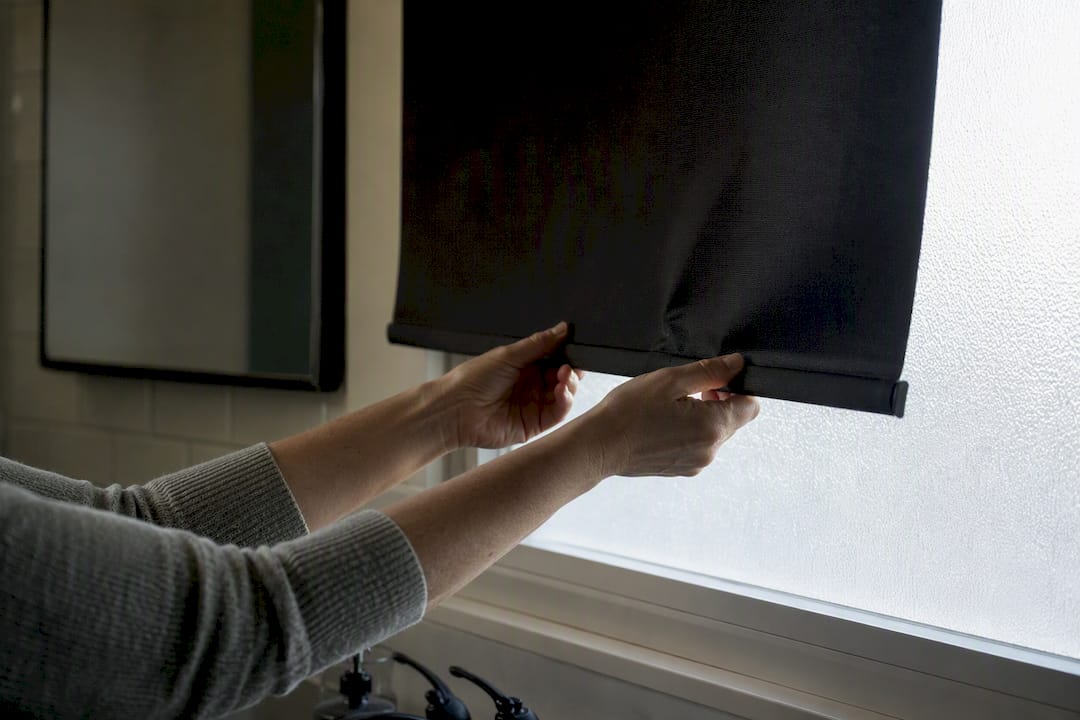
Pro Tip: If you love the daytime look of solar shades but need nighttime privacy, layer a light-filtering roller shade or curtain panel behind them. You get view control by day and real privacy by night, without giving up either.
Glare and outward view work in solar shades’ favor. A tighter weave, especially in darker colors, cuts screen glare on TVs and monitors while keeping the outside world visible, something a closed roller shade simply can’t offer. On UV protection, tighter solar weaves block a meaningful share of ultraviolet rays that would otherwise fade rugs, art, and furniture, while standard roller fabrics vary widely depending on backing and material.
Energy performance follows the same logic. Any shade that blocks direct sun reduces heat gain, but exterior fabric shades take it further. Field testing at the PNNL Lab Homes found exterior shades cut cooling HVAC use by roughly 20% versus no shading at all, and delivered 1.0 to 3.2 kWh in daily HVAC savings compared with interior vinyl blinds.
- Privacy: roller shades win outright, especially blackout fabrics.
- Daytime view and glare: solar shades win, particularly in darker weaves.
- UV protection: tighter solar weaves generally outperform standard roller fabrics.
- Energy savings: exterior solar shades post the biggest measured gains.
Which Rooms Suit Solar Shades vs Roller Shades?
Matching the shade to the room usually comes down to two questions: how much sun hits that window, and how much privacy do you actually need there?
- South and west-facing living rooms, sunrooms, and home offices. These spaces bake in afternoon sun and often have a TV or computer screen fighting glare. Solar shades in a mid-to-dark openness keep the view while cutting the squint.
- Bedrooms and media rooms. Sleep and screen time both benefit from real darkness, which is where blackout roller shades do their best work.
- Bathrooms and street-facing rooms. Privacy trumps view here almost every time, making a light-filtering or blackout roller shade the safer default.
- Homes with kids or pets. Cordless operation matters more than fabric choice. Both solar and roller shades come in cordless versions, so prioritize that over the fabric debate.
- Rooms with valuable art, floors, or furniture. Lean toward lower-openness solar shades or UV-treated fabrics to slow fading, especially on windows that get direct sun for hours a day.
Plenty of homeowners land on both: solar shades in the main living areas, roller shades in bedrooms and bathrooms.
What Does the Research Say About Energy Savings?
The clearest data point in this whole comparison comes from outside the shade category entirely: exterior fabric shades. The PNNL/DOE field study tested exterior shades on large west and south-facing windows and recorded indoor temperatures 2°F to 3°F cooler in shaded rooms, with reductions up to 9°F when cooling systems were off entirely.
That’s a bigger effect than most interior treatments can claim, and the reason is simple: exterior shades block heat before it ever reaches the glass, while interior solar shades absorb heat that’s already inside the room.
- Exterior shades: best energy performance, ideal for large west or south windows with high summer heat loads.
- Interior solar shades: solid glare and UV control, moderate energy benefit, easier to install and lower upfront cost.
- Interior roller shades: minimal energy impact unless paired with a blackout or insulating liner.
If your cooling bill spikes every summer on one specific exposure, an exterior motorized solar shade on that window is where the real savings live, not a fabric swap indoors.
Do Color and Openness Change the Look and Feel?
Fabric color changes more than aesthetics. Dark solar fabrics sharpen your outward view and cut glare more effectively, which is why they’re the default pick for TV rooms and home offices. Lighter fabrics reflect more sunlight and can shave a bit more heat gain, but the tradeoff is a softer, slightly hazier view outside.
- 1% to 5% openness: best for privacy-focused rooms and strong UV blocking.
- 10% to 15% openness: best for rooms where daytime brightness and an open view matter more than screening.
- Design pairing: dark solar fabrics read modern and minimal; woven, textured roller fabrics suit traditional interiors better.
Hold them up against your actual window at the time of day you use the room most. It settles the debate in about thirty seconds.*
What Should You Know About Sizing and Motorization?
Getting the mechanics right matters as much as picking the fabric.
- Check single-panel width limits. Most roller and solar shades top out around 8 to 10 feet in one piece before you need a seam or a split panel arrangement.
- Decide on mounting style. Inside mount gives a clean, built-in look; outside mount covers more of the window frame and works better for uneven openings.
- Consider a cassette headrail. It hides the roller tube for a more finished appearance, a detail design-conscious buyers tend to notice immediately.
- Weigh motorized vs cordless. Motorized shades are worth it for oversized windows, hard-to-reach skylights, or homes prioritizing child safety; cordless works fine for standard-size, easy-access windows.
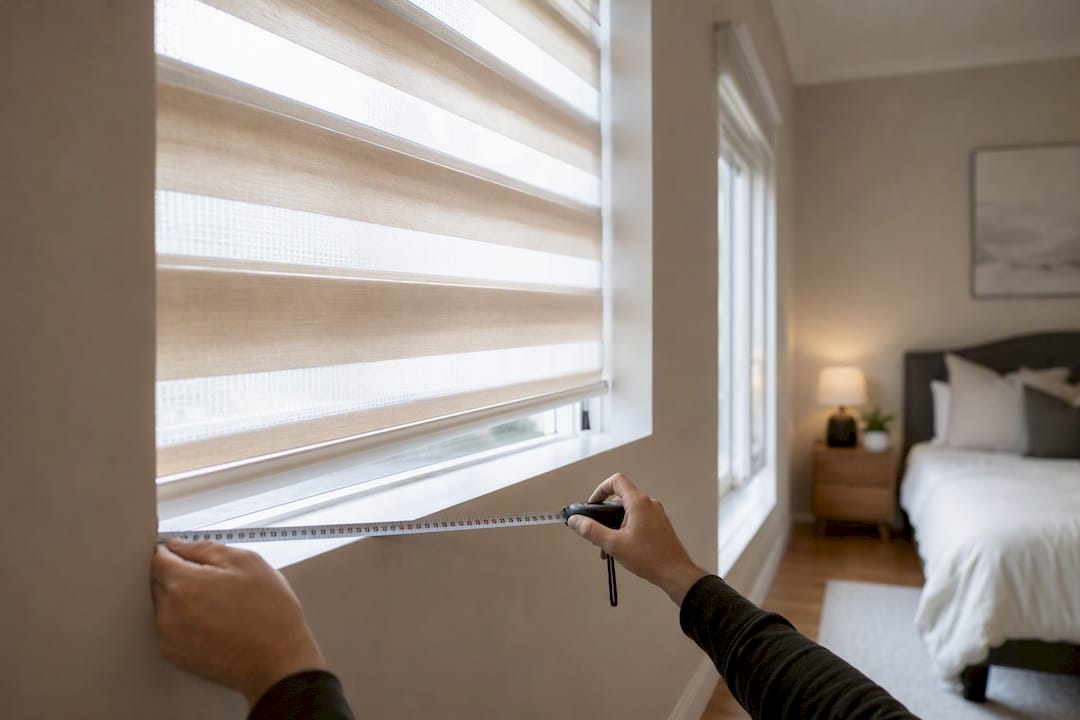
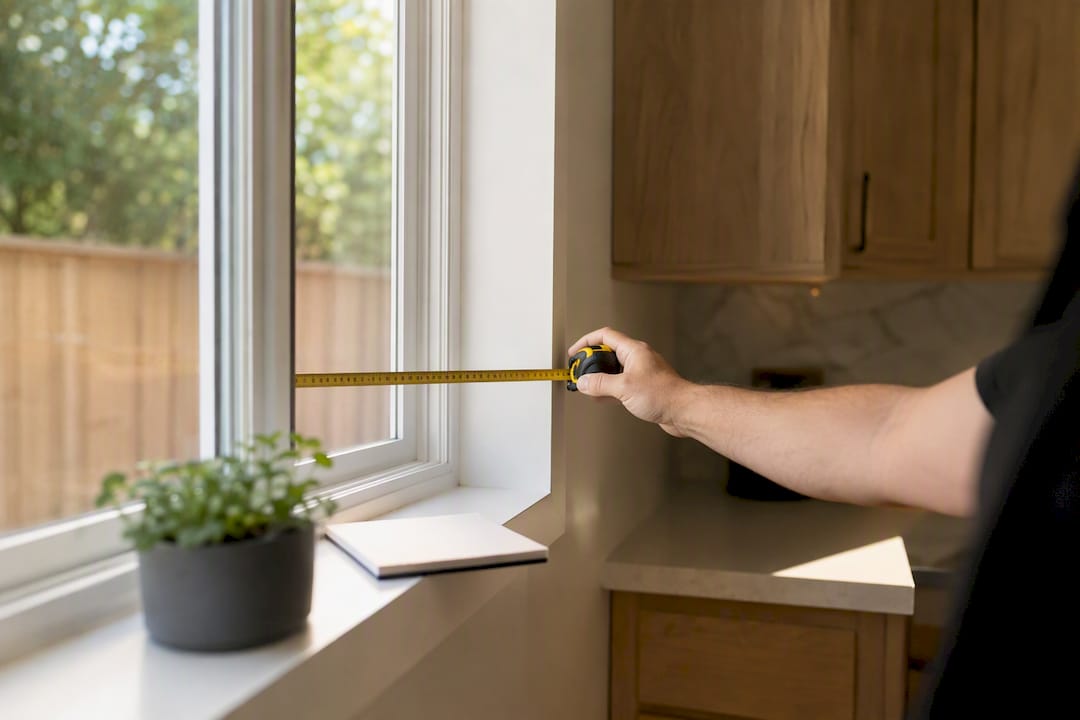
- Order swatches and measure carefully. Free swatches and a proper measurement guide prevent the two most common ordering mistakes: wrong color and wrong fit.
How Do Maintenance and Lifespan Compare?
Solar shades wipe clean with a damp cloth since the open weave doesn’t trap dust the way solid fabric does. Roller shades, especially blackout or textured versions, need more frequent vacuuming or light dusting to avoid buildup.
- Both styles typically last 5 to 10 years, with the roller mechanism usually outlasting the fabric itself.
- Fading and wear on solar fabric shows up faster on south and west windows with constant direct sun.
- Check any warranty for mechanism coverage separately from fabric coverage. They often differ.
- Free swatches let you test durability and fade resistance in your own light before committing.
How Do You Decide and Order the Right Shade?
Work through these steps in order and you’ll avoid the two most common regrets: wrong fabric and wrong fit.
- Assess your exposure and privacy needs. Stand at the window at the time of day you use the room most and note the glare, heat, and privacy concerns.
- Pick your fabric category. Choose solar openness (1% to 15%) if view and UV control top your list, or a light-filtering to blackout roller fabric if privacy or darkness matters more.
- Choose your operation. Decide between cordless and motorized, and confirm the width fits a single panel or needs a split configuration.
- Order swatches and measure. Test real fabric against your real window before you commit, and use a professional measurement service for bay windows, arches, or oversized openings.
- Confirm warranty terms and installation support. Know what’s covered on the mechanism versus the fabric before you check out.
Pro Tip: Measure twice, but also test light at two different times of day. A window that looks fine at noon can turn into a glare problem at 5 p.m. on a west exposure.
Do Solar and Roller Shades Reduce Outside Noise?
Neither style was built as a soundproofing product, but the fabric density does make a measurable difference on the margins. Roller shades in heavier, tightly woven or blackout-lined fabrics add a modest buffer against street noise and echo, simply because more mass sits between the glass and the room. Solar shades, by design, work against this. Their entire function depends on an open weave that lets air and light pass through, which means sound passes through nearly as easily.
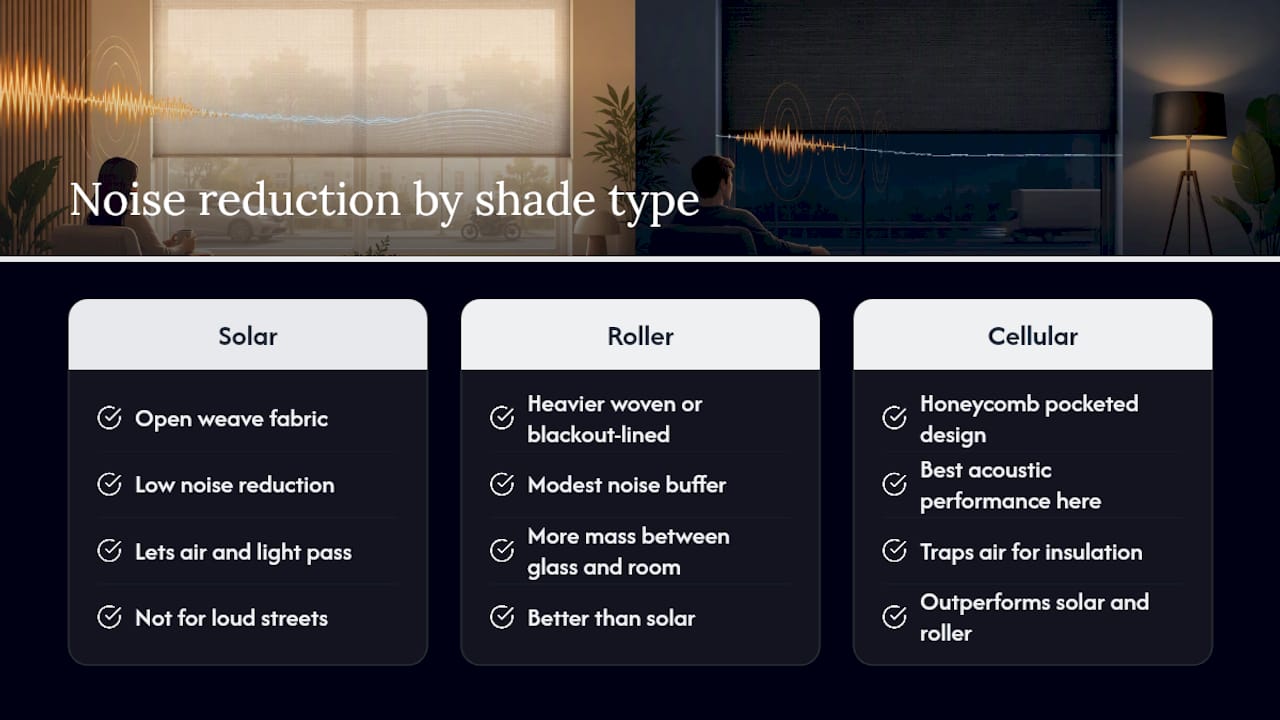
If noise reduction ranks anywhere near the top of your priority list, a thicker roller fabric or a cellular shade with a honeycomb structure will outperform a solar screen every time. Cellular shades in particular trap air in their pocketed design, which adds a layer of both thermal and acoustic insulation that a flat roller or solar fabric can’t replicate.
That said, don’t expect dramatic results from any fabric shade alone. Window treatments soften sound reflection inside a room, reducing echo and making voices and TV audio feel less sharp, but they don’t meaningfully block sound from entering through the glass itself. If you’re dealing with a genuinely loud street or a flight path overhead, the fix is usually the window itself (secondary glazing, laminated glass, or better seals) rather than the shade covering it.
For most homeowners, the acoustic difference between solar and roller fabric is a nice secondary bonus, not a reason to pick one over the other. Base that decision on privacy, view, and light control first, and treat any noise dampening as a small extra benefit layered on top.
Are Solar and Roller Shade Materials Environmentally Friendly?
Fabric composition varies more than most shoppers expect, and it’s worth understanding before you assume “shade” automatically means “sustainable.” Solar screen fabrics are typically vinyl-coated polyester or PVC-free polyester blends, chosen for durability and UV resistance rather than biodegradability. Roller shade fabrics span a wider range, from synthetic blackout linings to natural-fiber options like woven wood, bamboo, or linen blends that break down more readily at end of life.
The bigger environmental story, though, is indirect: what a shade does to your energy use over its lifetime tends to outweigh the footprint of the material itself. A shade that meaningfully cuts your cooling load, especially an exterior fabric shade on a hot-exposure window, reduces the electricity your home draws every single summer for as long as it’s installed. That’s a recurring environmental benefit that a one-time manufacturing footprint doesn’t erase.
If sustainability is a genuine priority alongside performance, a few practical choices help:
- Favor natural-fiber roller fabrics (woven wood, bamboo) for rooms where blackout isn’t required.
- Choose PVC-free solar screen options where available, since some manufacturers now offer lower-impact coatings.
- Prioritize durability and warranty coverage. A shade that lasts 10 years instead of 5 cuts your material footprint in half over time, regardless of what it’s made from.
- Consider motorized scheduling to automate shading during peak sun hours, which stretches the energy-saving benefit without any extra material use at all.
Neither category is inherently “green” or “wasteful.” The better question is which fabric will actually last in your specific window’s sun exposure, since a shade you replace in three years because it faded is a worse environmental outcome than a slightly less eco-labeled fabric that holds up for a decade.
Why We Push Homeowners Past the Fabric Swatch Alone
Most people researching solar shades vs roller shades get stuck comparing swatches under indoor lighting, which tells you almost nothing about how a fabric performs at 4 p.m. against your actual window. That’s the gap Sunny sees most often working with homeowners at Valueblindsdirect: the swatch looks great on the counter and then surprises someone six months later when the afternoon sun hits it differently than expected.
The fix isn’t more research. It’s testing in context. Our design studio walks you through fabric, openness, and color against your specific room, and free swatches let you hold real material up to your real window before you spend a dollar. Pair that with our measurement guides and energy calculators, and you’re deciding with actual information instead of guesswork about how a fabric behaves at your exposure and your time of day. Motorization and warranty options round out the decision once you’ve settled on fabric.
Try the swatches first. It’s the one step that prevents almost every regret we hear about.
Get Expert Help Choosing Your Shades
Comparing openness percentages and fabric weaves is one thing. Standing in your own living room deciding what will actually look right on your windows is another. That’s exactly what the Window Treatment Design Studio is built for: a guided way to compare solar and roller fabrics, motorization, and color side by side before you commit to an order.
Every order starts with free swatches, so you can test fabric against your actual window light instead of guessing from a screen. If measuring feels intimidating, especially for bay windows or oversized openings, our measurement guides walk you through it step by step, and professional measurement is available for trickier setups. Once you’ve narrowed down fabric and openness, browse the full roller shades lineup or the blinds collection to compare styles side by side. Start with a free swatch order today, and you’ll know exactly what you’re getting before it ever reaches your window.
Sources
- Evaluation of Exterior Shades at PNNL Lab Homes and Occupied Field Sites
- Difference Between a Roller Shade and a Solar Shade | Solasolv
- 8 hot benefits of solar shades - ERCO Ceilings & Interiors
Recommended
- Understanding Roller Shades vs Blinds for Your Home
- Understanding Roman Shades vs Roller Shades for Your Home
- Dual Roller Shades: Stylish Versatility for Your Home

Value Blinds®
Trusted window treatments provider
Value Blinds® is a trusted provider of Greenguard, OEKO-TEX, and FSC-certified window treatments based in Portland, Oregon. Specializing in sustainable, motorized, smart-controlled, and outdoor-ready blinds and shades, the company is built on a foundation of simplified shopping, premium eco-friendly materials, and transparent pricing without the inflated cost.




%20when%20your%20priority%20is%20full%20privacy%20or%20a%20da...)