
Keep kids safe: Parent's guide to cordless window treatments
TL;DR:
- Window cords pose a significant danger to children, with about 8 deaths annually in the U.S. from strangulation. Cordless and motorized window treatments greatly reduce this risk, especially in nurseries and play areas. Industry standards now favor fully cordless or motorized products, with certifications like the ANSI “Best for Kids” label ensuring safety.
Window cords are one of the most overlooked dangers inside family homes, yet the numbers are sobering. About 8 children die each year from window cord entanglements in the United States, and most of those accidents happen in rooms where parents feel completely at ease. The good news is that modern cordless and motorized window treatments have made it easier than ever to eliminate this risk entirely. This guide walks you through the real dangers, the safest product types, what certifications to look for, and how to set up every room in your home for maximum child safety.
Table of Contents
- Why window cord safety matters for families
- How cordless and motorized window treatments make homes safer
- Choosing safe cordless window treatments: Features and material considerations
- Beyond the basics: Installation, maintenance, and room-specific safety tips
- Why the ‘quick fixes’ rarely work—and what experts wish every parent knew
- Safer windows, happier kids—Choose your cordless solution
- Frequently asked questions
Key Takeaways
| Point | Details |
|---|---|
| Cordless prevents injuries | Switching to cordless or motorized window treatments eliminates the main cause of window-related child injuries and deaths. |
| Choose certified labels | Always look for ‘Best for Kids’ and ANSI certification to ensure window coverings meet modern safety standards. |
| Temporary fixes don’t work | Cord cleats, wraps, and retrofit devices are not effective at stopping determined kids from accessing cords. |
| Installation matters | Proper install and keeping furniture away from windows reduces risks and maximizes safety benefits. |
| Motorized equals peace of mind | Motorized window treatments completely remove interaction risks for both children and pets. |
Why window cord safety matters for families
Most parents spend hours childproofing cabinets, covering electrical outlets, and securing furniture to walls. Window cords, though, rarely make the list. That gap in awareness is exactly why they remain so dangerous.
The Consumer Product Safety Commission reports that over 440 children have died from window cord strangulation since 1973, with roughly 8 deaths occurring every single year. These are not freak accidents. They happen in average homes, in bedrooms and living rooms, often while a caregiver is nearby.
Here is why window cords are so dangerous:
- Loop cords can form a noose around a child’s neck in seconds.
- Inner cords on older horizontal blinds can tighten when a child pulls the slats apart.
- Long pull cords pool on the floor and become a strangulation and tripping hazard.
- Pets can also become entangled, especially cats that like to sit on windowsills.
One of the most persistent myths is that tying cords up high or using a cord cleat makes blinds safe. It does not. Children are natural climbers. A toddler who can reach a windowsill can often reach a cord that has been looped or clipped. The cord is still there, still dangerous.
“Tying cords up or using a cleat is not a permanent solution. It reduces visibility of the hazard without eliminating it.”
In 2018, the window covering industry voluntarily agreed to phase out corded products for stock (off-the-shelf) blinds. By 2024, updated U.S. safety regulations tightened those standards further, requiring that all new stock window coverings sold in the country be cordless or have inaccessible cords. Custom-ordered products still vary, which is why knowing what to ask for matters. The bottom line: if your home has older corded blinds, replacing them is the single most effective step you can take.
How cordless and motorized window treatments make homes safer
Now that you understand the risks, let’s look at what makes cordless and motorized solutions genuinely safer for families.
Not all “safe” window treatments are equally safe. There is actually a meaningful difference between cordless and motorized options, and understanding that difference helps you match the right product to each room.
Cordless blinds and shades operate without hanging cords. You raise or lower them by pushing or pulling the bottom rail directly. There are no loops, no dangling strings, and no inner cords that can tighten. Cordless blinds are a major improvement over traditional corded products and are appropriate for most rooms in a family home.
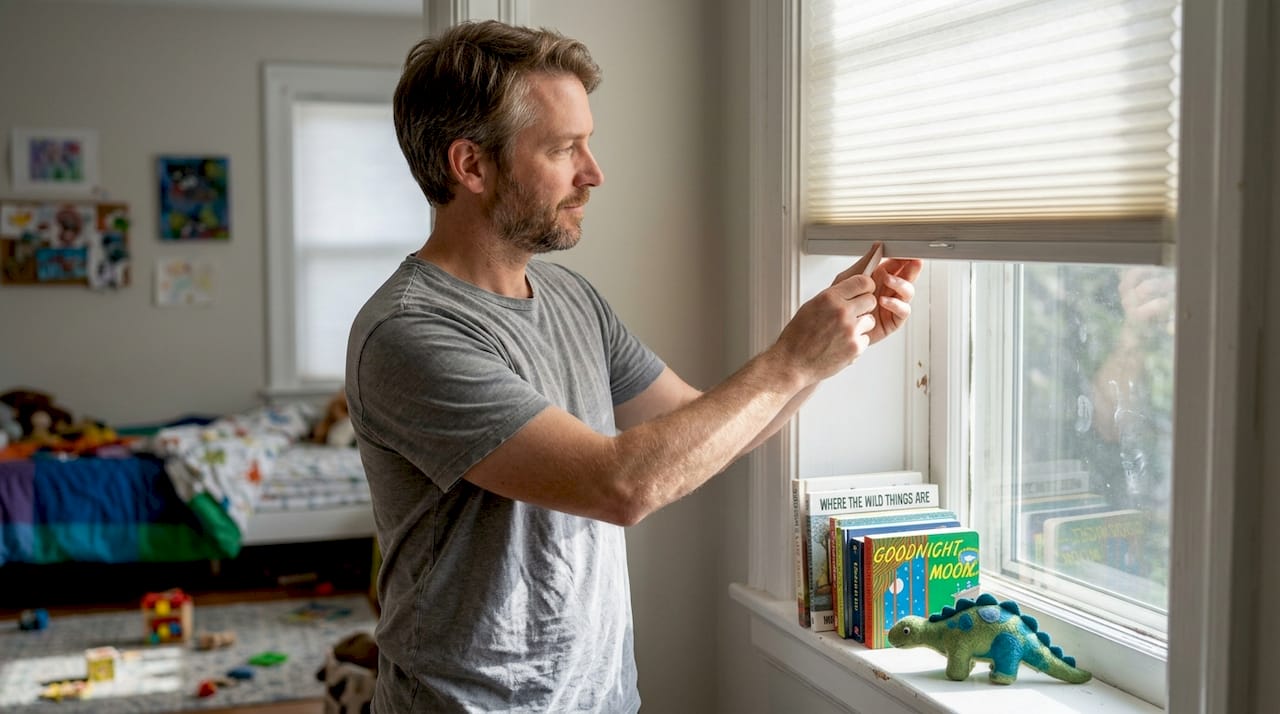
Motorized window treatments take safety a step further. A small motor inside the headrail moves the shade up or down via a remote, a wall switch, or a smartphone app. Motorized window treatments eliminate all physical interaction with the blind itself, which means there is nothing for a child to grab, pull, or climb toward. For nurseries, playrooms, or any room where a young child sleeps or plays unsupervised, motorized is the gold standard.
Here is a quick comparison to help you decide:
| Feature | Corded blinds | Cordless blinds | Motorized blinds |
|---|---|---|---|
| Hanging cords | Yes | No | No |
| Child interaction required | Yes | Minimal | None |
| Suitable for nurseries | No | Yes | Best choice |
| Cost | Lowest | Moderate | Higher |
| ANSI “Best for Kids” eligible | No | Yes | Yes |
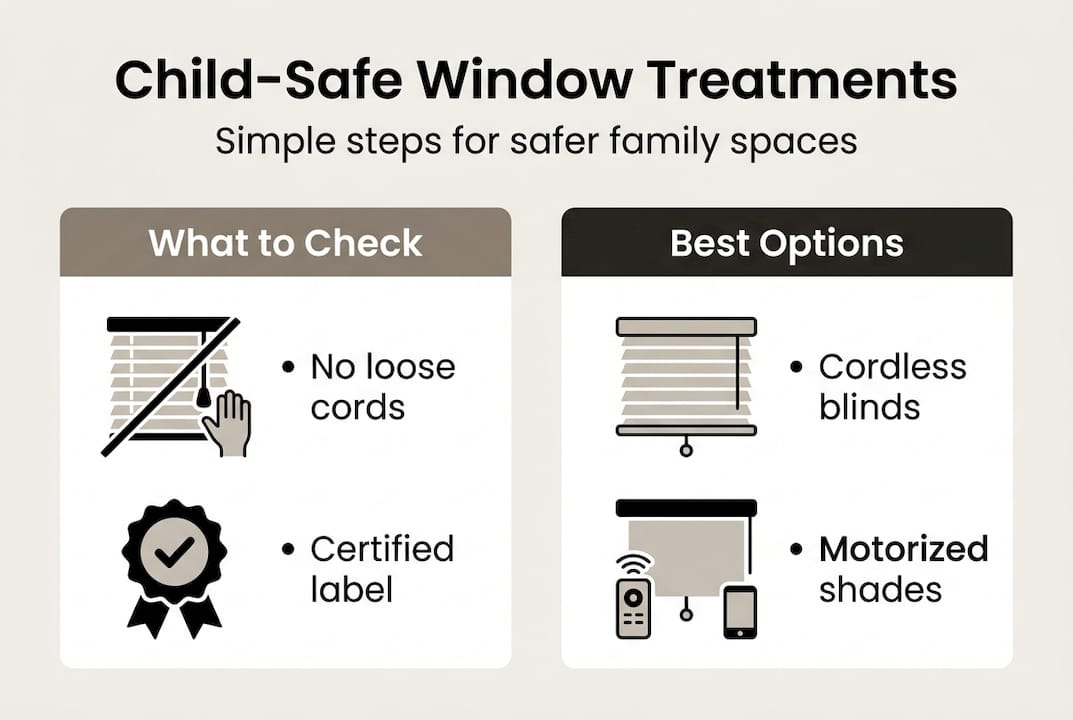
You may have seen cord cleats, cord wraps, or retrofit tension kits sold as safety upgrades for existing corded blinds. These are temporary measures at best. Retrofit kits are not fully safe for homes with children under 8, because they do not remove the cord, they only reposition it. A child who is determined or curious can still access it.
When shopping, look for the ANSI “Best for Kids” label. This certification, developed by the Window Covering Manufacturers Association, identifies products that meet the highest child safety standards. It is your fastest shortcut to a verified safe choice.
Pro Tip: If you are replacing blinds in stages, start with the nursery and any room where your child sleeps or naps. Those are the highest-risk spaces because children are often alone and unsupervised in them.
Choosing safe cordless window treatments: Features and material considerations
With types and safety standards in mind, let’s get practical about selecting the right cordless treatments for your needs.
The material and style of your window treatment affects both safety and function. Here is what works best for families.
Cellular shades (also called honeycomb shades) are widely considered the top pick for child safety. Their unique cell structure traps air, making them excellent for energy efficient window coverings that also keep rooms quieter and more comfortable. All new cellular shades are ANSI-compliant and carry the “Best for Kids” label when sold cordless. They come in single-cell, double-cell, and triple-cell options, with more cells meaning better insulation.
Other safe cordless options include:
- Roller shades: Clean, minimal, and easy to operate. Great for living rooms and kitchens.
- Zebra shades: Alternating sheer and solid bands for light control without cords.
- Vertical shades: A good fit for sliding doors and wide windows.
- Natural woven shades: Bamboo or grass weaves that add texture and warmth while staying cord-free.
Here is a quick material comparison to guide your choice:
| Material | Light control | Insulation | Best room |
|---|---|---|---|
| Cellular fabric | Blackout available | Excellent | Nursery, bedroom |
| Roller fabric | Light filtering to blackout | Moderate | Living room, office |
| Natural woven | Light filtering | Low | Living room, dining room |
| Zebra fabric | Adjustable | Low to moderate | Any room |
If you want to learn more about how window coverings can insulate windows for comfort and lower energy bills, cellular shades are the place to start.
One practical safety tip that often gets overlooked: furniture placement matters. Move beds, cribs, sofas, and chairs away from windows so children cannot climb up and reach the window covering, even a cordless one. The bottom rail of a cordless shade can still be grabbed by a child standing on furniture.
Beyond the basics: Installation, maintenance, and room-specific safety tips
After selecting your cordless solution, it is essential to follow through with proper installation and care to maximize safety.
Even the safest window treatment can become a hazard if installed incorrectly. Here is how to do it right.
Installation steps for safest results:
- Measure your window carefully before ordering. An ill-fitting shade can fall or be pulled down easily.
- Use an inside mount when possible. This keeps the shade flush with the window frame and reduces the chance of a child grabbing the edge.
- Follow the manufacturer’s instructions precisely. Most cordless shades include a template and step-by-step guide.
- Test the shade several times after installation to confirm it operates smoothly and stays in position.
- Check that all mounting brackets are secure and that no sharp hardware is exposed.
For window treatments for large windows, consider motorized options, since large shades can be heavy and awkward to operate manually, especially for children who might try to help.
Room-specific safety tips:
- Nursery: Use motorized cellular shades with blackout fabric. Babies sleep better in a dark room, and motorized operation means you never have to reach over the crib.
- Playroom: Choose cordless roller or zebra shades in light-filtering fabric. These are durable and easy to wipe clean.
- Living room: Cordless zebra or roller shades work well. Move furniture away from windows to reduce climbing access.
- Kitchen: Cordless roller shades in a moisture-resistant fabric are practical and easy to maintain.
Pro Tip: Set a reminder every six months to inspect your cordless and motorized shades. Check that the bottom rail is secure, the mounting brackets have not shifted, and the motor (if applicable) responds correctly to commands.
Maintenance basics:
- Dust cordless shades weekly with a soft brush or vacuum attachment.
- Spot-clean fabric shades with a damp cloth and mild soap. Avoid soaking the material.
- For motorized shades, check battery levels or the power connection every few months.
- Replace any shade that shows signs of fraying, sticking, or mechanical failure immediately.
Why the ‘quick fixes’ rarely work—and what experts wish every parent knew
We have seen a lot of well-meaning parents spend money on cord cleats, tension devices, and cord wraps, believing they have solved the problem. They have not. Most accidents involving window cords happen in homes where some form of cord management device was already in use. The cord was there. The child found it.
The industry has finally caught up with what safety advocates have argued for years: replacing corded blinds entirely is the only reliable solution. Retrofitting is a temporary patch, not a fix. New U.S. regulations reflect this, and the shift away from corded stock products is now essentially complete for new purchases.
What experienced parents and child safety experts agree on is this: peace of mind is not something you can achieve with a $5 cleat. It comes from knowing the hazard is gone, not managed. Cordless and motorized shade options are no longer a luxury upgrade. For families with young children, they are the baseline. Prioritizing safety over cost or convenience today prevents a tragedy you cannot undo tomorrow.
Safer windows, happier kids—Choose your cordless solution
You now have everything you need to make a confident, informed decision about child-safe window treatments. The next step is finding the right products for your specific windows and rooms.
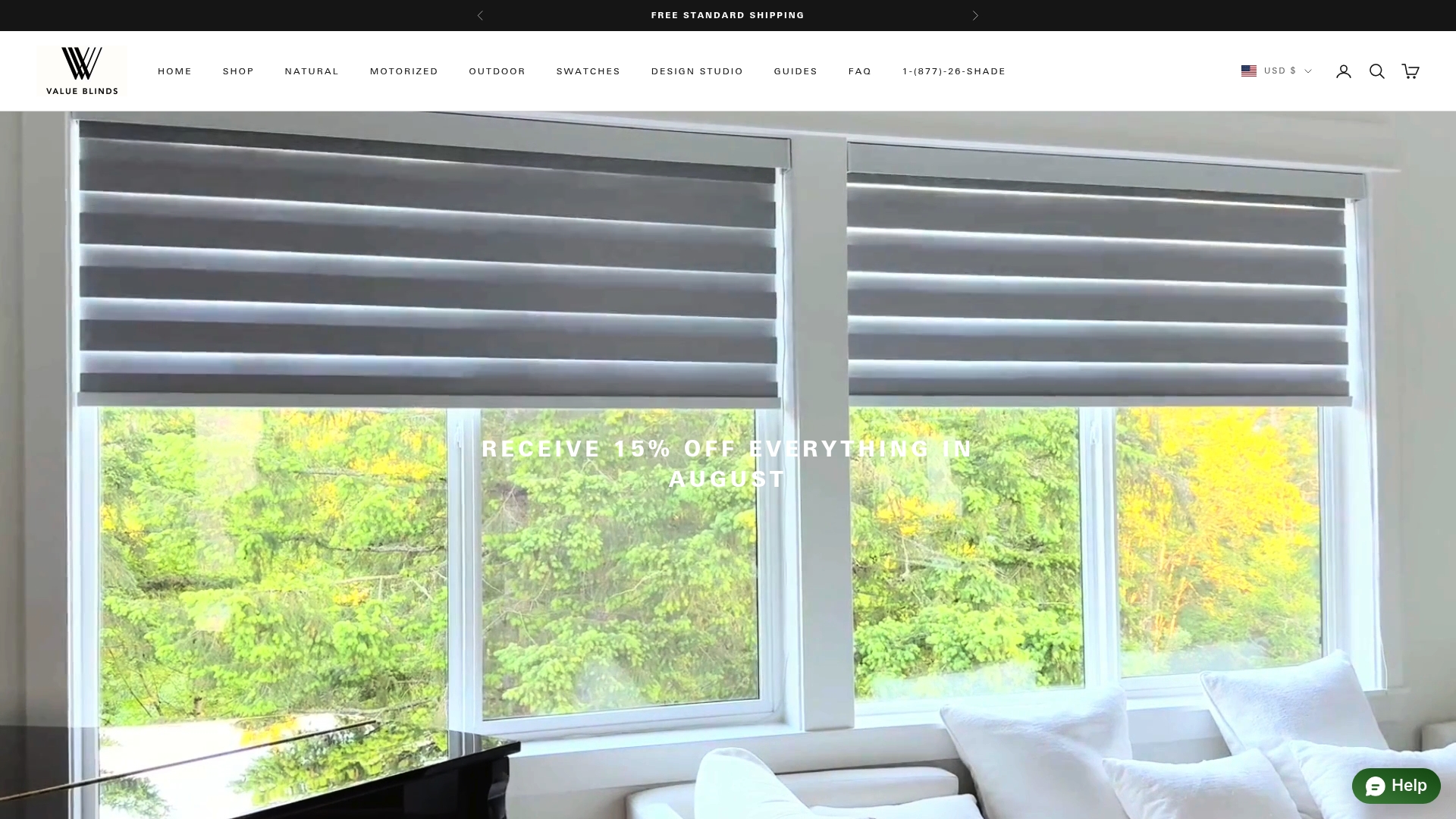
At Value Blinds, our cordless blinds shop features a wide range of certified cordless options, from roller and zebra shades to cellular styles. For nurseries and playrooms, our motorized cellular shades combine zero-cord safety with superior insulation and light control. Not sure where to start? Our design studio lets you visualize options for every room before you buy. Free swatches, expert support, and easy installation guides are all included.
Frequently asked questions
How do I know if my window treatments are safe for children?
Look for certified cordless or motorized products with the ANSI “Best for Kids” label and avoid any window covering with accessible hanging or looped cords.
Is using a cord cleat or tension device enough to make blinds child-safe?
No. Cord cleats and retrofits fail to eliminate the cord itself, and experts agree that only cordless or motorized replacements provide genuine safety for children.
What is the safest window treatment for a nursery?
Motorized or certified cordless cellular shades are safest for nurseries because they have zero accessible cords and provide excellent insulation for a comfortable sleep environment.
Can pets also be harmed by window cords?
Yes. Motorized treatments eliminate interaction risks for both children and pets, making them the safest choice for any household with curious animals or young kids.